When Great Britain completed the Dreadnought in 1906, considered to be the first modern battleship, it set off a global arms race in which other nations built battleships to match Dreadnought. This is the story of one such ship.
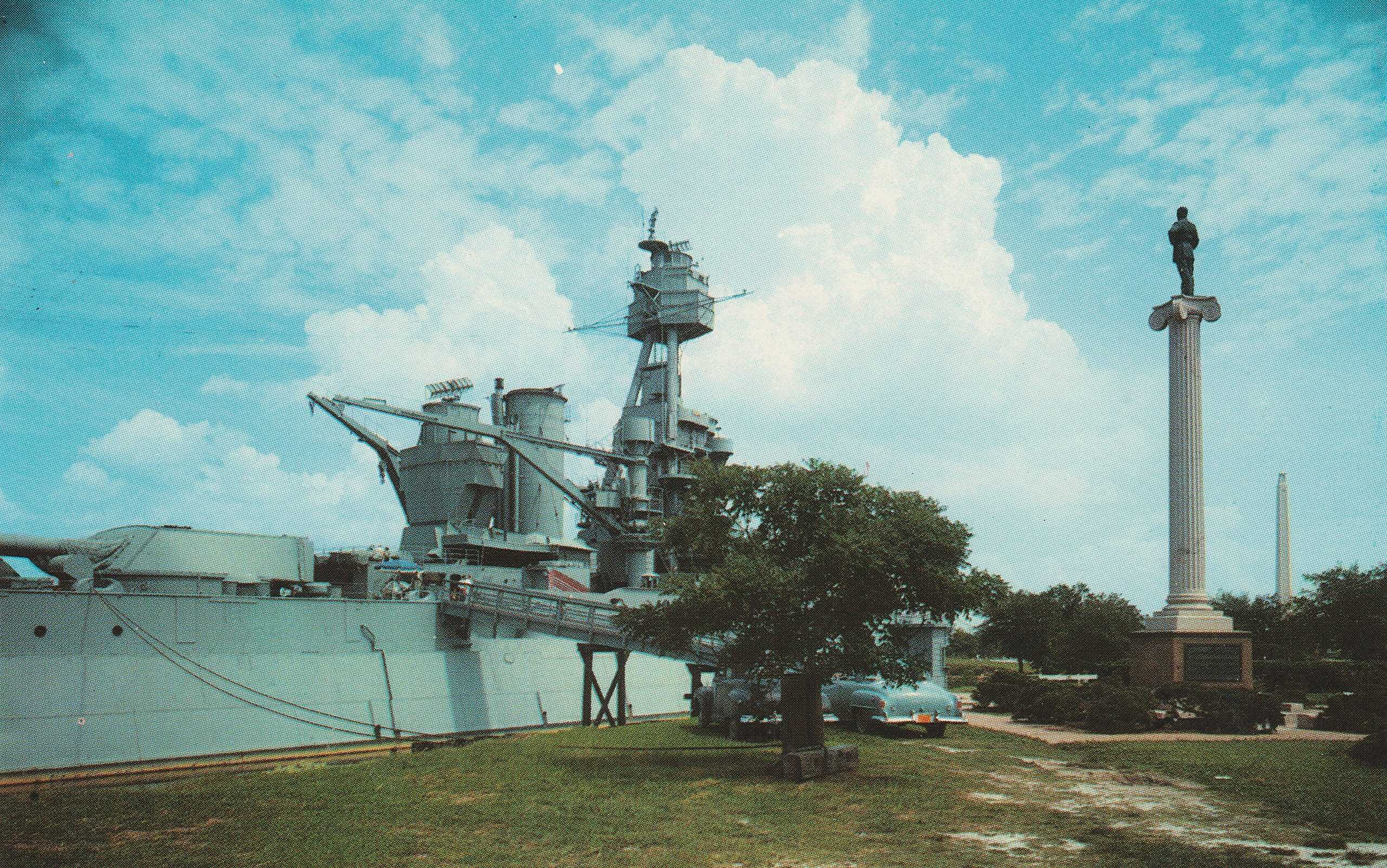
The battleship Texas, completed in 1914,was among the second generation of United States dreadnoughts. Of the nine United States battleships preserved as museum ships, only the Texas served in both World Wars. No other nation has preserved a single battleship.
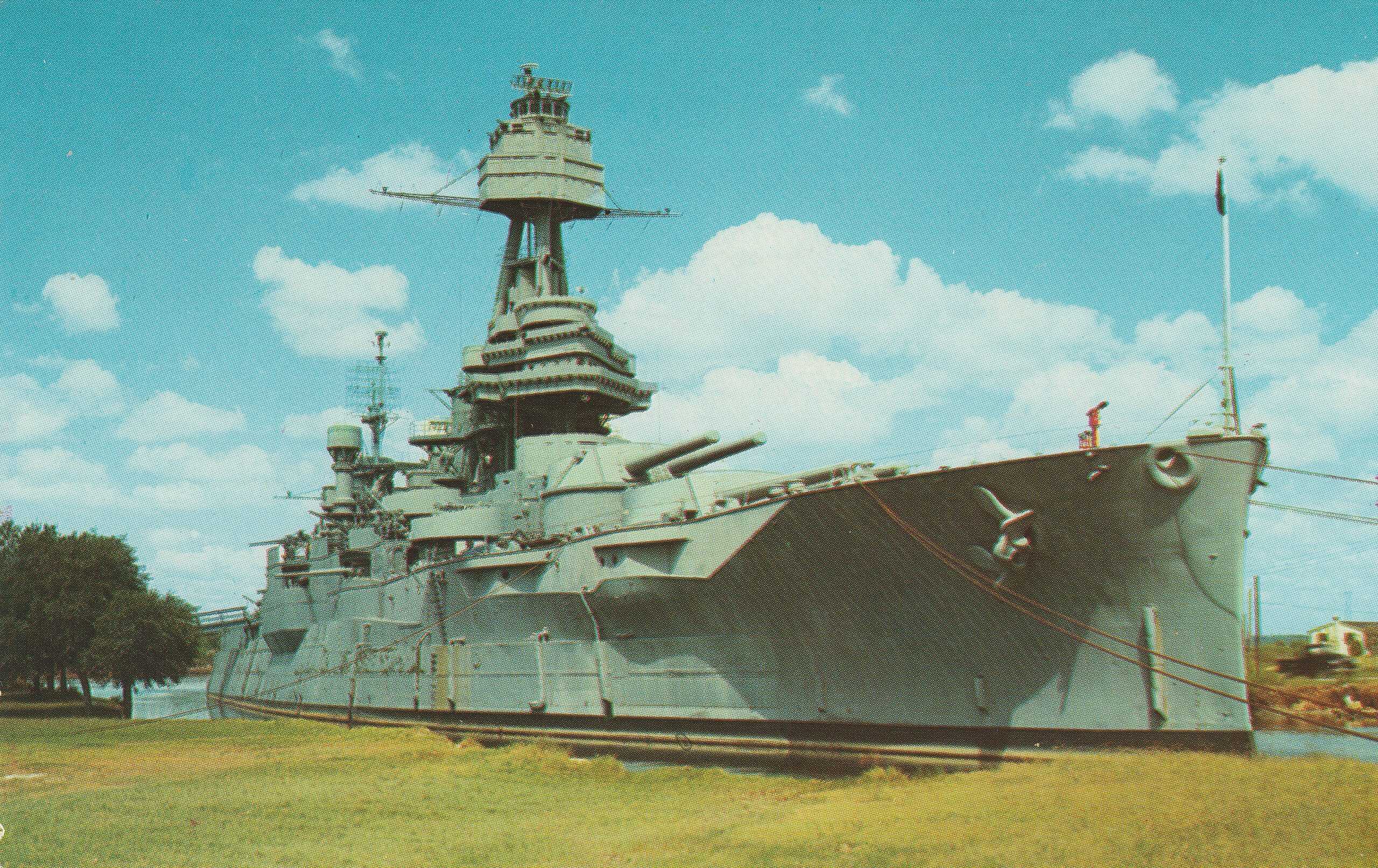
The keel for the battleship Texas was laid on April 17, 1911, at Newport News Shipbuilding and Dry Dock Company and was commissioned on May 12, 1914. Construction cost $5,830,000. Texas was the first battleship in the world to be armed with 14-inch guns. Her ten 14-inch guns were in five double turrets, two turrets forward and aft plus one turret amidships. Texas’s fourteen boilers were coal-fired, and her two engines produced a top speed of 21 knots. At full load she weighed 28,367 long tons with a length of 573 feet and a beam of 95 feet.
During World War I, the Texas and her sister New York were assigned in January 1918 to reinforce the British Grand Fleet. In addition to escorting convoys, the two ships operated with British battleship squadrons to enforce the blockade of Germany. The German High Seas Fleet left port in late April 1918 planning to attack a convoy off Norway but returned to port before the British and American battleships could attack.
In July 1925, Texas entered the Norfolk Naval Shipyard in Portsmouth, Virginia for extensive modernization. Her two cage masts were replaced with tripod masts, anti-torpedo bulges were added, her fourteen coal-fired boilers were replaced with six oil-fired boilers, and her anti-aircraft armament was increased. In December 1938, Texas became the first battleship fitted with radar.
When World War II began in September 1939, Texas was assigned to the Neutrality Patrol, protecting the East Coast. After the attack on Pearl Harbor and Germany’s declaration of war on the United States, Texas escorted convoys to and from England as well as convoys to the Panama Canal and Sierra Leone. In October 1942, Texas along with the battleships New York and Massachusetts took part in Operation Torch, the invasion of North Africa. She remained until early November providing gunfire support for the troops ashore.
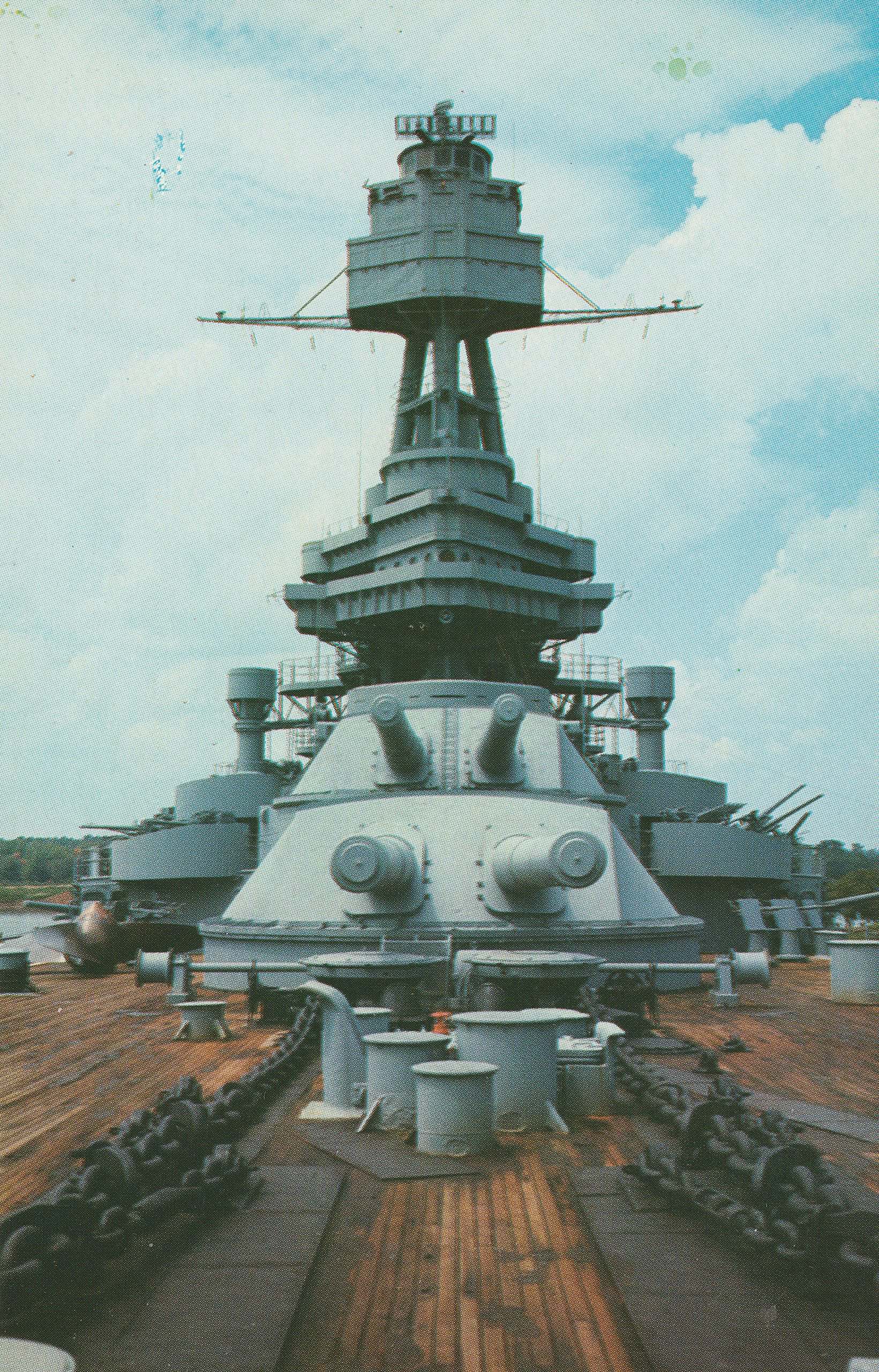
Texas returned to convoy escort duties in 1943. During the Normandy Invasion in June 1944, Texas along with the battleships Arkansas and Nevada, bombarded Omaha Beach with both her 5-inch and 14-inch guns. She supported the invasion through June 18 when the invasion force moved beyond the range of her guns.
On June 25, Texas and Arkansas bombarded the German gun battery Hamburg on the Cherbourg Peninsula. A German shell hit the conning tower killing one sailor and wounded three others and an officer. The shell exploded against the main support column of the navigation bridge, wrecking the navigation bridge and wounding seven more sailors. A second German shell later hit the port bow below the wardroom and lodged in a chief warrant officer’s cabin. It failed to explode and was later defused. Despite the damage, Texas dropped 206 14-inch shells on the German battery during the three-hour battle. The Germans landed 65 shells near Texas but scored only the two hits previously mentioned.
Texas next participated in Operation Dragoon, the invasion of Southern France. Along with the Nevada, Texas shelled German positions on August 15. German resistance crumbled, and the invasion force quickly moved inland.
After an overhaul at the Brooklyn Navy Yard, Texas departed for the Pacific in November 1944. Texas provided gunfire support for the invasions of Iwo Jima and Okinawa. Due to kamikaze attacks, the Texas stayed at general quarters for fifty straight days during the Okinawa campaign. Texas fired 2,019 fourteen-inch shells, 2,643 5-inch shells, 490 3-inch shells, 3,100 rounds of 40 mm ammunition, and 2,205 rounds of 20 mm ammunition in support of the invasion. At the outbreak of World War II, naval experts had deemed Texas obsolete, but she had repeatedly proved her worth.
After thirty-one years of service, Texas was slated to be scrapped. The state of Texas established the Battleship Texas Commission in 1947 to preserve the ship as a war memorial. In the spring of 1948, the Texas was towed from Baltimore to her new home at San Jacinto State Park, the site of the defeat of Mexican General Santa Anna. Her berth, off the Houston Ship Channel, was next to the 561-foot-high San Jacinto Monument, an obelisk that commemorates the battle. The shell that hit the Texas at Cherbourg was put on display aboard the ship.
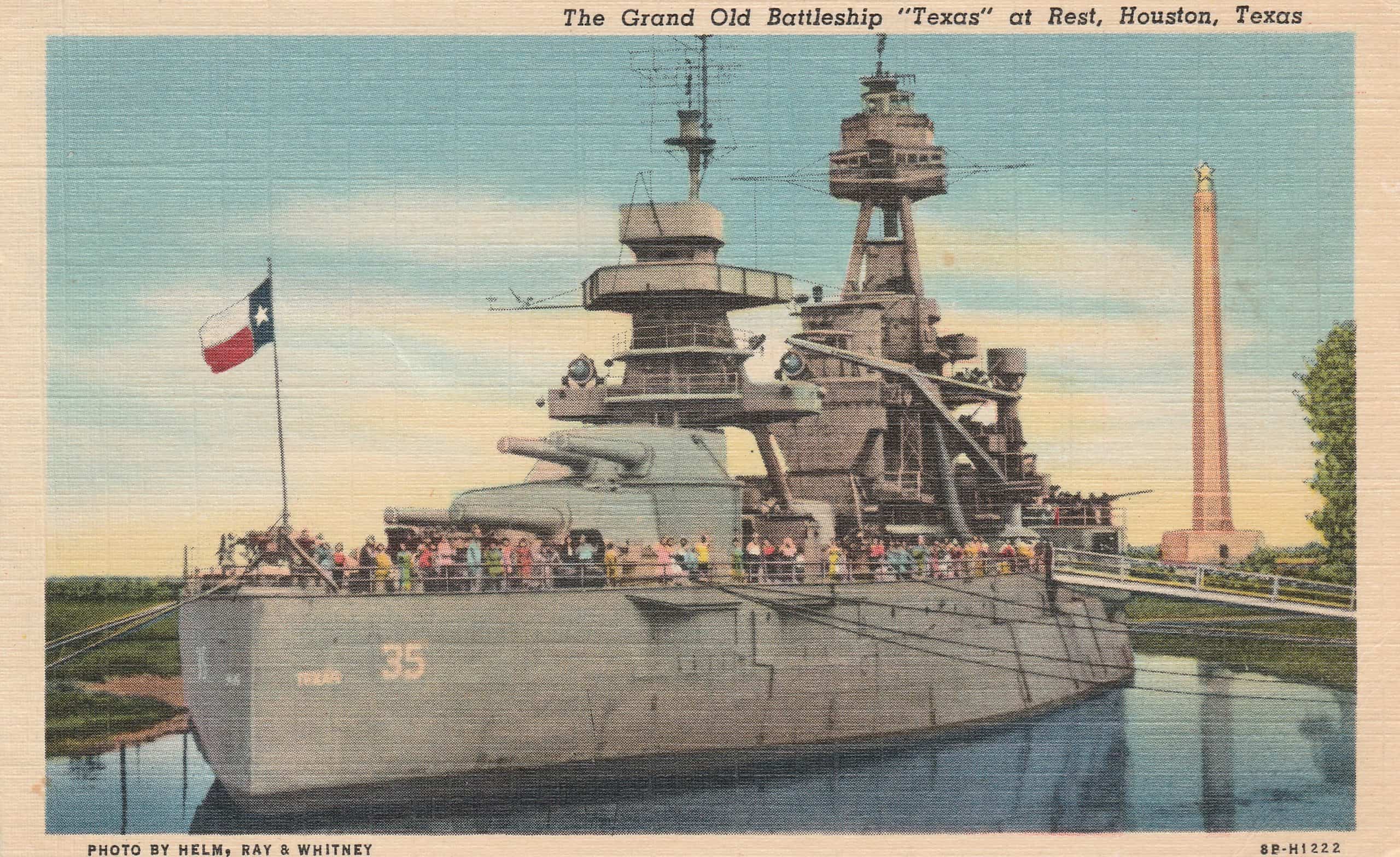
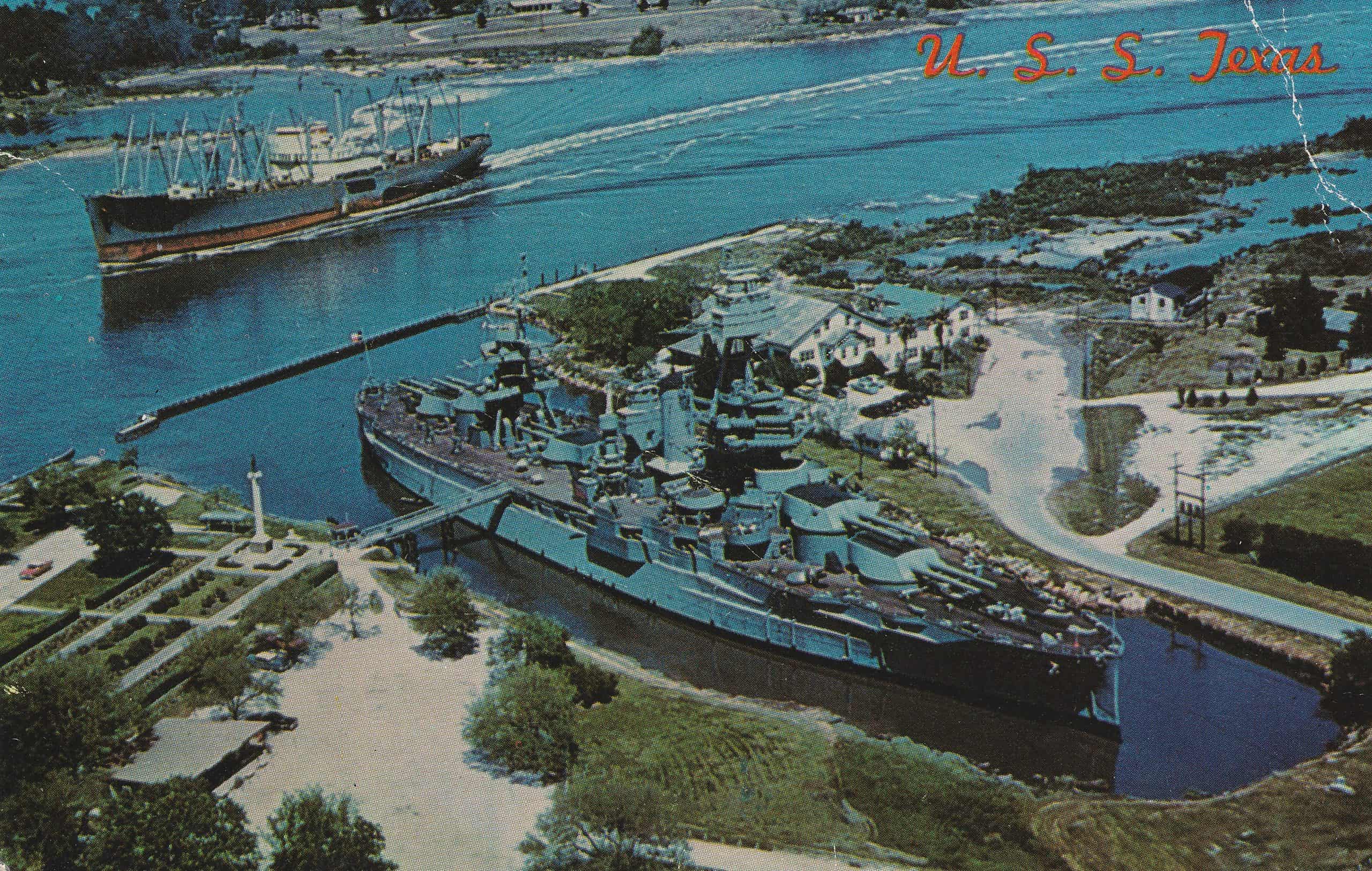
By 1968, Texas’s teak decks were rotted, and water was seeping into the ship. Instead of replacing the wooden deck, the cheaper option of covering the deck with cement was selected. In the mid-1980s, Texas was surveyed by naval architects and found to be in poor condition. Many compartments were filled with standing water and the deteriorating concrete deck allowed rainwater to seep into the compartments below. A five-year fund-raising campaign raised $15 million to repair the ship.
In December 1988, Texas was towed to the Todd Shipyards in Galveston. During the journey down the Houston Ship Channel, the ship began taking on water forward of the engine room. Five pumps worked continuously to keep her afloat. Once drydocked, workers replaced 15% of her rusted steel hull and seal-welded 40,000 rivets to prevent future leaks. Her concrete deck was removed and replaced with pine decking. Texas returned to San Jacinto and reopened to visitors in September 1990.

Texas continued to develop leaks. In June 2010, a leak on her starboard side, compounded by a burned-out pump, caused Texas to sink two to three feet. After the pump was replaced, 150,000 gallons of water were pumped out. In June 2012, thirty new leaks ranging in size from one inch to two square feet were discovered. In June 2017, a 6-by-8-inch hole 15 feet below the waterline caused Texas to list six degrees to starboard. After repairs, 105,000 gallons of water were removed.
The Battleship Texas Foundation began operating the Texas in August 2020. The foundation had two initial goals, to repair the Texas and to increase the number of annual visitors. Other museum ships in the United States attracted between a quarter- to a half-million visitors annually while the Texas only attracted 100,000 visitors. At San Jacinto State Park, the Texas was not drawing enough visitors to adequately fund maintenance and repairs.
On August 31, 2022, Texas was towed to the Gulf Copper Drydock & Rig Repair in Galveston. She was in drydock until March 2024. Over seventy tons of rusted steel were replaced. Restoration and repair work cost $75 million. The new home for Texas will be on the downtown Galveston waterfront, and she will reopen to the public in late 2025 or early 2026.
I used to work in the area where the Battleship Texas was for many years. The San Jacinto State Park was in a highly industrial oilfield area consisting of refineries and other related oilfield businesses. Not a park you’d go out of your way to visit. On my lunch breaks I’d often go there and enjoy the quiet afternoons. I remember climbing on the ship as a child and my son many years later did the same. The ship was in rough condition. I hope the ship has a better birth now and will have more visitors than in the… Read more »
I have fond memories of my 1965 visit to the battleship Texas. Most of the postcards used in the article were purchased during that visit. Today I live in Norfolk, Virginia and the battleship Wisconsin is docked downtown and I pass by her a couple times a week.
Over the weekend I was in San Jacinto Park. One of the Texas Historical Commission employees spoke about going to the park when he was a youngster, and the enjoyment he had going onto the battleship. When it was towed to drydock (I presume in 2022), the ship was only floated by means of spraying what sounded like tons of styrofoam into the hull. The engineer later told this employee that if the flotation scheme faltered, the officials were ready to scuttle it The San Jacinto Monument at the Park is the one with the star on top. Counting the… Read more »
I resided in Galveston in the 1960’s. My late father was the Chief of Internal Medicine at the Public Health Hospital there. At the hospital’s annual picnic, the wife of one of my father’s interns told my mother they were driving on the mainland in a blinding rainstorm and she swore she saw the Washington Monument, Her husband said she was hallucinating, My mom laughed and told her about the San Jacinto Monument. Yes, everything is bigger in Texas!
I was surprised to read that no nation besides the U.S.A. has preserved any battleships.