What they did, what they said, and what others said, about them.
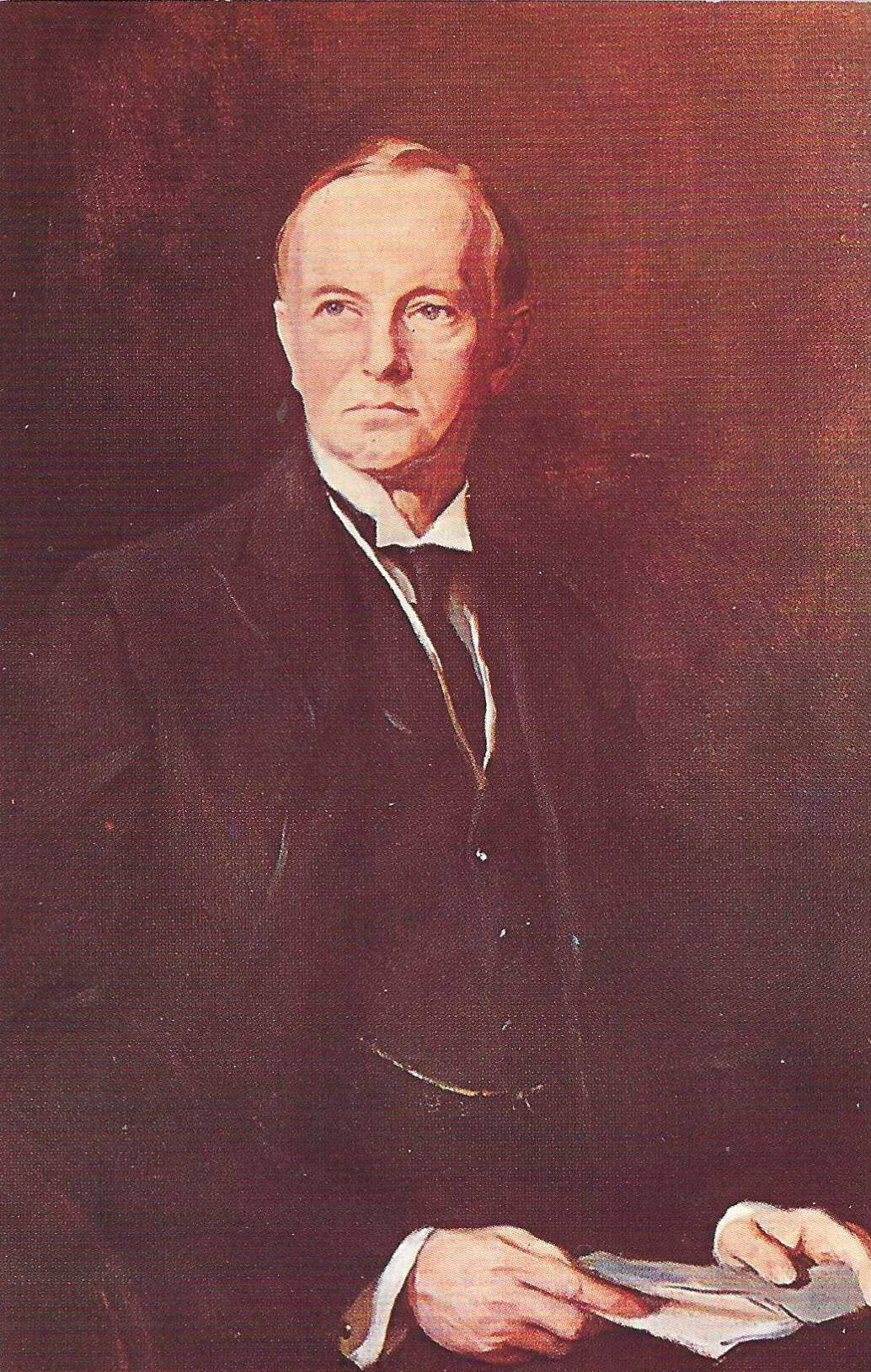
One hundred years ago, in May 1925, there were no major events recorded at the White House. At that time, Calvin Coolidge was the U.S. President, and his administration was focused on promoting economic growth and maintaining a hands-off approach to governance.
President Coolidge’s foreign policy was rooted in promoting peace and stability while protecting American interests. He favored economic diplomacy over military intervention, focusing on trade and investment to strengthen international relations.
Coolidge supported the Kellogg-Briand Pact, which aimed to outlaw war as a tool of national policy, reflecting his commitment to peaceful resolutions. He also worked to maintain neutrality in global conflicts, avoiding entanglement in alliances that could lead to war. His approach was pragmatic, emphasizing economic growth and non-interventionism.
Coolidge’s domestic goals revolved around fostering economic growth and maintaining a limited government. He championed tax cuts to stimulate business and individual prosperity, believing that a thriving private sector was key to national success. He also worked to reduce federal spending, aiming for a balanced budget and fiscal responsibility. Coolidge supported policies that encouraged industrial expansion and technological innovation, while opposing government intervention in the economy. His philosophy was rooted in the idea that less government interference allowed for greater individual freedom and economic opportunity.
Woah! This is beginning to sound like a U. S. history lecture by one of those college historians who wears tweed sportscoats with leather lapels and patches on the elbows.
My title is “Calvin and Grace,” not “Mr. & Mrs. Stuffy Shirt.” Let’s talk about them.
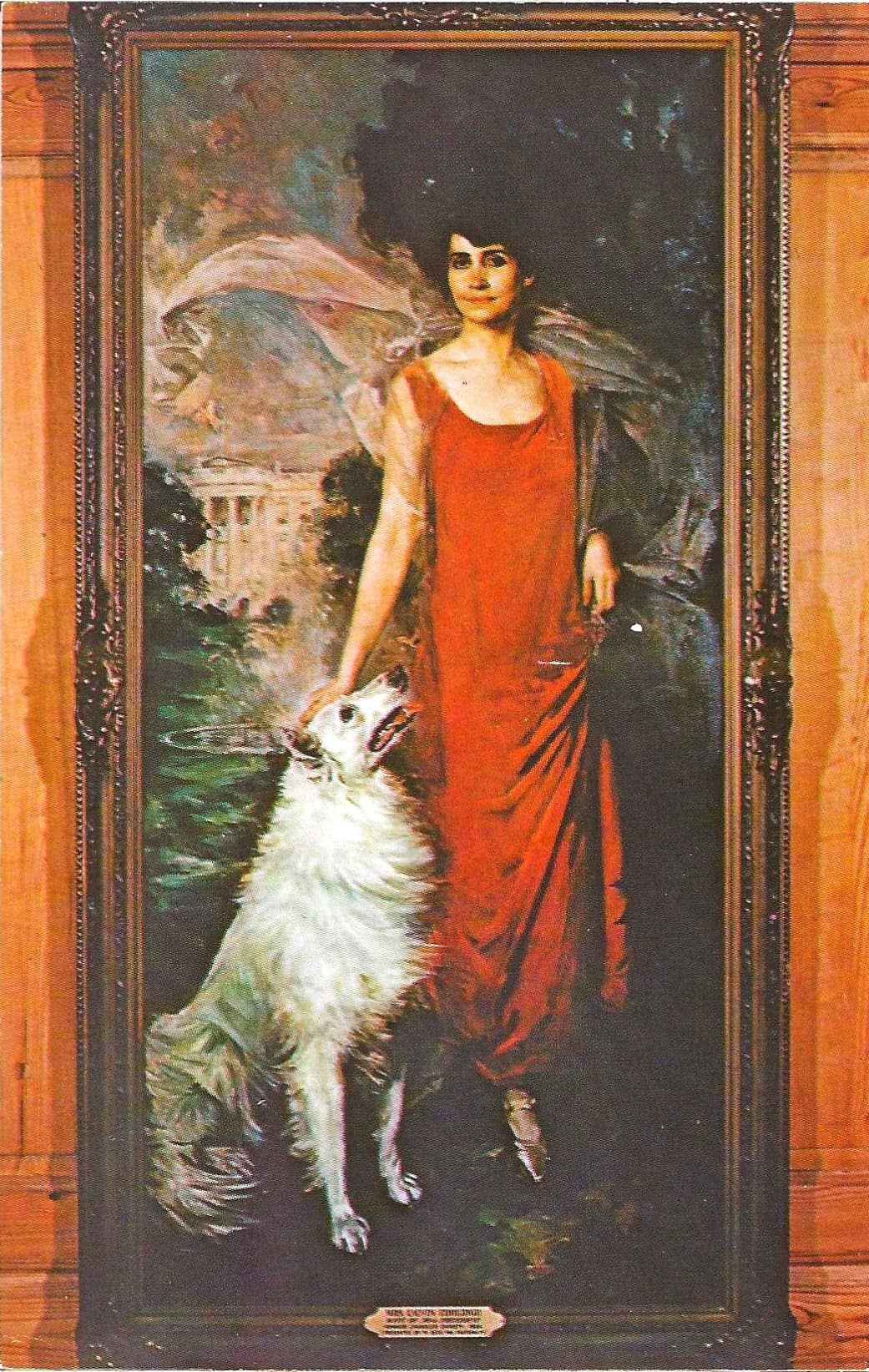
Grace was seven years younger than Calvin. Before she married, she was Grace Anna Goodhue, born in January 1879. She was the First Lady of the United States from 1923 to 1929 as the wife of the 30th president of the United States, John Calvin Coolidge, Jr.
She was never elected to a public office, but she was previously the second lady of the United States from 1921 to 1923 and the first lady of Massachusetts from 1919 to 1921.
And, you should know! Before being America’s First Lady and for many years afterward, Mrs. Coolidge was a well-known baseball supporter. Grace Coolidge was by far the most knowledgeable and enthusiastic fan who ever lived in the White House. She was “the most rabid baseball fan I ever knew,” said Bucky Harris, the manager of the Senators during their great run in the 1920s.
Grace Coolidge attended as many games as she could, faithfully keeping track of the proceedings on her personal scorecard. To stay in close touch with her team while sailing down the Potomac on the presidential yacht Mayflower, she listened to Senators games on radio station WRC.
Grace and Calvin were an unlikely pair. She was friendly. He was solitary. She was outgoing and popular. He was taciturn and introverted; he was popular too, but for many different reasons. Grace attended the University of Vermont. Calvin went to law school. Grace loved her pets; she once kept a pet raccoon named Rebecca and had dogs in the White House. Calvin liked dogs, too, but only liked white collies. He once said, Any man who does not like dogs … does not deserve to be in the White House.
Everyone loved Grace. John Kennedy once said that Grace Coolidge reminded him of his mother. “She is kind in every way and smarter than any man I’ve ever met.”
Calvin got a bad rap. Lots of people called him “Silent Cal.” There is a story that started soon after he became President. At a dinner party, Mr. Coolidge was seated across the table from a Washington insider’s wife. She said to him, “I made a bet that I could get you to say more than two words.” Coolidge smiled and replied, “You lose.”
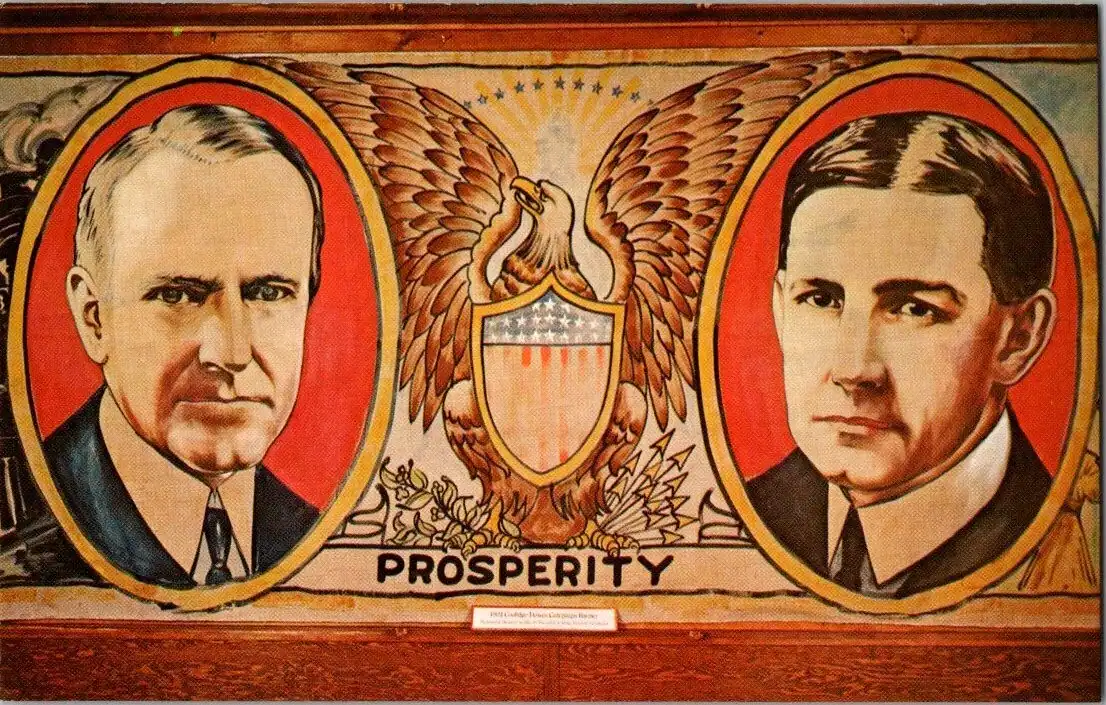
Calvin moved into the Oval Office upon the death of President Harding. He finished Harding’s term, and although he was not expected to win the election of 1924, he did run, and he prevailed. Charles Daws was his vice president. Daws later became the United States Ambassador to the United Kingdom in the Hoover administration.
In the years that followed, Calvin came to be known as quite a “jokester.” It all started about a week after he took office when a messenger from the Treasury Department arrived at the Oval Office door with his first paycheck. Mr. Coolidge took the envelope from the messenger’s hand, and said, “Call again.”
On another occasion, the first lady and the president visited a government farm on separate tours. She came to the chicken yard and showed some interest in a prize rooster. The farmer told her the rooster could mate several times a day. Mrs. Coolidge replied, “Tell that to the president when he comes by.”
A few days later, the farmer told the president exactly what his wife had said. Coolidge asked, “Same hen every time?” The reply: “Oh, no, Mr. President, a different hen every time.” To that Coolidge said, “Tell that to Mrs. Coolidge.”
Calvin chose not to run for reelection in 1928, he thought that ten years in the White House was too long! After the presidency, Calvin and Grace moved into retirement and chose to live at their home in Northampton, Massachusetts. Calvin kept busy with dozens of unfinished projects; Grace started to write about her years as first lady.

Calvin died in January 1933. And for years afterward, people still poked fun at his reserved character in social settings. In 1936 Max Eastman, published his book The Enjoyment of Laughter, in a chapter about the use of exaggeration in humor, he recalled the occasion at which Dorothy Parker was told that President Coolidge had died. She hesitated then replied, “He Is Dead. How Can They Tell?”
History has not been kind to Calvin. Mr. Coolidge had all the characteristics of a successful politician, yet historians have consistently ranked him, at best as being only a mediocre president.
After Calvin died, Grace kept in touch with her successors Lou Henry Hoover and Eleanor Roosevelt. She continued to write and was actively involved in the Clarke School for Deaf Children. She closely followed the events of the Lindbergh kidnapping, soon began to make decisions that Calvin would never have approved: she changed her hair style and wearing hiking shorts and trousers. She learned how to drive a car, and in 1936 she took her first flight on a plane.
Grace Coolidge died of kyphoscoliosis and heart disease on July 8, 1957. She is buried next to Calvin and their son in the Plymouth Notch Cemetery in Plymouth Notch, Vermont.
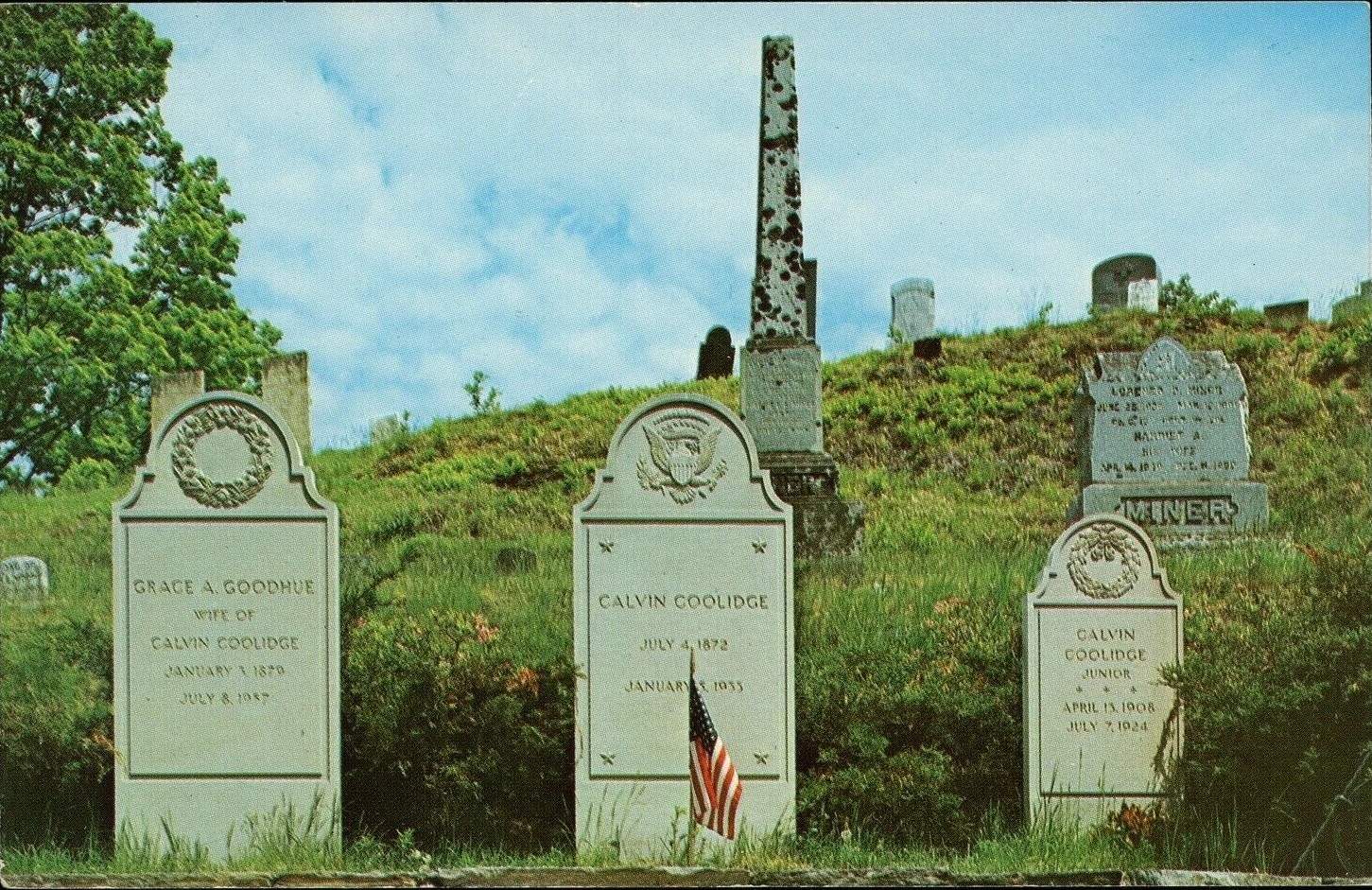
PS: Calvin Coolidge, Junior died in July 1924. There is a great story about the young man. It seems that Junior inherited his father’s sense of humor and skill at witticism.
Calvin, Jr. earned $3.50 per day working in the tobacco fields near Northampton for two summers, but he was a thinker rather than a worker. He learned that his father had become president, but he kept working. When questioned by another boy about why he was working even though his father was the president, he replied, “If my father were your father, you’d keep working too!”
Wonderful article about President Coolidge and his wife.
This is a great article! I’ve heard many positive things about Coolidge and this validates them.
Thanks for the article…I enjoy all your posts.
Fascinating. Now I want to know more about Grace.
I have an incomplete collection of our President’s grave markers. Coolidge’s grave markers is the plainest of all which always seemed befitting to is image and style.
Coolidge’s son died after contracting blood poisoning from a blister incurred while playing tennis on the White House lawn.