For many reasons New Englanders of the nineteenth century took unusual pride in their front doors. Door design and their decorations, especially in New Hampshire, Massachusetts, and Rhode Island, were prime factors in making a home unique. Many residents, whose names go unremembered are recalled by others, also unremembered, by the color of their front doors. (I’m not sure that I would approve of being known as “Mrs. Lemon Yellow Door.”) New England’s doors are more than mere entryways; they were expressions of creativity. From colonial times the way residents painted or decorated their doors reflected their heritage and style.
Settlers from England brought with them architecture that emphasized symmetry. Their doors were often simple and functional yet adorned with symbolic details like a wreath or a floral arrangement. The classic “center door” with side- and fan-light windows became hallmarks of the federal era – basically between 1780 and 1830.
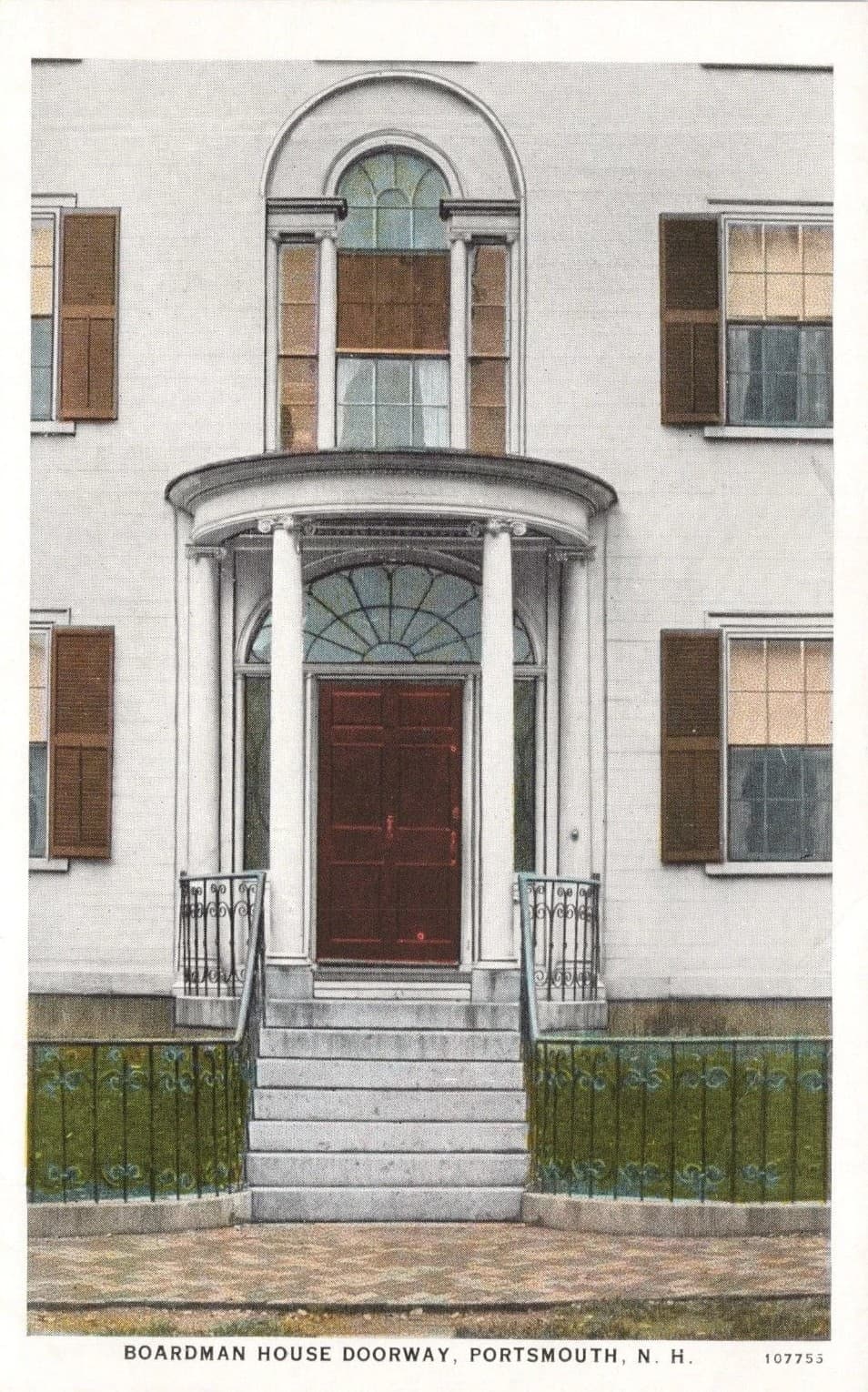
(Left) Langley Boardman built his mansion on Middle Street in Portsmouth, New Hampshire, in the early 1800s and lived here until his death in 1833. Early in life Mr. Boardman served as a constitutional councilor and a New Hampshire State Senator. His son, Dr. John Boardman, owned the home until 1900.
Many historic homes in towns such as Salem, Concord, and Newport feature doors painted in bold, traditional colors like navy blue, deep green, and crimson, often accented with brass or iron hardware. These doors are not only functional but also serve as focal points of the homes’ facade, blending well with aesthetic appeal.
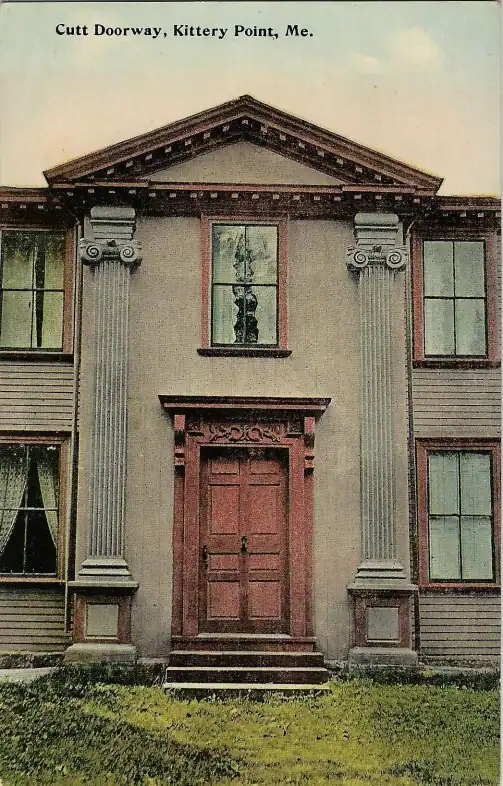
The Lady Pepperrell House (above left)is an American historic home in Kittery Point, Maine. Built in 1760 by Mary Pepperrell, widow of Sir William Pepperrell, the house is a two-story wood-frame structure. It is one of the finest examples of Georgian architecture in New England.
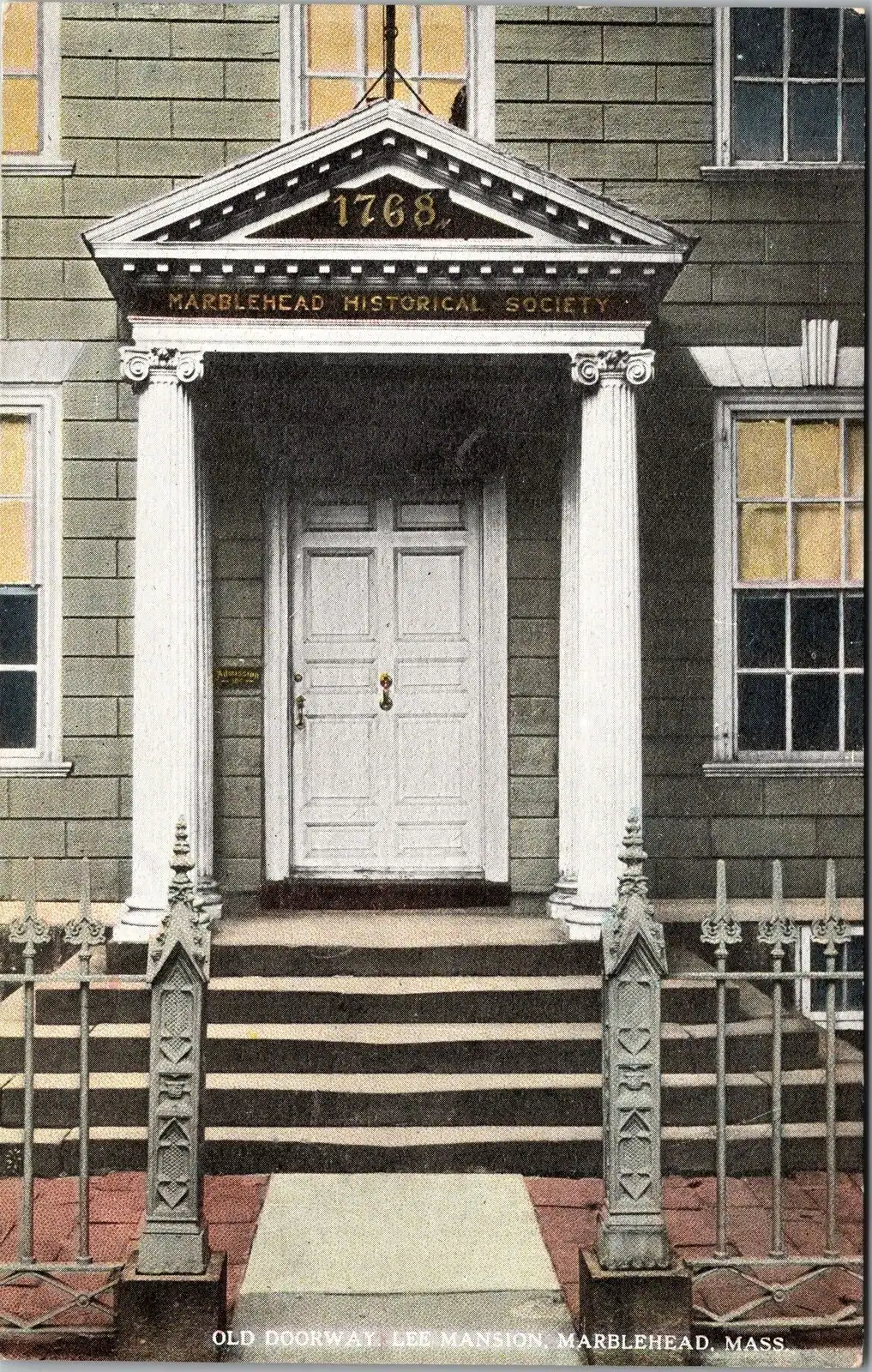
The Jeremiah Lee Mansion (above center) is a large, three-story, wooden house in the Georgian style. It was built with an imitation stone veneer in 1768. At that time Mr. Lee was the wealthiest merchant and ship owner in Marblehead, a quite prominent city in the Massachusetts Bay colony.
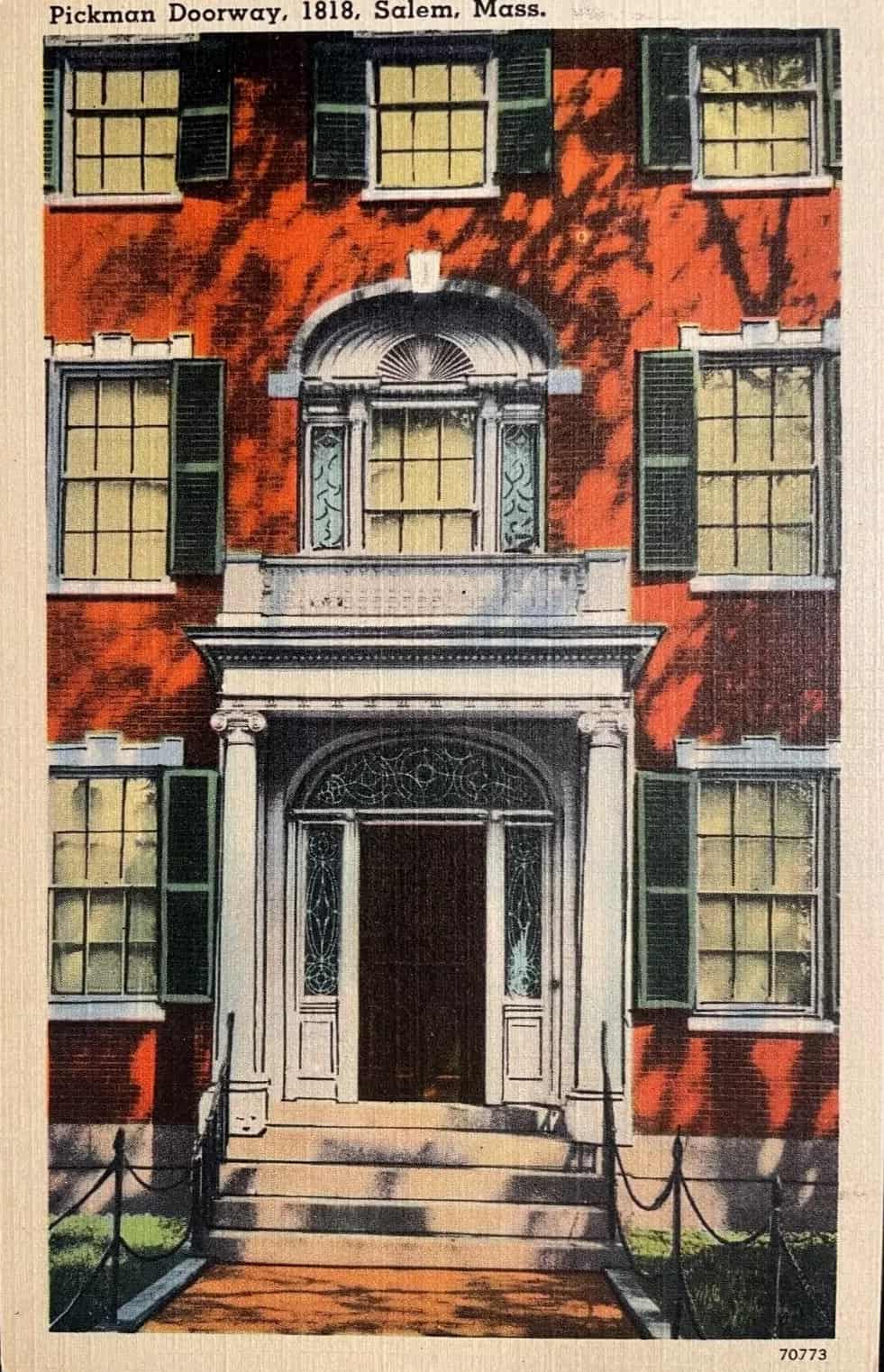
Chestnut Street in Salem, Massachusetts, is the central thoroughfare of the residential district. The house at 27 Chestnut Street is identified in the caption on the card above (right) as the Pickman House. It is not the home made famous in the historical accounts of the Salem Witch Trials. This house belonged to Dudley L. Pickman (1779-1846) an early nineteenth century merchant who traded primarily in the far-east.
In New England and elsewhere, door decorations offered symbolic greetings, especially during holidays. At the Christmas season, wreaths made of evergreens and holly were symbolic of eternal life and good fortune. A Christmas wreath was often decorated with ribbons, pinecones, and ornaments made by local craftsmen.
During Halloween, door decorations became more playful and spookier, featuring pumpkins, ghosts, and cobwebs, promoting a sense of fun. Conversely, for Memorial Day and Independence Day, patriotic motifs like flags and bunting in reds, whites, and blues decorated to express pride in country.
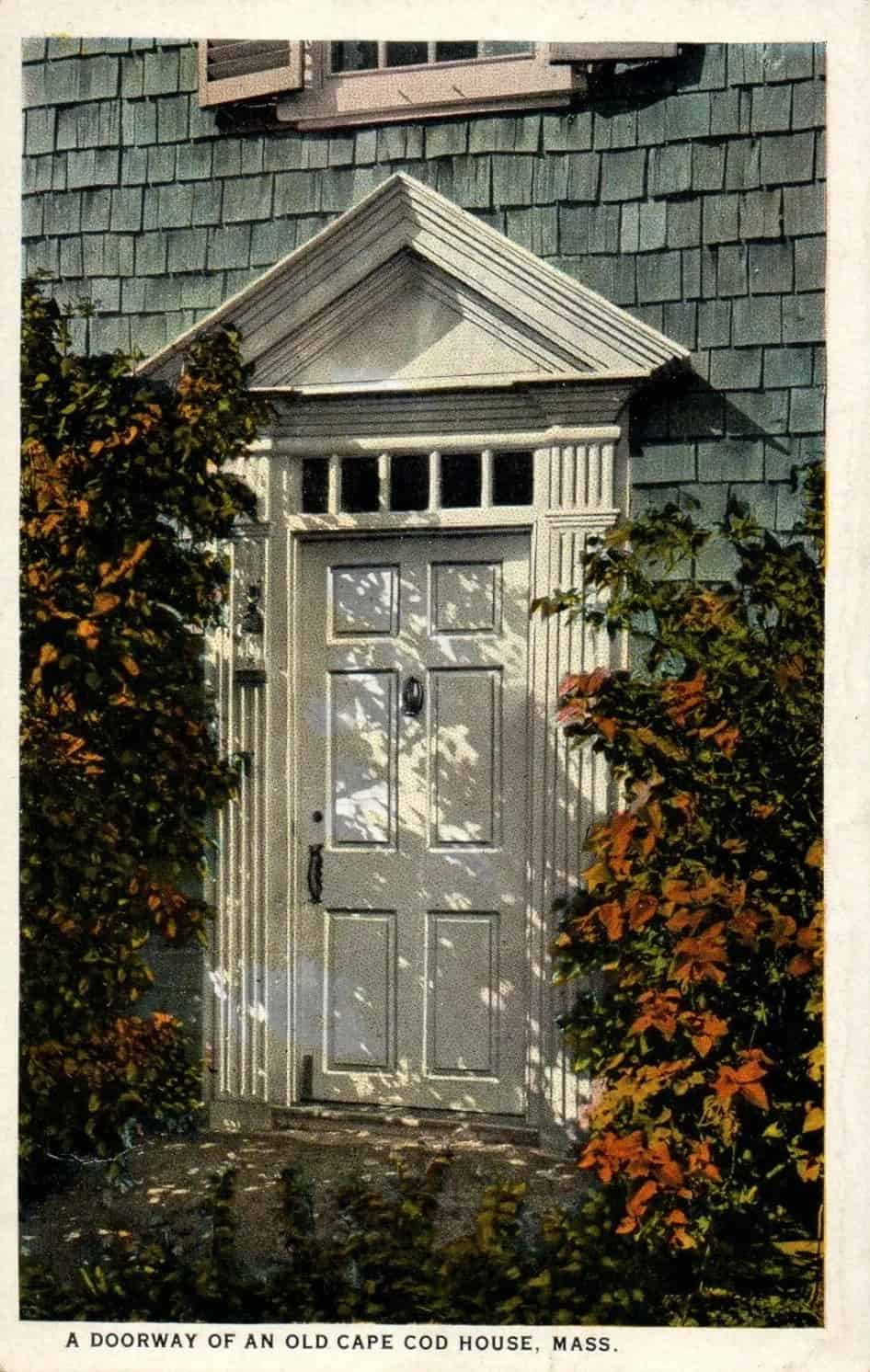
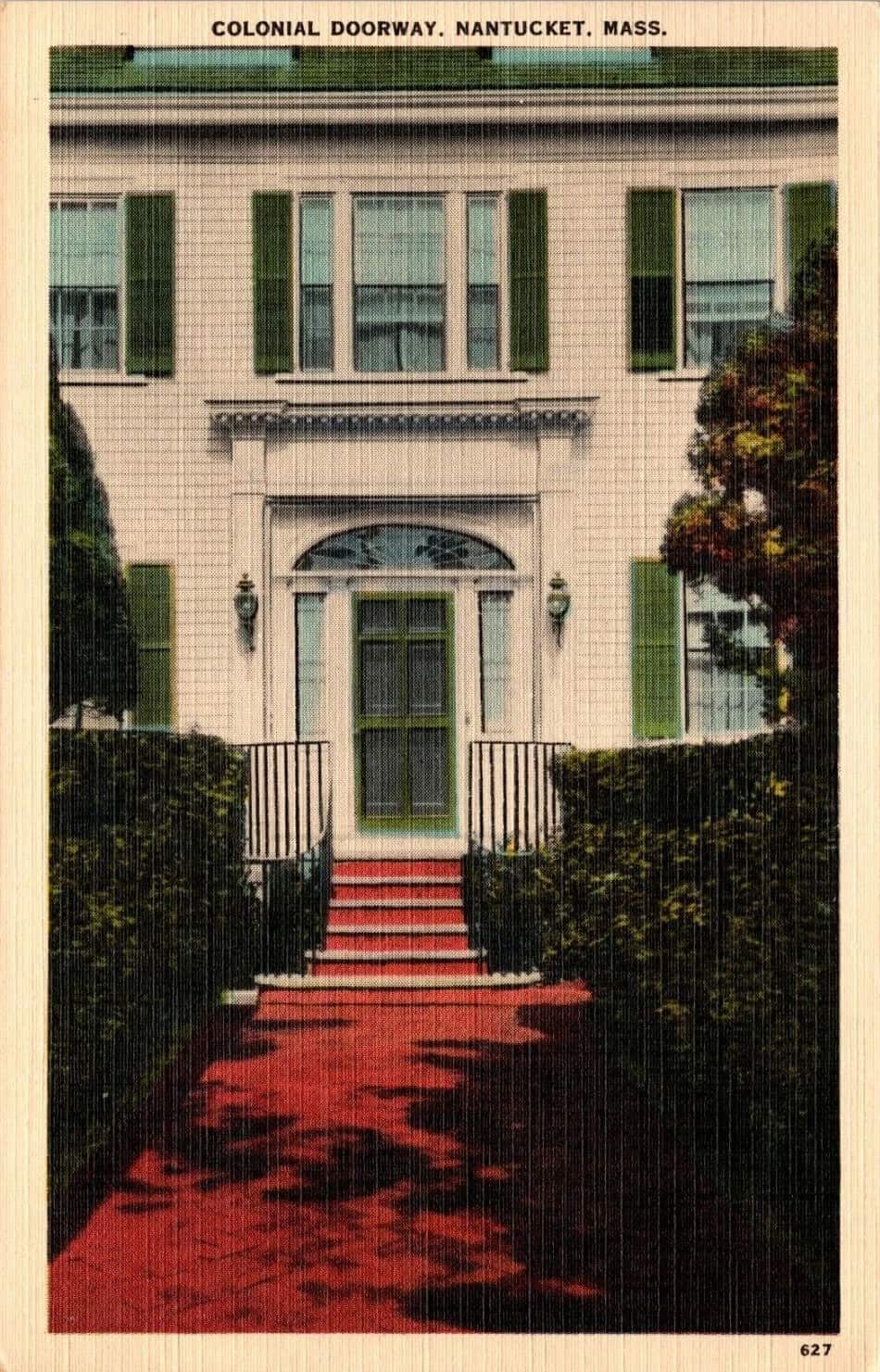
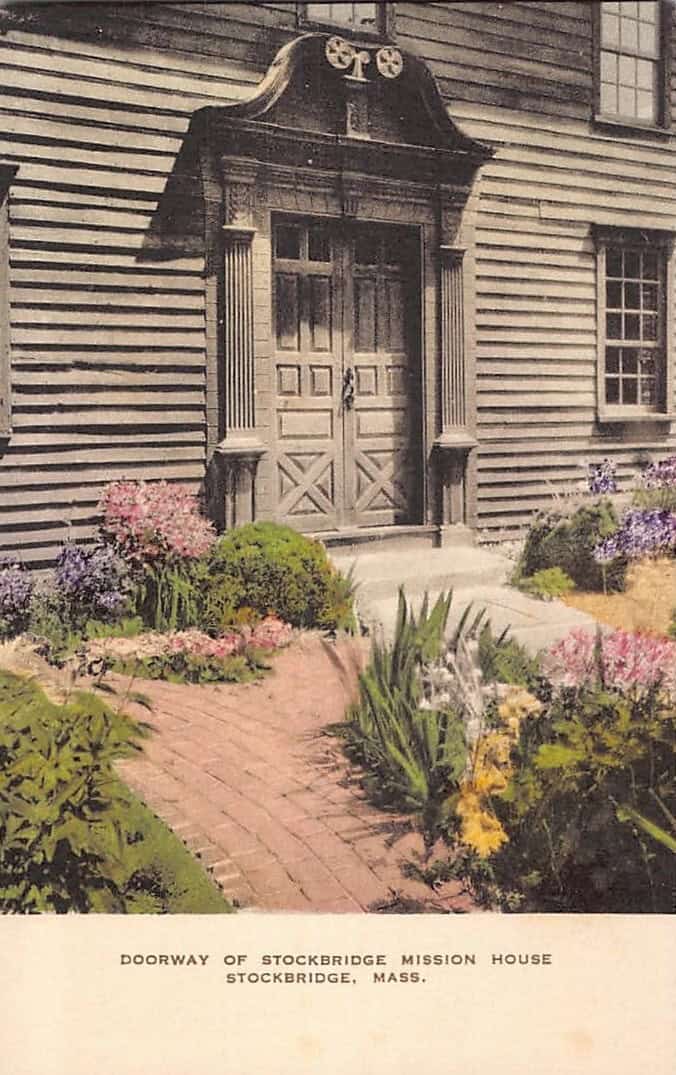
Cape Cod Nantucket Stockbridge
In towns with historic districts, namely Marblehead and others, maintaining period-appropriate door designs and decorations helps preserve the region’s architectural integrity. Some communities hold events such as “Door Decorating Contests” or “Historic Home Tours” to celebrate local craftsmanship and history.
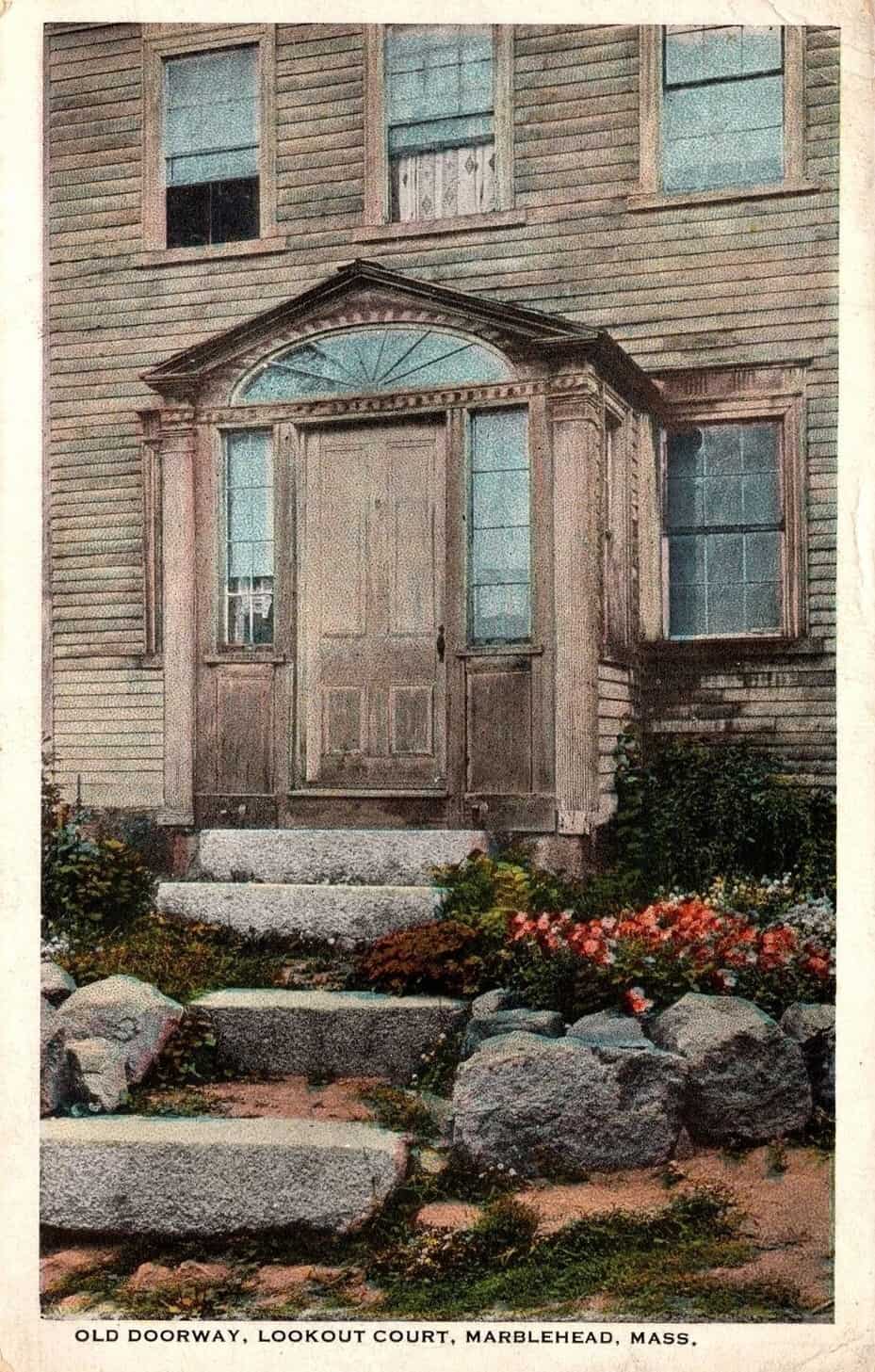
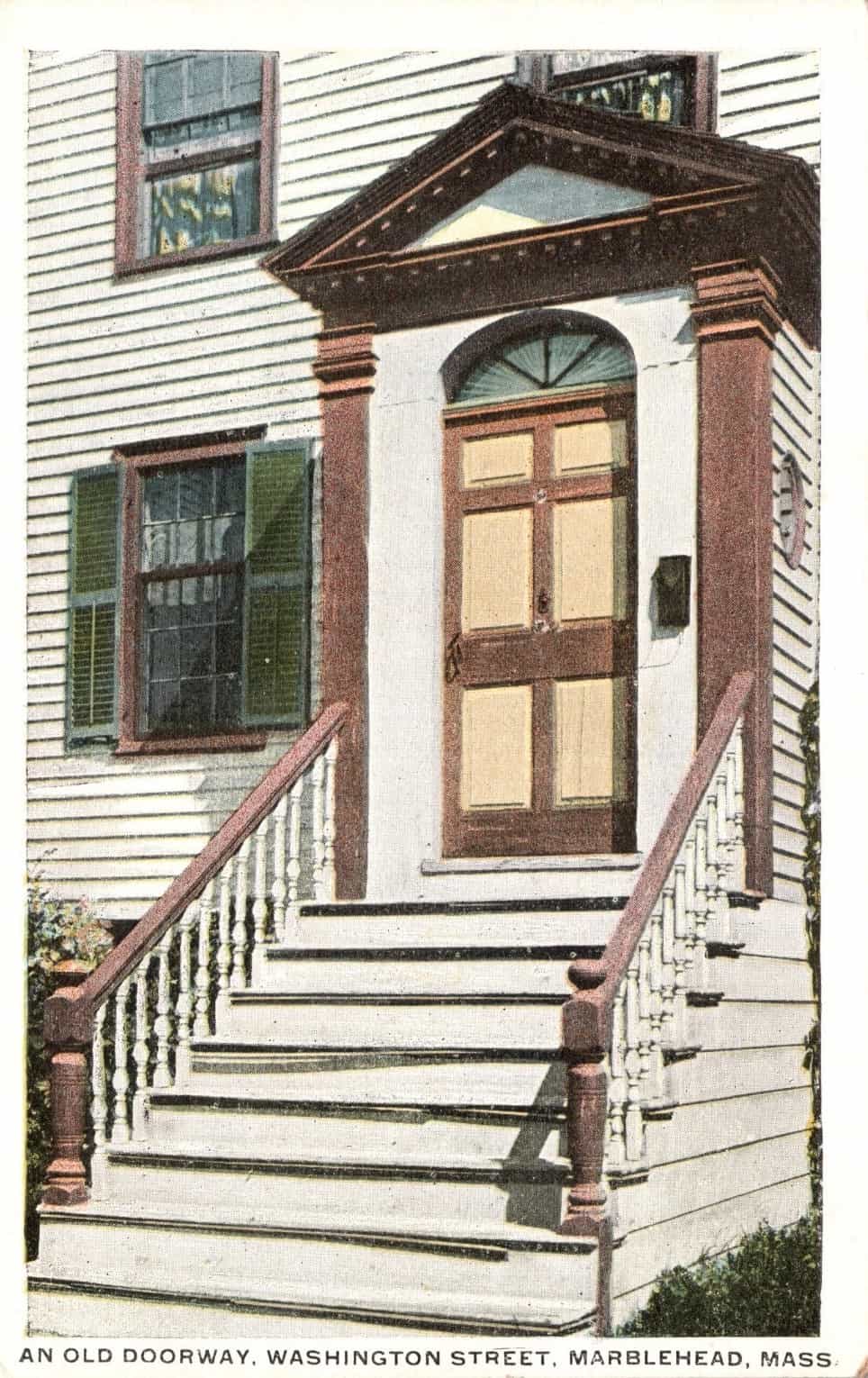
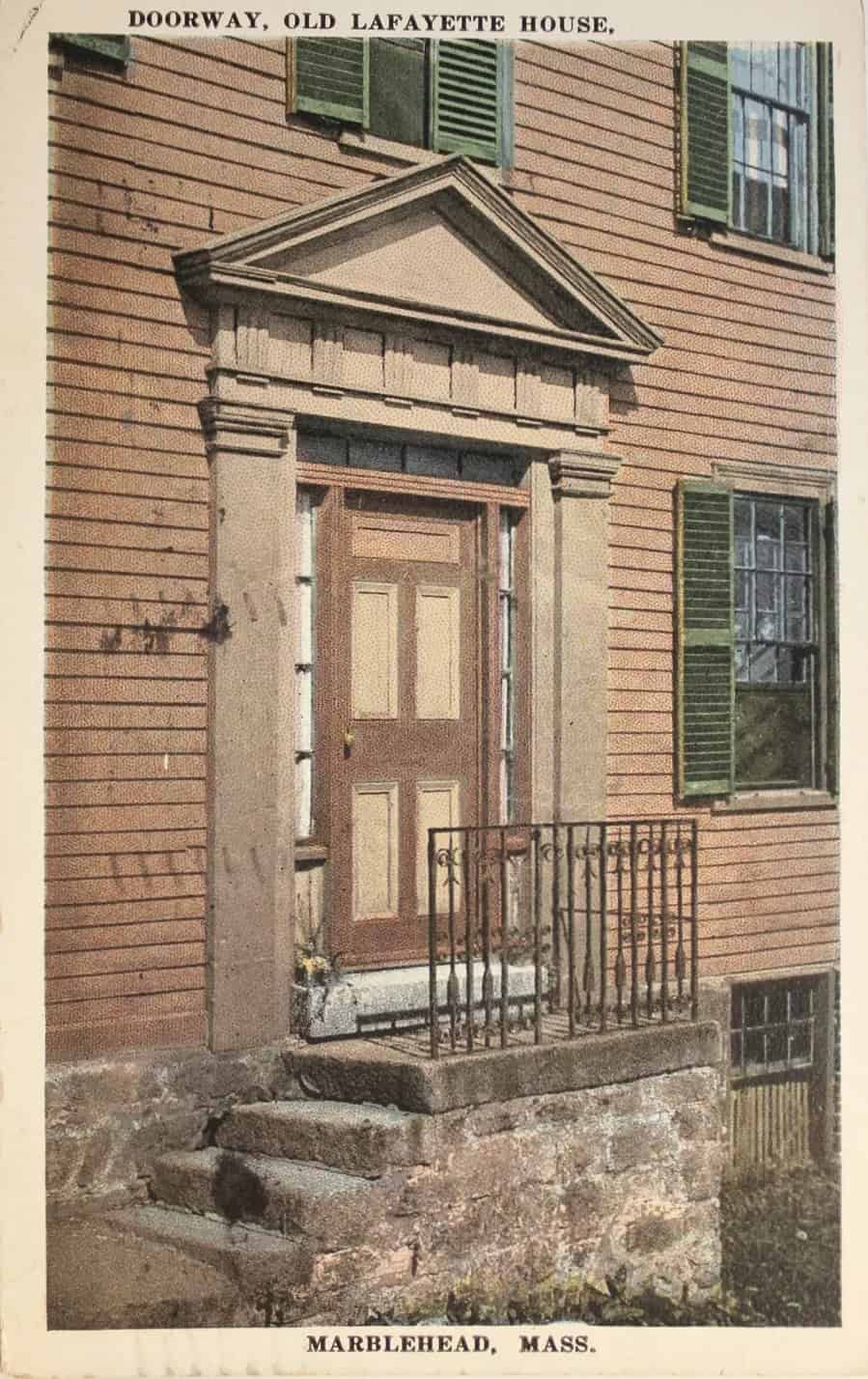
One report has been found in a 1922 copy of the Boston Globe that one resident who was quite accomplished in woodworking skills had four different front doors – one for each season – with different designs and painted in different colors.
In recent decades, doors and door decorations have evolved to the point that a door color can indeed increase its real (estate) value. Homeowners now experiment in ways that reflect taste, customs, and community. It is common to see doors painted in vibrant shades of the local high school’s athletic team colors.
New England’s diverse architectural styles such as Colonial, Cape Cod, and Victorian influence door designs. Colonial homes often feature paneled wooden doors with brass or black hardware. Cape Cod homes favor simple, unadorned doors, but there is every exception imagined. The Victorian homes in Massachusetts and Maine showcase doors with intricate carvings and stained-glass panels and are often complemented by floral-inspired wreaths.
It is important to know that it is not just the rich who have door decorations and specialty designed doors. History and tradition are important in New England with populations at every socio-economic level.
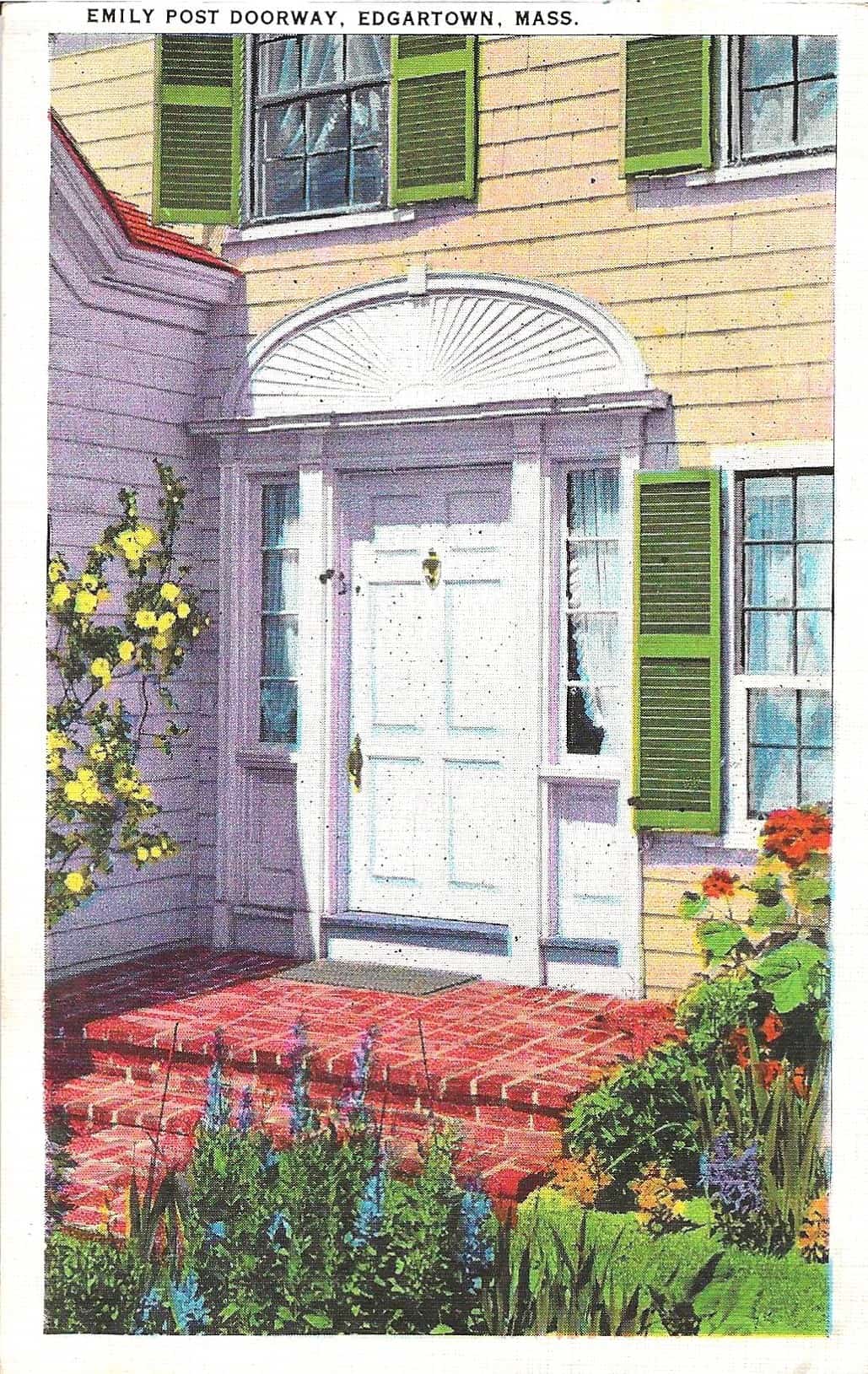
Roots are reflected in the personalized styles of many – even when they are named, Emily Post of Edgartown, Massachusetts, whose home has a raised panel door (two-over four) with a brass knocker and latch.
Visitors would be proud to call on someone with such a delightful front door. It is welcoming and warm.
Just one colorful green door. I was anticipating color.
The door begs you to wonder – what is within?