Construction of a new ship for the Cunard Line began in 1930 but was halted in 1931 due to the Depression. In 1932, the British government provided a loan to complete the first liner and construct a second liner that would enable Britain to compete with the German liners Bremen and Europa and the Italian liner Rex. It was hoped the construction of the two ships would alleviate unemployment in Scotland and provide over 2,000 jobs for seamen when both were completed. The Cunard and White Star Lines were ordered to merge as part of the loan agreement.
The Queen Mary was launched in 1934 and fitting out took two years. The Queen Mary made her maiden voyage from Southampton in the United Kingdom to New York City in May 1936. The construction of the second ship, later named Queen Elizabeth, began in December 1936.
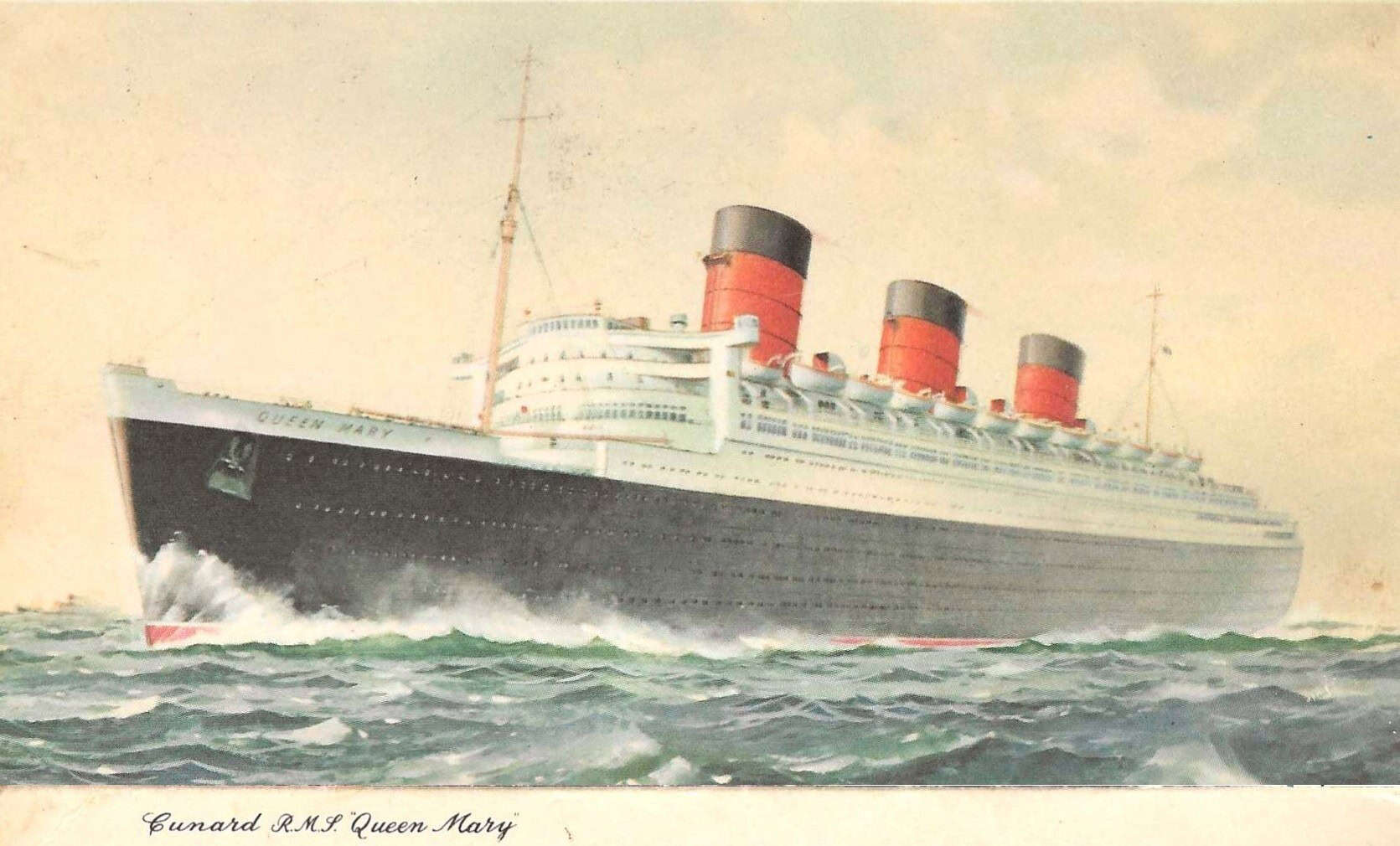
The Queen Mary took the Blue Riband for the fastest eastbound and westbound crossings from the French liner Normandie in August 1936. The Blue Riband is the accolade given to a passenger liner crossing the Atlantic Ocean with the record highest average speed. There are separate awards for eastbound and westbound crossings since the Gulfstream speeds the eastbound crossing. Normandie won the Blue Riband back in 1937 and Queen Mary wrested it back in 1938.
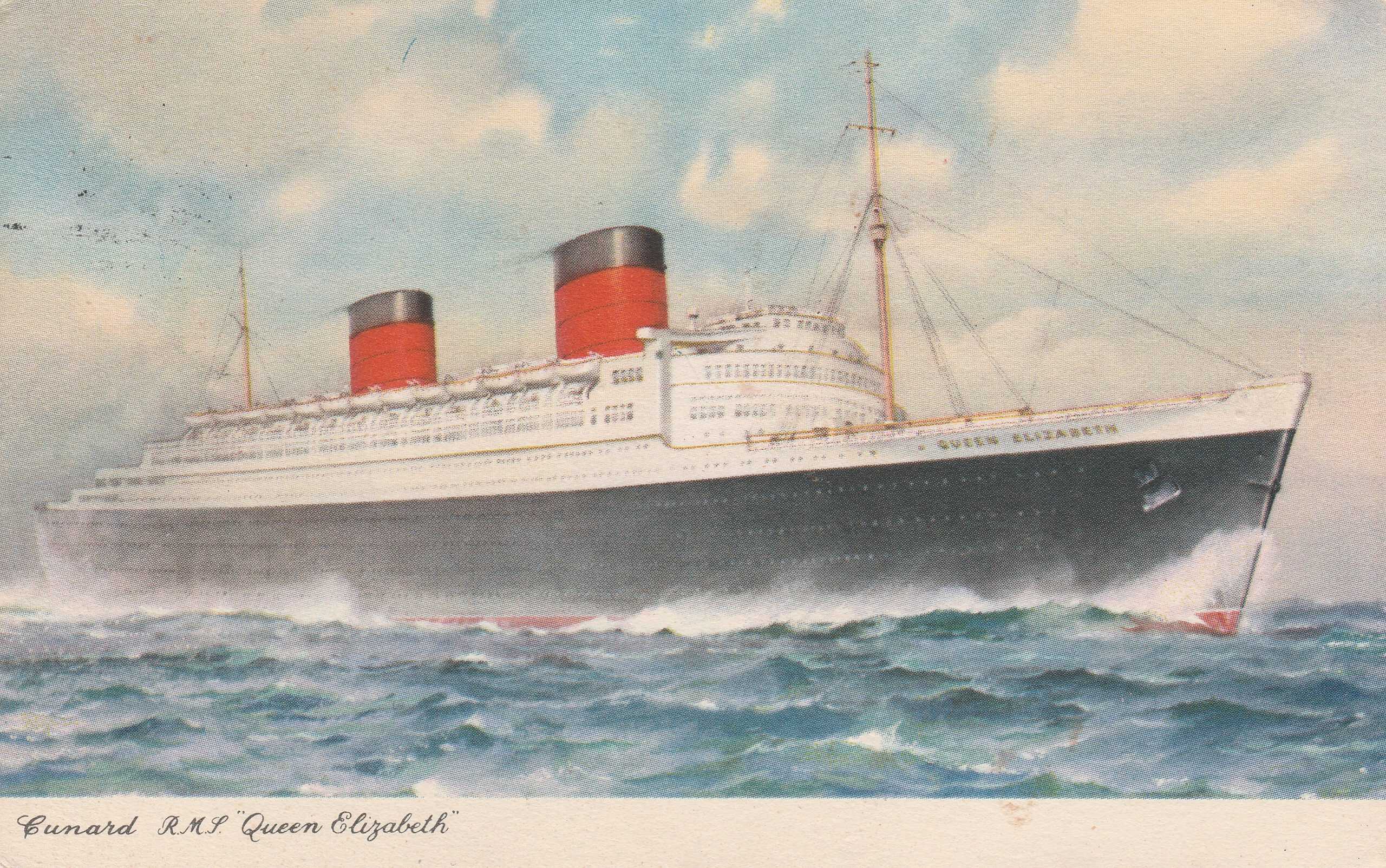
Queen Mary’s running mate, the Queen Elizabeth, was supposed to make her maiden voyage in April 1940, but World War II intervened. The Queen Elizabeth was twelve feet longer and 4,000 tons heavier than the Queen Mary. Her improved design had only twelve boilers compared to the Queen Mary’s twenty-four boilers enabling Queen Elizabeth to carry more passengers and cargo. Both Queens were capable of making over 30 knots although their usual cruising speed was 28.5 knots. During her trials, the Queen Mary achieved 32.84 knots. The Queen Mary (81,000 tons) and Queen Elizabeth (85,000 tons) along with the Normandie (83,000 tons) were the three largest ships in the world at their completion.
In late August 1939, the Queen Mary was sailing to New York when war was declared. After safely arriving in New York and disembarking her passengers (Bob Hope and his wife Dolores were among them), the Queen Mary was ordered to remain there rather than returning to England. Queen Mary’s rival, the Normandie, also opted to remain docked in New York rather than sailing home to France.
The Queen Elizabeth was launched in September 1938, was still fitting out at the John Brown Shipyard in Clydebank, Scotland when the war broke out and had never put to sea for her trials. Fearing attack by German bombers, the British Admiralty ordered her to sail to New York on March 3, 1940. Arriving in New York six days later, she was docked alongside the Queen Mary and Normandie. Two weeks later, the Queen Mary sailed to Sydney, Australia to begin conversion to a troopship. The three great liners were never docked together again.
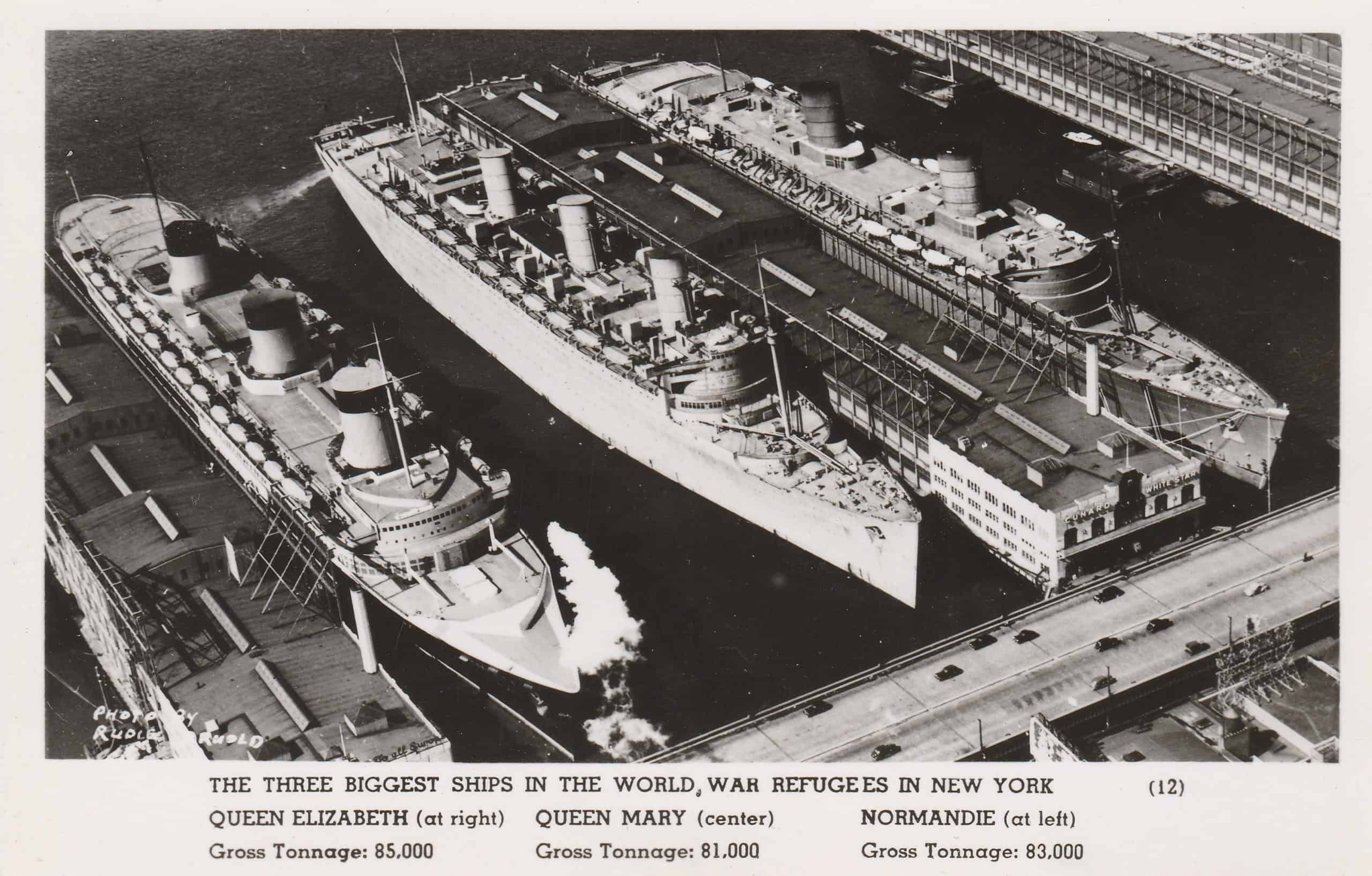
After the Japanese attack on Pearl Harbor, the U. S. government seized the Normandie for conversion to a troopship. Renamed the USS Lafayette, sparks from a welder’s torch set fire to a stack of flammable life vests on February 9, 1942. Efforts to fight the fire flooded the ship and caused Normandie to capsize. Normandie was too heavily damaged to be put back in service and was scrapped after the war. Maritime experts had predicted the rivalry for the Blue Riband between the Queen Mary and Normandie would’ve continued for a decade or longer.
Both the Queen Mary and Queen Elizabeth provided valuable service as troopships during World War II. Queen Mary carried over 800,000 troops and traveled over 600,000 miles. Queen Elizabeth carried more than 750,000 troops and sailed more than 500,000 miles. British Prime Minister Winston Churchill credited the two ships with bringing the war to an early conclusion.
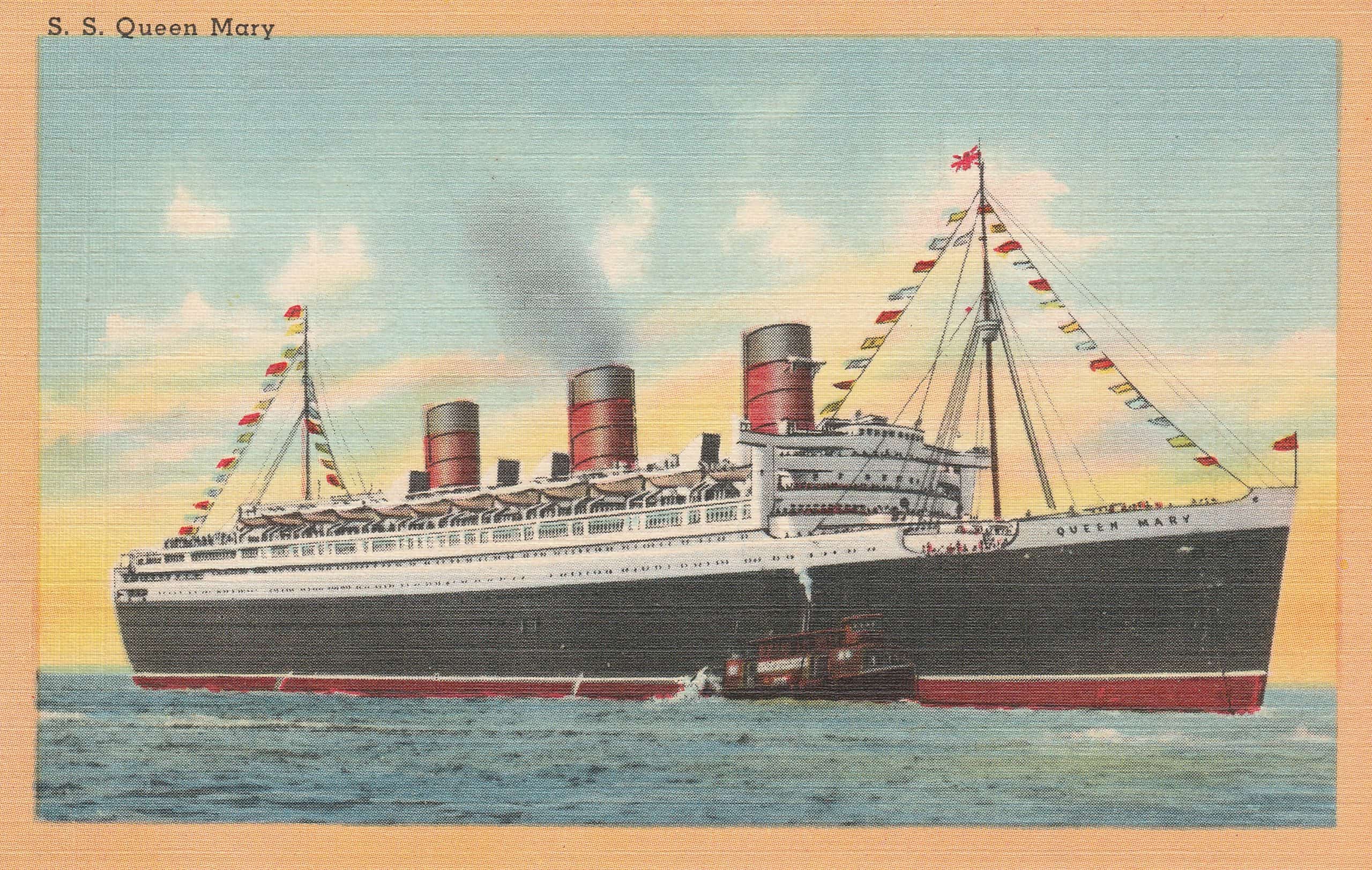
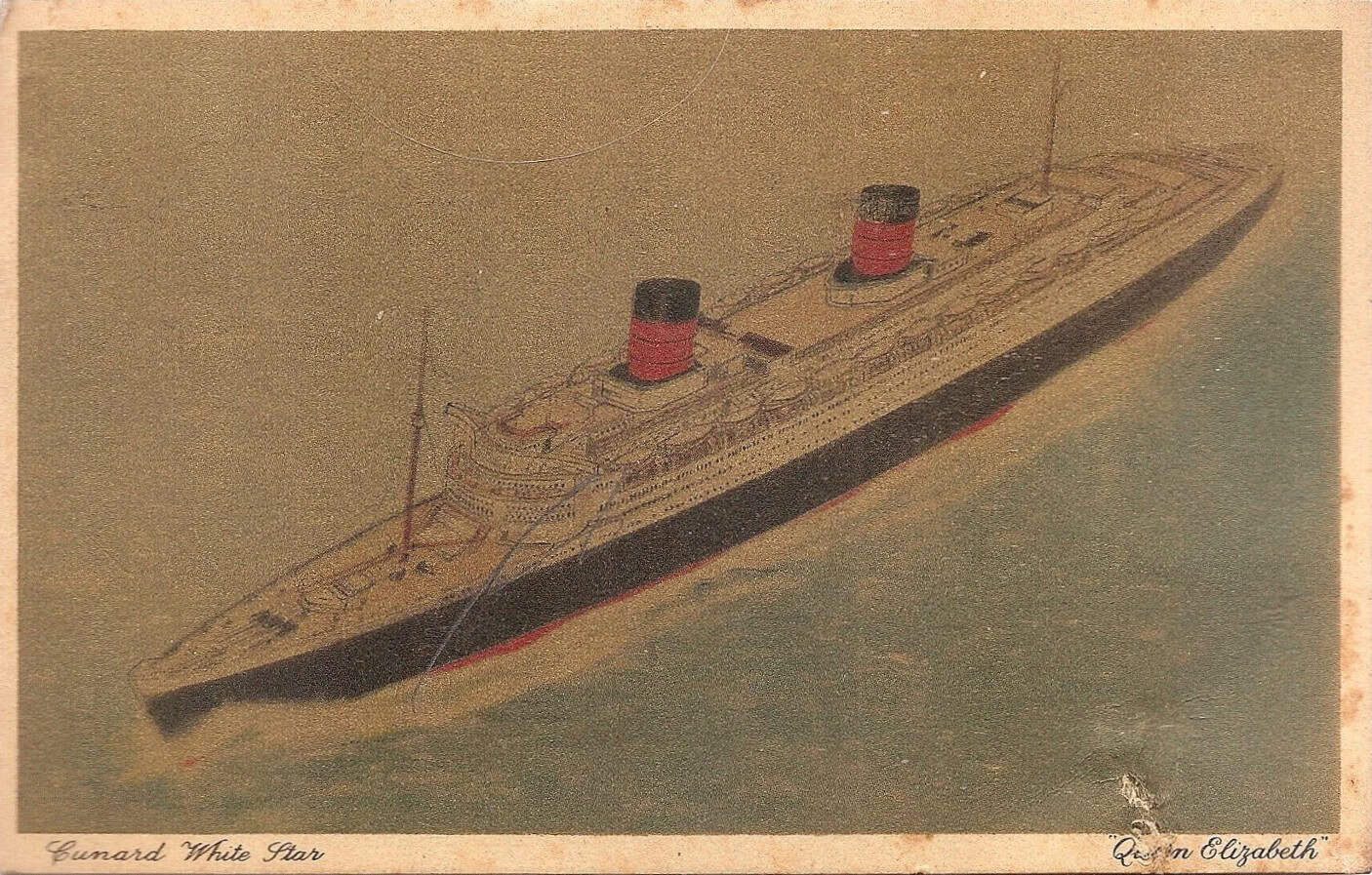
The Queen Mary and Queen Elizabeth after World War II.
After refurbishment in 1947, both Queens returned to service as ocean liners. During their glory days in the 1950s, the Queen Mary and the Queen Elizabeth dominated the transatlantic passenger business between Europe and the United States. On orders of the Cunard Line chairman, the Queen Elizabeth never challenged the Queen Mary for the Blue Riband although her improved design made her the faster ship. In 1952, a new liner, SS United States took the Blue Riband from the Queen Mary and never relinquished it.
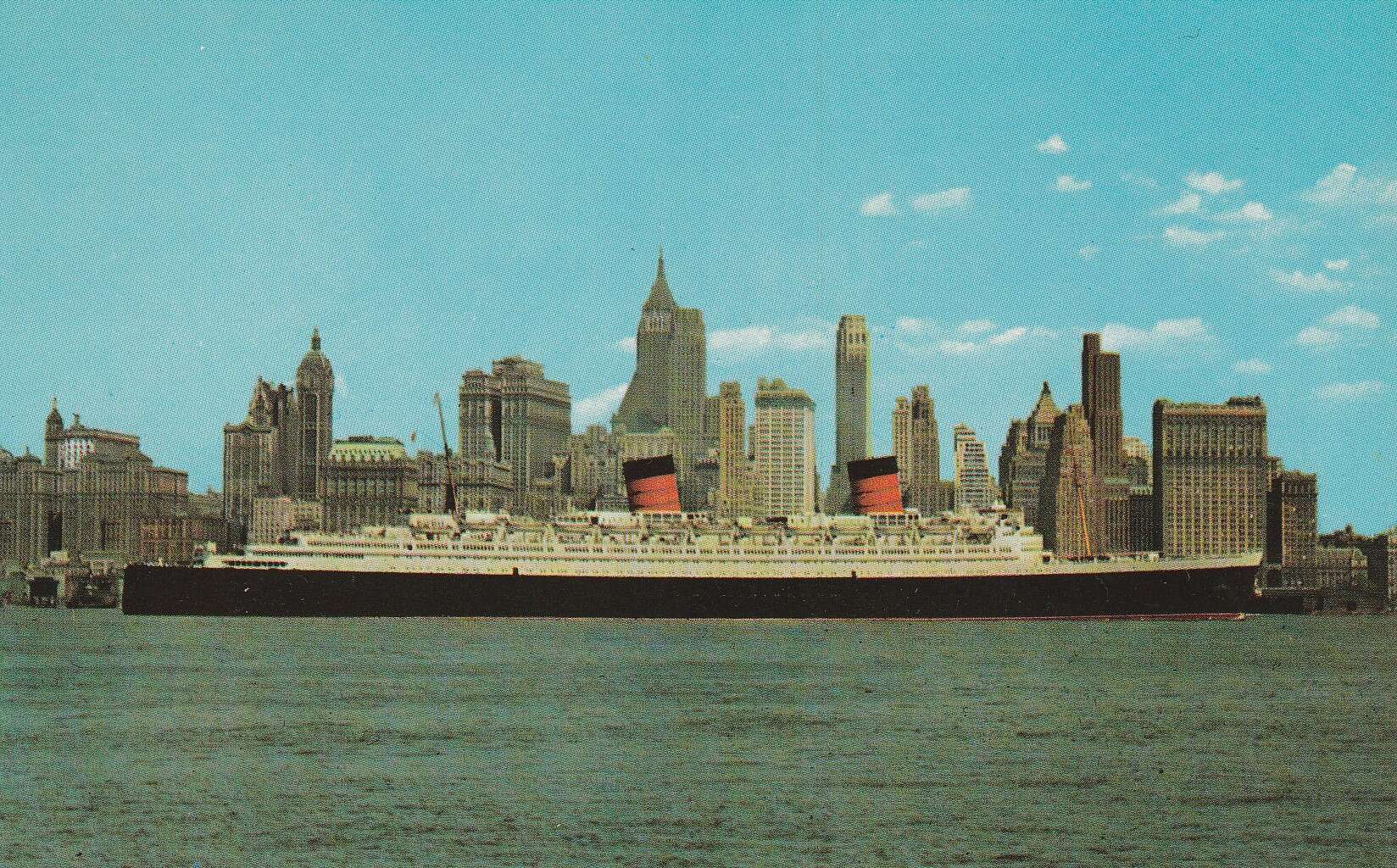
The Queen Mary retired from service in the fall of 1967 due to her age, high operating costs, and competition from more economical jet fares. She left Southampton on October 31, 1967, with 1,093 passengers, for her new home in Long Beach, California. Sailing around Cape Horn (her beam of 118 feet was too wide for the 110-foot locks of the Panama Canal), she arrived in California on December 8, 1967. Since 1971, the Queen Mary has served as a hotel, event center, and museum.

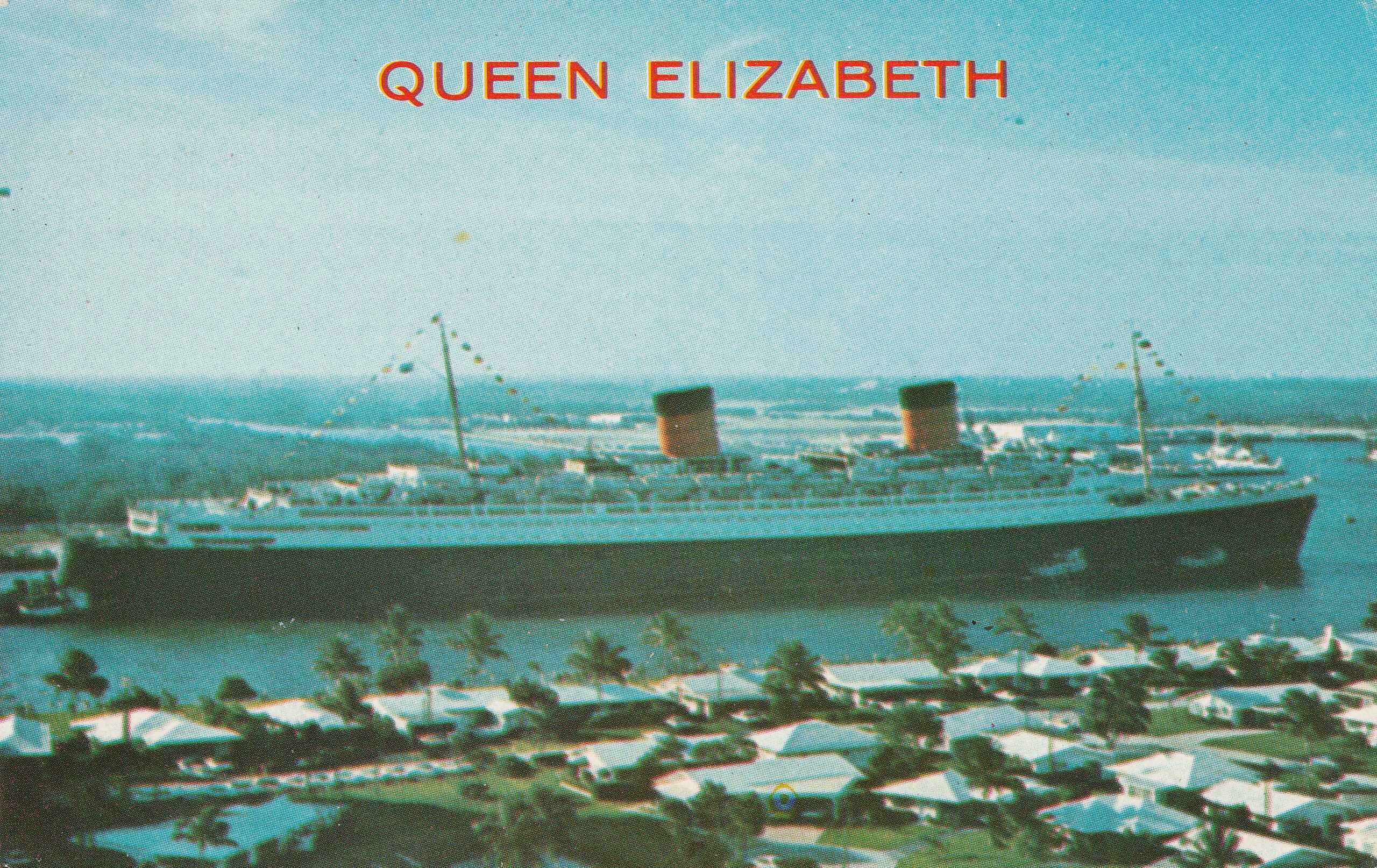
The Queen Elizabeth made her final Atlantic voyage in November 1968 and retired from service for the same reasons as the Queen Mary. After her retirement, the Queen Elizabeth was converted to a floating hotel in Port Everglades, Florida in 1968. The venture was unsuccessful and closed in 1970. She was sold to a Hong Kong businessman to house Seawise University. She arrived in Hong Kong in July 1971 and began her conversion to a floating university. In January 1972 the ship caught fire and rolled over on its side due to the water sprayed on the fire. Arson was suspected since the fire broke out simultaneously in several places aboard ship. The wreck was later salvaged for scrap but almost half still lies underwater in Hong Kong harbor.
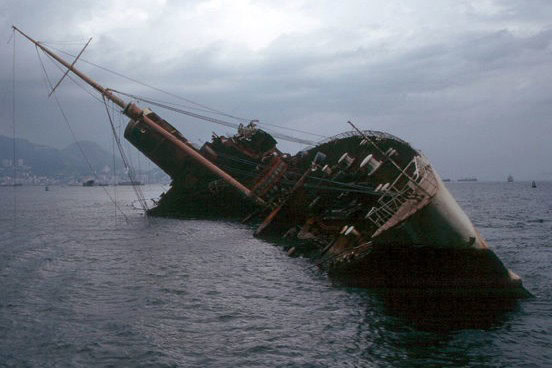
(photo added by PCHistory)
A postcard mailed from Southampton in July 1947 by Betsy, a passenger on the Queen Elizabeth, to her friend Frances in Connecticut summed up the glory days of ocean liners crossing the Atlantic. She wrote, “The trip over has been marvelous. The ship is enormous and absolutely gorgeous. The service is out of this world.”
Splendid article Daniel which brought back many happy memories. I remember I remember crossing over the Solent by ferry and some of the passengers had booked to have a trip from Portsmouth to Southampton to see the Queen Mary,well I told those people I could see the Queen Mary anchored off Cowes. Apparently she had made a fast crossing of the Atlantic and arrived 9hours early so had anchored off Cowes waiting for high tide. In the good old days my parents and I frequently holidayed in Portsmouth and obtaied passes from Cunard to look round both the Queen Mary… Read more »
Such an elegant way to travel! My daughter and I made the crossing on the QE2 in 2019. We went from Southampton to Brooklyn in 7 days. Everyone was carrying around a book. The library was one of the most popular spots on the ship. They turned the clock ahead one hour each night, so when we arrived in Brooklyn, we were rested and in the right time zone. Highly recommend it and affordable way to travel considering that the crossing felt like a special vacation.
Thanks for this excellent article!
The S.S. United States being taken to its final resting place in Florida to be sunk off the coast. Rather sad site for a grand ship!
https://youtu.be/XLPLlKVR_l4?feature=shared