In medieval England, sports weren’t just reasons to stay active — they were a prime opportunity for nobles to show off, peasants to get muddy, and everyone else to have a good time. These activities weren’t just entertainment reserved for Sunday afternoon; they were social events or demonstrations of skills learned at a special academy, however such events were held as an excuse to see who could hit the target or knock over the most stuff. Among the most popular Old English sports were archery and bowls. Falconry, rushing the quintain, and jousting were competitive events held in regal settings, and wherever there was an accessible river or lake, water tournaments were a frequent pastime that never seemed to disappoint.
Most old sports like these, illustrated in the Raphael Tuck & Sons “Oilette” set entitled “Old English Sports” Series #7018, are fascinating insights into medieval life. They reveal a society that valued skills as well as leisure activities that exhibited dual purposes, training and entertainment. These sports often shaped the physical and social fabric of the time, and they laid the groundwork for many modern recreational pursuits.
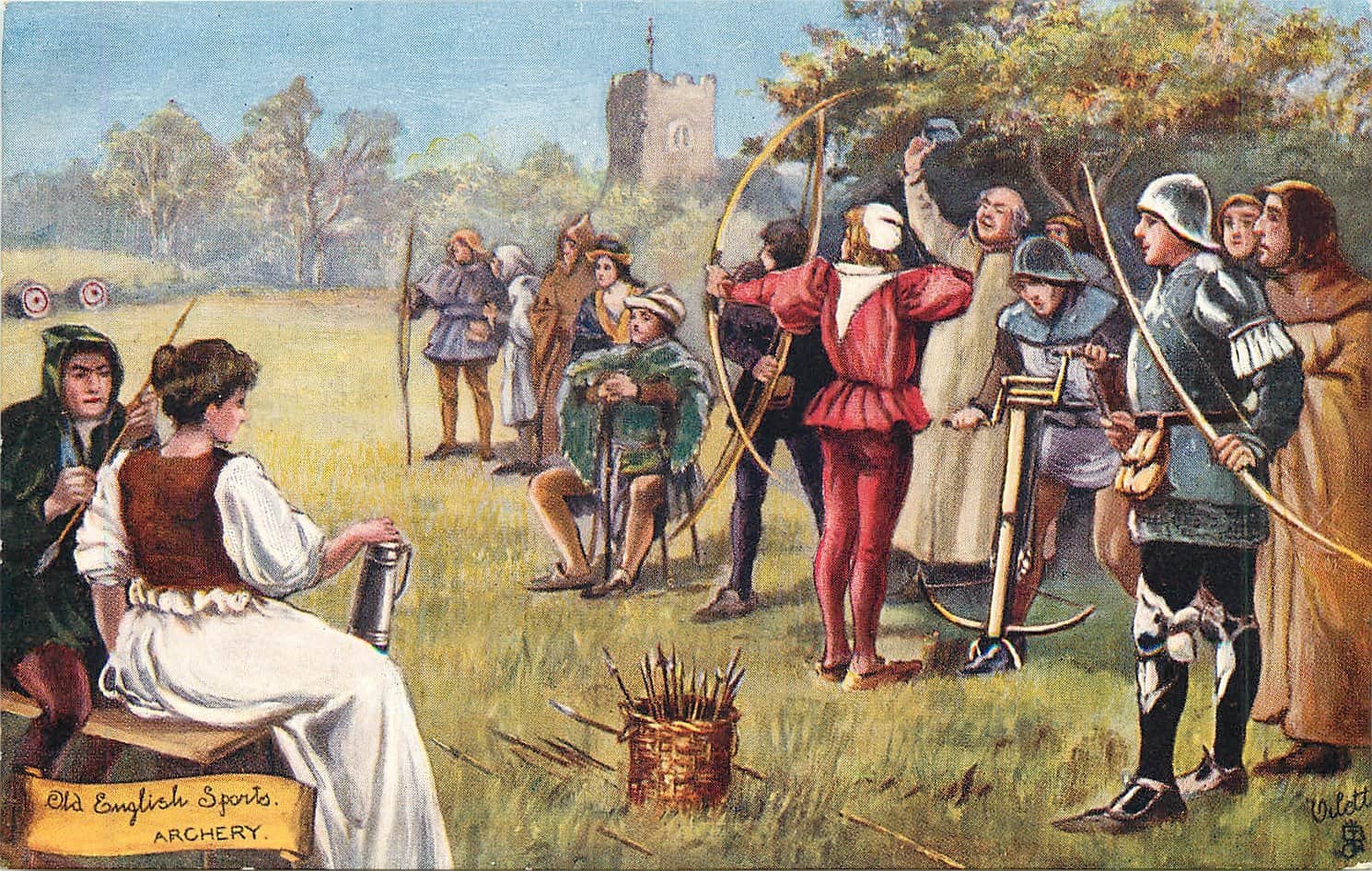
Archery was one of the most prominent sports in medieval England, especially after the enactment of the “Assize of Arms” which established in 1181 during the reign of King Henry II, requirements that even commoners must practice the skill for national defense. It aimed to ensure that all freemen in England were prepared to serve in the king’s military forces. This decree was part of Henry’s broader efforts to strengthen royal authority and create a more organized and loyal military force.
The famous English longbow that was capable of shooting arrows great distances, became a symbol of national strength, in sport and in war, especially during the Hundred Years’ War at the Battle of Crécy. Archery contests, often held during royal festivals, fostered national pride because beyond its military importance, archery competitions were popular among participants of all ages.

Bowl-playing or lawn bowls, has ancient origins and was popular among the nobility and common folk alike. Never was a game played that didn’t draw a crowd. In Old England, bowls was typically played in open fields and involved rolling heavy balls towards a smaller target, called a “jack.” The stakes amounted to little more than bragging rights. The game required precision and control, making it a favored pastime during village festivals and gatherings. Its leisurely pace contrasted with more martial sports but still demanded skill and concentration, making it both a social and competitive activity.
While in play in open fields, it was a game of skill, patience, and trying not to roll your ball into a muddy puddle. It was perfect for villagers, who liked to relax after a hard day of, well, whatever peasants did. The game was social, competitive, and sometimes resulted in minor disputes that only ended when someone’s neighbor finally threw a rock or a well-aimed insult.
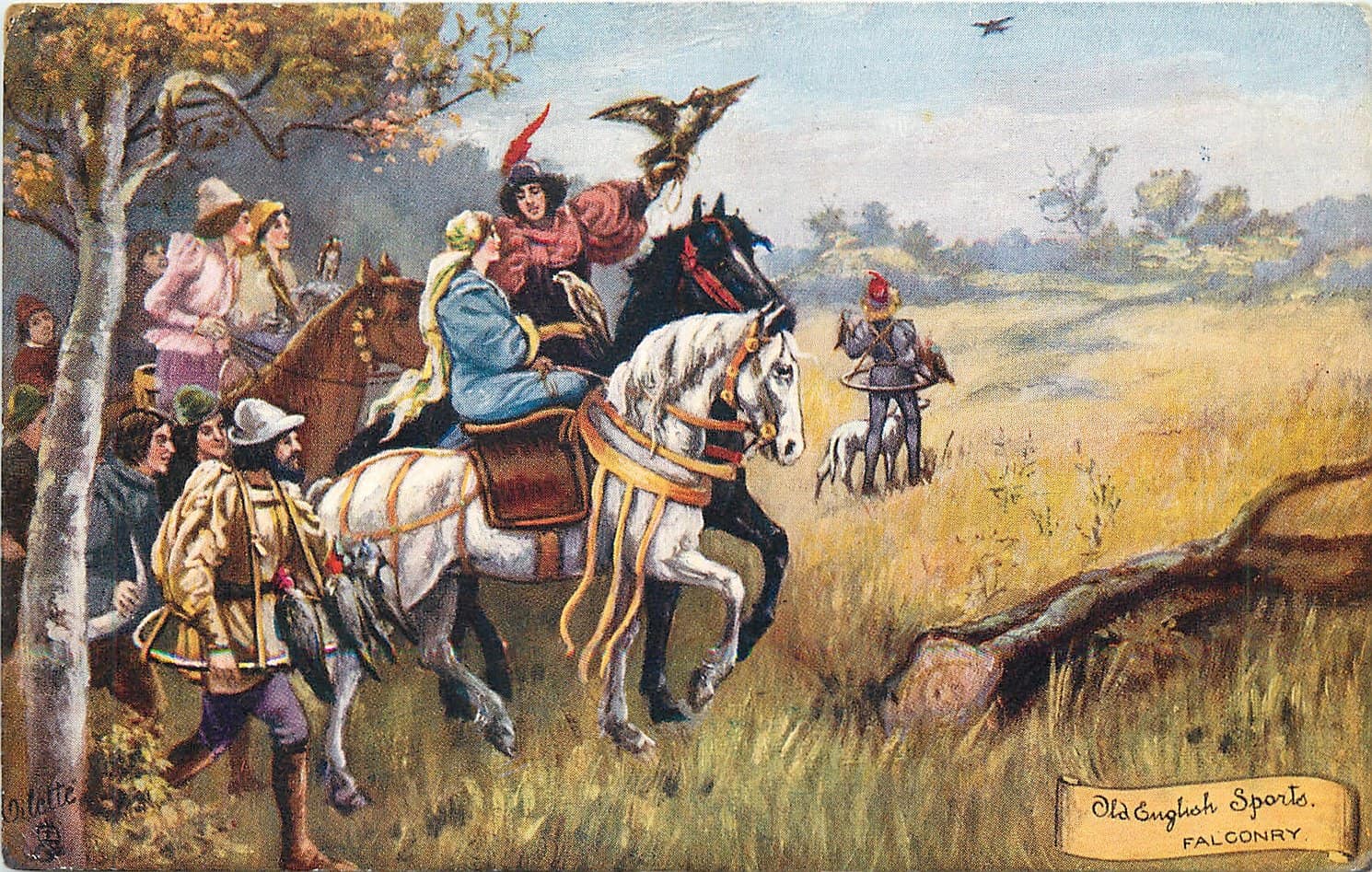
Falconry was a prestigious sport reserved mainly for nobility. It could have been called the sport of kings, but horse racing was already using that. It could also be a game for those who wanted to look important and appear wealthy, with a lot of patience, and could command animals that would probably take over the estate if they felt like it. And let’s be honest—if you could make a bird do your bidding, you probably felt pretty bossy.
Falconry was often practiced during hunting expeditions, which could last for days, and it played a significant role in the social hierarchy. It also influenced art, literature, and fashion in ways that remain uncounted. And, oh it also demonstrated a prowess that many young ladies found charming and macho.
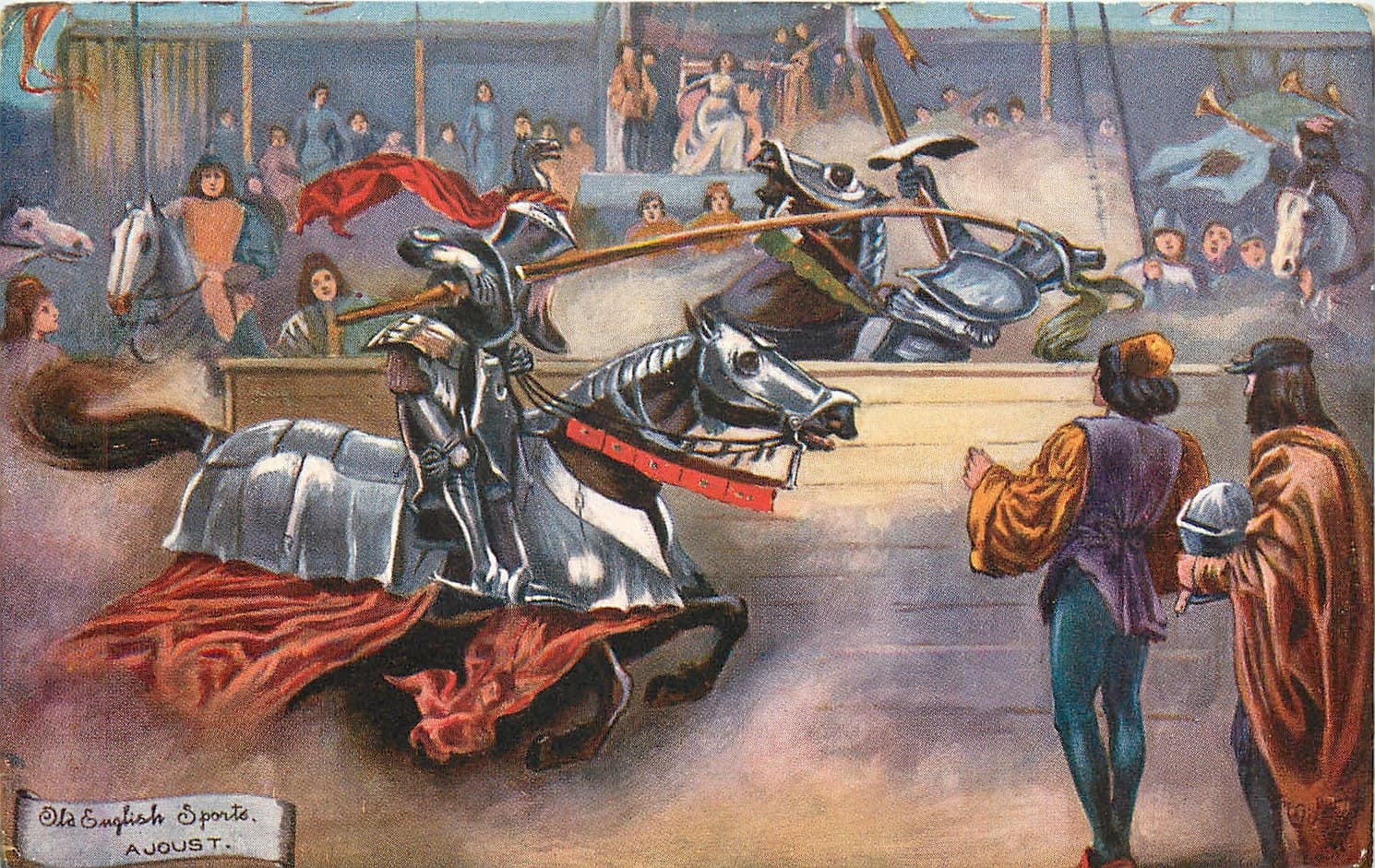
Jousting epitomized the martial aspect of medieval sports; it was medieval bumper cars with lances and a lot more splinters. Knights in shiny armor charged at each other, trying to knock the other off his horse. The average viewer would think of it as a very dangerous version of “King of the Hill.” This mounted combat involved knights on horseback charging at each other with weapons designed to create maximum damage. Jousts were grand events held during tournaments, showcasing bravery and chivalry. They also served as entertainment for the nobility and a display of martial prowess.
Jousting tournaments attracted audiences from all social classes and often included elaborate pageantry, music, and courtly rituals that enhanced the lore of medieval knighthood. The tournaments were also a chance for young knights to show off his shiny armor, his fancy horse, and his ability to stay upright after taking a lance to the helmet, however much of the glory disappeared after one was bettered by his opponent and finished his day with a face full of dirt, a split-lip or worse.
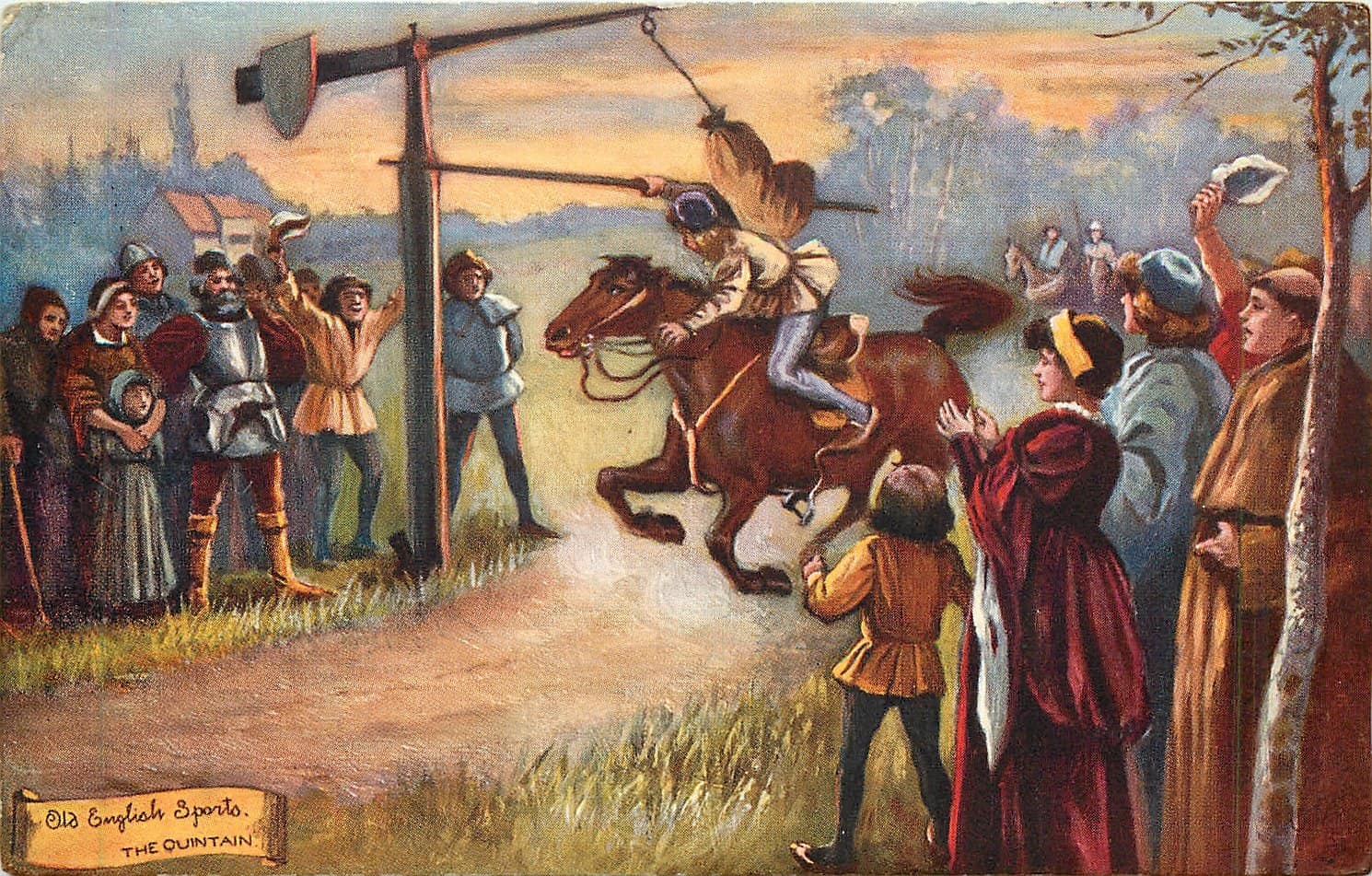
The Quintain was a training device used primarily by knights to hone the horsemanship and combat skills they would need to become an aspiring warrior. Training device, yes but it soon became a main attraction. It consisted of a target or dummy mounted on a pivot, which swung or spun when struck by a lance or sword. Participating in quintain practice helped knights improve their aim and coordination, essential qualities.
Quintains were often set up in castle courtyards or training grounds and were a staple of martial training. Their use highlights the importance of combat readiness in medieval society.
Historians have dubbed the quintain a medieval version of a punching bag. The difference being that instead of punching, you swung swords at it, hoping not to miss and hit your own foot. For young knights in training, practicing using a quintain was a chance to use their weapons and gave them a chance to practice their “watch this Ma, look what I can do” skills.
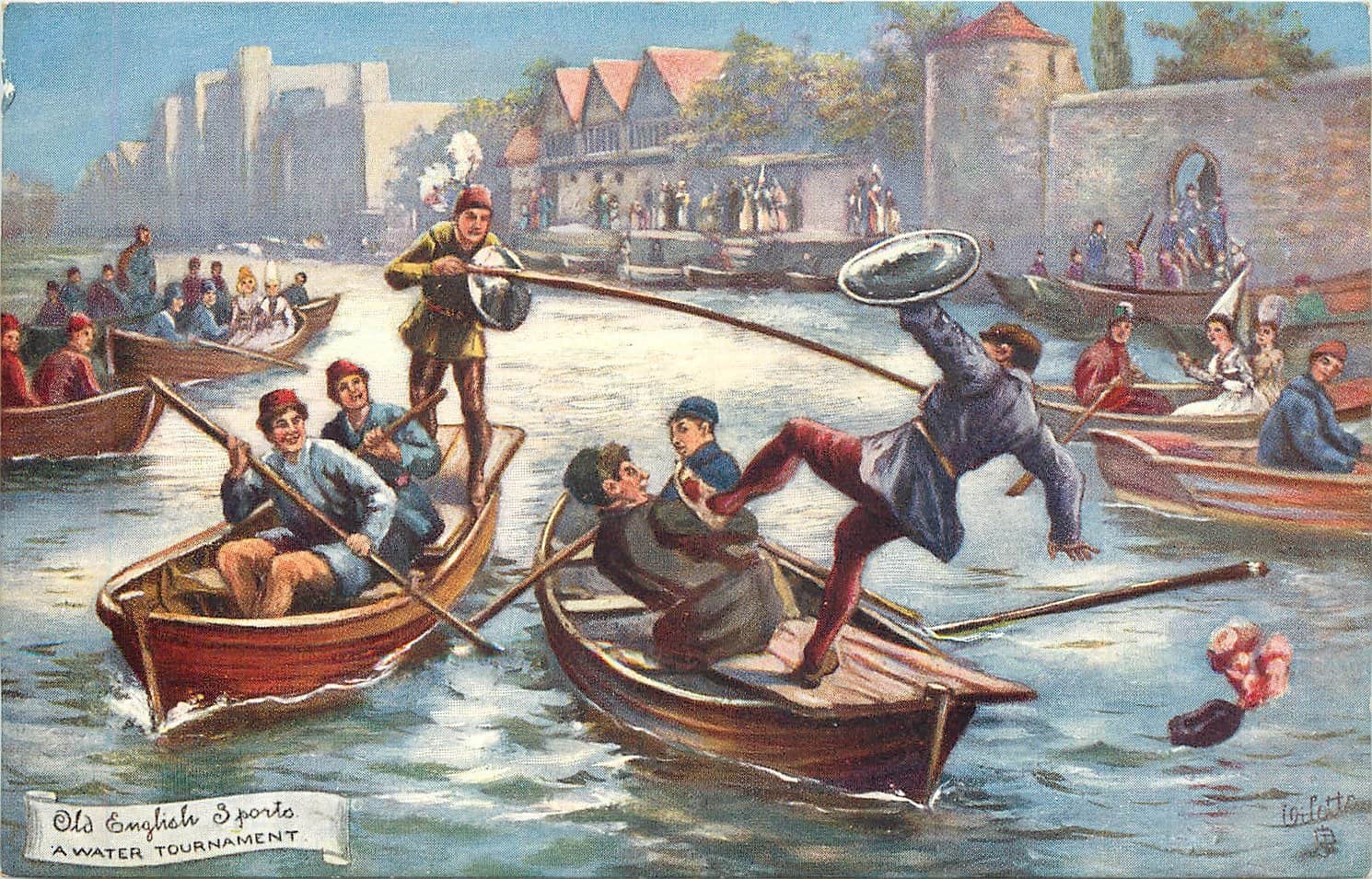
During their medieval years, old England had water tournaments every summer especially in regions with accessible rivers and lakes. Events, like boat races, swimming competitions, and various forms of water jousting always drew onlookers who came to see someone get wet. Boat jousts, where combatants atop boats would attempt to unseat each other with poles, were the most popular. (In many parts of the country and throughout Europe, towns and cities would actively recruit teams to enter competitions on large nationally known rivers. The internation competitions often drew crowds numbering in the thousands.)
In medieval times, when the water sports concluded, it was then that the “silly season” began. There was always a royal personality who was good-natured enough to wonder into the river and scream, “Splash-Me-‘til-I Drown.” The game began when the challenger yelled the challenge and ended only after being still afloat while being splashed with water by a bunch of rowdy peasants.
Water tournaments always took place along river edges and lake shores, where everyone could cheer on their favorite team or just laugh after seeing someone fall into the water. They were a mix of athleticism and slapstick comedy. Every tournament demonstrated that medieval folks knew how to have a splashin’ good time.
This was an interesting look at some sports I had never heard of before now.