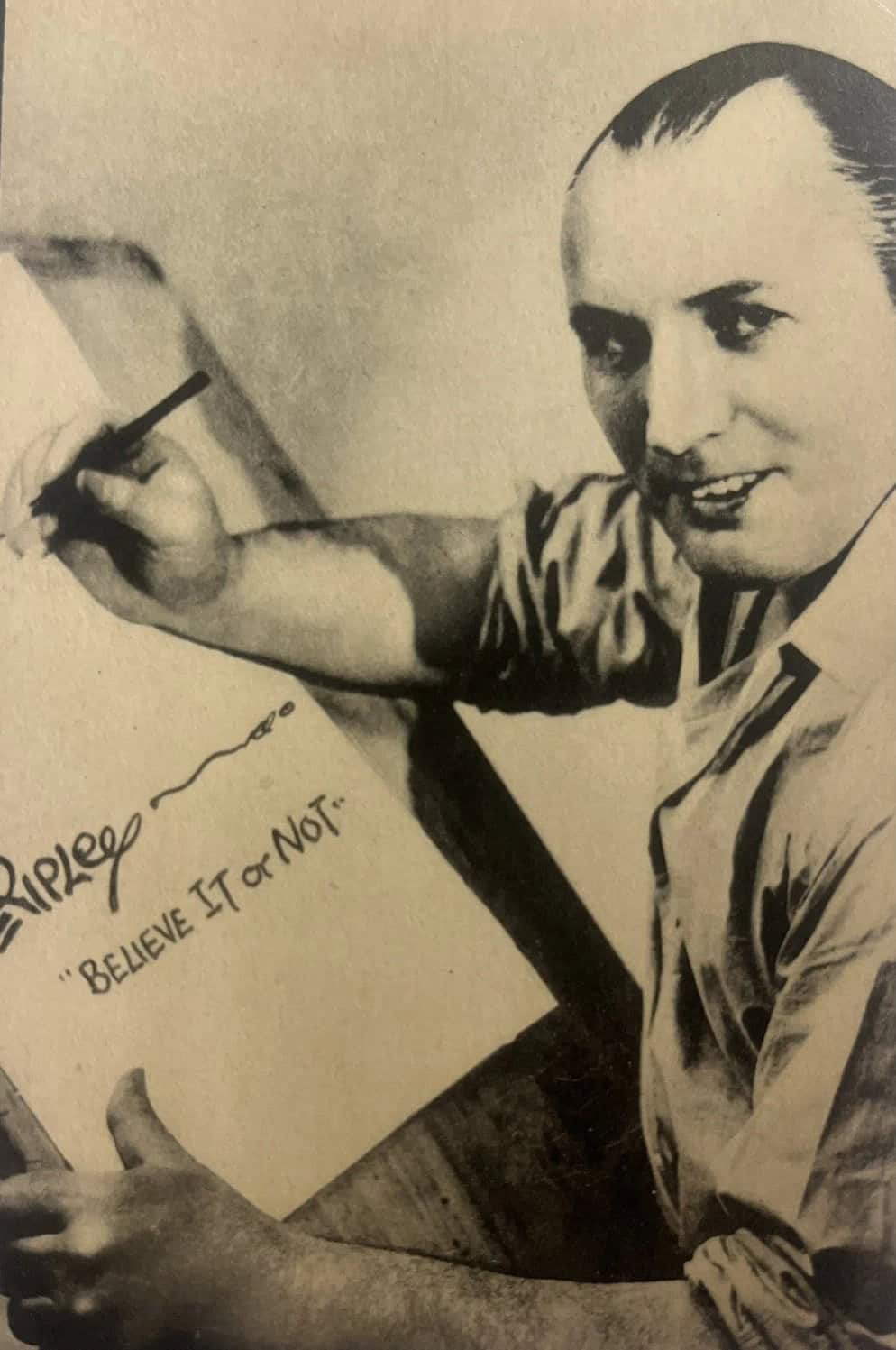
LeRoy Robert Ripley was born in 1890, but Robert L. Ripley claimed, on different occasions, that he was born in 1892, 1893, or 1894 (either he didn’t know when he was born or couldn’t remember). LeRoy Robert Ripley was born February 22, but Robert L. Ripley said he was born on Christmas Day.
Whatever may be true, “Believe It or Not!” everyone agrees on when and where he died – it was May 27, 1949, in New York City.
No one knew, except LeRoy Robert Ripley, why he did not pursue his dream career in major league baseball, but Robert L. Ripley was an American cartoonist and amateur anthropologist who created, a widely popular newspaper cartoon that presented bizarre facts and oddities of all kinds. At a variety of times, other parts of the franchise were television shows and radio programs that featured odd facts from around the world. Even today, the “Believe It or Not!” franchise is still widely popular and makes millions for the Ripley empire (now owned by Ripley Entertainment Inc., an entertainment company that is, in turn, owned by The Jim Pattison Group of Vancouver, Canada. The Jim Pattison Group acquired the Believe It or Not! brand in 1985).
Subjects covered in Ripley’s cartoons and text ranged from sports feats to little-known facts about unusual and exotic places. He also included items submitted by readers, who supplied photographs of a wide variety of small-town American trivia ranging from unusually shaped vegetables to oddly marked domestic animals, all documented by photographs and then depicted by his drawings.
Ripley’s journey into the world of the bizarre began in the 1920s when he was working as a sports cartoonist for newspapers. During his travels across the United States and abroad, he became intrigued by oddities and peculiar stories that he documented in his cartoons. His curiosity for uncovering bizarre facts led him to compile these stories into a newspaper panel titled “Believe It or Not!” The cartoon quickly gained popularity for its amusing and astonishing content, encouraging readers to question what they thought they knew about the world.
The first of the Ripley’s Believe It or Not cartoons appeared in October 1919. It gained widespread attention for its astonishing claims, and it captivated audiences with extraordinary feats and oddities. There was abundant skepticism over the publication that questioned its accuracy, but many readers were fascinated by its strange stories and unusual photographs. It quickly became a popular phenomenon, blending entertainment with curiosity, and established Ripley’s reputation as a collector of the world’s most unbelievable and strange phenomena.
Ripley moved his cartoon to the New York Evening Post in 1923 and reached national prominence in 1929, when William Randolph Hearst’s “King Features Syndicate” picked up the cartoon for syndication. It soon appeared in almost 300 American newspapers.
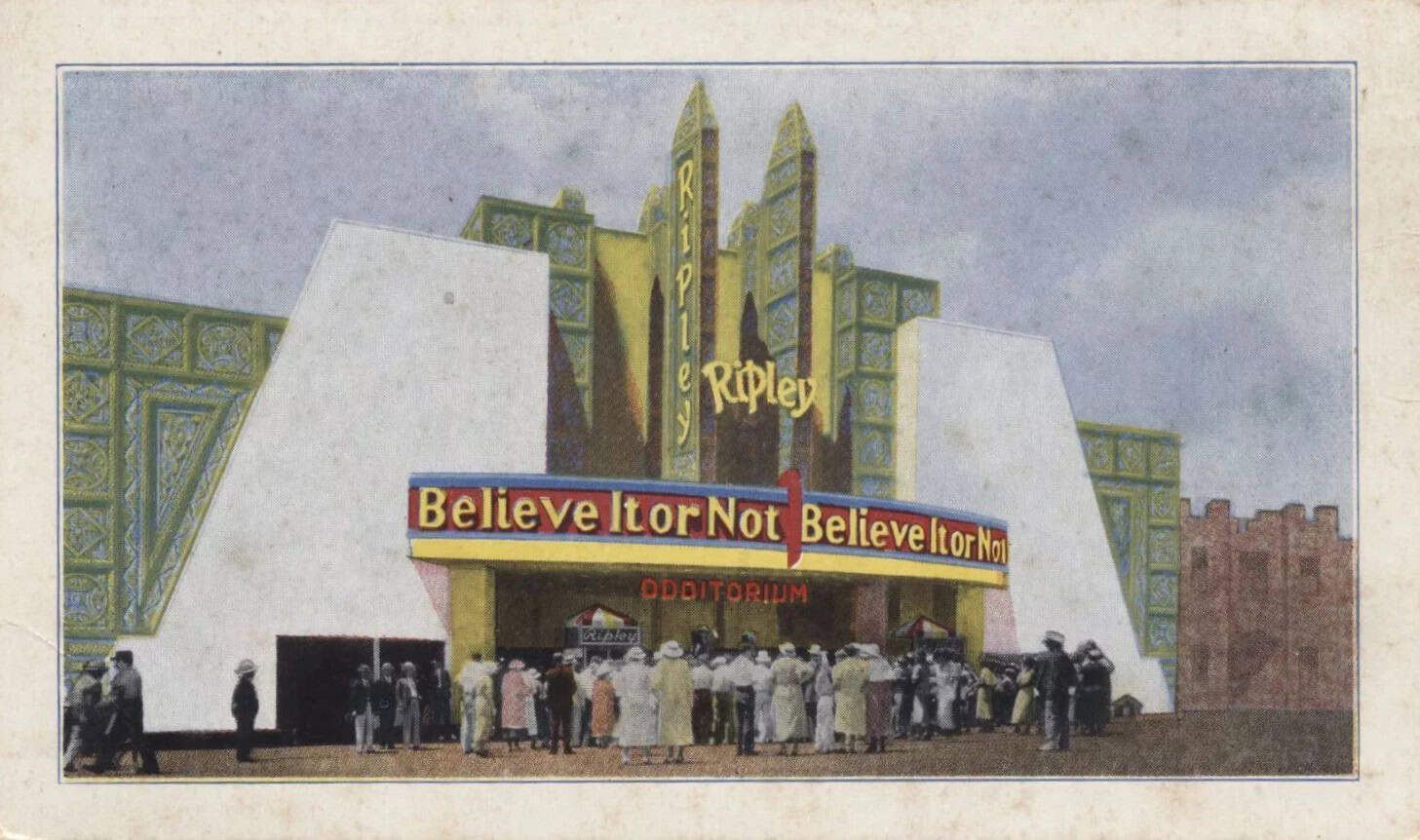
Ripley’s first book-length collection of his sketches, Believe It or Not (1929), was followed in the 1930s by others that were equally popular. He also made a series of “Believe It or Not!” film-shorts and he sponsored exhibits called “Odditoriums” where curiosities were displayed in a carnival-like atmosphere. His original cartoon was continued by others after his death in 1949.
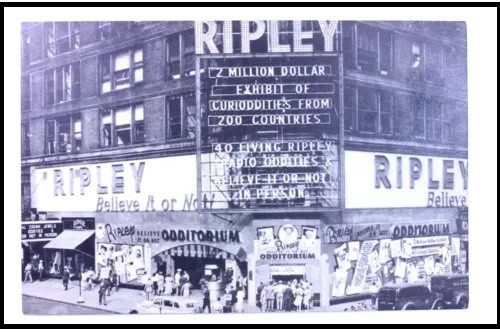
As the popularity of his cartoons soared, Ripley realized there was a demand for a physical space where fans could see these curiosities firsthand. This led to the establishment of the first “Believe It or Not” museum in 1933 in Chicago. The museum was a pioneering concept—a collection of oddities, artifacts, and displays of the strange and unusual. It was designed to entertain and educate visitors, offering a glimpse into the bizarre and extraordinary aspects of human culture and natural history.
Throughout the late-‘30s and early-‘40s, Ripley expanded his collection and opened additional museums in major cities such as New York, Los Angeles, and London. The museums showcased a wide array of curiosities, including shrunken heads, rare artifacts, strange artworks, and bizarre natural phenomena. The exhibits were carefully curated to intrigue and astonish visitors, often accompanied by Ripley’s witty commentary and storytelling. Each museum aimed to challenge visitors’ perceptions of reality and stimulate curiosity.
Ripley’s museums became more than just collections; they turned into cultural landmarks and tourist attractions. They emphasized the value of curiosity, open-mindedness, and the appreciation of diversity in human experience. Over the decades, the “Believe It or Not” brand expanded into comic books, radio shows, television series, and a franchise of museums worldwide. Today, Ripley’s museums can be found in most major cities, far-flung locations like Singapore and Tokyo.
Robert Ripley’s legacy endures and inspires new generations to explore the unknown, celebrate the peculiar, and embrace every new discovery in nature.
***
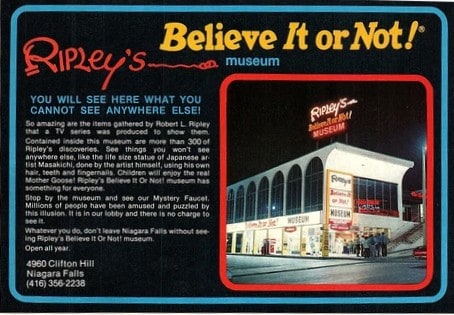
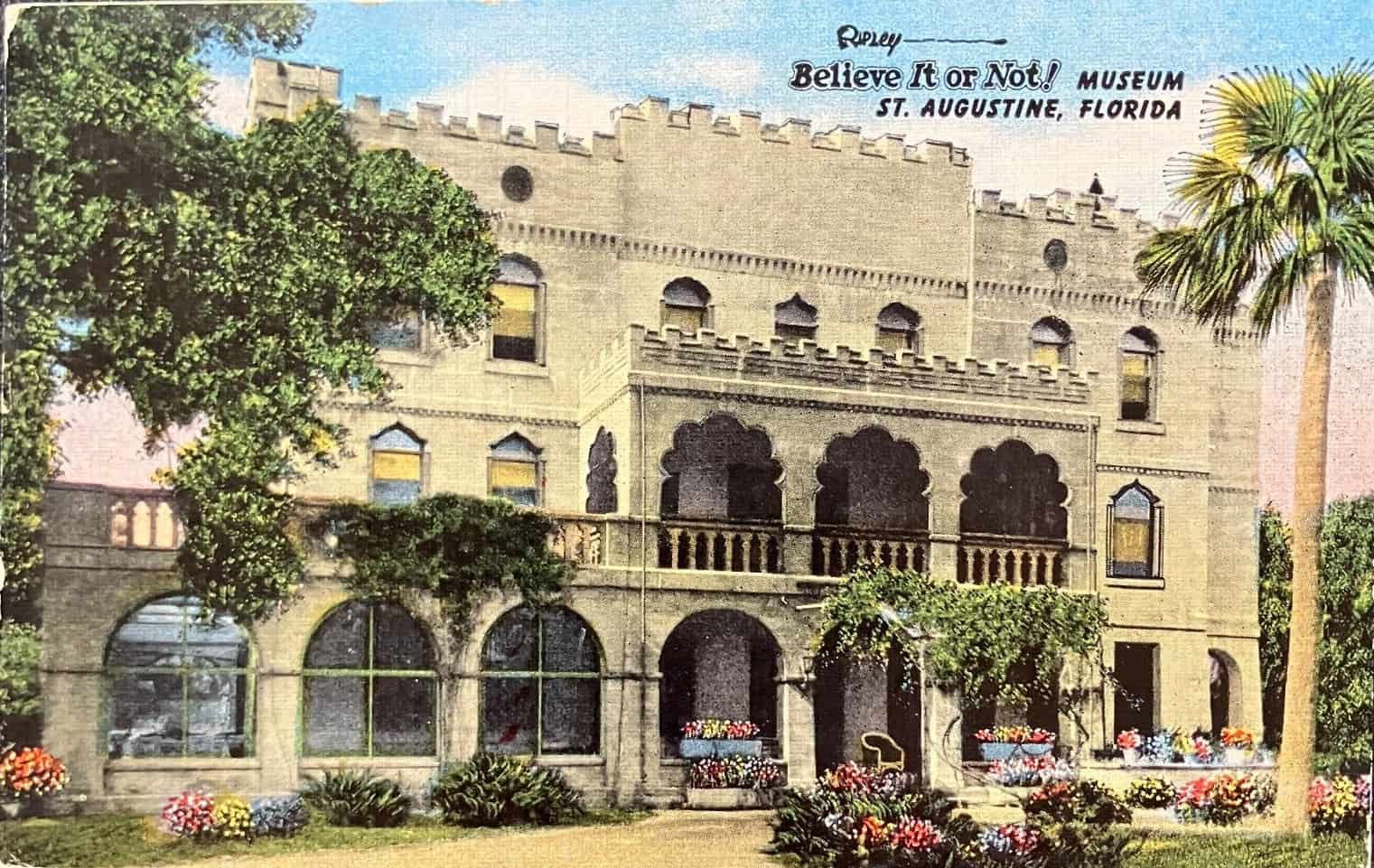
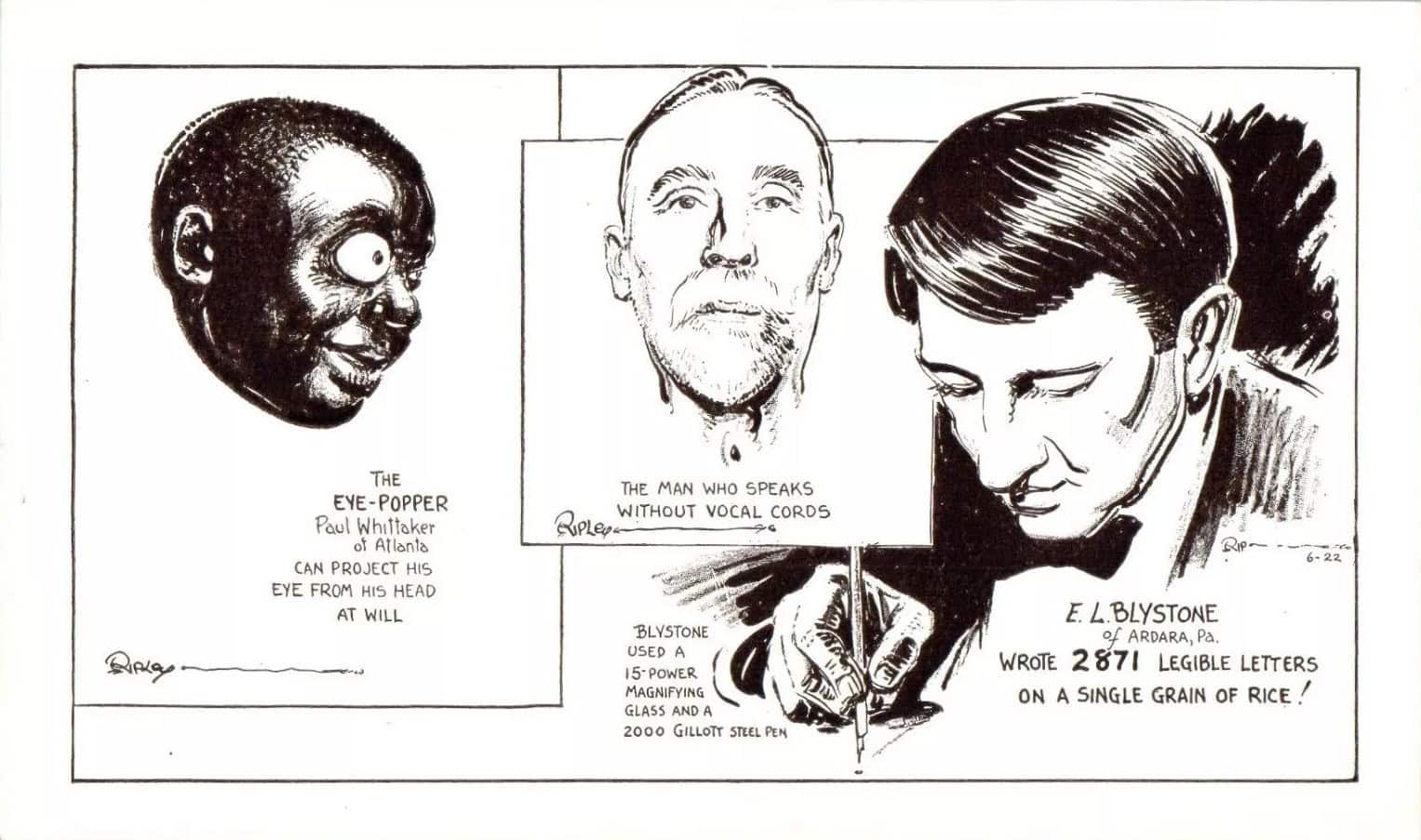
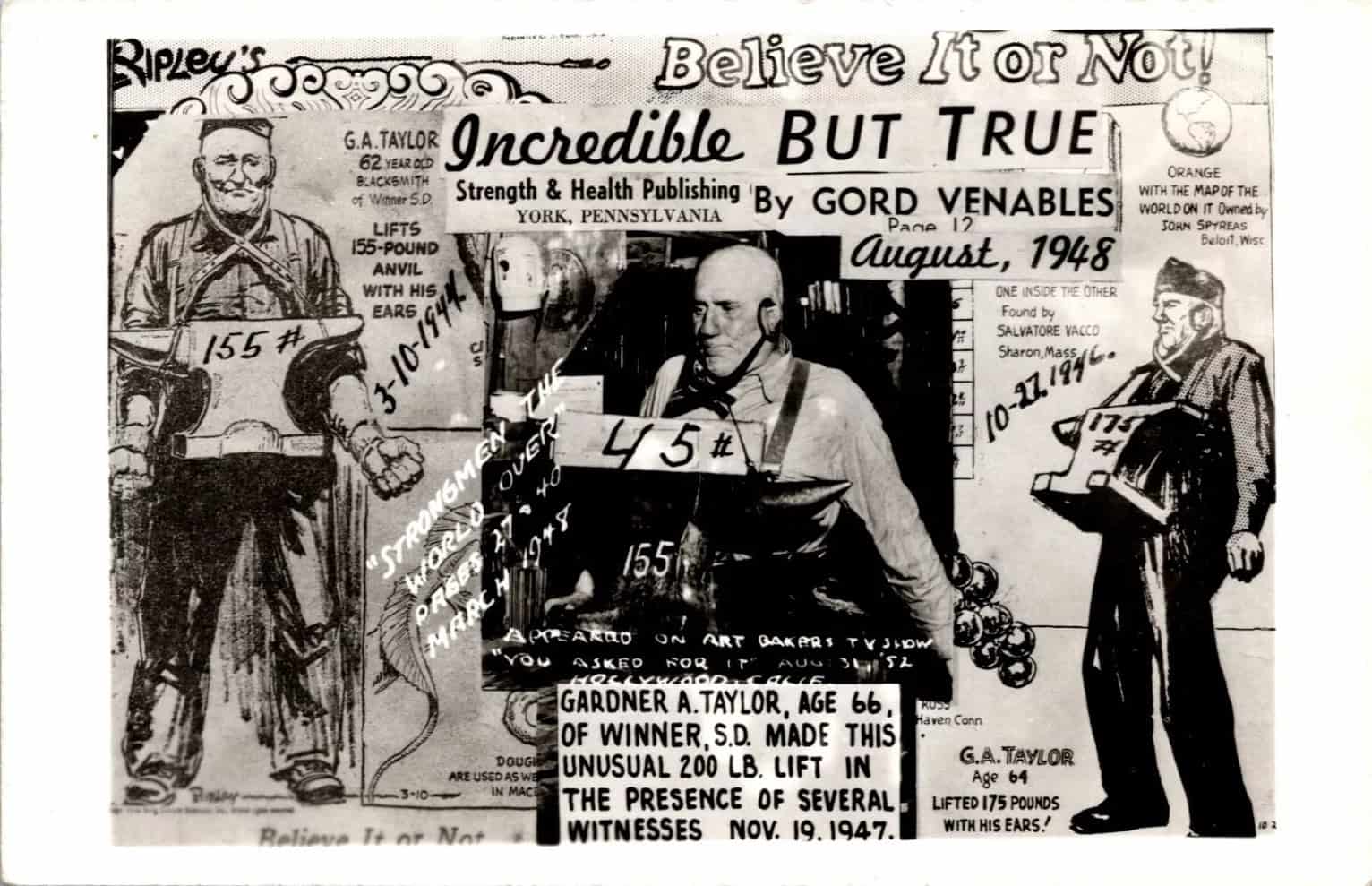
Ripley postcards seem to follow three themes: The “Odditorium,” the “Cartoon,” and the “Exhibit.”
THE MUSEUMS
THE CARTOONS
THE EXHIBITS
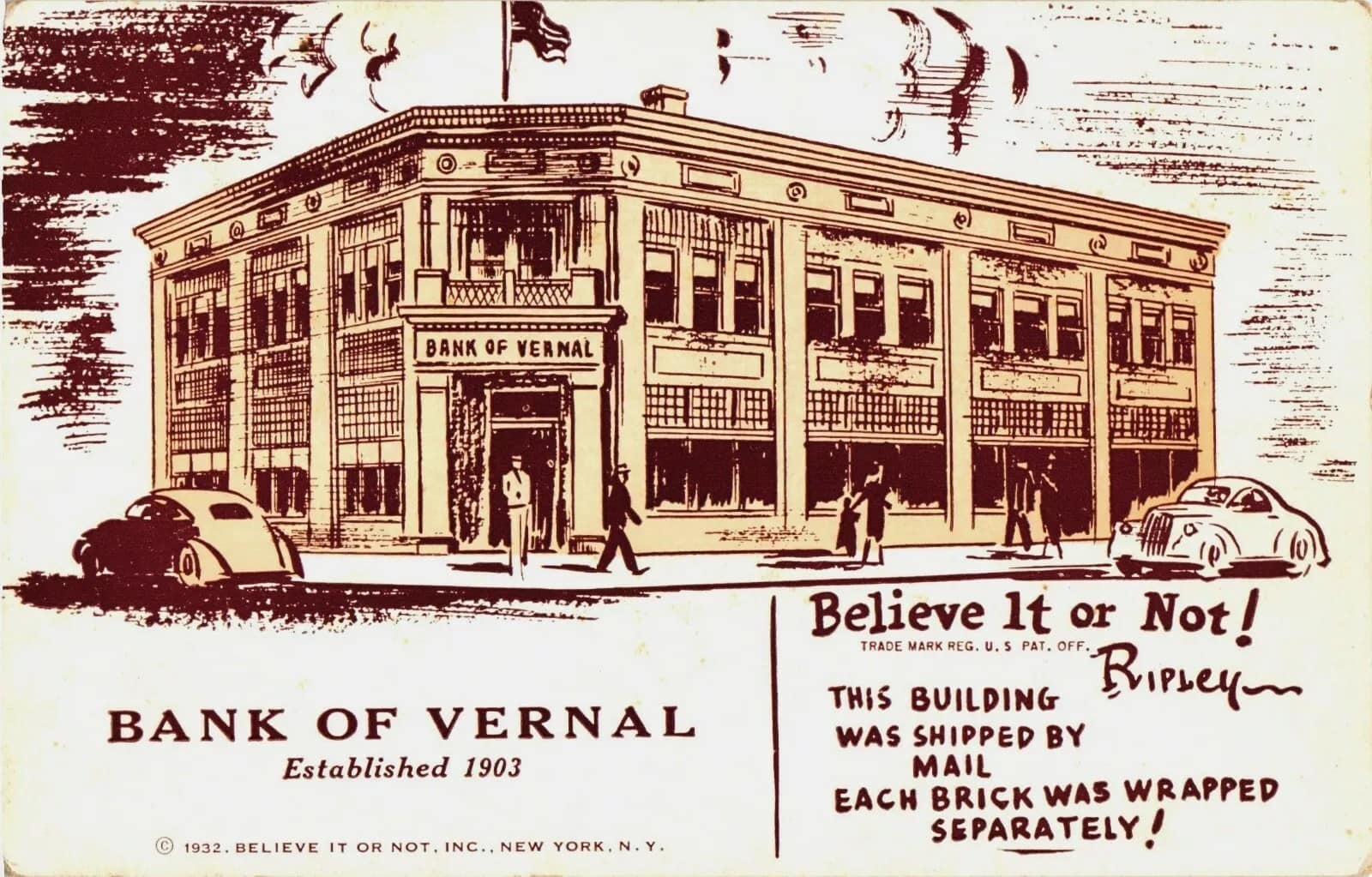
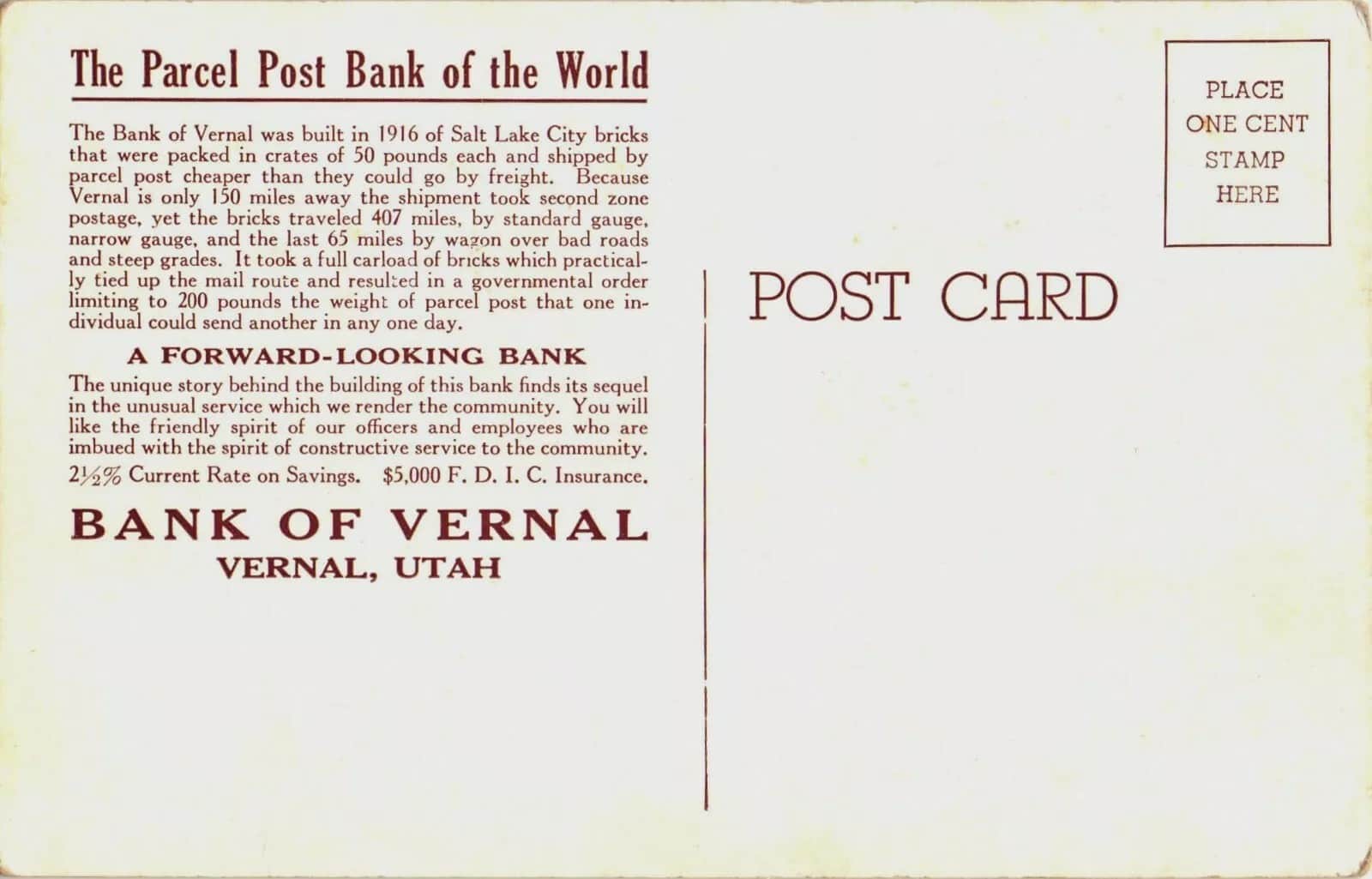
One hundred and seventy-five miles east of Salt Lake City, Utah, is the small town (just 10,400 residents) of Vernal. The bank at Vernal, Believe It or Not!, is the only known building in the world that was built with bricks that were mailed to the construction site.
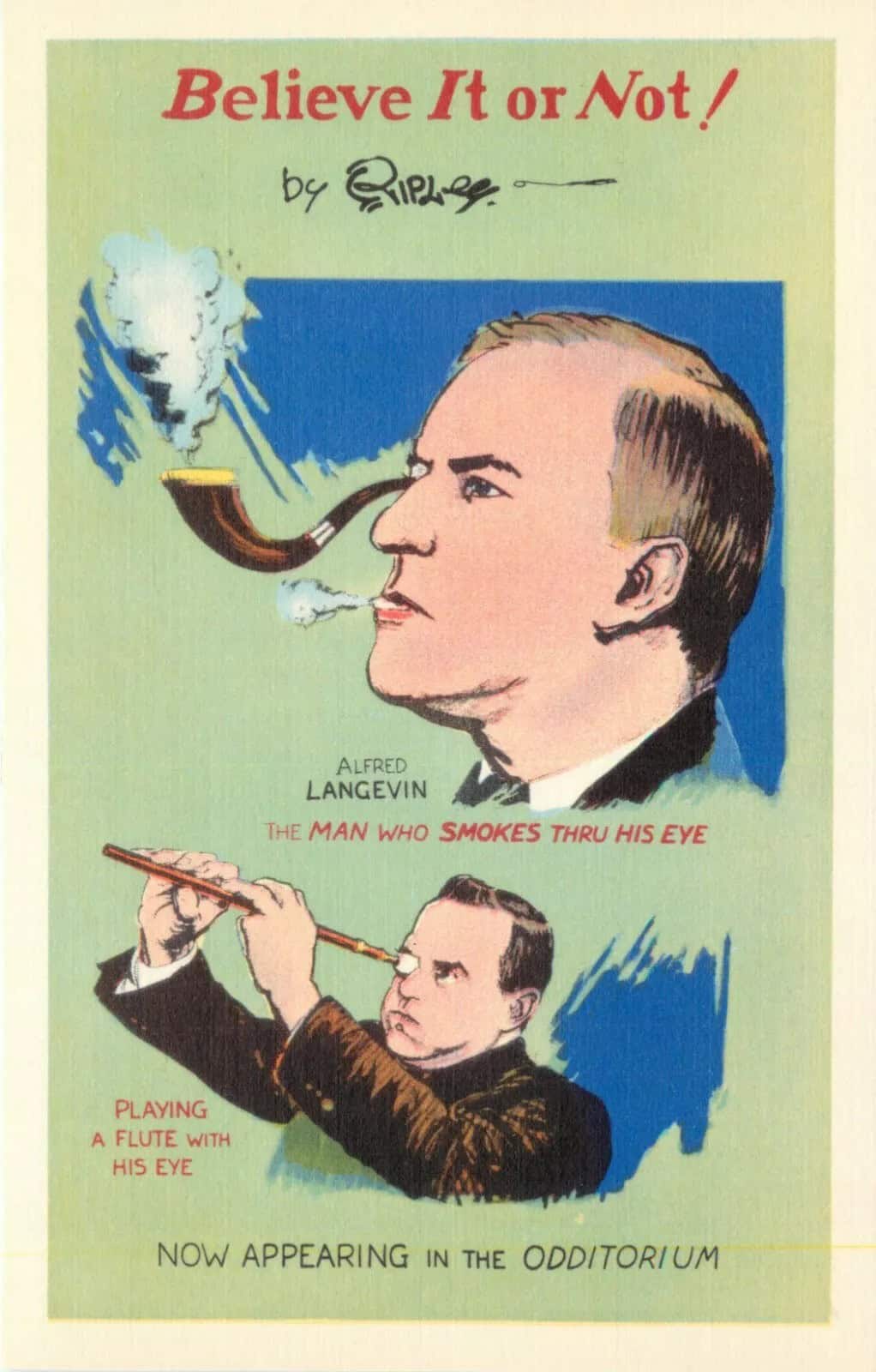
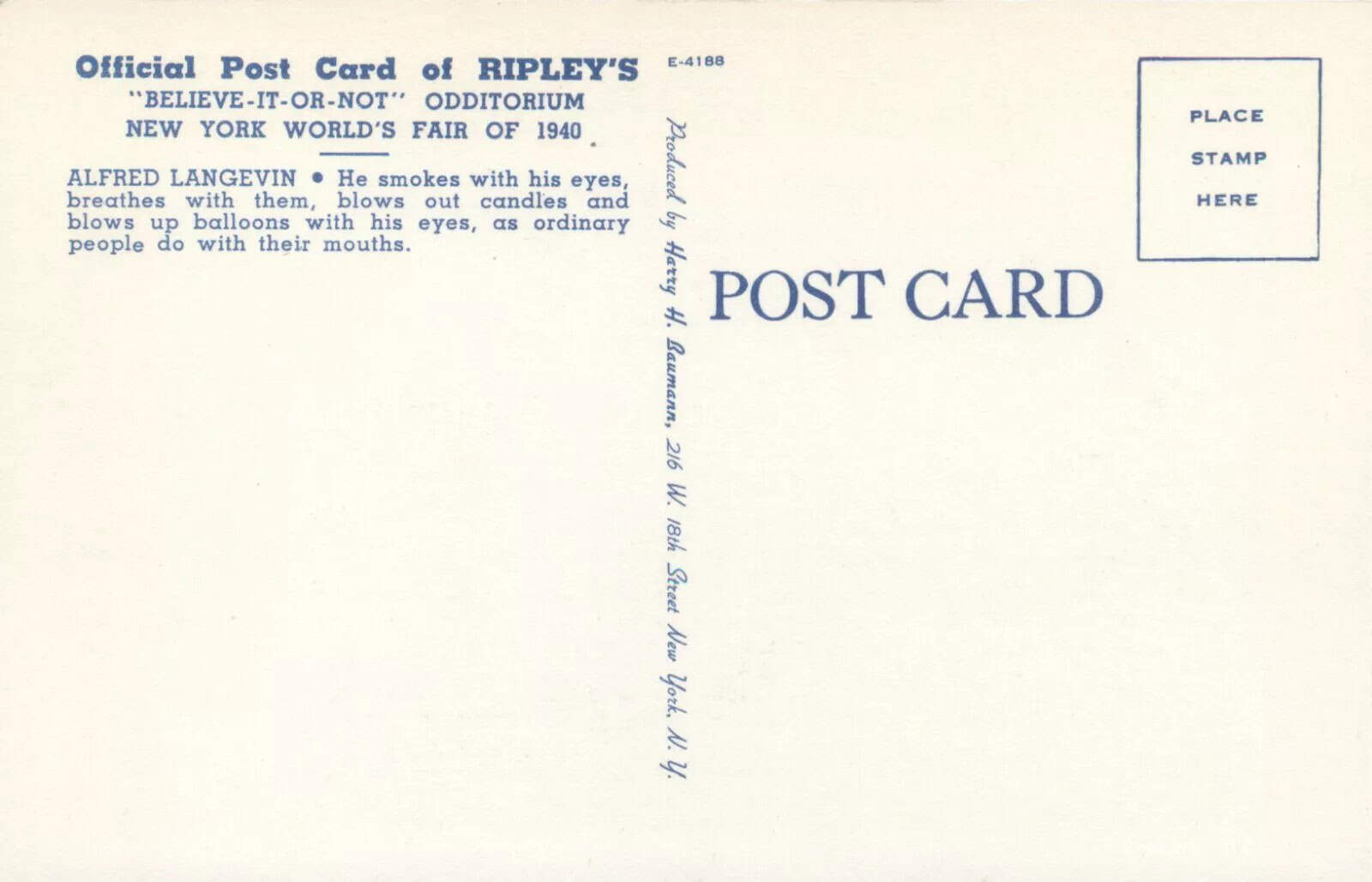
Alfred Langevin was born around 1885 in Canada. He was widely known as the “Eye Smoker.” He could smoke a pipe, play a recorder, smoke a cigarette, and even blow up a balloon through his eye. He would put a pipe in his eye and smoke would come out of the pipe, and out his mouth.
He married on June 26, 1909. When his unusual skill was discovered by Ripley he was hired immediately. Langevin and his wife traveled to different “Believe It or Not” museums several times each year until his death in February 1974.