As part of promotion campaigns, hotels tout the famous individuals who have stayed at the hotel as guests. Many major hotels have a presidential suite and tally the number of stays by U. S. Presidents. Other hotels brag about their celebrity guests. A few hotels have had the honor of hosting royalty during state visits to the United States and Canada. And, several hotels hold the dubious distinction of providing lodging for the Chicago gangster, Al Capone. Two of the hotels have marked his stay; one with a plaque and the other naming a suite for him. One Florida hotel attempted to claim Capone as a guest, but his purported stay turned out to be an urban legend.
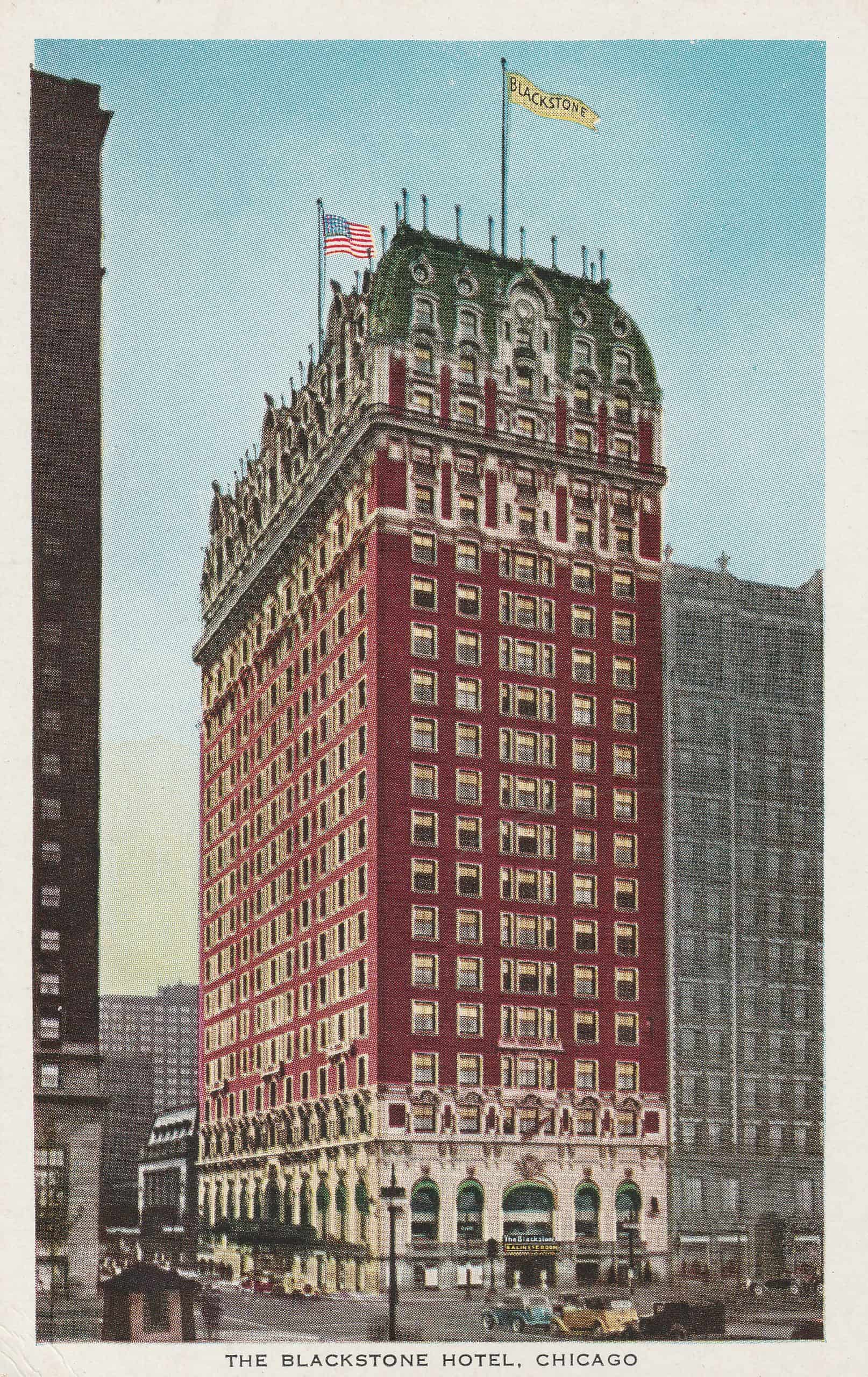
The twenty story Blackstone Hotel is located on the corner of Michigan Avenue and Balbo Drive in Chicago. It opened on April 16, 1910. It prospered in the early part of the twentieth century due to its location near Grant Park, the Chicago Coliseum, and theaters. It has a special tenth floor Presidential Suite that hosted a dozen U. S. Presidents.
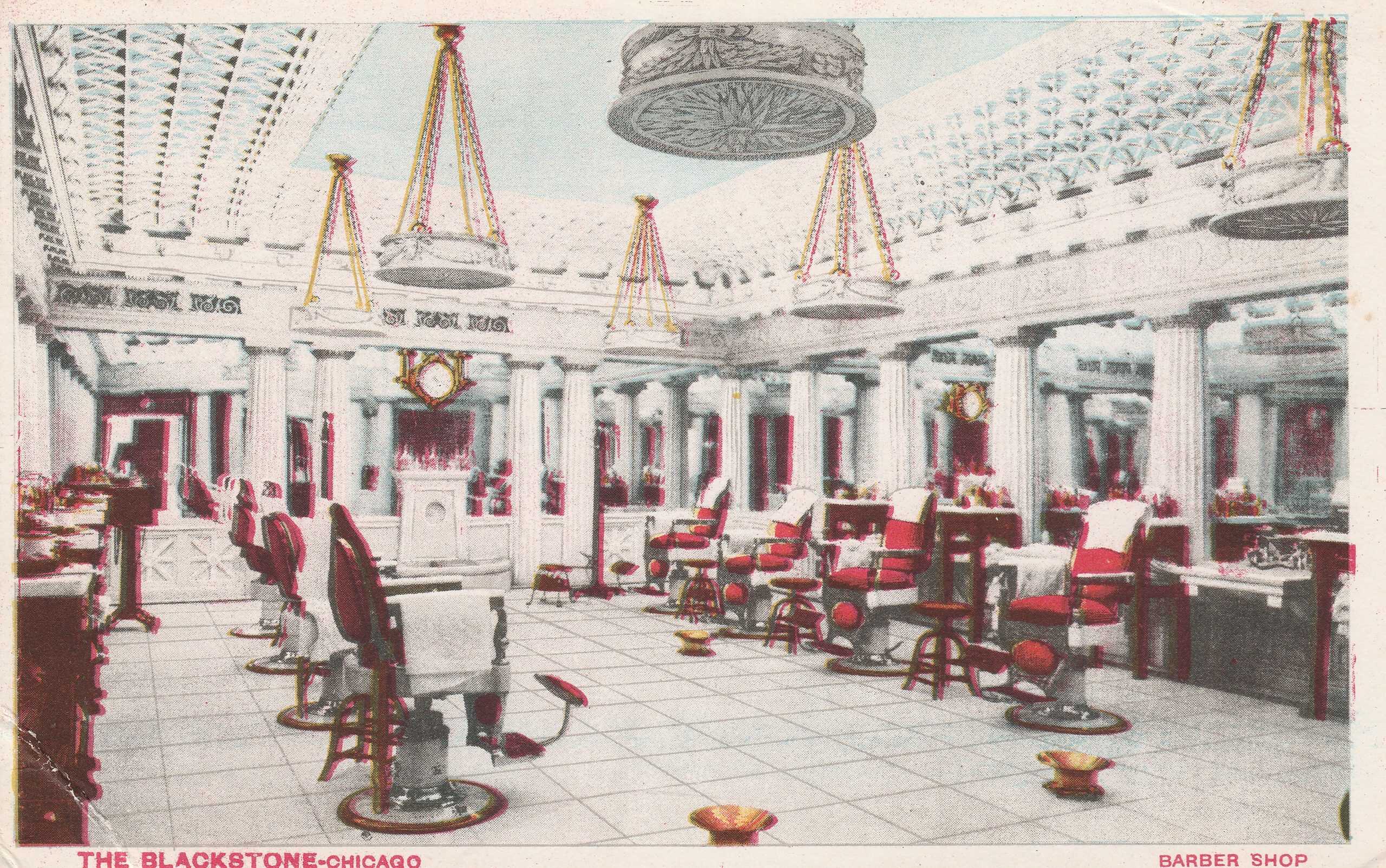
Al Capone had his headquarters at the Lexington Hotel. Fearing being shot and killed by rival mobsters, Capone used the Blackstone’s windowless basement barbershop to meet with his henchman while he got a haircut. Capone and New York mob boss Lucky Luciano convened a national meeting of mobsters at the Blackstone’s Crystal Ballroom in 1931 to lay the foundation for a National Crime Syndicate.
After decades of decay, Sage Hospitality purchased the Blackstone in 2005 and embarked on a three-year restoration and renovation that cost $128 million. It reopened to guests in 2008. The barber shop frequented by Capone is now a meeting room.
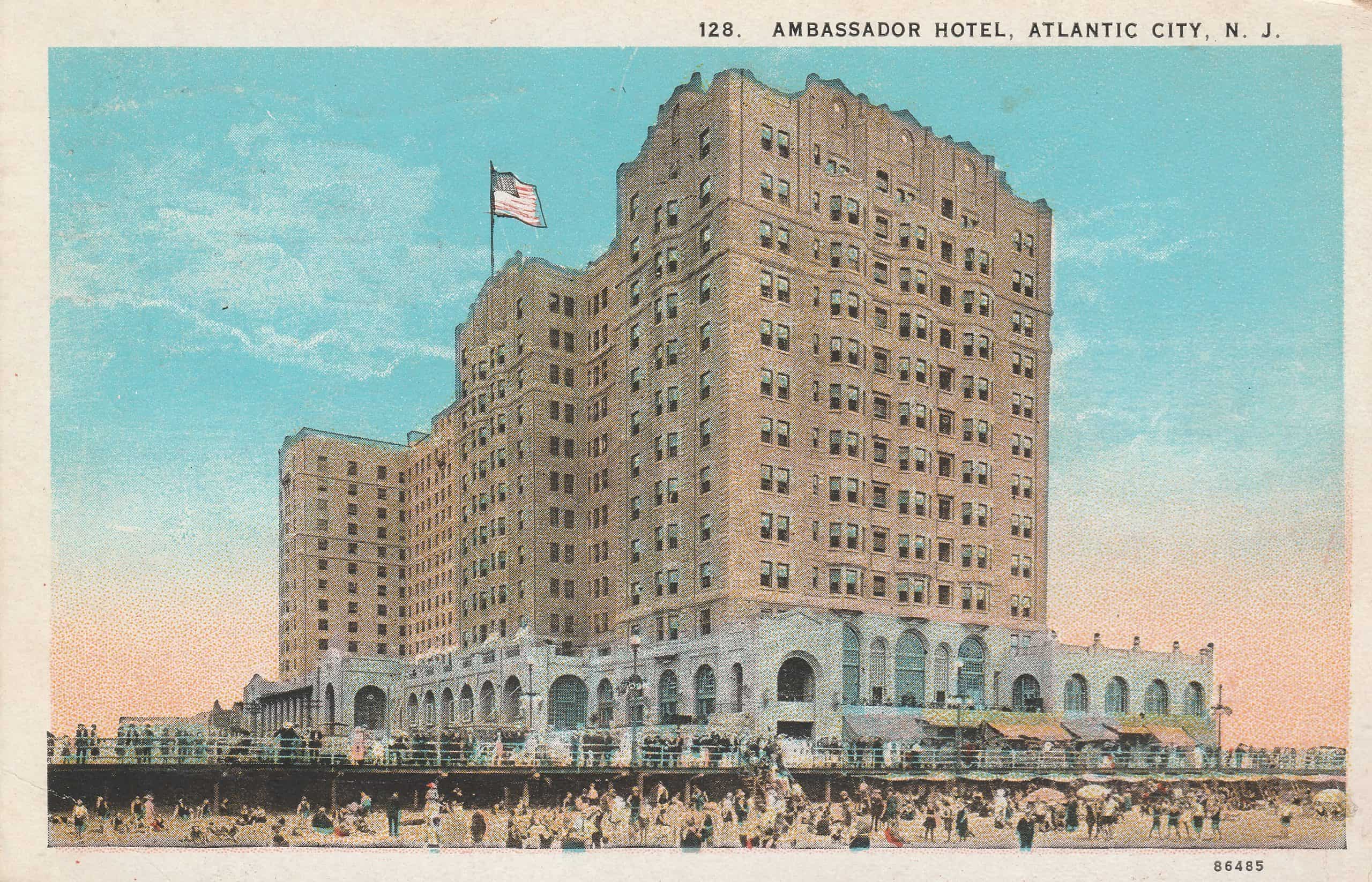
The thirteen-story Ambassador Hotel in Atlantic City opened in 1919 with 200 rooms. A 500-room addition was added in 1921. It was known as the Monarch of the Boardwalk.
Held during the week of May 13 through May 16, 1929, the infamous Atlantic City Conference of American mobsters, the first ever summit of crime bosses was held at the Ambassador. Meyer Lansky, Johnny Torrio, Lucky Luciano, and Frank Costello reportedly hosted the gathering. Among those attending were Al Capone, Frank Nitti, Dutch Schultz, Benjamin Siegel, Albert Anastasia, Vito Genovese, and Santo Trafficante, Sr. It should be noted that not all major mobsters were invited. Conspicuous by their absences were the old guard Italian mafiosoes – “The Mustache Petes.”
Seeing the repeal of Prohibition on the horizon, an agreement was made to stop the violent competition with each other and develop a national monopoly in the illegal liquor business. Future plans and operations had to be approved and administered peacefully among the country’s bosses and criminal organizations to avoid the bloody wars that plagued the underworld. Newspaper reporters took photos of Capone and the other attendees strolling on the Boardwalk.
After remaining shuttered for ten years, the Ambassador was sold for only $900,000 in 1977 as casino gambling was poised to begin in Atlantic City. Ramada Inns looked to transform the Ambassador into a casino modeled after the Tropicana Resort in Las Vegas, however, New Jersey Governor Brendan Byrne had been disparaged by the fact that many “new” casinos in Atlantic City were just “paint and patch jobs” of older hotels. Responding to Byrne’s pressure, the Ambassador was stripped down to its steel supports, which were then reused to build the new structure. The Tropicana opened in 1981 and today is the largest resort and casino in Atlantic City.
**
EDITOR’S SIDEBAR
The story of Capone’s first arrest that led to a conviction and incarceration.
On May 17, 1929, the day after the famous Atlantic City event mentioned above, Capone and his bodyguard were picked up outside a movie theater in Philadelphia while on their way from Atlantic City, New Jersey, back home to Chicago.
They were arrested on concealed weapons charges when Capone was found with an unlicensed .38 caliber revolver.
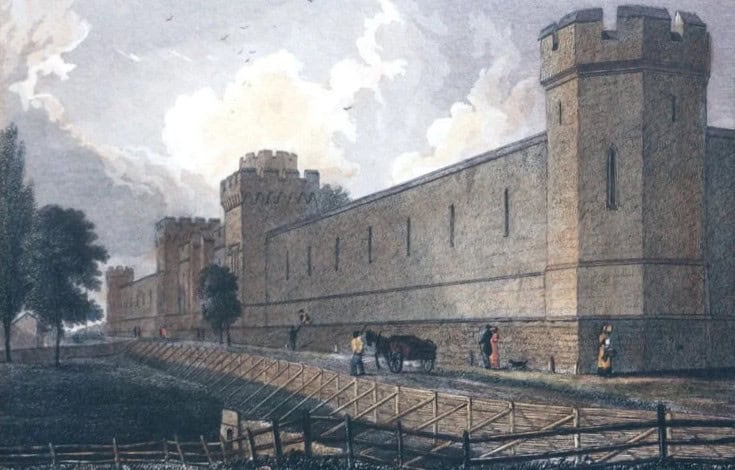
Justice was swift, and within 16 hours of the double arrest, both were slapped with one-year prison terms. The incarcerations were in the Eastern State Penitentiary in Philadelphia from May 17, 1929, to March 17, 1930. He was released early for good behavior.
**
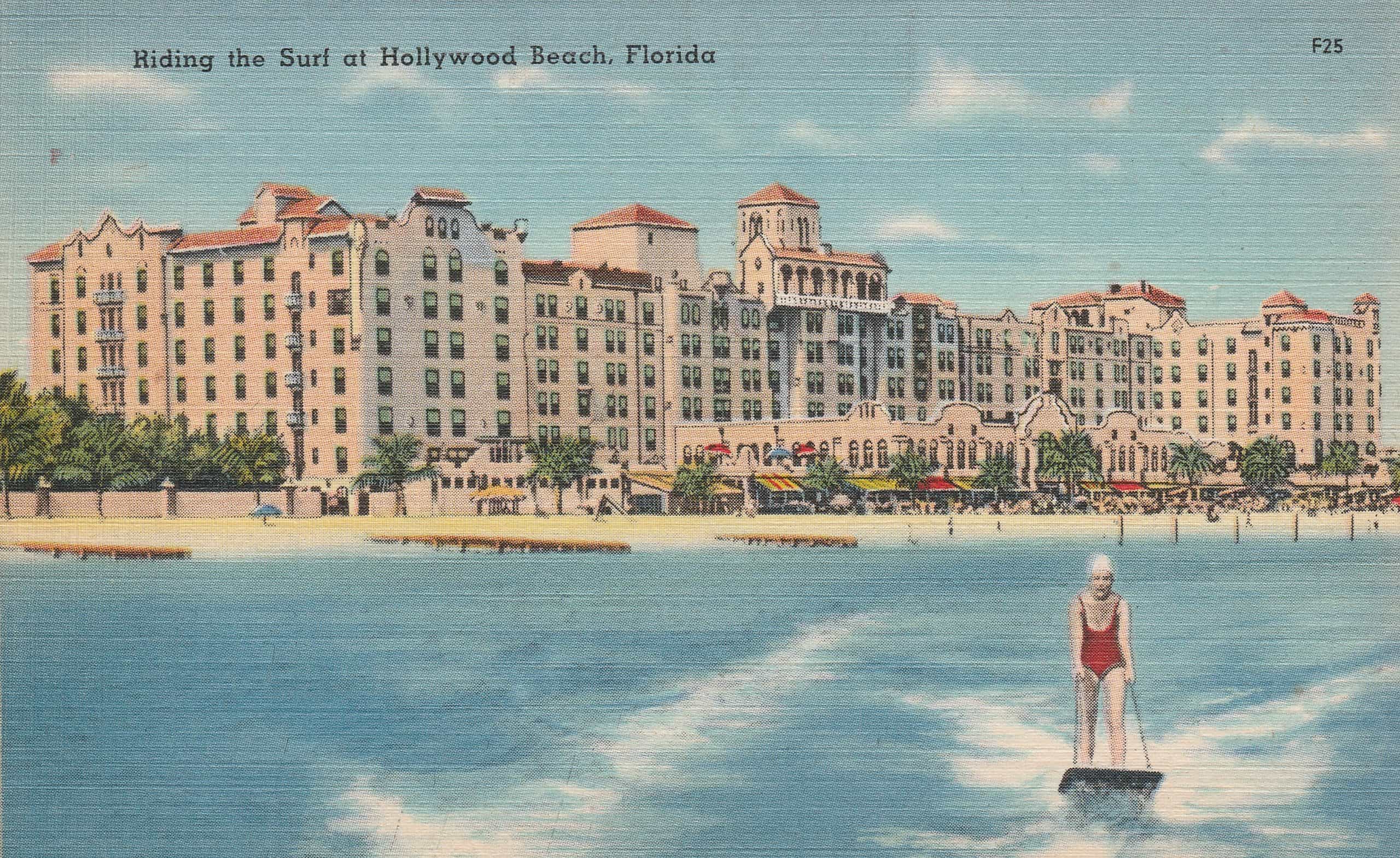
The Hollywood Beach Hotel in North Hollywood, Florida opened in 1925 during the Florida land boom. It was built in the Mediterranean Revival architectural style popular in Florida during that period. There were five hundred rooms, a ballroom, an ornate dining room, and a private beach. The hotel’s seven stories offered views of the Atlantic Ocean and the Intracoastal Waterway.
After it opened, it became a popular getaway for gangster Al Capone and his cronies when they wanted to escape cold Chicago winters and the heat of the law. Reportedly one of Capone’s henchmen murdered a prostitute in Room 202 and her ghost haunts the building to this day.
The Hollywood Beach Hotel was purchased in 1971 by Florida Bible College to provide classrooms and housing for its 1,400 students. The college later sold the property, and the hotel operated as an affiliate of the Ramada hotel chain. Today the building houses a hotel, condominiums, a timeshare complex, and a shopping mall.
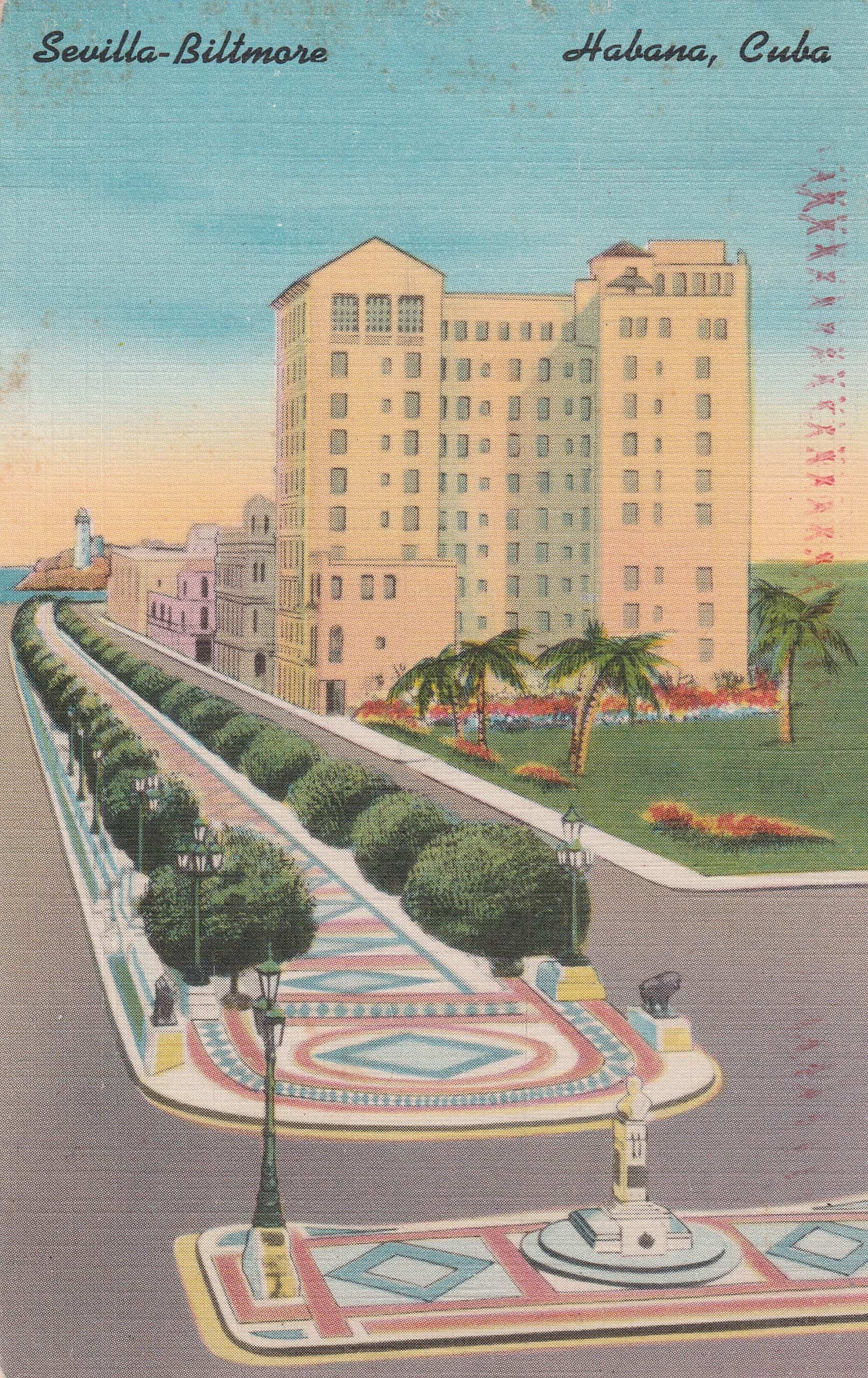
The Hotel Sevilla, located in the heart of Havana, was built in 1908. It was a fourteen-story ornate Moorish Revival structure. In 1919, it was bought by New York hoteliers and renamed the Sevilla-Biltmore. During Prohibition, American tourists began visiting Cuba in large numbers. Hotels imported American bartenders to cater to the tastes of these booze tourists. In 1929, an adjoining ten-story wing was added to the hotel complete with a rooftop ballroom.
On April 23, 1930, Capone along with Chicago Evening American editor Harry Read, Capone’s Miami lawyer, James Francis “Fritz” Gordon, Gordon’s father R.A. Gordon, Chicago Alderman Albert J. Prignano, Capone hoods Nicholas Carew (Nick Circella) and Sylvester Agoglia and Miami physician A.J. Bertram flew to Havana from Miami. It was Capone’s second visit to Havana. Capone and his party stayed in a ten room third floor suite at the Sevilla Biltmore Hotel. The group enjoyed sightseeing, shopping, drinking, and visiting cabarets in the evening. Capone’s group left on May 1, after Capone was hassled by Cuban police.
The Sevilla-Biltmore is currently operated by the Cuban government. Today the hotel erroneously boasts about Capone’s stay with a plaque in a sixth-floor suite.
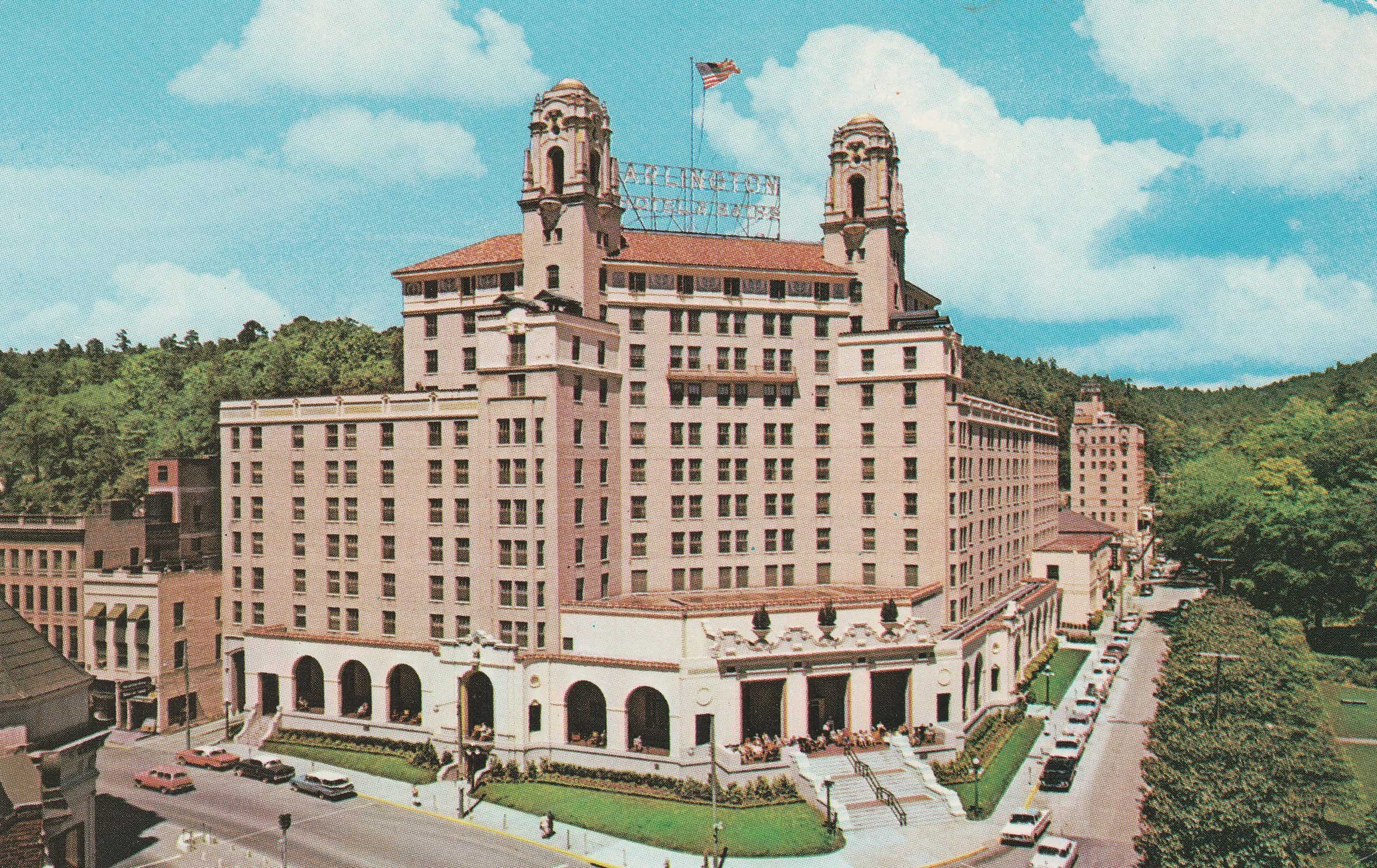
The Arlington Hotel and Baths, a resort in Hot Springs in the Ouachita Mountains of Arkansas, opened on New Years Eve in 1924 with a gala celebration. The Mediterranean style structure had 560 rooms. There was a bath house on the premises for guests to enjoy the thermal springs in separate facilities for men and women. Hot spring water was available in fifty of the rooms. When Al Capone stayed there, he rented the entire fourth floor for his bodyguards and henchmen. His room was number 443. Capone enjoyed gambling at the Southern Club across the street from the Arlington. Gambling was illegal in Arkansas, but authorities looked the other way.
In 2016, the city of Hot Springs threatened to close the hotel due to safety deficiencies. The threat prompted massive renovations meant to restore the hotel to its former glory. Guests today can stay in the Capone Suite on the fourth floor. There is also a suite named for President Ronald Reagan who stayed at the Arlington in 1969 when he addressed the National Governors’ Conference. Another suite is named for Babe Ruth who frequented the Arlington and its thermal baths.
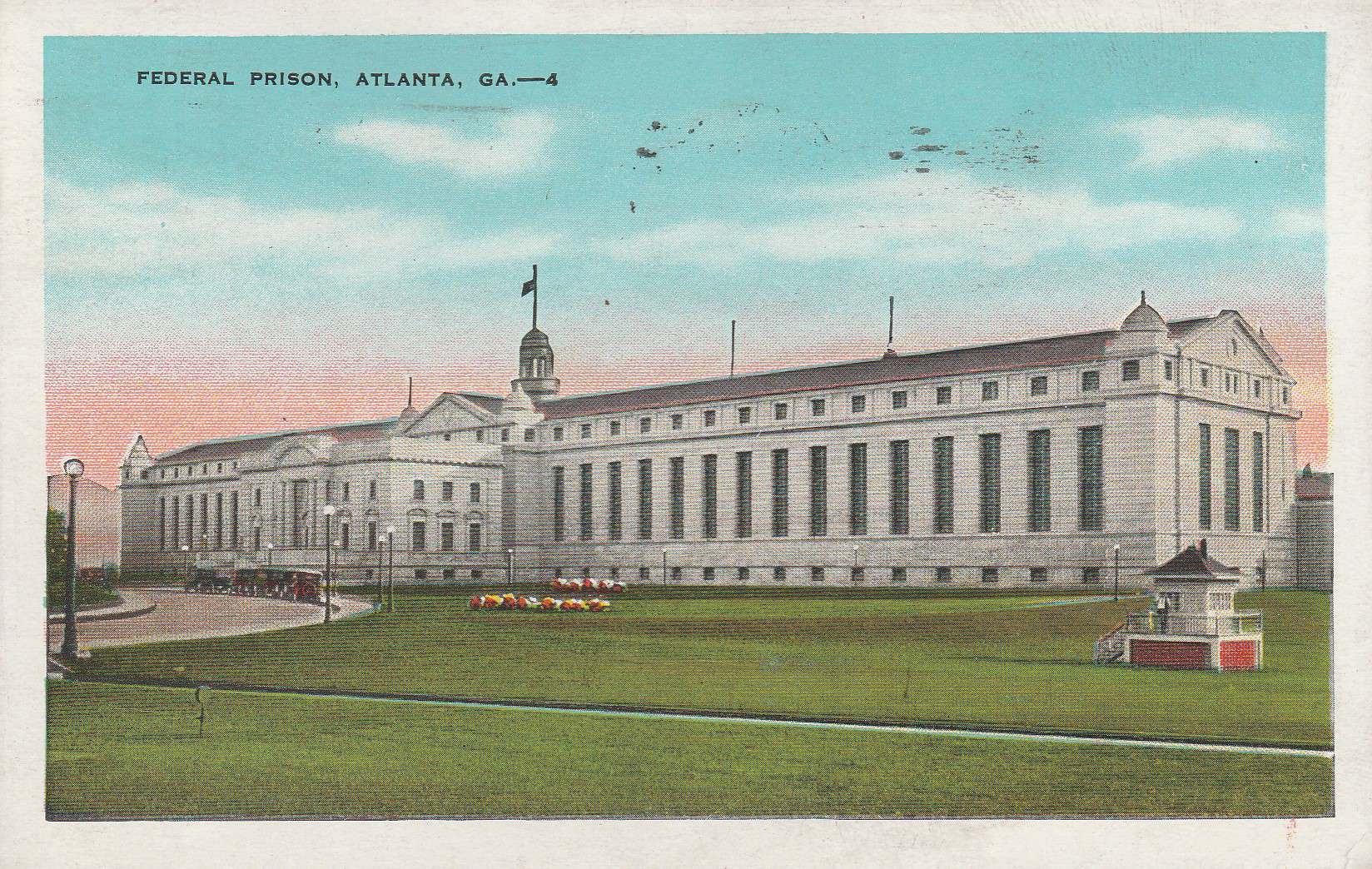
Federal officials, frustrated by their failure to bring Capone to justice for his crimes, decided to pursue him for income tax evasion. Despite his extravagant lifestyle and his criminal empire being valued at over $62 million, Capone had never filed a federal income tax return, claiming that he had no taxable income. He was indicted on twenty-two counts of income tax evasion in March 1931. Capone’s stays in luxury hotels came to an end in October 1931 when he was convicted on five of the counts and sentenced to eleven years in prison, a stiff sentence for income tax evasion.
Initially housed at the Cook County Jail in Chicago after his conviction, Capone paid off the guards for special treatment. Capone arrived at the Federal Penitentiary in Atlanta in May 1932. There he also bribed the guards and soon had a rug in his cell, a more comfortable mattress, a typewriter, a radio, and access to cigars. Capone also received special visitation privileges enabling his family to see him frequently.
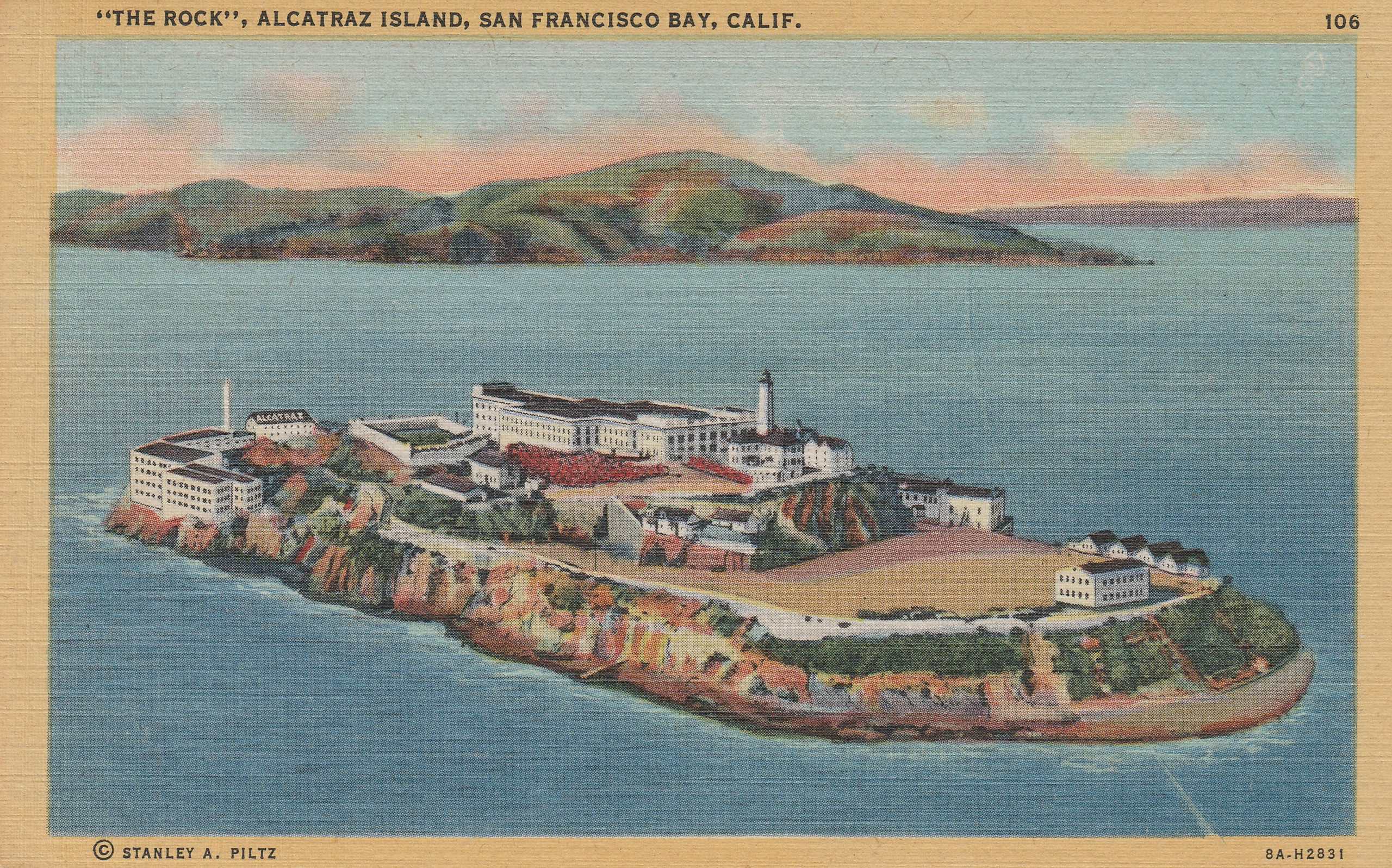
In August 1934, Attorney General Homer Cummings ordered Capone transferred to the newly opened Alcatraz Island Federal Penitentiary in San Francisco Bay. Capone’s attempts to secure favorable treatment failed and he settled into prison life as inmate 85 AZ. He became a model prisoner and was permitted to purchase a banjo. A self-taught musician, he played in the inmate band, the Rock Islanders, doing Sunday concerts for the other inmates. Despite the tough reputation at Alcatraz, inmates with good behavior were allowed to see one movie a month and were permitted to use the 15,000-book library. Capone, whose education ended in the seventh grade, became an avid reader.
Capone spent four-and-a-half years at Alcatraz. Suffering from neurosyphilis, he spent his last year in the prison hospital suffering from confusion and disorientation. He was transferred to the federal prison at Terminal Island (located at the entrance to Los Angeles Harbor, near Long Beach, California) in January 1939 and was granted parole in November 1939. The disease’s progression had left him with the mind of a twelve-year-old. His final years were spent at his mansion in Palm Island, Florida and he died from the effects of a stroke on January 25, 1947. He was 48.
Fascinating story about Al Capone, his life and the hotels that he frequented along the way!
It may be of interest to some readers that Al Capone’s son, Albert Francis “Sonny” Capone, legally changed his name to Albert Francis Brown to escape his father’s notorious legacy. He died in 2004.