Please forgive this assumption, but unless you are a scholar of early and mid-twentieth century vaudeville and theatre, the name DeWolf Hopper may be unfamiliar. It is possible that you will recognize one or two of his six wives, who include Edna Wallace (Hopper’s third wife, a Broadway actress) and Elda Furry (Hopper’s fifth wife who was known professionally as Hedda Hopper, the gossip columnist of the 1940s).
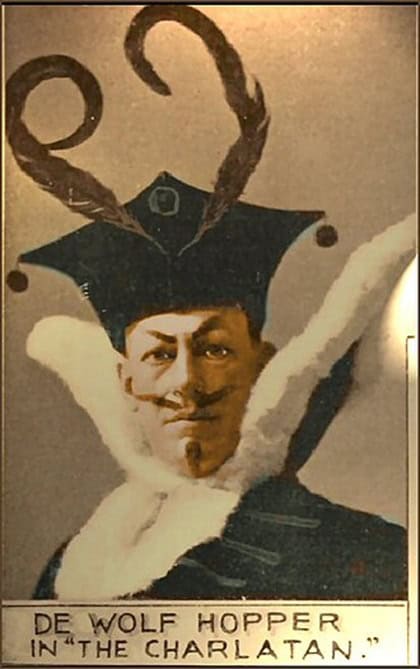
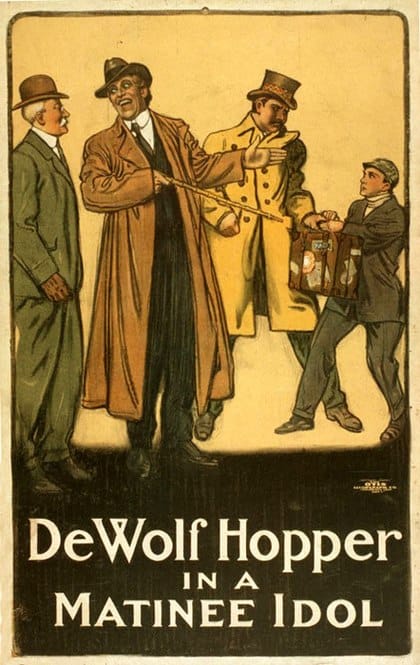
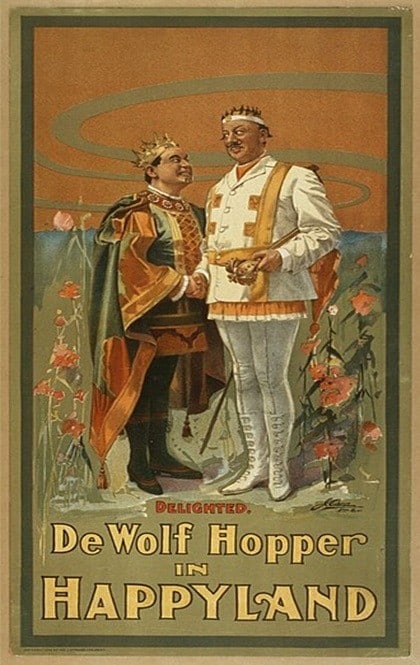
DeWolf Hopper was a somewhat distinguished American actor, comedian, and screenwriter whose works often reflected the complexities of human nature and societal issues. He was born in 1902 and was soon recognized as one whose life journey would be marked by a keen intellect and an enduring commitment to storytelling.
Growing up in an environment that valued education and the arts, Hopper developed an early interest in literature and writing. His formative years were characterized by a curiosity about human behavior and a desire to understand the darker aspects of mankind. Hopper pursued higher education with a focus on literature, which laid the foundation for his career. He learned that narrative techniques, character development, and thematic exploration were important hallmarks for any author, and he used them effectively as he wrote.
DeWolf Hopper’s career as a novelist gained recognition for its depth and psychological insight. He is perhaps best known for his contributions to the horror and psychological thriller genres. His most notable work, The House of the Seven Gables, showcased his ability to blend Gothic elements with contemporary themes, creating stories that were both haunting and thought-provoking. Hopper’s writing often explored themes of guilt, madness, and the supernatural. His interest in the darker corners of the human mind brought his narrative skills to Hollywood as well as Broadway productions.
His innovative storytelling and willingness to confront uncomfortable truths helped him bring his own writing and the work of others to the masses. One such work was the immortal mock heroic poem Casey At the Bat. The poem first appeared at the bottom of column four on page four of the Sunday, June 3, 1888 issue of The San Francisco Daily Examiner. It was the work of Ernest Lawrence Thayer. Thayer was prolific and was renowned since his “Casey” poem has become “the single most famous baseball poem ever written” according to the Baseball Almanac, and “the nation’s best-known piece of comic verse,” that began a legend as colorful and permanent as that of Johnny Appleseed or Paul Bunyan.
The first public performance of the poem by actor DeWolf Hopper was on August 14, 1888, on Thayer’s 25th birthday. Though not as widely known today as some of his contemporaries, Hopper’s work remains a testament to his talent and dedication to his art. His stories continue to resonate with audiences who appreciate narratives.
Casey At the Bat
A Ballad of the Republic, Sung in the Year 1888
By Ernest Lawrence “Phineas” Thayer and Illustrated by Dan Sayre Groesbeck
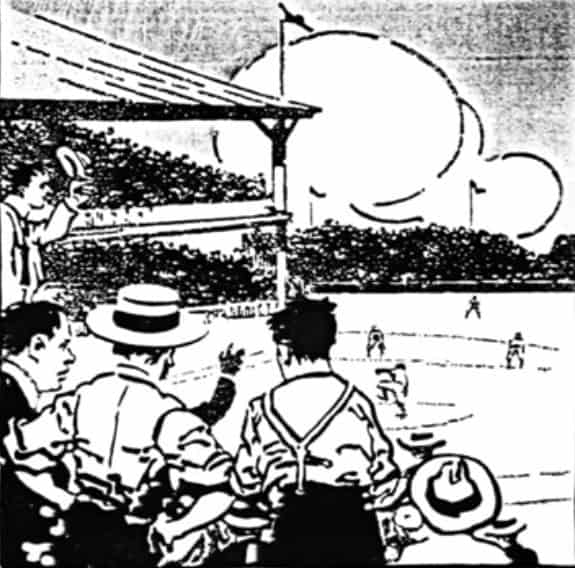
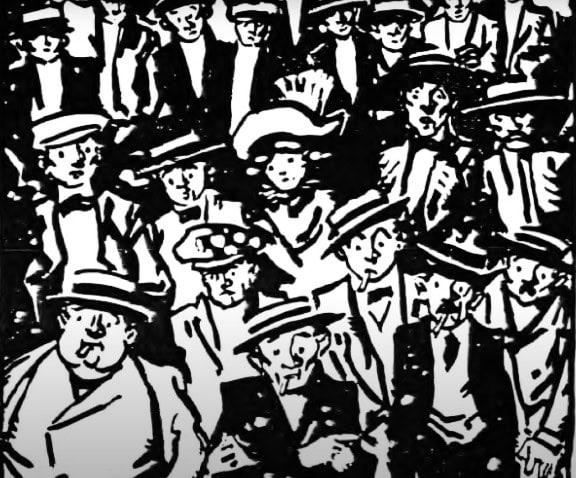
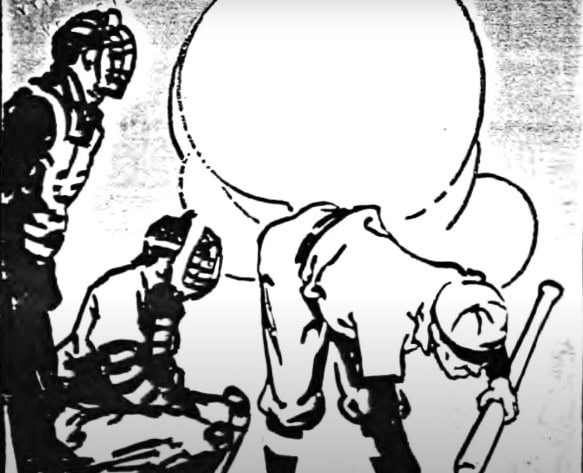
The outlook wasn’t brilliant for the Mudville nine that day;
The score stood four to two with but one inning more to play.
And then when Cooney died at first, and Barrows did the same,
A sickly silence fell upon the patrons of the game.
A straggling few got up to go in deep despair. The rest
Clung to that hope which springs eternal in the human breast;
They thought if only Casey could but get a whack at that—
We’d put up even money now with Casey at the bat.
But Flynn preceded Casey, as did also Jimmy Blake,
And the former was a lulu and the latter was a cake;
So upon that stricken multitude grim melancholy sat,
For there seemed but little chance of Casey’s getting to the bat.
But Flynn let drive a single, to the wonderment of all,
And Blake, the much despised, tore the cover off the ball;
And when the dust had lifted, and men saw what had occurred,
There was Jimmy safe at second and Flynn a-hugging third.
Then from 5,000 throats and more there rose a lusty yell;
It rumbled through the valley, it rattled in the dell;
It knocked upon the mountain and recoiled upon the flat,
For Casey, mighty Casey, was advancing to the bat.
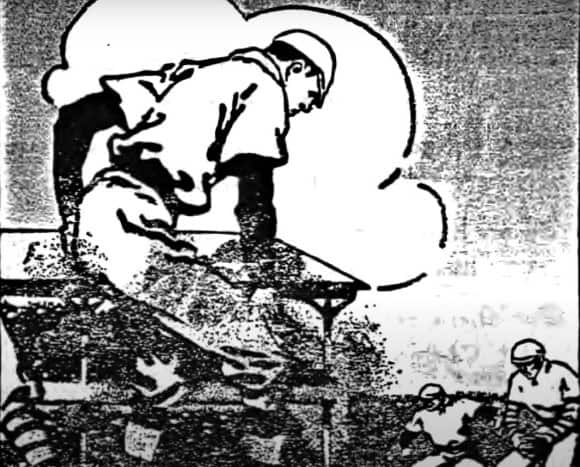
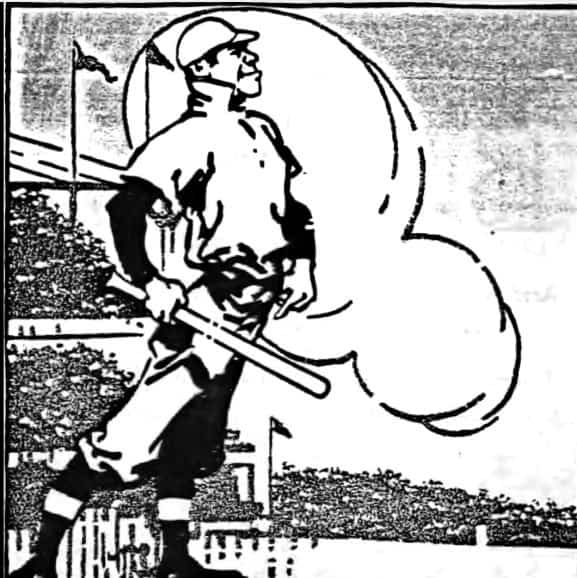
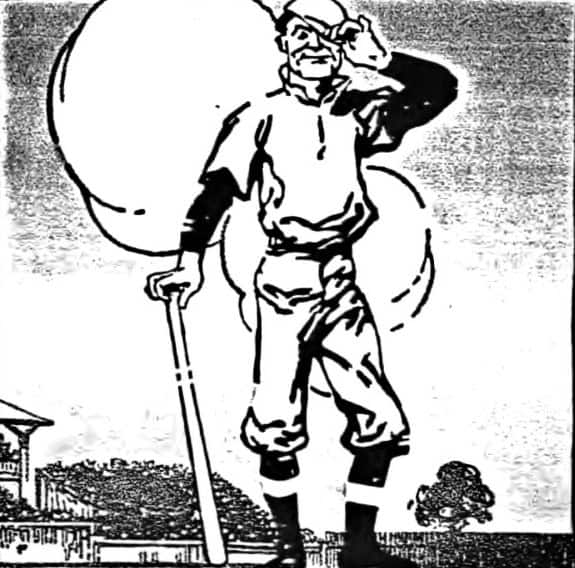
There was ease in Casey’s manner as he stepped into his place;
There was pride in Casey’s bearing and a smile on Casey’s face.
And when, responding to the cheers, he lightly doffed his hat,
No stranger in the crowd could doubt ’twas Casey at the bat.
Ten thousand eyes were on him as he rubbed his hands with dirt;
Five thousand tongues applauded when he wiped them on his shirt.
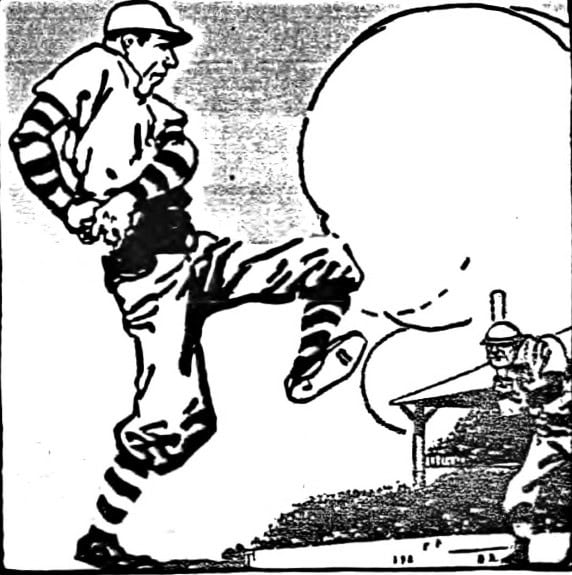
Then while the writhing pitcher ground the ball into his hip,
Defiance gleamed in Casey’s eye, a sneer curled Casey’s lip.
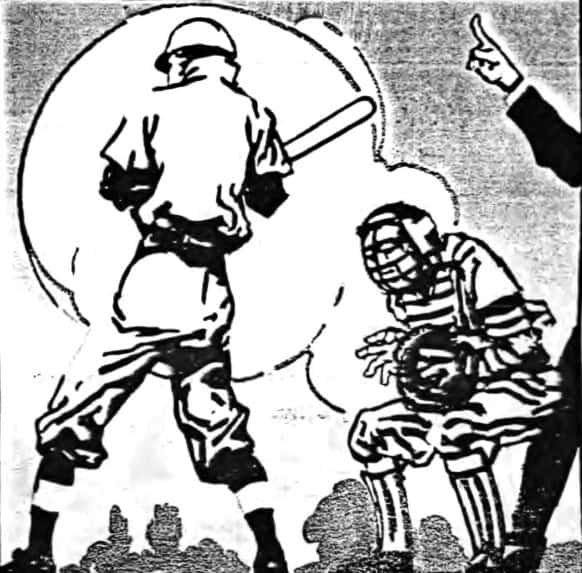
And now the leather-covered sphere came hurtling through the air,
And Casey stood a-watching it in haughty grandeur there.
Close by the sturdy batsman the ball unheeded sped—
“That ain’t my style,” said Casey. “Strike one,” the umpire said.
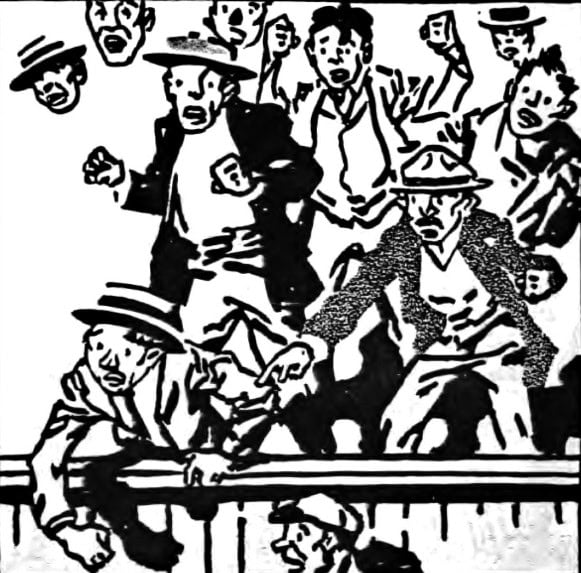
From the benches, black with people, there went up a muffled roar,
Like the beating of the storm-waves on a stern and distant shore.
“Kill him! Kill the umpire!” shouted someone on the stand;
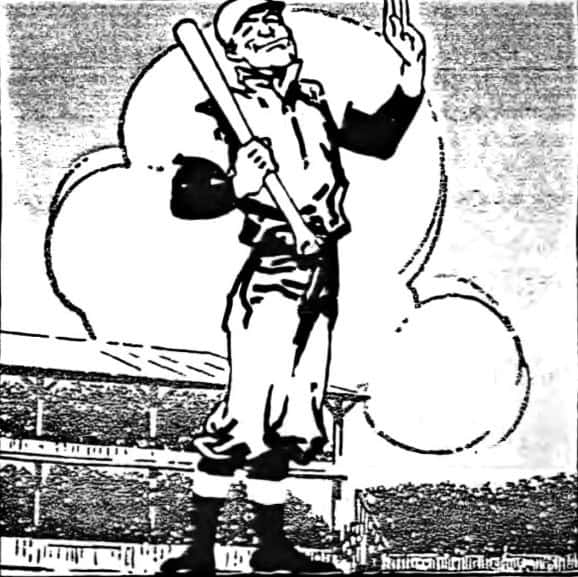
And it’s likely they’d have killed him had not Casey raised his hand.
With a smile of Christian charity great Casey’s visage shone;
He stilled the rising tumult; he bade the game go on;
He signaled to the pitcher, and once more the spheroid flew;
But Casey still ignored it, and the umpire said, “Strike two.”
“Fraud!” cried the maddened thousands, and echo answered fraud;
But one scornful look from Casey and the audience was awed.
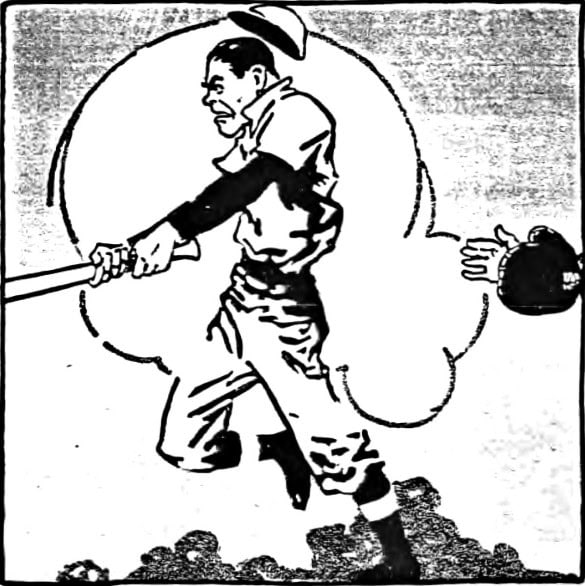
They saw his face grow stern and cold, they saw his muscles strain,
And they knew that Casey wouldn’t let that ball go by again.
The sneer is gone from Casey’s lip, his teeth are clinched in hate;
He pounds with cruel violence his bat upon the plate.
And now the pitcher holds the ball, and now he lets it go,
And now the air is shattered by the force of Casey’s blow.
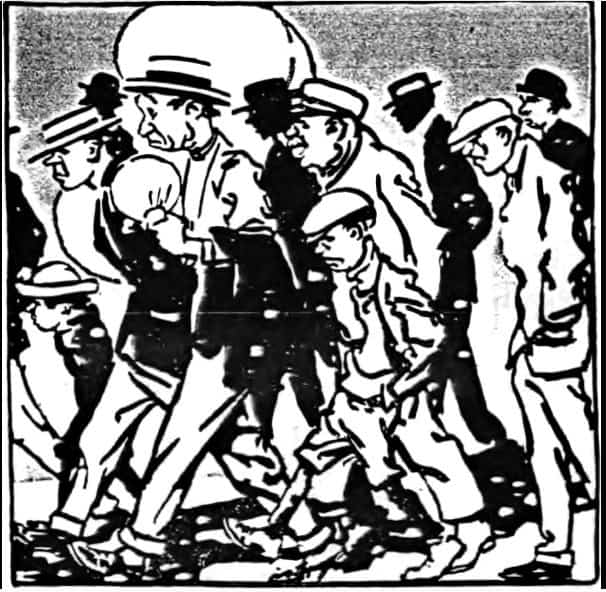
Oh, somewhere in this favored land the sun is shining bright;
The band is playing somewhere, and somewhere hearts are light,
And somewhere men are laughing, and somewhere children shout;
But there is no joy in Mudville—mighty Casey has struck out.
I remember this poem from days watching Captain Kangaroo. Thank you for the article and fun reminder.