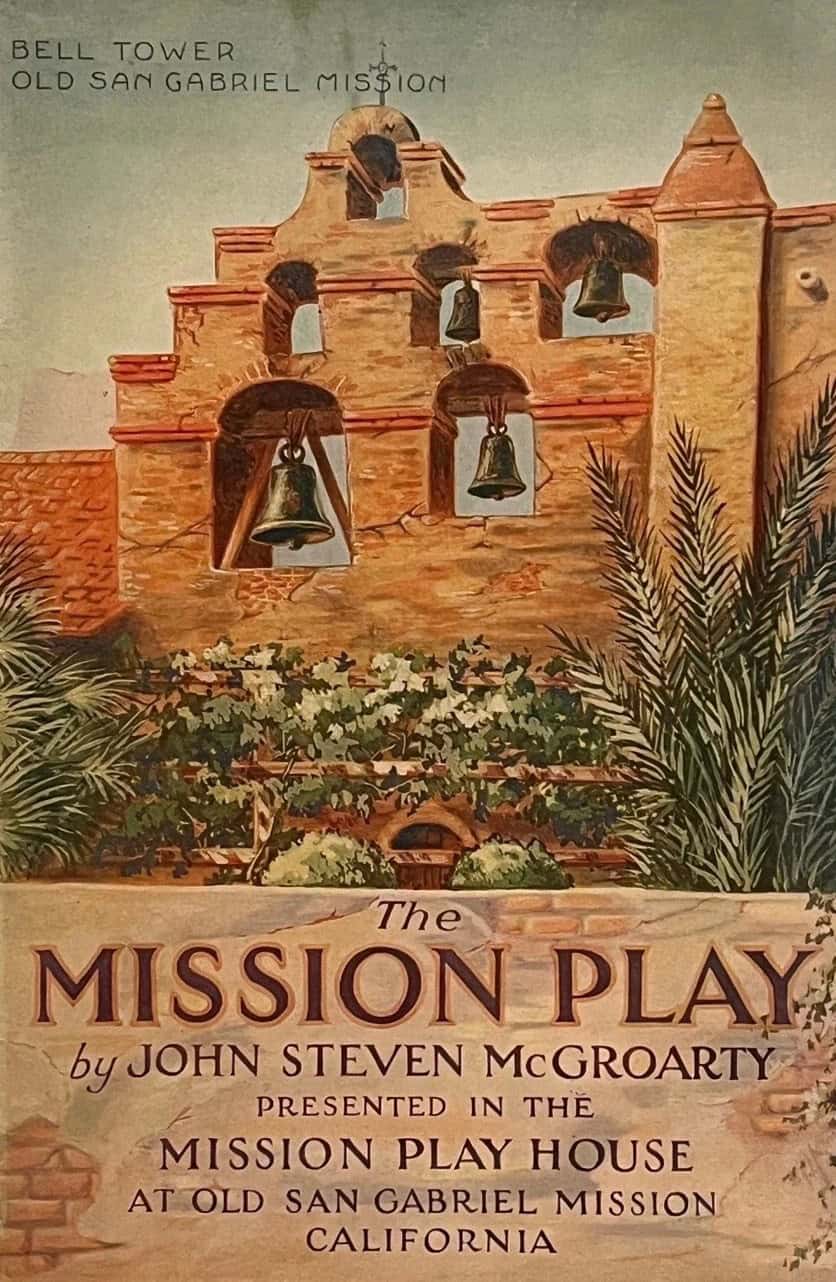
In 1902 an interest in Spanish California developed after the success of Helen Hunt Jackson’s novel “Ramona.” This novel spoke of a cultural movement that highlighted the struggles of Native American communities. The interest contributed to a population influx helped by new railroads connecting Southern California to the rest of the United States.
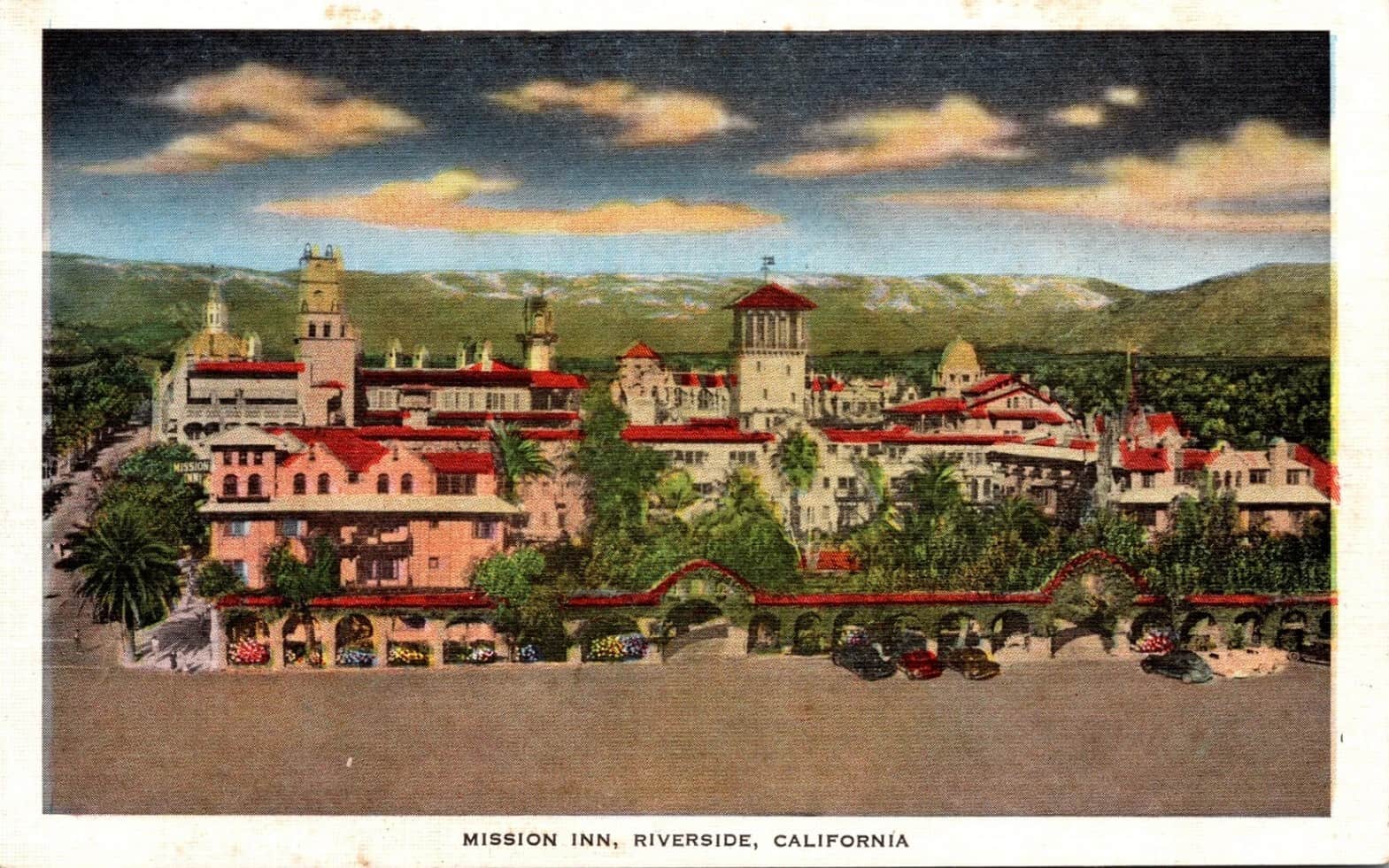
Frank Augustus Miller, a 44-year-old native of Riverside, California, wanted part of the “action.” He changed the name of his father’s 1876 hotel from the “Glenwood Hotel” to the “Mission Inn.”
He began building in a variety of styles including a revival of Mission style. In the years that followed Miller traveled the world, collecting treasures to take home and to his hotel for display.
During his travels Miller witnessed a Passion Play, most likely in Oberammergau, Germany. (That German production has been staged every ten years since the year 1634. The next series of presentations will begin in May 2030.)
The Oberammergau event sparked an idea in Miller’s mind that became a tradition of its own. After his return, he befriended John McGroarty (a poet, author, and Los Angeles Times columnist) and took him to Mount Rubidoux just west of downtown Riverside, California. There, in the shadow of a cross erected to the memory of Father Serra, the plan for a new and similar play like the German one unfolded. The result was a three-hour pageant portraying the history of the California missions.
Performed in San Gabriel, California, it was first staged in 1912 across the road from the San Gabriel Mission. In 1927 the San Gabriel Mission Playhouse was constructed to house the production. Within the first few years, the play was seen by over 2.5 million people.
Among the early investors were three deep-pocketed heavy-hitters: the railroad magnate and collector of art and rare books, Henry E. Huntington; the son-in-law of the owner and future publisher of the Los Angeles Times, Henry Chandler; and one of Southern California’s first oil tycoons, Edward L. Doheny.
***
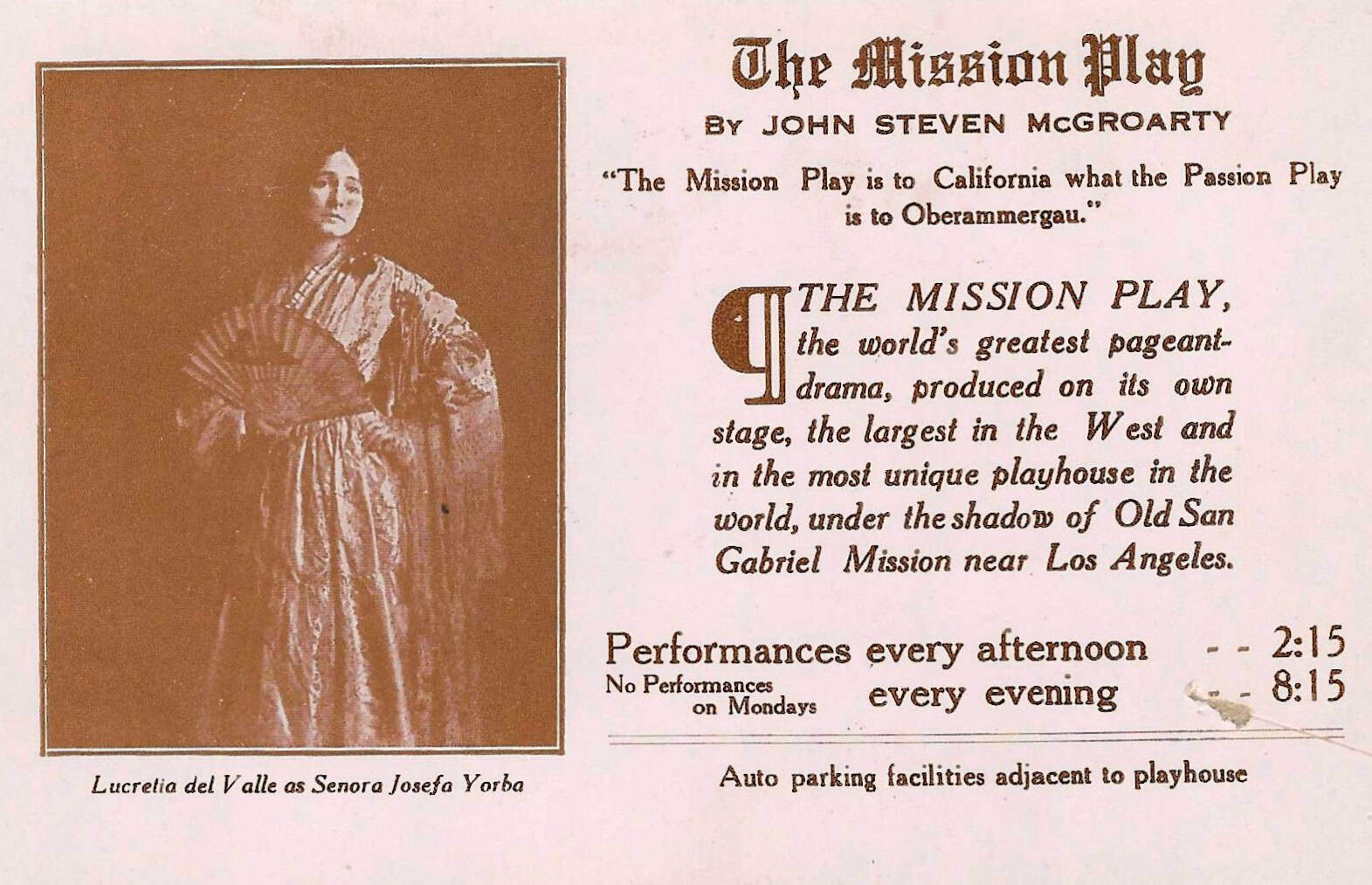
Lucretia Louise del Valle was born in Los Angeles on October 18, 1892, to Rancho Camulos owner and former state Senator Reginaldo F. del Valle (son of Ygnacio and Ysabel) and his wife, Helen May White del Valle.
Lucretia took to the stage, debuting in 1912 as the leading lady in John Steven McGroarty’s three-hour outdoor pageant, “The Mission Play,” a drama of Californio life that ran for twenty years at Mission San Gabriel Playhouse and other venues with the slogan, “If you haven’t been to see the Mission Play, you haven’t seen California.”
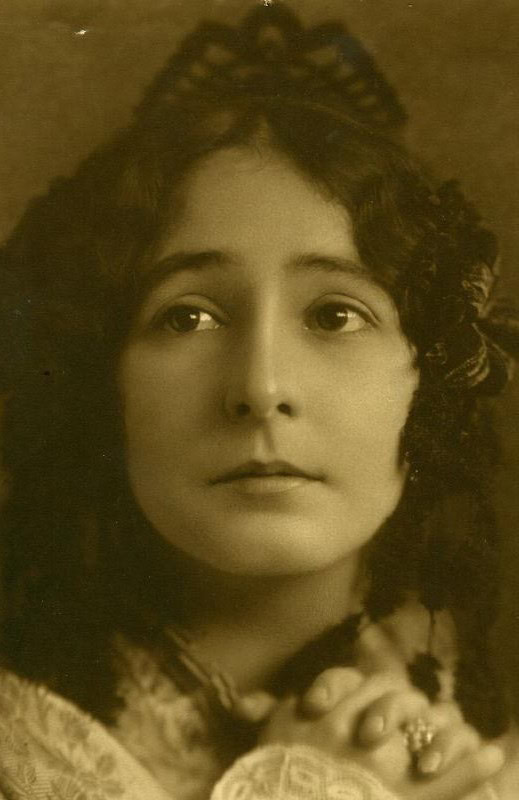
Lucretia starred in 850 of the roughly 3,200 performances.
Lucretia’s father, Reginaldo, was a strong promoter of McGroarty’s play. He had a keen interest in preserving the Californio lifestyle, and he had been a founding member of Lummis’ Landmarks Club in 1887 that was dedicated to restoring the missions; and he was a founding member of the Historical Society of Southern California.
On her 25th birthday, in 1917, Lucretia married Henry Francis Grady Sr. (1882-1957), an economist and diplomat. Grady worked under then-Commerce Secretary Herbert Hoover, taught at U.C. Berkeley, and ran a shipping company. Early into the Franklin Roosevelt administration he was recruited into FDR’s “brain trust,” and he was named assistant secretary of state at the outbreak of the war in Europe. After the war he continued to serve in the Roosevelt administration. When Harry Truman became President, he appointed Grady as the first U.S. ambassador to the newly independent nation of India and Nepal, then Greece, and Iran where he served until 1951.
Lucretia, in later years, was a California delegate to the Democratic National Conventions of 1928, 1936 and 1940 and was a member of the Democratic National Committee from California in 1937. She became a friend of Eleanor Roosevelt and in fact Roosevelt mentioned, “my good friend … Mrs. Henry Grady” in several of her My Day columns that appeared in newspapers nationwide in the 1950s.
Lucretia outlived her husband by nearly 15 years. She was 79 when she died (May 23, 1972) at Mills Memorial Hospital in San Mateo, not far from her home at 850 Powell Street in San Francisco. She is buried alongside her husband at Holy Cross Catholic Cemetery in Colma, California.
***
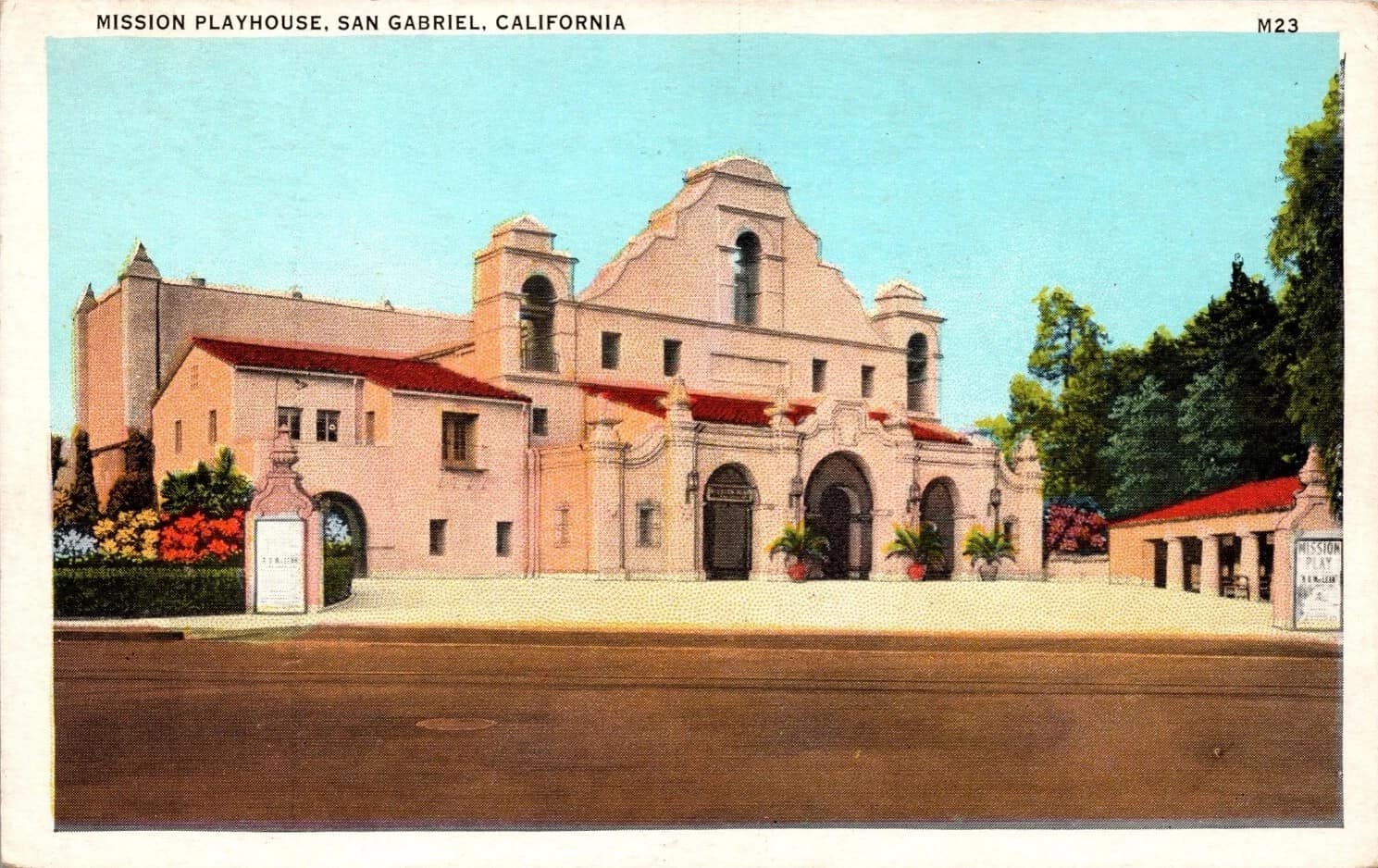
The San Gabriel Mission Playhouse is still an opulent theater open with an active events calendar. Dedicated March 5, 1927, this facility was designed to resemble McGroarty’s favorite mission, the San Antonio de Padua in Monterey County.
The stunning interior features beautifully muraled ceilings, original tapestries presented by the King of Spain, ornate chandeliers that replicate the lanterns used on Spanish galleons that once ruled the seas, and a fully operational 1927 Wurlitzer theatre organ.
Throughout its illustrious history the theatre has served performers such as: Tony Bennett, B.B. King, Lilly Tomlin and Tippi Hedron, just to name a few. It has also served as a backdrop to several feature films, commercials, and television shows.
Today, thanks to ongoing restoration, the theater looks much as it did when the Mission Play was in production.
I’m pretty sure that’s a photo, not a painting (by the painter Guy Rose…I’ve seen other works of his — stylish and beautiful.)
Great story about California missions that I was not aware of! I saw “Ramona” several years ago, and now I would like to see “The Mission Play”–perhaps on my next trip to California.