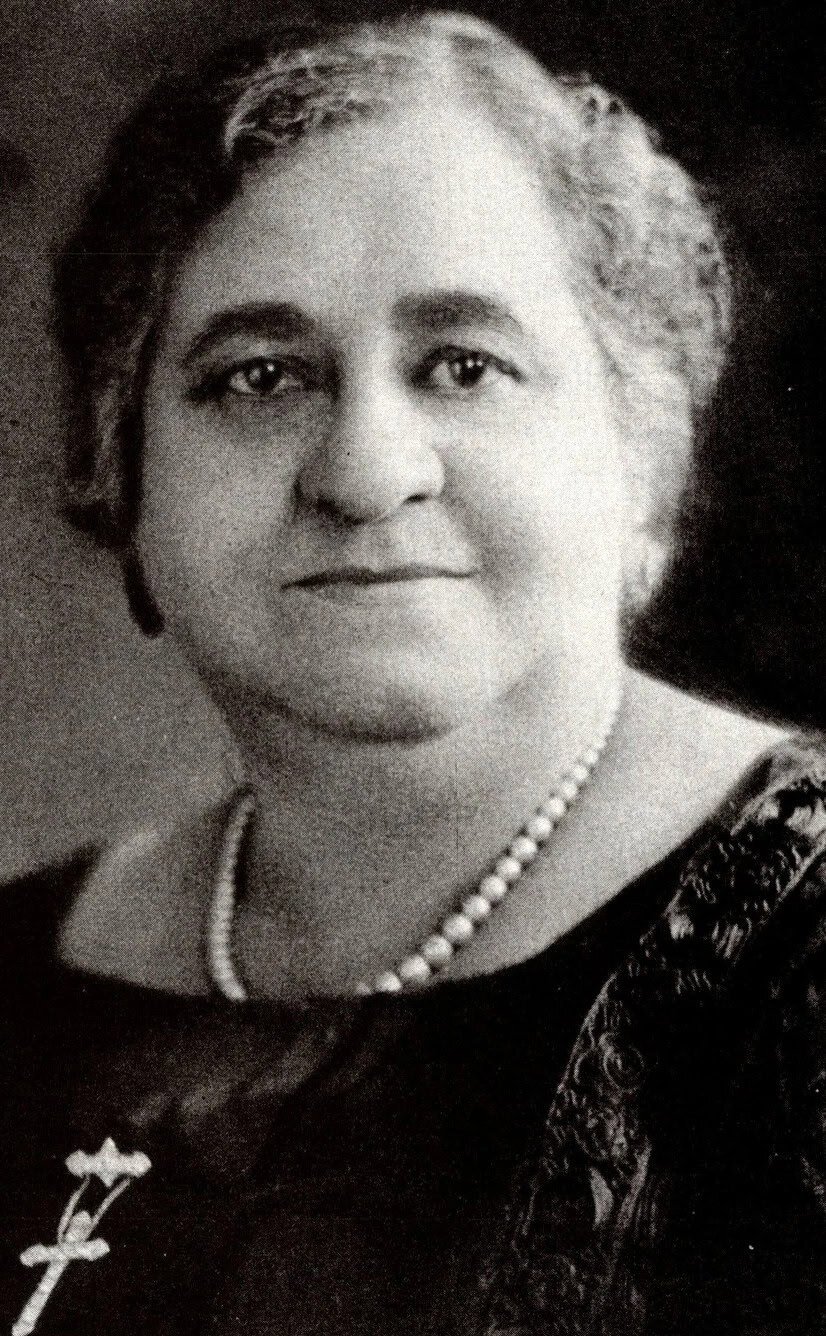
Maggie Lena Walker was born on July 15, 1864, to Elizabeth Draper, a formerly enslaved woman who worked as a laundress in Richmond, Virginia. Maggie’s early life was defined by boundless determination; she entered a world of deep racial inequality and limited opportunities for most African Americans. Despite her challenges, she became one of the most influential black business leaders of her era and the first African American woman in the United States to charter and serve as bank president.
Walker’s mother later married William Mitchell, and Maggie grew up helping with the family laundry business. Delivering clean clothes to white households gave her an early, personal look at the economic and social barriers facing black families in the post‑Civil War era.
Even as a young woman, Maggie realized that education would be her only path to success. She attended the Richmond Colored Normal School, graduating in 1883 and became a teacher — then the most respected profession available to African American women. Teaching allowed her to support her family and contribute to her community.
In 1881, at just 17, Walker joined the Independent Order of St. Luke, a black fraternal organization dedicated to mutual aid and financial support. Walker quickly proved herself to be a gifted organizer and by 1899, she assumed the position of Right Worthy Grand Secretary, taking charge of an organization struggling with debt and declining membership.
Walker believed deeply in economic independence as a path to racial progress. In 1901, she announced a bold plan to expand the Order’s services by creating a newspaper, a department store, and a bank. Her goal was simple but powerful.

In 1903, she made history by founding the St. Luke Penny Savings Bank, becoming the first African American woman in the United States to charter a bank and serve as its president. Under her leadership, the bank encouraged African Americans to save money, buy homes, and start businesses — opportunities often denied to them by other banks.
The St. Luke Penny Bank thrived. Walker guided it through economic downturns, including the Great Depression, and eventually oversaw its merger into the Consolidated Bank and Trust Company. C.B. & T. Co. remained the oldest continuously African American operated bank in the nation for more than a century.
Walker’s influence extended far beyond banking. She founded the St. Luke Herald newspaper to keep members informed and to promote education, civil rights, and community engagement. She also supported women’s suffrage, public health initiatives, and educational opportunities for black youth.


Her home in Richmond’s Jackson Ward — a thriving center of black business and culture — became a gathering place and today, it is preserved as the Maggie L. Walker National Historic Site, honoring her life and legacy.

In her later years, Walker developed paralysis and used a wheelchair, but she continued her leadership roles with determination. Her perseverance made her not only a pioneer for African Americans and women but also a role model for people with disabilities.
Maggie Walker died on December 15, 1934, leaving behind a legacy of empowerment, resilience, and visionary leadership. Her life demonstrated the power of education and economic independence. She proved that one person can transform the lives of others.
Thank you, very informative, I had never heard of this lady before.
A great article about how African Americans persevered during the Jim Crow era. A lot of African American history is not documented on postcards, I have two postcards of Maggie Walker High School in my collection. I’ve never come across a postcard of the St, Luke Bank & Trust. Having once resided in Richmond, it is one of my collecting interests.
Thank you for publishing this article. I too have never heard of the lady and she deserves to be remembered.