Dear Fifth Sunday Readers,
Today you will find three tiny works of fiction: all without fact, perception, or experience. This week, I celebrate a milestone; forty years ago in a Berkeley Springs, West Virginia, antique store, I purchased the first postcard I “collected.” Over the years, it is possible for me to have seen a million-plus postcards. These are my favorites.
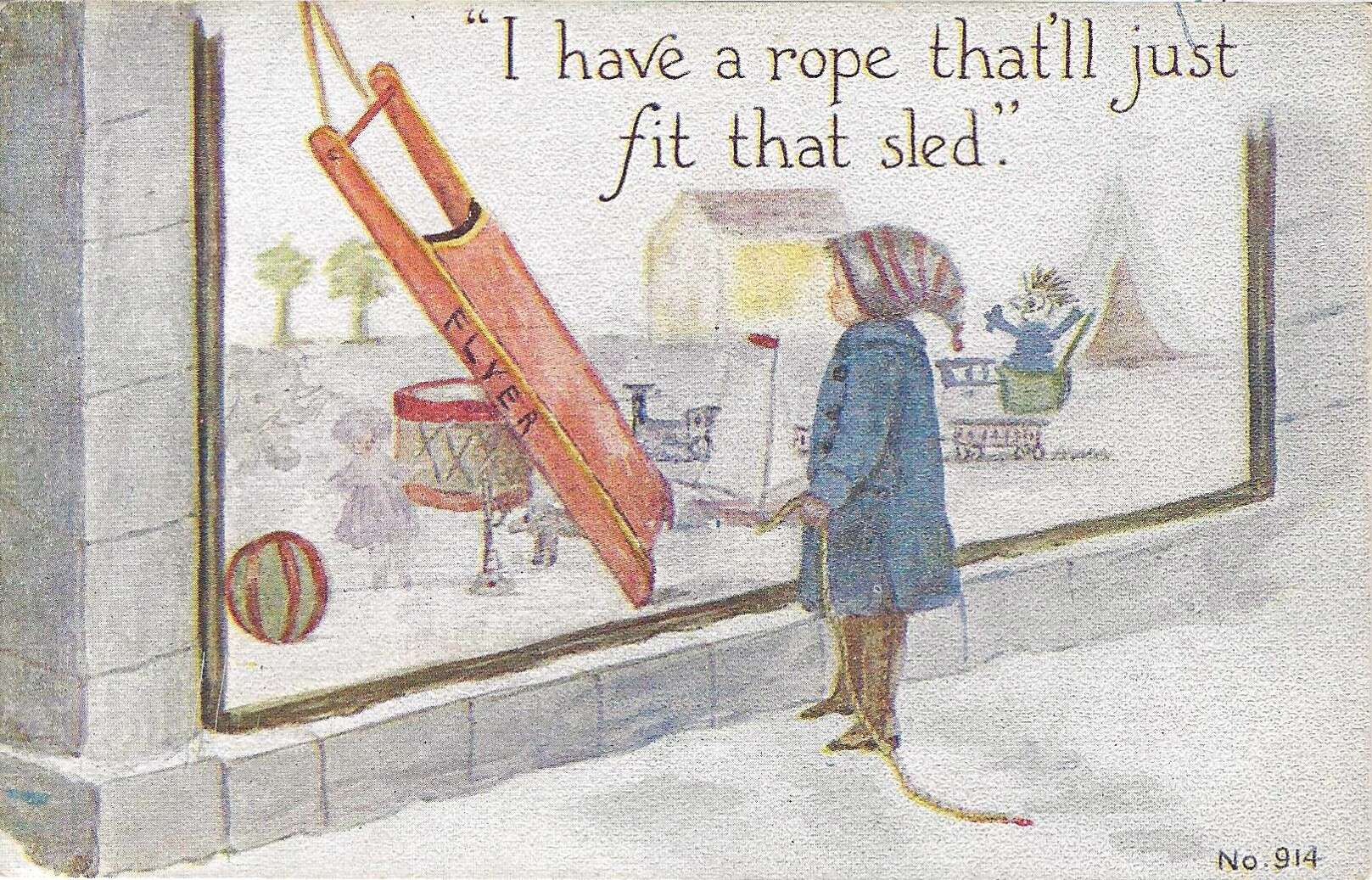
THE SLED … There was a toy store near the home of a young boy who had a rope. He was seven or eight, and after snowstorms, he took his rope and walked down the street to admire a sled on display in the store window. He often pressed his forehead against the cold glass and would wonder why no one bought such a fine toy. It gleamed a bright, impossible red, the kind of red that made someone think of speed and laughter and the sharp bite of winter air.
That boy would tighten his grip on the rope in his hand, feeling the rough fibers against his palm. It wasn’t much—just an old length he’d found in the shed behind the house—but in his mind it was already looped around the sled’s handle, already pulling him across fresh snow.
He imagined the hill behind the school, the one the older kids always claimed first after a storm. He pictured himself at the top, the Flyer beneath him, the rope coiled neatly, the world waiting. For a moment, the thought warmed him more than his jacket ever could.
He remembered telling his mother about the sled the night before, how the name FLYER was painted in bold letters on the runner. She had smiled in that soft, tiring way she sometimes did after a long day. “Dreams don’t always come easy,” she’d said, brushing his hair back from his forehead, “but the ones worth having are the ones you don’t give up on.” She hadn’t promised him the sled. She never made promises she couldn’t keep. But she’d squeezed his shoulder and added, “If it matters to you, then keep your eyes open. Life has a way of surprising people who work hard and believe.”
Inside the store, a bell jingled as the door opened as someone left with a large package wrapped in brown paper and tied with string. A gust of warm air brushed his face. He stepped back and was suddenly aware of how long he’d been standing there.
He knew the price of the sled; he’d checked it twice. It was more than he had, more than he could hope to earn before the snow melted. Still, he couldn’t make himself walk away.
Maybe, he thought, some things were worth hoping for even when they didn’t make sense. Maybe wanting something—really wanting it—was its own kind of magic.
He straightened up, squared his shoulders, and gave the sled one last look. “I’ll find a way,” he whispered, not to convince himself but because he already believed it. Then he turned toward home, the rope swinging at his side. The rope was his hint to keep the promise he made to himself.
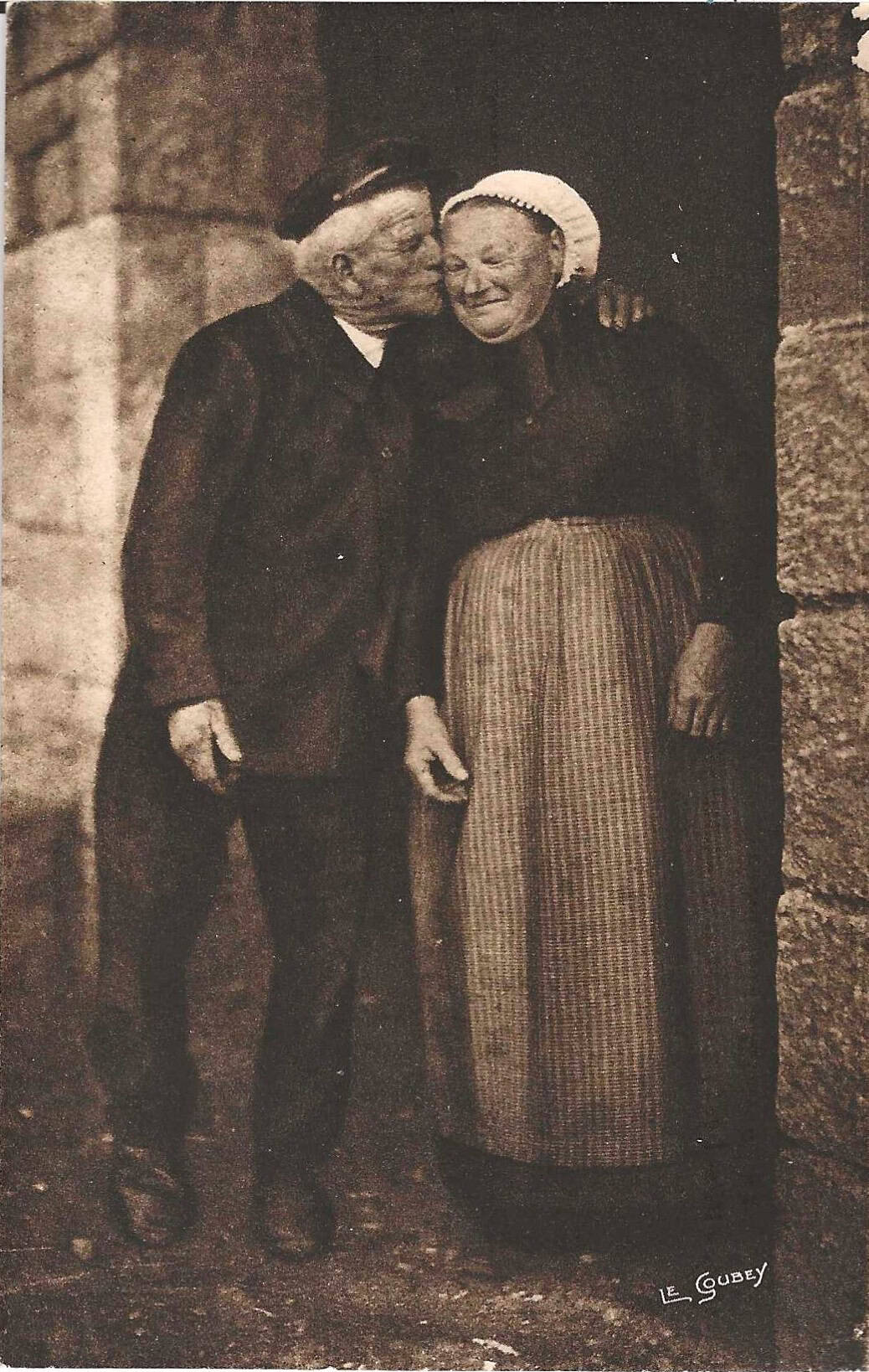
THE KISS … In the spring of 1928, the air in a little French village carried that gentle stillness that comes just before dusk. The elderly couple, Henri and Colette, stepped into the doorway of their modest stone home, the same home where they had raised children, weathered winters, and shared countless quiet mornings.
Their clothes were simple, their hands worn, but their posture held a quiet dignity. The photographer, a young man from the next town over, adjusted his tripod and asked them to stand very still.
Henri tried; he truly did. But as the photographer began his slow countdown—trois… deux…—something in him stirred. Perhaps it was the way the evening light softened the lines on Colette’s face, or the way she smiled at him, as she did long ago. Perhaps it was simply the weight of years, all those shared joys and sorrows rising at once. Whatever the reason, he leaned over and pressed a gentle kiss on her cheek.
Colette startled, just slightly, her shoulders lifting in a delighted quiver that made her look, for a moment, like the young woman he had courted long before the war. Her eyes widened, then softened, and a smile bloomed—radiant, unguarded, utterly sincere.
Un… clic!
The shutter tripped at the exact instant Colette’s joy met Henri’s tenderness. The photographer lowered his camera, stunned by the spontaneity he had captured. Henri and Colette simply laughed, as if they had shared this moment a thousand times before.
Years later, that photograph would sit on a mantelpiece, its edges yellowed, its subjects long gone. Yet the image would remain a testament to something simple and enduring: that love, when tended quietly over a lifetime, still finds ways to surprise.
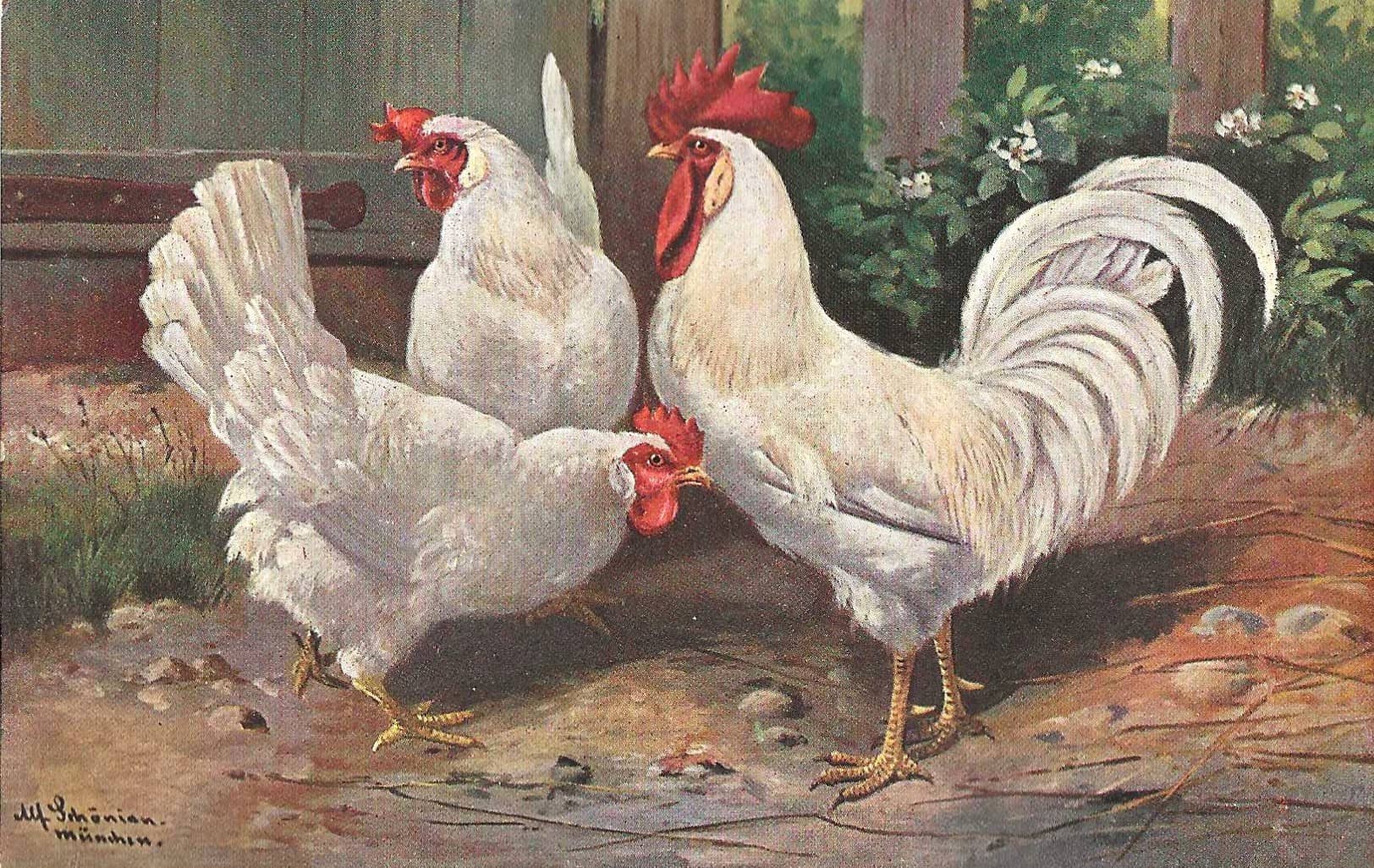
A ROOSTER, a HEN, and THEIR CHICK … Each morning one Spring, as the pale sun lifted over the Bavarian hills, the little family of birds gathered faithfully by the barn door. The rooster stood tall, his chest puffed with pride that he had survived hunger and six hard winters. The hen hovered close to him, as they watched their chick, who peeped with the impatient energy of youth. They knew the rhythm of the farm better than the clock on the kitchen wall, and they knew that soon the door would creak open and the farmer’s wife would appear with her apron full of corn.
To outsiders, they were just birds. But to the farmer and his hausfrau, they were reminders of a time when survival depended on small blessings. During the war, when food was scarce and fear was plentiful, the couple had found unexpected comfort in the simple companionship of the rooster and hen.
They had watched the birds scratch through rubble, rebuild nests after storms, and greet each day with a stubborn will to live. When the chick hatched in the first peaceful spring, it felt like a promise that life could begin again.
Now, years later, the birds remained as steadfast as ever. The farmer would chuckle as the chick, no longer quite so small, darted forward to snatch the first kernel. The rooster clucked reproachfully, the hen fussed, and the hausfrau laughed in a way she never did before the war softened her disposition.
These creatures, once destined for the stewpot, had become part of the household’s quiet rituals, they and a daily offering of corn were never forgotten, each part of a live proof that with resilience and tenderness, there could be a peaceful future.
***
Thank you for reading.