Totem poles have lured tourists to Alaska for well over a century.
The Pacific Coast Steamship Company of San Francisco, California, which began in 1876 provided summer excursions to Alaska as early as 1904 and soon after became the predominant steamship tour company running along the West Coast into Alaska.
The company’s steamship to Alaska, the SS Spokane was described in the advertising as “palatial,” made at least six round trips from early June to mid-August. The voyage was for eleven days, with stops in Ketchikan, Wrangel, Sitka, Juneau, Skagway, Treadwell Mine, Metlakatla, Taku Glacier, Davidson Glacier, Brady Glacier, and Muir Glacier.
The Alaska voyage was called “The Totem Pole Route.” It was heavily advertised to those who traveled to Portland, Oregon, for the Lewis and Clark Exposition of 1905 and the Yukon Pacific Exposition in Seattle, Washington, in 1909.
Those who would travel by train to a port could send a 2-cent postage stamp to the Chicago and North-Western Railway to receive a timetable, itinerary, and Alaska map plus information on railroad and steamship fares including meals and berths on board the ship. Advertising indicated you would be traveling the Inside Passage. And, best of all, “sea sickness unknown!”
If you sent two cents in postage to the Pacific Coast Steamship Company you could have a booklet, The Alaskan Indian Mythology mailed to you about the totem pole that included the history, legends and traditions, along with a description of an Indian Potlatch, the most celebrated of Indian ceremonies.
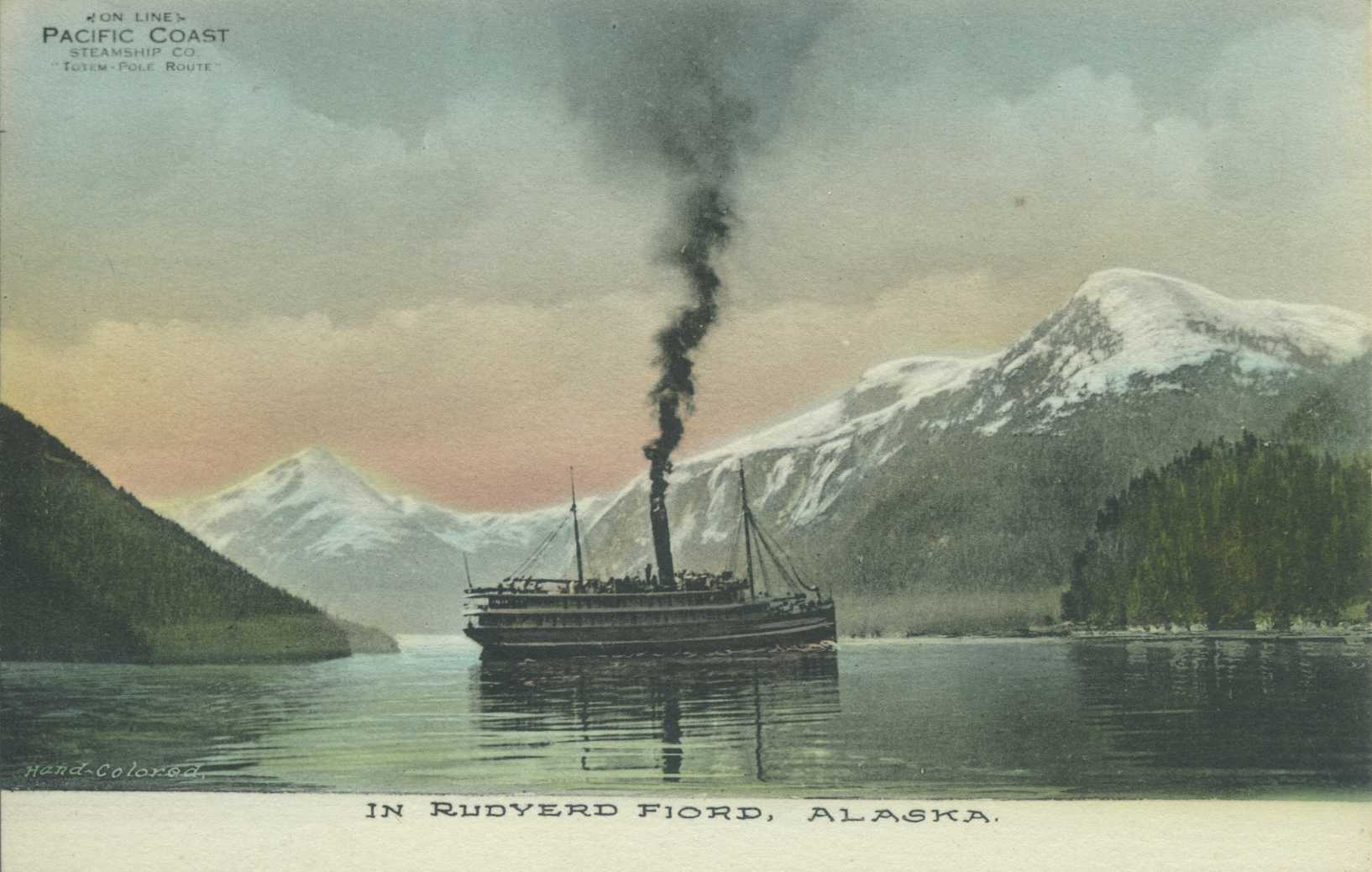
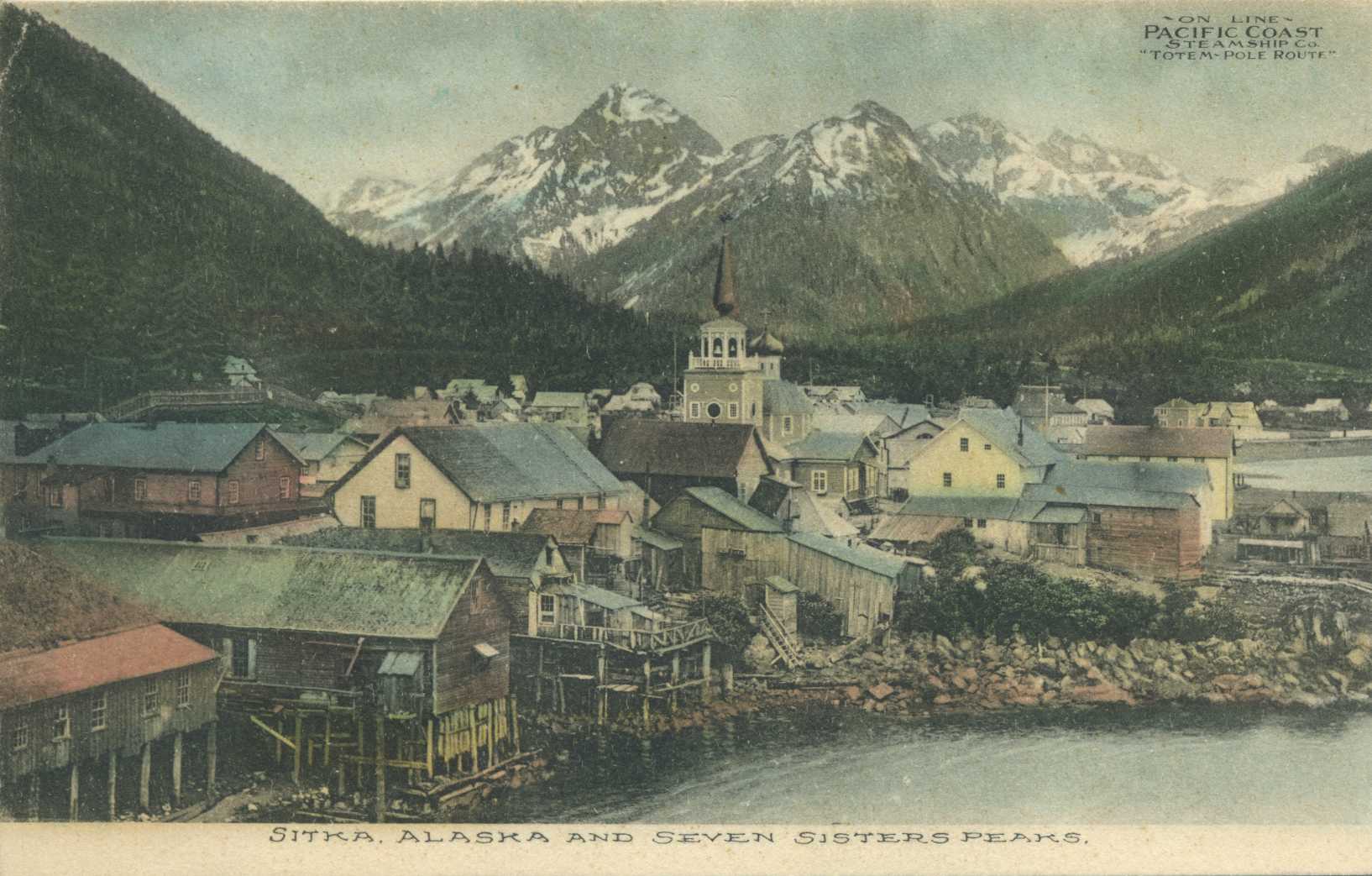
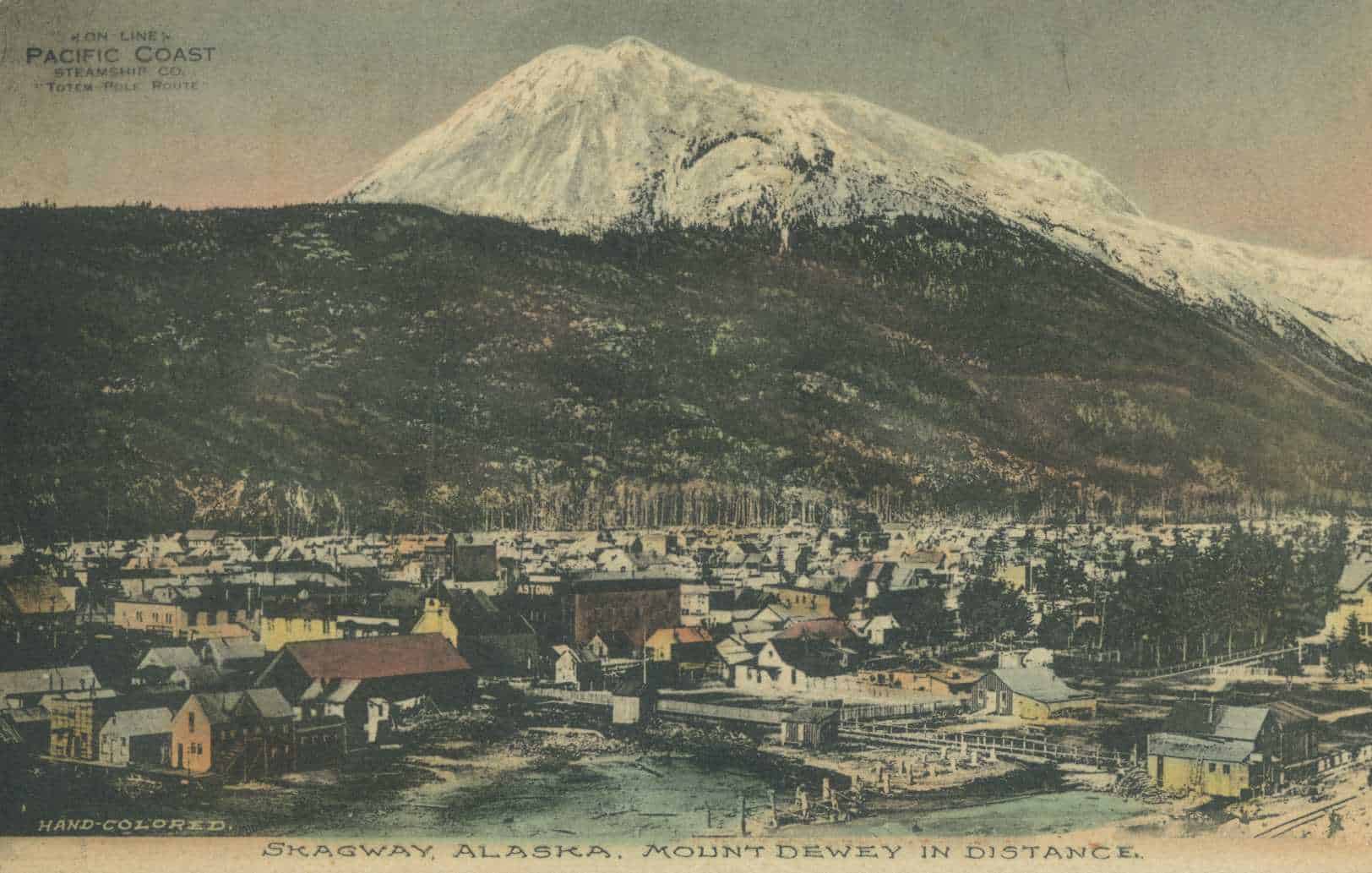
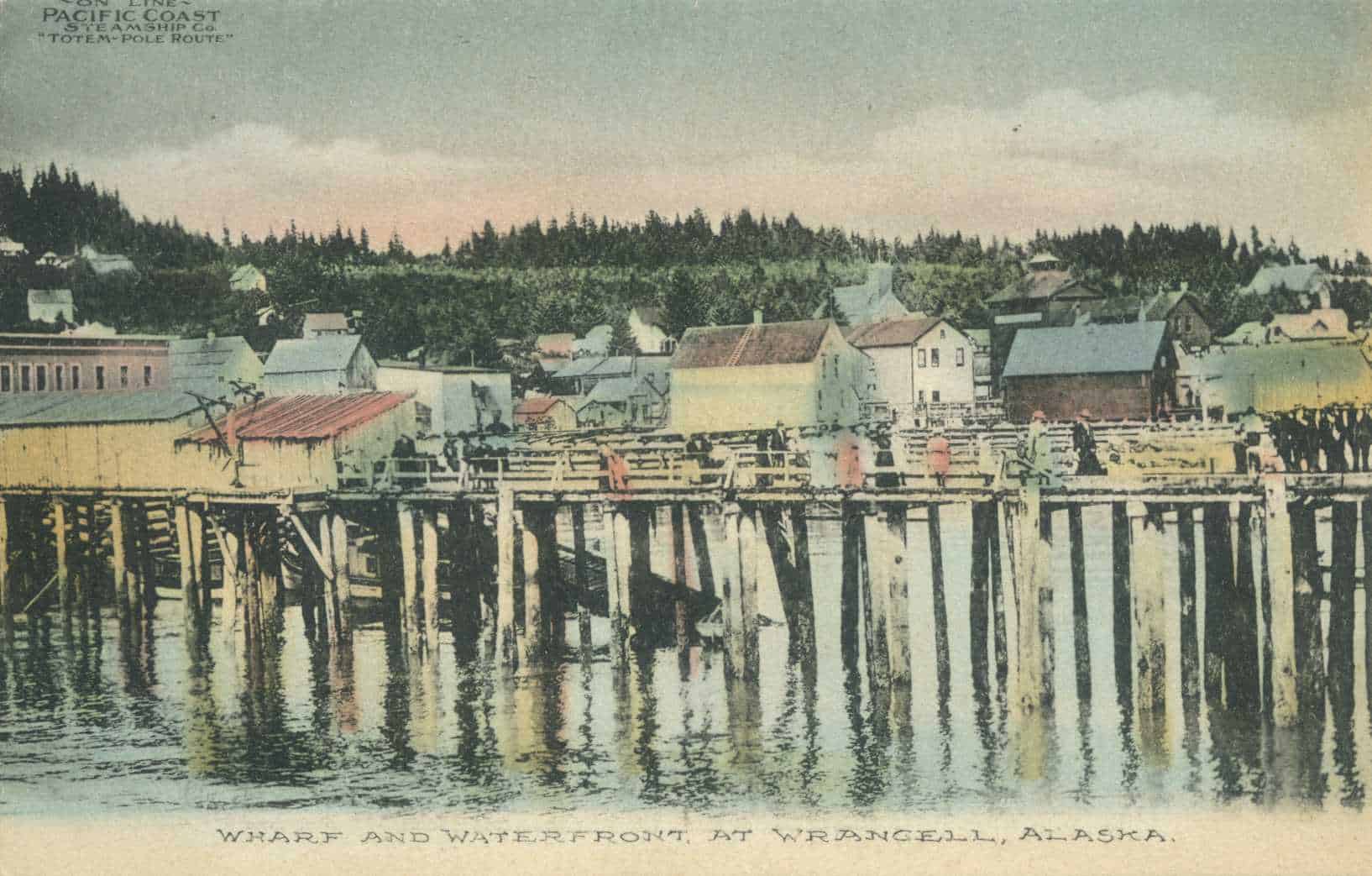
The Pacific Coast Steamship Company did a great job of visually promoting their Totem Pole Tour with an unnumbered set of colored Albertype postcards that highlighted the scenery and ports of call.
As a brief aside, the Albertype Company was based in Brooklyn New York and existed from 1890 to 1952. It was established by the Willemann brothers, already established printers. The Company used the Albertype printing method which was created by the German photographer Joseph Albert. The process was a planographic gelatin process using a flat glass plate. It produced very sharp images not unlike “real” photographs. It was a relatively expensive process so reserved for high quality and usually a long run production. At some point the Albertype Company also employed the Rotogravure process to produce their postcards. Rotogravure, also called Intaglio, was a different process that initially used engraved metal cylinders which transferred the image directly to paper. Both the image sharpness and saturated color are hallmarks of these two printing processes.
Some of the postcard images feature the steamship SS Spokane as she travels through the scenic Alaskan bays and fiords. Several postcards feature the rustic towns of Wrangel, Sitka, Juneau, and Skagway. Native craftspeople and totem poles round out the set. Each postcard is identified with “On Line PACIFIC COAST Steamship Co. Totem Pole Route” in either the upper left or right corners. All but two of the cards are landscape oriented. Logically, the two postcards featuring totems are portrait oriented. The stamp box has the typical “The Albertype Co. Brooklyn N.Y.” identifier.
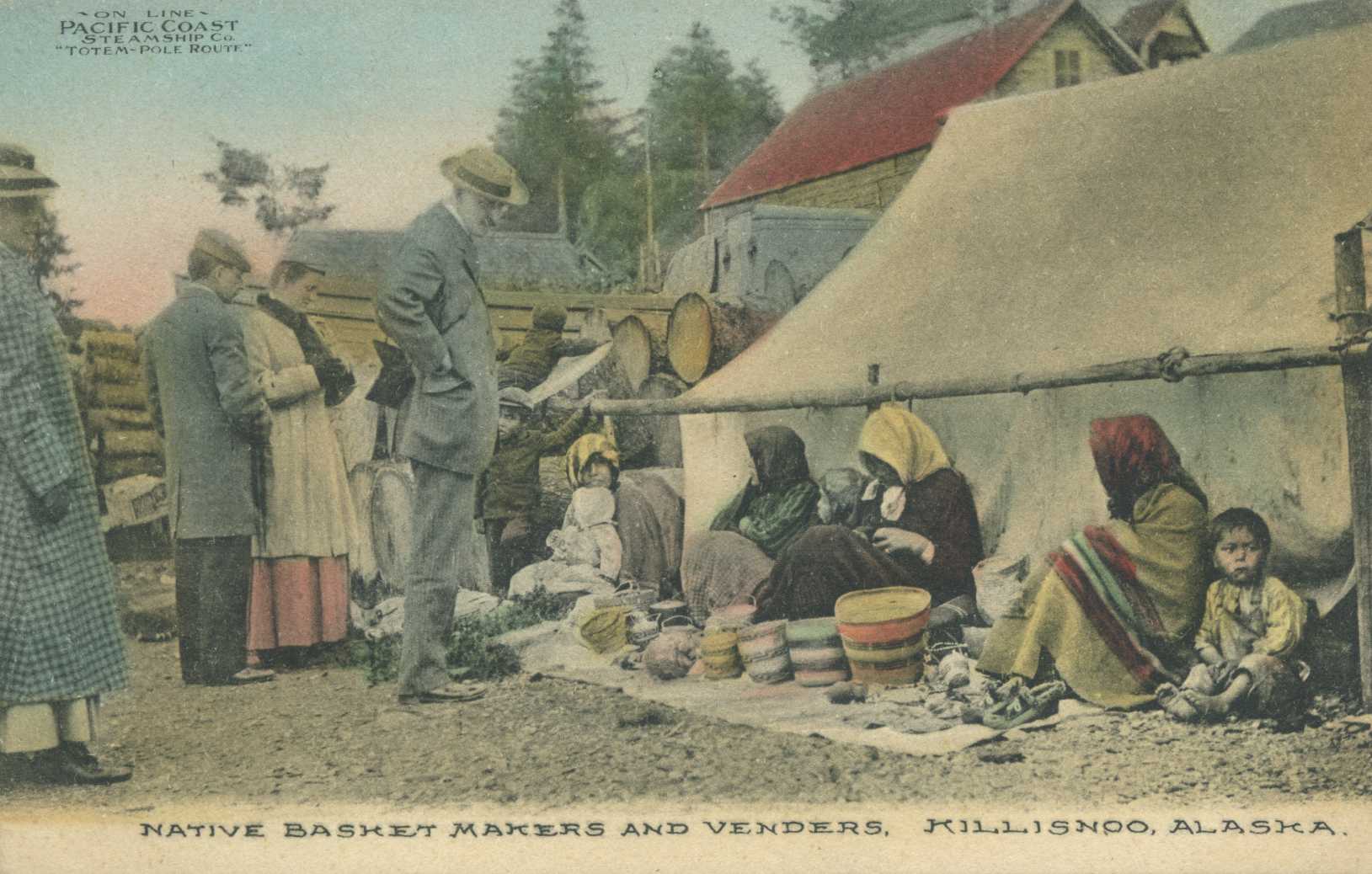
The postcard above was featured in the company’s “Alaska Excursions” booklet. A full-page ad asks, “Are you interested in basketry? Is Alaska represented?” Tourists visiting Alaska via THE TOTEM POLE ROUTE can purchase baskets, totems, and other curios at reasonable prices direct from the native makers.
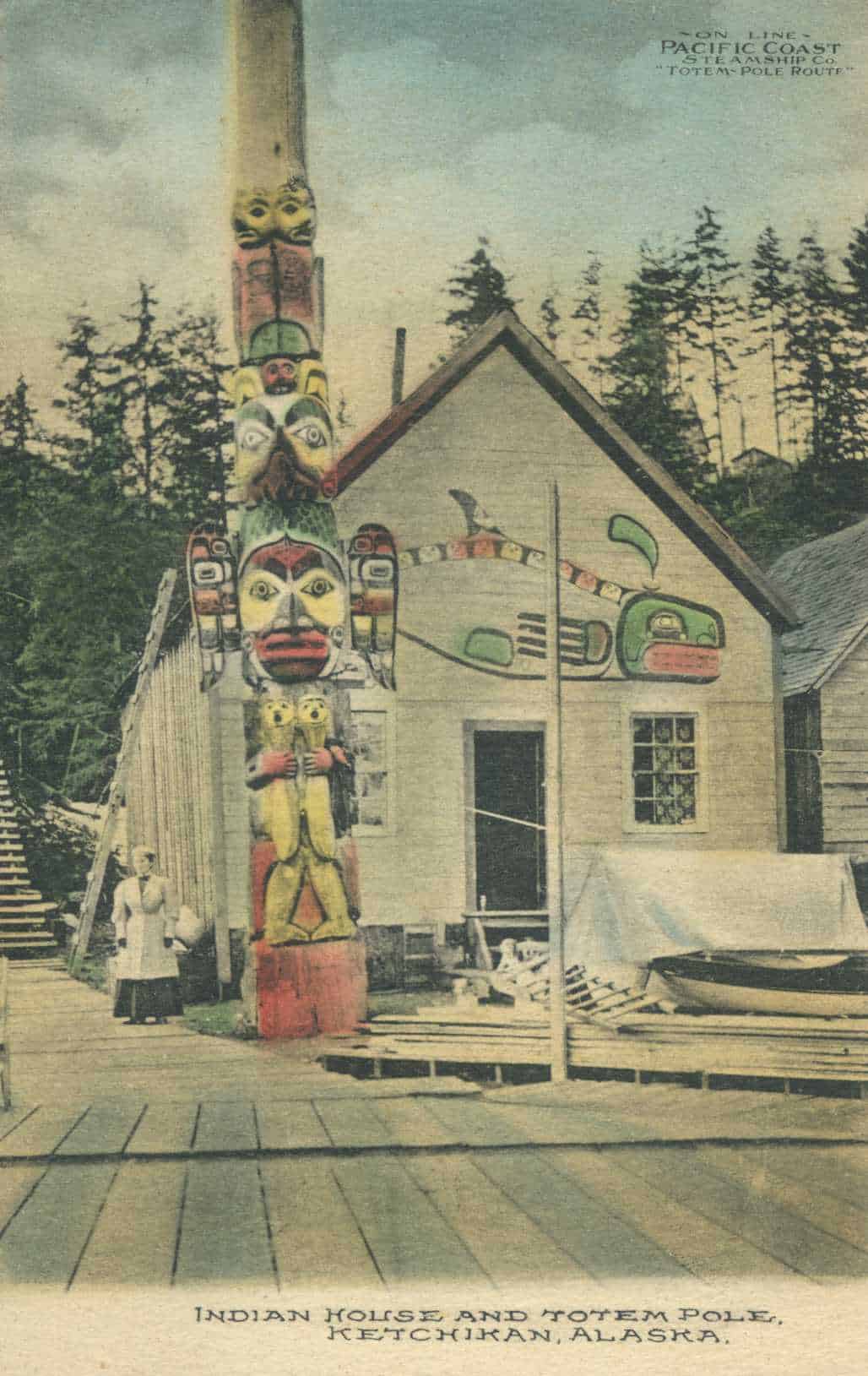
Indian House and Totem Pole, Ketchikan Alaska
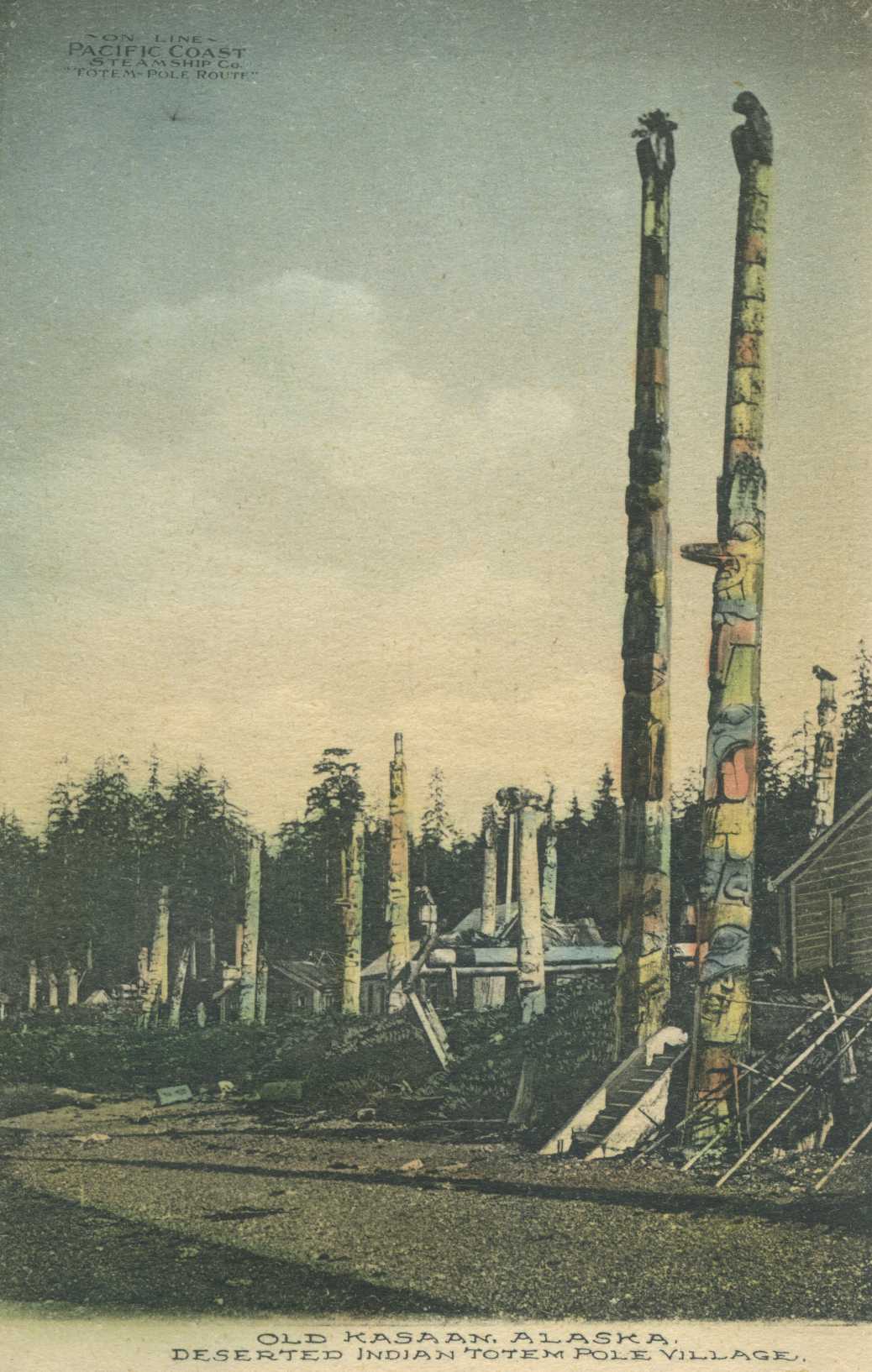
Old Kasaan Alaska Deserted Indian Totem Pole Village
The two postcard images of totem poles, one in front of a house in Ketchikan and the other showing the totems in the deserted village of Kasaan can be found on many other postcards, but none are as attractive as these Albertype cards.
The images in this set were also sold in a book entitled Alaska Scenic Hand Colored and published by the steamship company. The book is 11¼” x 14” with the images being 6” x 8” and one 6” x 16” foldout. As a side note, there are two editions: the San Francisco edition book has ten pages of plates, but the New York edition has eleven pages of plates. I do not know which plate is not included in the San Francisco edition. These books are somewhat scarce.
Fortunately, all the postcards in this set can still be found for sale by postcard dealers and on various online selling platforms.
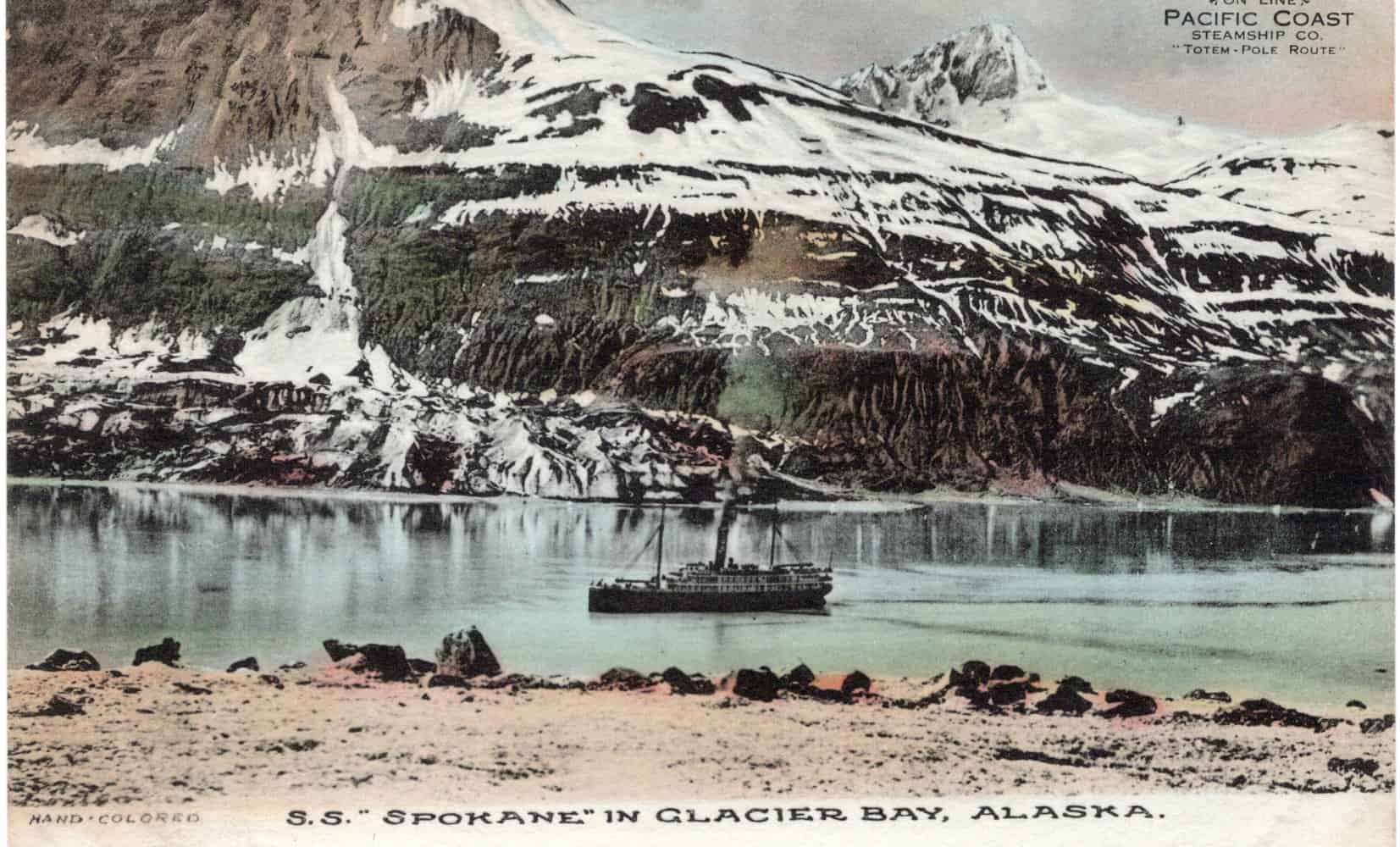
SELECTED TIMELINE OF THE STEAMSHIP SS SPOKANE
1901-02 She was built by the Union Iron Works Company in San Francisco. She was a steel bodied ship of over 270-feet long that could carry 171 first class passengers and additional steerage passengers.
1910 She ran ashore in Peril Straights Alaska and was repaired.
1911 She hit an uncharted rock in Seymour Narrows Alaska and partially sank, resulting in two casualties.
1912 She was repaired and put back into service.
1922+ She was sold and renamed several times, plus the company went through various mergers and name changes.
1935 She was used briefly by the University of Oregon as a floating classroom.
1946 She was intentionally beached on Shaw Island in the San Juan Islands and converted to an unsuccessful resort.
1948 She was scrapped in Seattle.
Although the SS Spokane and the Pacific Coast Steamship Company are long gone, totem poles in Alaska live on. It is well worth a trip to Alaska to see the many totems and to absorb their beauty and long history.