Lizzie Borden was accused of the 1892 axe murders of her father and stepmother, Andrew and Abby Borden. Her entire public identity is wrapped around those brutal killings at the Borden home in Fall River, Massachusetts. Even though she was acquitted, the rhyme and the legend that followed eclipsed everything else about her life.
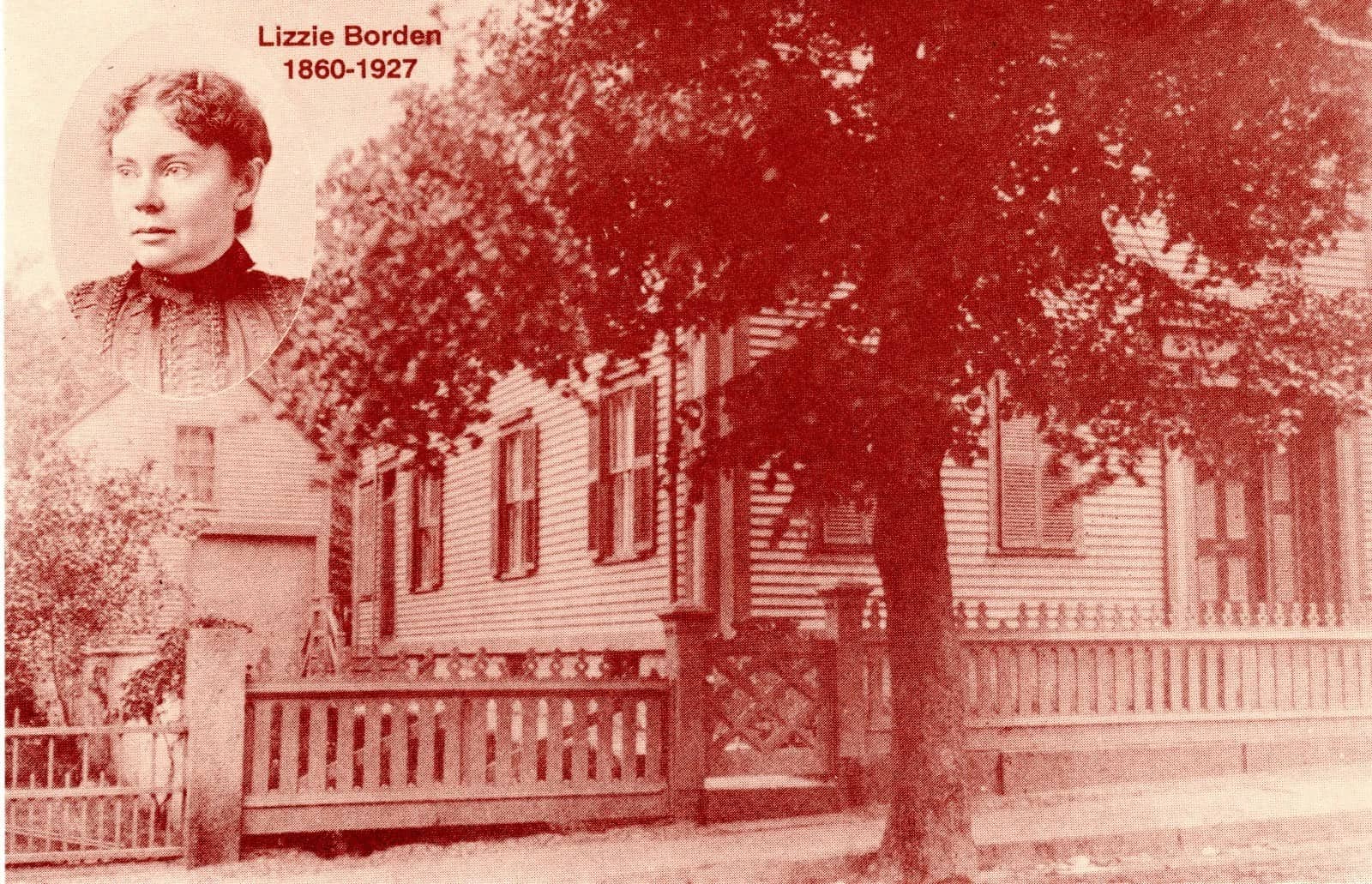
“Lizzie Borden took an axe,
And gave her mother forty whacks;
When she saw what she had done,
She gave her father forty-one.”
Children sang this rhyme for decades to skip-rope, yet the Borden murders of 1892 remain one of America’s most infamous unsolved crimes. On the morning of August 4 in Fall River, Massachusetts, Andrew Borden and his wife, Abby, were brutally killed inside their home. Andrew, a wealthy and notoriously frugal businessman, was found on the sitting‑room sofa with his face nearly destroyed by repeated blows from a sharp instrument. Abby had been attacked earlier upstairs, struck multiple times from behind while she was making the bed in the guest room.
Suspicion quickly fell on Andrew’s 32‑year‑old daughter, Lizzie, who was home at the time. Her shifting statements, calm demeanor, and the absence of any sign of forced entry fueled public speculation. Investigators also noted the tense atmosphere within the household, marked by inheritance disputes and strained relationships. Despite this, no murder weapon was definitively linked to her, and no bloodstained clothing was ever found.
Lizzie’s trial mesmerized the nation. It took place in New Bedford starting on June 5, 1893. Prosecuting attorneys were Hosea M. Knowlton and future United States Supreme Court Justice William H. Moody; defending were Andrew V. Jennings, Melvin O. Adams, and former Massachusetts Governor George D. Robinson. Her defense stressed the lack of physical evidence and the improbability that a woman of her social standing could commit such a crime, after all Lizzie and her sister Emma had a relatively religious upbringing and attended Central Congregational Church.
The most gruesome moment of the trial came when both victims’ skulls (their heads had been removed during an autopsy), were admitted as evidence. Upon seeing them Lizzie fainted.
Newspapers across the country reported on the proceedings. At the end, she was acquitted, yet the mystery endured, and Lizzie lived the rest of her life under the shadow of suspicion.
Borden was ill the last years of her life and died at age 66 on June 1, 1927, of pneumonia that developed after gallbladder surgery. Her funeral details were not published and only a few neighbors attended.
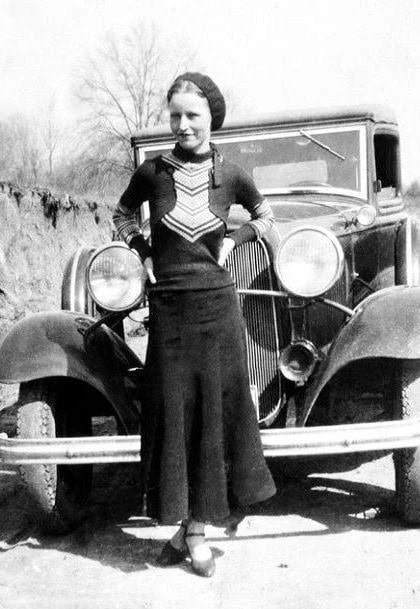
Bonnie Elizabeth Parker was a “pencil-thin” girl who stood only 4’11” tall and weighed only 90 pounds. She had strawberry‑blonde hair, freckles, and was delightfully attractive. She also had a vocabulary that would, as the old saying goes, make a trooper blush.
Parker was born and raised in Rowena, Texas, on October 1, 1910. Her father was a bricklayer who died when Bonnie was only four years old. After her father died, her mother moved the family back to her parents’ home in Cement City, a suburb of Dallas, where Bonnie attended school.
Bonnie met Clyde Chestnut Barrow through his sister around 1930 when she was 19 years old. He was the fifth of seven children in a family with no assets and very little prospects for a future. It is a fact that when Clyde was born the family was living under a wagon in West Dallas and he was several months old when his father had enough money to buy a tent.
Barrow was first arrested in late 1926, at age 17; his second came early the next year and although he had some legitimate jobs from 1927 through 1929, he also cracked safes, robbed stores, and stole cars.
Bonnie had a life before crime, but history remembers her for joining forces with her boyfriend, Barrow, to commit robberies and murders in the American Southwest between 1931 and 1934. In her youth, she was known for being kind, an honor student, a poet, and for other creative writing endeavors. By age of sixteen, she had dropped out of high school, and in September of 1926 she married high-school sweetheart Roy Thornton.
Despite the abusive marriage and Roy’s imprisonment in 1929, she remained married to him until she died. She worked as a waitress to support herself. She became friends with future Dallas County sheriff deputy Ted Hinton, who would ironically be a member of the posse that would ambush the Bonnie and Clyde crime duo.
After their first meeting when he was released on parole, Bonnie decided to join Clyde in his criminal activities. Over two years, the couple was credited with killing at least twelve people, including nine law enforcement officers in three different states. They also committed robberies and auto thefts, and though their criminal activity was exciting and romantic to her, she was seriously injured in an auto accident during an escape from police.
They were eventually stopped when a posse of six law enforcement officials waited in ambush with rifles. After Barrow drew his gun, the couple was killed in a hail of bullets not far away from their Louisiana hideout. Before her death, she sent the reporters her infamous “Story of Bonnie and Clyde,” which was published. She was never a convicted criminal.
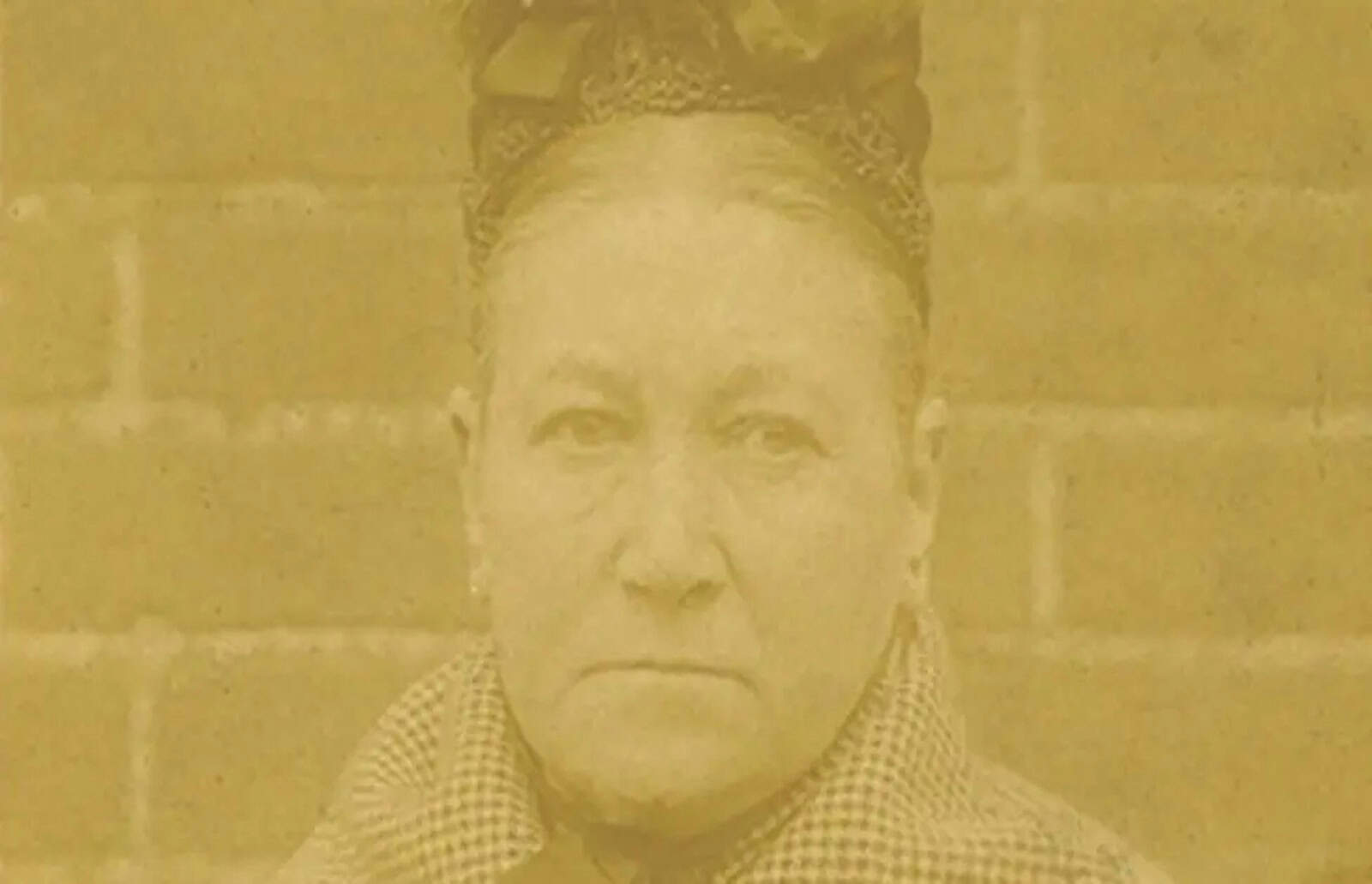
There was nothing nice about Amelia Dyer, she was a serial killer of babies. She is remembered solely for one horrifying thing: running a baby‑farming operation in Victorian England that led to the deaths of infant children. Her name is synonymous with her crimes.
Amelia Dyer, of Reading remains one of Victorian England’s most notorious serial killers. Operating between the late 1860s and 1890s, Dyer exploited the era’s desperate social conditions by engaging in “baby farming,” a practice in which a woman accepted infants from struggling mothers in exchange for money. While some baby farmers provided genuine care, Dyer turned the system into a mechanism for profit and murder.
Born Amelia Elizabeth Hobley in 1837 near Bristol, she endured a troubled childhood marked by her mother’s mental illness which may have contributed to her own instability. After training as a nurse, she discovered that taking in unwanted infants was far more lucrative than legitimate work.
Initially, she allowed children to die through neglect, but over time she escalated to deliberate killings, often by strangulation or poisoning. Authorities estimated she may have been responsible for as many as 400 deaths, making her one of history’s most prolific killers.
When she was finally brought to justice, It took the jury only four and a half minutes to find her guilty. She was allowed three weeks to write her “last true and only confession.” When a chaplain visited her the night before her execution and asked if she had anything to confess, she offered him her exercise books, saying, “isn’t this enough?”
Dyer was hanged at Newgate Prison on Wednesday, June 10, 1896. Asked on the scaffold if she had anything to say, she said “I have nothing to say,” just before being dropped at 9:00 a.m. precisely.
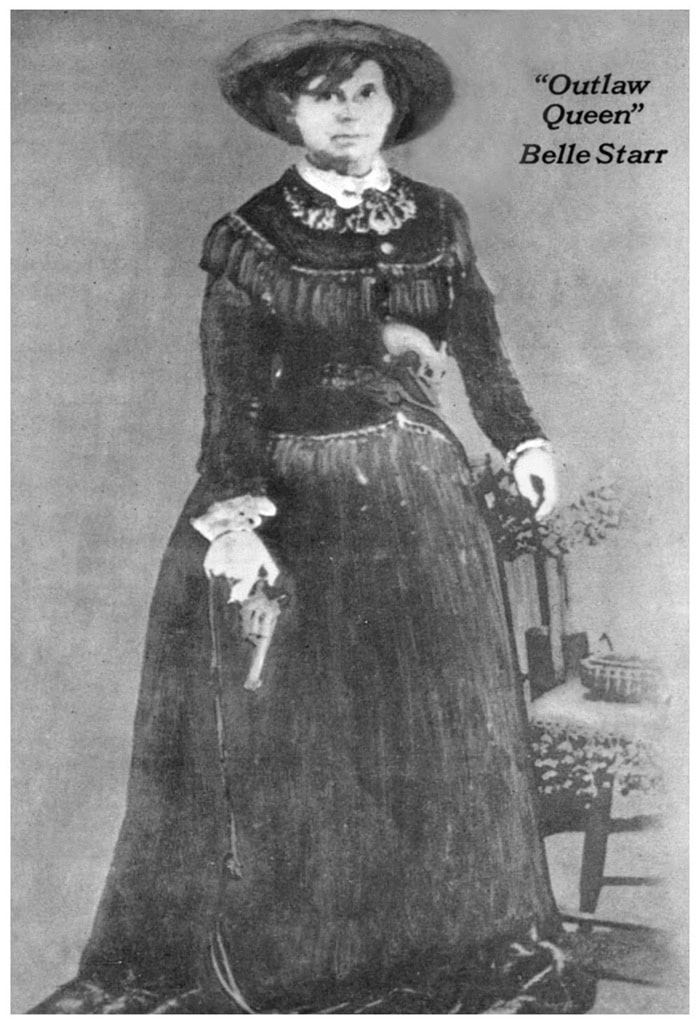
Belle Starr, also known as the “Bandit Queen,” was involved in horse theft and associated with several famous outlaws, including Jesse James and the Younger brothers. She was convicted of horse stealing in 1883.
Belle Starr is frequently remembered as the most notorious woman in the American Old West. She lived a life of rebellion and hardship, and her association with outlaws seemed a righteous path for her. Born Myra Maybelle Shirley in 1848 in Missouri, she grew up during the Civil War, and her family’s support of Confederate guerrillas was an early start on a life of lawlessness and shifting loyalty.
Starr was married three times. Each marriage deepened her exposure to the world of crime. Her first husband, Jim Reed, was a robber and horse thief. After Reed’s death, she married Sam Starr, a Cherokee outlaw, and together they were known for harboring fugitives, stealing horses, and evading authorities in Indian Territory.
Although Belle Starr was arrested multiple times, her most notable conviction came in 1883, when she was found guilty of horse theft and sentenced to nine months in prison. Reports from the era often exaggerated her role in criminal activity, blending fact with myth to create a larger‑than‑life persona. She cultivated an image of elegance and defiance, riding sidesaddle with a plumed hat and carrying herself with confidence. Her image, however, is tarnished by the fact that she never left home without a Smith & Wesson pistol, Model No. 3, likely a .44 caliber American model, reportedly given to her by Cole Younger.
Belle Starr was 40 years old when she was murdered on February 3, 1889 (two days shy of her 41st birthday). She was riding home when she was ambushed. After she fell off her horse, she was shot again to make sure she was dead. Her death resulted from shotgun wounds to the back and neck and in the shoulder and face. Officially, since there were no witnesses, the crime remains unsolved, but one of her sharecroppers was tried, convicted, and executed by hanging for Starr’s murder. Her unsolved death only added to her legend.
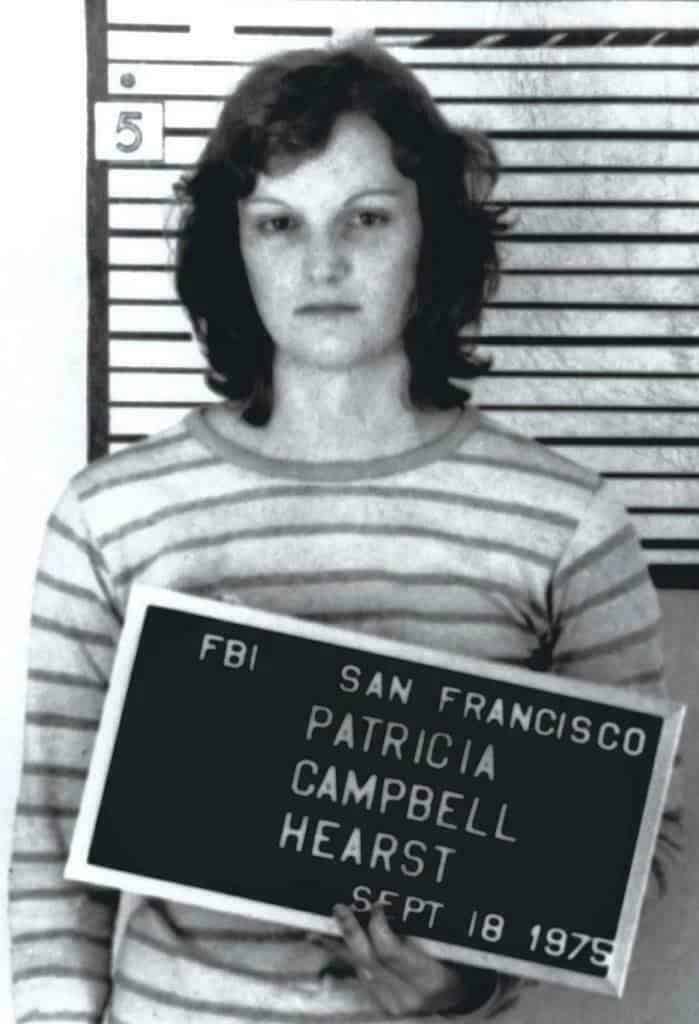
Patty Hearst may have been an unwilling criminal, but she was center stage in the mid‑1970s as one of the most debated episodes in American legal and cultural history unfolded.
In 1974, Hearst, the granddaughter of newspaper magnate William Randolph Hearst, was kidnapped by the Symbionese Liberation Army (SLA), a small radical militant group. During her captivity, she appeared to adopt the group’s ideology and took the name “Tania.”
The most widely publicized crime associated with Hearst was her participation in the armed robbery of the Hibernia Bank in San Francisco. Surveillance footage showed her holding a rifle and appearing to assist the SLA in the robbery, an image that quickly became universally controversial.
In the months that followed, Hearst was also linked to other illegal acts committed while she remained with the SLA, including the use of stolen vehicles and involvement in a series of violent confrontations connected to the group’s activities.
When she was eventually captured by federal authorities, Hearst was charged and later convicted for her role in the bank robbery. Her defense argued that she had been coerced and brainwashed, raising complex questions about agency, trauma, and criminal responsibility.
Her sentence was later commuted, and she eventually received a full presidential pardon by William J. Clinton on his last day in office.
I was a bit surprised to see Patty Hearst in this group of Notorious Women. I actually followed her case and felt sorry for her at the time. Overall, I learned more about a couple of other “bad girls” today too. Thank you!
If Ray’s article has whet your appetite for adventure, the Lizzie Borden House in Fall River, Massachusetts is now a museum and bed and breakfast. There are two suites and four rooms to chose from. Afternoon tea is served by Lizzie and her sister Emma. There are also evening ghost tours.
I live about ten miles from the Lizzie Borden home in Fall River. We named our current dog, Lizzie. If anyone asks my wife the dog’s name, she says “Lizzie Borden.” There is an early post card of the Bristol County Court House in New Bedford with the caption “Lizzie Borden was tried here” in my collection.
Awesome article filled with well researched information. I had never heard of Amelia Dyer and knew very little about Belle Starr.
Quite interesting! I’d never heard of Amelia Dyer… I looked her up after reading the article, which sent me down a rabbit hole about Victorian era baby-farming, and Britain’s Poor Law Amendment Act of 1834.
This is a fascinating article. Compared to the other women, Patty Hearst is pretty tame. I remember singing the Lizzie Borden song when I was a kid in elementary school.