One hundred years ago – in 1926, the Volstead Act had been in effect for six years. Citizens from coast to coast were conniving new ways to violate the law. No one wanted to become a criminal, but thirst is a difficult problem to cure.
The Attorney General in New York, Emory R. Buckner had calculated that the bootlegging business now had an estimated value of $3,600,000,000. The Supreme Court upheld the law limiting doctor’s prescriptions for medicinal whiskey per patient to one pint every ten days. President Coolidge told Congress that to have teeth in the Volstead Act, things needed to change. Those in favor insisted that more people were buying their babies shoes now that they couldn’t spend their money on alcohol. Wayne B. Wheeler, who was the general counsel for the Anti Saloon League of America, admitted that the league had paid some congressmen to lecture on their cause.
In other news, at Passaic, New Jersey, 16,000 textile workers walked out on a year-long strike, over a 10% pay cut. There were 23 lynchings in 1926. Ford Motor Company dropped the Model T and replaced it with the Model A. The stock market suffered major losses but came back strong. The first telephone calls between New York and London took place. The Navy ended a 15-year ban on chewing gum in their ship’s stores. The Massachusetts Supreme Court denied a new trial to Sacco and Vanzetti. Henry Ford enacted the five-day work week in his factories. Sinclair Lewis refused to accept the 1925 Pulitzer Prize for his novel Arrowsmith. DuBose Heyward’s novel Porky came out in 1926; George Gershwin picked it up one night because he couldn’t sleep. He read it through in one sitting and the next morning, wrote to Heyward and said he would like to build an opera around the “Catfish Row” story. It was also the year that John Erskine’s The Private Life of Helen of Troy was published, and the “Book of the Month Club” was started. The number one best seller was Hemingway’s The Sun Also Rises. And Gimbels Bargain Basement sales of “Charleston Flare” dresses at $1.58 soared.
All these stories were reported in the newspapers of the time in a myriad of ways by a plethora of reporters, but there is one tale missing from the list that very few remember. (Sadly, only one postcard has been found but others are probably not needed.) It concerns a case brought by the New York District Attorney against a Broadway producer, Earl Carroll. The “papers” dubbed the event as “The Wine Bath Trial.”
It goes like this: In 1922 Countess Vera Cathcart was the defendant in a rather sensational divorce from her husband George, the 5th Earl of Cathcart. It was a clamorous affair, and the British press had several heydays with the news that the Earl had accused his wife of adultery which in the end were the stated grounds for the dissolution. The divorce occurred early in Vera’s literary and theatrical career but after the split, she went on to write plays and novels, including Ashes of Love.
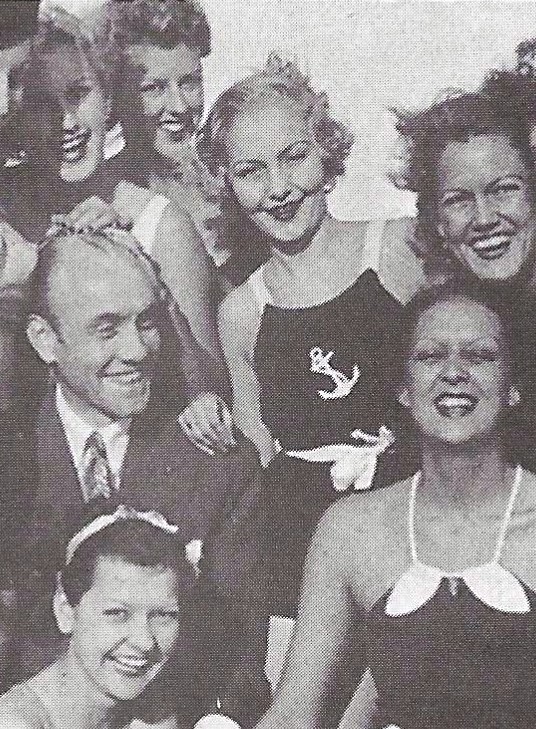
Vera Cathcart was a client, protégé, and friend of Earl Carroll’s.
Because of her divorce, the Immigration Service attempted to refuse her admission to these shores on the grounds of “moral turpitude.” Mr. Carroll wanted to present his friend with a “welcome back to New York” party at his Broadway theatre where he had invited several hundred people to an after-hours gathering where he unveiled what he thought was exactly what “Dry America” needed to enliven their evening soirees.
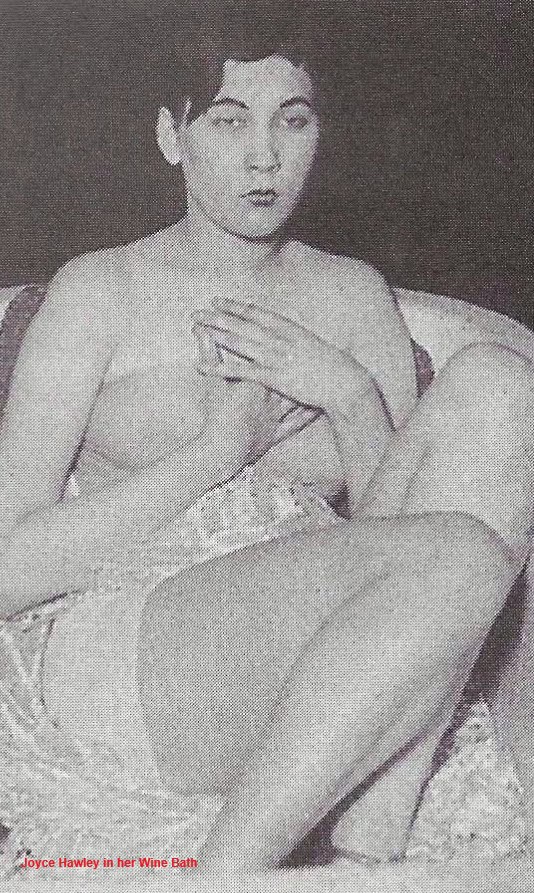
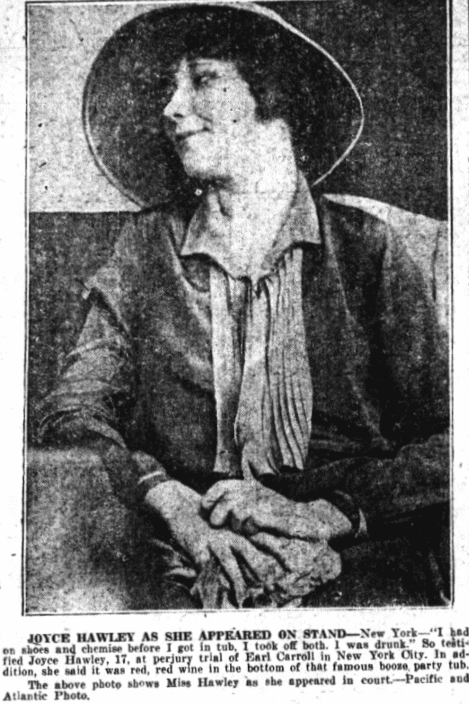
The curtain opened as a bathtub was wheeled centerstage. Carroll stood with an opera-cloak in front of the tub while just behind the 17-year-old Joyce Hawley shed her clothes and slipped into the tub. When the cloak was dropped Carroll invited his guests to step forth and enjoy a tumbler of the “bubbly water” and feast their eyes on the beautiful Miss Hawley who was radiantly awash in the latest vintage.
It was a plain and simple stunt – some would say, stupid – and it failed miserably.
Charges were filed and the producer was summoned before a Federal Grand Jury. The law was clear – in 1926 it was illegal to bathe in anything that contained more than 1.5% alcohol.
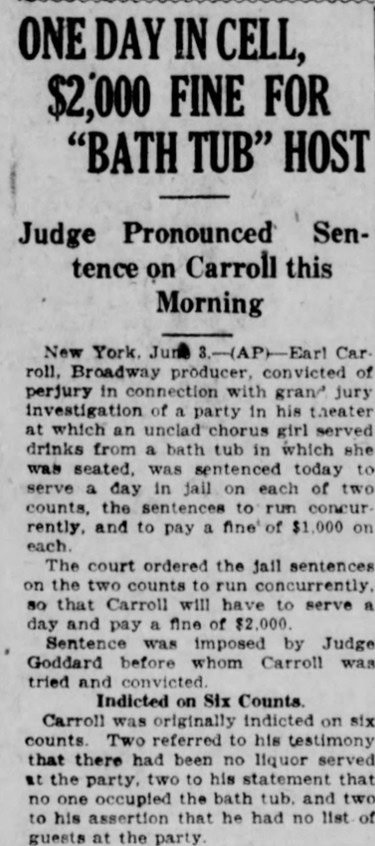
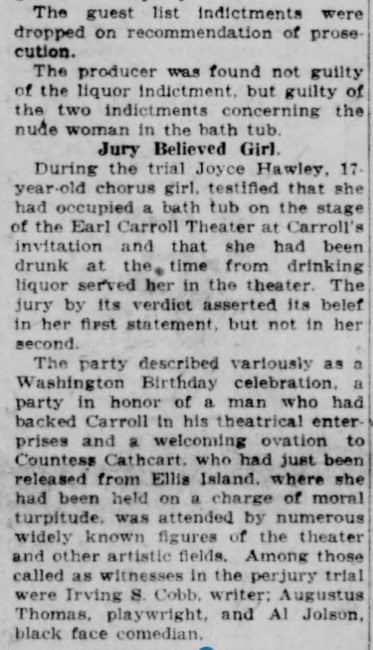
The trial against Earl Carroll concluded in June. The Associated Press reported the verdict as follows:
I enjoyed this essay on 1926. Correction: The novel by DuBose Heyward is titled “Porgy,” not “Porky.”
I think George Washington would’ve been OK with this celebration of his birthday.