Arundel, pronounce /uh-RUN-duhl/ (or in American English) /a-ruhnduhl/, Castle is among the most haunted castles in England. Five ghosts, four humans and one canine, make regular appearances at the castle. And in addition to the ghost stories there are an equal number of folk legends and mysterious sightings in the village and along the docks.

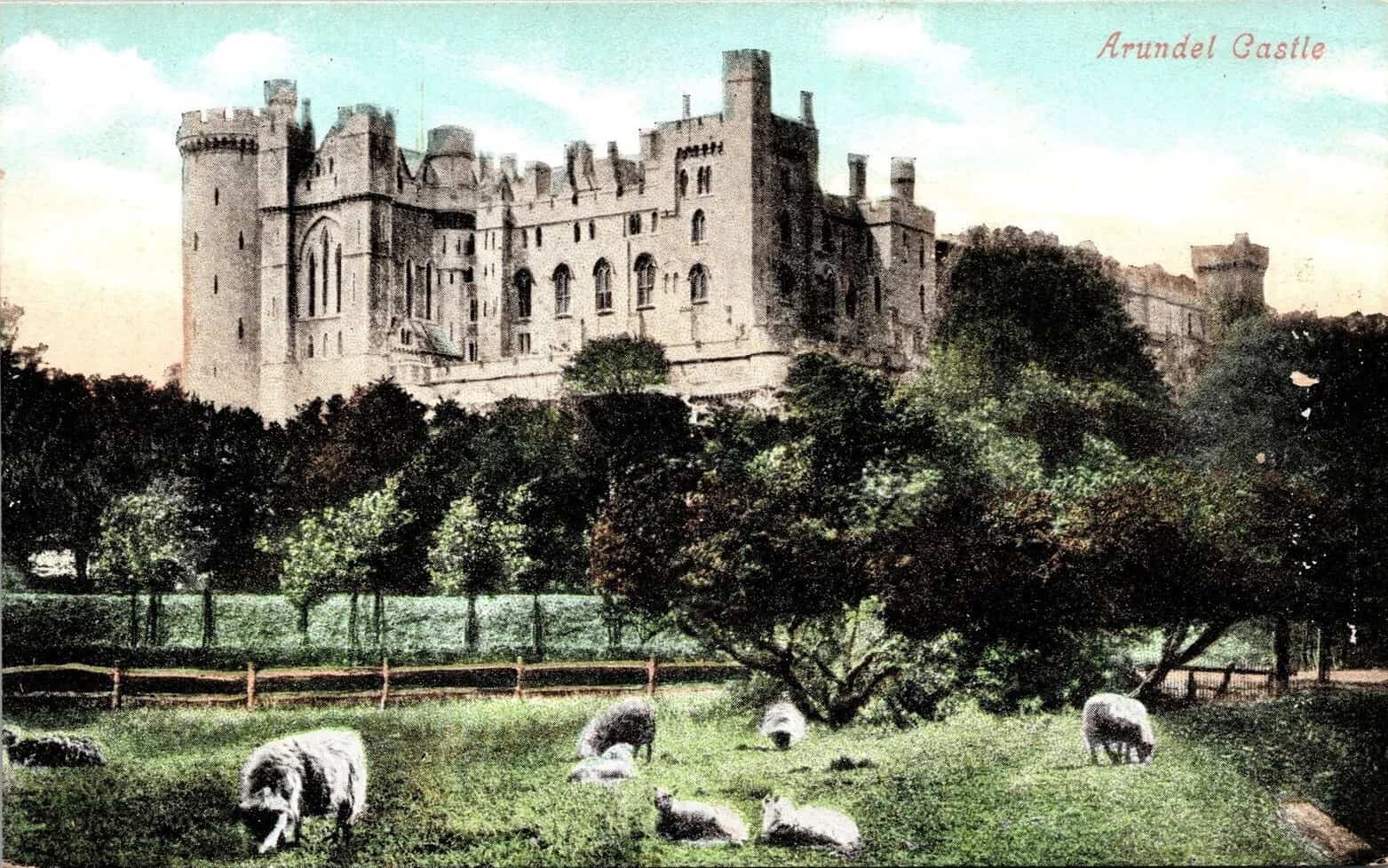
Arundel Castle, founded in 1067 by Roger de Montgomery was designed to secure the Sussex coast along the West Sussex shoreline. It was probably a good plan but totally ineffective since the castle is at least six miles from any beach that could serve an invader as a landing point.
Arundel has been the seat of the Dukes of Norfolk for over 400 years and has retained its eleventh century Norman keep, the castle was seriously restored in the late nineteenth century into a Gothic-style stately home.
Some of the town’s and castle’s historical highlights include the establishment of the village, on Christmas Day 1067 (exactly one year after William’s victory over Edward at Hastings in 1066). In 1102 Arundel became a critical fortress and fended off two sieges – one that same year and another in 1139.
During the English Civil War (1643), the castle was besieged twice, resulting in severe damage. It was later left in ruins for roughly 150 years. Restoration and modernization began circa 1790 and continued under the 11th Duke of Norfolk, Charles Howard until the mid 1800s. Further extensive rebuilding was completed in 1900 by the 15th Duke, making it one of the first English country houses with electric light and heating.
Royal visits always appear in architectural histories, and Arundel has one by Queen Victoria and Prince Albert who visited in 1846 and stayed three days. Presently, the castle is still used as a family home, and is a popular tourist attraction featuring extensive gardens and a historical art gallery showing works by Van Dyck and Gainsborough.
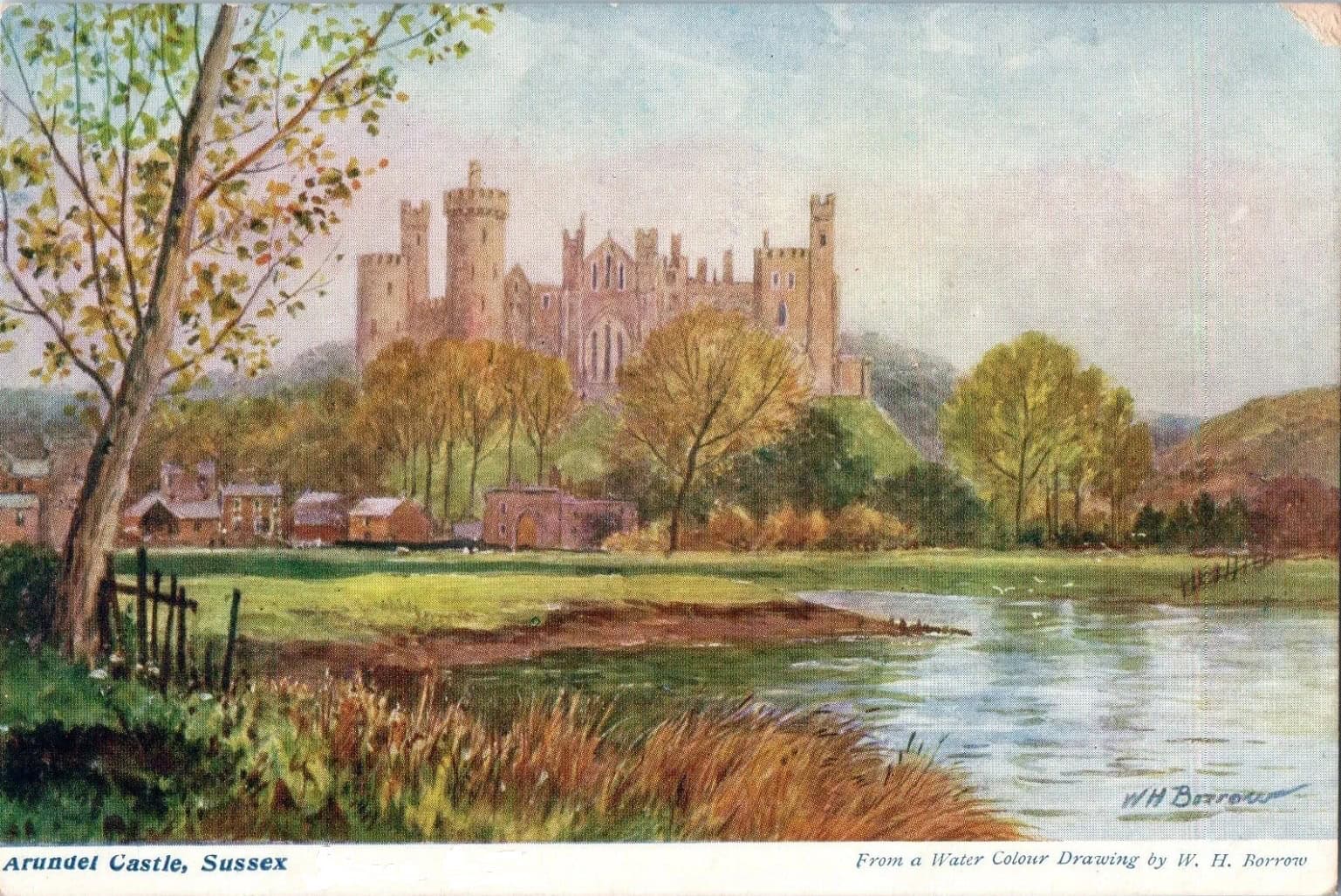
Arundel (often misspelled “Arundal”) has several enduring legends, especially centered on Arundel Castle. The hauntings at the castle are foremost since the castle is literally the Heart of Arundel and dominates the town both physically and mythologically. Since the founding, it has accumulated nearly a millennium of tales and ghost stories.
The “Blue Man of the Library” is the most famous of the five apparitions. He is a figure dressed in blue silk clothing from the Charles II era. Witnesses report that he appears briefly in the castle library, silently searching through books before vanishing. Sightings date back to 1630, making him one of the oldest recorded ghosts in the castle.
The “Kitchen Boy” is everyone’s favorite. His is a tragic legend of a young boy who worked in the castle kitchens some 200 years ago. After being beaten to death by his master, his spirit is said to linger. It is heard scurrying, scrubbing pots, or moving about, though never seen. This is considered one of the saddest of Arundel’s hauntings.
The “First Earl’s Ghost” is that of the peer who oversaw the original construction of the castle. He has only been seen in the corridors. He is described as protective — even jealous that his castle no longer is his, but strangers. He often causes disturbances when he is displeased over work being done on the castle or when rooms are repainted.
The “Ghost of the Lady in Hiorne’s Tower” remains unnamed. The best tale yet told is that a romantic but tragic love affair ended in heartbreak. The young woman whose heart was broken climbed Hiorne’s Tower, the tallest point of the castle, and leapt to her death. Her spectral form is said to reenact this final ascent before disappearing.
The castle is also said to be haunted by a small black dog, once belonging to St. Philip Howard, a nobleman imprisoned during the reign of Elizabeth I. The dog reportedly appears in the library or nearby rooms and often chases after the other ghosts but never barks or makes a sound.
Arundel has a mythic atmosphere throughout the town. Beyond the ghosts in the castle, Arundel’s appearance contributes to its mythic aura. Writers have compared it to a “fairytale town” or even a “Bastion of Camelot.” Those who think in terms of medieval towns with river settings are mesmerized by all things discovered in the Arun Valley.
* * *
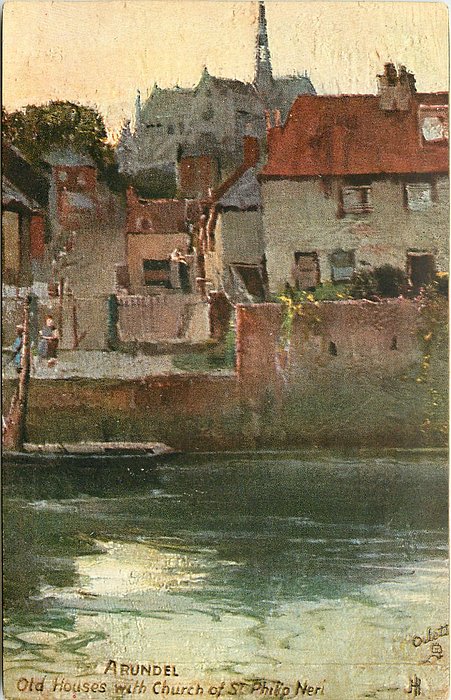
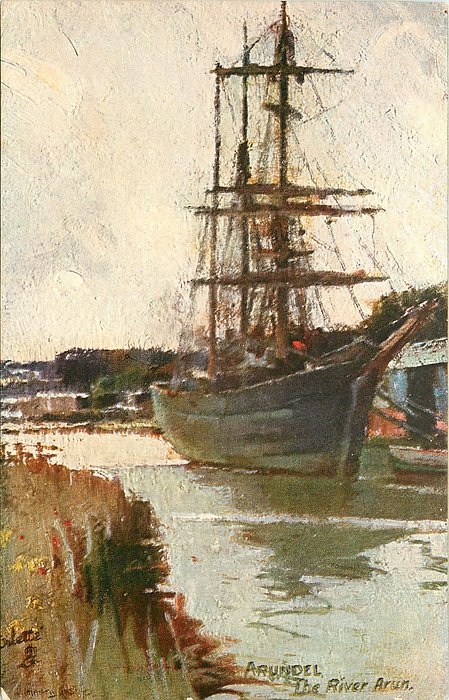
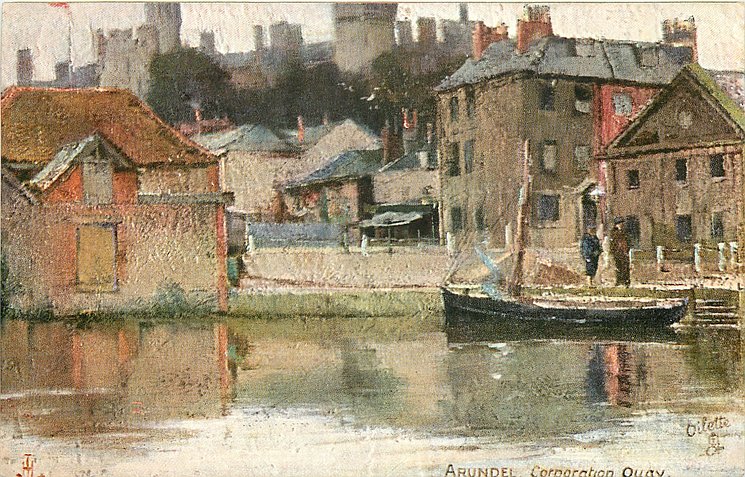
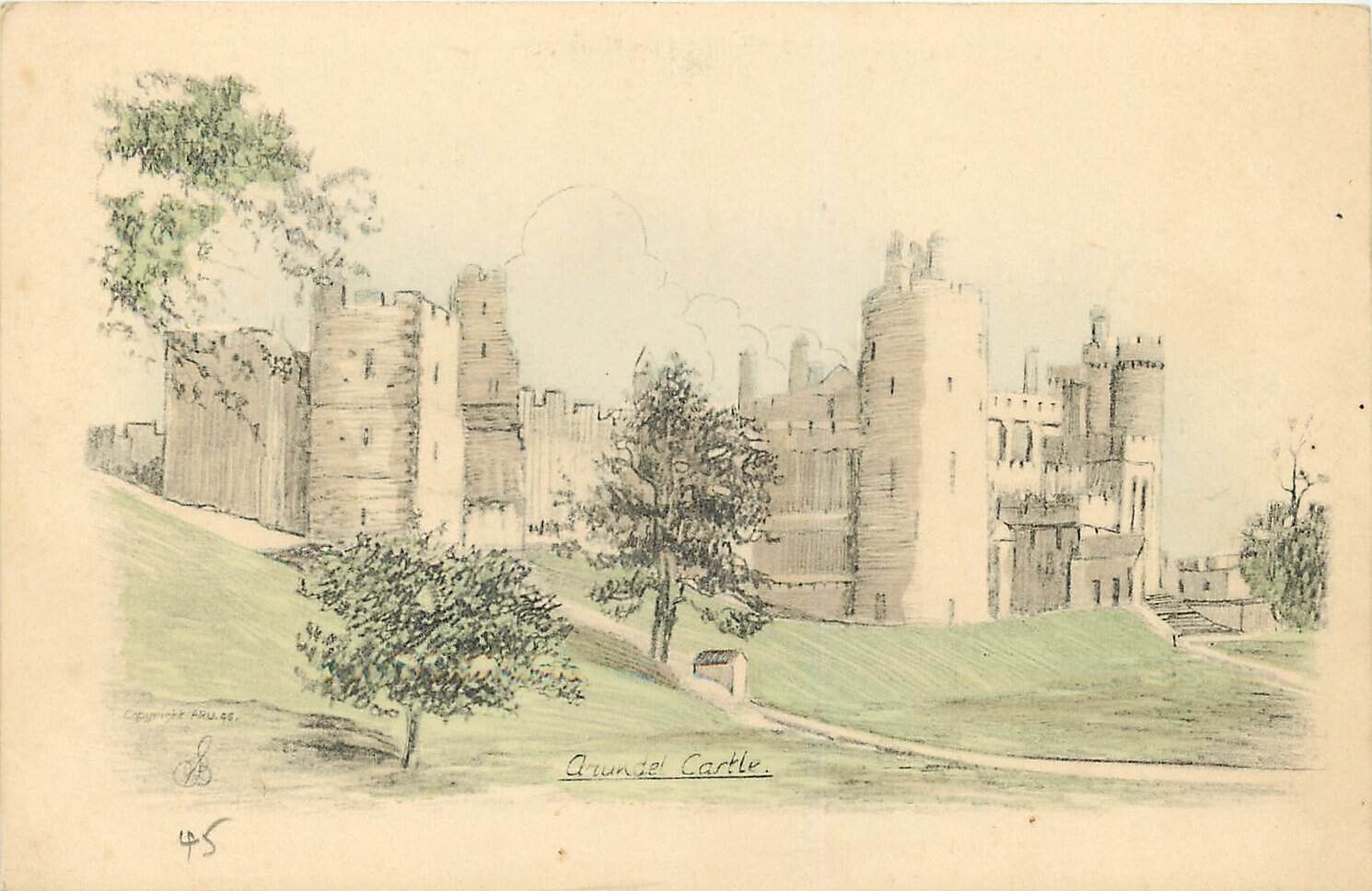
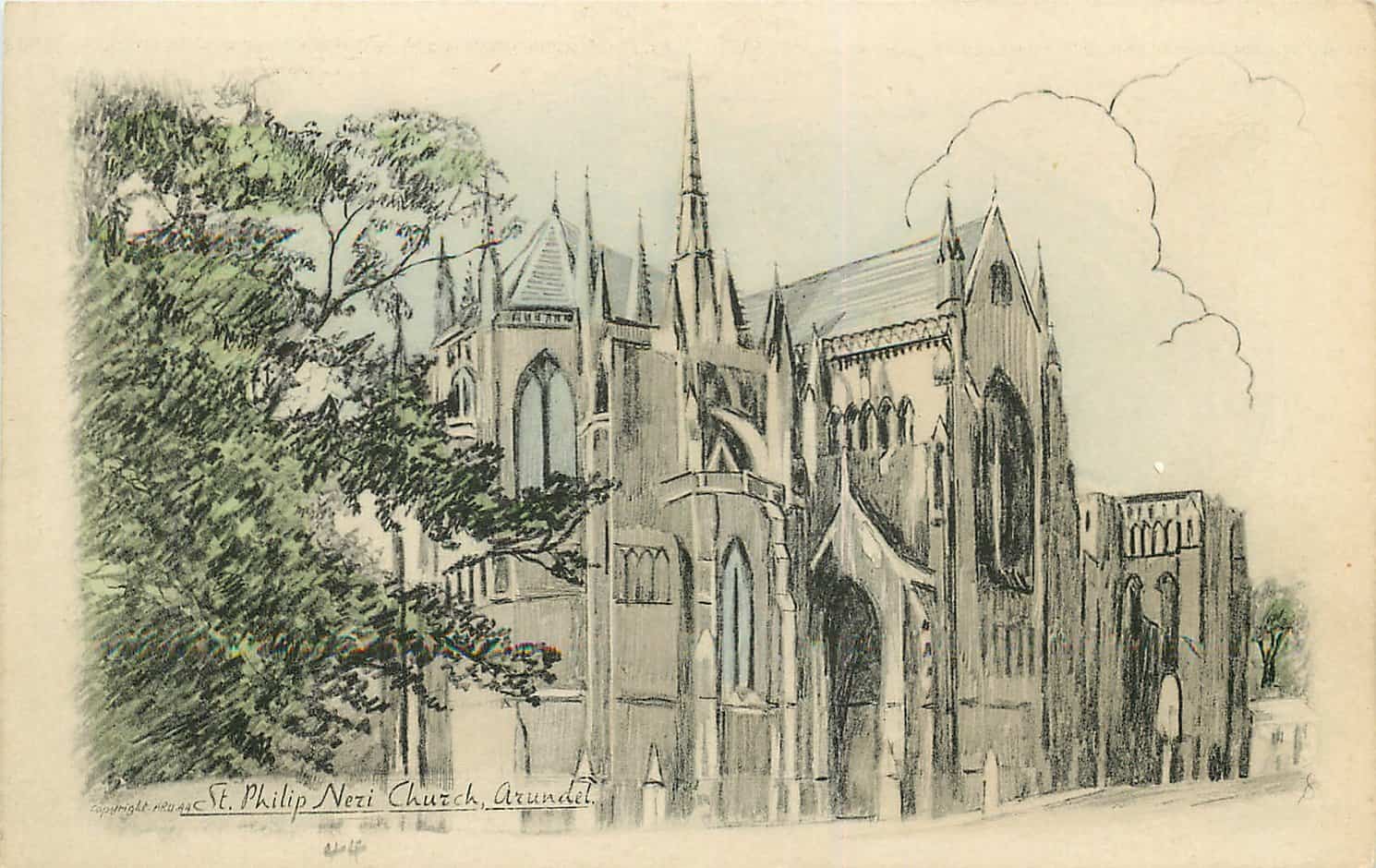
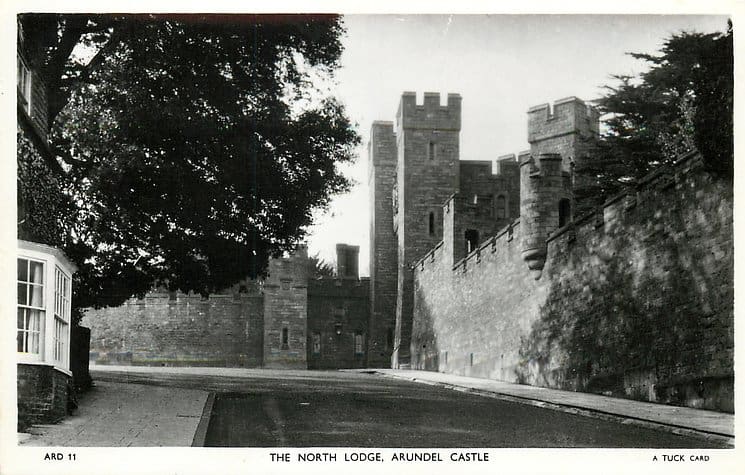
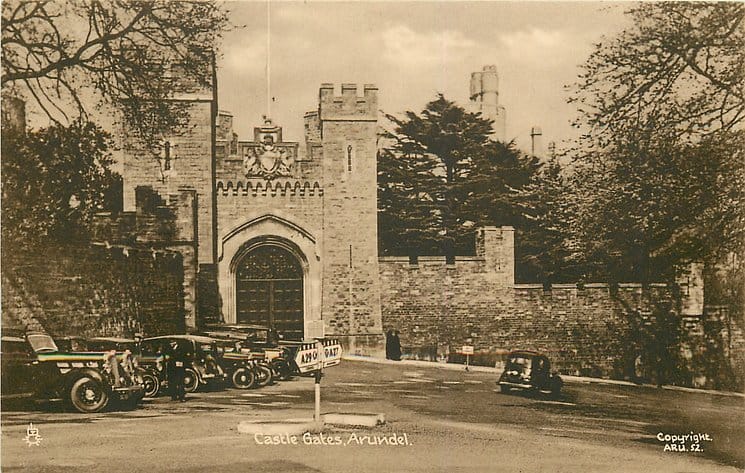
Postcards of Arundel are few but charming. There are some single cards of the castle, two artistic Tuck & Sons sets, (#7579 drawn by the British landscape artist, J. Henry Inskip) showing the village and the areas along the Arun River, and (#41 drawn by someone named S. Barrett). There are also three printed real-photo sets, one from 1937, another from 1944 and then 1956). Selected samples follow . . .
Inskip issues
Barrett issues
Printed real photo cards
Thank you, I have visited Arundel village and surrounding area a few times and have always felt it to be quite mystical. Never knew about the ghostly sightings in the castle. Will look out for postcards.