Walter Hayward‑Young (1868–1920) was a British artist who used the Nom de brush, “Jotter.” He is best known for his postcards and his landscapes throughout the British Isles that is estimated at more than 800 designs. He worked for two major publishers: M. Ettlinger & Co. and Raphael Tuck & Sons.
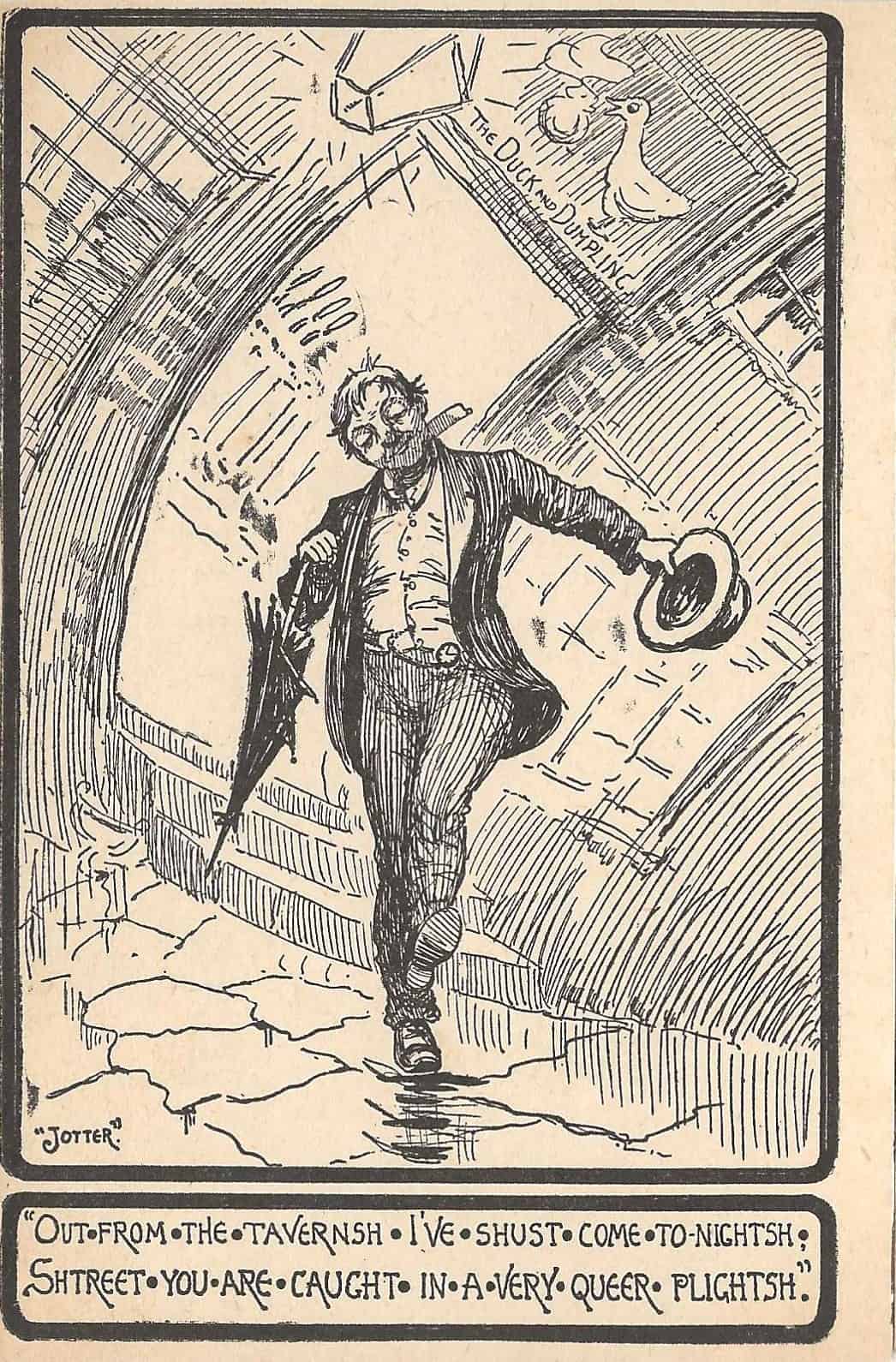
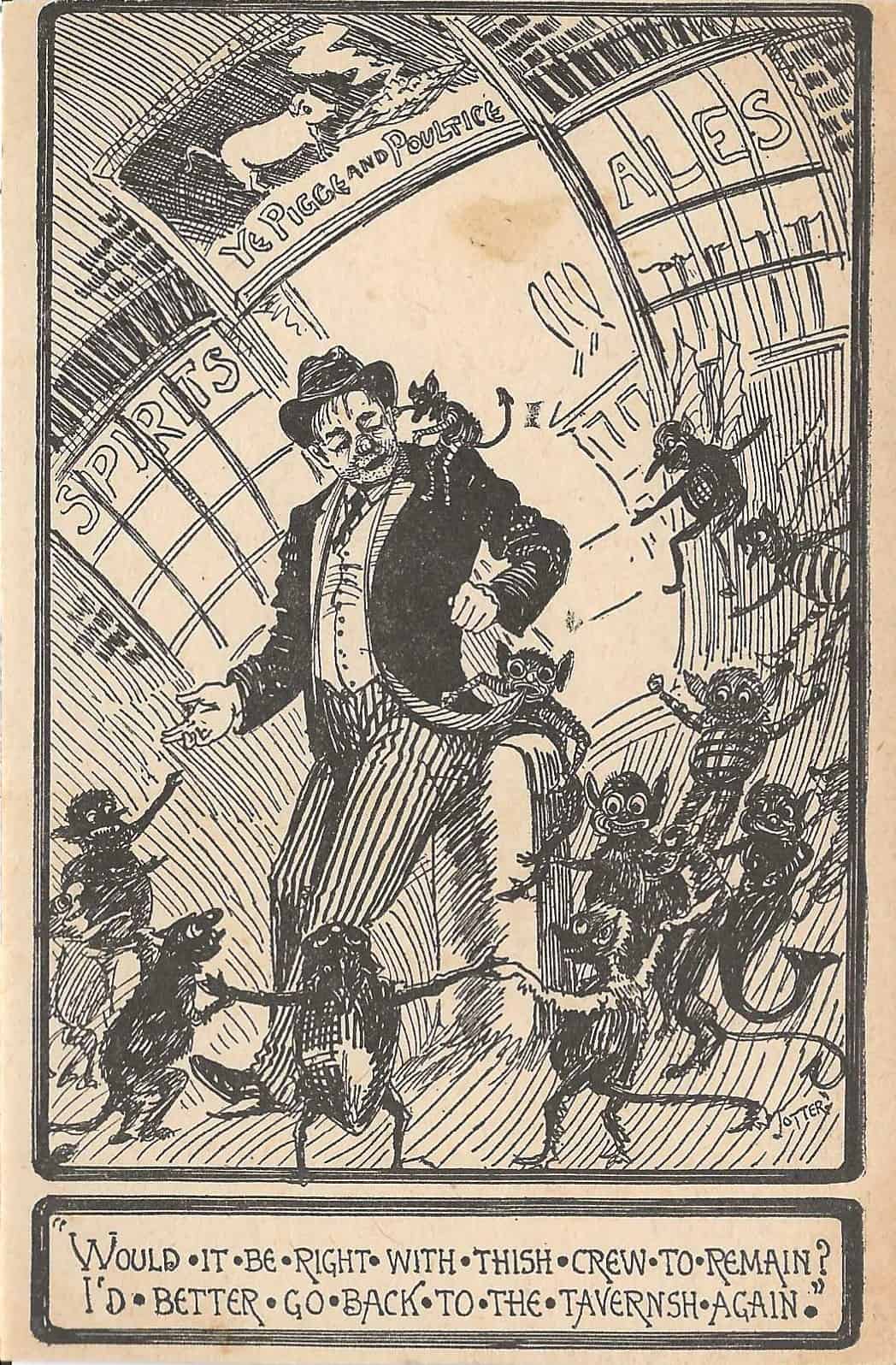
Ettlinger (very likely because of limited equipment) published most of Jotter’s line drawing comics and cartoons – his “Drunks” in particular – that are still highly collectable.
Walter Hayward‑Young was educated at the Warwick School and built his early reputation through postcard illustrations during the Edwardian and pre‑World War I years. Even his early works were signed “Jotter,” but there are no surviving primary sources that explain why. What can be said with confidence is that he used it consistently – on postcards, but also on his “serious” art.
***
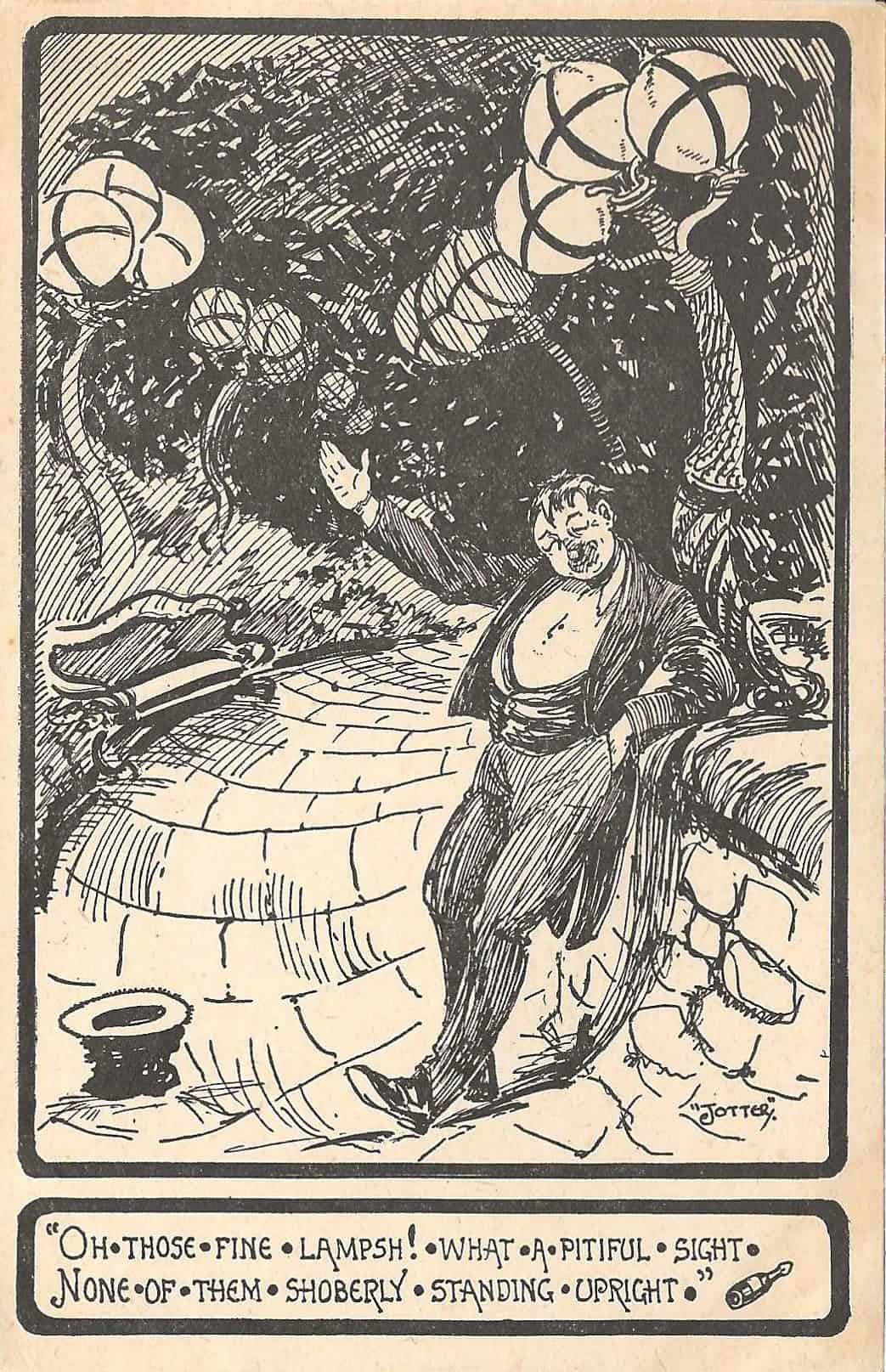
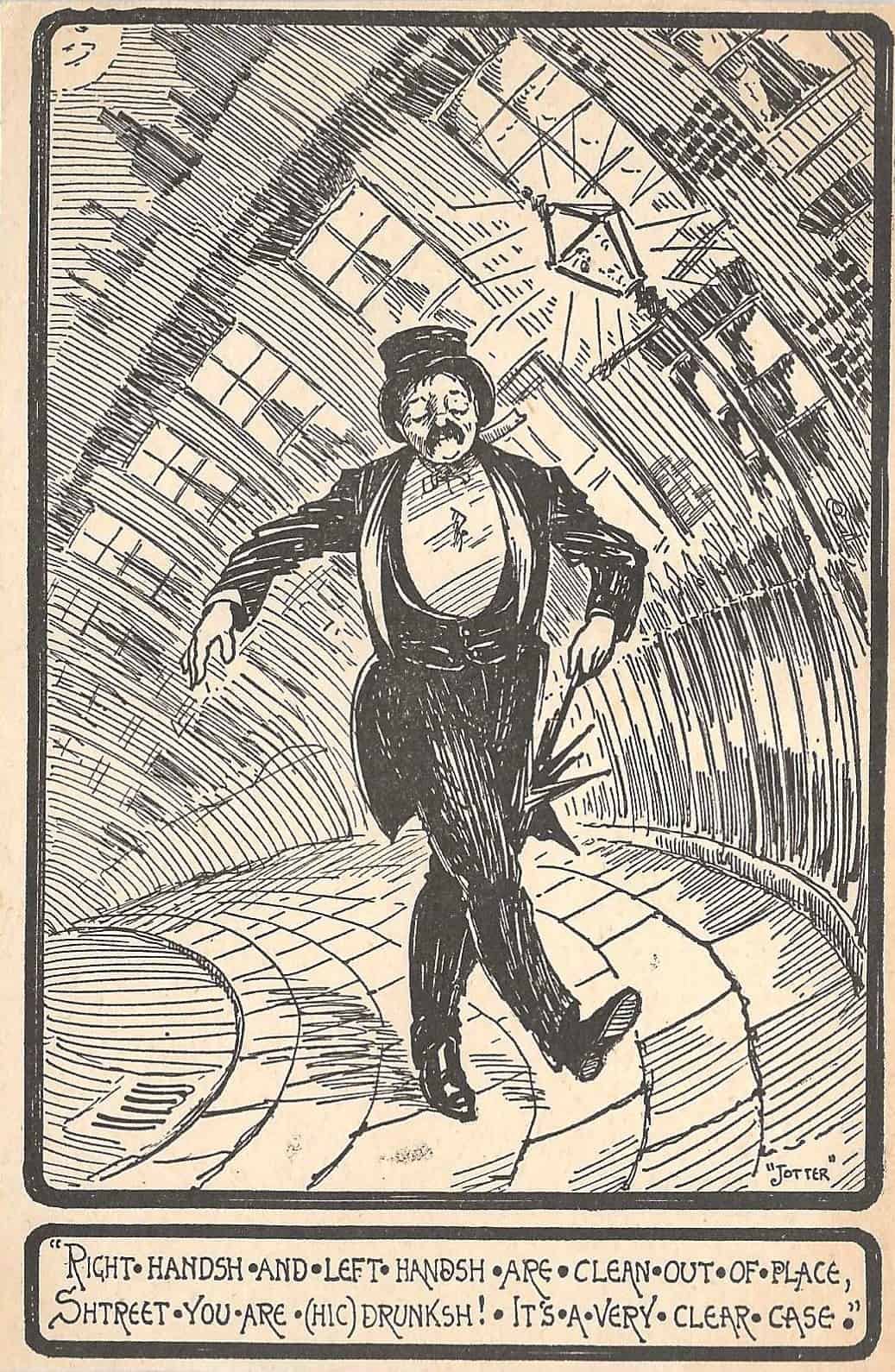
Some of his most collectible work is his drunken men comics. He pictured men on the way home from the “tavern,” often wobbling through distorted streets, seeing double. The scenes often included his subjects struggling with their coats, leaning on lamp posts, trying to navigate sloping sidewalks, being chased by street vermin, and talking to the moon.
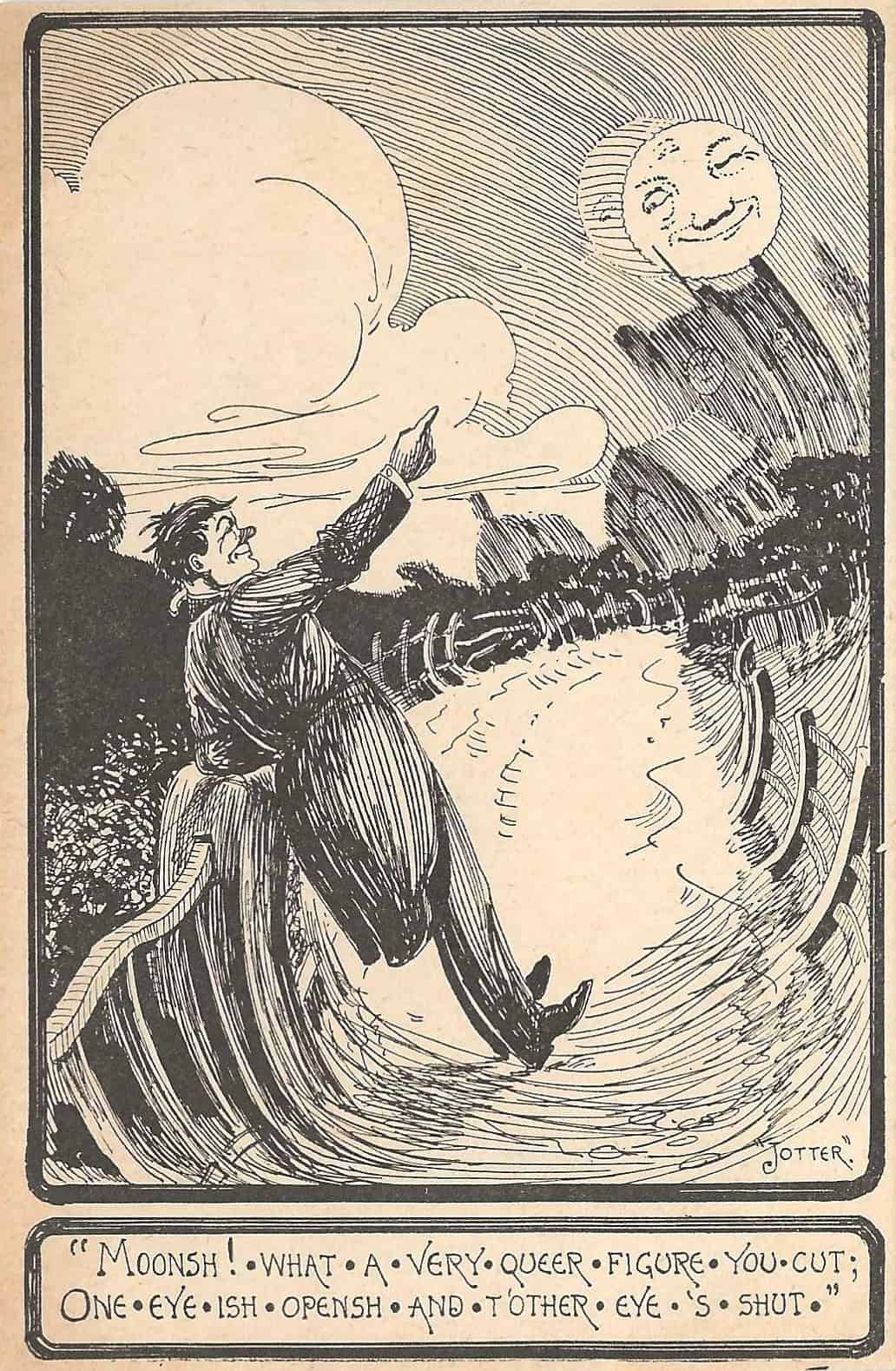
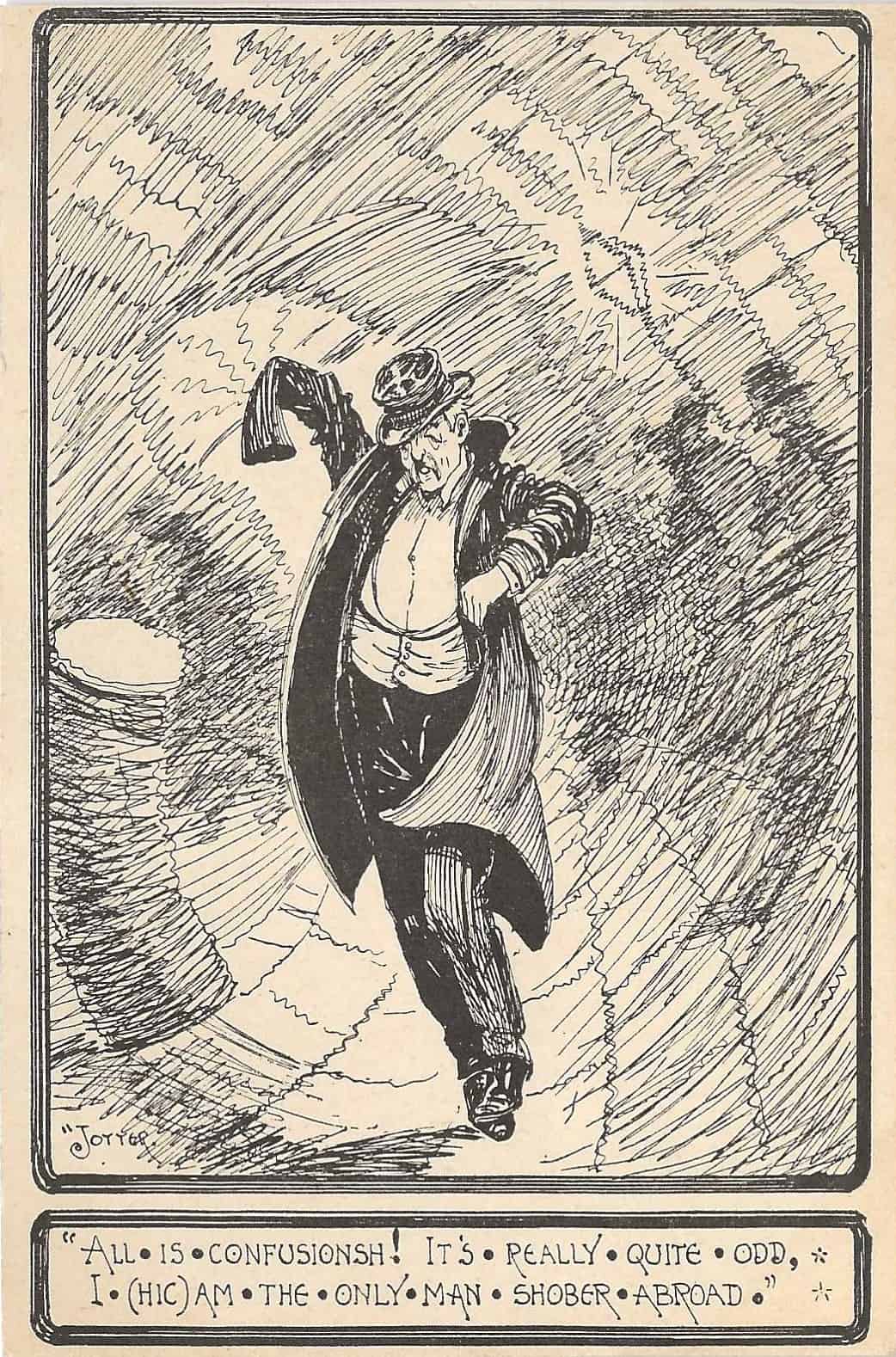
One of the best examples of Jotters drunken men is the 1910 set by Ettlinger entitled, “A Night Out.” These cards capture a moment in social history during Edwardian Britain when the nation had a lively pub culture, and humor about drunkenness was common. These cards now serve as small cultural artifacts of that era’s attitudes toward leisure and mischief.
Although famous for comic cards, Jotter was also a respected landscape artist. His serious art consisted mainly of landscape paintings and portrait art that Tuck reproduced as high‑quality color postcards that were typically issued in themed sets, such as postcards of London, Cornwall, and more that remain widely collected. Other examples include sets of six cards each of sites in Irish counties like Wicklow, Mayo, Galway, Antrim and Dublin.
One particularly noteworthy set from Ireland is the Tuck #9488 Irish Life set. The set is so life-like that upon seeing the images you feel as if you know the subjects.
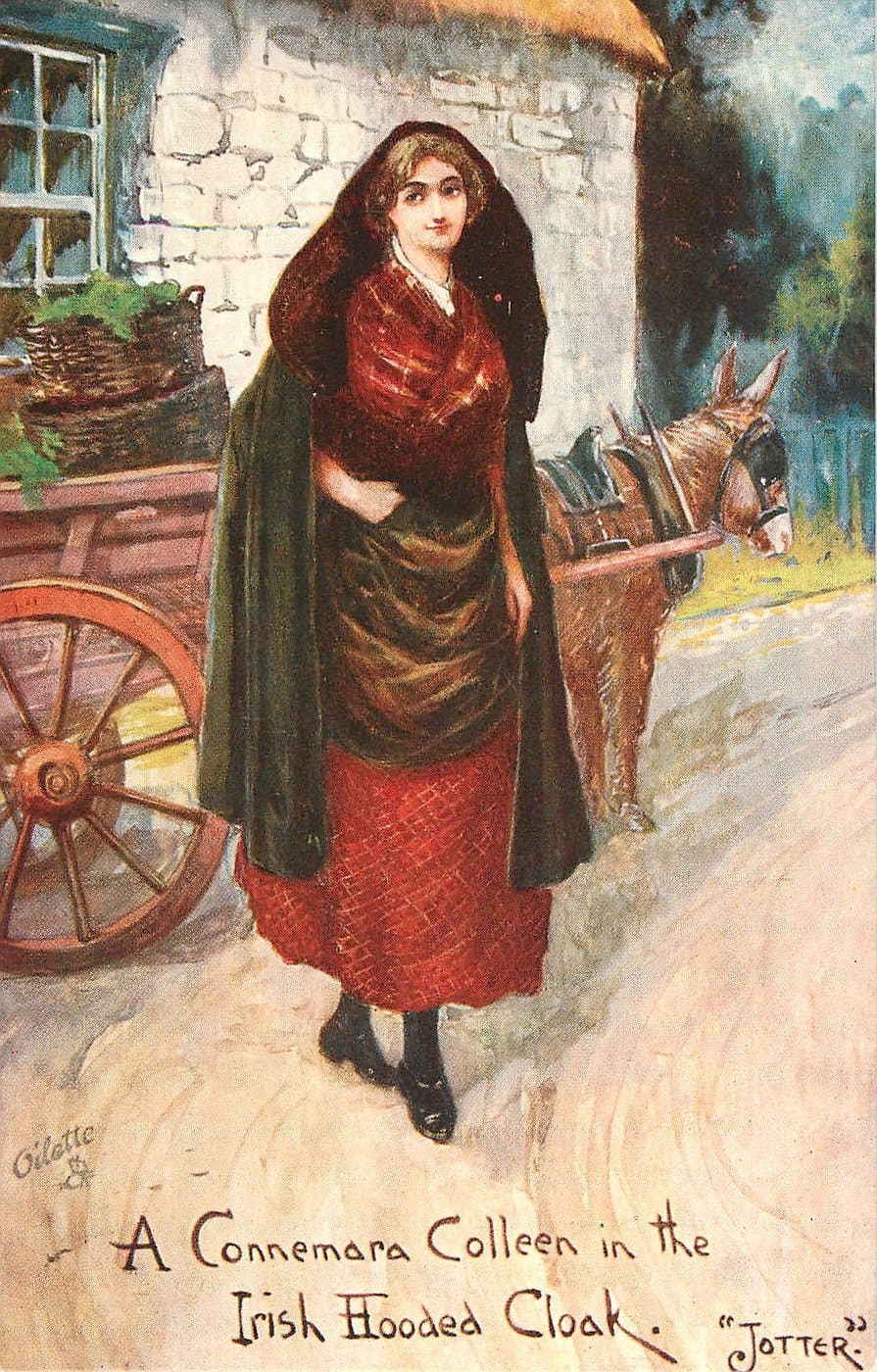
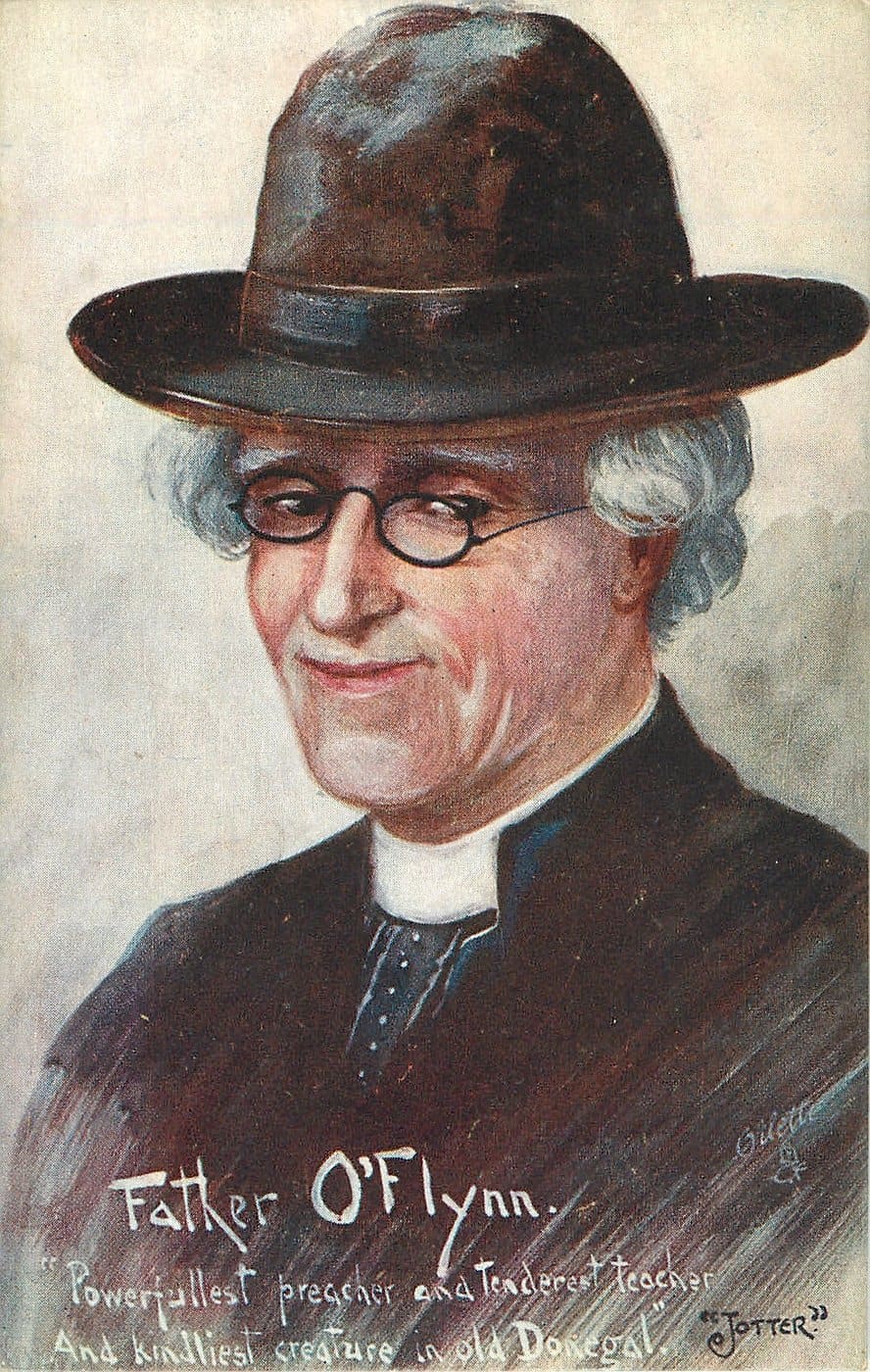
The examples most sought after by collectors are those in Tuck’s “Oillette Series.”
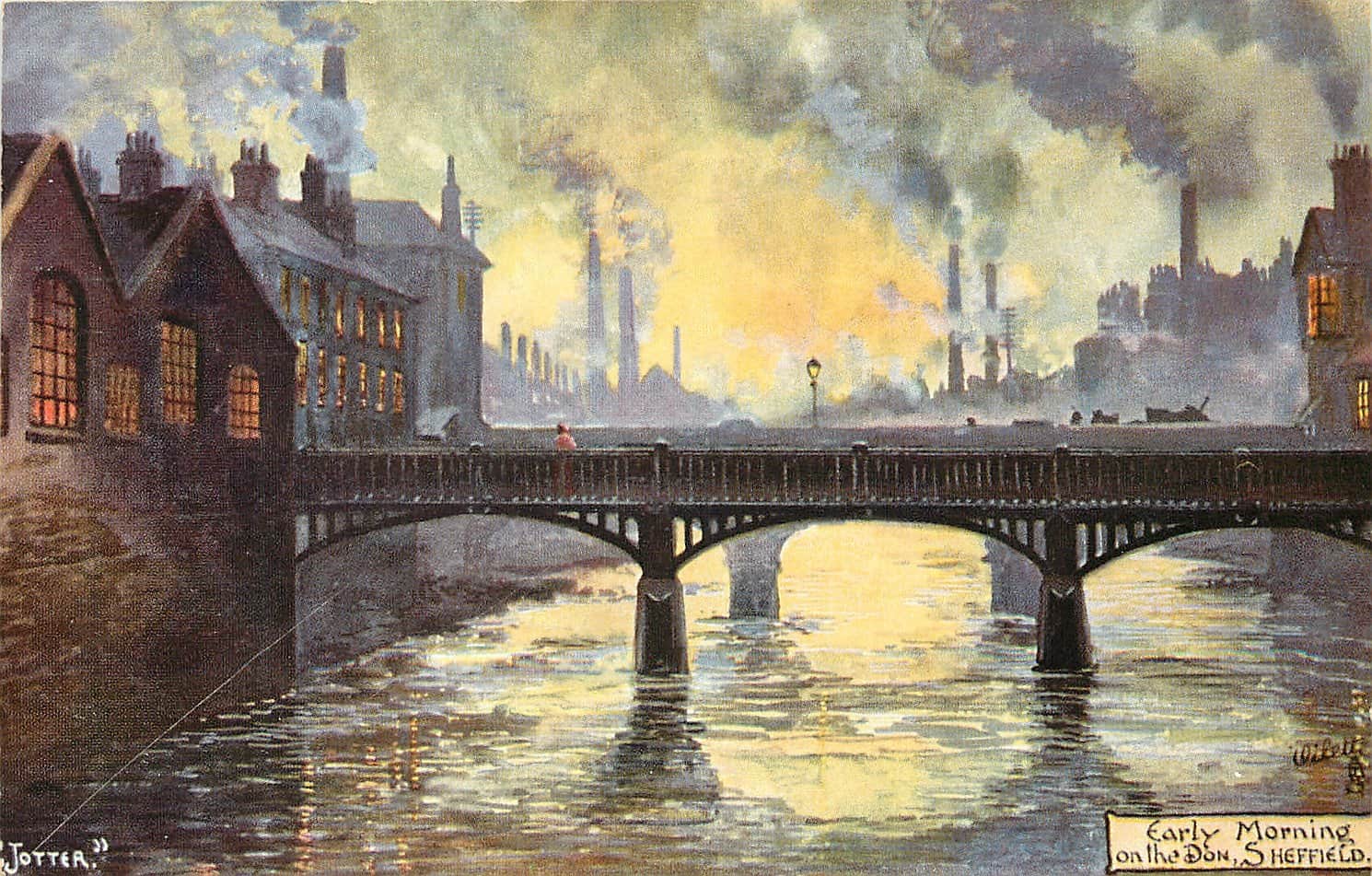
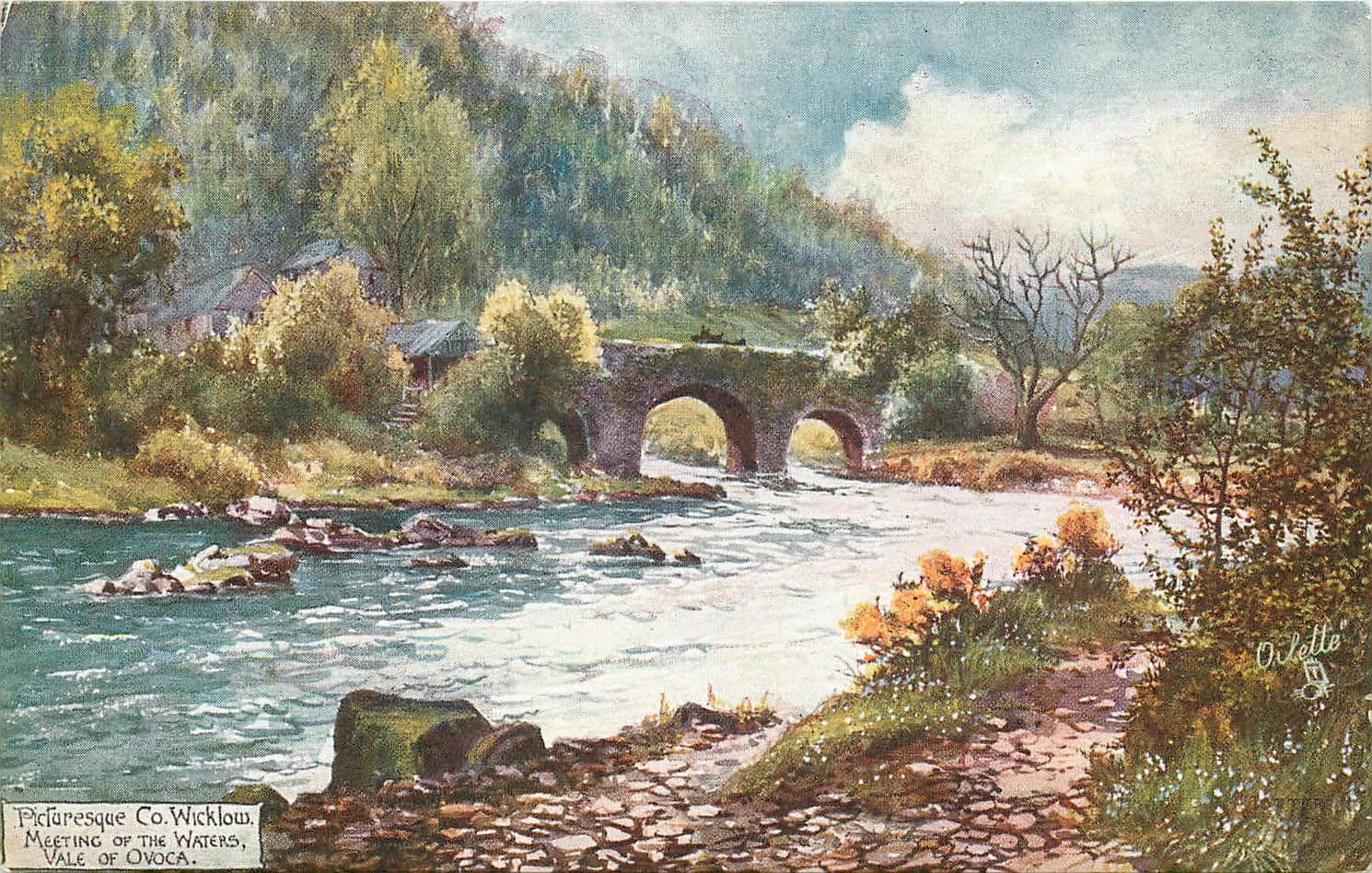
Surely Jotter was among the most widely traveled artists of his era. His scenic work covered several of the U. K.’s southern shires and most of Irelands. All published by Tuck in more than a dozen six-card set.
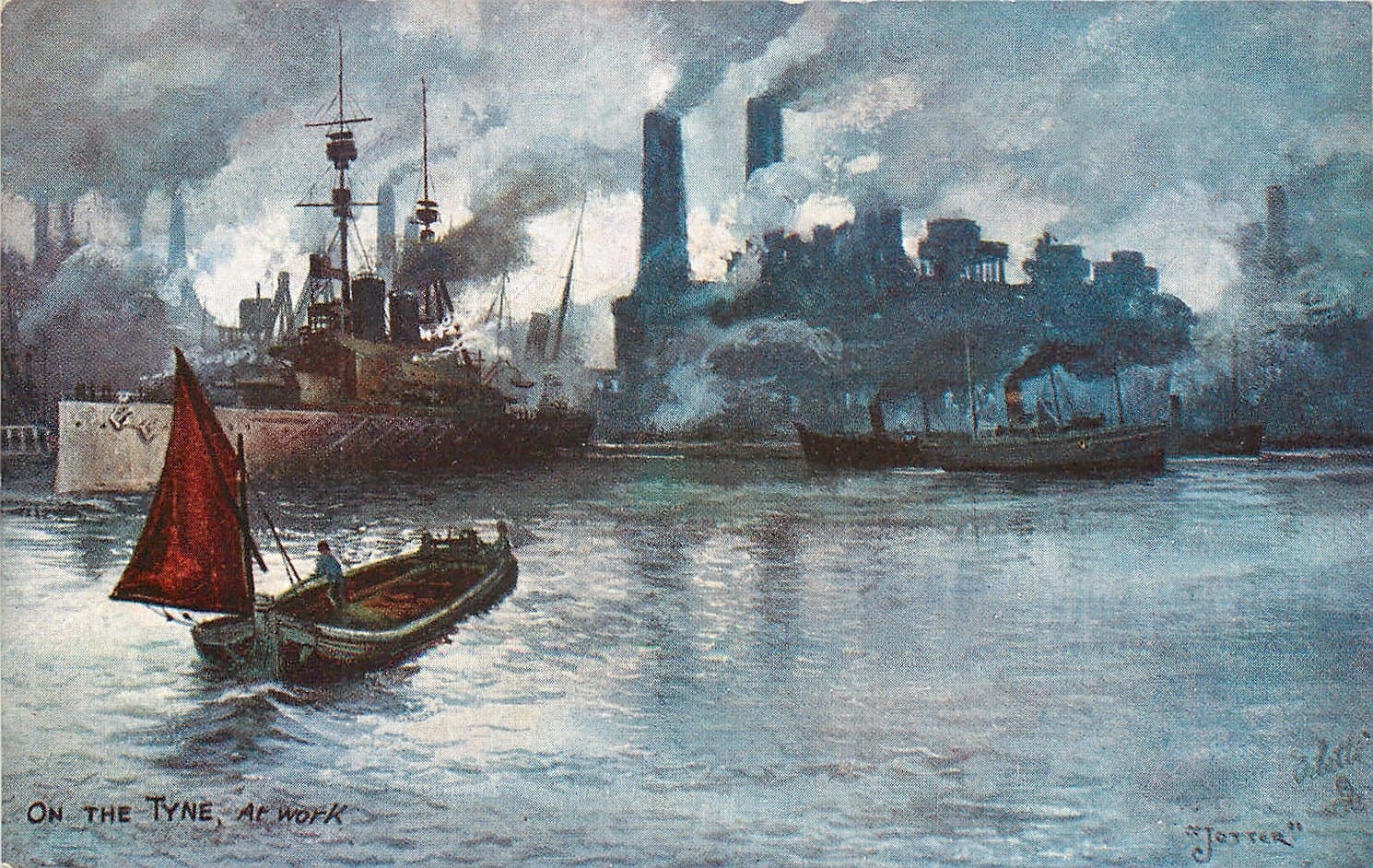
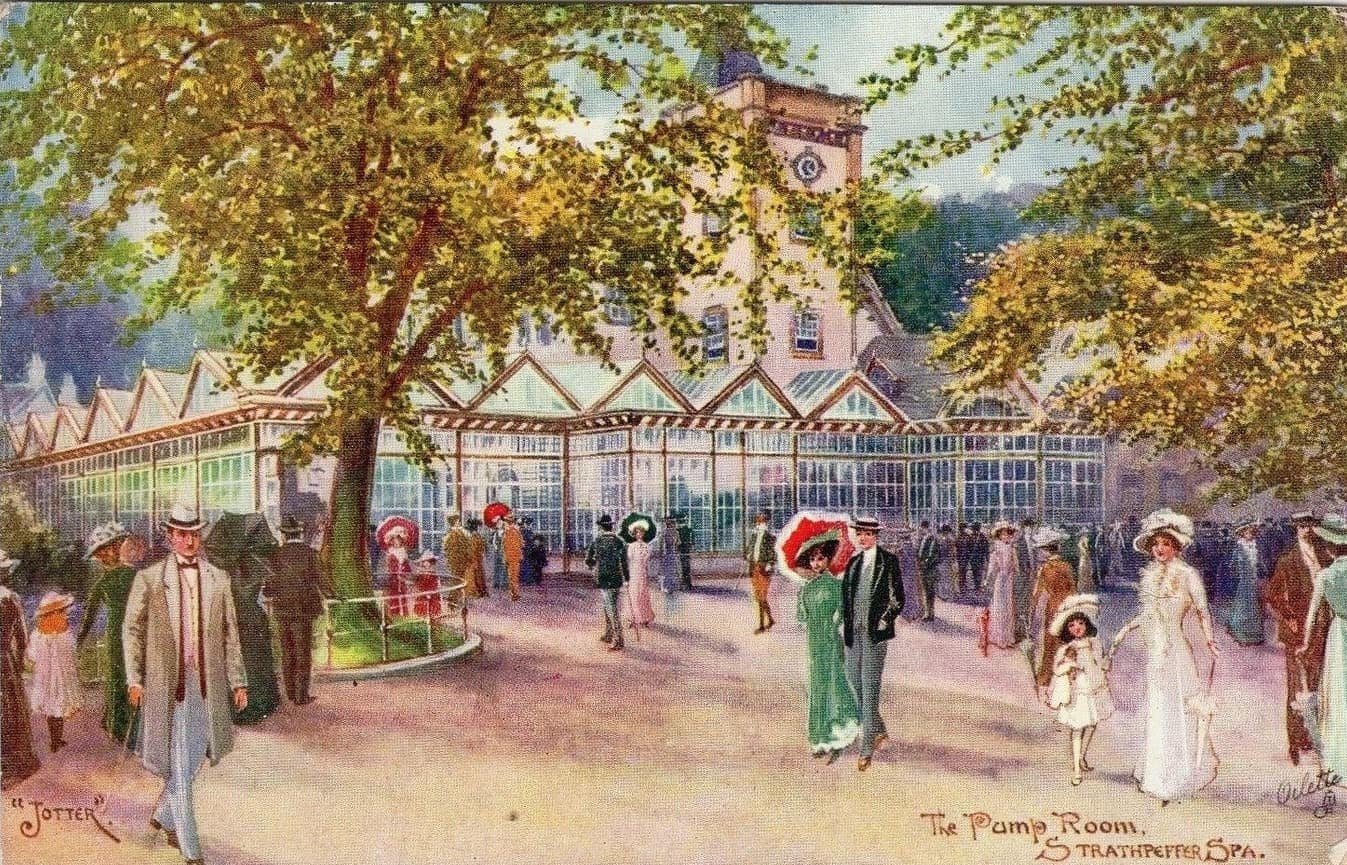
Another example, and one of my favorites, is the “Derbyshire Dales” series, which includes the card “Monsal Dale.”
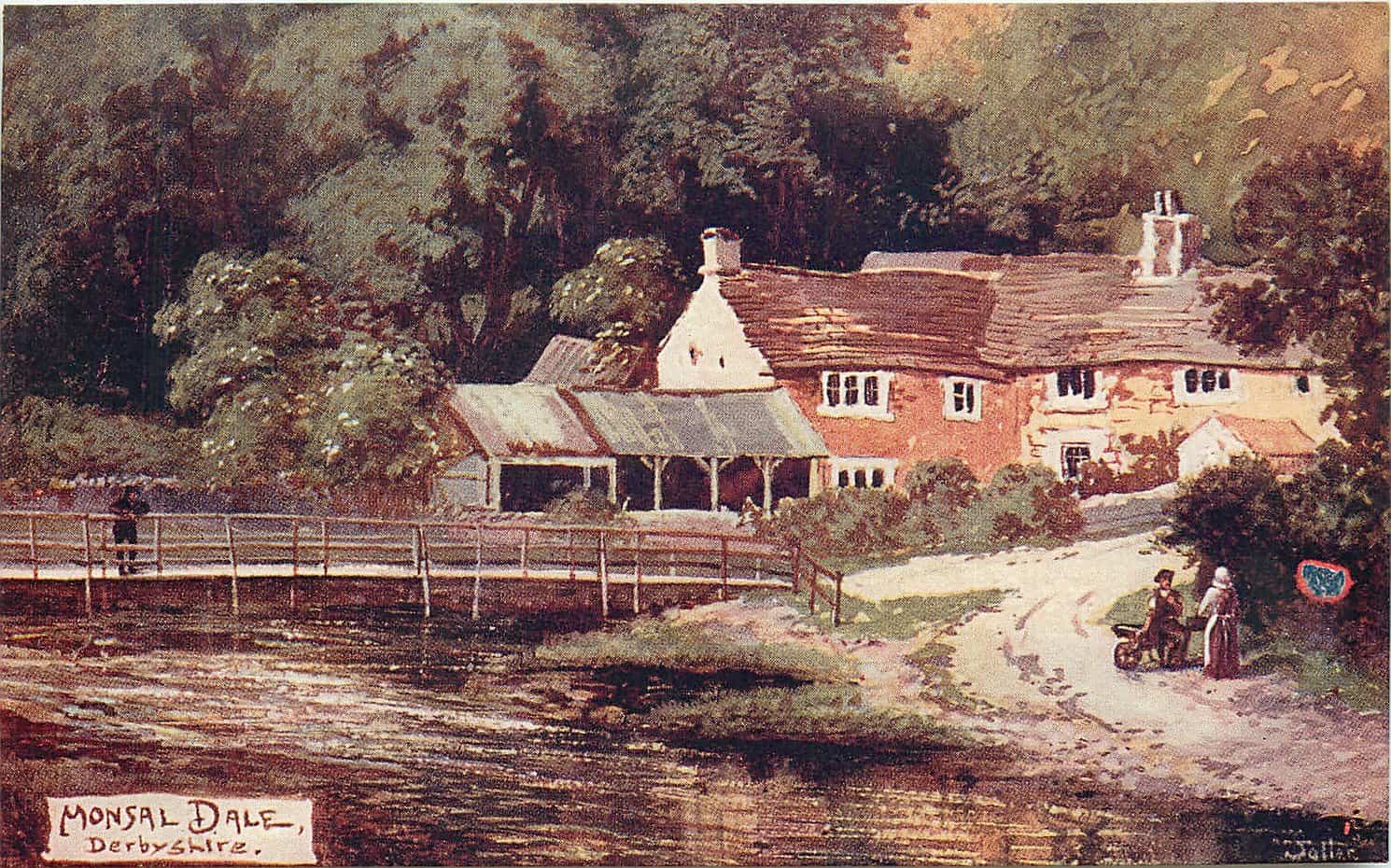
Monsal Dale (about 175 miles northwest of London) is in the White Peak area of a national park. Summer tourist flock here to enjoy the area as a special conservation site. It is part of a Europe-wide network called Natura 2000 that once controlled about 18% of the EU’s land area. (This was true until Brexit in 2020.)
Jotter … look for his cards by signature; it never changed.
Lovely article. It is amazing how much detail can be produced on such a small postcard. I particularly like the industrial images of the Cities, as they give an insight into the manufacturing industries and to compare the same scenes today. How times change within 100 years! Look forward to seeing some more articles from you Graham. Thank you
I enjoyed this, so thank you. I hope to come across some “Jotter” postcards sometime.
Fun and informative! Had never seen a Jotter postcard; now, I’m a fan.