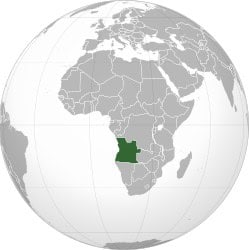
The elders in Ambundu country say that some nights feel thin—as if the world has been scraped down to its bones. On such a night, when the moon was the shape of a chipped fingernail and the wind carried the smell of wet earth, a young hunter named Mavinda felt that thinness pressing against his skin.
He had gone into the forest to track a wounded antelope, but the trail had dissolved into mud and shadows. The trees leaned close to the ground, as if each leaf was listening for a sound from the shadows. Even the insects had quieted, as if waiting to attack something old and weak.
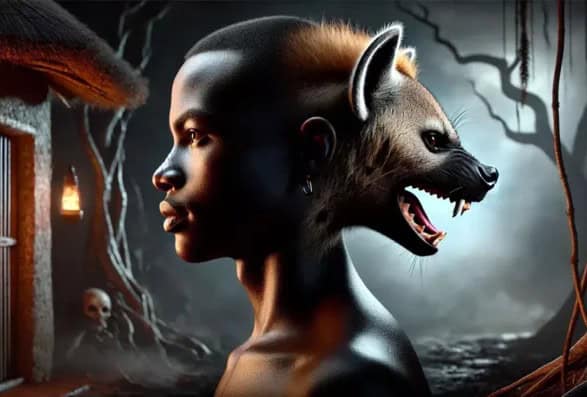
Mavinda tightened his grip on his spear. He had heard stories of the Kishi creature—the many‑headed terror with hair like knotted vines and teeth like the ones you notice just before something in the room goes terribly wrong. Children never spoke of the Kishi but sometimes whispered about them as if they were warriors boasting about a fight they almost won but refused to admit the outcome. Elders refused to speak of them at all. But stories were one thing. Silence was another. And the forest was very, very silent.
Mavinda stepped into a clearing where the moonlight pooled on the surface of a pond, like milk. That was when he saw it.
At first, it looked like a man sitting with his back turned. Broad shoulders. Long hair hanging in ropes. But the hair twitched, as if something beneath it was breathing. Mavinda’s throat tightened. The figure did not move, yet the air around it seemed to ripple. Then the hair parted.
Behind the hair was a face. Not one face—two. One snarling, angry, and mad, animal like. The other smiling, friendly but almost weeping, chewing on nothing. The faces rose and fell like waves, fighting for dominance. The creature’s true body shuddered beneath them.
Mavinda froze. His spear felt suddenly small; too small to protect him.
The Kishi turned. Its faces spoke at once.
“Hunter,” said the smiling face. “Run,” hissed the other.
Mavinda did not run. He had been taught that running from a spirit only made it chase harder. Instead, he planted his feet and lifted his spear.
The Kishi laughed, mocking Mavinda’s stance. The sounds were like echoes created by falling stones. The creature stood to its full height, taller than any man, both heads writhing. One head lunged, then another, snapped at the air. The creature stepped forward, and the ground seemed to recoil.
Mavinda remembered a tale his grandmother once told him about how a Kishi could regrow his head instantly after decapitation. She had said that only one thing that could stop such a creature was forcing both its heads to speak the same truth.
So Mavinda did something no hunter had ever done. He lowered his spear.
“What do you want?” he asked.
The heads snarled, argued, and shrieked. But one—the friendly one—finally whispered, “Peace.”
The other face roared in fury, but Mavinda seized on the word. “Peace?,” he repeated. “Say it together.”
The Kishi staggered, its heads thrashing. The forest trembled. Mavinda felt the air tighten, as if the creature’s brains were being forced to join together and form a single thought.
“Peace,” he said again, louder.
The heads screamed. Then, each face began to echo the word—reluctantly, angrily, mournfully. Finally, both voices aligned, and said, “Peace,” together.
The creature collapsed. Its faces melted into one; one face that portrayed a soul who was tired, yet human, sorrowful and solemn. The Kishi looked up at Mavinda with a single pair of eyes.
“I was cursed,” it said. “Split into two. You have given me back myself.”
And before Mavinda could speak, the creature dissolved into mist, leaving only the smell of rain and the faint echo of its final word – Peace!
The forest exhaled. The insects began to sing again.
Mavinda walked home beneath the thin moon, knowing he had not slain a monster. He had freed one.
My Days in Luanda, Angola
By T. VanStaden
In the sky above the South Atlantic in the early hours of the morning there is a haze. It is mostly vapor rising from the evaporating dew. The sun is hot all day in this part of Africa. I suspect that if I lived here the haze would not fascinate me, but during my short visit this phenomenon was a constant amusement. It changes colors by the minute and to witness the change is much like playing with an old-fashion kaleidoscope.
I was there to teach The History of Diplomacy to the fine arts students at UA-L (the University of Angola at Luanda). I had just 17 students in my class, so when I set my alarm for just before dawn, I could grade their assignments and witness what the natives call a nuvem da manhã – The Cloud of Morning – together, which along with a cup of café doce com leite de vaca – a popular early morning beverage made with coffee and tiny chips of raw sugar, made for a very pleasant start of my day.
My students were very welcoming and almost daily I was invited to one or another of their homes. Most were modern and modest homes, but occasionally there was that one that was both cultured and learned.
In one such home I learned about the Kishi. The legend originates in Angola among the Ambundu. It is an oral tradition, where kishi (from the Kimbundu term for spirit) refers to a dangerous, man‑eating being.
Early accounts collected by Héli Chatelain (Swiss linguist and Protestant missionary) in 1894 describe kishi as many‑headed creatures with long, tangled hair, appearing in tales like Sudika‑mbambi. These stories portray kishi as deceptive monsters who sack villages, lure victims, and sometimes regenerate severed heads. Over time, the legend evolved into the modern image of a two faced seducer, blending older multi‑headed motifs with later symbolic interpretations of hyenas.
***

The postcard illustrations are modern cards purchased in a stationary store along Luanda’s main street. The Boutique Bamti sold everything: snacks, beverages, tobacco, jewelry, candy (Milky Way bars are very popular but because of the heat, the boutique sells them frozen), bus tickets, lottery cards and if you ask, under-the-counter the have underwear for both men and women and other bedroom and bathroom products (toothpaste is a perennial best seller). Bamti also has a vast inventory of samakaka (the brightly colored, geometric-patterned cloth) in appropriate lengths, for dresses worn by women across Angola for festivals, dance performances, weddings, and cultural celebrations. Samakaka has become the most recognizable of the traditional Angolan textiles.
The metropolitan nature of Luanda is somewhat surprising. At least ten to perhaps twenty international corporations have offices in the downtown business district. And in the entertainment neighborhood there are cinemas and theatres showing first-run Hollywood blockbusters to Shakespeare.
***
A personal note: I know that a holiday trip to Angola is not in the stars for most people. It is expensive – in terms of American dollars – and it seems much too foreign for most to feel comfortable. The Angolans are very friendly and tactile people (they will often pat your shoulder to emphasize the point they are making.) They use a currency called a novo-kwanza that is quite stable at about 925:1 USD (United States Dollar). The people speak Portuguese, but nearly everyone who has attended school here speaks English.

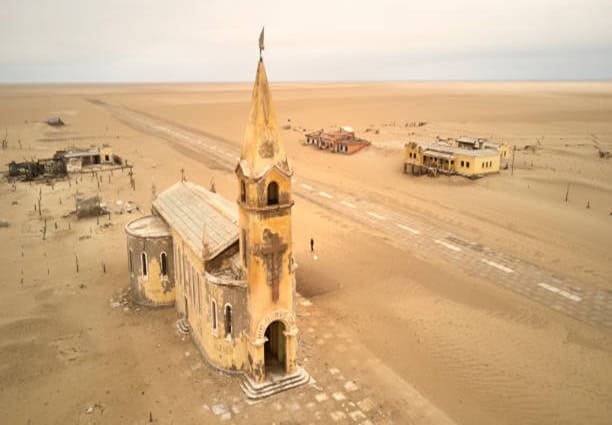
Many amusements await the tourists. There are beach and safari tours that include an exploration of a mermaid’s cave and two-day bus holidays to the countryside.
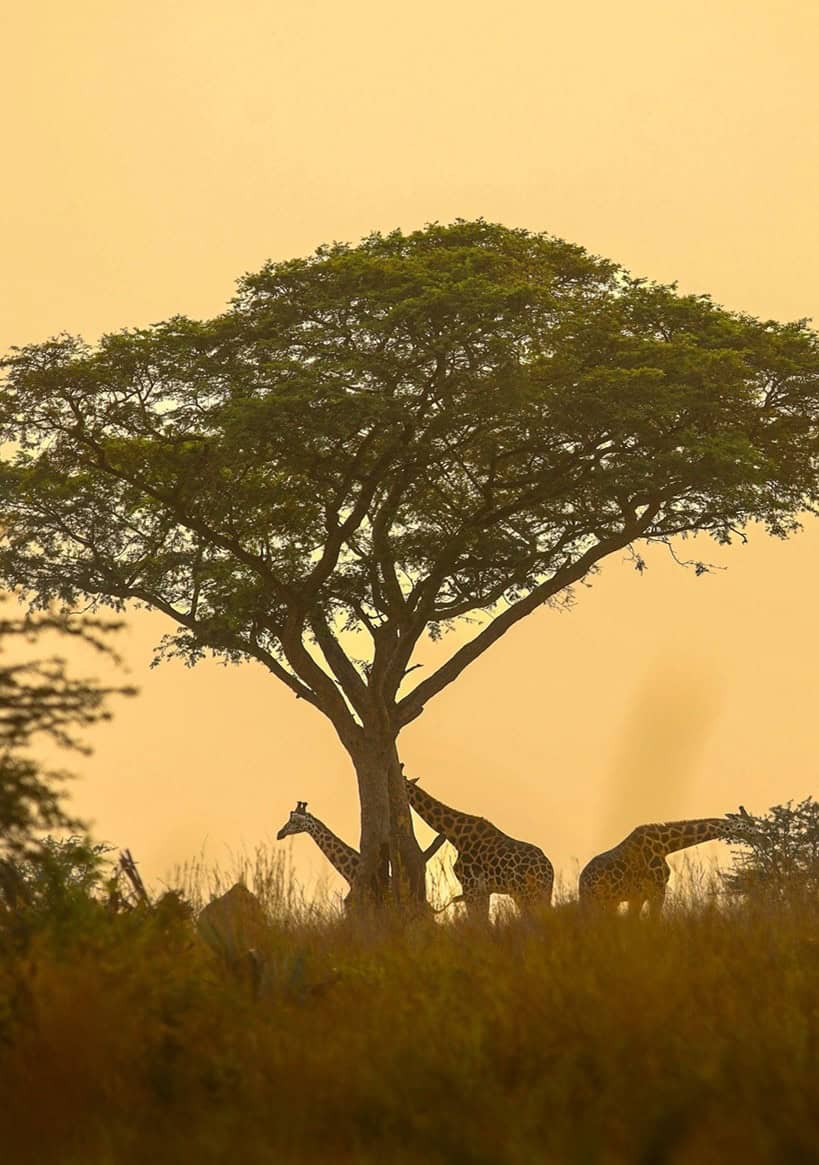
Teaching in Angola was a wonderful experience; it was my first post in Africa, but I am damn glad to be home.
Folklore from other countries is always Very Interesting, Thank you.