Rah, rah, rah!
Ole, ole, ole !
Urrà, urrà, urrà!
Ζήτω, zήτω, zήτω!
Up to about two years ago, every Fall the postcard you see below appeared in my mailbox. I’ve never counted them, but I have at least a dozen. You may be surprised to learn that my optometrist is who mails it to me as a reminder that Daylight Saving Time is coming soon.
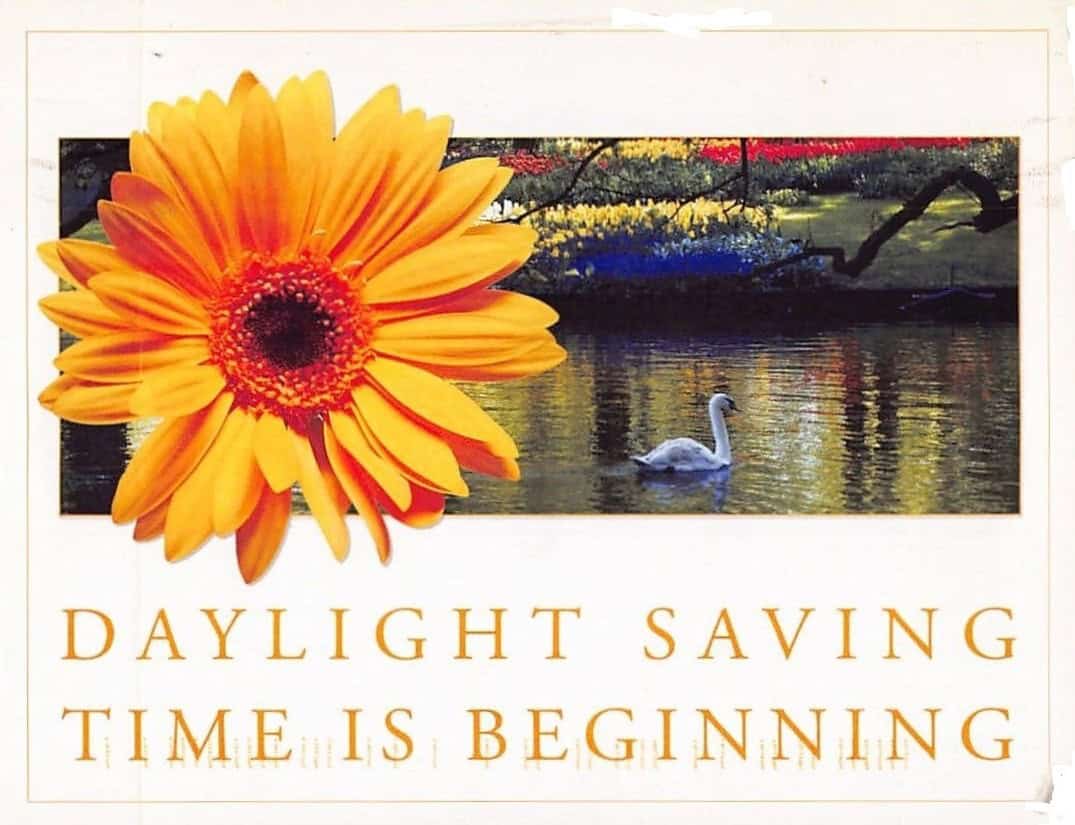
When Daylight Saving Time starts, I spend the whole day wondering what I would have done with the hour I lost. Each year I find myself trying to make up for that lost hour, so I spend sixty minutes looking for it.
However, I am told there are some genuine advantages to Daylight Saving Time, although whether they outweigh the disadvantages is still debated. A few of the strongest arguments in favor of DST today are: 1. it gives us more usable daylight in the evening. DST shifts an hour of daylight from the morning, when many people are asleep, to the evening, when people are more likely to be shopping, exercising, gardening, attending events, or enjoying outdoor activities. 2. The change in time as some safety benefits. Studies have found that having more daylight during the late afternoon and early evening can reduce certain types of crime and lower some traffic and pedestrian accident rates during those hours; and 3. there are some true economic benefits. Businesses that depend on evening activity, such as restaurants, tourism, recreation, and retail stores, often favor DST because people are more likely to go out when it is still daylight. Finally, there are some energy savings in some places. DST was originally promoted as an energy-saving measure. Modern studies generally find that any savings are quite small, and in some regions, they may disappear entirely because of air conditioning and other energy demands.
On the other hand, many critics argue that the clock changes are what causes sleep disruption, reduces productivity, and has short-term health effects, and that the energy benefits are no longer significant.
A lot of people actually agree on a compromise: if there is one thing they dislike, it is not necessarily DST itself, but changing the clocks twice a year.
By definition, Daylight Saving Time is the practice of setting clocks ahead of “Standard Time” one hour during part of the year to make better use of evening daylight. Although many people associate it with Benjamin Franklin, he merely joked in 1784 that Parisians could save candle wax by getting up earlier.
The first serious proposal came from New Zealand scientist George Vernon Hudson in 1895, followed by British reformer William Willett, who campaigned vigorously for what he called “British Summer Time.”
An interesting historical note: in the United States, when DST was first introduced during World War I, electric lighting consumed a much larger share of household energy than it does today. In 1918, the idea of saving daylight for the evening made much more economic sense than it does in our era of LED lights, air conditioners, computers, and appliances.
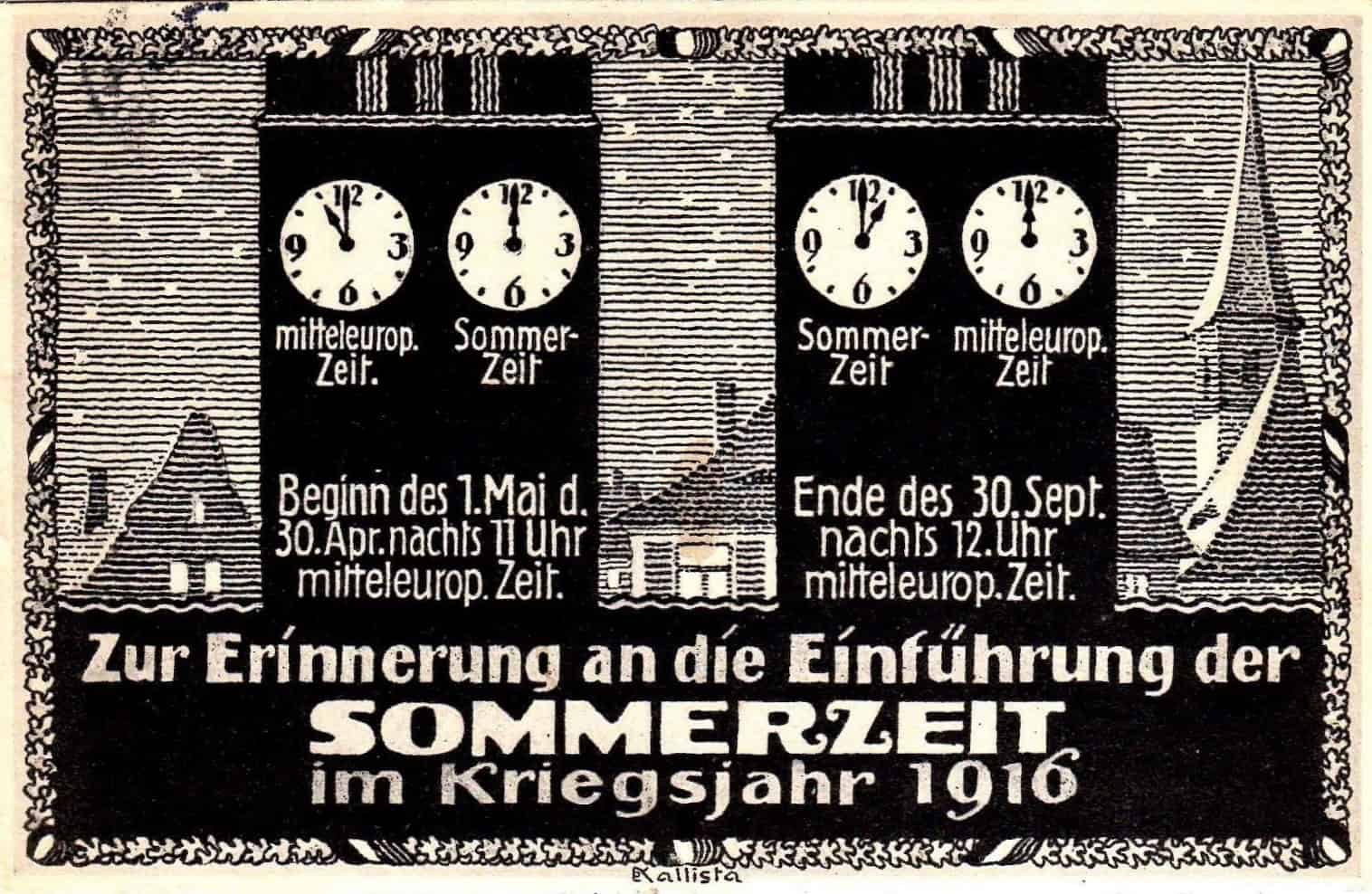
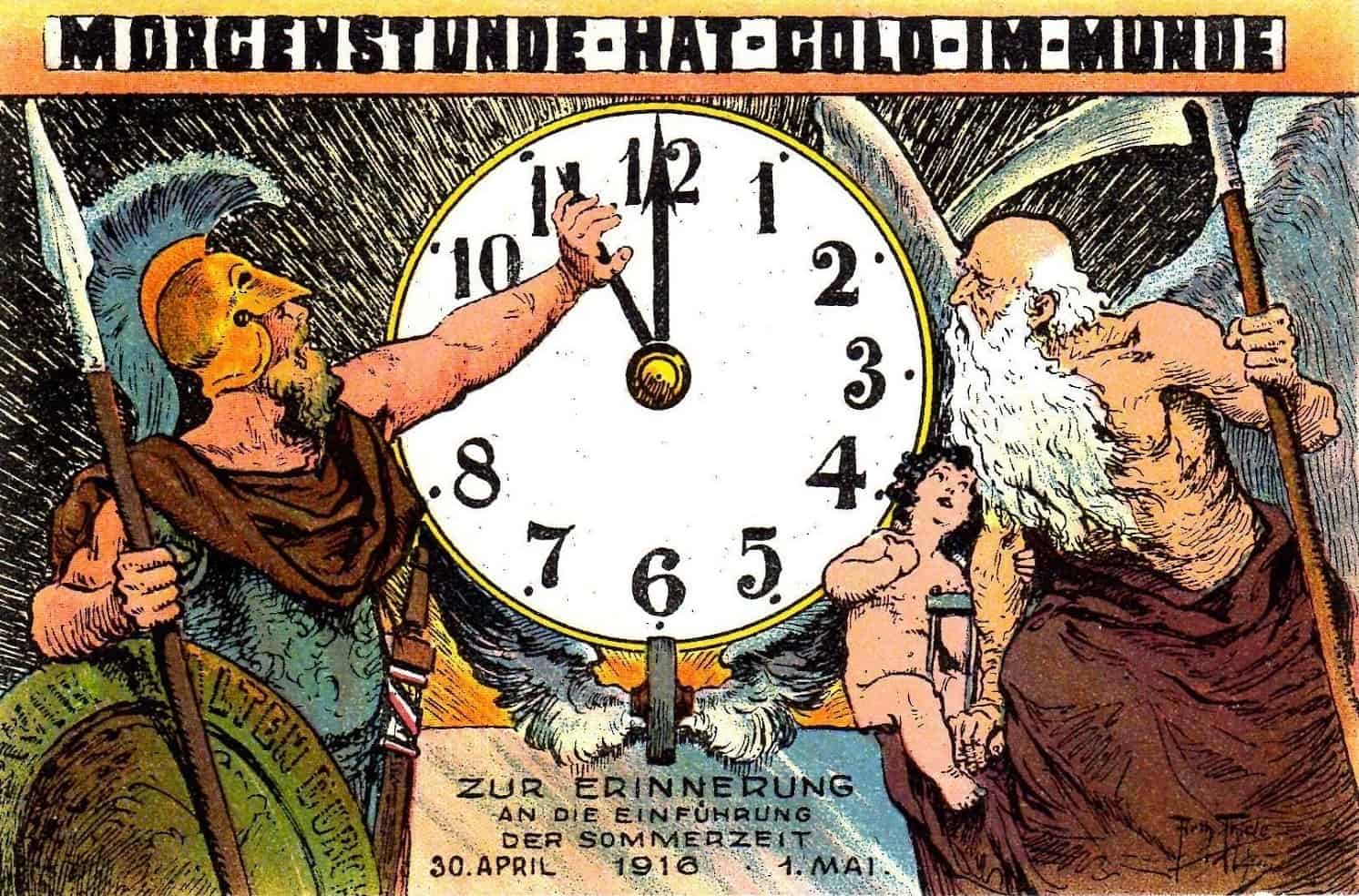
The first nation to adopt DST was Germany in 1916 during World War I. The goal was to conserve coal and reduce the need for artificial lighting. Other countries quickly followed. France used DST from 1916 to 1945, Italy started their DST on June 4, 1916, Spain began on April 15, 1918, but Greece waited until 1932 before testing DST.
We were in the throes of President Wilson’s administration when DST was first suggested. But it was clear at the time that Congress would be responsible for making the concept a national law. Campaigns reached Washington in many forms, not the least of which were postcards.
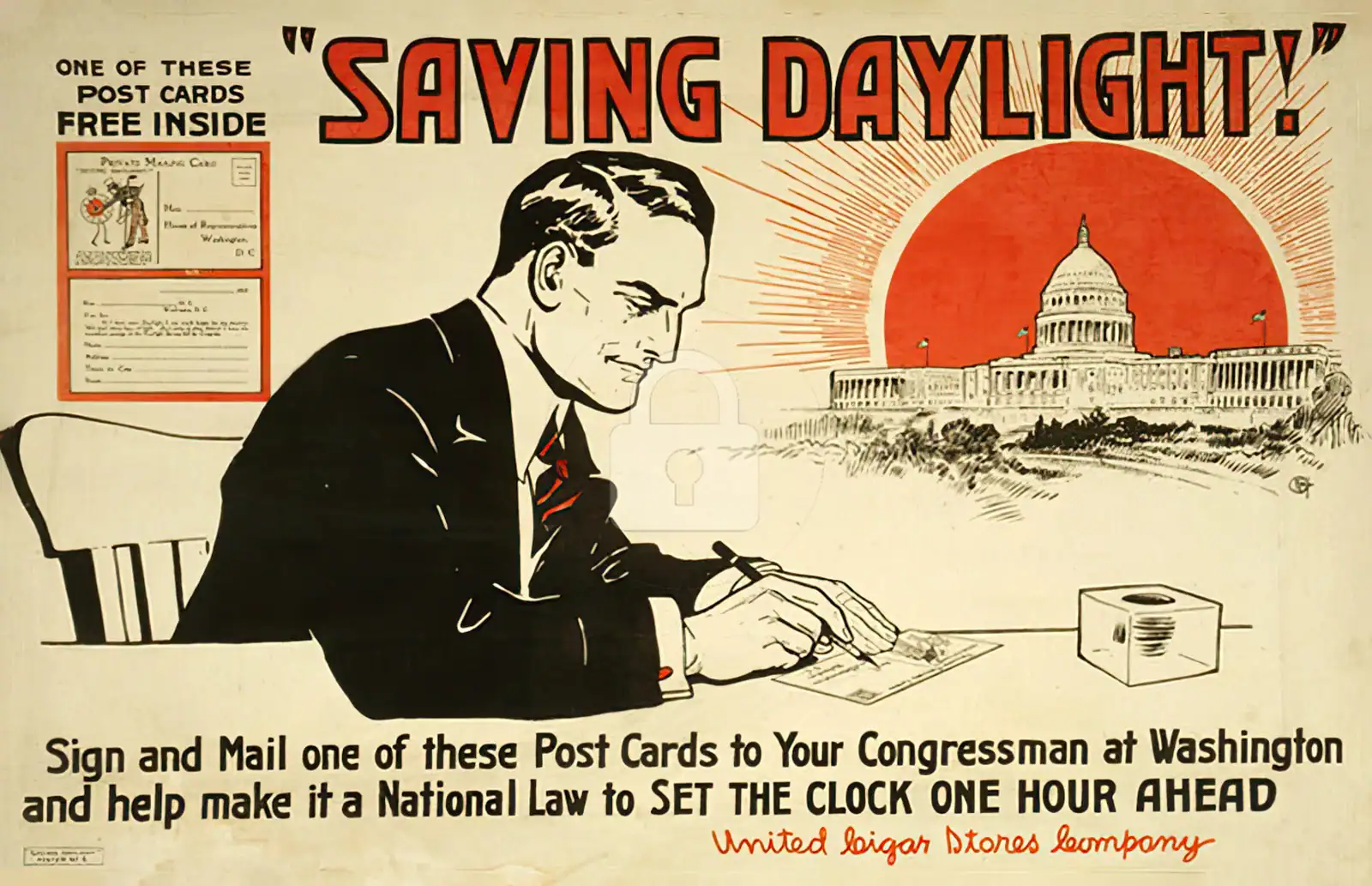
President Wilson signed the Standard Time Act of 1918 on March 19th.
Supporters of DST have included business groups, retailers, recreation industries, and government officials who hoped to save energy and encourage evening shopping and outdoor activities. Opponents have often included farmers, who work by the sun rather than the clock, along with parents, sleep researchers, and others who argue that the twice-yearly clock change disrupts schedules and health.
DST has remained controversial for more than a century. Despite repeated efforts to abolish or make it permanent, the debate over its benefits and drawbacks continues today.
Daylight Saving Time is like a software update for humanity: nobody asked for it, and it always seems to happen at an inconvenient time.
So as many are wont to ask, are y’all “fore it” or are y’all “agin it?”
Remember today we …