Our American Cousin is a three-act production by playwright Tom Taylor, an English journalist, biographer, and one of the most popular dramatists of his time. The play mocks an awkward and boorish American named Asa Trenchard, who is introduced to his aristocratic English relatives when he goes to England to claim the family estate. The play premiered with great success in New York City in 1858. The title character that night was the American Joseph Jefferson, who enjoyed a national reputation for his portrayals of the character Rip Van Winkle. To an nineteenth century audience “Cousin” was dubbed a laugh riot. Interestingly the London production in 1861 was equally successful.
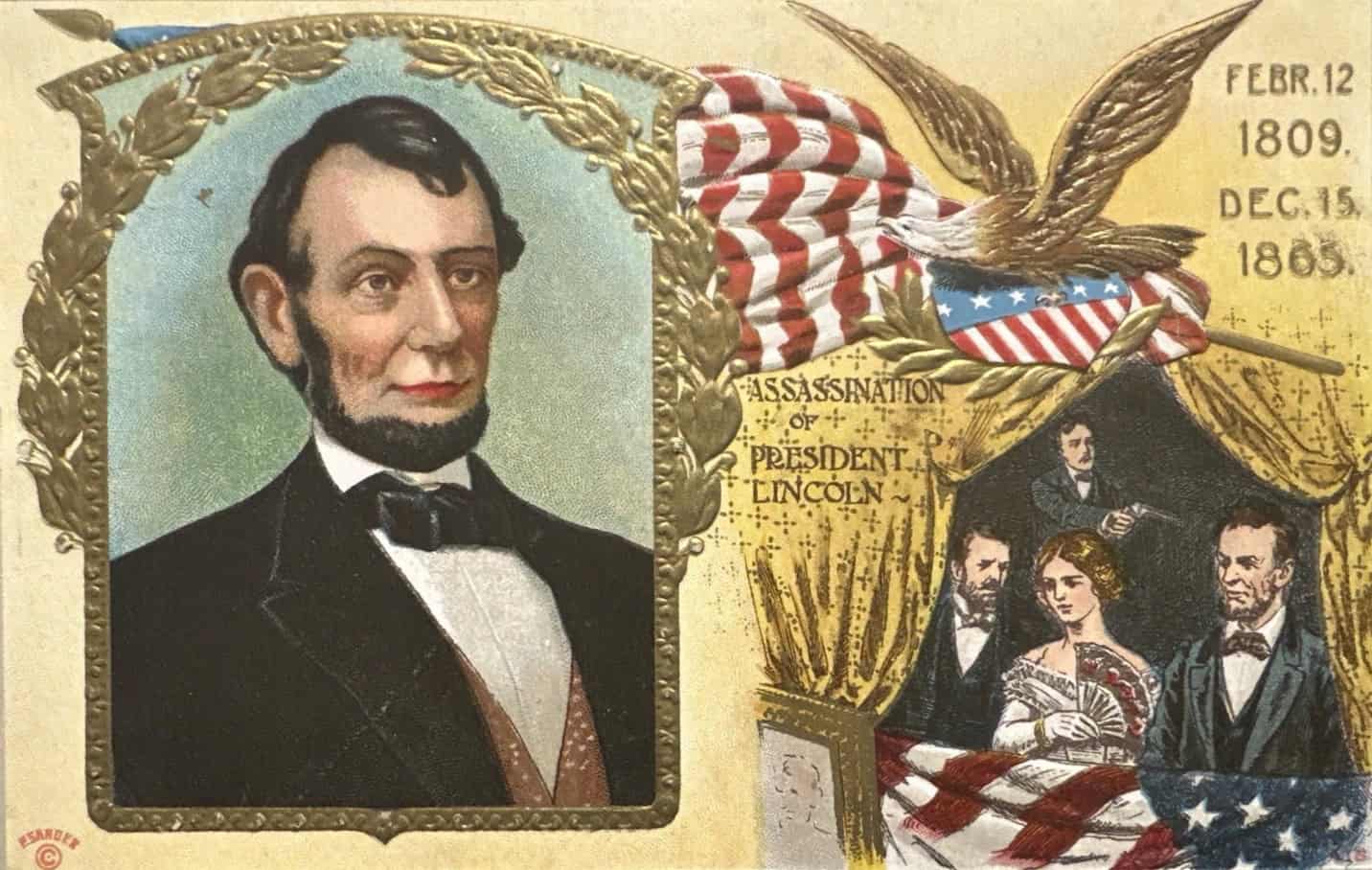
The play quickly rose in popularity in its first few years and remained very popular throughout the second half of the century. Despite achieving critical and audience acclaim, it is best known as the play that U.S. president Abraham Lincoln was attending in Ford’s Theatre when he was assassinated by John Wilkes Booth. Booth, an actor, knew the play well and he attempted to time the sound of his gunshot with the audience’s laughter after a particularly funny line.
***
When I was in high school our academic year finished the syllabus of our American History – Part I class with a script reading of the play being presented at Ford’s Theatre the night that Booth assassinated our sixteenth president. My role in this “educational experience” was that of Mr. Binny, the butler. I think I had three lines, “Yes, Sir,” “No Sir,” and “I’ll tend to that immediately, Sir.”
***
The assassination on that April 15, 1865, was the worst of two violent events that stunned America in the middle years of the nineteenth century. The other occurred almost nine years earlier on May 22, 1856.
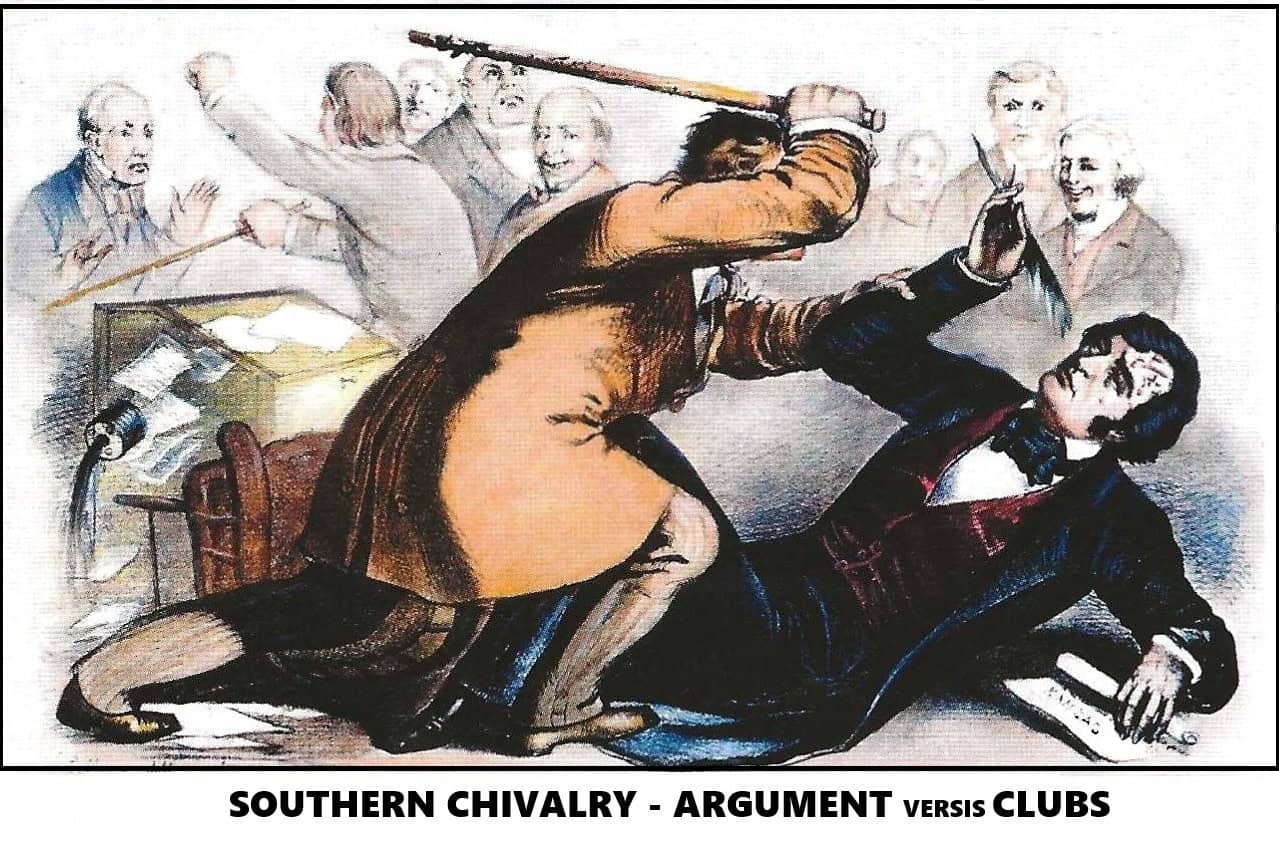
On May 20, 1856, Massachusetts Senator, Charles Sumner, delivered a speech that was a scorching insult of those supporting the Kansas-Nebraska Act of 1854. The fiery speech that he titled The Crime Against Kansas, condemned the Kansas-Nebraska Act, which allowed territories to decide for themselves whether to permit slavery. He harshly criticized pro-slavery politicians, particularly Senator Andrew Butler of South Carolina, mocking him as a man devoted to slavery as one would be to a mistress. Sumner’s rhetoric was deeply insulting, and it enraged Butler’s relative, Representative Preston Brooks.
Two days later, on May 22, 1856, Brooks entered the Senate chamber and confronted Sumner, who was seated at his desk. Without warning, Brooks struck Sumner repeatedly with a metal-tipped cane, beating him so severely that Sumner collapsed, unable to defend himself. The attack was so brutal that Sumner suffered serious head injuries and did not return to the Senate for three years. Meanwhile, Brooks resigned from Congress but was quickly re-elected by his constituents, who viewed him as a hero.
That day was one of the most shocking moments in U.S. Senate history. This violent incident between Representative Brooks of South Carolina and Senator Sumner of Massachusetts, was seen as a deepening divide between the North and South over slavery and many journalists referred to it as a foreshadowing of the coming Civil War.
The incident further polarized the nation. In the North, Sumner became a martyr for the abolitionist cause, while in the South, Brooks was celebrated for defending Southern honor. The attack demonstrated that political discourse had deteriorated to the point of violence.
The caning of Charles Sumner is still a powerful reminder of how deeply divided the United States was in those years. It showed that words were no longer enough; violence became a tool of political expression that day.
Thank you for this interesting discussion. It is sad when argument deteriorates into violence.
Hopefully, this incident does NOT foreshadow our own future. Thank you for writing.