Rationing in the United States during World War II extended far beyond gasoline; it impacted nearly every aspect of civilian life. Although “gasoline rationing” was the hot topic of the era, gas rationing was not solely about conserving fuel—it was a complex strategy intended to support military operations, manage rubber supplies, and curb unnecessary travel. With millions of resources diverted to military efforts overseas, the government introduced controls over many things to ensure support for the troops.
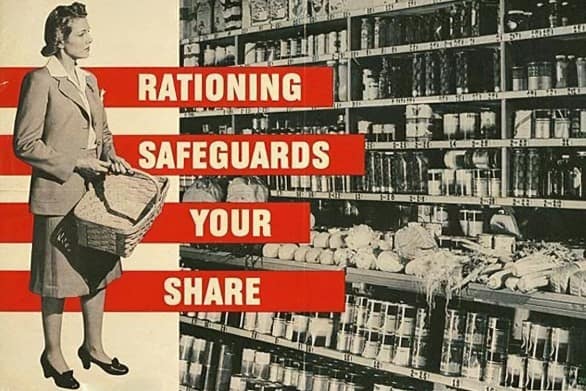
Food was heavily rationed. Staples like sugar, coffee, meat, butter, and canned goods were regulated through ration books and stamps. Sugar was among the first to be limited, since supply routes were disrupted by German U-boats and the demand for processed foods for soldiers rose as more and more men moved abroad to the war-fronts. Since meat was rationed, it forced housewives to get creative when making evening meals. Ever heard if Mac & Cheese? It was during the Second World War that rationing led to the increased popularity of baked macaroni and cheese that was sold in two boxes and could be obtained for one food rationing stamp, or one box for 19 cents.
Clothing and textiles also felt the pinch. With wool and cotton needed for uniforms, civilians faced shortages in everyday apparel. Nylon, originally used for stockings, was redirected to parachutes, making hosiery a rare commodity. Americans learned to mend and reuse clothing and prioritize durability over fashion.
Even shoes were rationed. Civilians were restricted to two pairs per year because leather was needed for dozens of military supplies. Tires, already scarce due to rubber shortages, were nearly impossible to replace, further emphasizing the importance of travel limitations.
Worst of all, many items that could serves as “alternatives” were also on the list of rationed items. Typewriters, for instance, and bicycles. Even kitchen appliances like stoves, refrigerators, and toasters were simply unavailable. Not having a working toaster seemed to be a hardship in dozens of households. There was a story in the book, How We Lived, that the author recounted how his mother would make toast using a long-handled fork with the tines pushed through a slice of bread and then held the bread over the flame from a gas-stove burner. After factories shifted production to war materials nothing would change until there was victory at the front. The national culture became frugality and shared sacrifice.
Gasoline rationing was part of the frugality scheme. In June 1942, the government undertook measures to support the war effort, and gas rationing became one of the most significant.
In announcing it, Leon Henderson, the chief of the Office of Price Administration (OPA), first implemented rationing in seventeen eastern states: the six New England States and New York, New Jersey, Pennsylvania, Delaware, Maryland, Virginia, West Virginia, North and South Carolina, Georgia and Florida. Gasoline was a problem, but not the only one. Japan had invaded most of the rubber-producing areas in Southeast Asia and that drastically reduced access to natural rubber, which was essential for manufacturing tires. This shortage posed a direct threat to transportation for both civilians and the military. The imposition of gas rationing reduced travel which in turn forced extended use of tires already in usage.
The rationing system categorized both filling stations that were rated on the gallons usually dispensed, and drivers based on their necessity of travel. The majority of Americans received “A” stickers, entitling them to four gallons of gasoline per week. Those whose jobs were deemed critical to the war effort, doctors, police officers, and industrial workers, received more generous allotments, marked by “B” or “C” stickers. Meanwhile, special designations such as “X” stickers applied to members of Congress and other essential personnel.
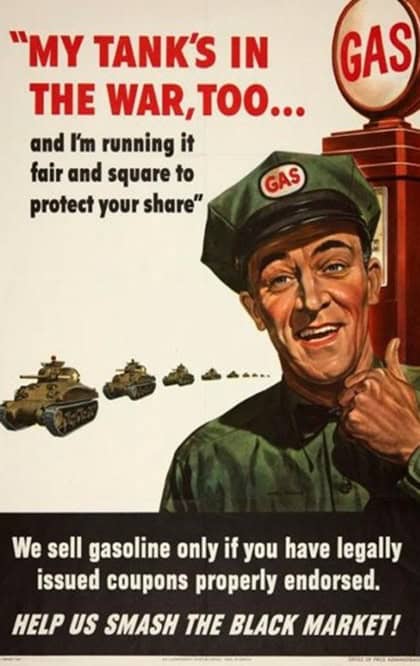
To implement and monitor the program, citizens were issued ration books, and gas stations were required to collect coupons before dispensing fuel. Violating ration rules was considered unpatriotic and, in some cases, illegal.
The government heavily promoted rationing as a civic duty, tying it to national solidarity.
Propaganda encouraged Americans to carpool, take public transportation, and avoid unnecessary trips. Slogans like “Use it up, wear it out, make it do, or do without” captured the attitudes of citizens across the land.
The restrictions had a profound impact on the daily lives of Americans. Families were forced to adjust schedules, they had to plan carefully to travel, and some even moved closer to work to reduce the need for gasoline. Many cities expanded trolley and bus service, and alternative modes of transportation gained popularity. Bicycle usage surged, and hitchhiking became a common practice.
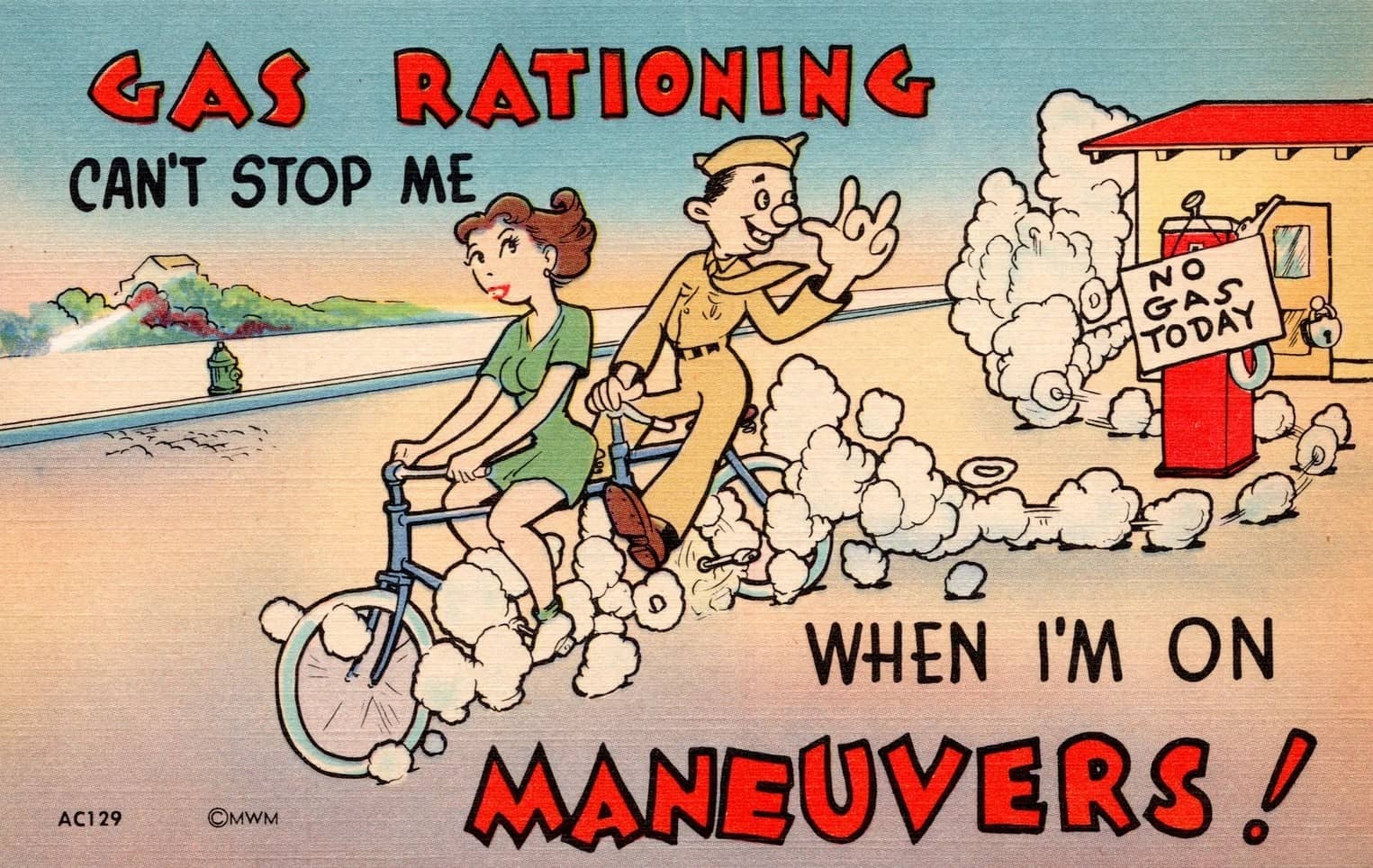
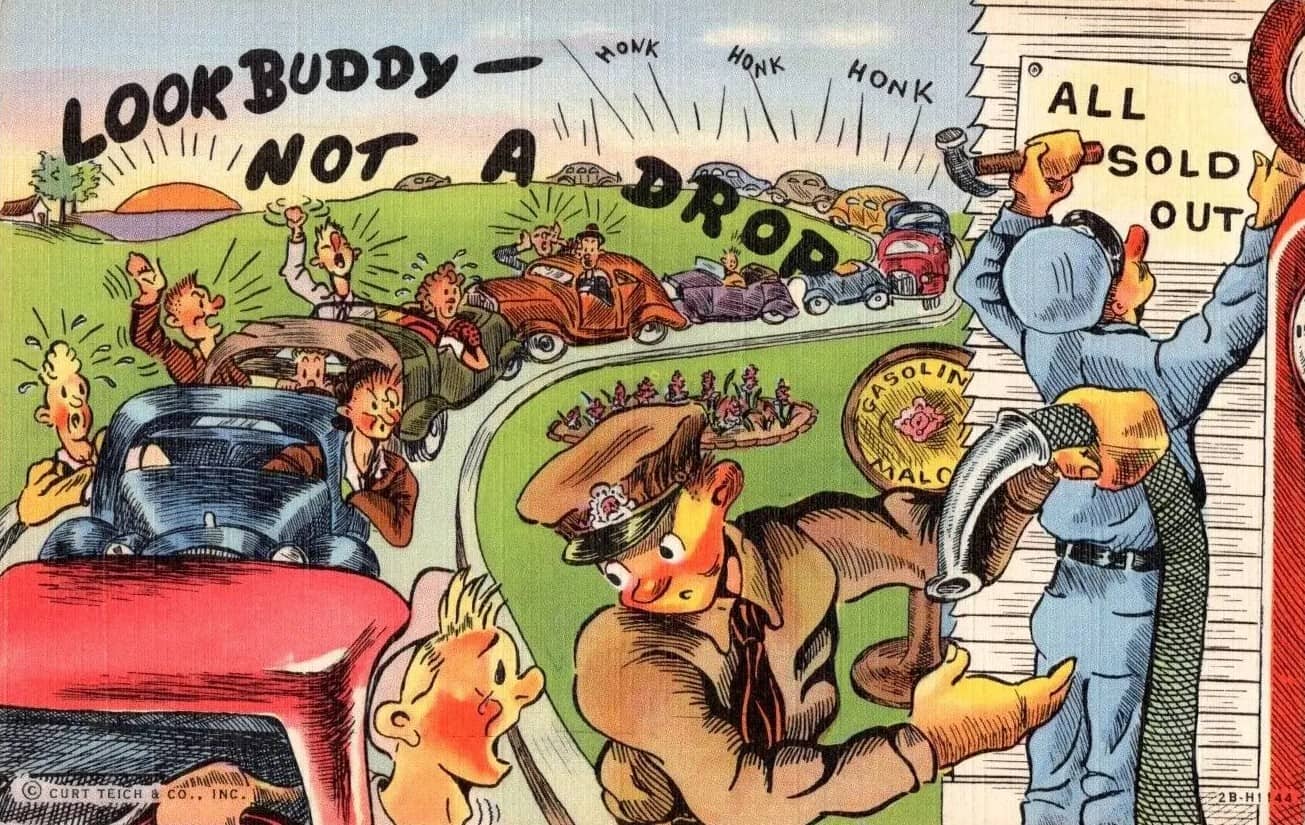
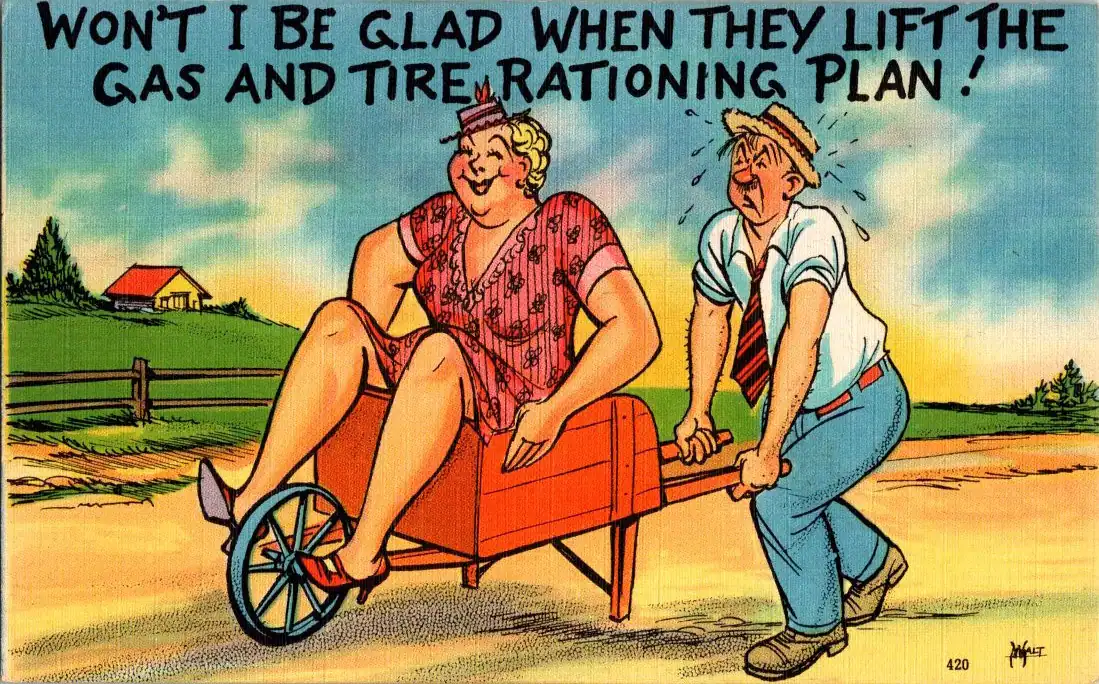
Though unpopular with some, especially those who felt unfairly limited, gas rationing fostered a shared sense of sacrifice and purpose. It underscored the reality that victory in war demanded not only soldiers on the front lines but disciplined citizens at home. By preserving vital resources and ensuring military mobility, the gas rationing program was a key piece of the U.S. war effort on the home front.
In retrospect, gas rationing exemplified how a nation could mobilize all aspects of society– even its sense of humor – to serve a larger cause.
The last war to have a direct impact of consumers in the states.
This is a swell article. I enjoy reading about how things were handled and worked during World War II. It is all fascinating. Thanks very much.