If you ever tire of postcards, you can spend days or maybe weeks watching the 876 episodes of “What’s My Line?” Such an exercise may be good for you; a healthy giggle or a genuine belly laugh is still guaranteed even though the programs are over 60 years old.
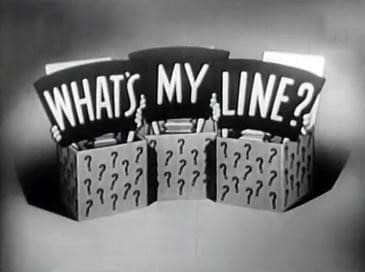
From October 1, 1950, to September 3, 1967, every Sunday night at 10:30 PM most American televisions were tuned to the original CBS version of the panel game show “What’s My Line?” The show debuted earlier on February 2, 1950, in a different time slot but settled into its regular weekly slot on Sunday in October. The show was a network staple for the next seventeen years.
“What’s My Line?” first ran in the United States in black and white and later (1966) in color, with celebrity panelists who questioned contestants to determine their occupation. Most of the “guests” or “contestants” were from the general public, but there was one weekly “mystery guest” for whom the panelists were blindfolded. The program was moderated by John Charles Daly and the most frequent panelists were Arlene Francis, Dorothy Kilgallen, and Bennett Cerf, with several guest panelists. During its long run, What’s My Line? won three Emmy Awards for “Best Quiz Show.” It also won a Golden Globe Award for Best TV Show of 1962.
Of all the episodes more than 700 are preserved on film since at the time there was no video tape. Many early episodes were lost because of economic decisions made by CBS executives between 1950 and 1952, but the episodes from July 1952 to September 1967 existed for a long time in the archive of producers Goodson and Todman.
In the years after 1967 the show returned in syndication, hosted by Wally Bruner and was seen by viewers until 1975. There have been no American episodes created since December 12, 1974.
The host, then called the moderator, was veteran radio and television newsman John Charles Daly who shared the job with Clifton Fadiman, Eamonn Andrews and on four occasions when Daly was unavailable with Random House co-founding publisher and panelist Bennett Cerf.
The What’s My Line panel for the first show was New Jersey Governor Harold Hoffman, columnist Dorothy Kilgallen, poet Louis Untermeyer, and psychiatrist Richard Hoffman. The panel varied often but after a few broadcasts it settled and consisted of Kilgallen, Arlene Francis, Untermeyer and Hal Block. Bennett Cerf replaced Untermeyer in 1951, and Steve Allen replaced Block in 1953.
Kilgallen died in 1965 but was not replaced, so thereafter, for the two final years, it was Cerf and Francis and two guests.
One charming practice was how the panelists were introduced. The announcer introduced Arlene Francis who used the far-left seat at the panel’s table. Francis would then introduce the panelist to her left, the next panelist would do the same, and finally Cerf, whose usual seat was the last on the right would introduce Daly.
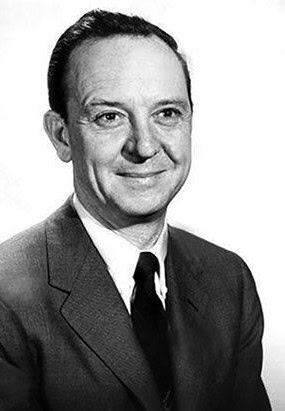
Daly served as host of the show from the beginning. He was born in Johannesburg, South Africa in 1914, where his father was working as a geologist. After his father died, the family moved to Boston, where John attended school and later enrolled in Boston University where he earned a degree in journalism. He later joined the news teams at WJSB in Washington, DC.
Daly had a distinguished career long before becoming the host of What’s My Line. He was the first national correspondent to report the attack on Pearl Harbor. During World War II, Daly covered front-line news from Europe and North Africa. He was also the first to report on the death of Franklin D. Roosevelt.
John Daly died on February 24, 1991, three days after his 77th birthday.
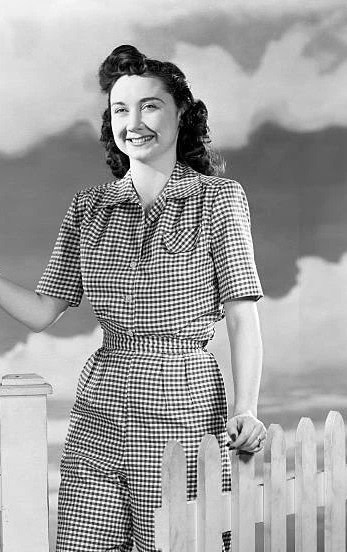
Dorothy Mae Kilgallen was born into an Irish-Catholic family from Chicago in July 1913. The family lived in many places up to 1920 when her father took a reporter’s job in Chicago. Dorothy began her career as an investigative reporter in 1938 and through the years distinguished herself as a competent impartial journalist.
When Mark Goodson called in 1950 Kilgallen was thrilled to be a panelist on What’s My Line, beginning on its first broadcast. She was seen almost every Sunday evening on the show for 15 years.
Beginning in 1959, the Goodson Todman Productions Company pioneered the use of videotape. It was new but difficult to use and expensive, nevertheless it provided produces to escape the drudgery of live telecasts. In 1961 the producers were able to stockpile enough videotaped episodes so that Kilgallen and the other panelists Arlene Francis and Bennett Cerf, along with host John Charles Daly, could take their summer vacations.
In 1965, they returned to live telecasts on September 12. It was followed by eight consecutive Sunday nights when Kilgallen appeared live, the last of them being November 7. Dorothy Kilgallen was found dead in her Manhattan townhouse on November 8th.
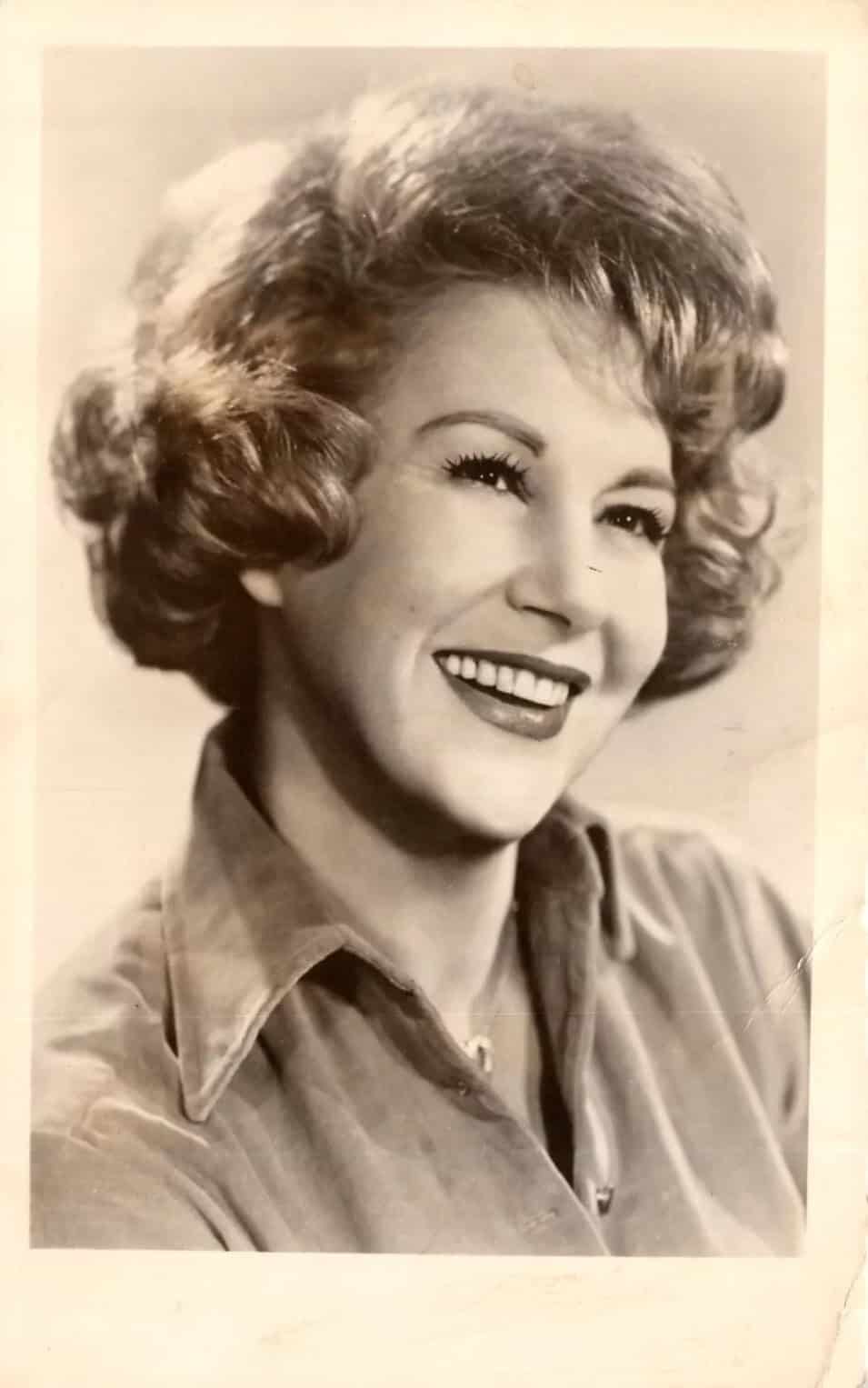
Arlene Francis was a “second show” panelist. Miss Francis, as everyone called her was born in Boston as Arlene Francis Kazanjian. Her father was of Armenian descent who moved to America after the Hamidian Massacres of 1896. He became a highly respected portrait photographer.
Arlene’s family moved to New York City in 1914. She attended Finch College and began her acting career in several local and off-Broadway theatres and then Broadway in 1928. She made her film debut in 1932. By the late-1950s Francis was the highest paid game-show panelist in television making $1,000 per prime-time show. Francis also had several film credits.
Her personal life included two marriages and one son, Peter Gabel who surprised his mother by being a What’s My Line mystery guest.
Arlene Francis lived to age 93. She spent her last years in a San Francisco nursing home and died from Alzheimer’s and cancer.
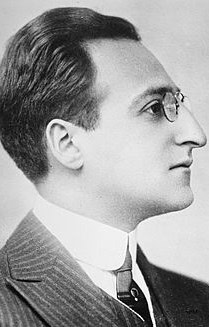

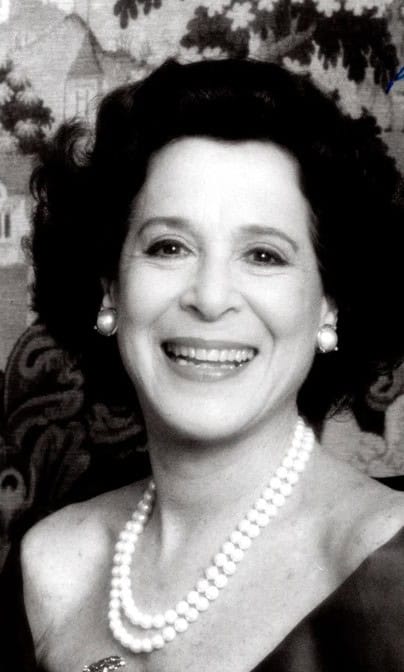
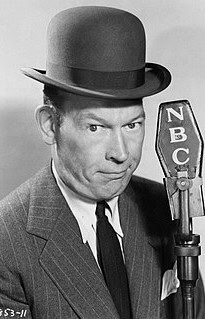
Louis Untermeyer, Hal Block, Kitty Carlisle, Fred Allen, and Soupy Sales were others who enjoyed occasional opportunities to appear as panelists, but none had the lasting impact that Bennett Cerf did.
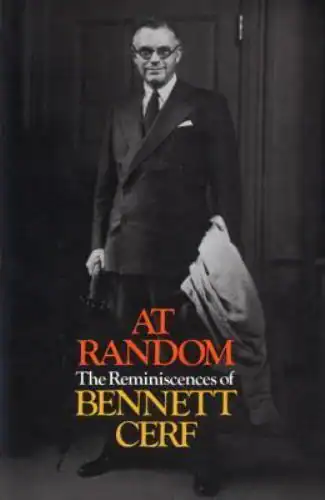
Bennett Alfred Cerf has been called America’s funniest punster. He was born in Manhattan in May 1898. It is difficult to label Cerf because he succeeded in so many fields: publishing (he was co-founder of Random House), civil rights advocate in cases against government censorship, and even as a jurist at the Miss America pageant and as a television personality.
In 1951 when Louis Untermeyer announced that he planned to leave What’s My Line, Cerf replaced him for the second season of programs and remained until the show ended in 1967.
After Cerf’s death in 1971, Random House published (in 1977) his autobiography, At Random: The Reminiscences of Bennett Cerf. The postcard at left is a promotional item for the book.
***
These personalities and others were gifted with insights, wit, and deductive skills that contributed to the show’s entertainment. The most famous panelists including Cerf, Francis, and Kilgallen, who had engaging personalities and that “special” skill to deduce the obvious, helped make “What’s My Line?” a popular program – then, sixty plus years ago and now!
Inclusion of photographs of each celebrity rounded out this well researched television history. Wonder what the viewership would have been were the Sunday program aired several hours earlier.
I enjoy watching episodes of What’s My Line on my I-Pad, My favorite episodes are the nudist camp operator and Erle Stanley Gardner, Bishop Fulton Sheen, Kate Smith, and Marian Anderson as mystery guests. The show was witty and often hilarious. Arlene Francis’s husband, Martin Gabel and Tony Randall were also frequent guest panelists.
My father worked for Bennett Cerf at Random House– and as a child in the 1950s, I was able to meet Bennett Cerf when I visited the Random House brownstone building with my father. The building whose image was the publishing company’s logo on the back of the books, at 457 Madison Avenue, NYC, NY, shared offices with the Catholic Arch Diocese of NY (Cardinal Spellman) as St. Pat’s was conveniently across the street. Later the building became the foyer of the Helmsley Palace Hotel!