My Five Favorite New England Castles
A castle is a large, fortified building originating and first constructed in medieval times. Castles were traditionally residences for nobility, constructed from stone that usually featured towers, high walls, and battlements. Castles were symbols of power and wealth and were frequently thought to be places where families were protected and enjoyed feelings of safety. The first castles appeared in the early 9th century in Europe, especially in France, Germany, and England. The earliest castles were wooden forts, but they soon evolved into quite grand stone edifices.
Buildings commonly considered castles are rare in New England, but those that are there are quite notable. There is one castle in Maine, one in New Hampshire, eight in Connecticut, seven in Rhode Island, eight in Massachusetts, only Vermont has no such structure.
Unlike their European counterparts, New England’s architects focused more on homes and churches due to the different social and historic contexts. However, there are homes and estates that resemble their European counterparts and at one time served similar purposes. Today, some of these historic structures attract visitors because they serve as reminders of the region’s colonial past or their “Gilded Age” history.
Winnekenni Castle, Haverhill, Massachusetts
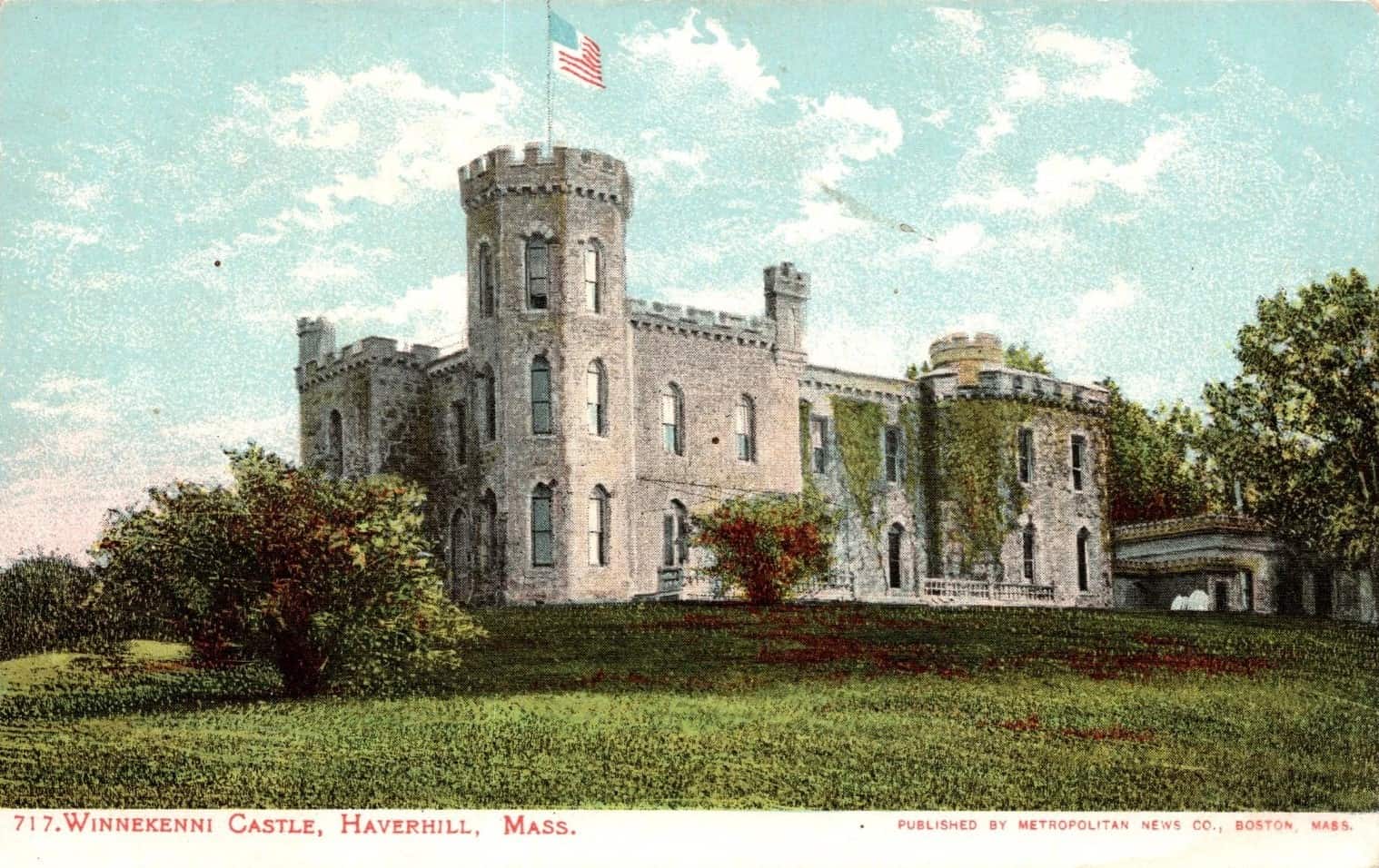
Haverhill, Massachusetts, is only thirty-five miles north of Boston but it might as well be in a different world. Although the population is mostly professional, Haverhill has an atmosphere more rural then most Massachusetts cities. One reason Haverhill is so welcoming is Winnekenni Castle. Today, this favorite landmark is a valuable part of the community, the surrounding grounds still serve as a recreational park where concerts, plays, workshops, craft fairs, Halloween parties, and fundraisers are held.
The name “Winnekenni” is an Algonquian word for beautiful! The castle is not very old in years, it was completed just 150 years ago. In 1861, Dr. James R. Nichols, a brilliant chemist and agriculturist bought the old Darling family farm that sat on a hill overlooking Lake Kenoza, to use as a laboratory site to test chemical fertilizers.
In 1872 Nichols visited England and Scotland and was inspired by their long-standing stone structures. He returned with the idea of building a summer home using boulders and rocks. He was often heard saying, “my desire is to prove in a practical way the value of boulders and rocks (commonly found across New England) as building materials.”
Construction of Winnekenni began in 1873. Then The Haverhill Gazette, in 1875 when construction was complete, described the first-floor interior of the castle as having a grand Gothic door that opened to a spacious Grecian drawing room, a Pompeian style dining room, a Roman-tiled, black-walnut finished library, as well as a full-service kitchen, a storeroom and laundry. A spacious staircase in the foray led to a hall on the second story that had entrances to nine bedrooms and a “bathing room.” On the second floor there was access to the roof and each one of the four towers. The view from the roof of the castle included seventeen surrounding towns in three states and the ocean.
In 1885, due to poor health Dr. Nichols sold the castle and 27 acres of land to his cousin William Webb, whose widow in 1895 sold the property to the City of Haverhill. It is now owned by a foundation.
Gillette Castle, Hadlyme, Connecticut
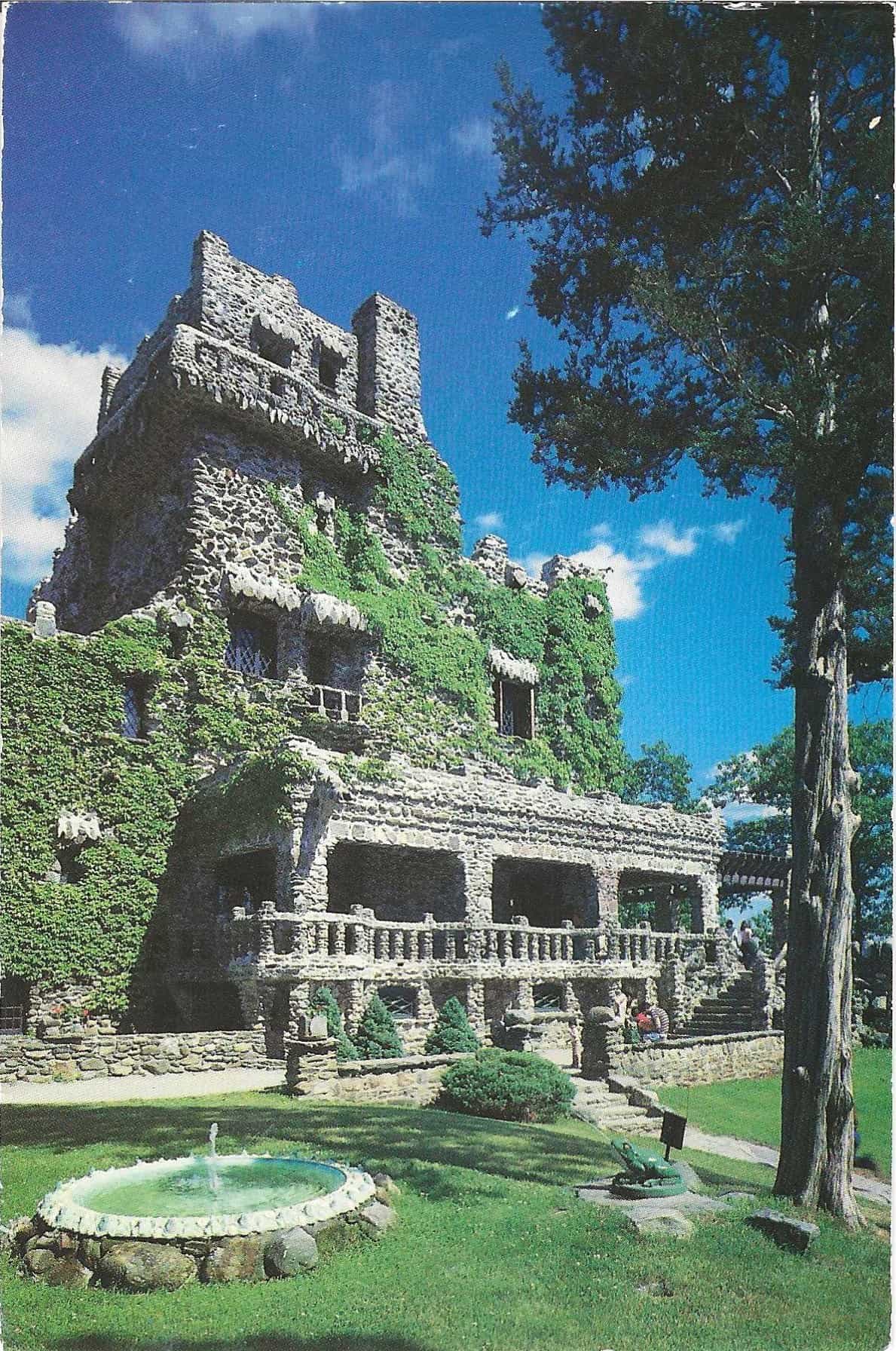
William Hooker Gillette (unrelated to King C. Gillette, the razor blade namesake) built a mansion of his own design that he perched high above the Connecticut River in Hadlyme, Connecticut. He also planned the surrounding grounds, and it was he who invented the many unique features of the castle – down to the smallest detail.
Gillette, who was an actor, director, and playwright most famous for his portrayal of Sherlock Holmes, started construction of the ornate 14,000 square-foot stone fortress in 1914. It sits 200 feet above the Connecticut River atop the most southerly hill in a chain known as the Seven Sisters.
Construction took five years and all the materials for the castle were carried up the hill by a tramway designed by him.The mansion was finished in 1919, at a cost of just over one-million dollars. Gillette called it “The Seventh Sister.”
William Gillette gave specific directions in his will and testament that the property did not fall into the hands “of some blithering saphead who has no conception of where he is or with what [he is] surrounded.” Gillette died in 1937 and since the will so stated, it was incumbent on the State of Connecticut to purchase the castle and adjoining acreage to create a state park.
Hearthstone Castle, Danbury, Connecticut

Hearthstone was built between 1895 and 1899. Today, the castle is owned by the City of Danbury and is in Tarrywile Park and slated to be renovated into an observation deck, however, to date no work has commenced.
Hearthstone was designed by architect Ernest G. W. Dietrich for its first owner, E. Starr Sanford, a noted Connecticut photographer. It was first known as “Sanford Castle,” that was intended for Sanford’s wife to be a honeymoon “cottage.” Sanford and his family owned the castle for only five years before selling it in 1902 to Victor Buck, a retired New York industrialist. When the Buck family moved in, they renamed the castle “Buck’s Castle.” In 1910, a new owner Charles Parks bought neighboring properties and later, in 1918 bought “Buck’s Castle” for his oldest daughter, Irene Parks, as a wedding gift.
During this time the castle was renamed “Hearthstone Castle.” The name was possibly changed to honor the eight fireplaces within the structure.
Searles Castle, Great Barrington, Massachusetts
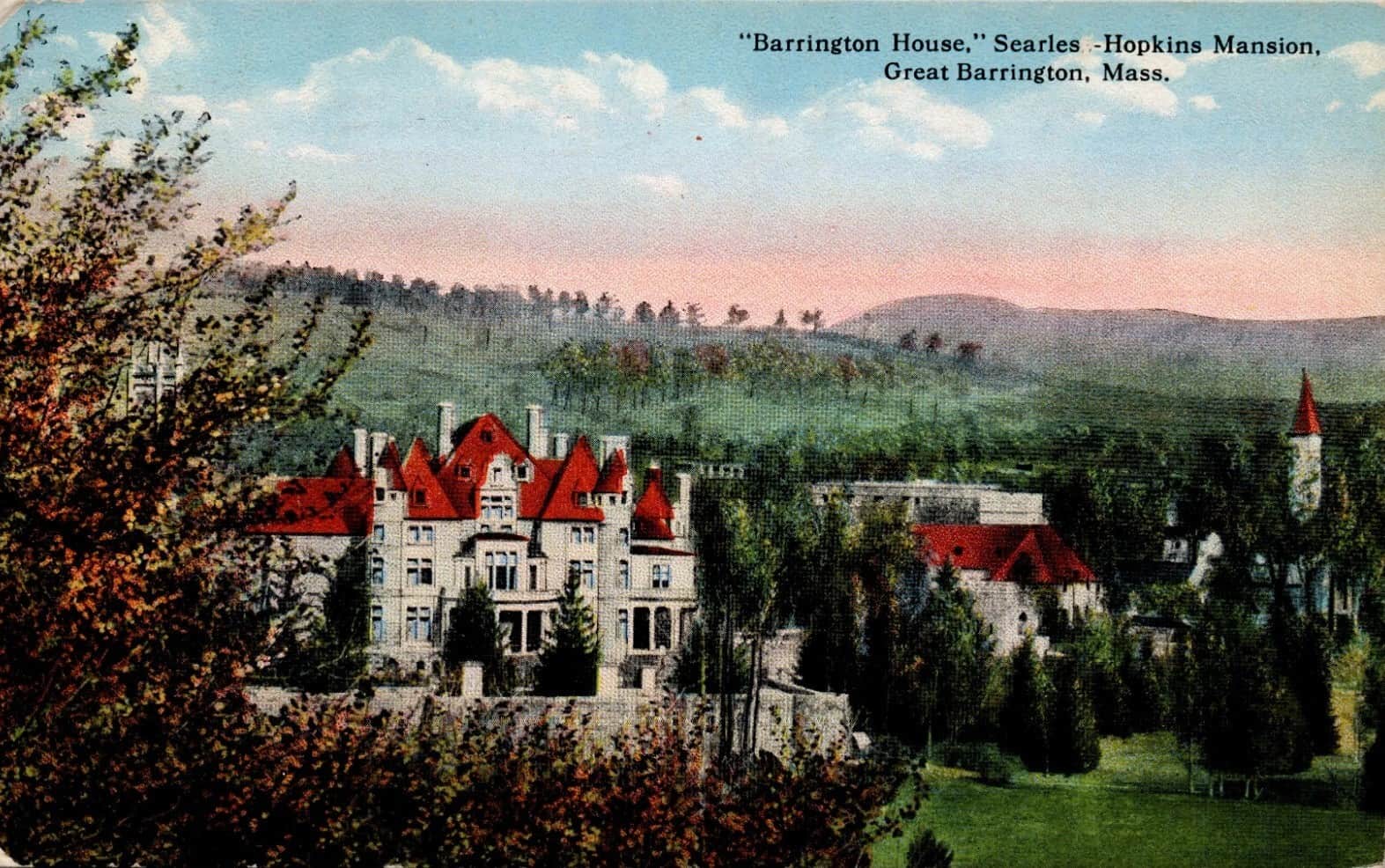
The Searles Castle was designed by Stanford White of McKim, Mead and White, the most famous New York architectural firm of the time. There are 40 rooms with a combined 54,246 square feet of floor space. There are 36 fireplaces. The design fairly imitates a French chateau.
The construction of the seven-story colossus began in the 1880s atop its foundation that frames a “dungeon” like basement.
Commissioned in 1875 by Mary Sherwood Hopkins whose husband, Mark Hopkins, was the treasurer and one of the founders of the Central Pacific Railroad. Mark Hopkins died in 1878 and Mary Hopkins married Edward Francis Searles, who designed the interior while the castle was being built. He was 23 years younger than she was. Mary died in 1891, but Searles maintained the castle until his death in 1920.
Belcourt Castle, Newport, Rhode Island
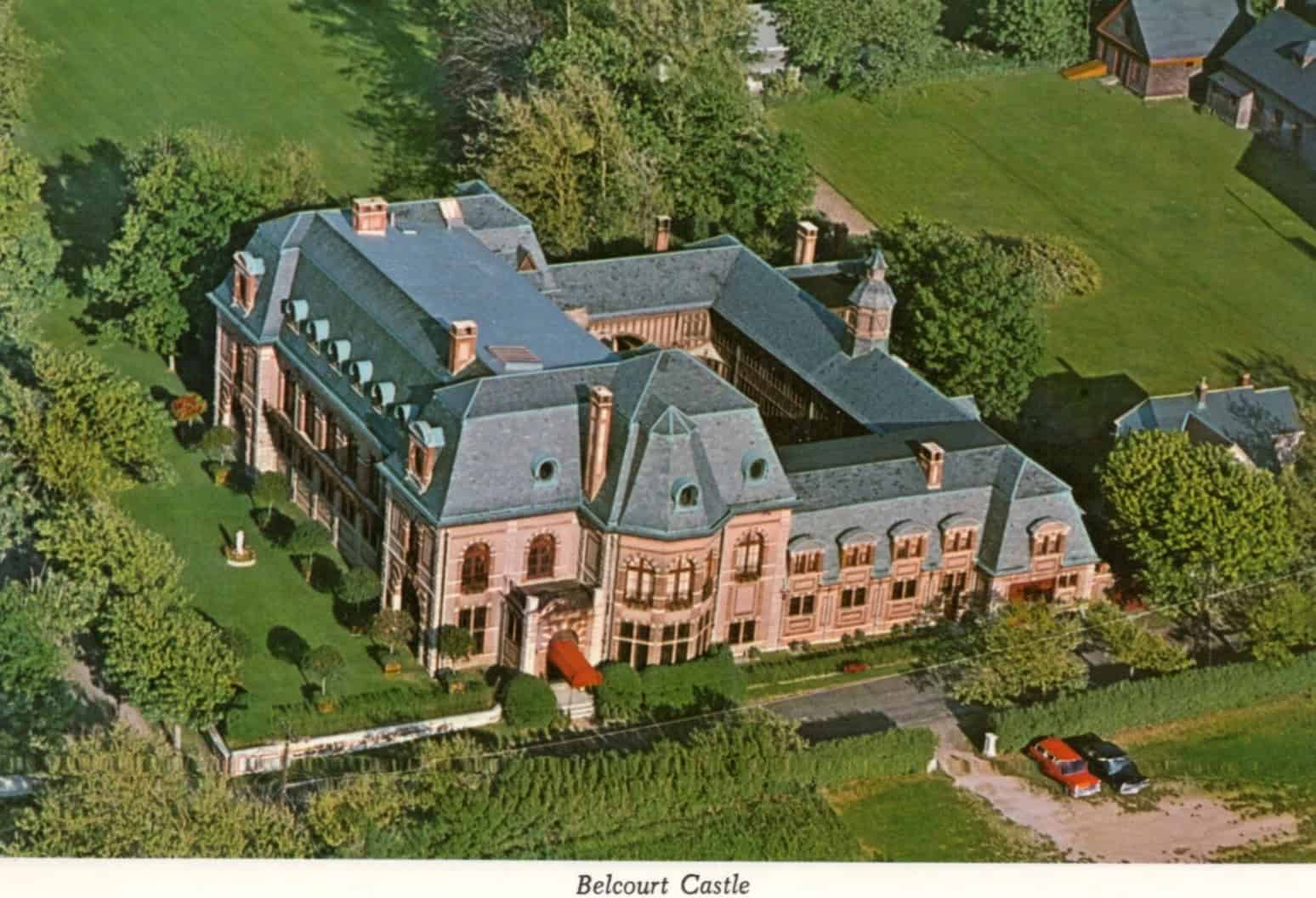
This palatial home was intended to be used for only six to eight weeks of the year, so Belcourt is considered a former summer cottage that was designed by architect Richard Morris Hunt for Oliver Hazard Perry Belmont. It is located on Bellevue Avenue in Newport, Rhode Island.
Construction of this 50,000-square-foot, 60-room summer villa began in 1891 and completed in 1894. It was designed in a multitude of European styles, and it was ostensibly designed to satisfy the whims and wishes of the eldest Belmont son, 33-year-old Oliver. Not surprisingly Belmont frequently clashed with Hunt over design and costs which ran somewhat more than three-million dollars in 1894.
Yet when Belcourt was open for the season, Belmont employed some thirty servants at aggregate wages of approximately $100 per week – a staggering amount at the time.
The Belmont family was widely known for its particular interest in the breeding and care of horses, hence Oliver’s father, August became the namesake for the Belmont Stakes.
Very Interesting for me. As someone who was raised in a small town out west with a ‘castle like home’ then moved to Yakima Wa. where we have: Charboneau Castle, Congdon Castle and had Castle School (burned) and ‘The Castle’ (North Yakima High School), I enjoyed this article. Thanks Miss Ingram. Paul
Thankfully, people with gobs of money sometimes do create wonderful buildings.