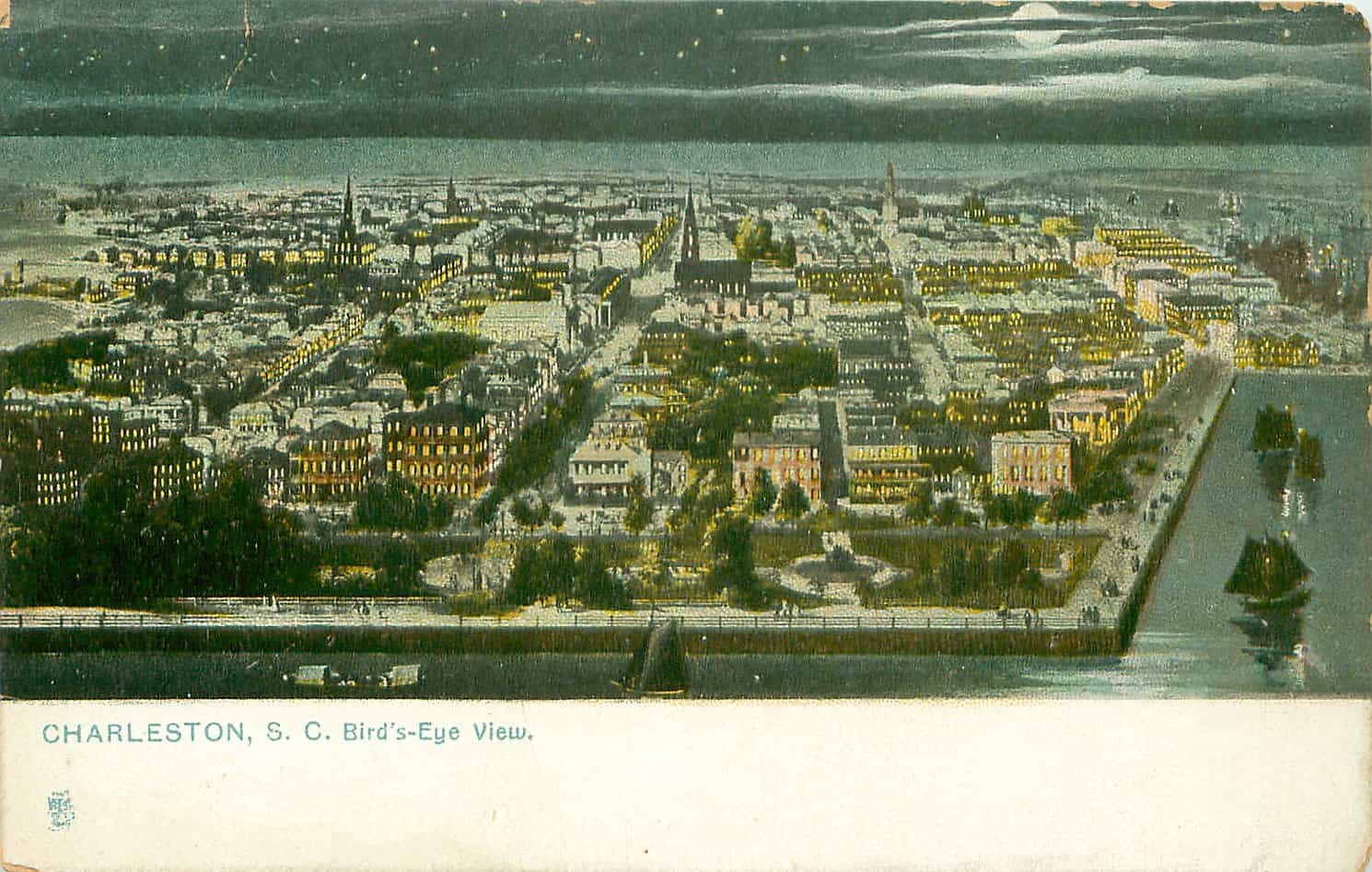
Charleston, South Carolina, is a historic coastal city known for its architecture and cobblestone streets. The locals frequently boast of their history, especially the role they played in the American Civil War. The city has several charming parks, more than a dozen historic homes, and culture centers. The local symphony orchestra is world-class, and the art museum has earned the respect of hundreds of active artisans. All this, and I haven’t yet mentioned the renowned cuisine, especially seafood, found in restaurants across the city.
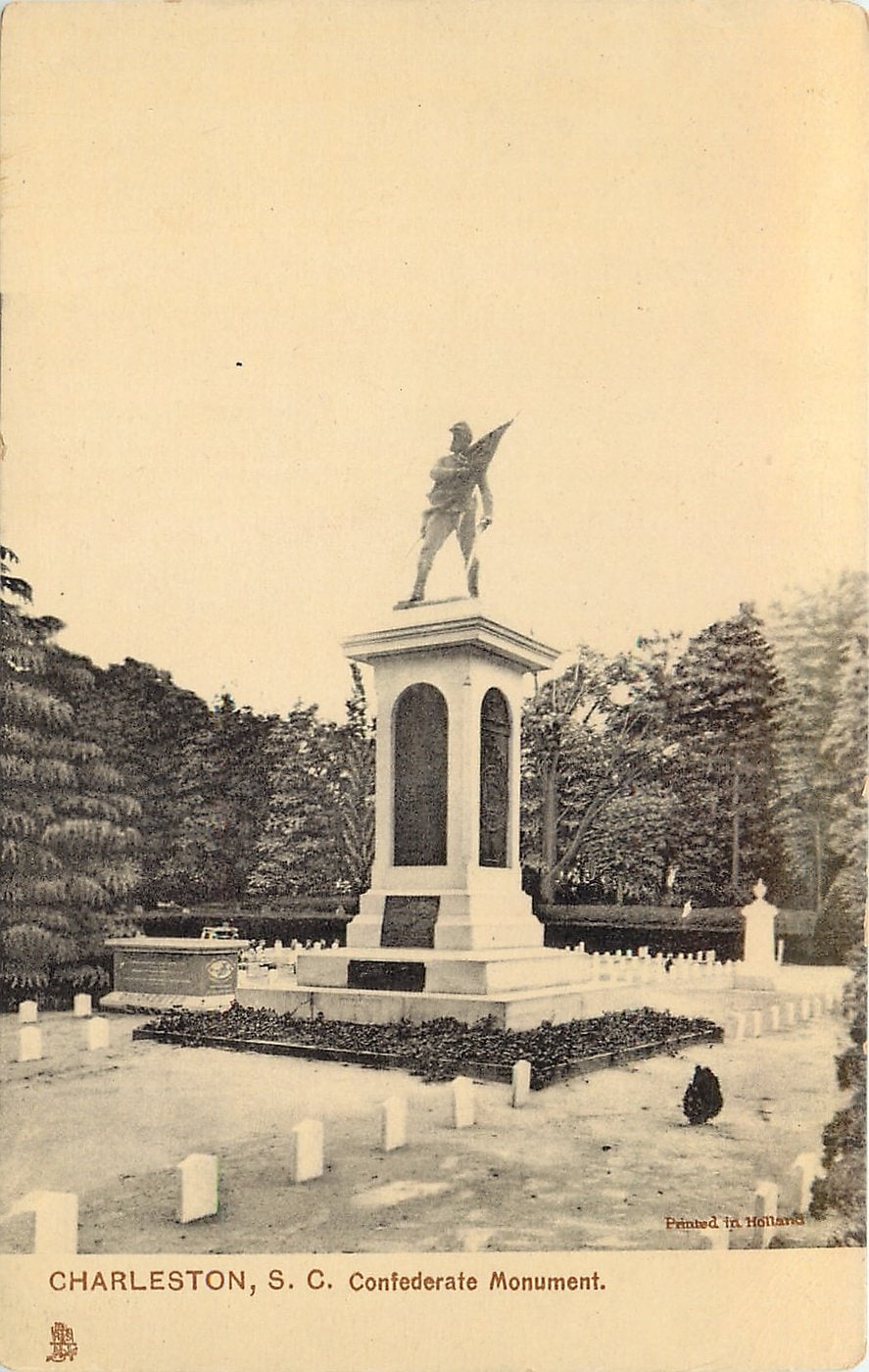
When Tuck decided to create cards showing Charleston in 1906, they had plenty of sites worthy of being featured. The end-product of twelve cards (i.n.o. 5216-5227) was produced using the Raphotype printing process that was done in Holland.
CHURCHES
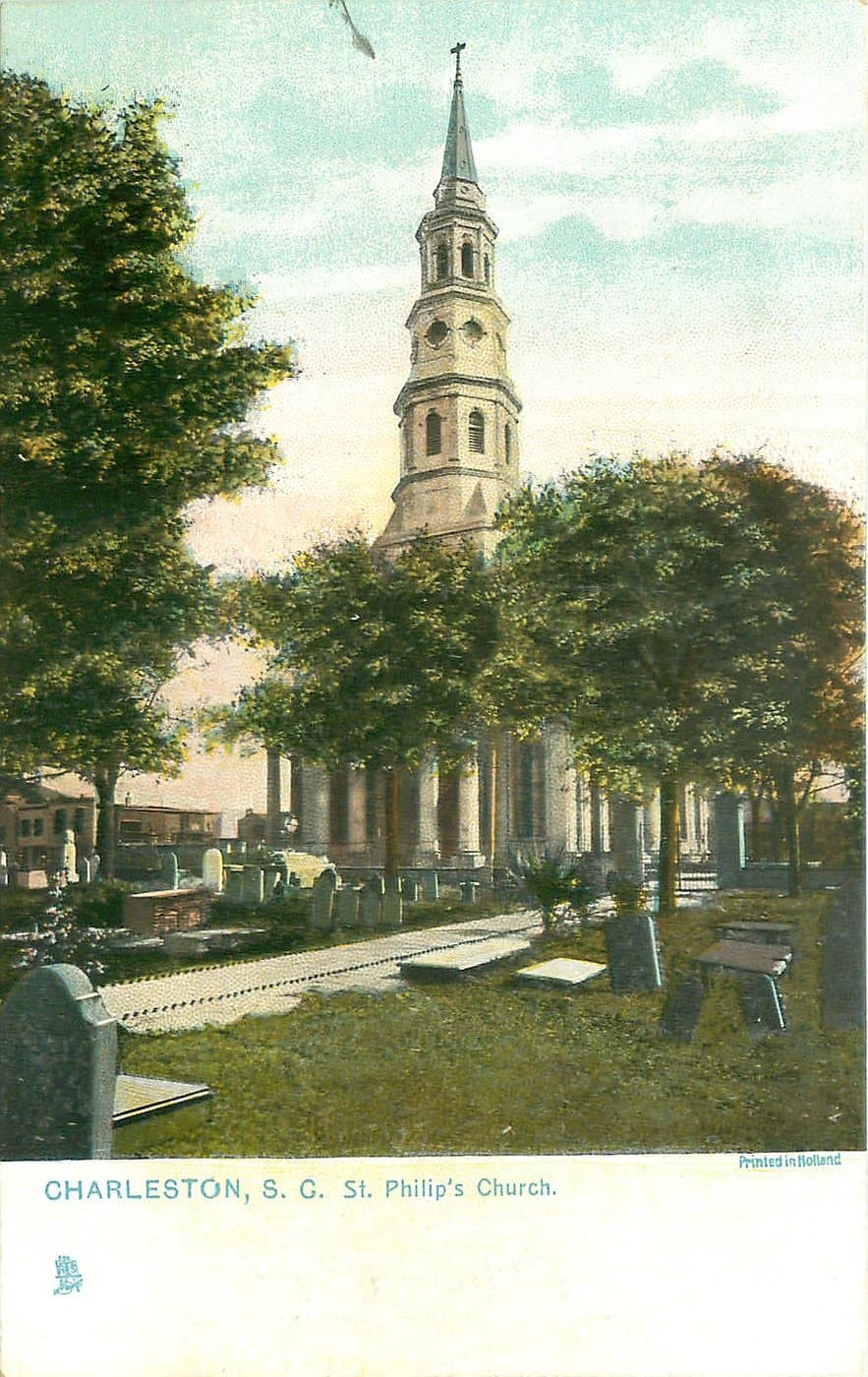
The first St. Phillip’s church was built in 1682. In 1723 a new church was erected and the old edifice demolished. During a fire in 1796, the spire caught fire, but a parishioner climbed the spire with a bucket of water and extinguished the flames. In 1835 it burned again, and this time was destroyed. The present church was opened on May 3, 1828. The steeple is nearly 200 feet tall; at night a beacon light shines far out to sea.
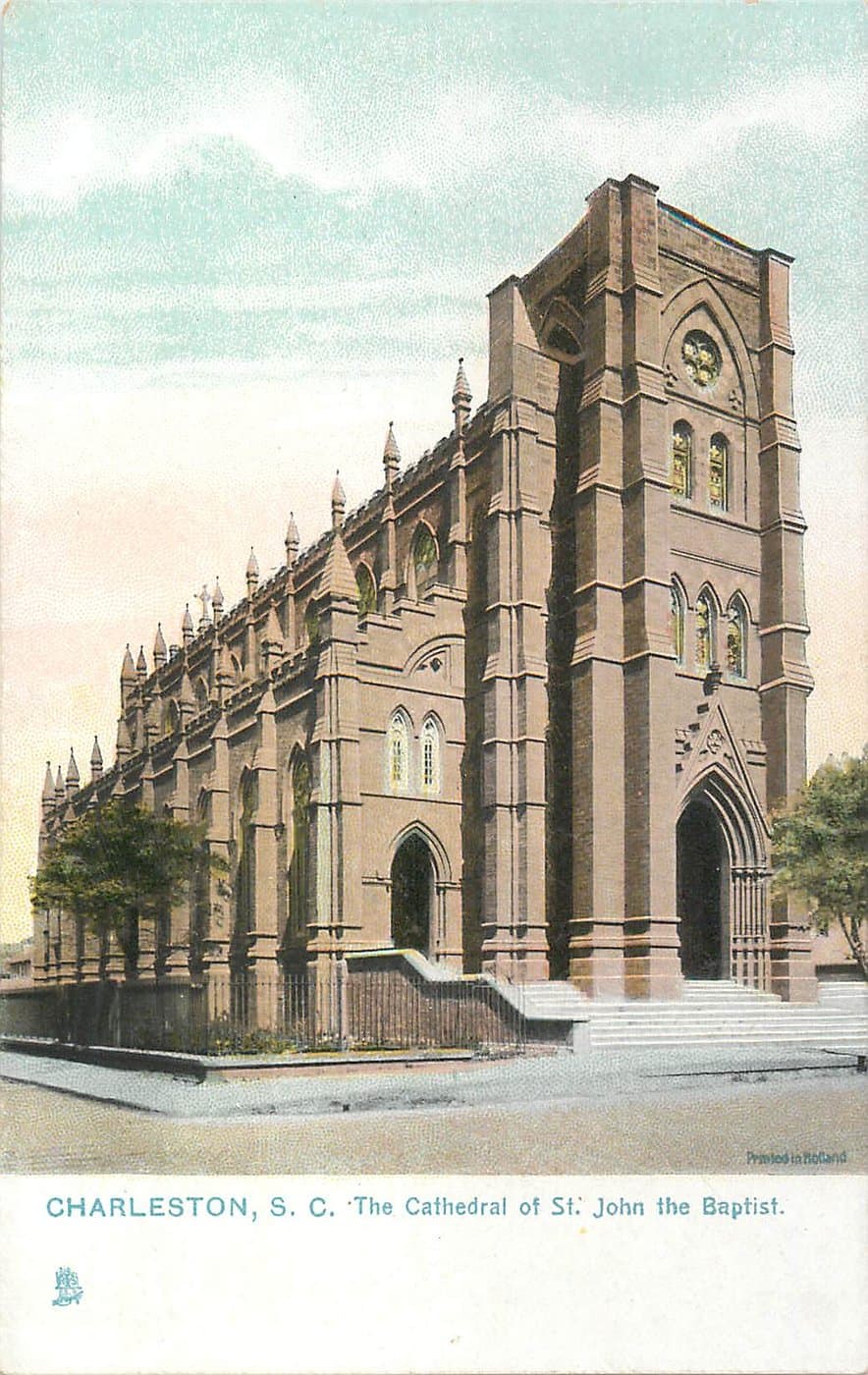
The cathedral of St. John the Baptist. This Roman Catholic church, known formerly as St. Finbar’s Cathedral, was burned down in the great fire of 1861. The new structure, dedicated in 1906, is on the same site and is known simply as “The Cathedral.
AN HISTORIC HOME
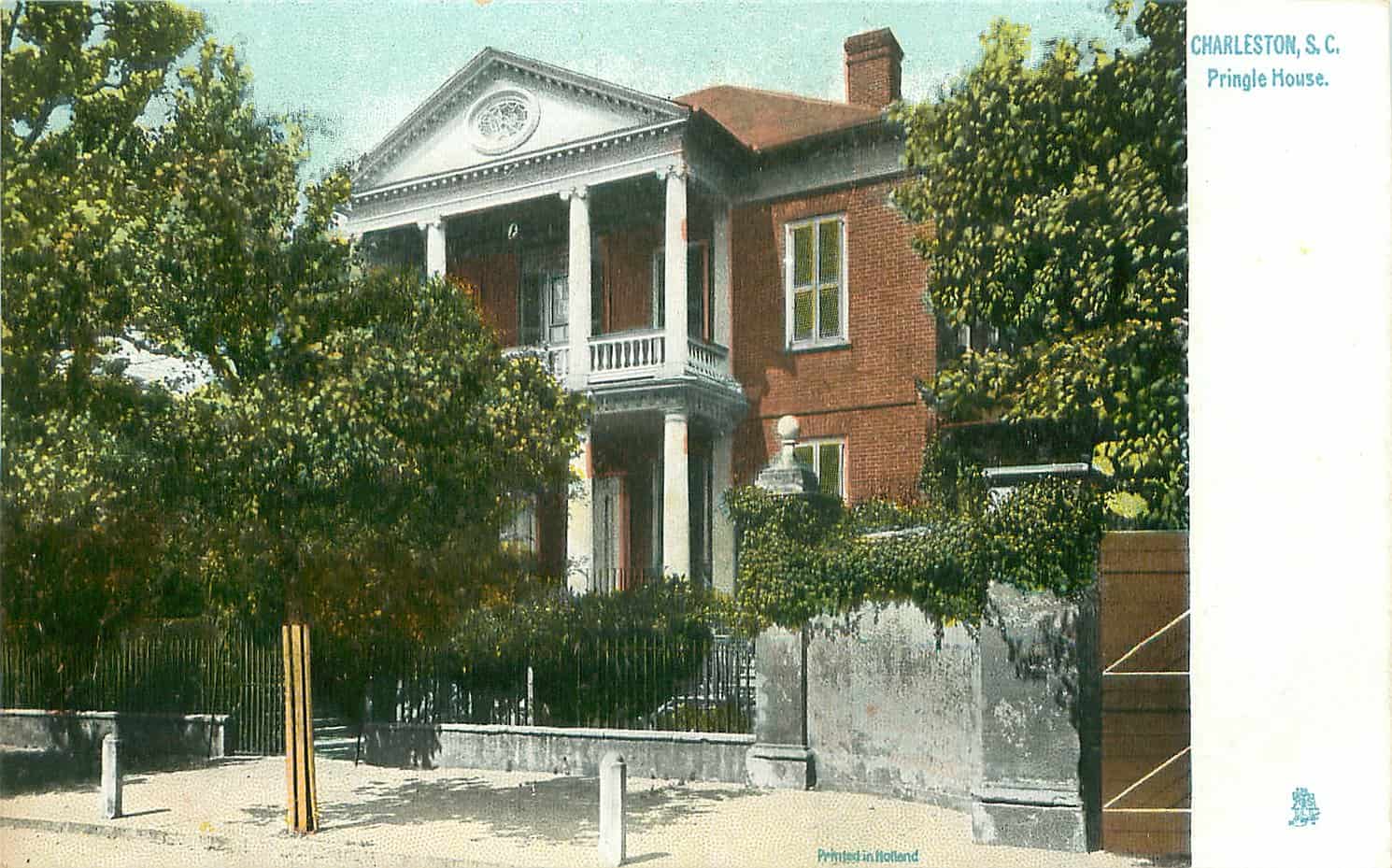
The old Bull-Pringle mansion on lower King Street is one of the city’s landmarks. It is striking in appearance and enclosed by a twelve-foot-high brick wall. Prior to the Revolution it was the home of Col. Miles Brewton and during that war it was headquarters for the British officers. Since that time the home has been in the possession of the Bull and Pringle families.
MONUMENTS
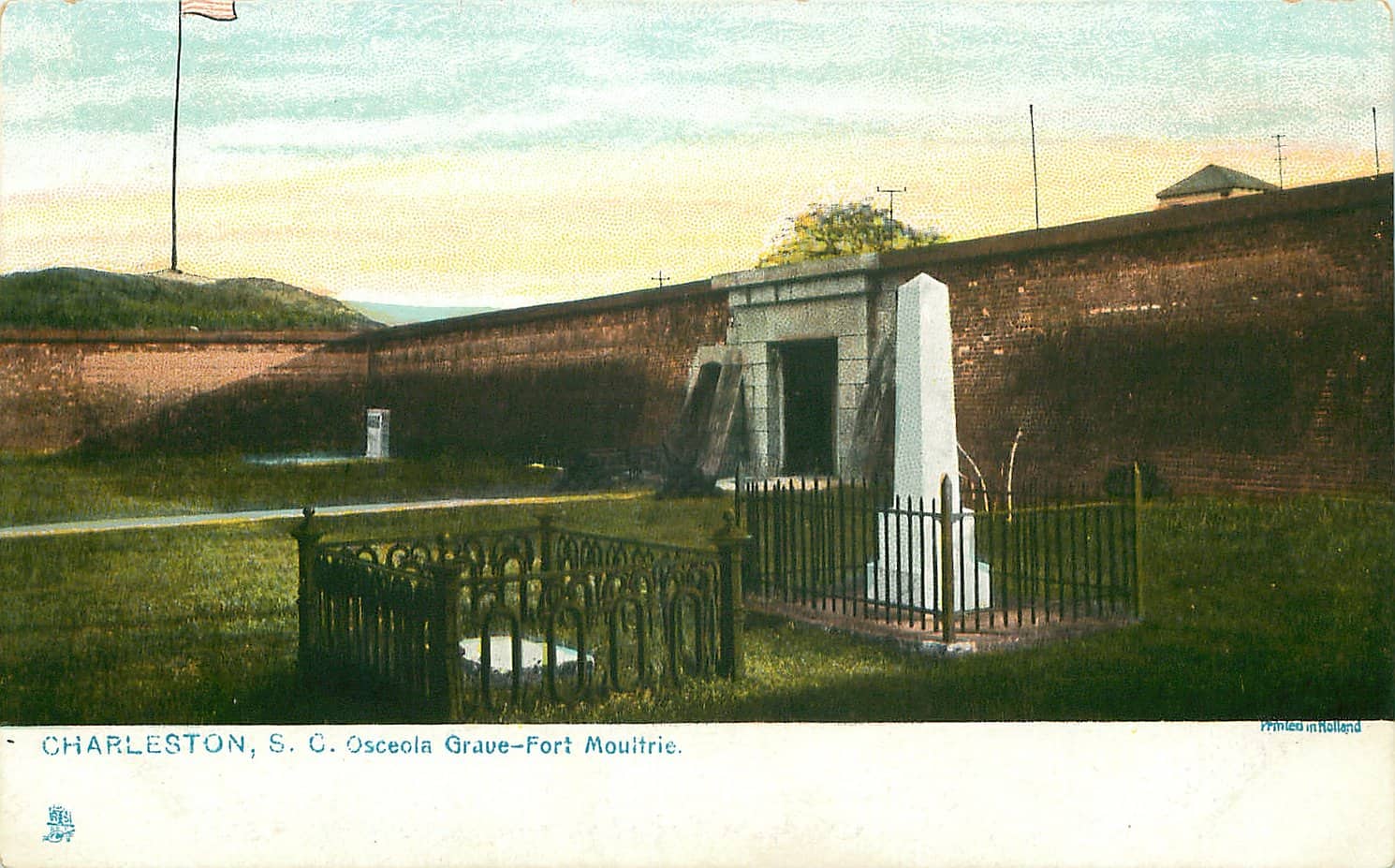
Osceola was a famous chief of the Seminole Indians. He was born in Florida in 1803. In 1835 his wife was seized as a slave, and he began a war which carried on until he was captured. He died at Fort Moultrie in 1837. The fort was abandoned during the Civil War when Charleston harbor was evacuated in 1865.
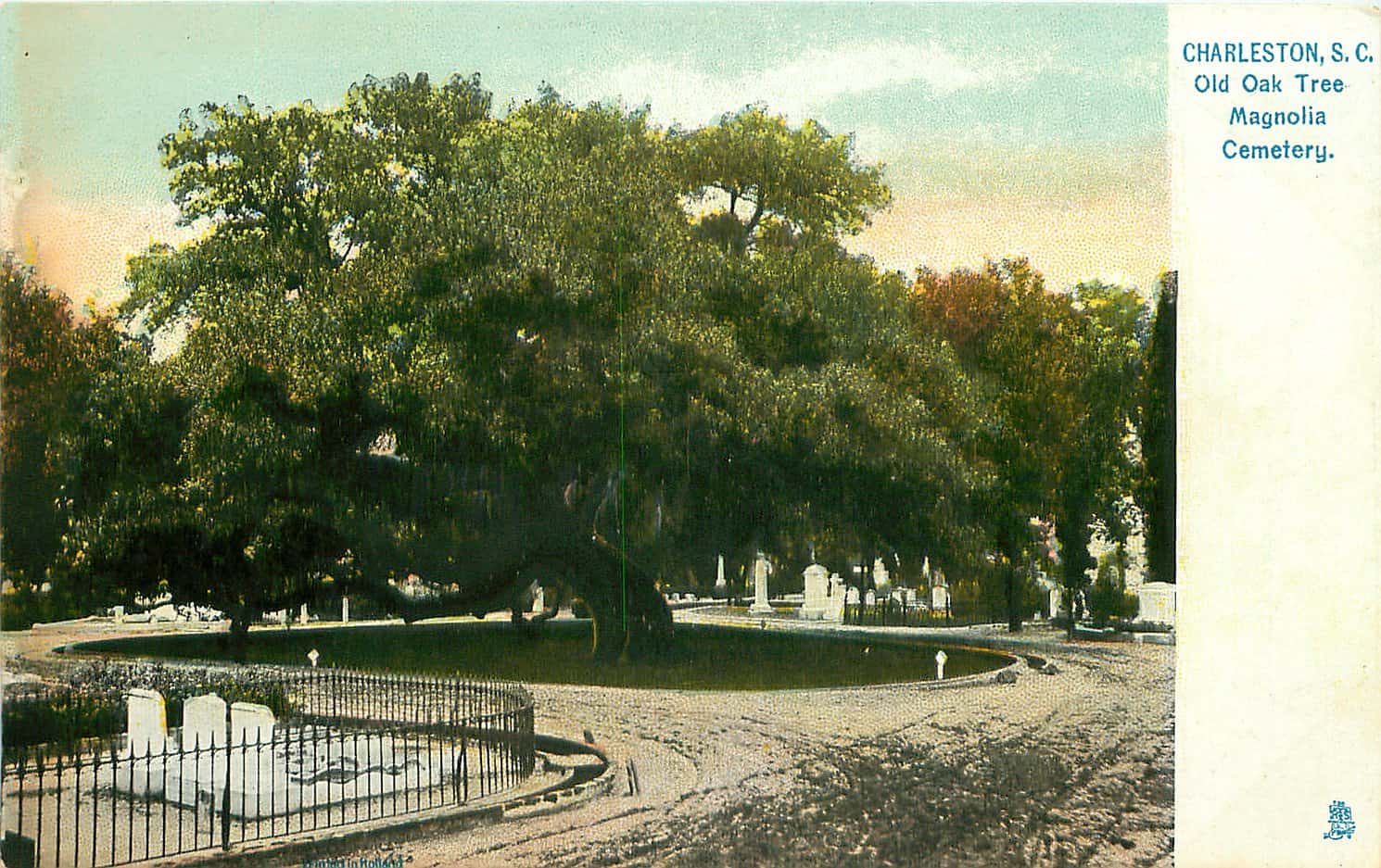
The Magnolia Cemetery was established about 1850 and in addition to its natural beauty, the landscapers left oak trees that thrive abundantly, some of which are more than 100 years old. Many have grown to be 40- to 60-feet tall and have trunks that exceed 20-feet in diameter.
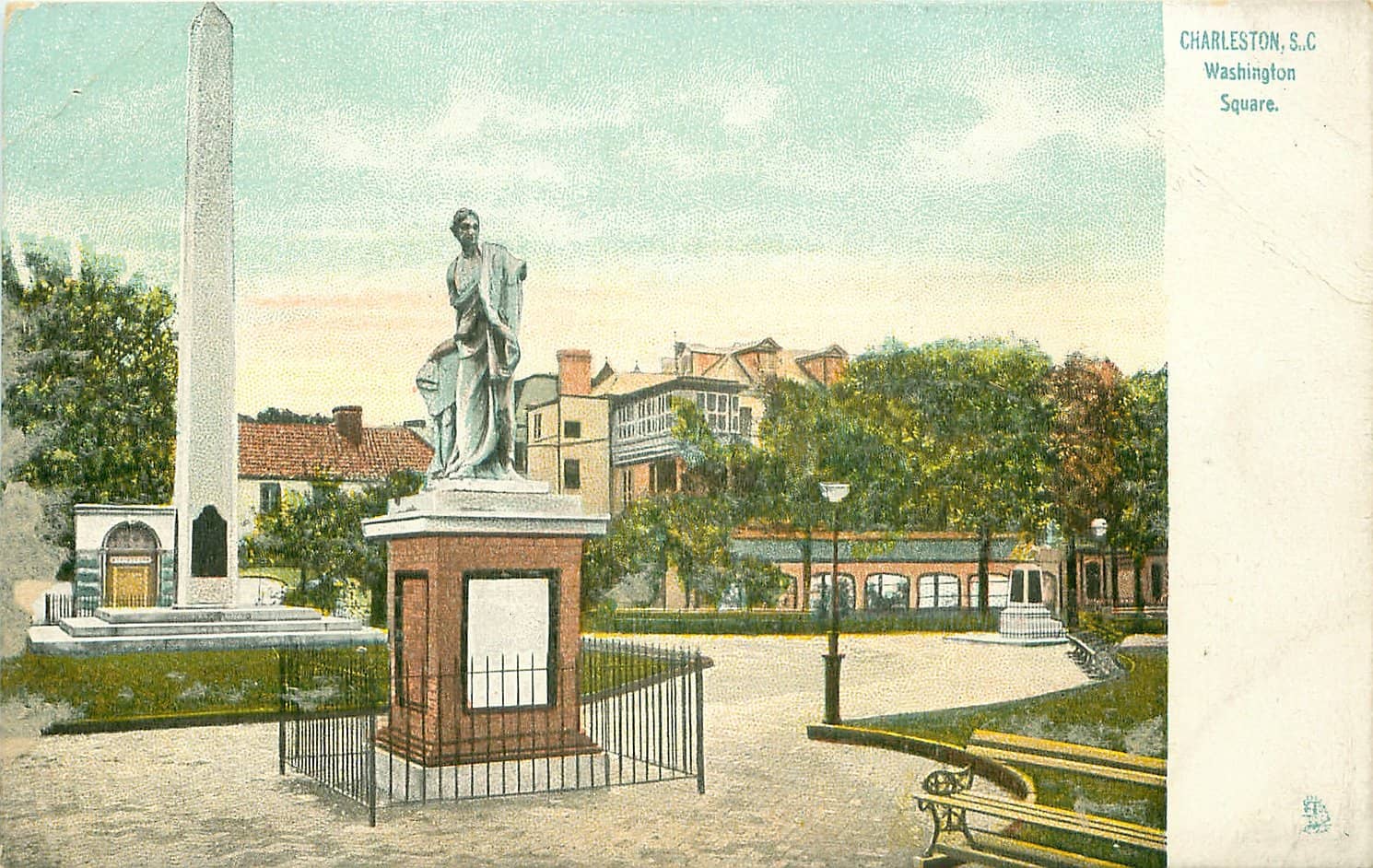
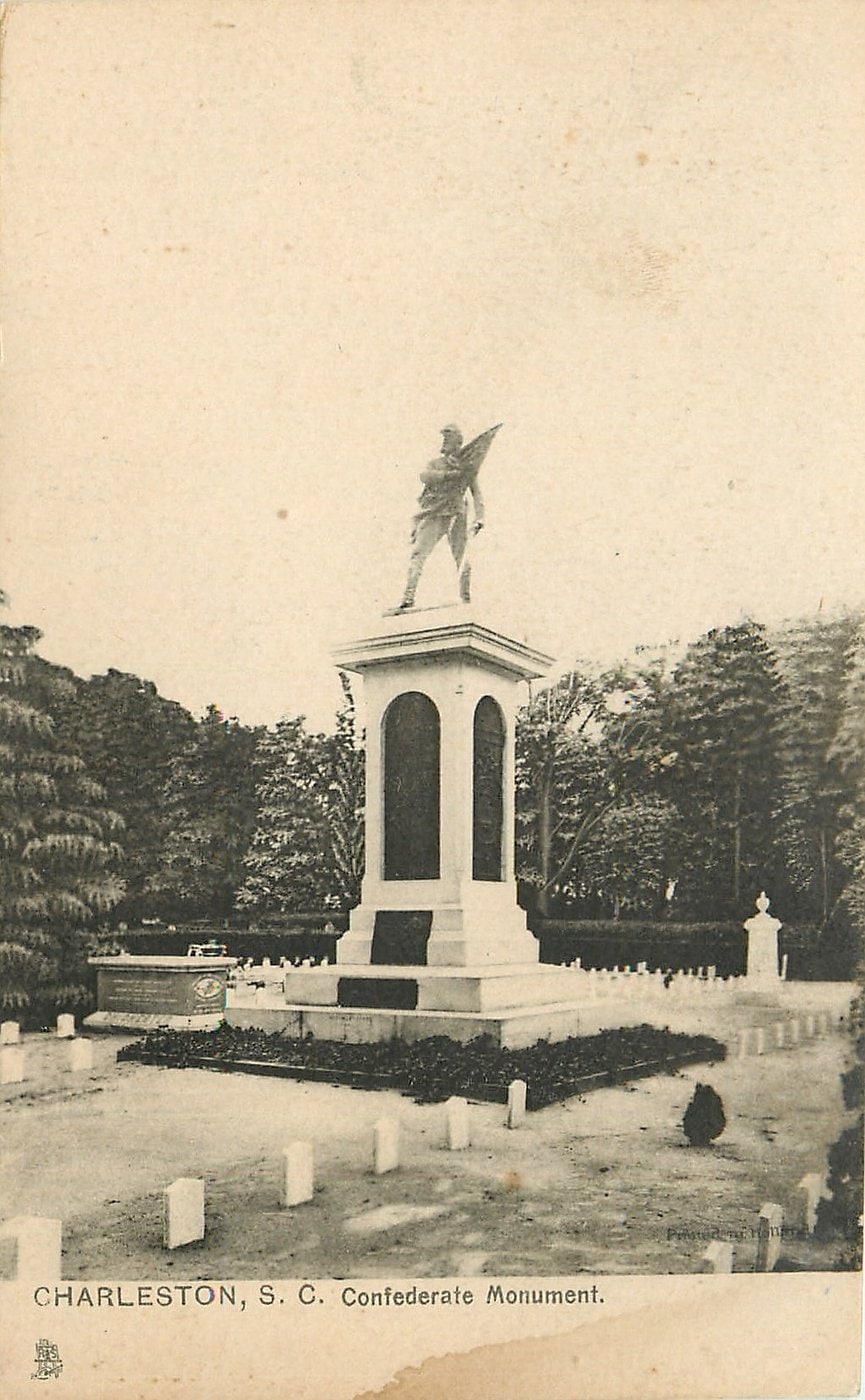
Washington Square is a public park adjoining the city hall. It contains several monuments, one of which was erected by the State Assembly in 1770 to honor William Pitt, who was a British statesman who favored the American Cause, another is a tall column in honor of the Washington Light Infantry who fought for the Confederacy.
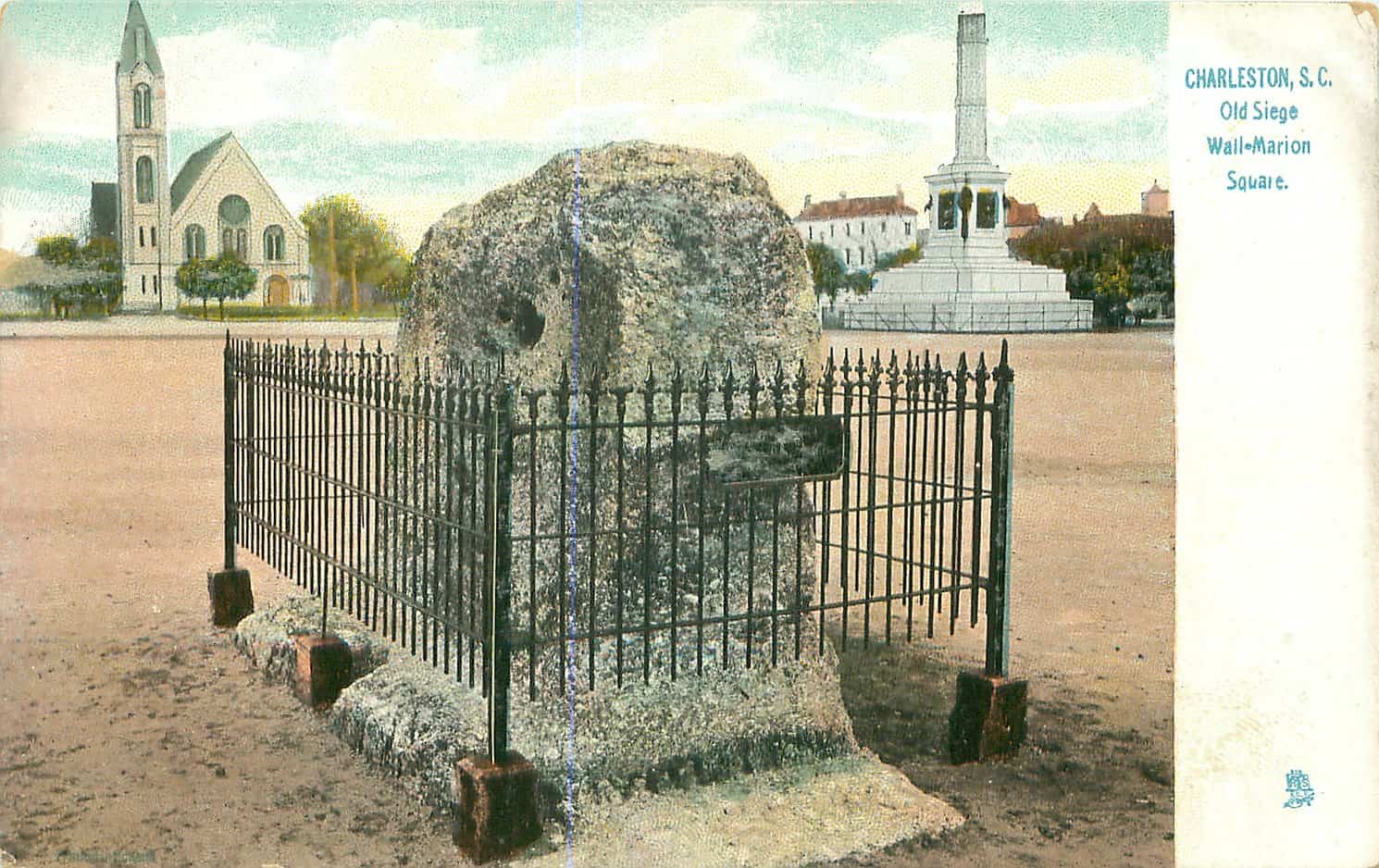
Marion Square was named in honor of General Francis Marion of the Revolutionary War. At one end of the plot a monument has been erected to John C. Calhoun. Within an iron railing is a portion of the old siege wall that was built as a defense for the Colonial Army.
PLACES OF SPECIAL INTEREST
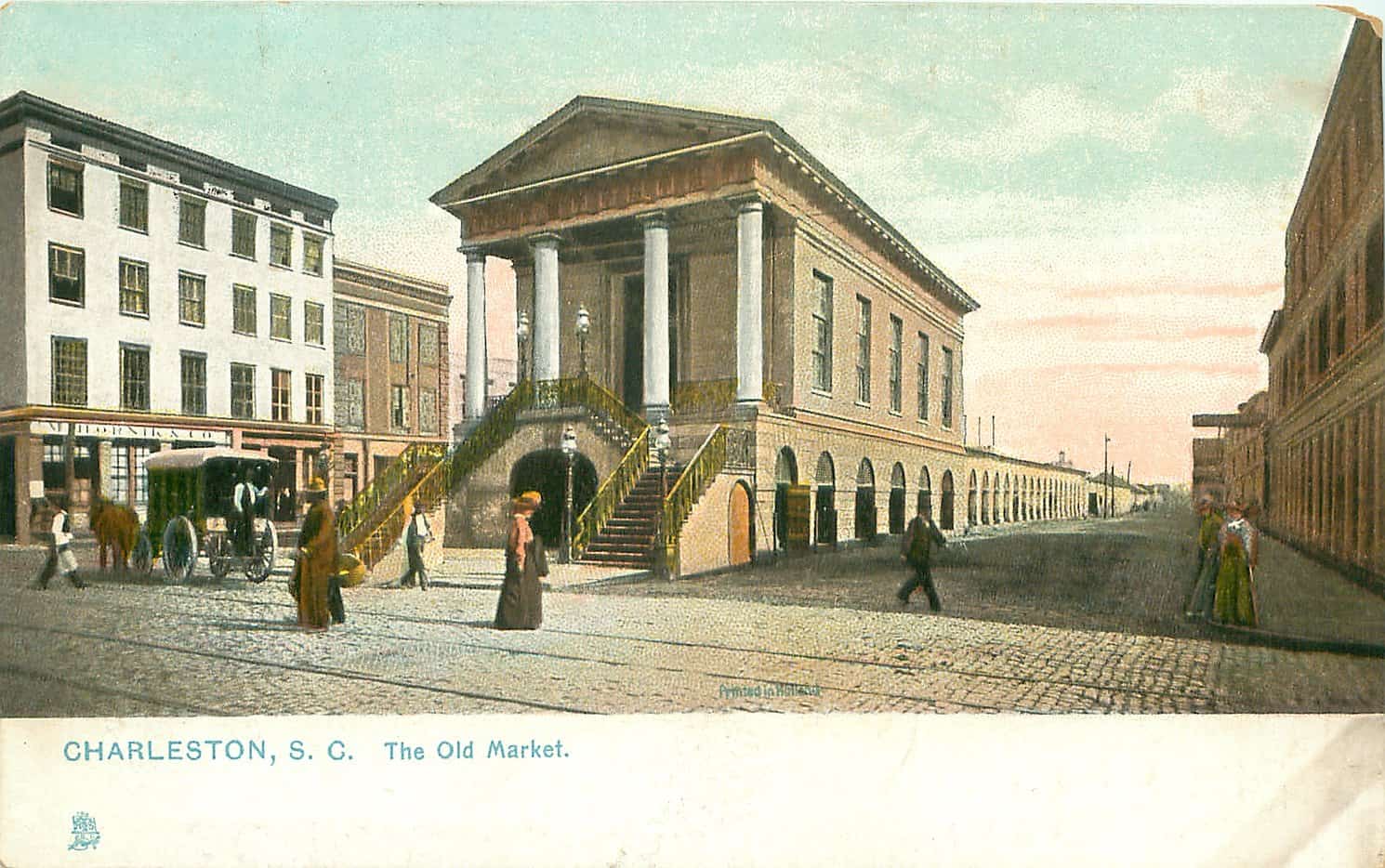
This ancient “Old Market” stands on Market Street at the corner of Meeting Street. The market was where the early Charlestonians bought their provisions. It is a weird place to visit at night, and a scene long to be remembered. The handsome hall at the head of the Market is now used as a relic-room by the Daughters of the Confederacy.
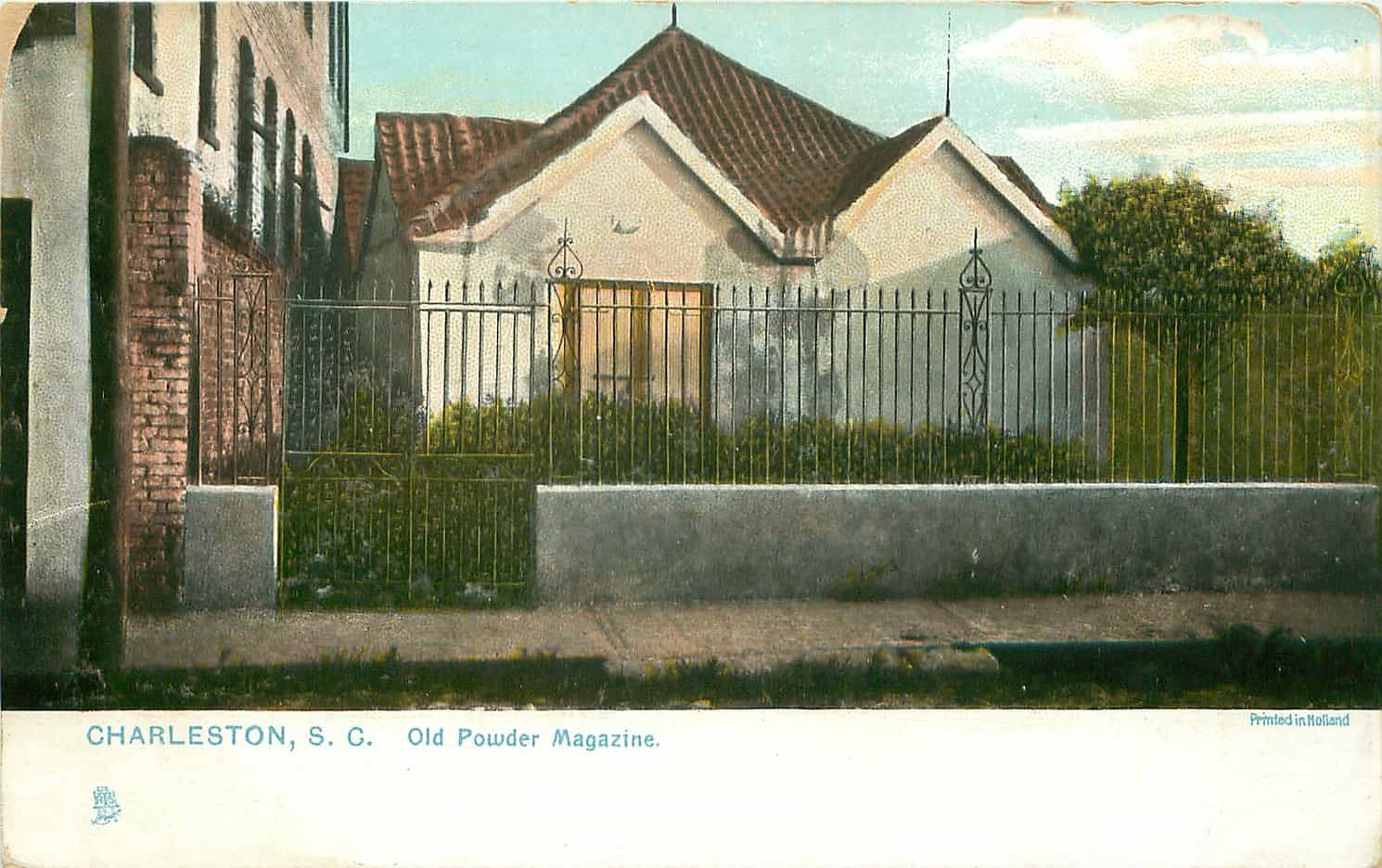
The powder magazine is the oldest building in Charleston. It was erected about 1703 and used as a powder magazine until 1780. It was thereafter owned privately until the Colonial Dames Society purchased it for use as their headquarters.
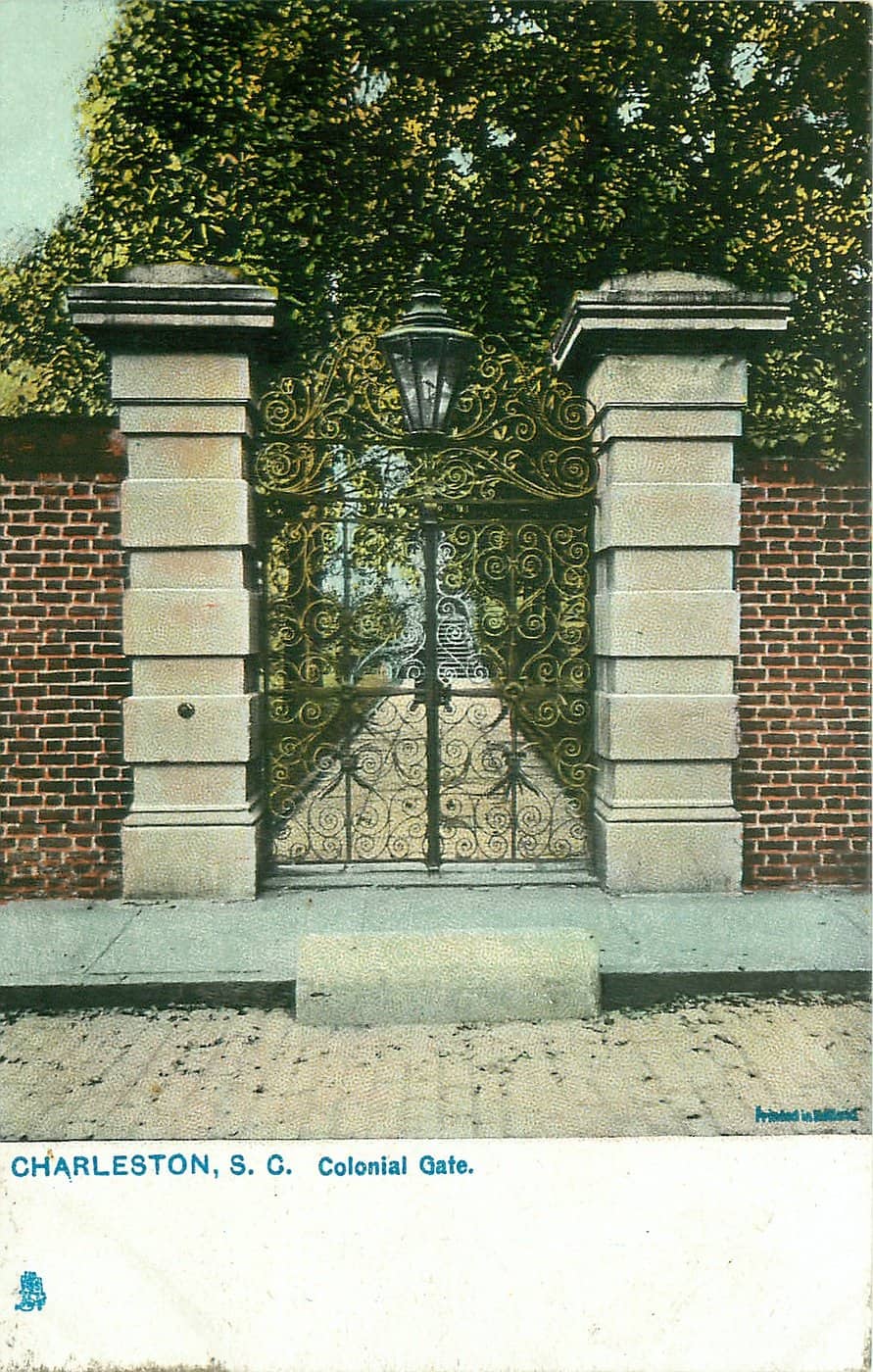
The artistic ironwork gates in Charleston are among my favorite sites. Some are difficult to find for they are located in small streets or alleys in various parts of the city. Among the finest is at the entrance of U. S. Judge Charles H. Simonton.
Charles Henry Simonton was a Federal Judge who lived from 1829 to 1904. He practiced law in Charleston from 1851-1886 and served as a state representative. Given this, his home would have been a historic residence in Charleston.
***
For our reader’s information, Tuck repeated the images in the Charleston (Raphotype Set) twice. First in February 1907 using the Collotype printing process and again in late August using the newer and less expensive Silverette process.
The Collotype process is a gelatine-based printing process usually reserved for printing photographs. The Collotype was invented by Alphonse Poitevin, a French photographer in 1855 to print images without the need for halftone screens. The majority of collotypes were produced between the 1870s and 1920s. It was the first form of photolithography. The Tuck set of Charleston Collotype postcards are numbered from 6216 to 6227.
The Silverette postcards made by Tuck were manufactured using a process invented in 1871 by Richard L. Maddow, an English photographer. There is virtually no difference in appearance except for some marginally notable sharpness of the Silverette images. The most excepted reason for using Silverette over Collotype is the expense. The Tuck set of Charleston Silverette postcards are numbered from 7216-7227.
See the difference for yourself:
A fun visit to the historic sites of Charleston.
A very nice visit to Charleston. I look forward to reading more.