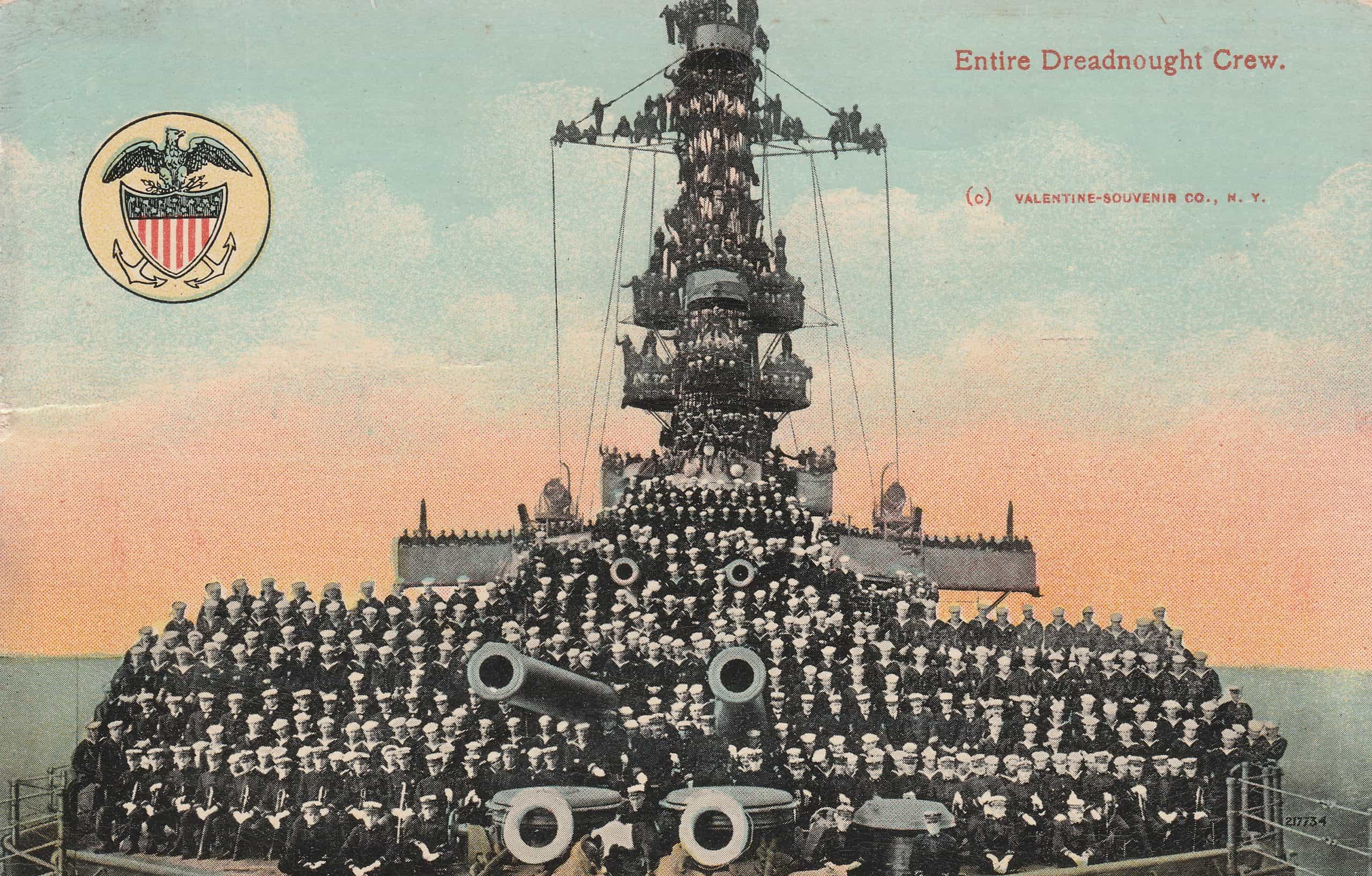
In 1904, the United States Navy adopted the recruiting slogan, “Join the Navy and see the world.” It was more than a slogan. The Navy’s admirals had changed its philosophy concerning the crews in manning its expanding fleet. Until that time, the Navy had relied on “old salts” to staff its ships. In the eyes of the Navy’s brass, these old salts were problematic. Most were hard drinkers, some that had served in the Asiatic fleet were drug users, and many were considered sexual degenerates since they frequented the red-light districts that were fixtures in seaports.
Instead of old salts, the Navy decided to recruit young men who wanted to escape the drudgery of the farm or the factory. It didn’t matter that a farm boy from Kansas had never seen the ocean or had been in anything larger than a rowboat, the Navy believed it could train any talented young man to be a sailor.
After the close of the Jamestown Exposition held in Norfolk, Virginia, in 1907, President Theodore Roosevelt sent sixteen battleships of the U.S. Atlantic Fleet on a voyage around the world to show America’s naval strength and proclaim the United States as a player on the world stage. The fleet steamed out of Hampton Roads Harbor on December 16, 1907, with Roosevelt watching from the presidential yacht, Mayflower.
On February 22, 1909, President Roosevelt stood on the Mayflower near Cape Henry at the mouth of the Chesapeake Bay as the Great White Fleet returned to their home port. The fleet had sailed 46,000 miles, visiting six continents and twenty-six countries. Its sailors average age was just twenty years old. For these young men, the Great White Fleet’s voyage fulfilled dreams stoked by that recruiting slogan.
The voyage of the Great White Fleet stirred nationwide interest in the Navy and its sailors. Several sets of postcards were issued by publishers depicting navy ships and shipboard life. The sets appear to have sold nationwide not just near naval bases. One postcard in this article was mailed from Lucasville, Ohio, hardly a hotbed of naval activity, and another mailed in South Dakota.
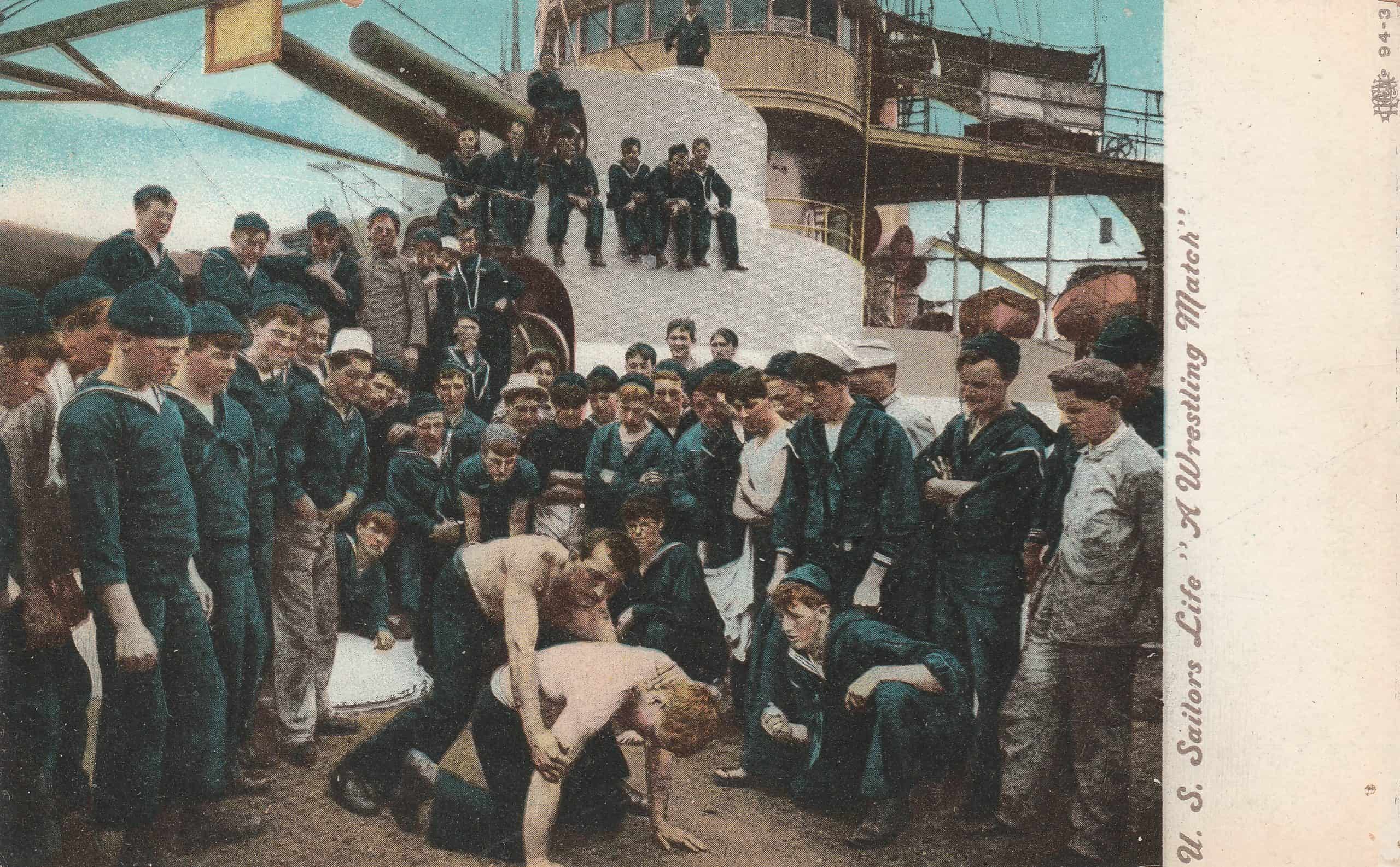
U. S. Sailors Life was the title of one set that depicted shipboard activities. The publisher, Illustrated Postal Card Company of New York had the card printed in Leipzig, Germany. Some cards in the set do not list a publisher. A few have divided backs, while others have undivided backs.
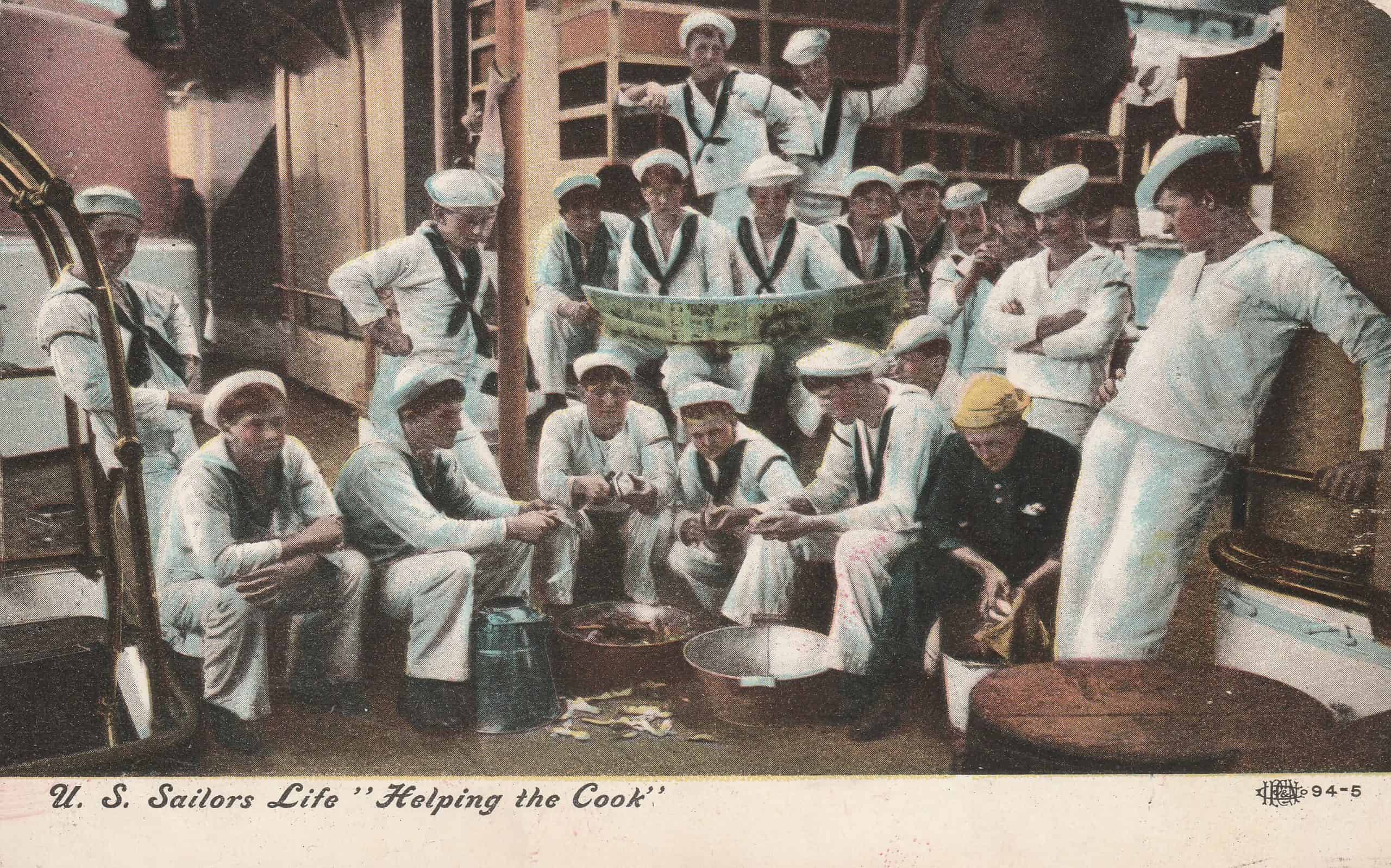
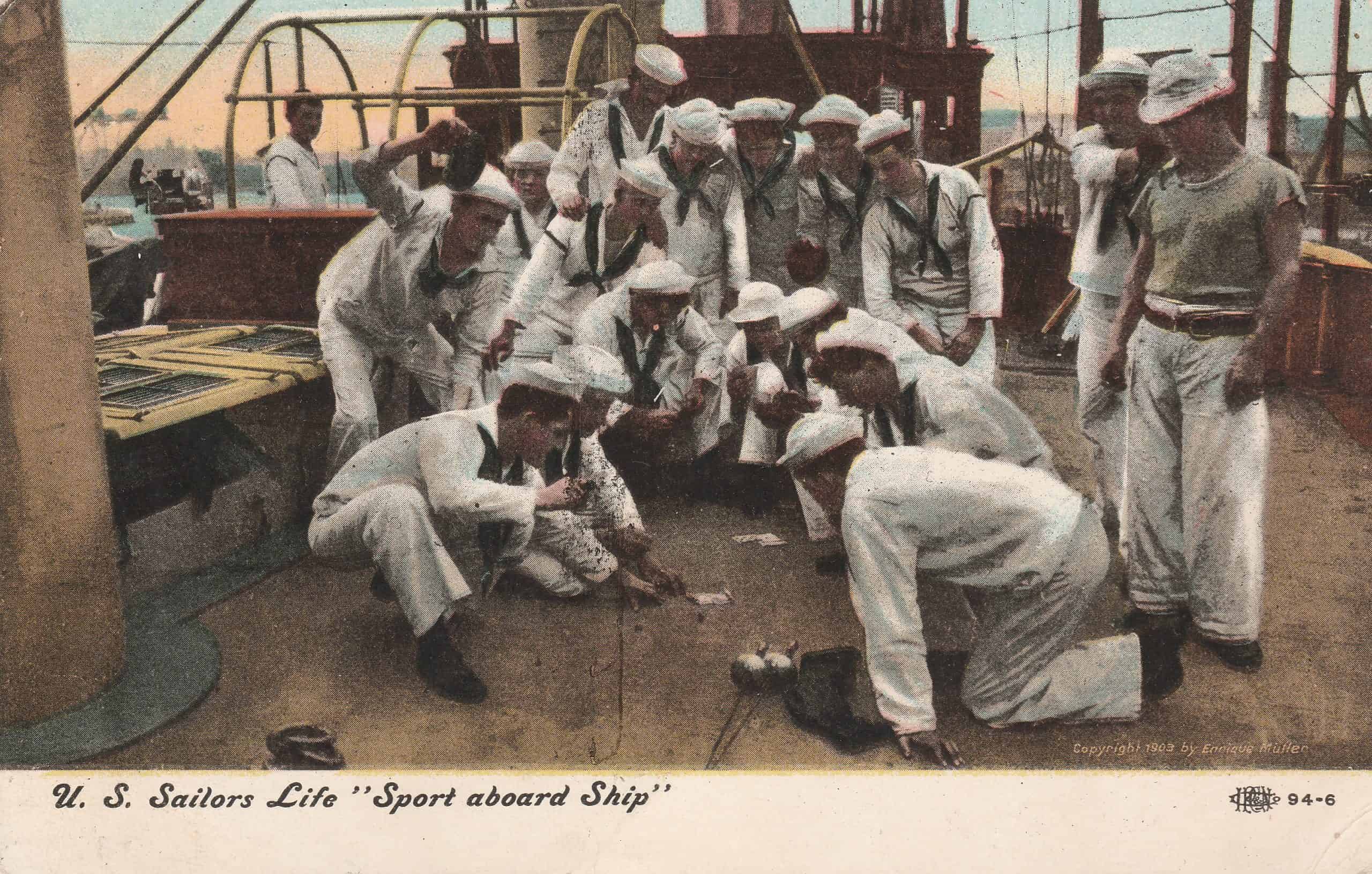
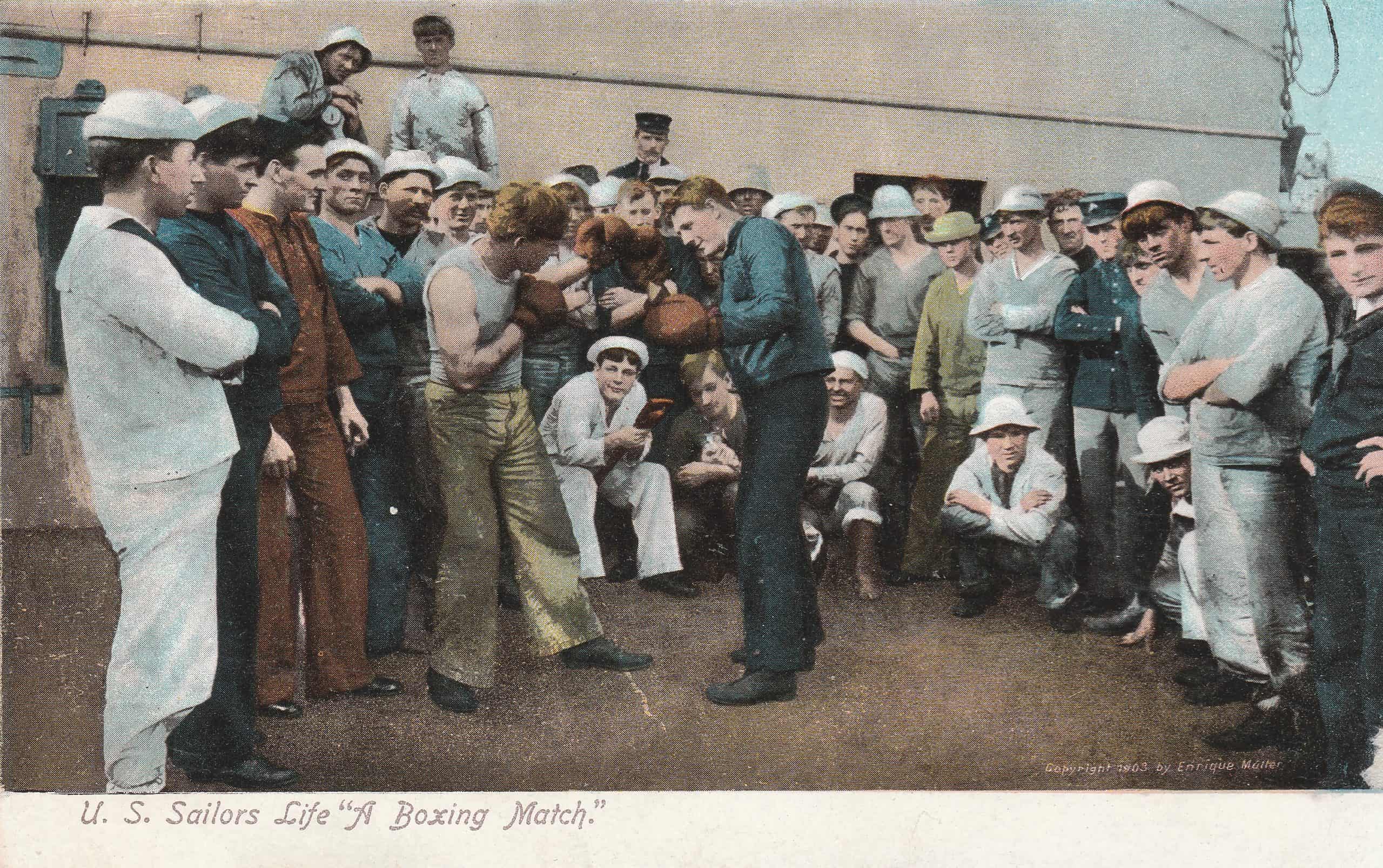
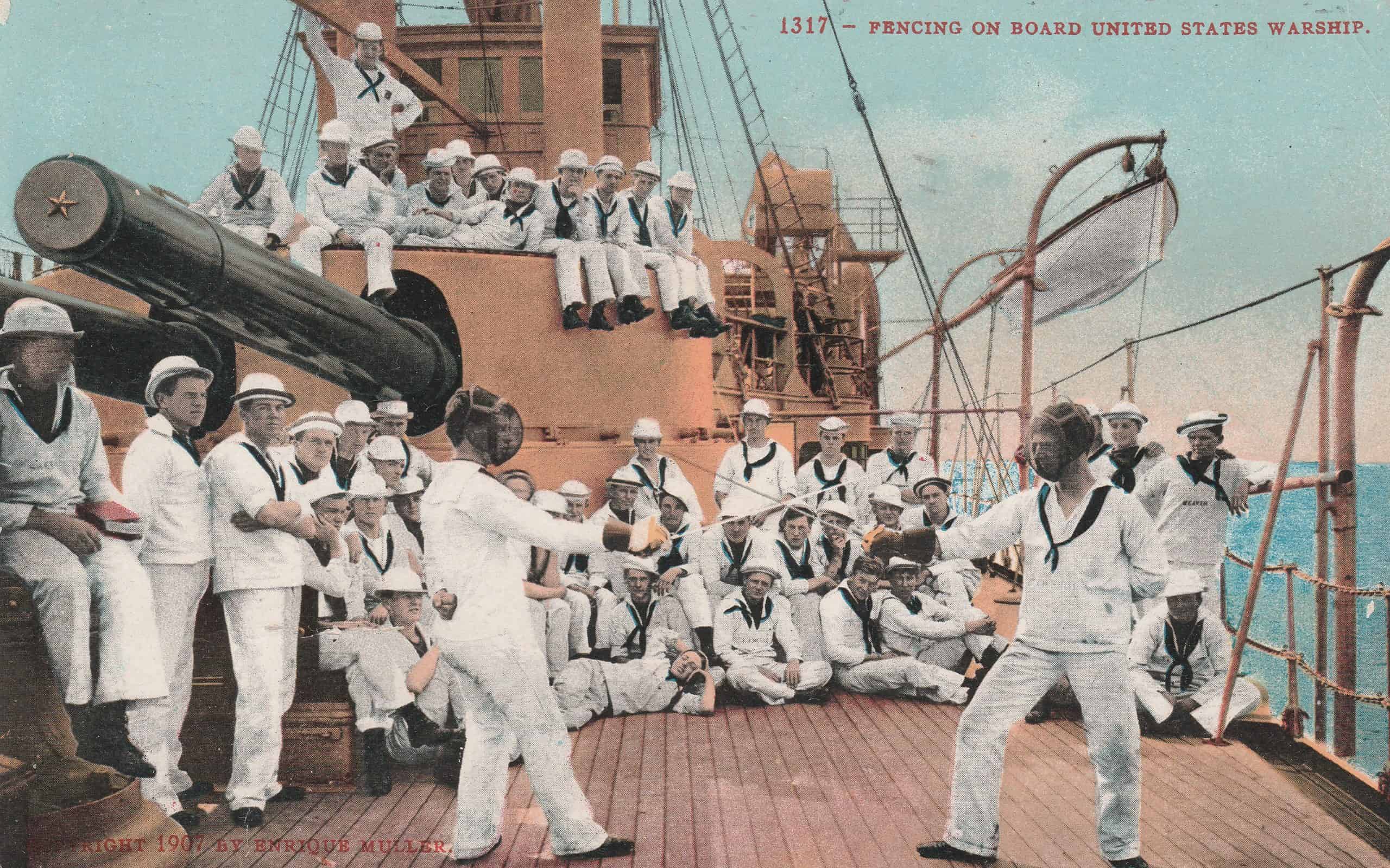
Three postcards depict sports activities that sailors enjoyed aboard U. S. Navy ships in the early twentieth century. What sport was the most popular? Boxing, wrestling, or shooting craps?
According to a friend, a retired Navy Captain, the fencers are Naval Academy midshipmen on their summer cruise. Midshipmen have a blue band on their cap. The Navy is not training sailors to board an enemy vessel with swords drawn.
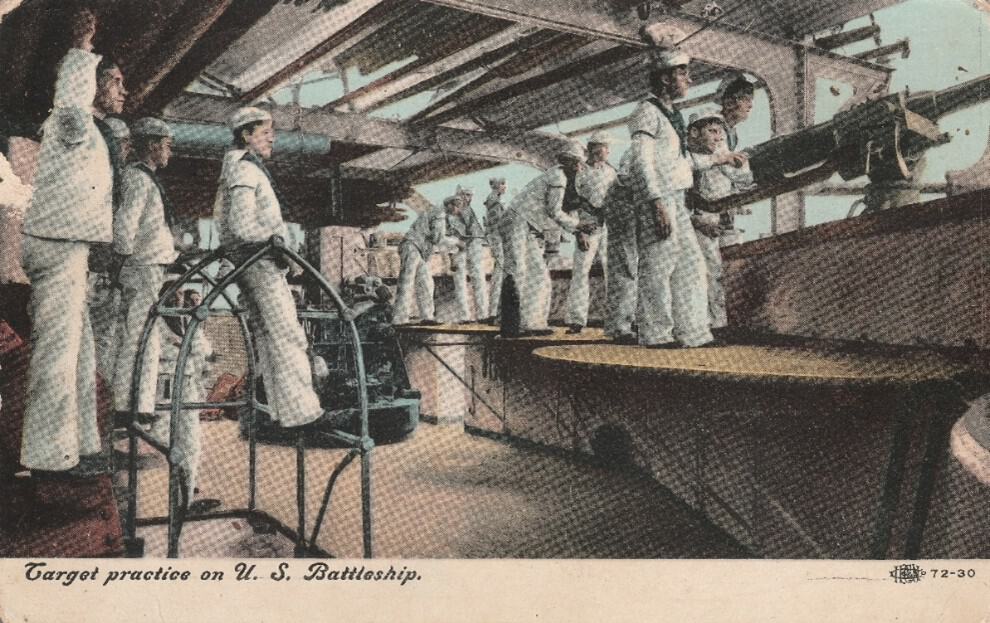
A gun crew firing the battleship’s secondary battery during target practice.
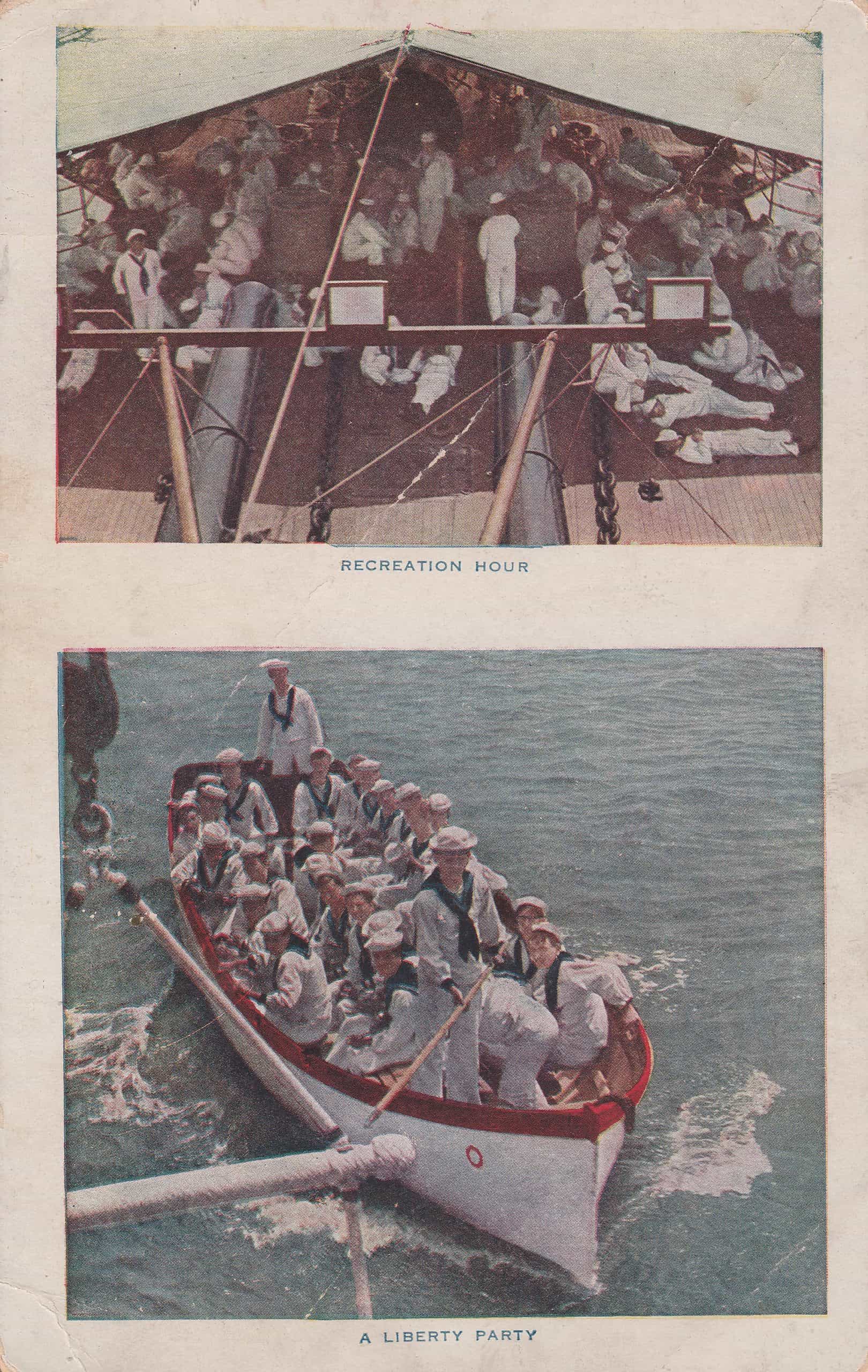
The four postcards in the next set were also produced as stereograph cards for viewing in a stereopticon. I came across the complete set of over twenty stereograph cards at a recent postcard show. Captions on the back of the stereograph cards sounded like a naval recruiting officer wrote them. “The card shows the muscular and intelligent young men the Navy is recruiting these days.” No publisher was listed on the postcards or the stereograph cards.
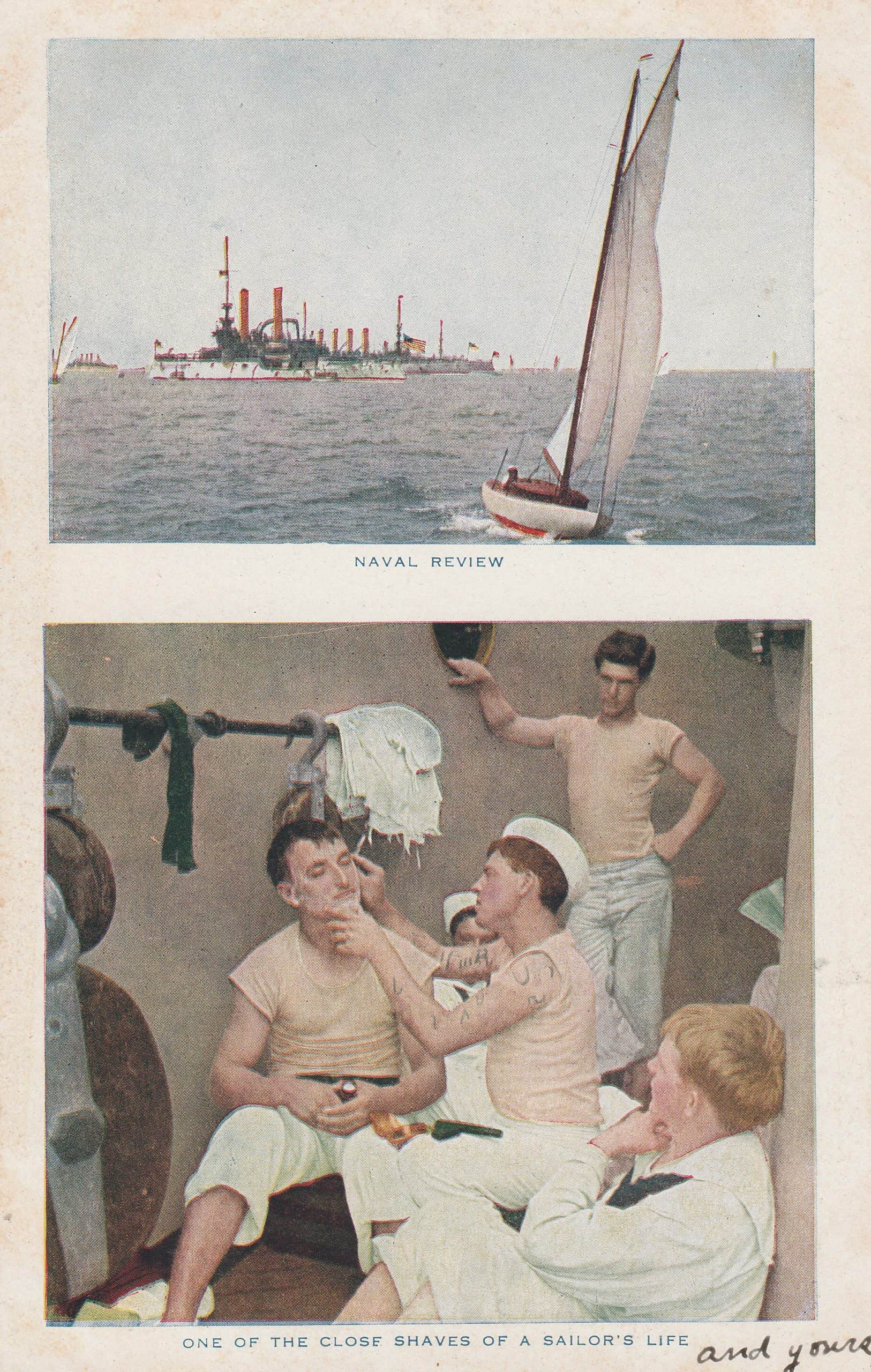
Another touch of humor. A sailor gets a close shave while his buddies look on.
A number of sailors are catching up on their sleep during recreation hour.
What exotic port are the sailors heading to for liberty?
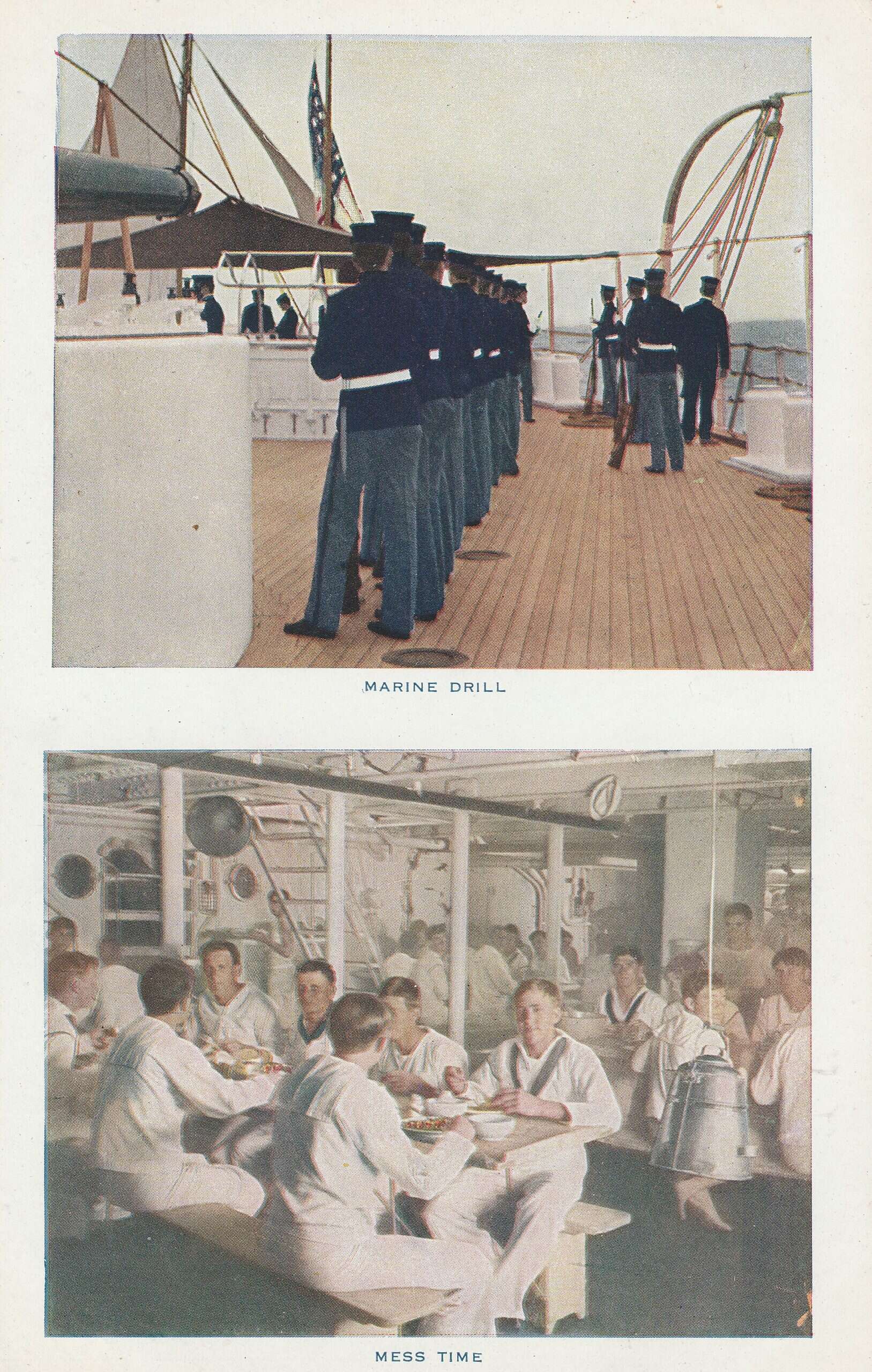
Mess time and Marines drilling.
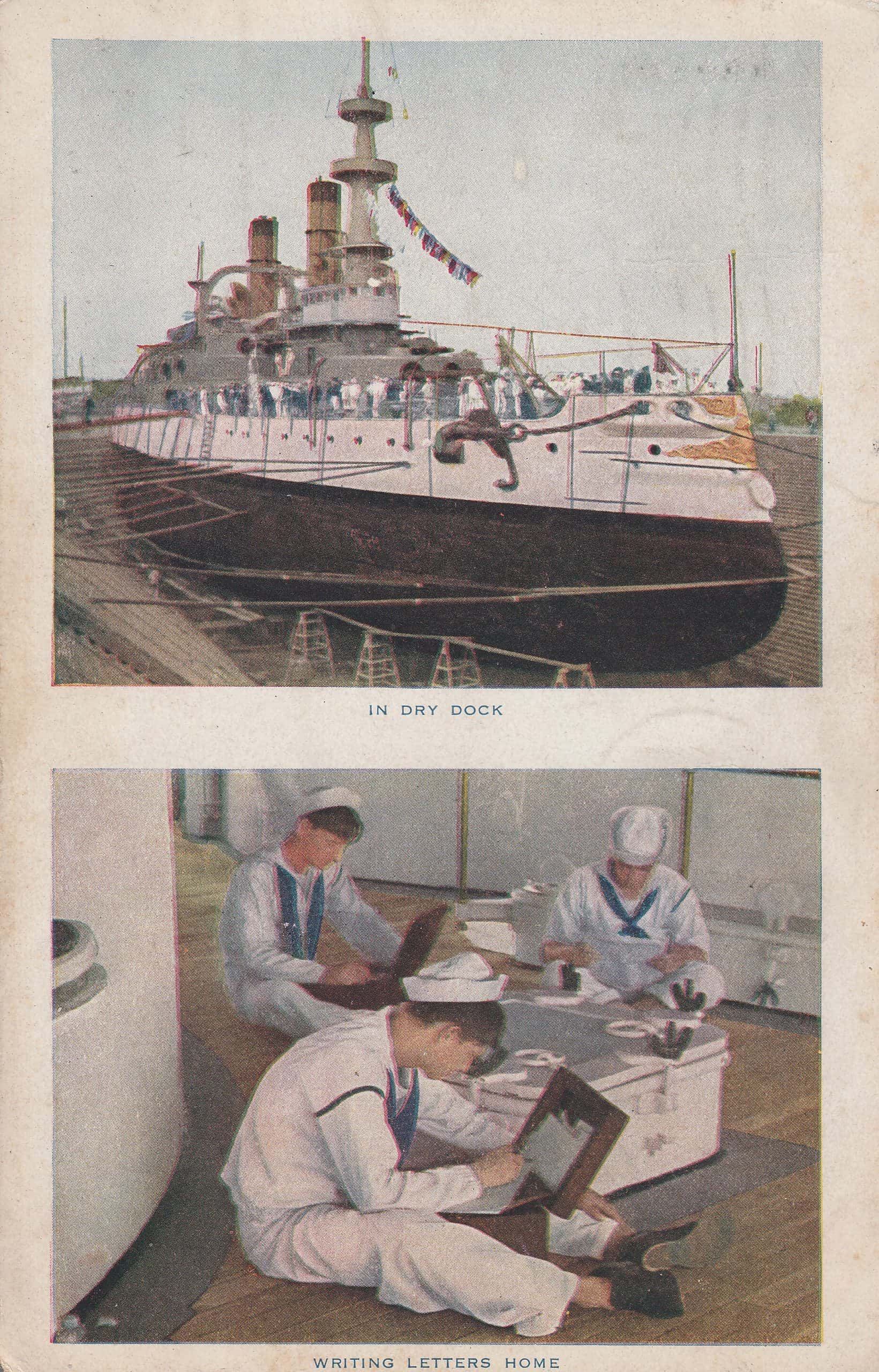
The postcard reassured a sailor’s mother that her son would write faithfully.
Only a few of these postcards were mailed by men in the Navy. One sailor wrote to a girl back home in Hazelton, Pennsylvania, from the Puget Sound Navy Yard in July 1914, “Having a fine time.” A postcard mailed from Cuba in February 1912 by a crewman on the battleship USS Delaware writes, “Having a fine time down here. Am nearly roasting to death.” Another wrote to a young lady in Rhode Island, “We are wearing a khaki uniform on warm days, if cool or rainy weather, all officers wear the blue uniform. On board the battleship, the Marines wear a white duck uniform as you see the sailor here on the picture.”
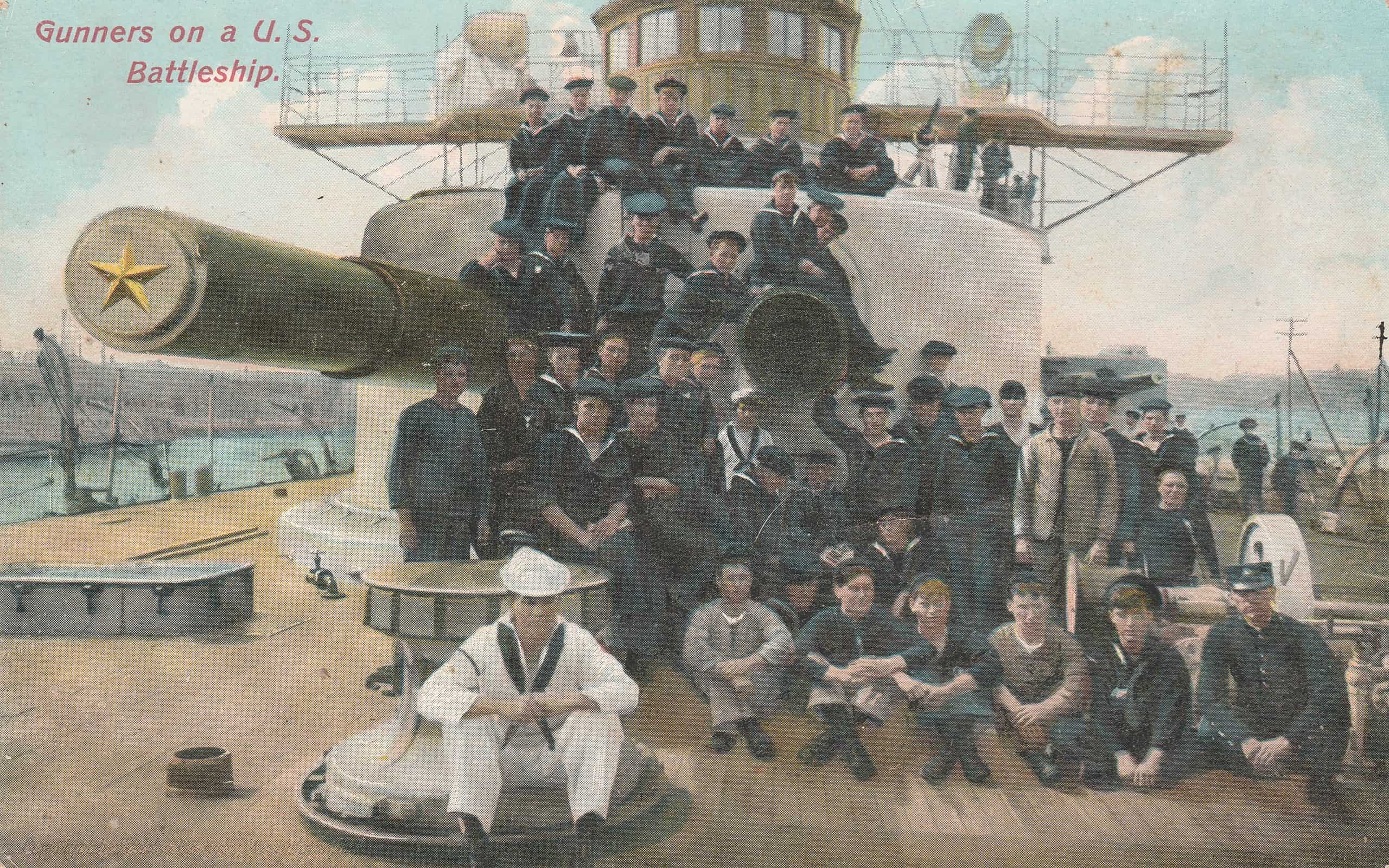
The postcards also served as an informal recruiting tool for the Navy. Imagine a starry-eyed teenager living on a farm in Nebraska receiving one of these postcards from a boyhood friend who had joined the Navy. Did he yearn to go to sea like his friend and have a life of adventure?
We will never know if any young man joined the Navy after receiving one of these postcards.
Great article and insight to a famous extension of US outreach to advise the world they were a country to be noticed – for all the good reasons, trade, friendship and influence.
You don’t poke pins in eyes of your friends you visit!
Is there a lesson here, for today?
Very interesting Thankyou
Interesting that the Navy would promote shooting craps!!
I believe the postcard publisher was having a bit of fun at the Navy’s expense. I didn’t find any evidence that the Navy sanctioned the postcards, The Navy did make available in the 1950’s through the 1980’s official photographs of Navy ships to postcard publishers I assume as part of its general public relations campaign.
Another fine article by one of the greatest authors of his generation. If you are interested in a great read, check out Norfolk Confidential which is available on Amazon