This is not a Robert Ripley question, but “Believe It or Not” the answer to the question, “How many statues of horses are there in the world?” is attainable – if you have time to count them. In the popular online Wikipedia Encyclopedia, there is a list entitled Notable Equestrian Statues by Country. (Ninety-nine countries are included. One is Aruba; there is one equestrian statue in Aruba. Another is the United States, where there are more than one thousand – more than two dozen in Washington, DC, alone.) The sculptures are listed by the date of their inauguration, regardless of whether they were later dismantled or torn down.
Surely those who collect postcards of equestrian statues have seen many cards of their favorites, but their stories are welcome at a different time. In this Postcard History Lesson, the theme is centered on statues done by little known sculptors from home and far-away places.
We begin in Bamberg, Germany.
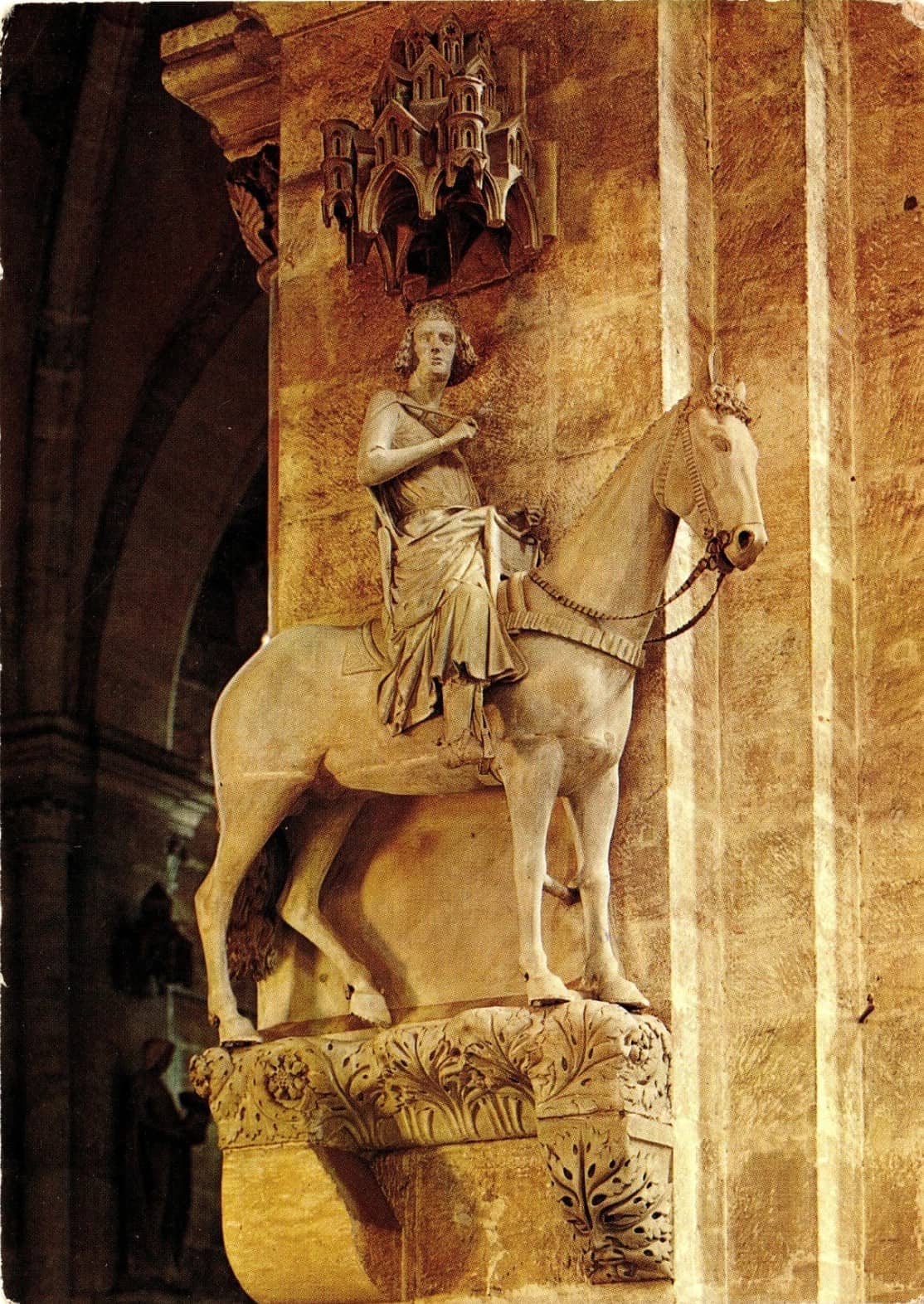
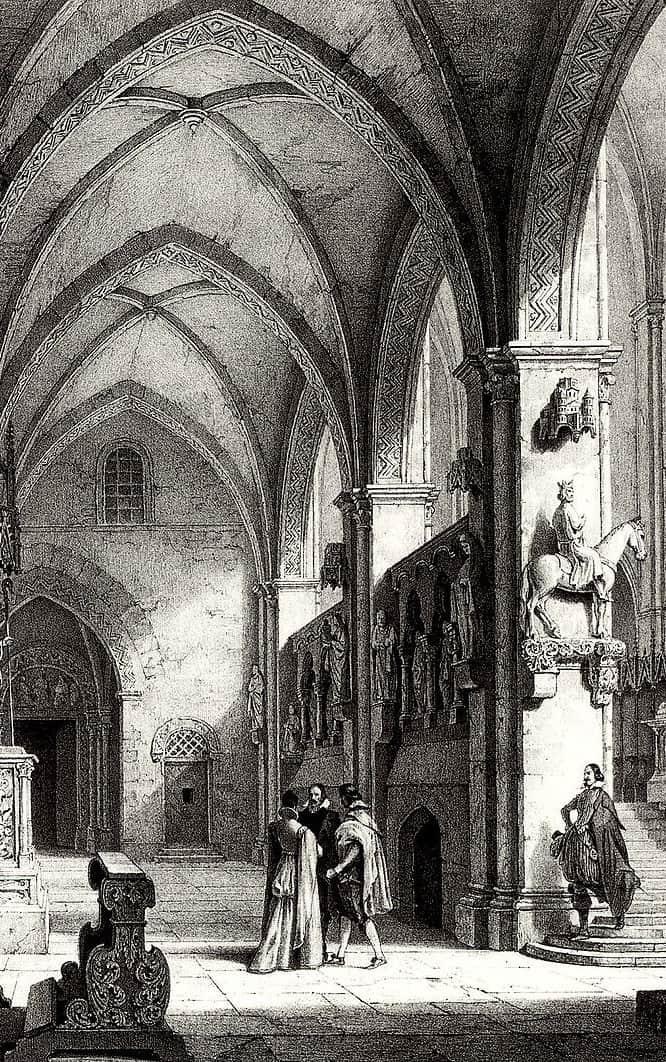
The cathedral in Bamberg is a Catholic church completed in the thirteenth century. It is the seat of the local archbishop, and since 1993, the cathedral has been a site in the UNESCO World Heritage Program.
The Bamberg Horseman (above, left) is an early thirteenth century stone statue by an anonymous medieval sculptor that was the first of its kind since antiquity. Dating probably from the time after 1225, yet before the consecration of the cathedral in 1237 it is located on a console at the north pillar (above, right) of the St. George choir.
The work depicts a crowned yet unarmed man, many believe that it represents a specific king, perhaps one who was a saint. A good candidate for the honor is Emperor Henry II (973-1024) also known as Saint Henry who was the Holy Roman Emperor from 1014 until he died in 1024. He is buried in the cathedral along with Pope Clement II.
It is not known whether this is the intended position of the statue, although the base appears to be original and the structure of the base would seem to dissuade moving.
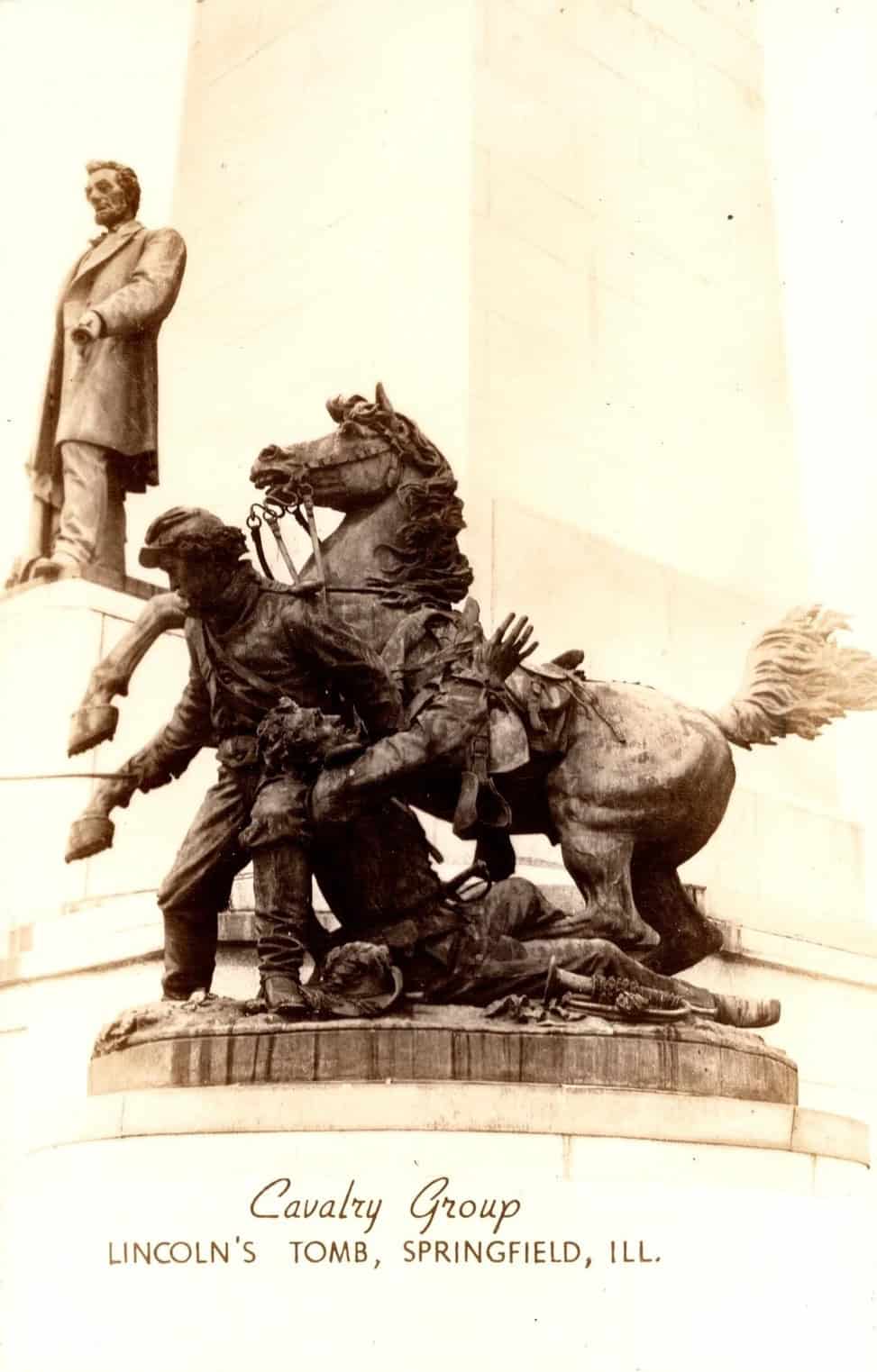
In Springfield, Illinois, there is the Cavalry Sculptureat the Lincoln Tomb. It is a significant part of the memorial’s design, created by sculptor Larkin Mead. The statue stands to the east of the Lincoln statue and depicts a dying Union soldier who fell from his horse, supported by a comrade. The sculpture is bronze and represents a Civil War battle scene, capturing the emotional and physical toll of combat. It is one of four bronze sculptures that adorn the corners of the obelisk’s base, each representing a different service in the Civil War. The group is a testament to the bravery and sacrifice of the soldiers who fought for the Union during the Civil War.
Larkin Goldsmith Mead was an American neoclassical sculptor best known for his work in bronze. A native of Vermont, Mead gained great fame after he created an impressive snow sculpture on New Year’s Day, 1856, that drew considerable attention and launched his career. He later moved to Florence, Italy, where he spent much of his life and married an Italian woman. His other notable works include the Soldiers’ Monument in St. Johnsbury, Vermont, and the statue of Ethan Allen in the U.S. Capitol.
(Watch this site for a future article about Mead and postcards of his famous works.)
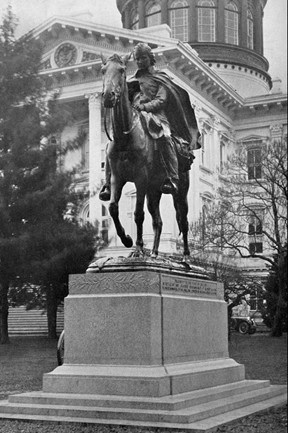
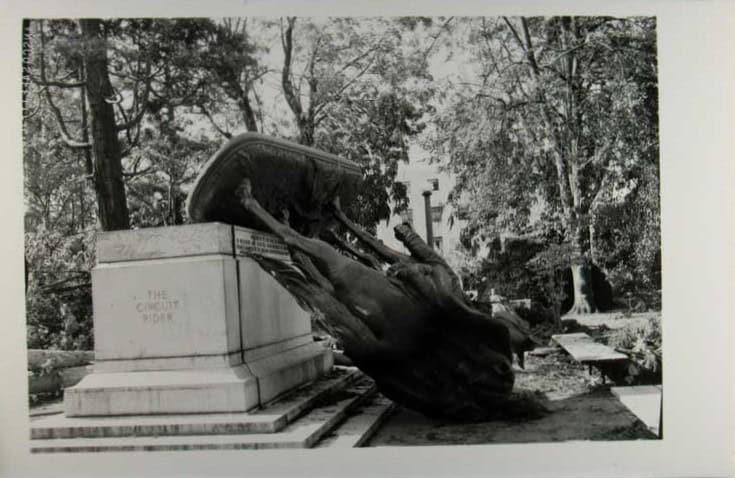
At Salem, Oregon is the Circuit Rider.
The Circuit Rider is a bronze sculpture by Alexander Proctor. The card above shows the statue in 1924 as it was installed in the Capitol Park, east of the Oregon state capitol building.
According to a museum docent, The Circuit Rider depicts “one of Oregon’s pioneer circuit-riding Methodist ministers” and commemorates “the labors and achievements of the ministers of the Gospel, who as circuit riders became the friends, counselors and evangelists to the pioneers on the American frontier.”
The 3.5-ton statue was cast by Roman Bronze Works in New York and was given to the State of Oregon in 1924. It was presented to honor Robert Booth, a pioneer minister by his son, Robert Asbury Booth, who was a well-known Eugene businessman.
Despite its extraordinary weight, the statue was toppled by a tree that fell on it during a storm on October 12, 1962. It fell from its pedestal and remained on its side for several months. Apparently, postcard makers took advantage of the event and made considerable amounts of money selling the card shown above.
The statue was finally sent to the studio of James Hansen in Canada for repairs, but such things took time, and the statue was not returned to its pedestal until August 1963.
Oklahoma City, Oklahoma
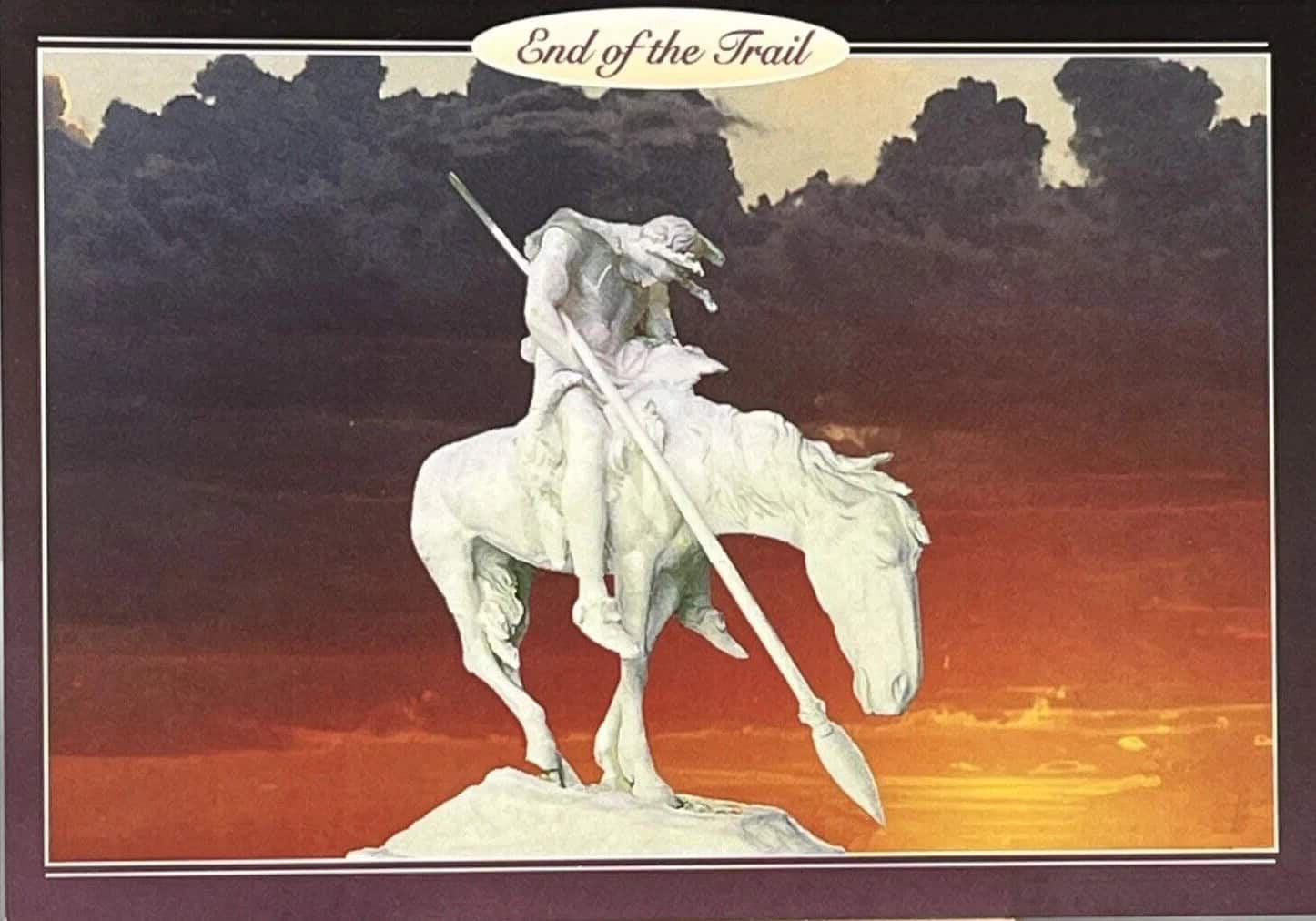
The End of the Trail statue, reminds thousands of Native Americans who were displaced from their original homelands, that Oklahoma became their “end of the trail.” The sculpture by James Earle Fraser is in the National Cowboy Hall of Fame. There are no specific visitor statistics, but thousands have seen it every year since it became the lobby-exhibit in 1955.
Fraser completed the original bronze version in 1924.
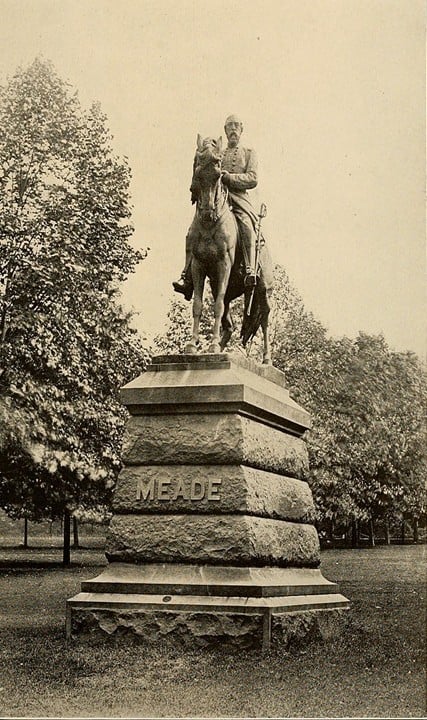
In Philadelphia, Pennsylvania is a statue of George Gordon Meade who was an American military officer that served in the United States Army and the Union Army as a major general in command of the Army of the Potomac during the American Civil War. He fought in many of the key battles and is best remembered as the commanding general who defeated the Confederate Army of Northern Virginia led by General Robert E. Lee at the Battle of Gettysburg.
The General Meade Statue (above, left) is a bronze equestrian sculpture in West Fairmount Park, Philadelphia, created by Alexander Milne Calder and unveiled in 1887. Located behind the Memorial Hall, the statue honors Meade as a decorated Union Army officer during the Civil War and a former commissioner of Fairmount Park. The sculpture depicts Meade on his warhorse, Old Baldy. The setting is such that the general is gazing across the Schuylkill River toward his final resting place at Laurel Hill Cemetery.
(General Meade was born in Cádiz, Spain, on December 31, 1815. It was no secret that General’s favorite beverage was champaign. Each year on New Year’s Eve, the members of the General Meade Society gather at his grave in Laurel Hill Cemetery and toast his accomplishments with a glass of champaign. It is often very cold that day, but it is a true honor to remember the man in such a way.
Edinburgh, Scotland
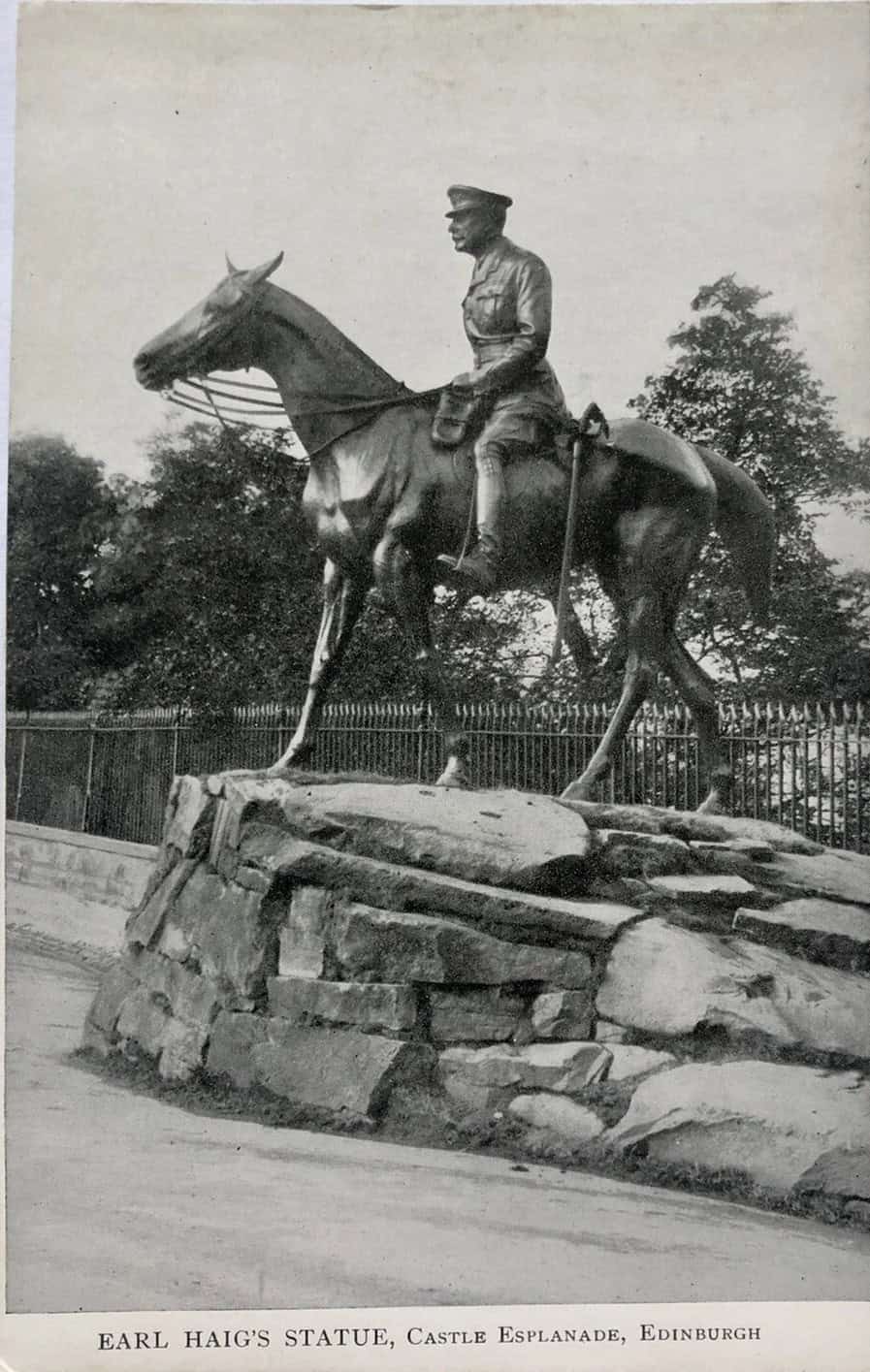
Field Marshal Douglas Haig, 1st Earl Haig, is remembered as a senior officer in the British Army during the First World War. He commanded the British Expeditionary Forces on the Western Front from late 1915 until the end of the war.
Haig’s military career included service in the War Office, where he was instrumental in the creation of the Territorial Force in 1908.
The Earl Haig statue (above, right) is at Edinburgh Castle. The statue was commissioned by Sir Dhunjibhoy Bomanji of Bombay. It was in full view near the castle entrance, but now relatively hidden in a back courtyard at the entrance to the National War Museum.
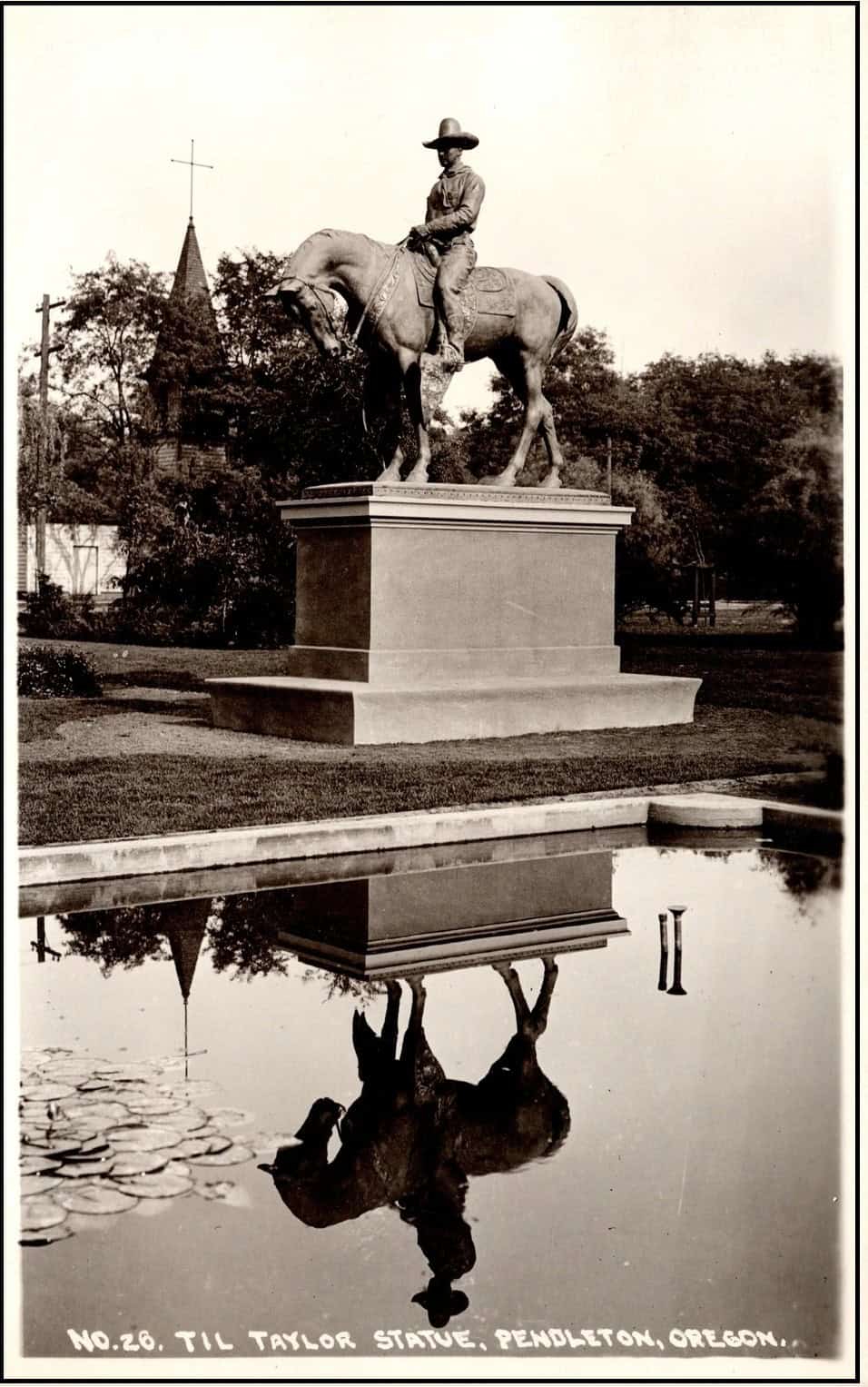
Pendleton, Oregon is the home of the Tillman D. “Til” Taylor statue (above, left).
Sheriff Tillman Taylor was shot and killed during a jail break from the Umatilla County Jail. Five inmates had a gun that was smuggled into the prison and shot Sheriff Taylor with it during the escape. The five suspects were eventually apprehended. Two of them were sentenced to life, one was hung in December 1920 and the remaining two were hung in July 1922.
Sheriff Taylor had been with the Pendleton law enforcement agency for 18 years.
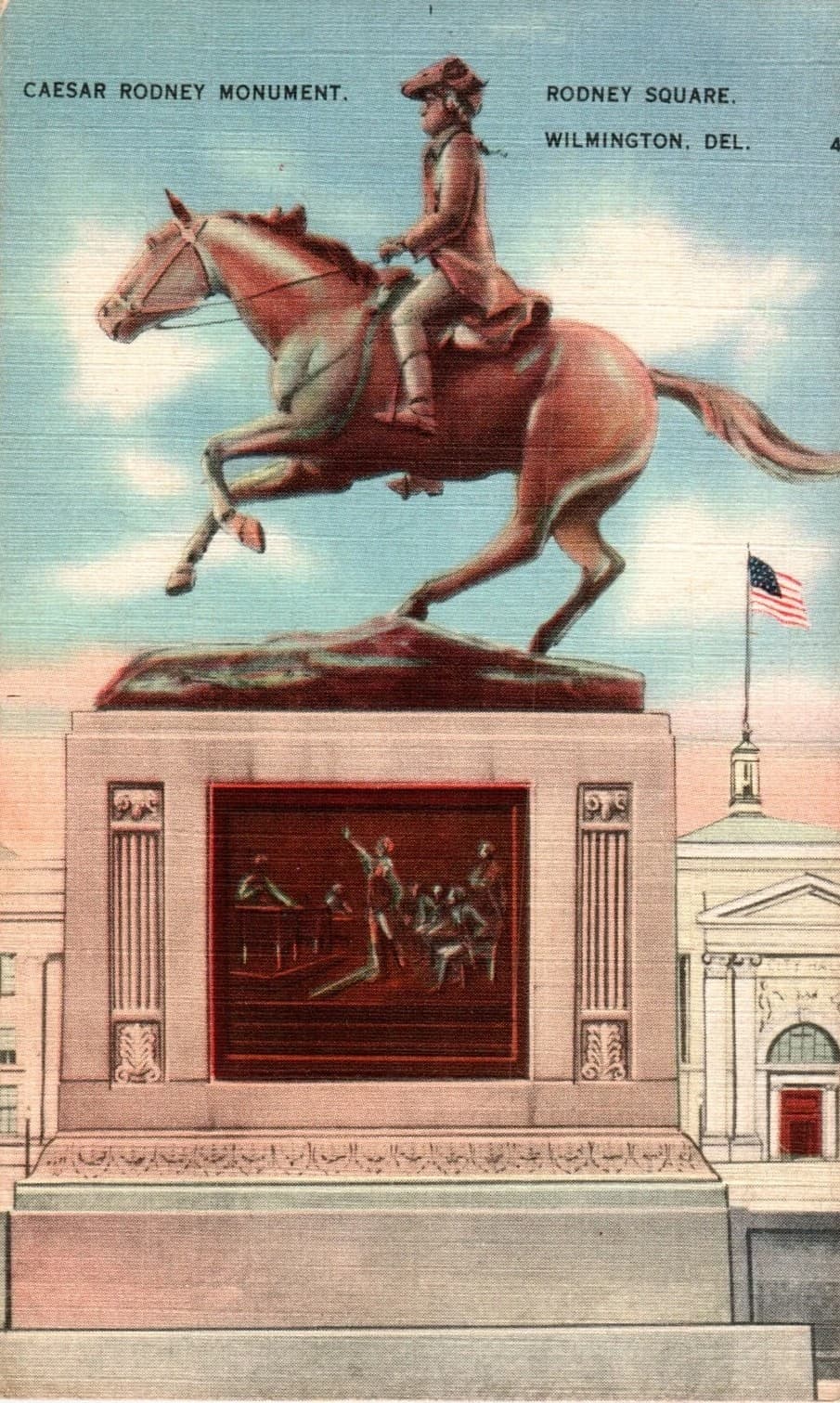
In Wilmington, Delaware, there was a statue (above, right) of Caesar Rodney in Rodney Square. It was installed July 4, 1923. Funds for the statue were raised by the Caesar Rodney Equestrian Statue Executive Committee to commemorate the ride of Rodney from Kent County, Delaware to Independence Hall in Philadelphia on July 1 and 2, 1776.
James Edward Kelly, a New York sculptor, designed the memorial and had the bronze statue cast by the Gorham Company in Rhode Island.
The memorial was removed from public display, on June 12, 2020, at a cost of $33,561.80. It was removed along with a statue of Christopher Columbus in the wake of the protests following the murder of George Floyd. It is currently being stored in Swedesboro, NJ, in a private storage facility, at a cost of $100 per month. The statues were removed after a Dover, Delaware, statue honoring law enforcement was vandalized with an axe and a urine-soaked Delaware state flag.
Plans for future display of the statues are currently unclear.
Two bronze plaques were affixed to the northwest and southeast sides of the statue’s pedestal. One depicts Thomas McKean greeting Rodney in Philadelphia; the other shows Rodney casting the deciding vote in favor of American independence. On top of the pedestal once was the statue seen on the card above, showing Rodney sitting astride his horse, which is in full gallop.
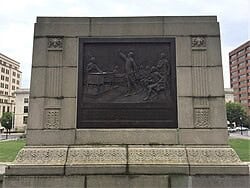
As of June 2025, the Rodney statue had not been replaced.