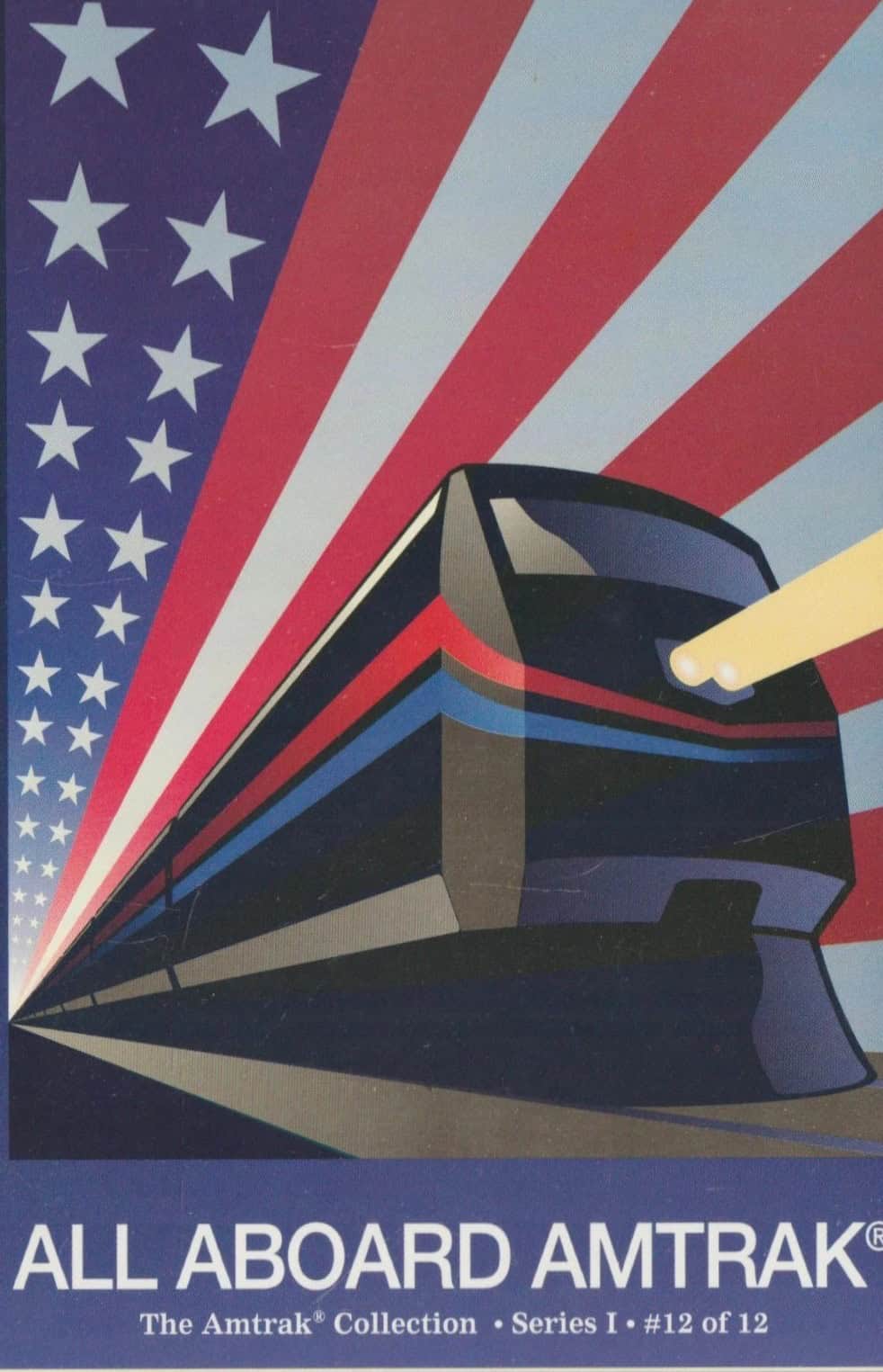
Amtrak is the official National Railroad Passenger Corporation. It was created on May 1, 1971, by the U.S. federal government to preserve intercity passenger rail service. At the time, private railroads were abandoning passenger operations due to financial losses and competition from automobiles and airlines. One of the initial concerns for Amtrak was the consolidation of the various services into a single national system and the organization of inherited equipment and routes from twenty different railroads.
From the onset, Amtrak focused on improving service quality and reliability in the Northeast Corridor, a 457-mile stretch from Boston to Washington, D.C. The area was identified early on as the most promising region for high-speed rail due to its dense population and economic activity. The corridor had long been served by trains like the Metroliner that was introduced in 1969 by Penn Central.
To the delight of many and the dismay of others, in the 1990s, Amtrak began planning a new high-speed service to replace the aging Metroliner fleet. Such plans led to the development of the Acela Express that was officially launched on December 11, 2000. “Acela,” the portmanteau name of the new train, combined the words “acceleration” and “excellence.” It was gradually accepted as the fast train that used a new non-tilt technology to maintain speed on the curved tracks of the northeast.
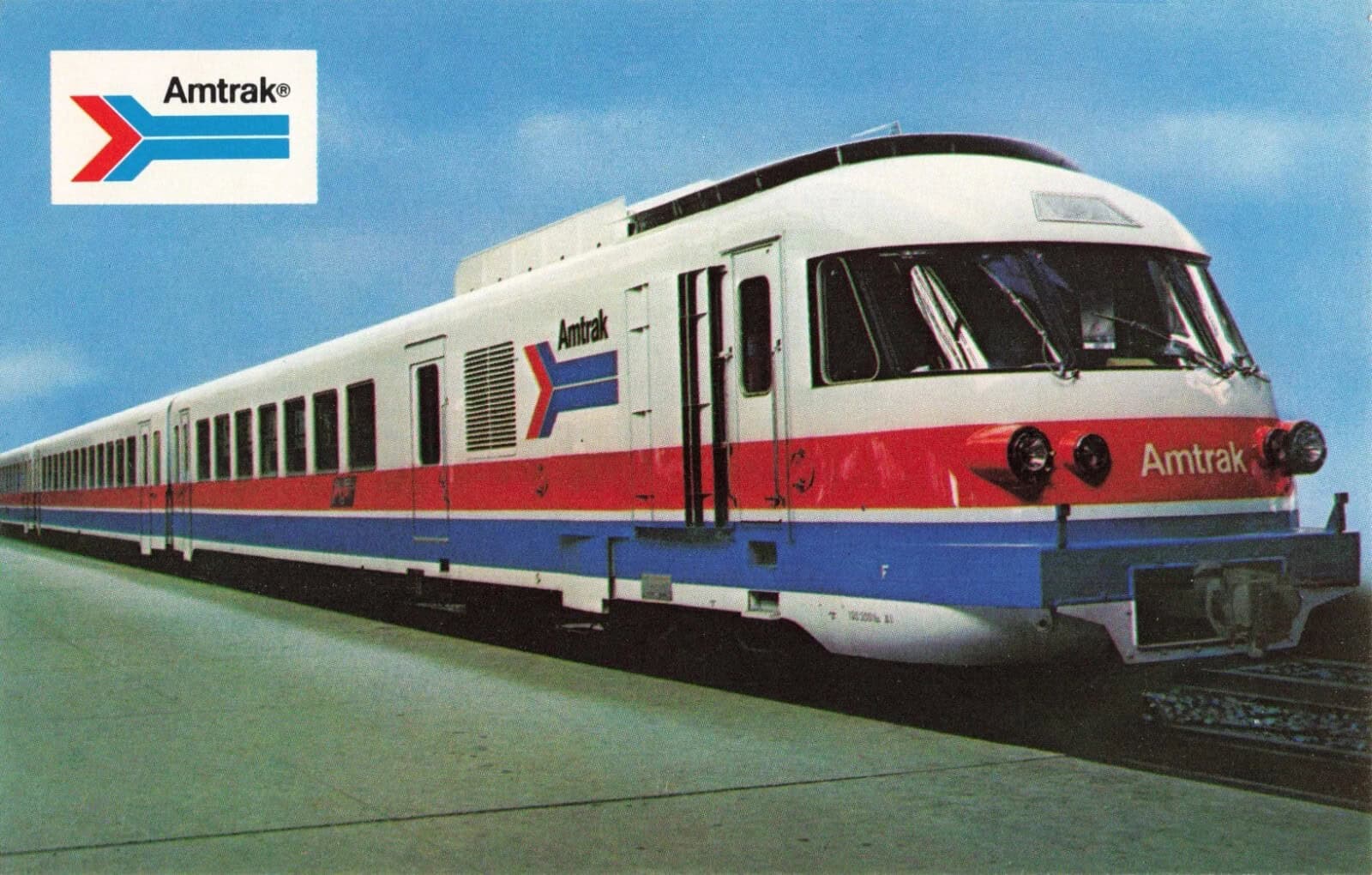
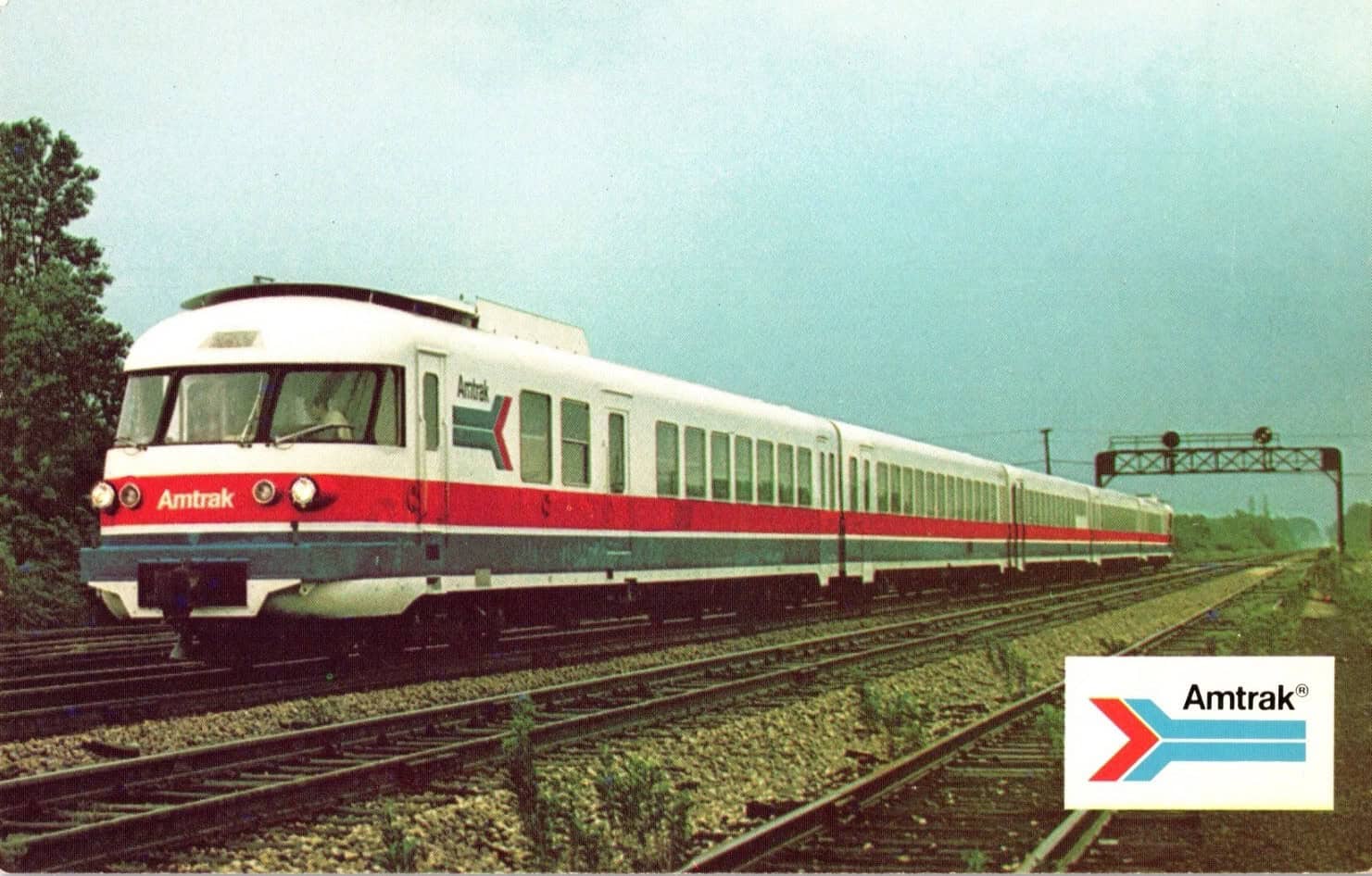
The new equipment was commissioned and built by a consortium of Bombardier and Alstom. Acela trains were capable of speeds of 150 mph. The train featured modern amenities such as Wi-Fi, power outlets, quiet cars, and spacious seating, catering to professionals commuting between major cities. Despite its speed, Acela’s full potential was limited by infrastructure constraints—shared tracks, outdated bridges, and tunnels—preventing consistent high-speed operation across the entire route.
Nevertheless, Acela was successful. It captured a significant share of the air-rail market between New York and Washington, often outperforming airlines in terms of total travel time when factoring in airport security and delays. By the mid-2010s, Acela accounted for over 25% of Amtrak’s revenue, despite serving only a small portion of its total ridership.
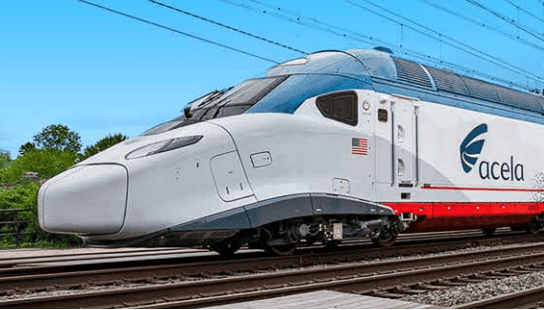
Recognizing Acela’s importance, Amtrak initiated the Next-Generation Acela project in the late 2010s. The new fleet, known as Acela II, is built by Alstom and features improved energy efficiency, greater passenger capacity, and enhanced safety systems. These trains are expected to enter full service by 2026, coinciding with major infrastructure upgrades funded through federal investment and the Bipartisan Infrastructure Law.
Acela’s legacy is more than just speed—it represents a shift in how Americans view rail travel. In a country dominated by highways and air travel, Acela has proven that trains can be competitive, sustainable, and desirable. It has also reignited discussions about expanding high-speed rail beyond the Northeast, with proposals in California, Texas, and the Midwest.
***
Amtrak and Acela postcards have appeared in recent decades, but only in chrome and continental formats. Most of the modern cards are reflections of modern travel.
Acela postcards serve as souvenirs (you may read, “never mailed” if you wish) of the high-speed rail service that revolutionized travel in the northeastern United States in 2000, the Acela Express symbolizes innovation, efficiency, and modern engineering, connecting major cities like Boston, New York, Philadelphia, Baltimore, and Washington, D.C.
Postcards featuring Acela often showcase sleek, aerodynamic train designs, emphasizing speed and the newest technology. These images highlight the impressive engineering feats and they also evoke the sense of progress that the service brings to America.
Collectors and travelers alike cherish Acela postcards for their vivid depictions of the trains against urban skylines or scenic backgrounds, not to mention the new and much welcomed travel environment in times when high-speed rail makes travel an enjoyable experience instead of a challenge.
***
Collectors, Alert! Look for the “Life on Acela” set. I call them the things you can do while someone else takes me where I want to go. You can “READ,” “DEPART,” “Practice being a “BRAINCHILD,” or “ARRIVE” at a decision. Samples follow. . .


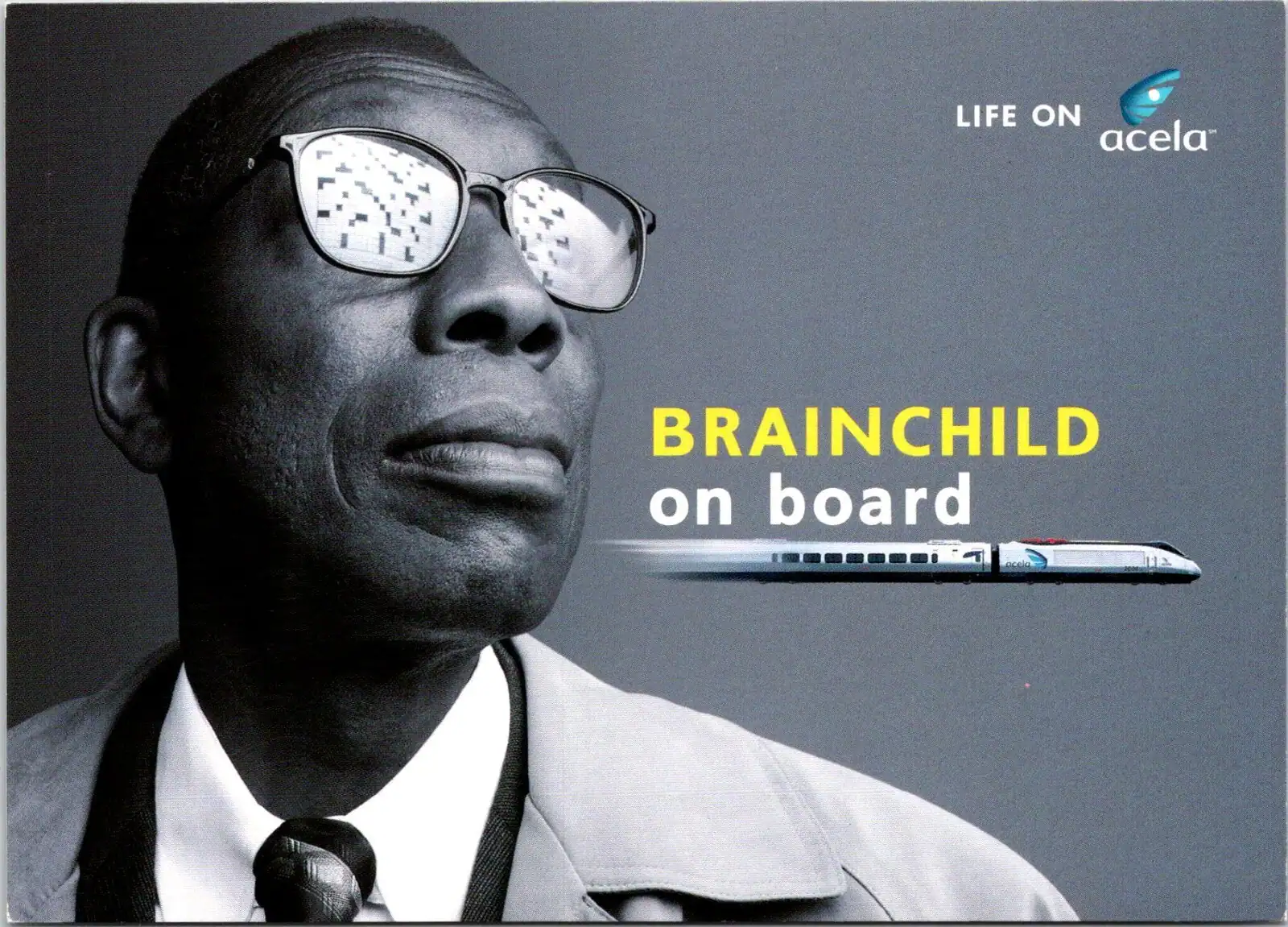

For travelers an Acela postcard is all it takes to remind oneself of an unforgettable experience; for collectors an Acela postcard is a visual capsule of progress in a new era of fast, comfortable, and environmentally conscious travel.
Those medern Acela poztcards are great!