The story of William Tell is among the most enduring legends of Western Civilization. It is a living symbol of freedom and patriotism. Originating in Swiss folklore, the legend has been adapted into various artistic forms, most notably as a dramatic play and an opera, each contributing to its enduring legacy.
The Legend of William Tell
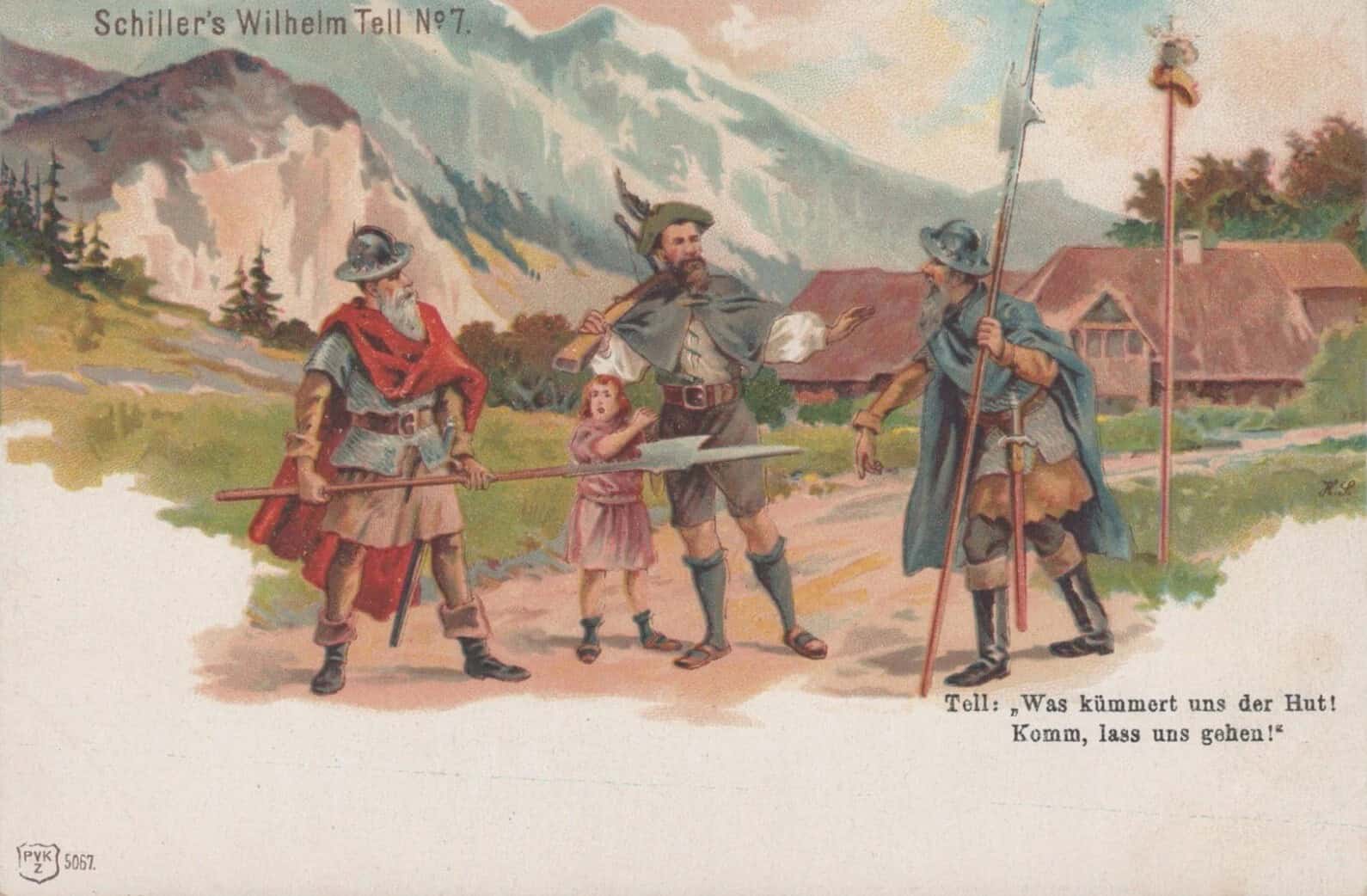
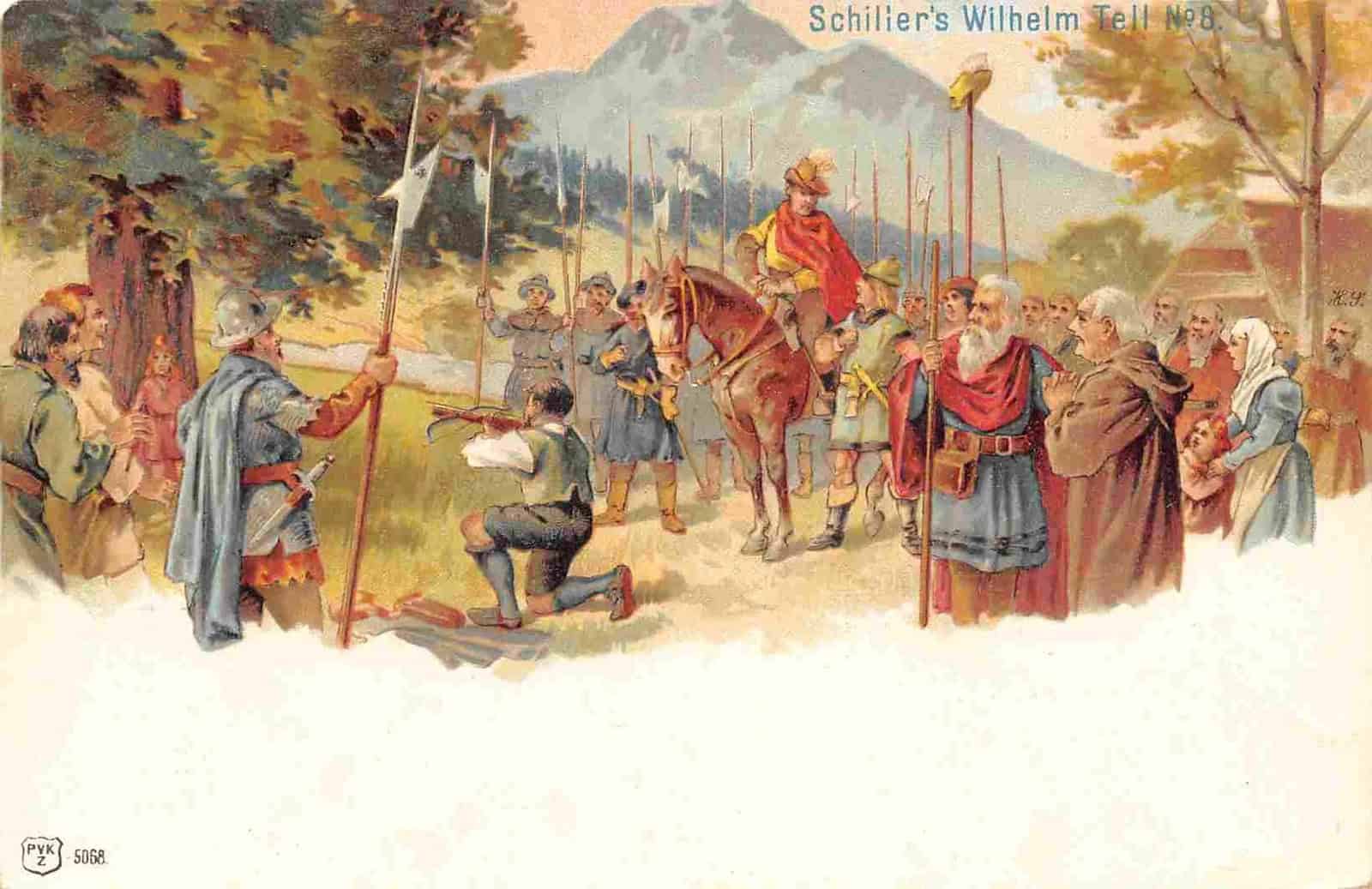
The Tell story dates to the early fourteenth century, set against the backdrop of Swiss struggles against Habsburg domination. According to the story, Tell was a folk hero and skilled marksman from the canton of Uri. The most famous episode involves Tell’s defiance of the oppressive Austrian bailiff, Gessler. When Gessler placed a hat on a pole and commanded the Swiss to bow to it as a symbol of submission, Tell refused. As punishment, Gessler ordered Tell to shoot an apple off his son’s head with a crossbow. Demonstrating incredible bravery and precision, Tell succeeded, and his act of rebellion sparked wider resistance against Habsburg rule. The legend portrays Tell as a symbol of national identity and the fight for independence, embodying themes of courage, patriotism, and the struggle for freedom.
William Tell as Drama
The first significant dramatization of William Tell came in the early-nineteenth century. Friedrich Schiller, a German playwright, created a stage production in 1804 that he entitled William Tell. Schiller’s clever turn-of-phrase and dynamic dialog elevated the legend to the realm of serious drama. Schiller’s version emphasizes themes of resistance and the moral virtue of bravery for the sake of patriotism.
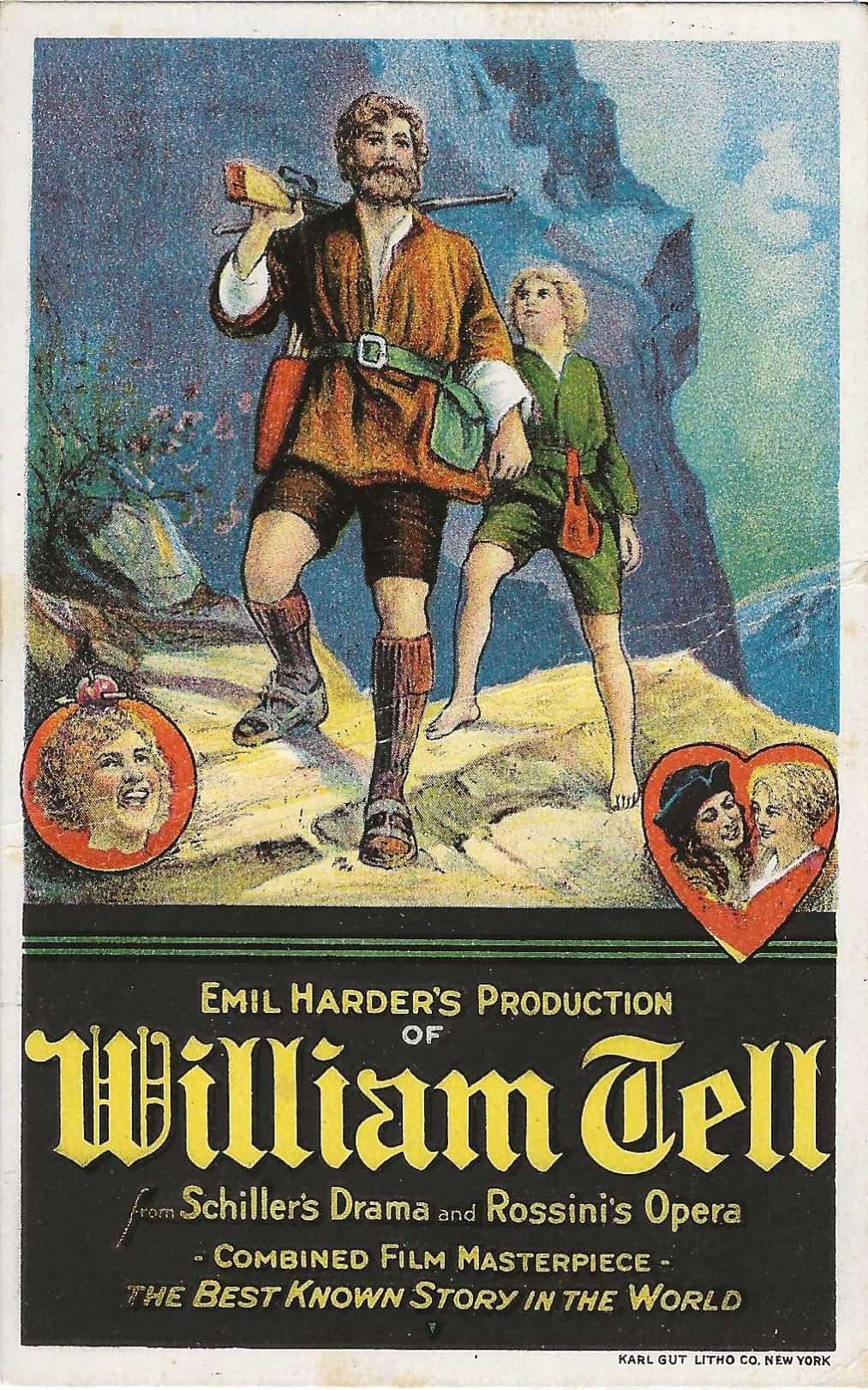
William Tell, the play, portrays a heroic figure who embodies the spirit of people resisting foreign domination. The scenes are set to remind an audience that political turmoil and personal sacrifice are often necessary to create national unity and a moral righteousness. Schiller’s play not only popularized the legend across Europe but also inspired revolutionary movements around the world.
William Tell as Opera
When set to the music of Gioachino Rossini in 1829, William Tell found a new and enthusiastic audience. Rossini was by then a highly respected Italian composer with forty operas in his repertoire. (Official performance dates, Edizione critica, show that only one of Rossini’s works, Ugo, re d’Italia, was ever abandoned.) Although he preferred his native tongue, his last five works were sung in French.
William Tell is renowned for its dramatic intensity and memorable melodies, especially the famous overture with its high-energy finale, “The March of the Swiss Soldiers” which has become a symbol of heroism personified by the Lone Ranger. The opera dramatizes key moments from the legend, including the iconic apple shot. Rossini’s musical brilliance brought the legend into balance with the social, political, and economic chaos that raged across the European continent in the first half of the nineteenth century.

William Tell the movie
The film had its world premiere at the Toronto International Film Festival in September 2024. Its theatre release came in January 2025 in the United Kingdom. It received mixed reviews. Billed as an epic historical action film written and directed by Nick Hamm, it is based on Schiller’s play.
The cast includes Claes Bang as Tell, Connor Swindells as Tell’s nemesis Gessler, and Golshifteh Farahani as Tell’s wife Suna who he met in Palestine during the Crusades.
William Tell the Citizen
Tell, the heroic citizen of Switzerland, came to the forefront of Alpine legend when he defied the authority of the Habsburg bailiff, Gessler. He was a legendary Swiss folk hero associated with the Swiss canton of Uri, and specifically the village of Bürglen. He is the central figure in the mythology of Swiss independence, though his historical existence is disputed.
***

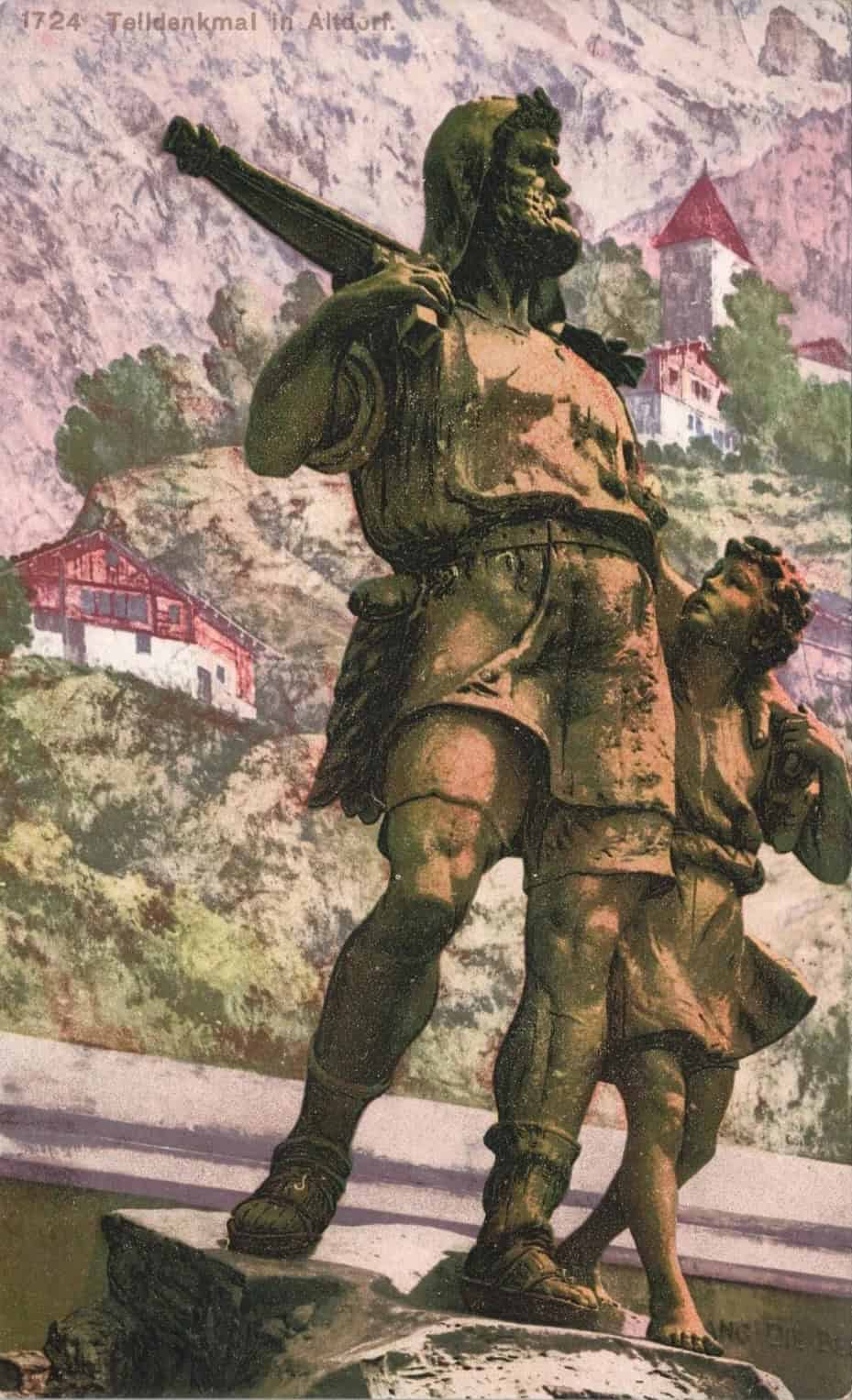
Postcards of the William Tell legend are not rare, but neither are they abundant. Two sets of the same artist’s work can be found at most postcard shows and there are several issues of the famous monument that stands in his village home on the shore of Lake Lucerne. (Samples follow.)
Interesting
Please continue your story philatelically, as the Swiss Postal Authority issued a William Tell series of stamps circa 1908 – 1923. Look for the Wm. Tell postcards franked on the reverse, with Wm. Tell stamp(s) on the address side ! Great subject matter and story. Thanks for the article.