An epic baseball battle took place in the 1950s, not between two teams but between two men, Walter O’Malley, the owner of the Brooklyn Dodgers, and Robert Moses, New York City’s influential political power broker, master builder, and urban planner.
O’Malley was a Brooklyn attorney who became involved in running the Brooklyn Dodgers in 1933, when the Brooklyn Trust Company appointed him to protect their interest in the struggling team that was in arrears on the $300,000 mortgage on Ebbets Field. New York State bank regulators wanted Brooklyn Trust to foreclose on the ballpark. Digging into the team’s finances, O’Malley found that a number of team employees were likely skimming from gate and concession receipts. Brooklyn Trust loaned O’Malley $250,000 to purchase a 25% ownership stake in the Dodgers and O’Malley soon made the team solvent. By 1950, O’Malley was sole owner of the Dodgers.
Robert Moses amassed great political power in New York City, Long Island, and New York State despite never being elected to political office. At one point, he held twelve government positions. He controlled the building of bridges and tunnels in New York City and the revenue they generated. The Triborough Bridge, the Throgs Neck Bridge, Brooklyn-Battery Tunnel, and the Verrazzano-Narrows Bridge were constructed under his leadership, as well as several highways bisecting the five boroughs. Moses also built the limited access Northern State Parkway, the Southern State Parkway, and the Wantagh State Parkway on Long Island. He was responsible for the development of Jacob Riis Park, Jones Beach, and Orchard Beach. From 1942 through 1960, he was a commissioner on the New York City Planning Commission. More importantly, he had the ear of major politicians.
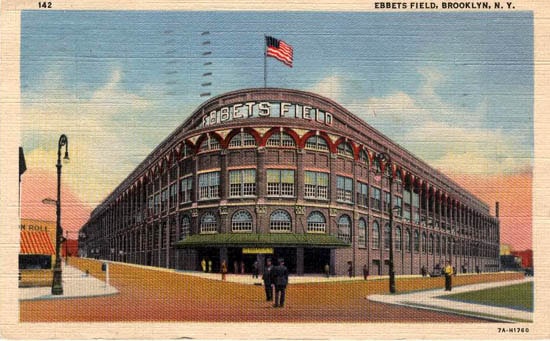
By the mid-1950s Walter O’Malley sought to replace crumbling Ebbets Field. Although the Dodgers drew a million fans annually and was highly profitable, Ebbets Field had only 34,000 seats limiting annual attendance and revenue. Sightlines at Ebbets Field were blocked by pillars supporting the upper deck and the roof over it. It had only seven hundred parking spaces and fan amenities were abysmal. Even O’Malley admitted the ballpark’s restrooms smelled.
O’Malley wanted to build a 55,000-seat domed stadium in downtown Brooklyn using air rights above Atlantic Terminal Station. The centrally located site offered numerous advantages. Several subway lines used Atlantic Terminal Station, and the Long Island Railroad stopped there. Two other subway lines stopped at the nearby Lafayette and Fulton Street Stations. Conceptual drawings of the stadium were created, but skeptics questioned if grass would grow indoors.
Robert Moses refused to give approval for O’Malley’s downtown Brooklyn stadium. An advocate for cars and highways over mass transit, Moses claimed the fans would overwhelm downtown Brooklyn’s streets and bring traffic to a standstill. O’Malley believed most Dodger fans would arrive by mass transit. Instead, Moses offered a site in Flushing Meadows, Queens, adjacent to the former site of the 1939 -1940 New York World’s Fair. Moses envisioned a multi-purpose municipal stadium for both baseball and football. He proposed Horace Stoneham’s New York Giants being co-tenants in the stadium since the Polo Grounds was also in poor condition. Seeing the rapid growth of the suburbs on Long Island, Moses saw the Dodgers’ and Giant’s fan bases were shifting from Brooklyn and Manhattan, respectively. Moses believed the Flushing Meadows site had better highway access.
O’Malley rejected Moses’ offer, telling Moses that if he moved to Queens, his team would no longer be the Brooklyn Dodgers. He was also loath to share parking and concession revenue with New York City, as well being a co-tenant in the stadium with the rival Giants and the NFL Giants. Instead, O’Malley moved the Dodgers to Los Angeles and convinced Horace Stoneham to move the Giants to San Francisco to preserve the rivalry between the two teams. Stoneham didn’t need much convincing. The Giants were struggling financially, and Stoneham had already been angling to move the Giants to Minneapolis.
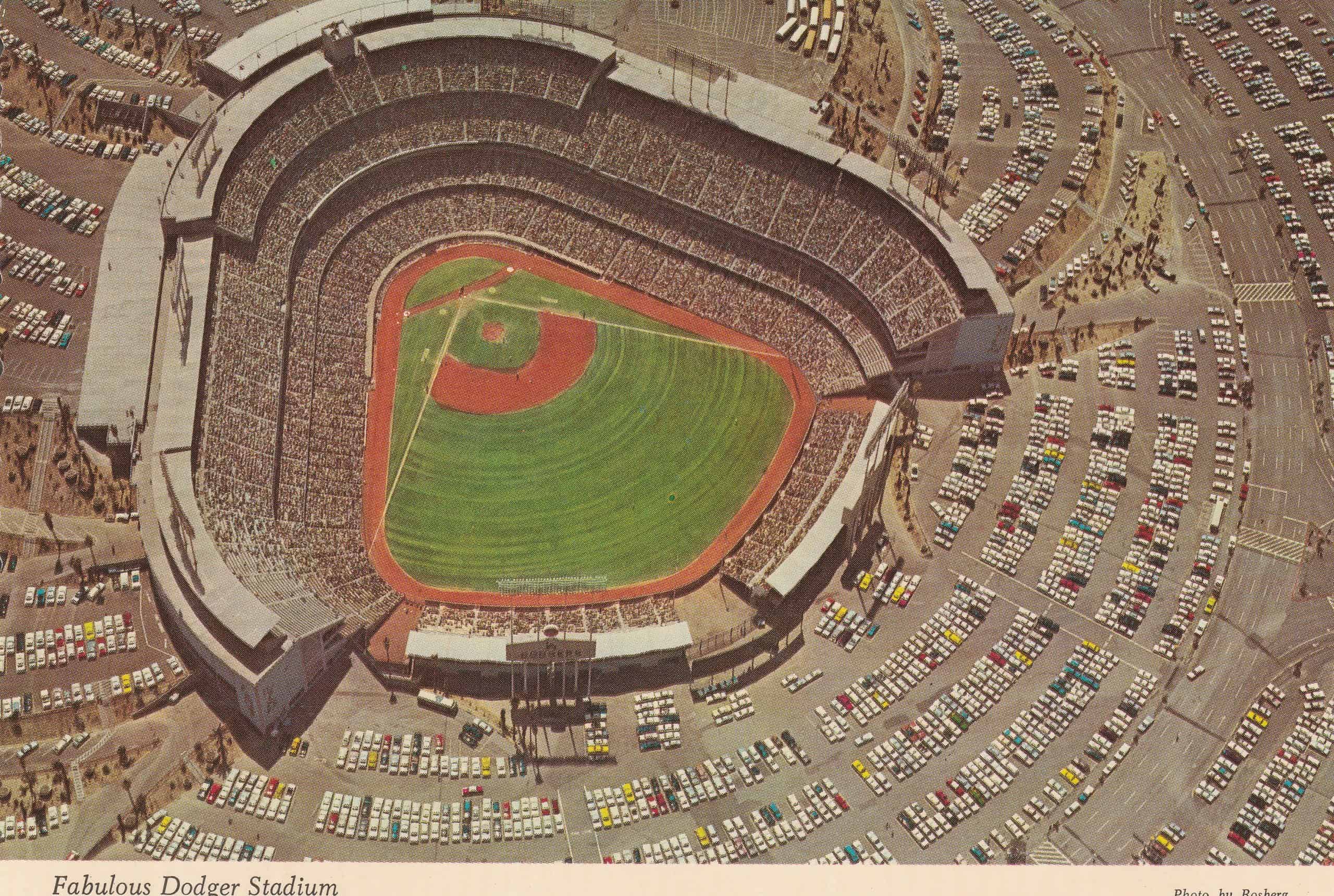
The Dodgers now ensconced in the City of Angels played their first four seasons in the Los Angeles Coliseum while Dodger Stadium was under construction. Dodger Stadium was first privately financed stadium in forty years and cost $23 million to build. It seated 56,500 and had 16,000 parking spaces. There were forty-eight clean and modern restroom, twenty-four each for men and women.
Union Oil provided a construction loan for Dodger Stadium at a generous 2% interest rate. In exchange, Union Oil’s corporate logo was placed atop the left and right field scoreboards. It was the only corporate logo permitted in Dodger Stadium for decades. Union Oil also operated a service station in the Dodger Stadium parking lot. Although the station is no longer in operation, the building is used today as an event space.
The American League Los Angeles Angels were tenants of the Dodgers from the 1962 through the 1965 seasons until Anaheim Stadium was completed in 1966. It was a lucrative arrangement for the Dodgers. They received 7.5% of the Angel’s attendance gross, 50% of concessions, and all parking revenue.
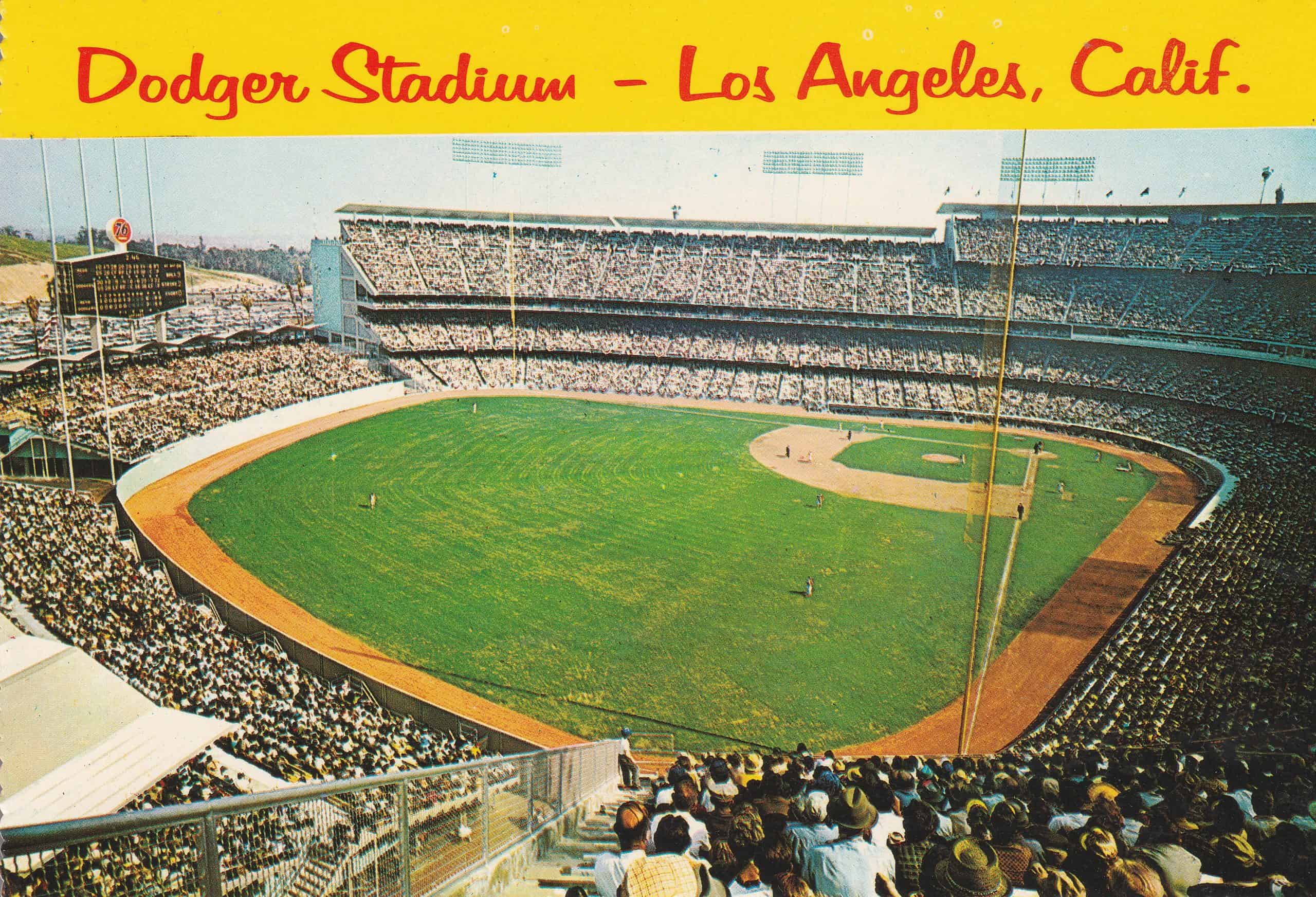
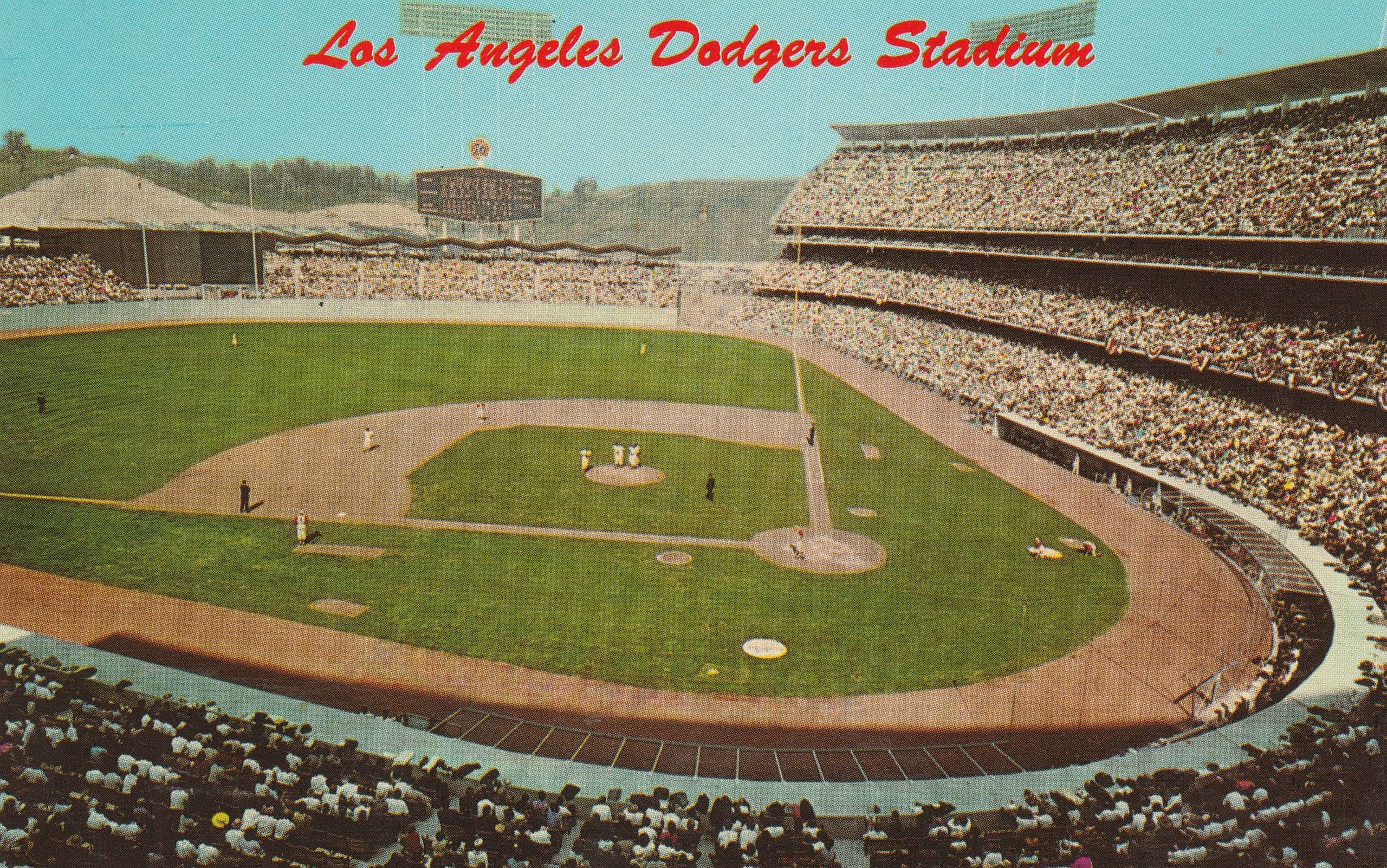
Two postcards of Dodger Stadium’s first game, April 10, 1962.
Opening Day at Dodger Stadium was April 10, 1962. the Cincinnati Reds spoiled the party and defeated the Dodgers, 6-3. A crowd of 52,564 attended. The Dodgers drew 2,755,184 fans in that inaugural season. Attendance for the 2025 season was 4,012,470. Today, Dodger Stadium is the third oldest stadium in Major League Baseball after Fenway Park (1912) and Wrigley Field (1914). It is the largest baseball park in the world.
The National League granted New York City an expansion team that began play in 1962 at the Giants former home, the Polo Grounds. The Amazing Mets (as dubbed by their manager Casey Stengel) quickly became the darling of New York sports enthusiasts and erased some of the bitterness held by former Dodgers and Giants fans. At the site at Flushing Meadows offered to O’Malley, Moses would build 55,300 seat Shea Stadium to serve as the home field of the New York Mets. Shea Stadium opened in April 1964, the same month as the 1964–65 New York World’s Fair that was held next door to Shea Stadium. The Moses led Fair was his last great endeavor. Shea was also home to the New York Jets of the National Football League from 1964 until 1983.
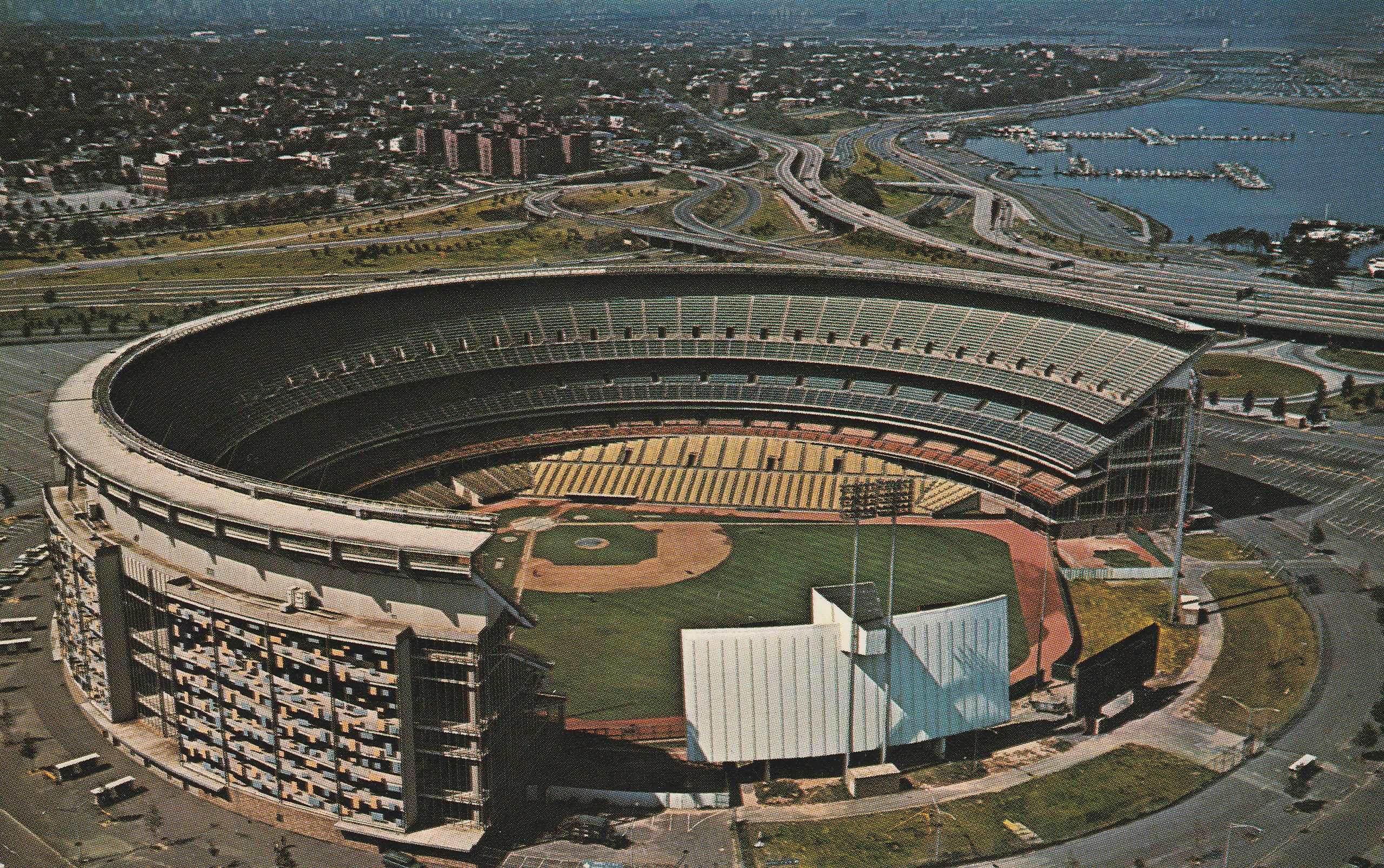
While Yankee Stadium underwent a massive renovation in 1974 and ‘75, the Mets shared Shea Stadium with the New York Yankees for the two seasons. After playing at the Yale Bowl for the 1974 season, the New York Giants played their 1975 season at Shea Stadium. Moses’ plans for Shea Stadium to be the center of New York sports came to fruition in 1975 when the Mets, Yankees, Giants, and Jets called Shea home. The four teams drew 3,738,546 customers to Shea: 1,730,566 by the Mets, 1,288,048 by the Yankees, 361,102 by the Jets, and 358,830 by the Giants.
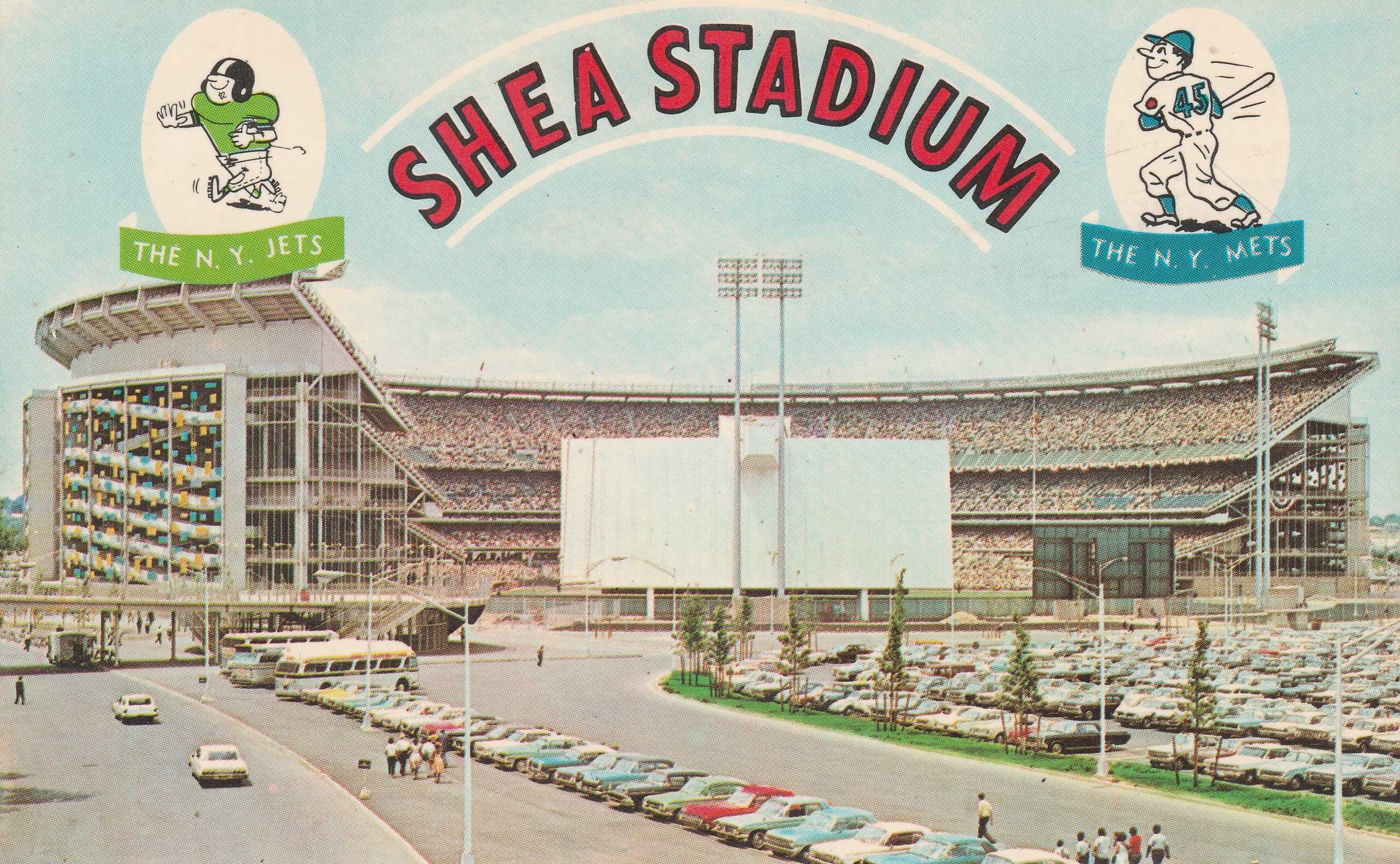
Over the years, the Mets became disenchanted at Shea. The stadium’s open design meant winds blowing off Flushing Bay chilled fans to the bone even in the summer. Shea was not well maintained and as in many multi-purpose stadiums, the sightlines for baseball fans were poor. The Mets played their last game at Shea Stadium in 2008, and demolition was completed in 2010. In 2009, the Mets began playing in Citi Field built adjacent to Shea Stadium.
Who won the battle of the titans? Dodger Stadium will soon undergo a $100 million renovation that will ensure that it continues to serve as baseball’s cathedral for years to come. A clone of O’Malley’s domed stadium, the Astrodome, opened in Houston in 1965. The grass didn’t grow indoors proving skeptics right, but the development of Astroturf solved the problem. Shea Stadium fulfilled Moses’ vision for the Flushing Meadows site and served as the home of the Mets for forty-four years. The exterior of Shea’s replacement, Citi Field, pays homage to Ebbets Field. The 17,732 seat (basketball) Barclays Center opened in 2012 and was built above Atlantic Terminal Station where O’Malley envisioned his domed stadium.
I score the contest, O’Malley 4, Moses 1.
Once again, Dan has thoroughly researched his topic and presented it in a most interesting and readable way. Great history lesson on New York baseball. I’d say the Dodgers won—they’re repeat World Series winners!!
Great lookback into baseball Dodger baseball history, thanks.