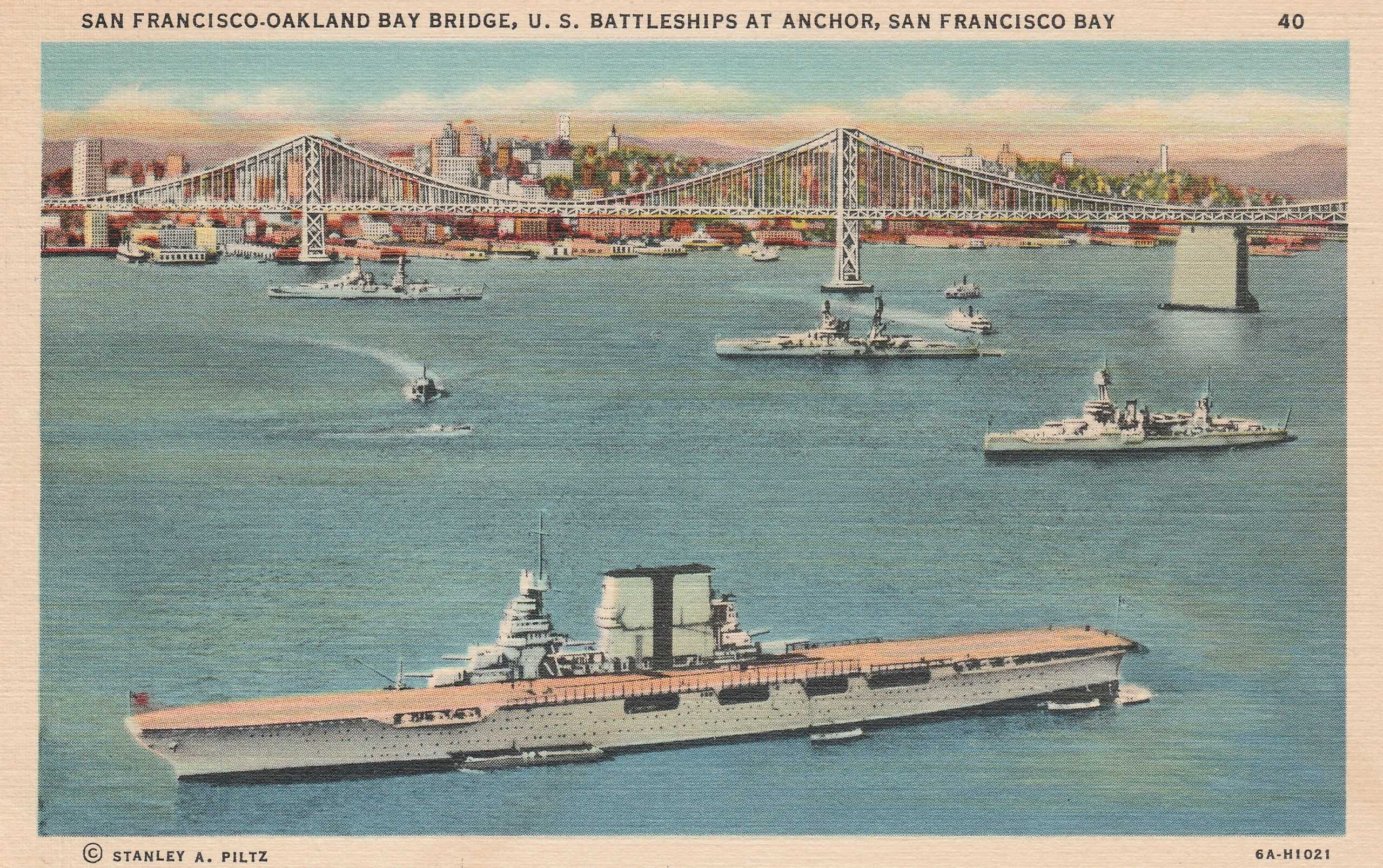
with three standard type battleships in the background.
The second generation of dreadnoughts built by the U. S. Navy became known as the “standard type” battleships. Twelve standard type battleships were commissioned between 1916 and 1923.
The United States Navy opted for a top speed of 21 knots so that battleships of different classes could operate as a tactical homogeneous unit. Foreign navies had slow and fast battleship wings that did operate well together. Standard type battleships had a tactical turn radius of 700 yards and a cruising range of 8,000 miles enabling them to cruise from the West Coast to the Philippines without refueling. This was an important part of the military’s Plan Orange for a war in the Pacific against Japan.
The standard type battleships incorporated the “all or nothing” armoring concept, heavily armoring important areas like magazines and machinery spaces while the rest of the ship received no armor. Many foreign navies’ fast battleships sacrificed armor for speed.
All U. S. battleships had to be able to transit the 110 feet wide locks of the Panama Canal. As result the standard battleships had a beam of between 95 feet and 97½ feet. During this period, the five battleship classes, Nevada, Pennsylvania, New Mexico, Tennessee, and Colorado, offered improvements over the prior class rather than a radical redesign. Each class had two battleships except for the New Mexico and Colorado classes that had three battleships each. The twelve standard battleships constituted the U.S. Navy’s battle line during the interwar period.
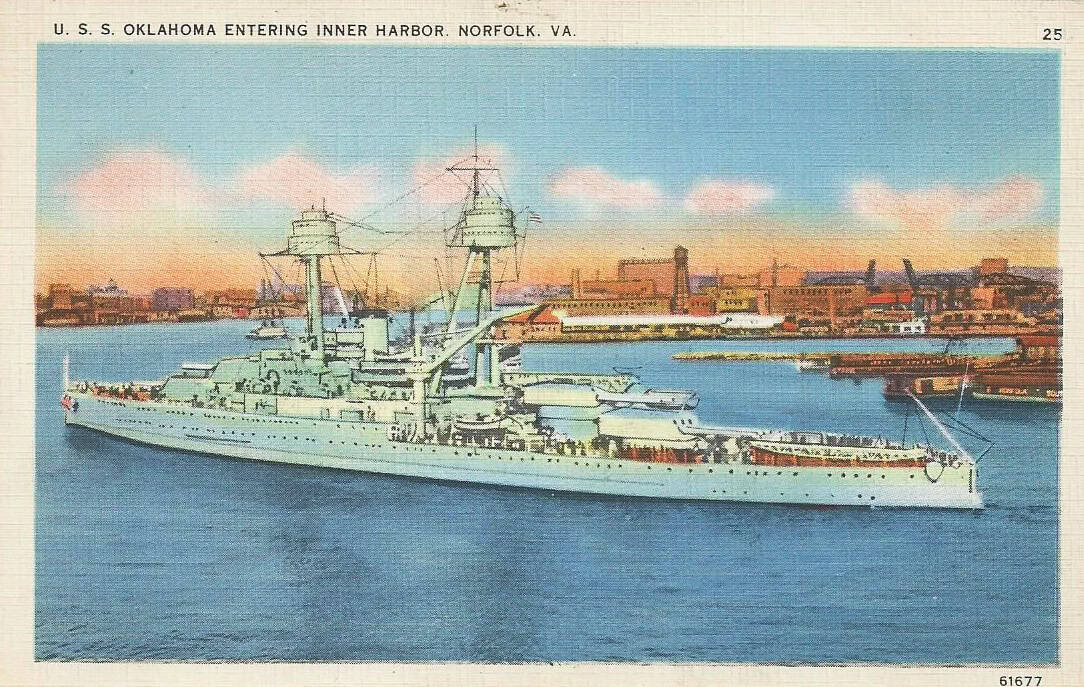
Nevada and Oklahoma were the first standard type battleships. Both were commissioned in 1916. Armed with ten 14-inch guns, the A and Y turrets held three guns, and the B and X turrets had two guns. They were considered revolutionary since they were the first U. S. battleships with triple turrets, oil-fired steam power plant, and a single funnel. Oil increased the cruising range and enabled ships to be refueled at sea. A crew of twenty-four now operated the boiler room while a coal-fired battleship required 100 stokers and 112 coal passers. Eliminating over 200 crew members enabled the battleship to carry less provisions and fresh water increasing fuel capacity for a greater cruising distance without refueling.
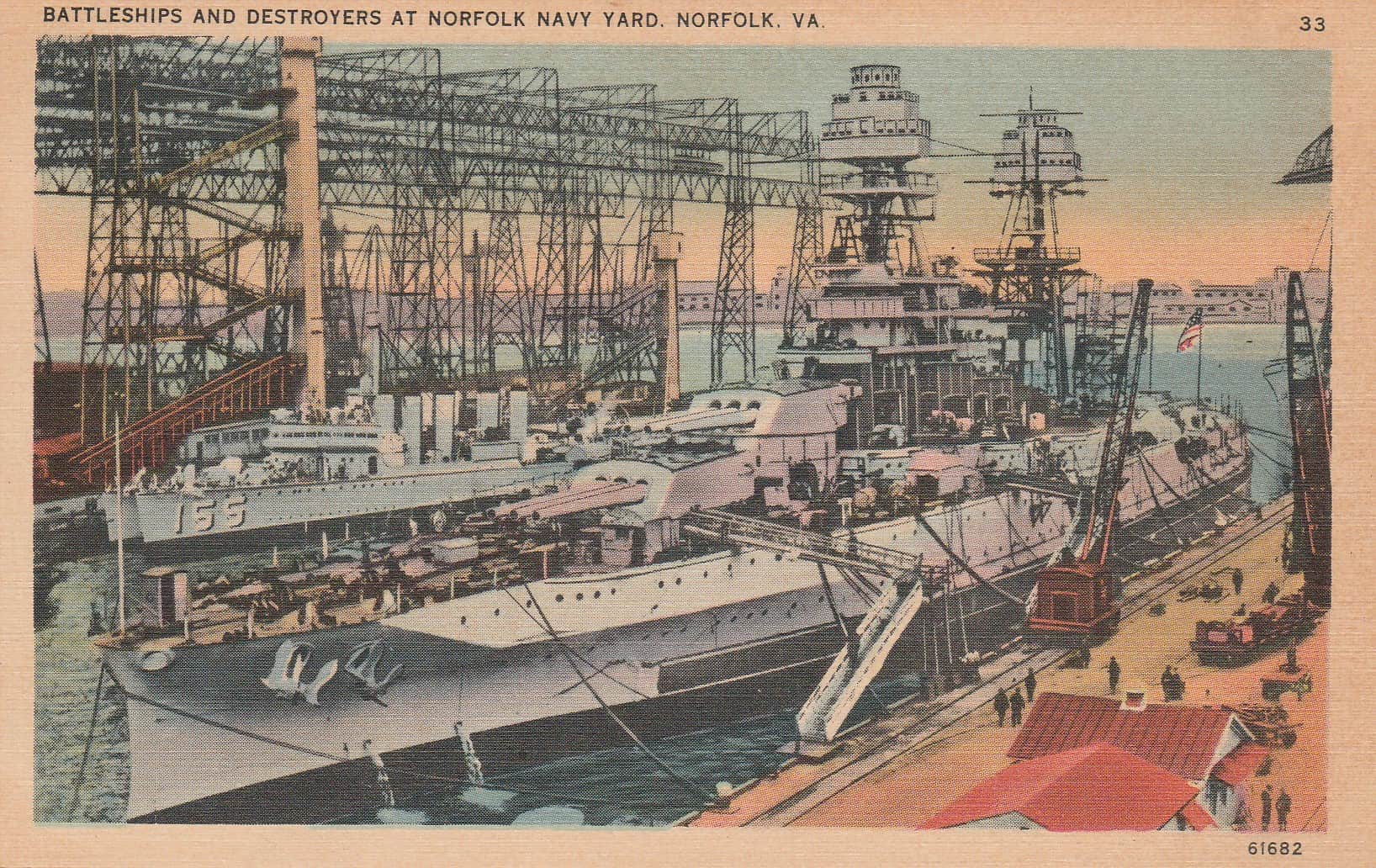
Naval Shipyard in Portsmouth, Virginia from 1929 through 1931.
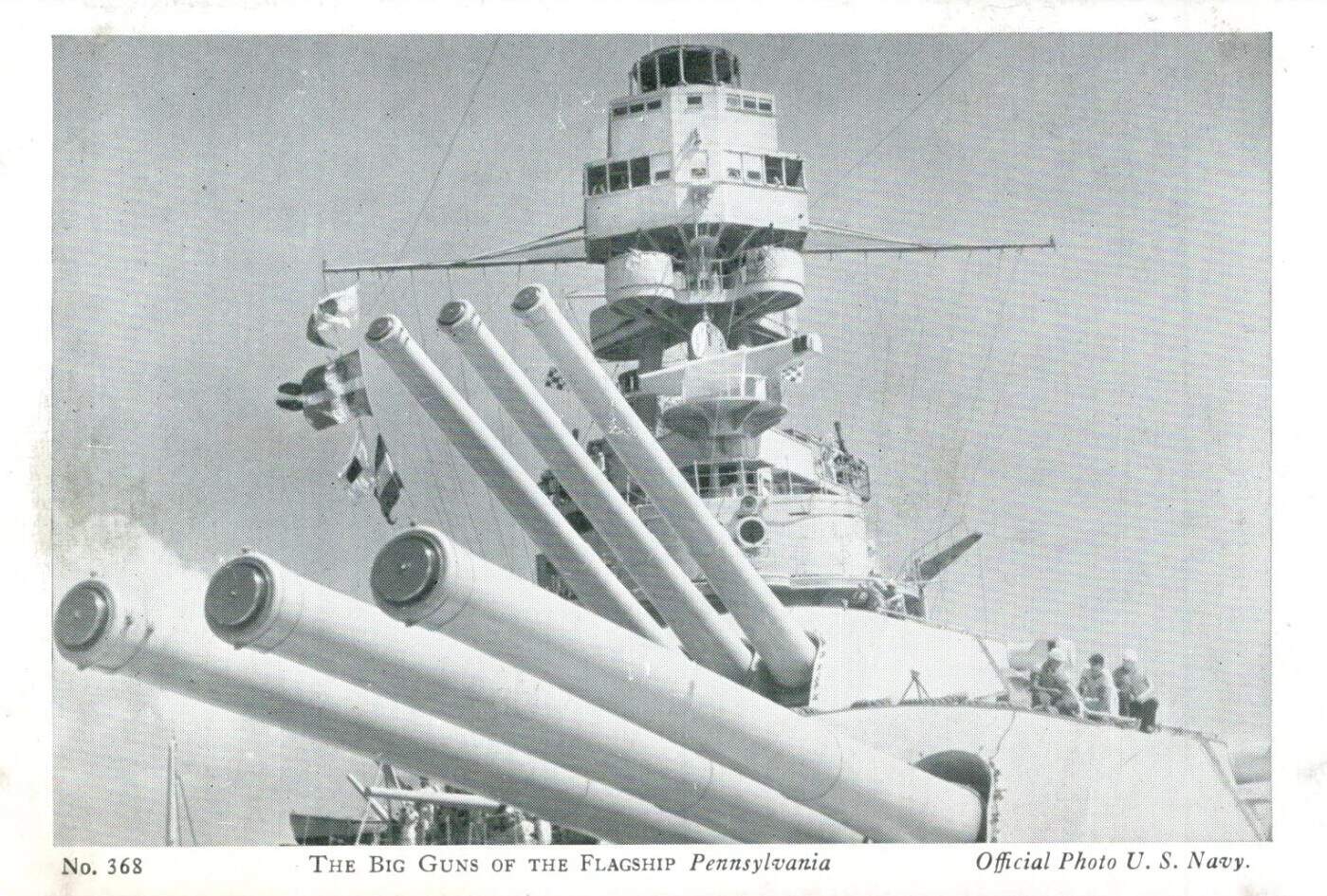
by a sailor in 1942 to his former co-workers in Norwich, New York.
The next standard type battleships were the Arizona and Pennsylvania. The Pennsylvania was commissioned in June 1916, just before the United States entered World War I. She and her sister, the Arizona were the first U. S. battleships with four triple gun turrets, giving them a broadside of twelve 14-inch guns. Due to the lack of fuel oil in Britain, they were not sent to Europe during World War I but patrolled the U. S. East Coast. The U.S. sent coal fired battleships to reinforce the British Grand Fleet.
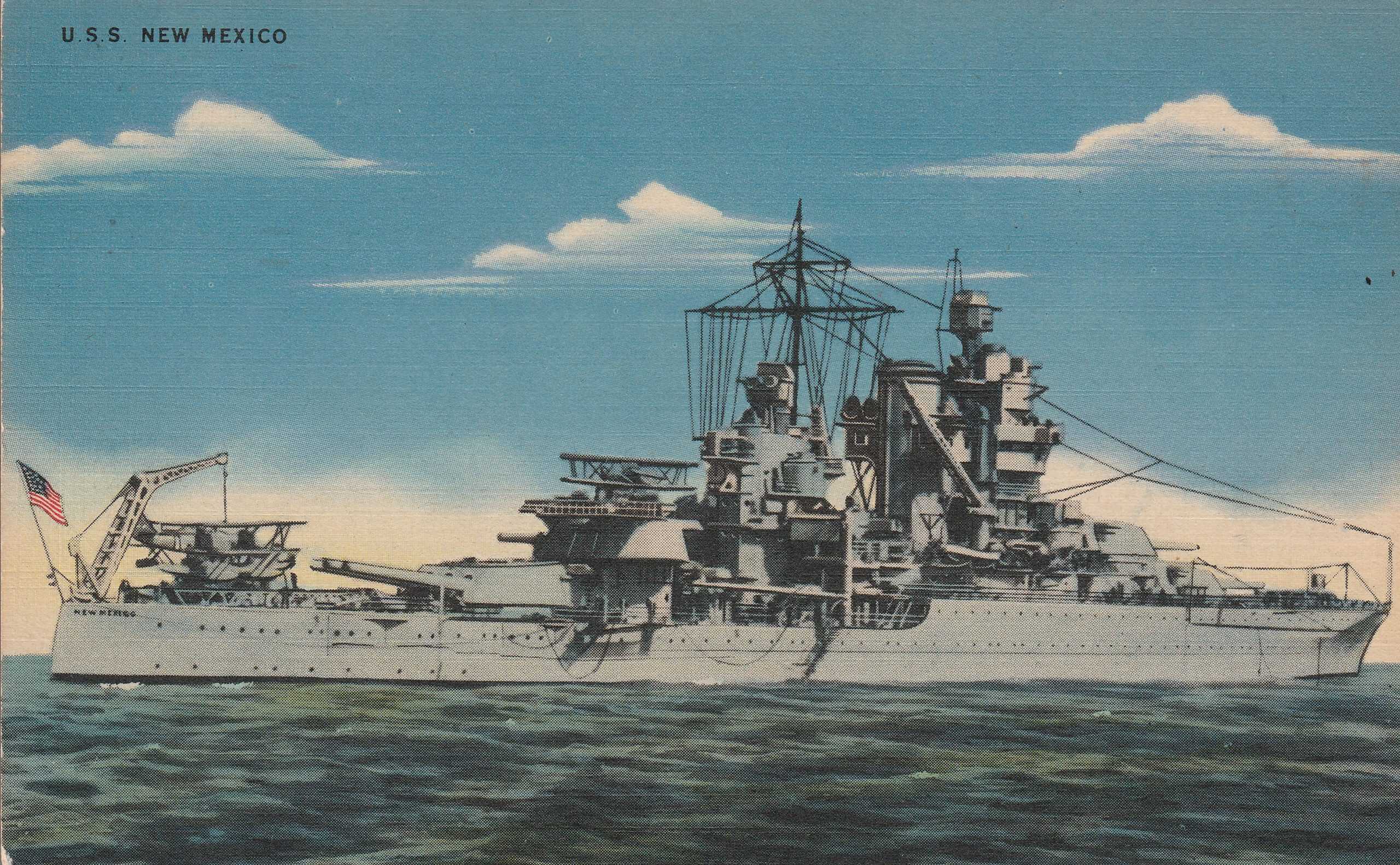
Three New Mexico Class battleships were built by the U.S. Navy during World War I. The New Mexico and her two sisters had twelve 14-inch guns in four turrets. They were the first battleships where each gun in the turret fired independently of the other two. Their hulls featured a clipper bow to better handle rough seas and reduce overwash of the forward portion of the ship.
Operating experience on the existing battleships had revealed that the secondary battery, mounted in casemates in the forecastle deck, were unusable in anything other than calm seas. The designers moved eighteen of the secondary guns a deck higher and further aft, where they would be less affected by rough seas.
Two pre-dreadnought battleships were sold to the Greek Navy, and the Navy was permitted to use the proceeds generated by their sale to fund a third ship in the class due to the outbreak of World War I. The battleship Mississippi was commissioned in December 1917. Her sisters, New Mexico and Idaho were commissioned in May 1918 and March 1919, respectively. During World War I, the Mississippi operated in the Western Atlantic. Her sisters were commissioned too late to participate in the war.
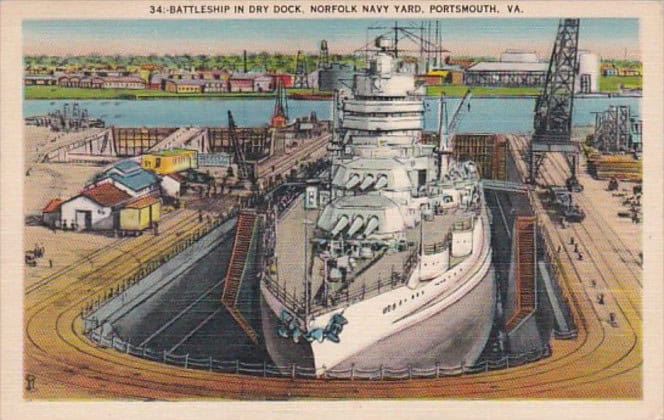
Naval Shipyard in Portsmouth, Virginia during the 1930s.
During the early 1930s, the three New Mexico class battleships underwent extensive modernization programs. They received an additional two inches of special treatment steel for their main deck armor, bringing the total thickness to 5.5 inches. A second torpedo bulkhead was installed outboard of the original one, and all three ships received anti-torpedo bulges to further protect them against underwater attack. Both lattice masts were removed, and a tower bridge was built in place of the fore mast. The upgrades made the three sisters, the most modern battleships in the U.S. Fleet.
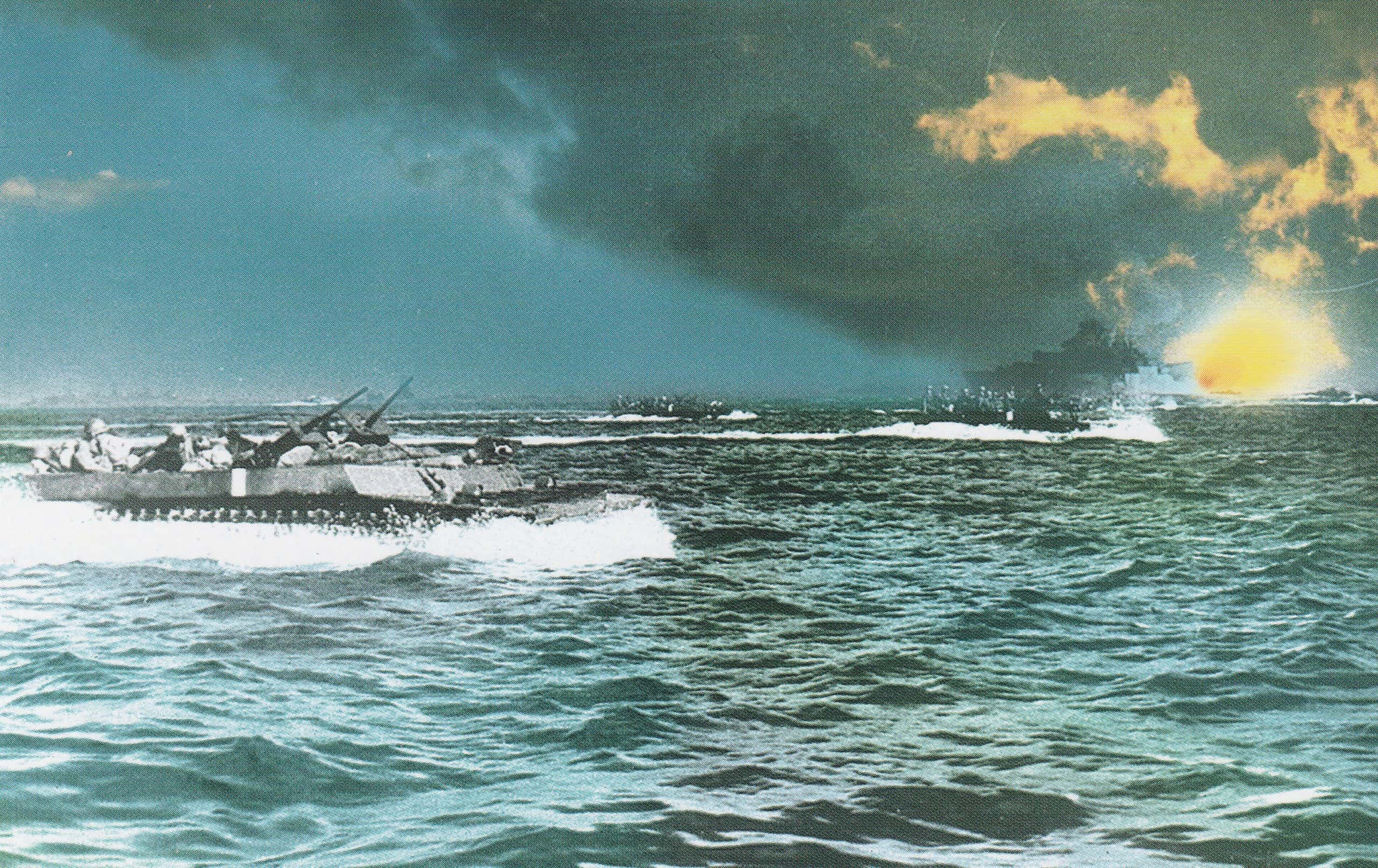
The two Tennessee class battleships were essentially repeats of the previous New Mexico class with the primary improvements being a significantly strengthened underwater protection system, and increased elevation of the main battery of twelve 14-inch guns to 30 degrees to allow them to fire at much greater ranges. To improve the ship’s ability to survive mine and torpedo explosions, four torpedo bulkheads were created. The inner bulkheads were filled with water or fuel oil to absorb the pressure and gas of the explosion. This design was used in future battleship classes and later used when retrofitting older battleships. In addition, the hull featured extensive compartmentalization to reduce the risk of uncontrollable flooding.
The keels of the California and Tennessee were laid in 1917 and 1916 respectively. Tennessee was commissioned in June 1920 and California followed a year later in August 1921. California, constructed at the Mare Island Naval Shipyard, was the only U. S. battleship constructed on the West Coast.
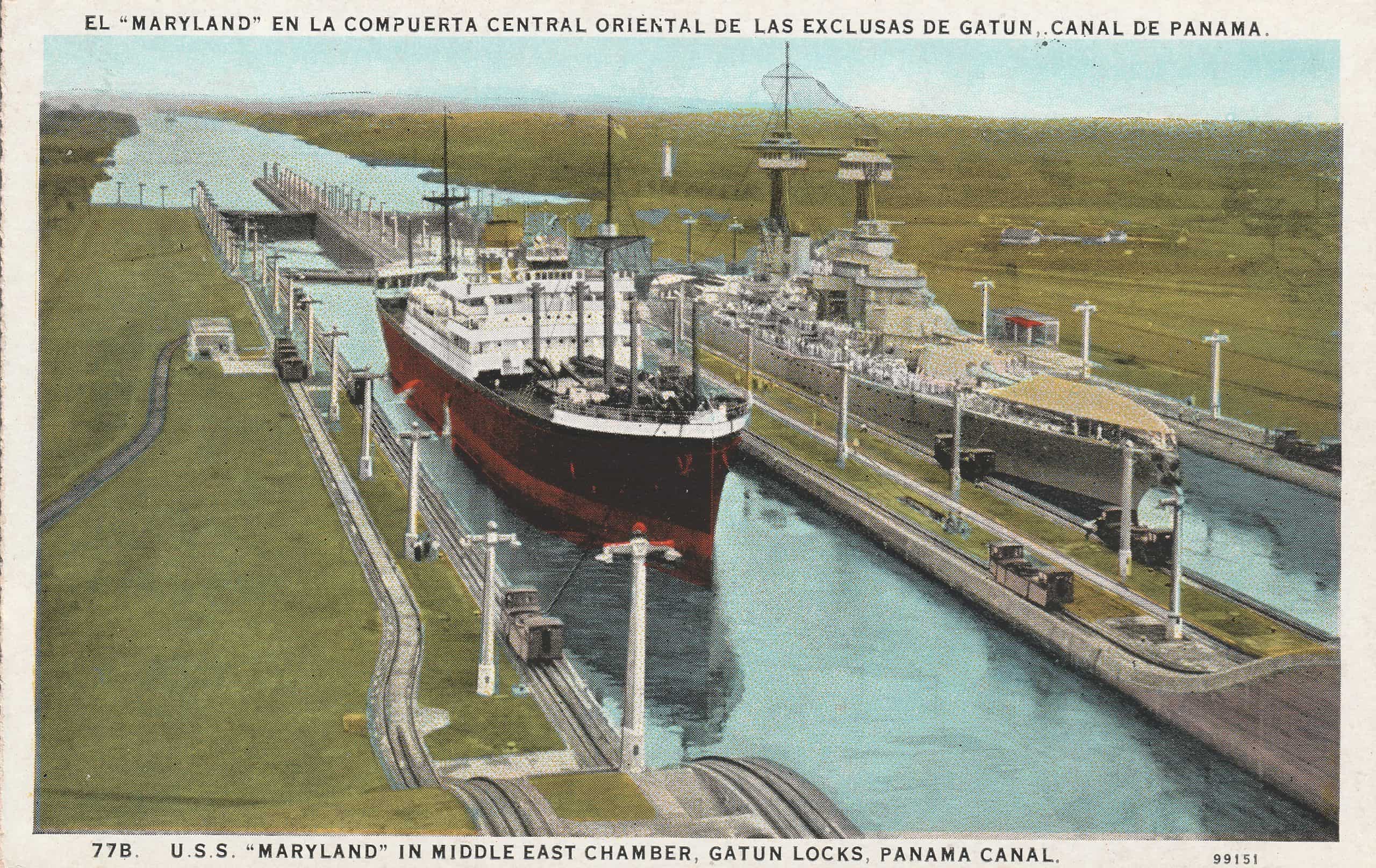
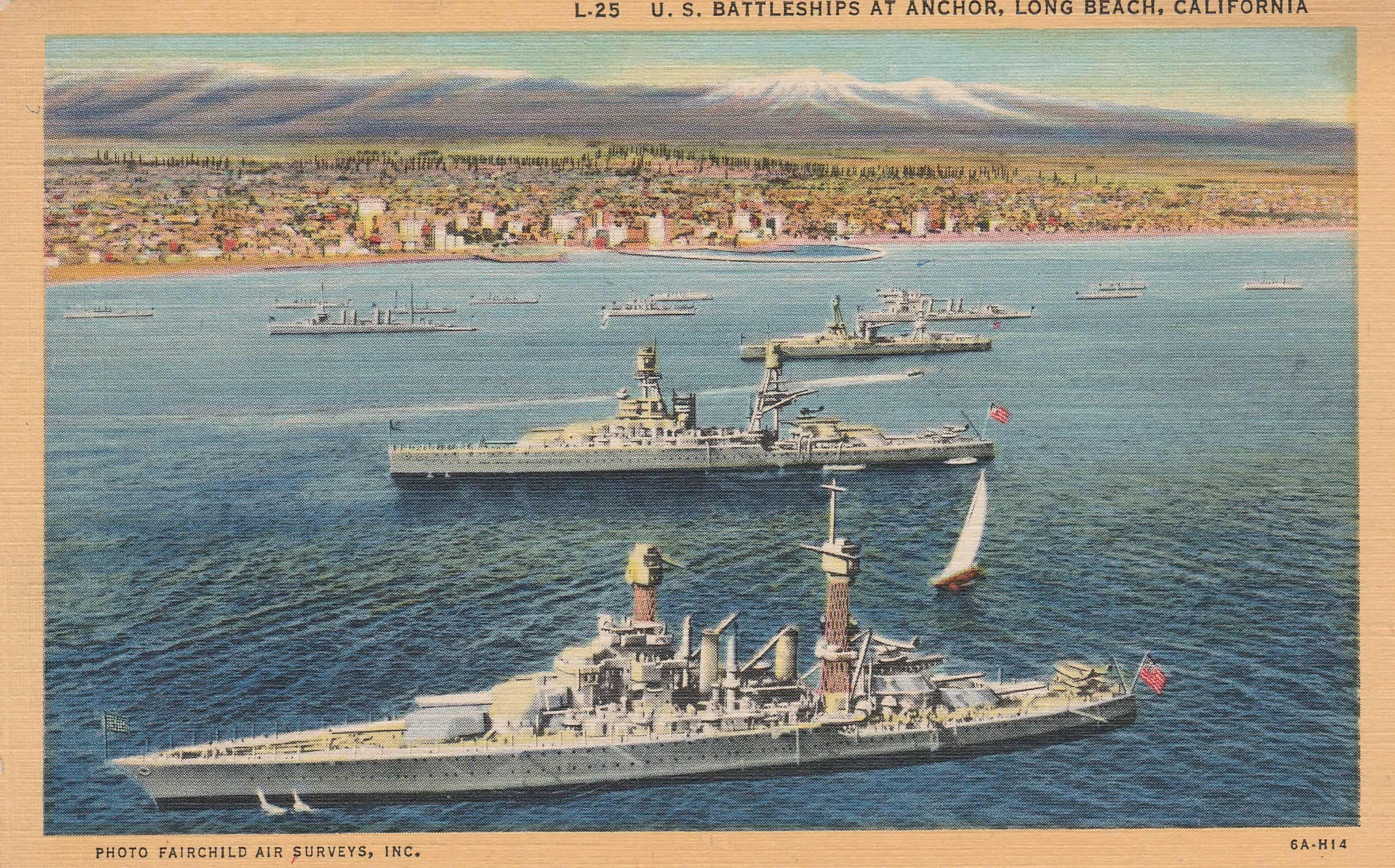
standard battleships in the background.
The three Colorado Class ships, Colorado, Maryland, and West Virginia, were the most powerful battleships built by the U.S. Navy until the two North Carolina Class battleships entered service in 1941. The “Colorados” were like the preceding Tennessee Class except they had eight 16-inch guns in four double turrets, two forward and two aft while the Tennessee Class had twelve 14-inch guns in four triple turrets.
The three Colorado Class battleships were the first U. S. battleships with 16-inch guns. In order to get the increased range and penetration of the 16-inch guns, the Navy believed dropping the main battery from twelve guns to eight guns was an acceptable tradeoff. Together the two Tennessee Class battleships and the three Colorado Class battleships constituted the “Big Five” of the U. S. fleet. A fourth Colorado Class battleship, Washington, cancelled under the terms of the 1922 Washington Naval Treaty, was 75.9% complete when sunk as a gunnery target in 1924.
Like the Tennessee Class, the Colorado Class battleships were designed and built after the World War I Battle of Jutland and incorporated the lessons learned from that engagement between the English and German fleets. Colorado, Maryland, and West Virginia were commissioned in 1923, 1921, and 1923, respectively.
The twelve standard type battleships were well armed and protected. When built, they compared favorably with the battleships of foreign navies. A major criticism was the top speed of only 21 knots and that they were unable to operate with the fleet’s fast aircraft carriers. Speed however comes at the cost of fuel consumption. The standard type battleships usual cruising speed was 15 knots, and this was factored into the War Plan Orange for the battleships to reach the Philippines without refueling.
The speed of the Saratoga Class carriers completed in 1927, the Yorktown Class carriers completed in the late 1930s, and the Essex Class carriers completed during World War II would have required prescience of the naval architects designing the standard type battleships.
Excellant postcards with a lot of interesting information
I enjoyed reading your article very much. So much history involved in old ships and their stories!
Very informative, factually & illustratively.
WOW! Great piece! Love these doses of history so thoroughly researched and well written! I live in the “neighborhood” of Bath Iron Works which, apparently, also built a destroyer.