Everyone needs a prayer, or two! And, over the years dozens, maybe more, have appeared on postcards. Prayers are expressions of the human spirit’s longing for connection and understanding. They serve as reminders of our shared humanity and our search for meaning.
Whether whispered in solitude, sent to a friend on a postcard, or spoken aloud in congregation, prayer sustains hope during uncertainty. In a world often marked by chaos and confusion, prayer remains a timeless practice that nurtures and connects people to the divine.
Throughout history, prayers have played but one vital role in life. Prayers serve as a bridge between the mortal and the divine. No matter how prayers are expressed – through words, silence, or action – prayers seem to transcend cultures and religions. Praying reflects the innate human desire to seek guidance, pursue forgiveness, and find solace in times of distress.
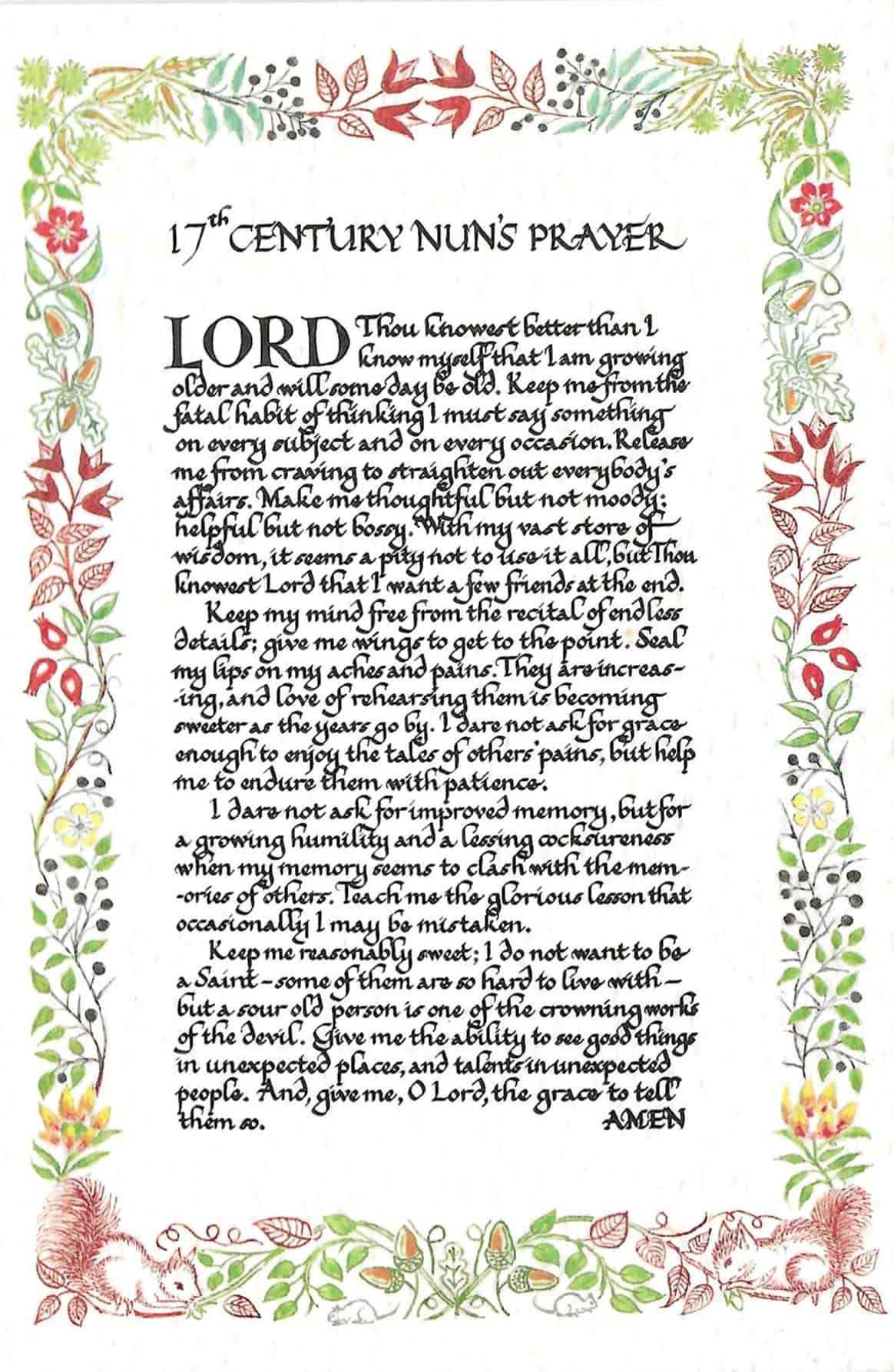
From the glance into the sky, and the plea, “God, Help us!” everyone prays in their own way. One early one comes from the seventeenth century that was prayed by a nun who seems to be less concerned about where her soul will spend eternity than what people think of her in life.
At its core, prayer is an act of communication. It is a way for individuals to connect with a higher power, be it God, Allah, Yahweh, Jehovah, Wahegugu, Brahma, or the universe. This connection often provides a sense of comfort. Prayer can be formal, but also informal and spontaneous. Despite the listener’s name the purpose of prayer remains the same.
Prayers take many forms. Supplication is a common form, where individuals ask for help. For example, someone might pray for health, trusting that their divine source will respond in their time of need. Intercessory prayer involves praying on behalf of others, demonstrating concern for the well-being of family and friends. Thanksgiving prayers acknowledge all blessings and express gratitude for life’s gifts. Confession is a form of prayer that seeks forgiveness.
Many believe that prayer has the power to transform life and time. It can bring peace in turbulent times, provide clarity in decision-making, and strengthen faith. Believers also give prayer credit in providing resilience and finding strength beyond their own limitations. Praying, it is thought, often involves reflection on the present moment and how times change if actions are taken in the spirit of, “God helps them who help themselves.”
Research has shown that prayer can have psychological and physiological benefits. It can reduce stress, lower blood pressure, and promote emotional stability. The sense of community that comes with communal prayer fosters social bonds and shared hope.
Different cultures and religions have unique prayer practices. Christians may pray the Lord’s Prayer or recite psalms, Muslims perform Salah five times daily facing Mecca, Hindus chant mantras or perform pujas, and Buddhists meditate or recite sutras.
When they talk, instead of war with one another, people who participate in interfaith dialogues discover similarities in prayer practices, recognizing that all spiritual traditions are a desire for harmony and understanding. Many spiritual traditions teach patience and trust in divine timing, emphasizing that prayers may be answered in ways that are beyond human understanding. The act of praying itself, regardless of immediate results, cultivates patience, humility, and faith.
The most popular prayers in Christendom are Grace, “Bless us, O Lord, And these Thy gifts, Which we are about to receive, Through Christ our Lord we pray. Amen.” And the bedtime or sleepy time prayer: “Now I lay me down to sleep.”
Prayers on postcards remind us that all sorts of people in the two dozen time zones pray.
***
Below are a few postcards they may have sent home to family or friends …
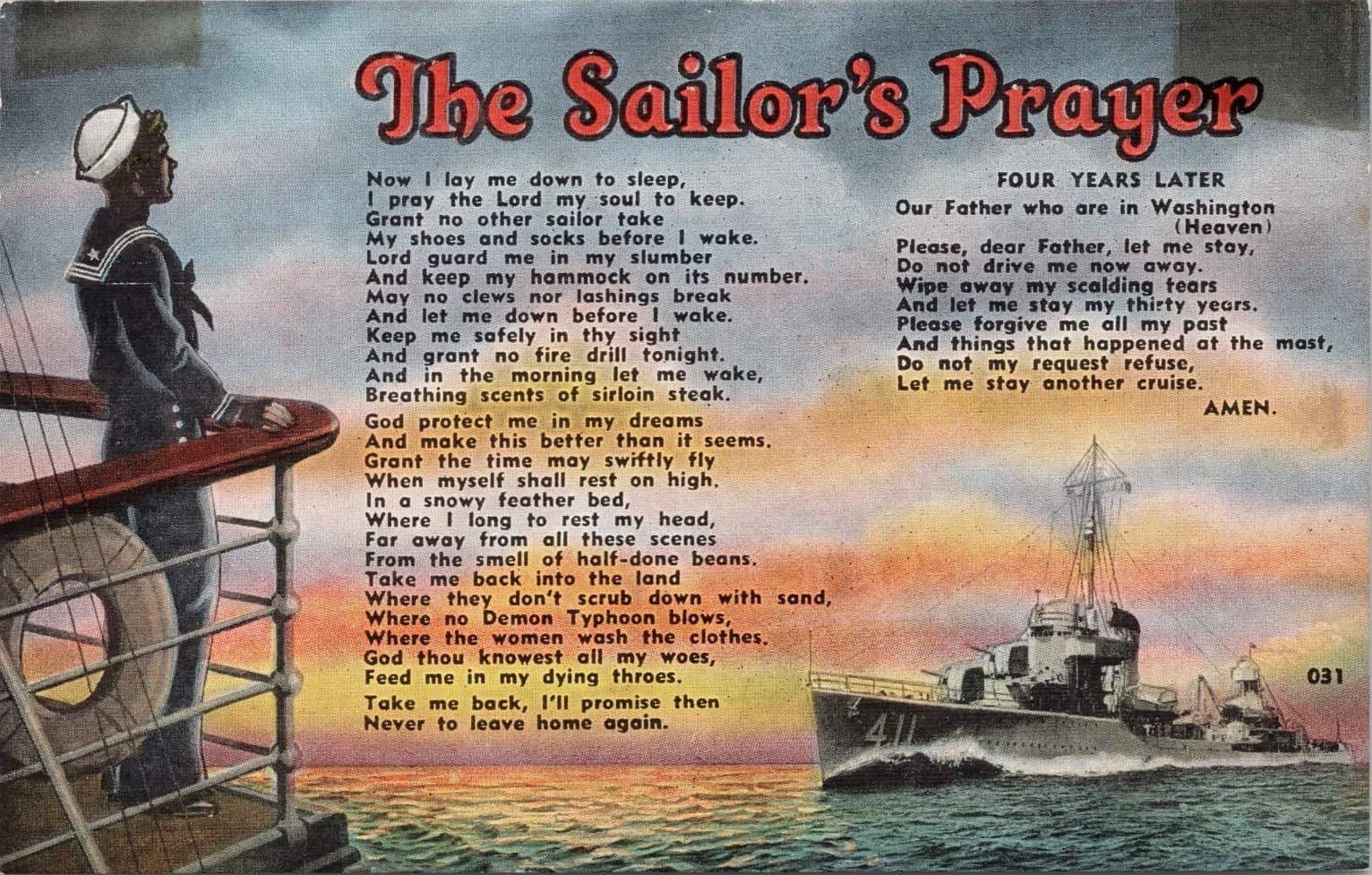
Sailors pray a lot. Seven variations of this prayer have been found
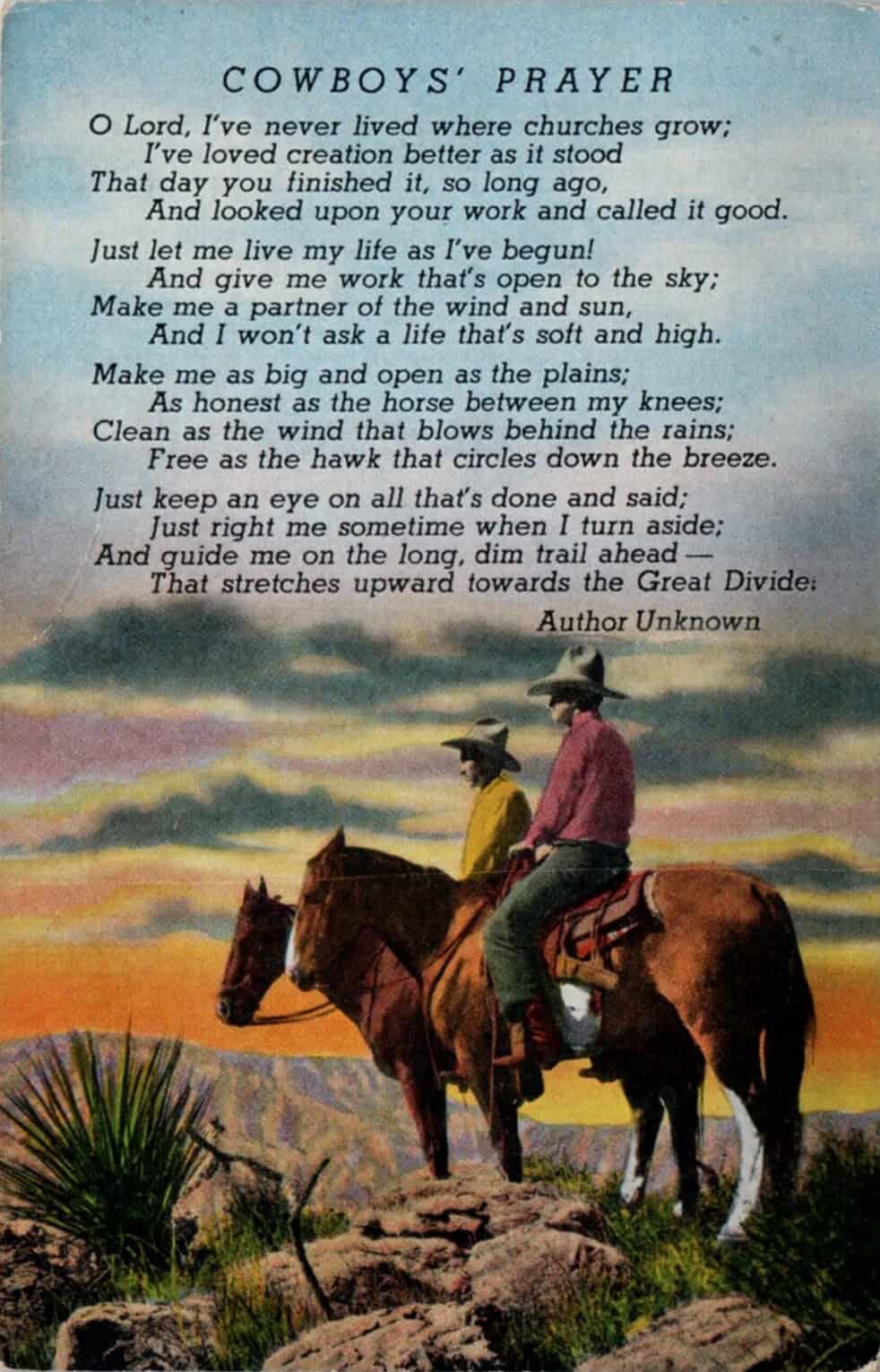
Cowboys pray a lot too! Nine variations have been found.
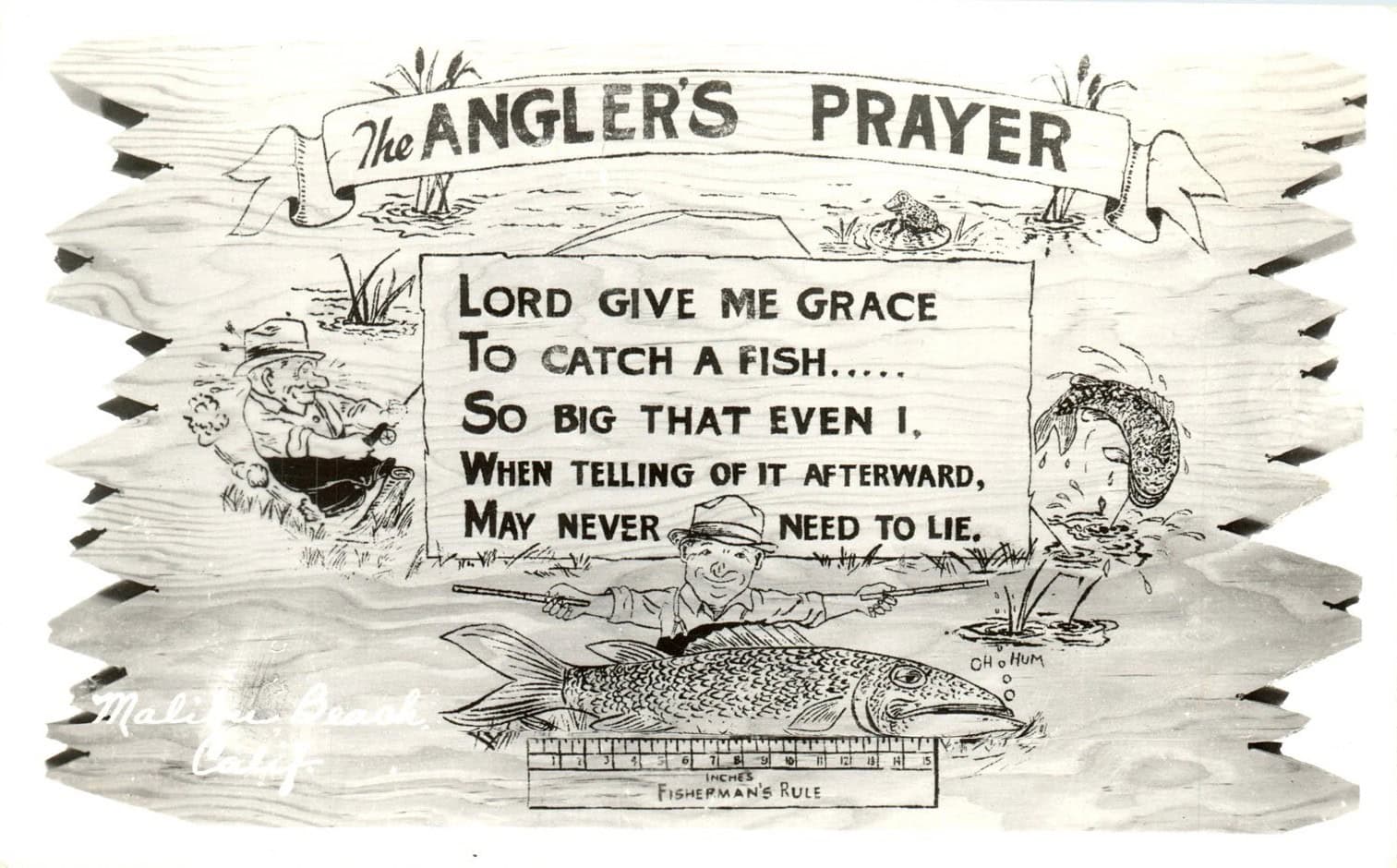
Fishermen pray, but perhaps not as often. Three similar cards exist.
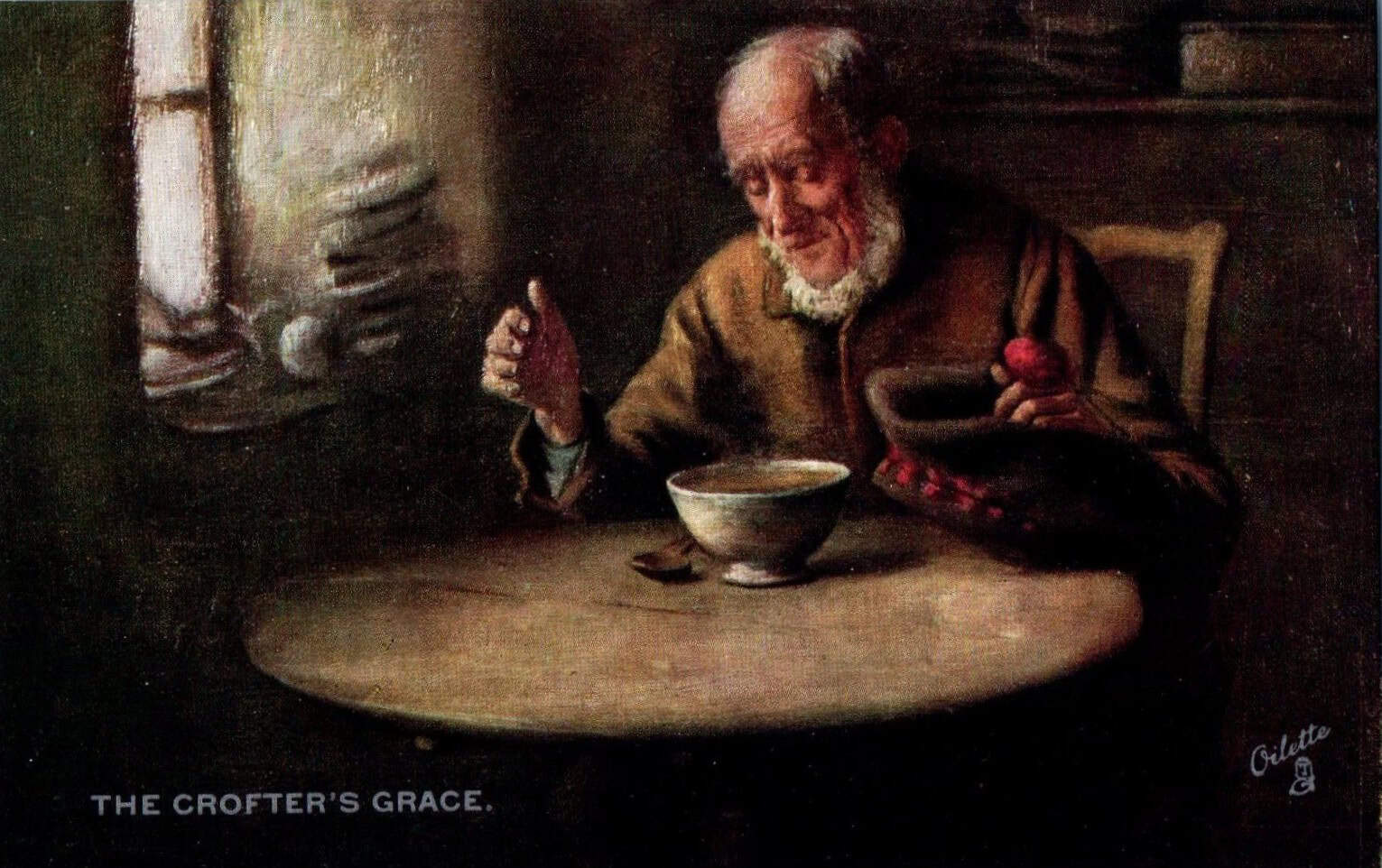
Farmers pray (quite often for rain) and in Scotland “crofters” pray
for strength to endure hardship.
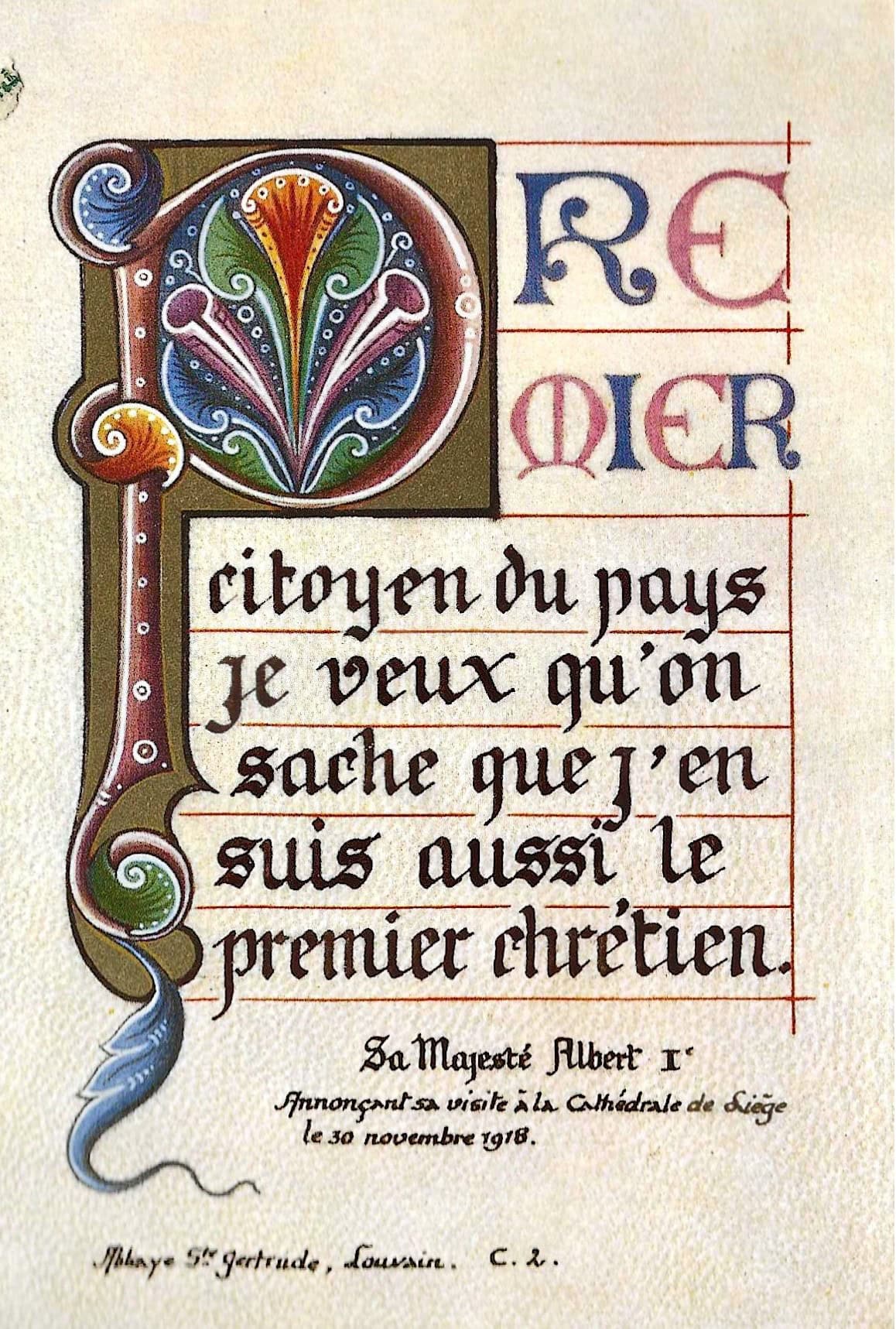
Even King’s pray. As His Majesty Albert I did on November 30,
1918 when he visited the cathedral at Liege.
King Albert uttered the words, “Premier citoyen du pays je veux qu’on sache que J’en suis aussi le premier chretien.” [As the first citizen of the country, I want it to be known that I am also its first Christian.]
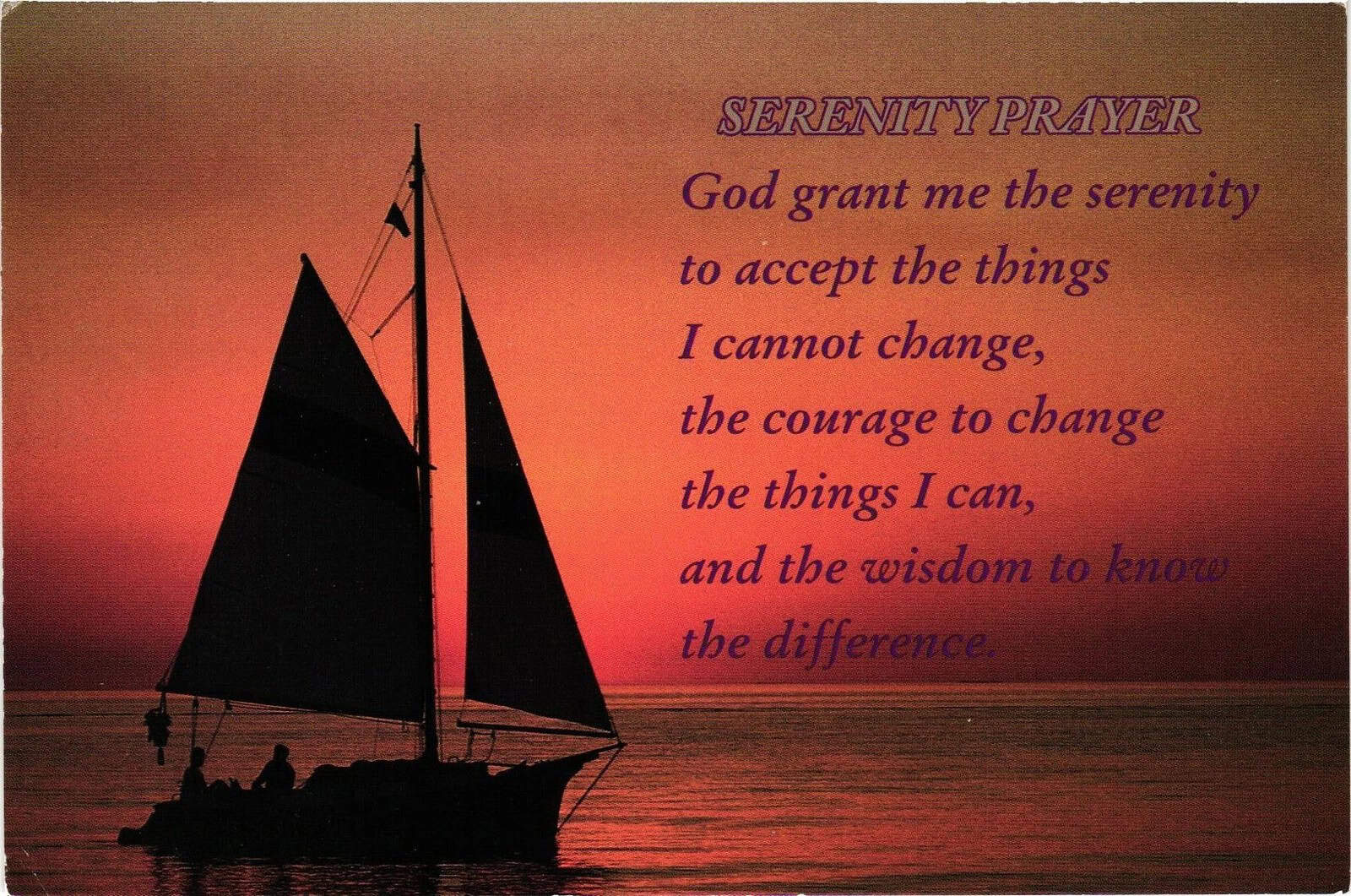
Who among us hasn’t had the urge to recite the words of this “Serenity Prayer?”