The Cat and the Fiddle is the name of three (maybe four) English pubs, at least two American restaurants, and two bookstores, as well as a violin repair shop in Lancaster, England, circa 1890. It is also the name of a very successful Broadway musical by Jerome Kern and Otto Harbach.
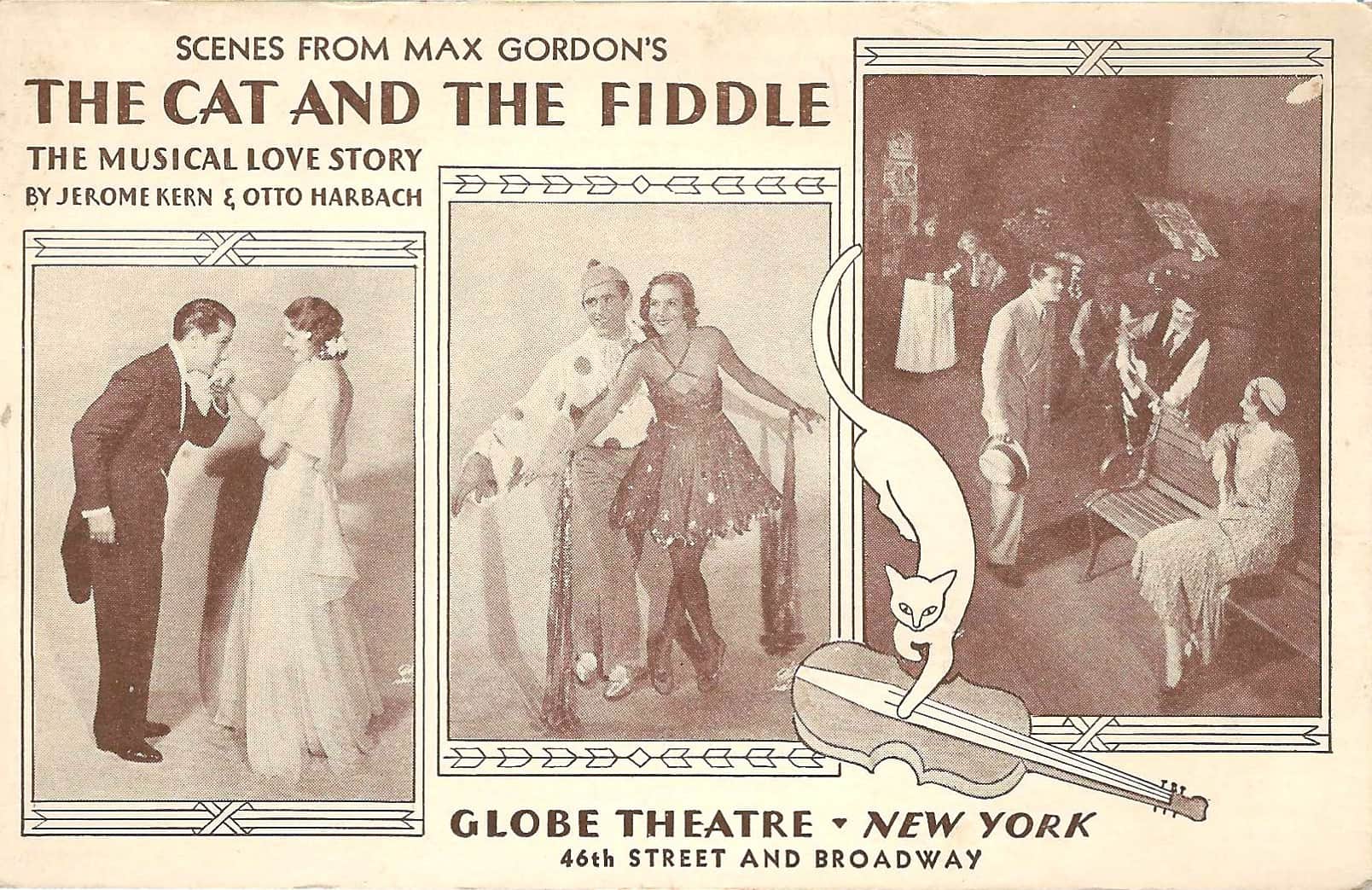
In fact, The Cat and the Fiddle was an effort on Kern’s part to fuse art and romance on the stage of the Globe Theatre in the middle of the Great Depression. (The production opened on October 15, 1931, and ran for 395 performances during that economically strained era, which emphasizes its significance with audiences of the time.)
At its core, The Cat and the Fiddle is a narrative about artistic contrast. The plot follows an American composer whose sensibilities are rooted in the accessible, commercial world of popular music, and a Romanian composer devoted to the discipline and prestige of classical composition. This cultural and musical contrast forms the backbone of the story.
Rather than presenting one tradition as superior, Kern and Harbach craft a narrative that celebrates the strengths of both. The characters’ romantic relationship becomes a metaphor for the blending of musical forms, suggesting that innovation arises when differing artistic worlds collide.
Its success led to a 1932 West End (London) production and a 1934 film adaptation starring Jeanette MacDonald and Ramon Novarro.
Beyond its narrative and musical achievements, The Cat and the Fiddle fills a place in Kern’s career. Known for works such as Show Boat, Kern was instrumental in shaping the modern American musical by integrating story and song better than anyone before him. In The Cat and the Fiddle, he continued the use of music not merely as entertainment but as a structural force. The two-act format, its European settings, and its emphasis on character-driven musical expression are part of the composer’s attempt to elevate the theatre musical.
Ultimately, The Cat and the Fiddle is a work about harmony: musical, cultural, and emotional.
***
The phrase comes from a century old nursery rhyme that was once illustrated by the notable Randolph Caldecott and later by other English illustrators such as Arthur Rackham and John Tenniel.
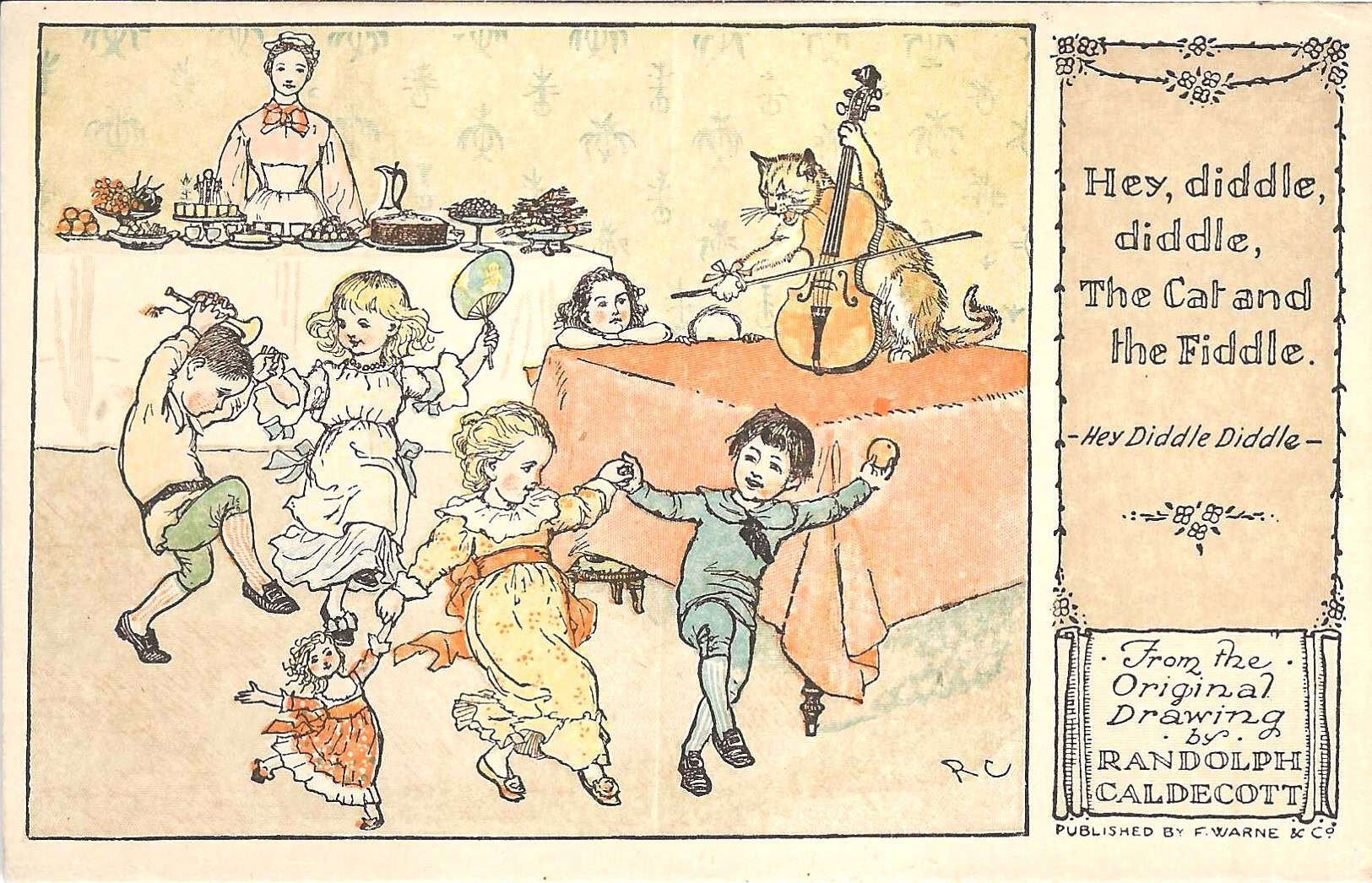
The rhyme, Hey, Diddle, Diddle, opens by asking for your attention, “Hey, diddle, diddle.” (Are you ready for some excitement and delight?). It then introduces the six characters: a cat, a fiddle, a cow and the moon, along with a dish and a spoon who are about to set off doing the most outlandish things that are witnessed by a dog.
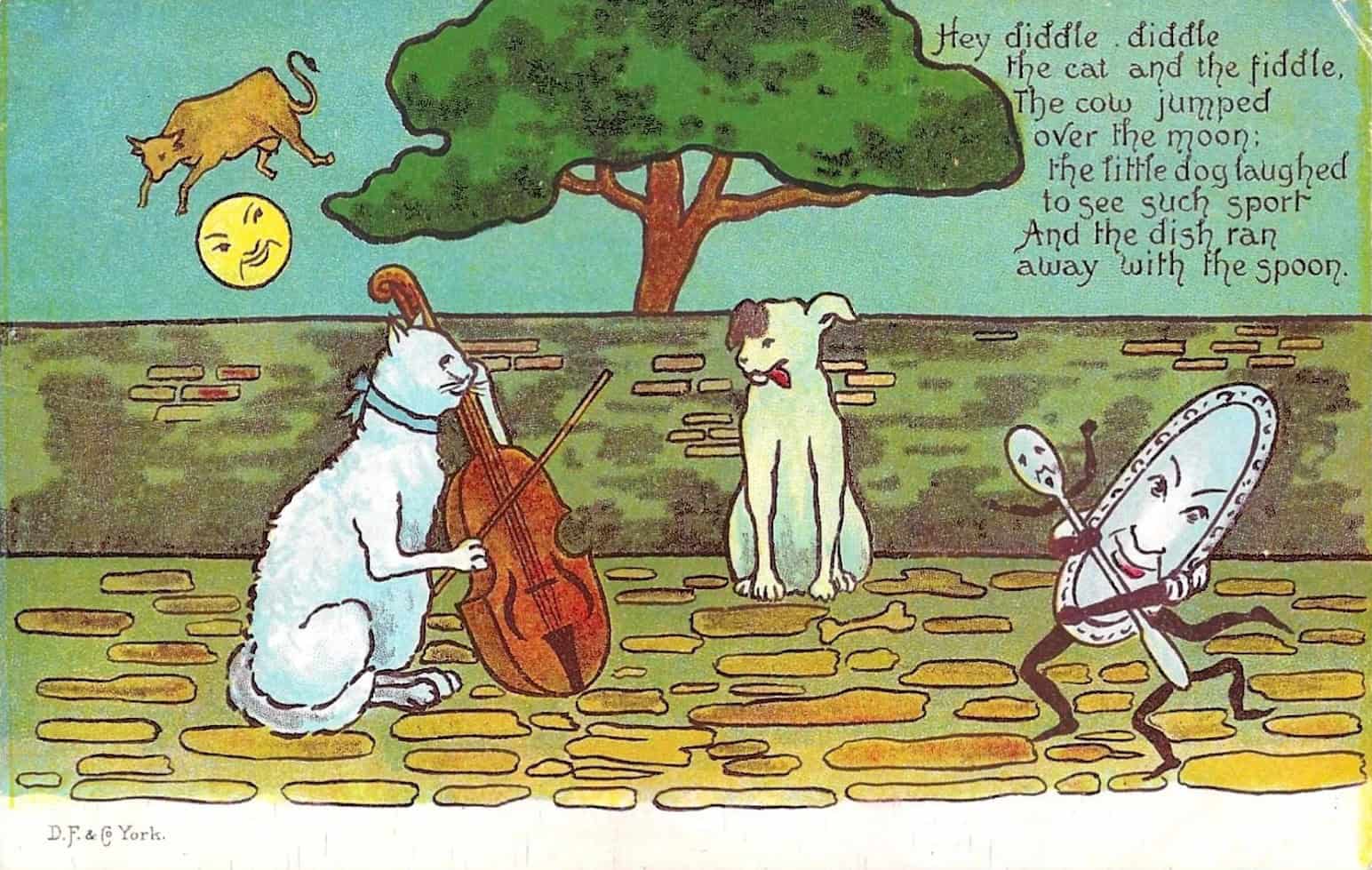
This famous English nursery rhyme that was first printed in the eighteenth century and then became overtly popular with young and old in the nineteenth century, had its origins much further back into medieval European art that often depicted cats playing fiddles.
Some theories suggest the verse could even echo real historical disputes, such as a sixteenth century Yorkshire tale involving a Prior or Abbot named Moone who was known for his homilies that blended nonsense with the familiar. Over time, “the cat and the fiddle” became a cultural shorthand for the rhyme’s joyous absurdity.
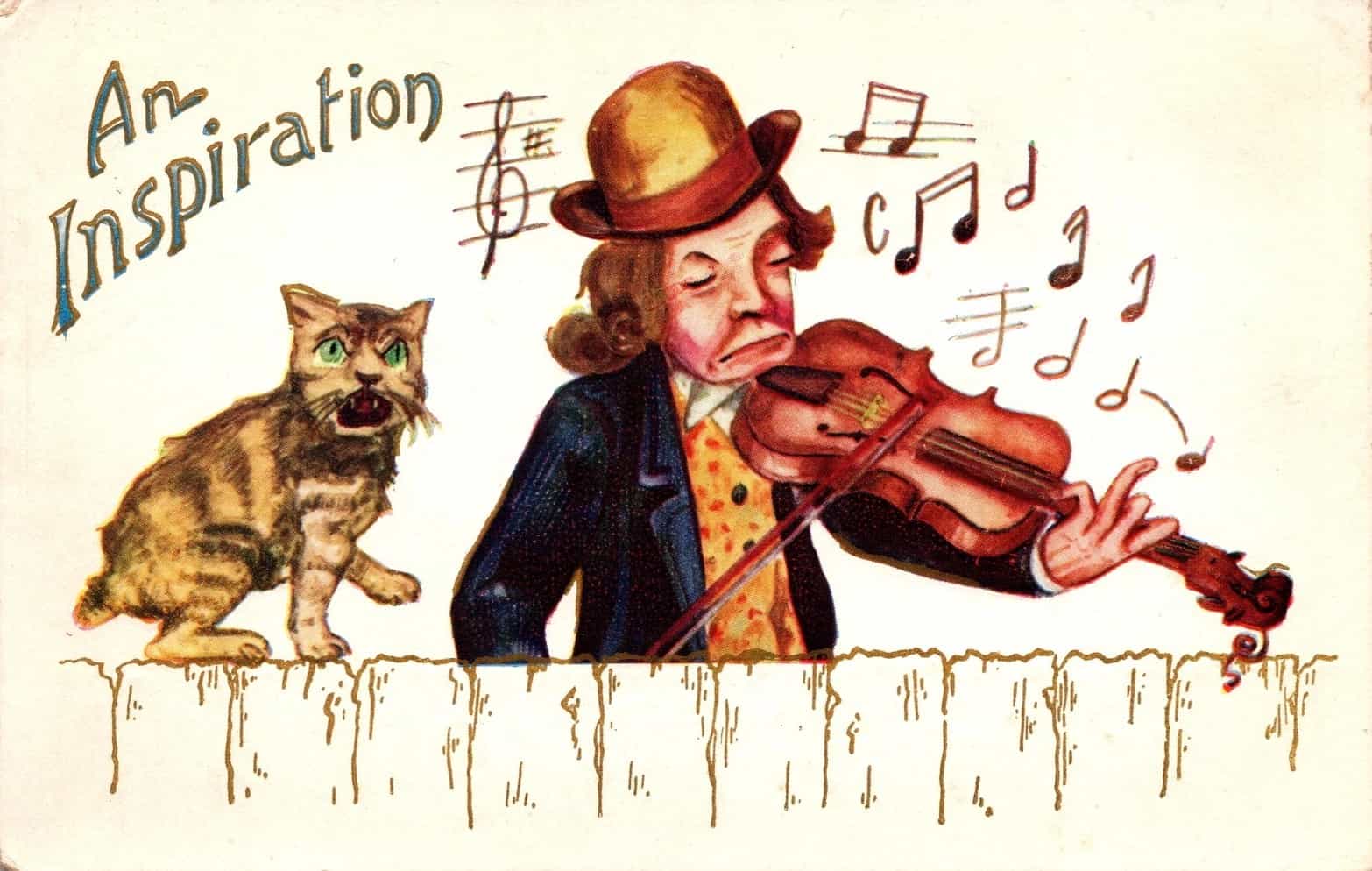
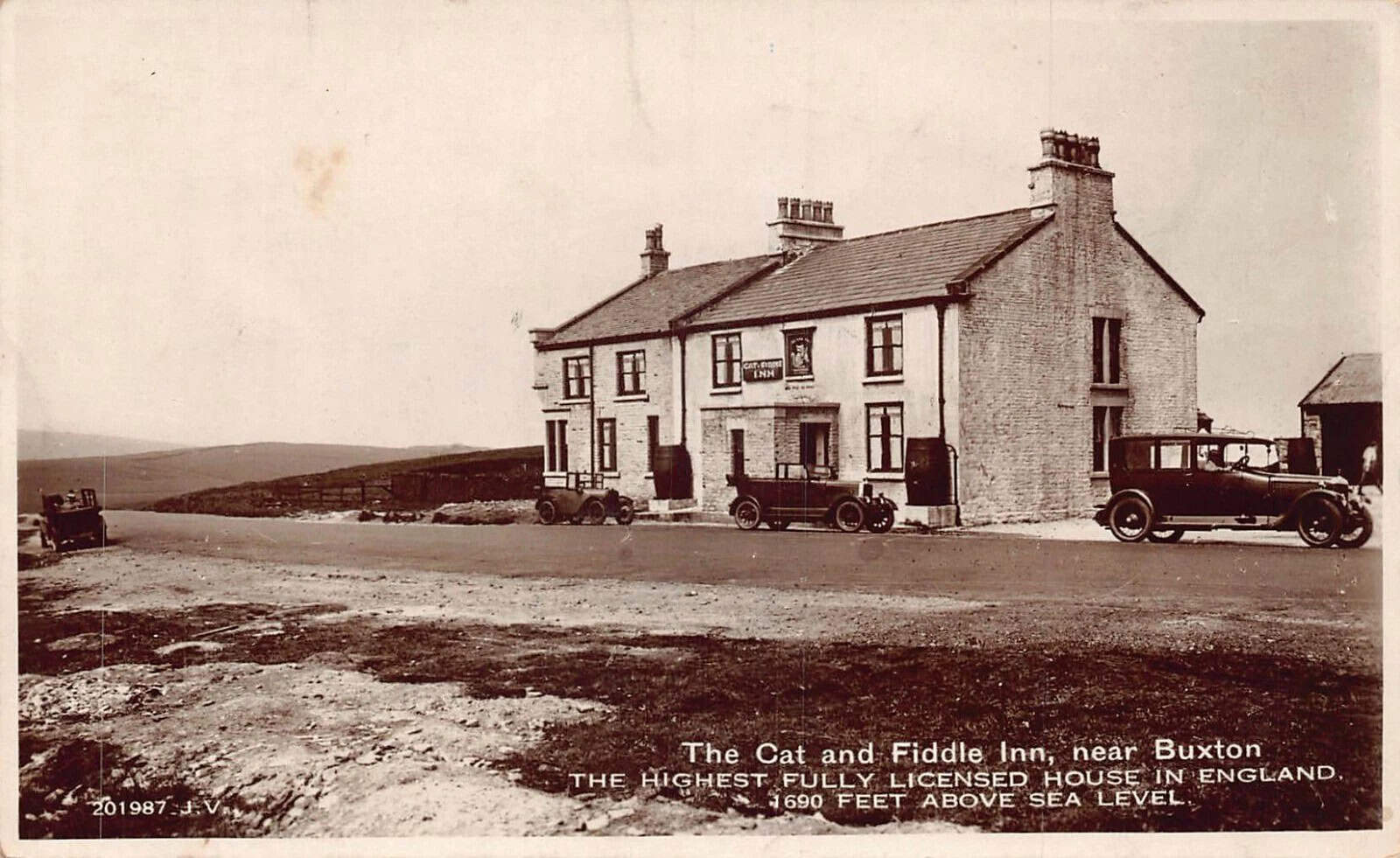
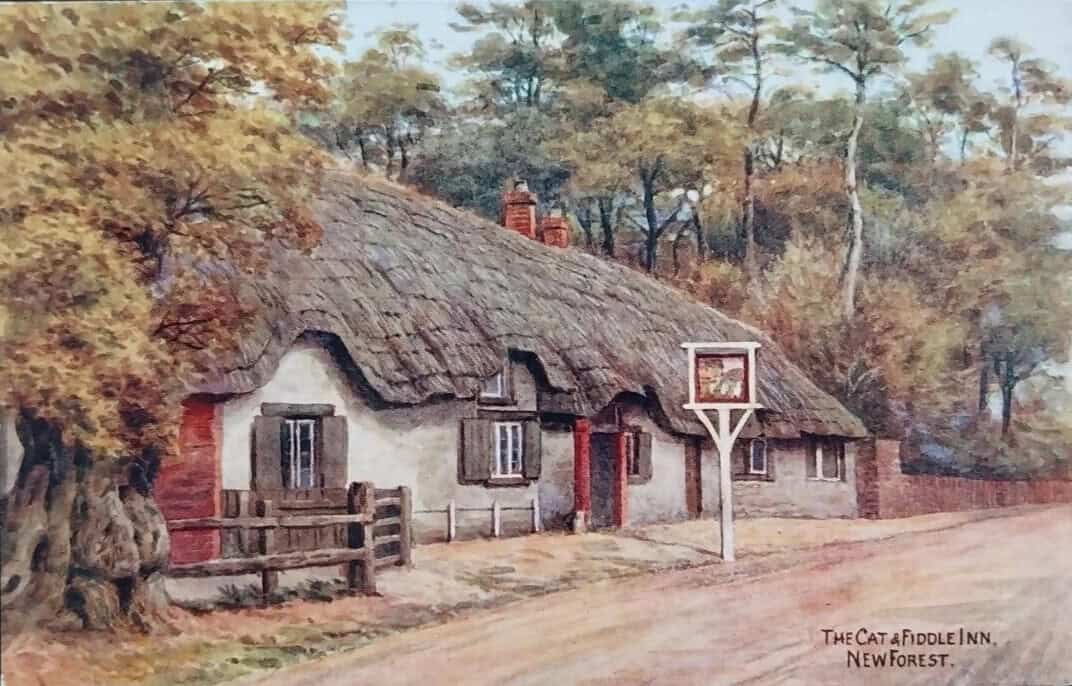
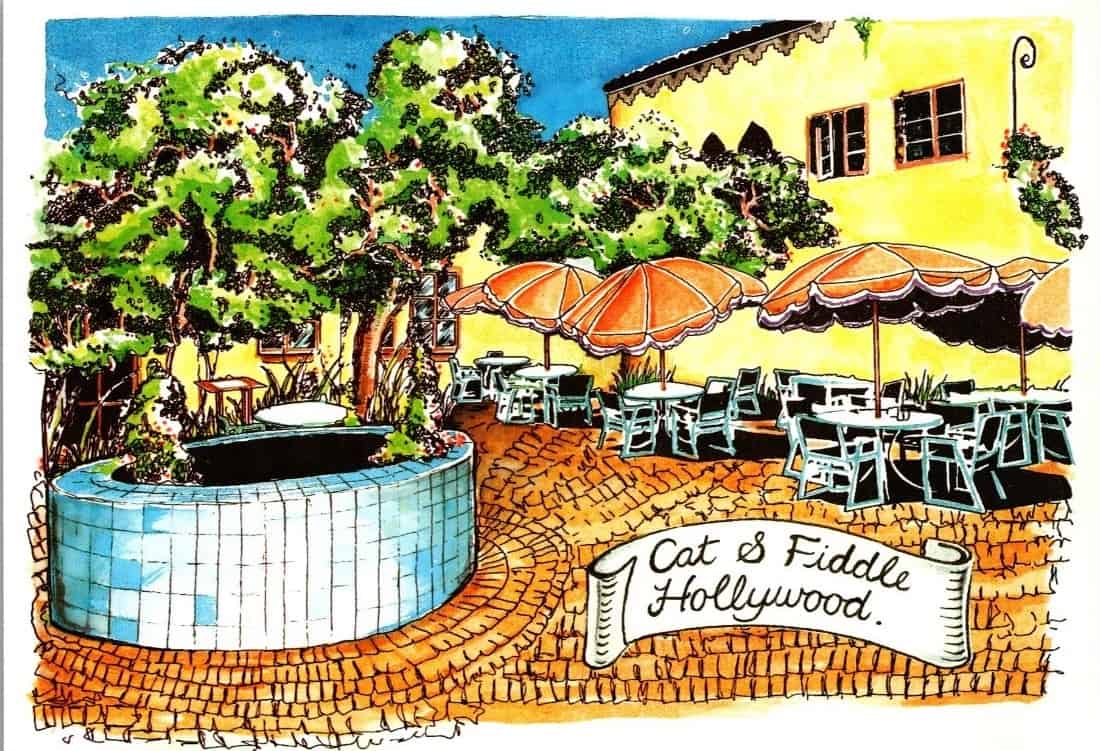
(Serves afternoon tea on Saturdays and Sundays since 1982.)
It has been nearly twenty years since the warm summer night my husband’s parents treated us to dinner at The Cat & Fiddle in Hollywood. The place had the feel of a city where charm and comfort blends with history. The courtyard had a relaxed atmosphere that made you feel like Hollywood royalty, but not one face was familiar.
The menu featured British pub classics (the Beef Wellington was sensational) complimented by California wines. The service imitated the attention offered in London pubs and ale houses. After dinner we lingered but were never rushed. It was the kind of vacation experience that is real and welcoming.
I like that you threw in your personal experience at the Cat and Fiddle Restaurant in Hollywood. Great postcard too.