The N. S. Savannah was built to demonstrate a peaceful use of atomic energy during the Eisenhower Administration’s Atoms for Peace Program. Built by New York Shipbuilding in Camden, New Jersey, Savannah was ordered in 1955. With the wave of an “atomic wand” her keel was laid by Patricia Nixon, wife of Vice President Richard Nixon, on Maritime Day, May 22, 1958. When the wand, with a small amount of radioactive material, activated the clicking noise of a Geiger counter, a crane operator was cued to swing the first keel section into place.
Launched on July 21, 1959, First Lady Mamie Eisenhower broke a bottle of champagne on her bow. Construction costs were $46,900,000 ($18,600,000 for the ship, and $28,300,000 for the nuclear core). Installation of her nuclear reactor took another 2 ½ years.
The N. S. Savannah was named for the SS Savannah, the first steamship to cross the Atlantic. On May 22, 1819, the SS Savannah began a three-week journey across the Atlantic. It was unable to secure passengers and cargo for the voyage since the public was afraid of her boilers exploding.
The Savannah was equipped with sails and used its boilers for eighty hours before exhausting its coal supply. Unable to make a profit, the ship was converted to sails only when it returned to the United States and was broken up after running aground on Long Island on November 5, 1821. A model of the SS Savannah graced her namesake’s dining room.
In March 1962, N. S. Savannah sailed from New Jersey to Yorktown, Virginia using her auxiliary oil-fired engine. On March 23, 1962, Savannah’s reactor started, and she commenced her sea trials under nuclear power off the Virginia Capes. Savannah passed with flying colors. Using only thirty-five pounds of uranium, Savannah could sail 100,000 nautical miles at 20 knots before needing to be refueled. Designed for a top speed of twenty-one knots, during her trials Savannah’s reactor produced more energy than expected and she achieved twenty-four knots.
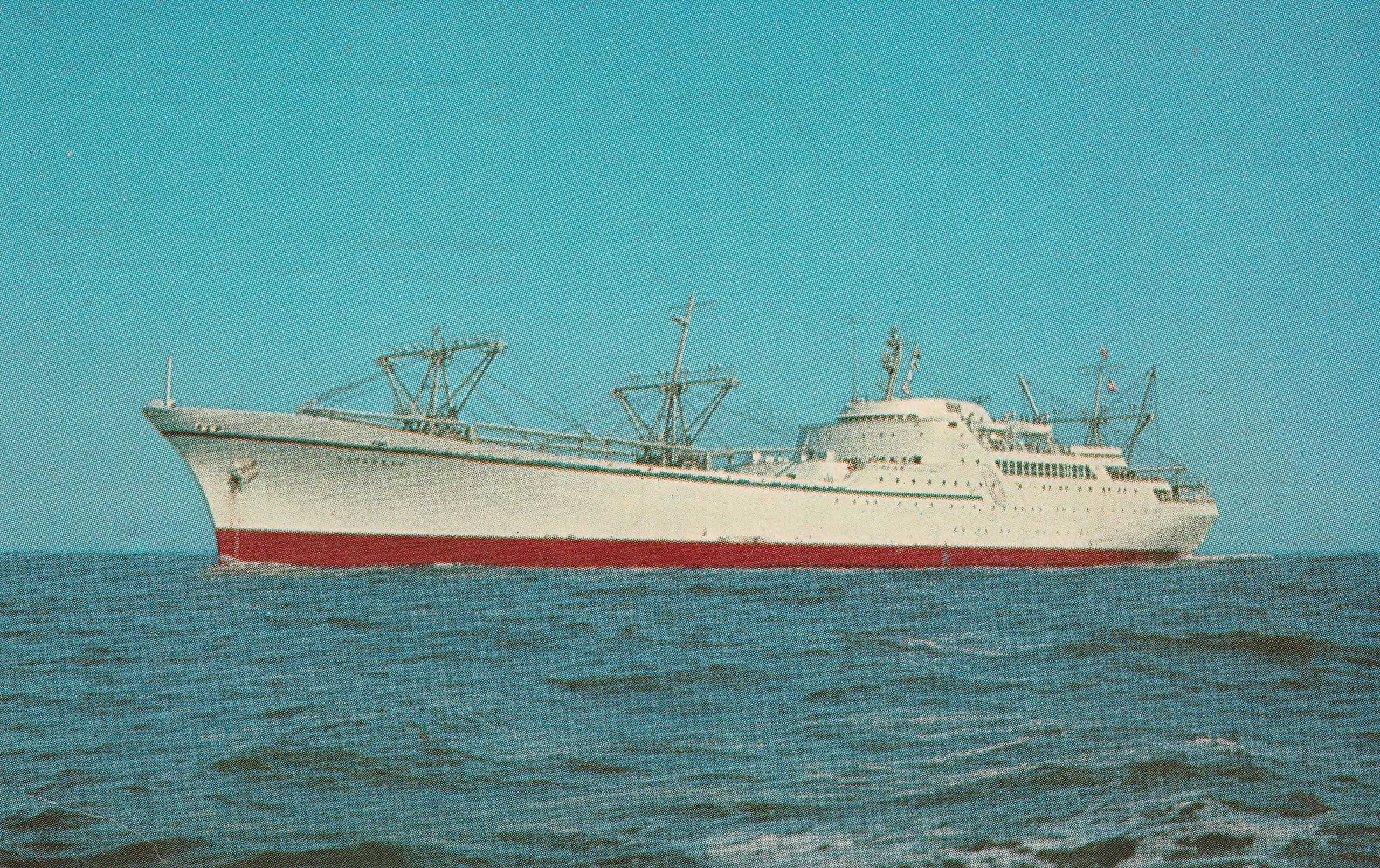
luxury yacht than a cargo vessel. Her white paint proclaimed the cleanliness of nuclear power.
Savannah measures 596 feet 6 inches in length and 78 feet in beam, with a loaded draft of 29 feet 6 inches, and a loaded displacement of 21,800 short tons. Her seven cargo holds were designed to carry 14,090 tons of cargo.
The crew of 124, numbered 27 in the deck department, 35 in the engineering department, 49 stewards, and 13 others in various support functions (including one senior nuclear advisor and three health physics monitors).
Designed as a passenger-cargo liner, there were thirty air-conditioned passenger cabins each with a bath that accommodated sixty passengers. Passenger amenities included a swimming pool, a library, a lounge with a dance floor that doubled as a movie theater, beauty salon and barber shop, and a 75-seat dining room. Passenger cabins and public spaces were decorated with mid-century modern furnishings and colors.
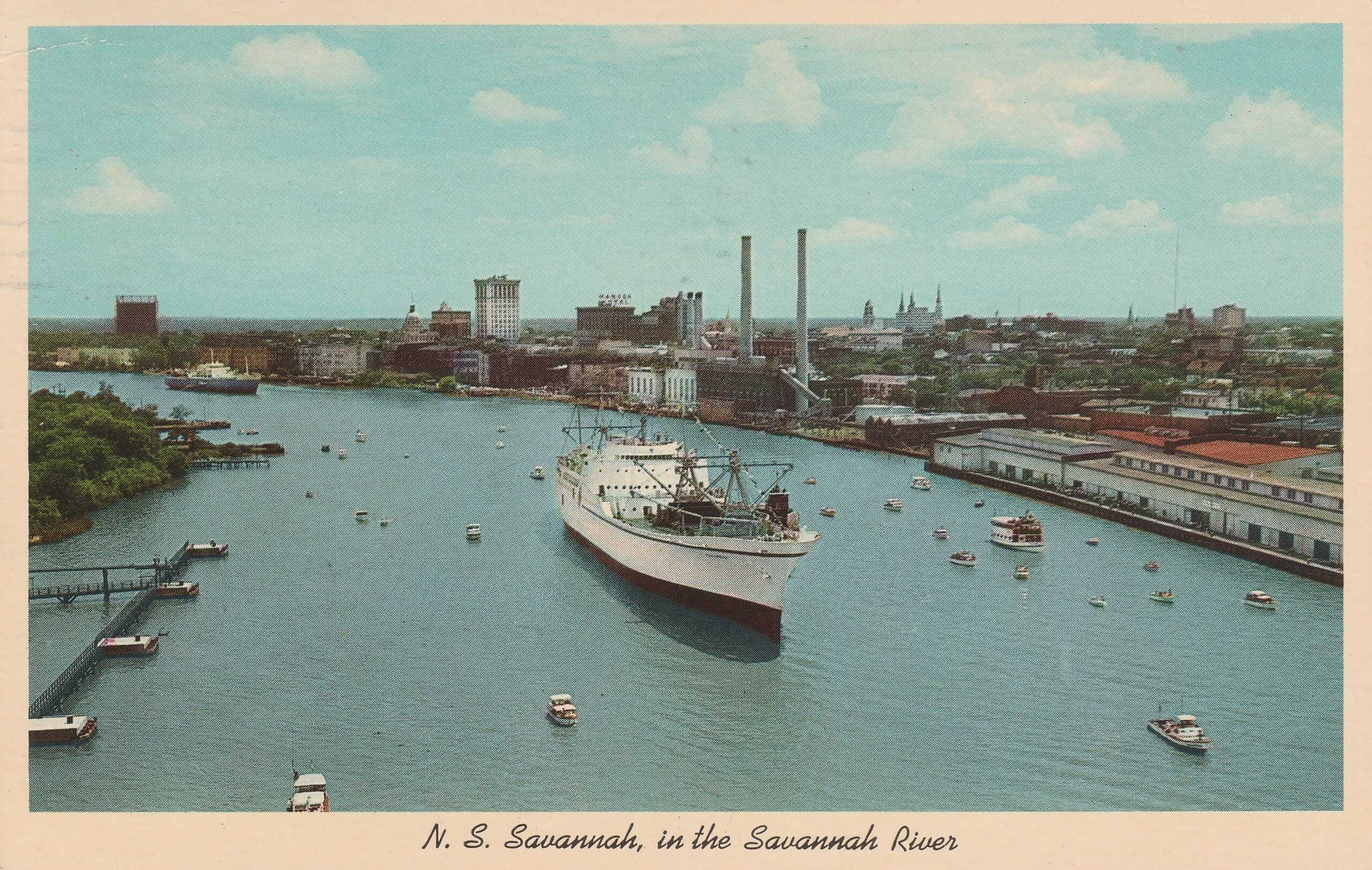
when she sailed up the Savannah River in August 1962.
During her maiden voyage that commenced on August 20, 1962, from Norfolk, Virginia, Savannah’s first stop was her namesake city of Savannah, Georgia. She then sailed through the Panama Canal visiting Hawaii and ports on the West Coast. Savannah then spent three weeks at Century 21 Exposition in Seattle. It was estimated that 1.5 million visitors toured the ship that summer.
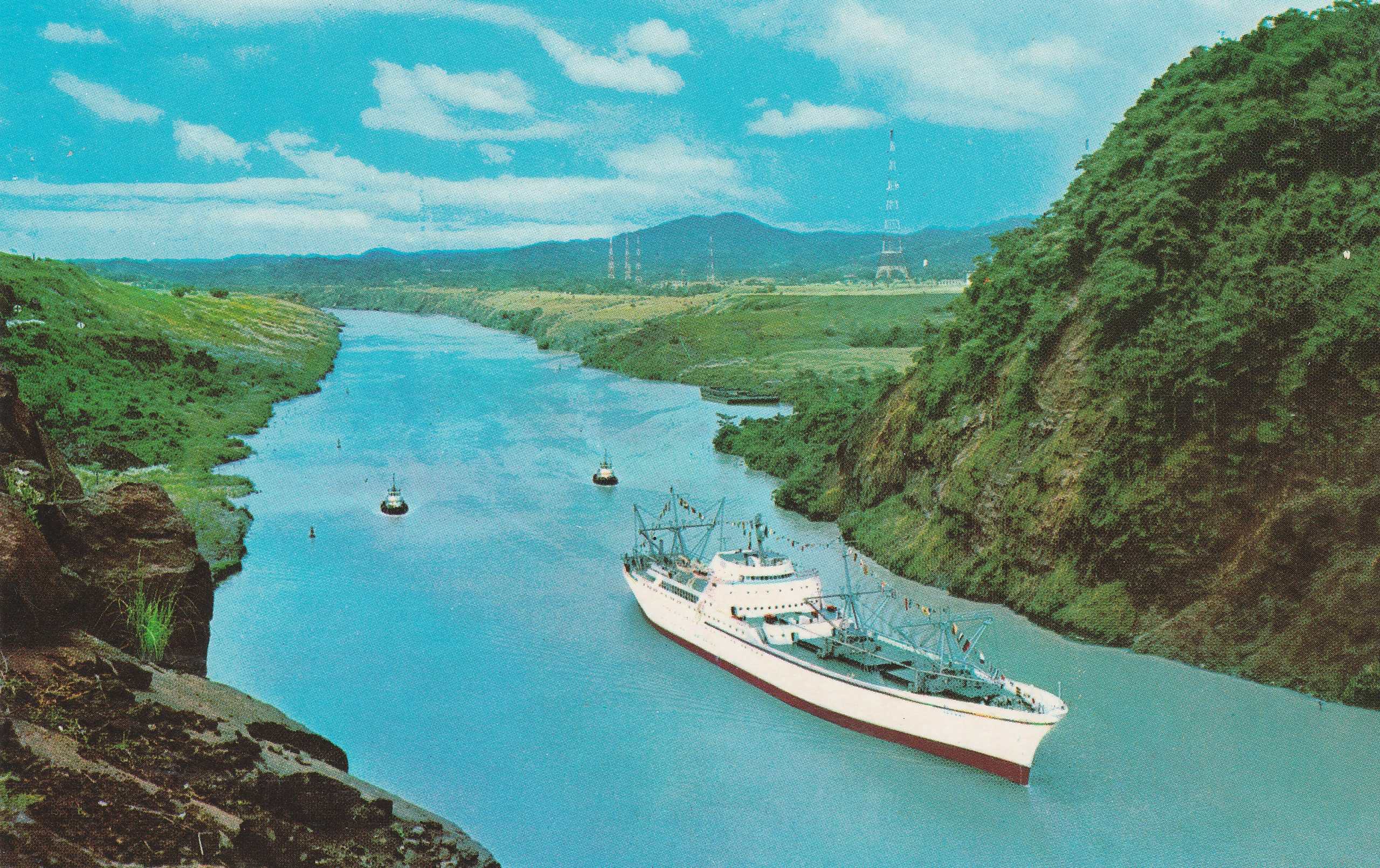
Savannah’s service as a passenger-cargo liner ended in 1965. She only carried 840 passengers before being converted to carrying only cargo. She delivered her last load of cargo in 1971 and was retired due to high operating costs, particularly the cost of the specially trained crew needed to operate the reactor.
Her sleek hull limited her cargo capacity compared to other freighters of the era. In addition, container ships that first came into service in the mid-1950s, revolutionized shipping. Break-bulk ships like Savannah could not compete with the highly efficient container ships. Containerization has reduced shipping time by 84% and overall costs by 35%. Today more than 90% of world trade in non-bulk goods is transported in containers.
During her brief career, Savannah traveled 454,675 nautical miles, stopping in forty-five foreign and thirty-two domestic ports. She used 163 pounds of uranium. If Savannah had been oil-fired, she would have burned nearly twenty-nine million gallons of fuel.
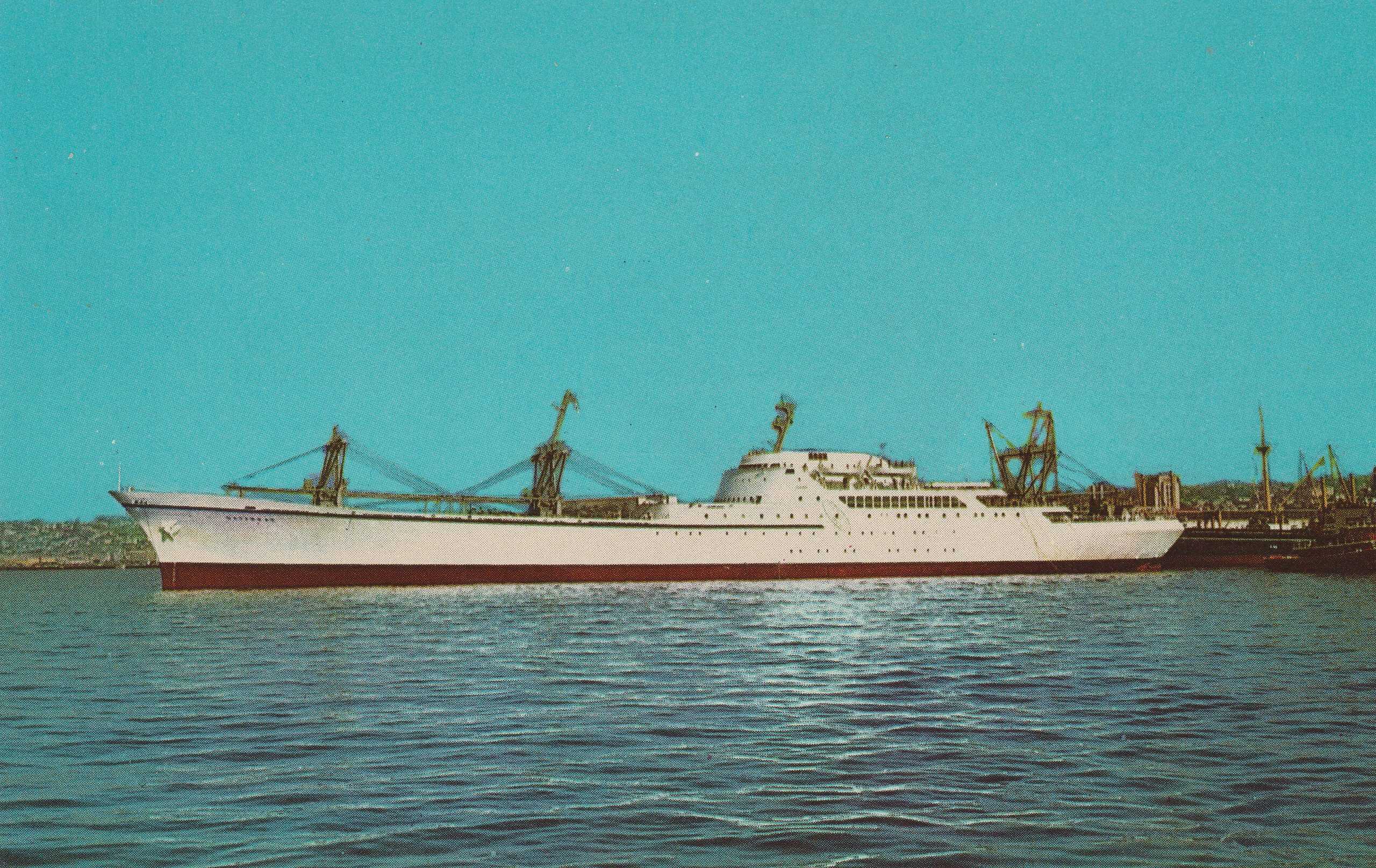
Savannah has not fared well in retirement. She was first moored in Savannah and later Galveston, Texas, but was not open to visitors. Savannah was a museum ship at Patriots Point in Charleston, South Carolina from 1981 until 1994, but drew fewer visitors than the adjacent aircraft carrier Yorktown.
After repairs in Baltimore, Savannah was moored with the James River Reserve Fleet in Newport News from 1994 until 2006. After undergoing repairs for several months at Colonna’s Shipyard in Norfolk, she was moored in downtown Newport News from 2007 through 2008. In May 2008, Savannah was towed to Baltimore where she remains to this day. Still owed by the U. S. Maritime Administration, Savannah is open periodically for tours by the N. S. Savannah Association, the nonprofit group trying to raise the funds necessary to restore and reopen the Savannah as a museum.
The Savannah stopped at the Todd Shipyard in Galveston, Texas in early 1963 for repairs and system checks. My late father was a physician in the United States Public Health Service that provided medical care for members of the Merchant Marine, and my brothers and I were privileged to tour the Savannah with him. That tour started my lifelong fascination with ships.
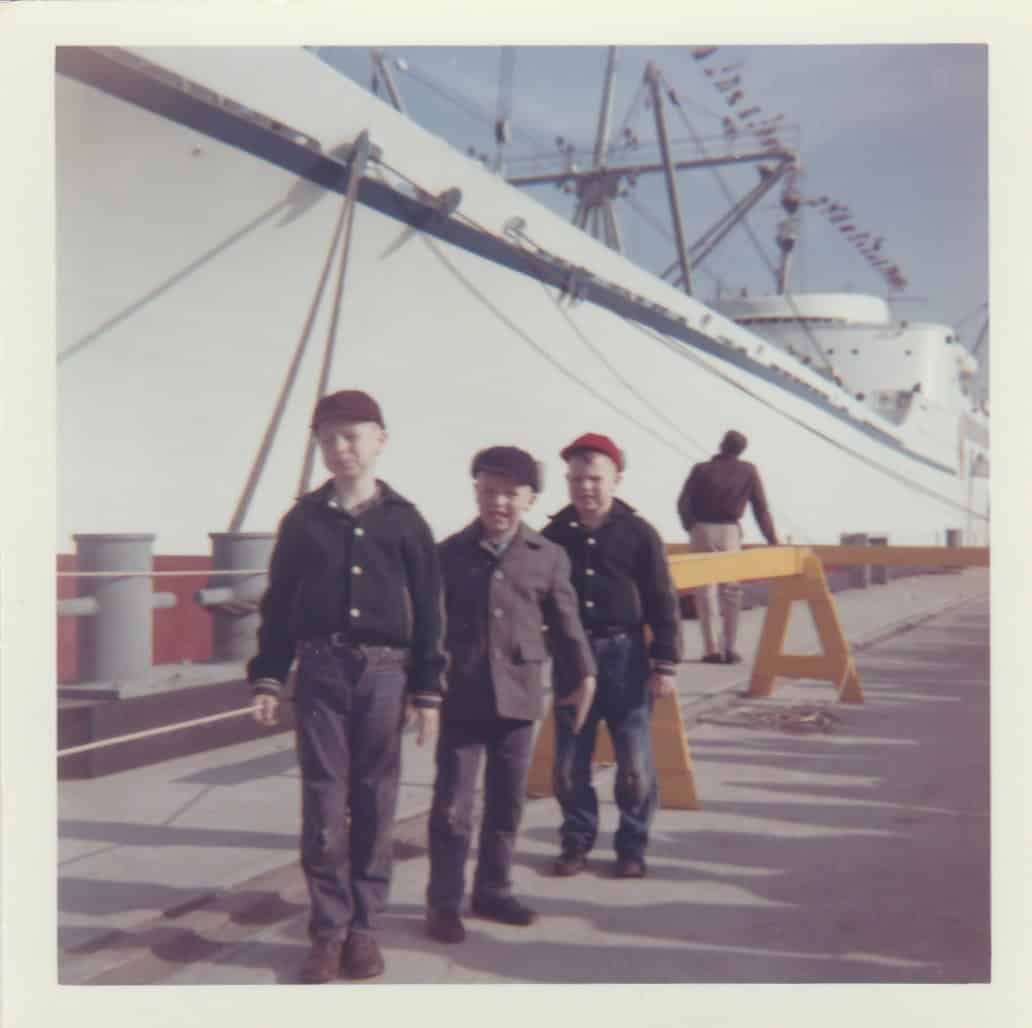
of the Savanah in 1963 at the Todd Shipyard in Galveston, Texas.
Enjoyed reading this article as my Parents and I went on board her while she was in dock at Southampton,England inthe early 1960`s. We were holidaying in Southsea near Portsmouth at the time. I also have a postcard of her in an album.
Thank you for this informative article.
Thanks for the great article that filled in the gaps in my history of this famous ship.