Spanish explorer Juan Ponce de León led the first European expedition to Florida in 1513. He may have landed in the vicinity of present-day St. Augustine, but the records of his voyage are sketchy. The expedition mapped the Atlantic coast down to the Florida Keys and then north along the Gulf Coast. His voyage began the myth of his search for a Fountain of Youth although the myth did not develop until decades after his death. In March 1521, he returned to southwest Florida and attempted to establish a colony on the southwest coast. However, the Native American Calusa people who controlled the area attacked the Spanish forcing them to abandon the colony. During the skirmish, Ponce de León was mortally wounded by a poisoned arrow.
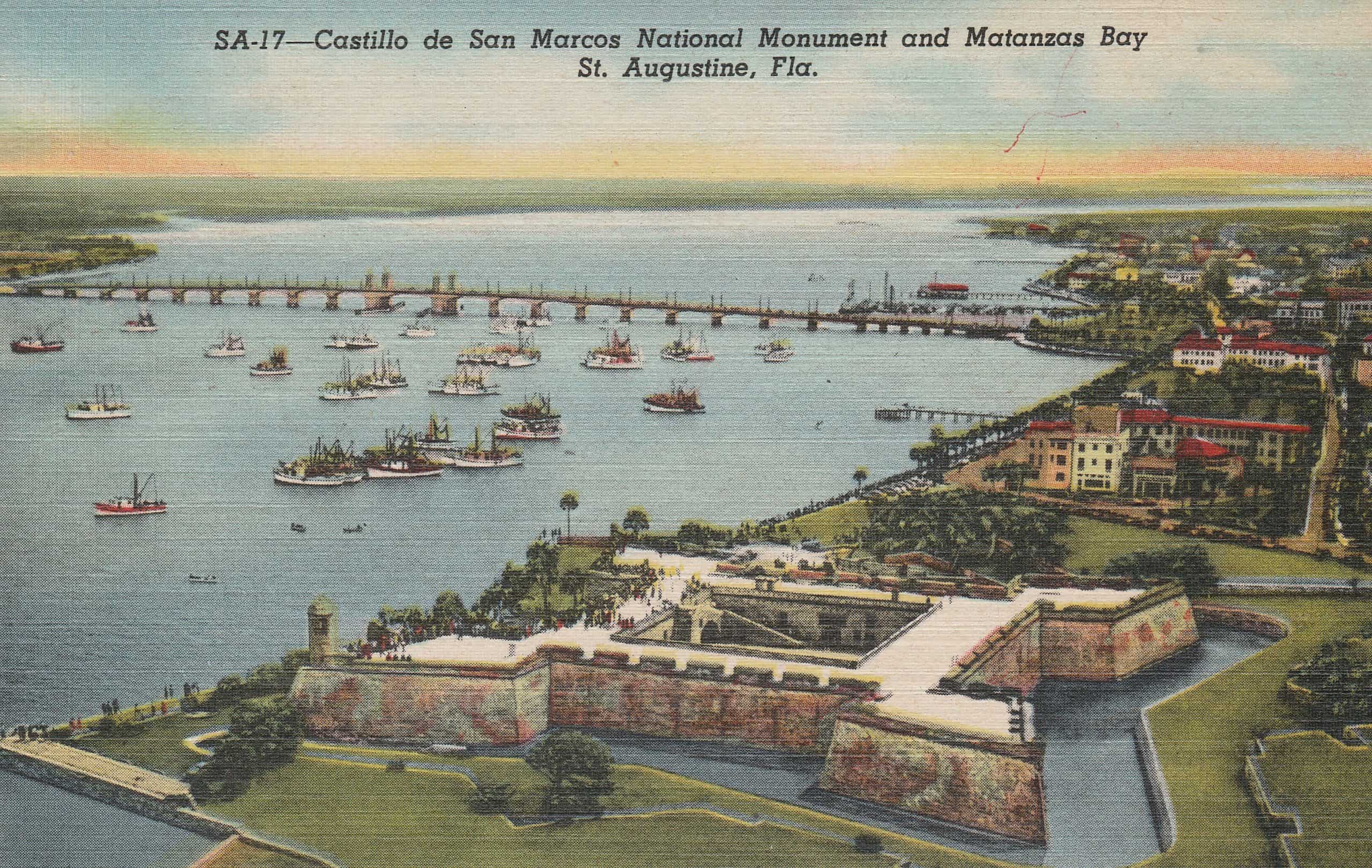
Located on the northeastern Atlantic coast of Florida, the settlement of St. Augustine was founded in 1565 by Spanish admiral and explorer, Pedro Menéndez de Avilés. It is the oldest, European-established settlement in the United States. St. Augustine served as the capital of the Spanish colony until Spain ceded Florida to the U. S. in 1819. It remained a co-capital of Florida with Tallahassee until 1824.
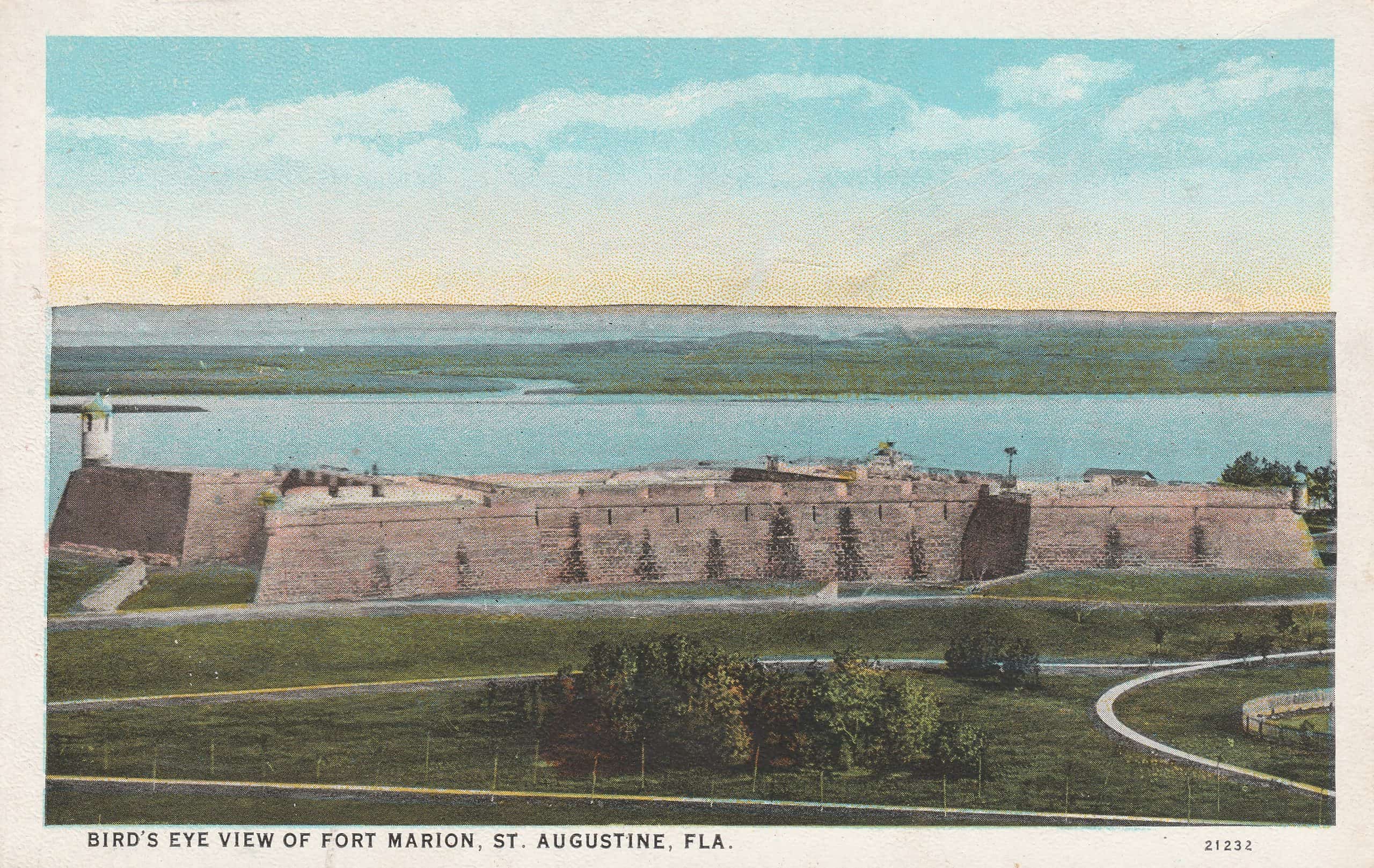
Built by the Spanish between 1672 and 1695, the Castillo de San Marcos is located on the western shore of Matanzas Bay. The Castillo was attacked several times by the British and under siege twice, but the British failed to capture it. When the United States took control of Florida, the Castillo de San Marcos was renamed Fort Marion in honor of the Revolutionary War hero, Francis Marion, the Swamp Fox. During the Civil War, the fortress was occupied by the Confederacy in January 1861. The Union had evacuated the fortress leaving one soldier behind as a caretaker. In March 1862, the Union recaptured Fort Marion when the Confederates departed in advance of the Union fleet. In 1942, by Act of Congress, the fort reverted to its original name, Castillo de San Marcos. Today it is part of the historic district that reflects St. Augustine’s Spanish past.
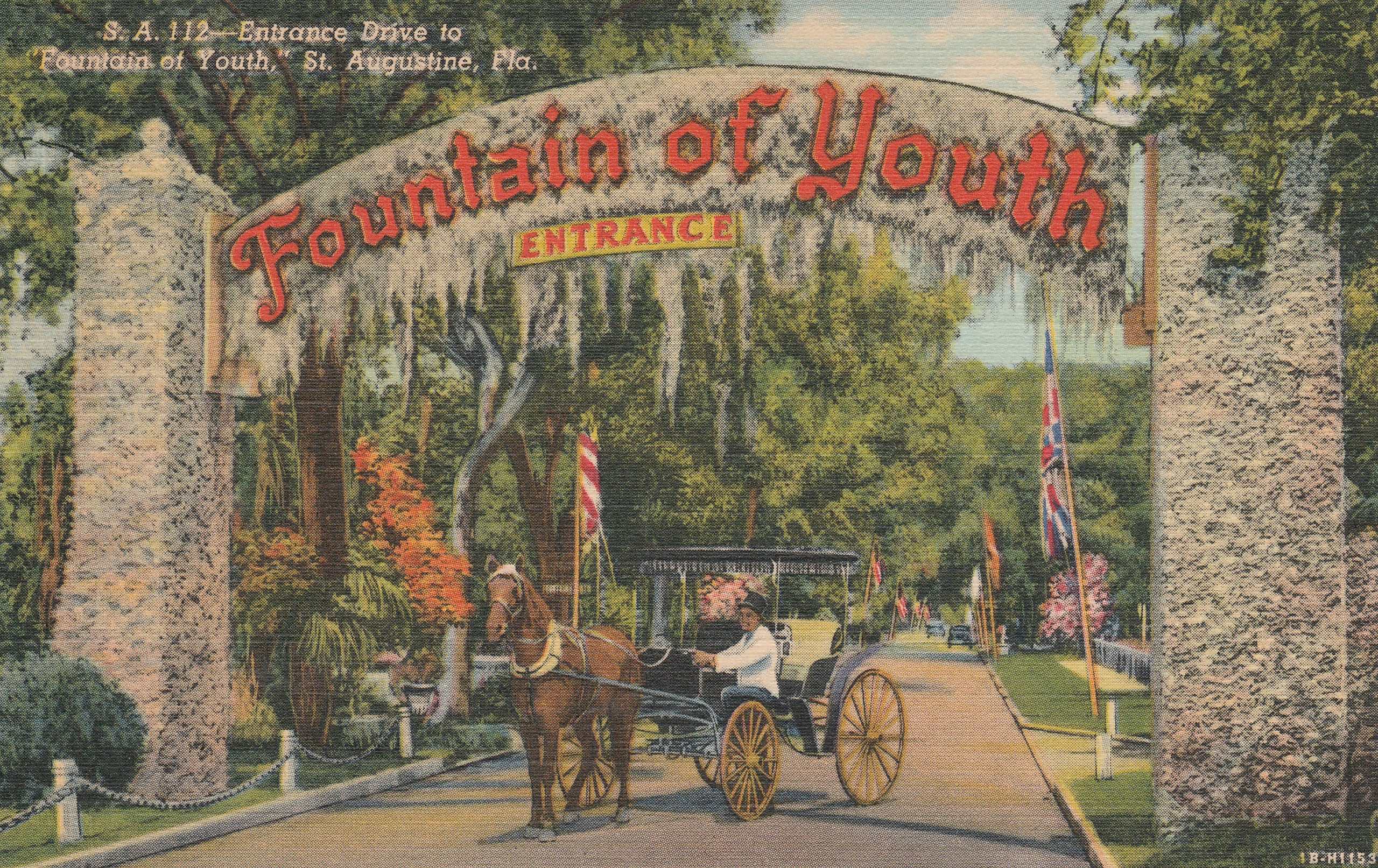
The Fountain of Youth Archaeological Park is located where Juan Ponce de León was purported to have landed in 1513 however there is no historical or archeological evidence to support the claim. The site first became a tourist attraction in the 1860s and in 1904, the park’s new owner began embroidering the myth to make it one of Florida’s most popular tourist destinations.
Archaeological digs that began in 1934 established the park as the site of Pedro Menéndez de Avilés 1565 settlement and the Mission Nombre de Dios founded in 1587. Today the park accurately reflects the historical record with a nod to the myth of Ponce de León.
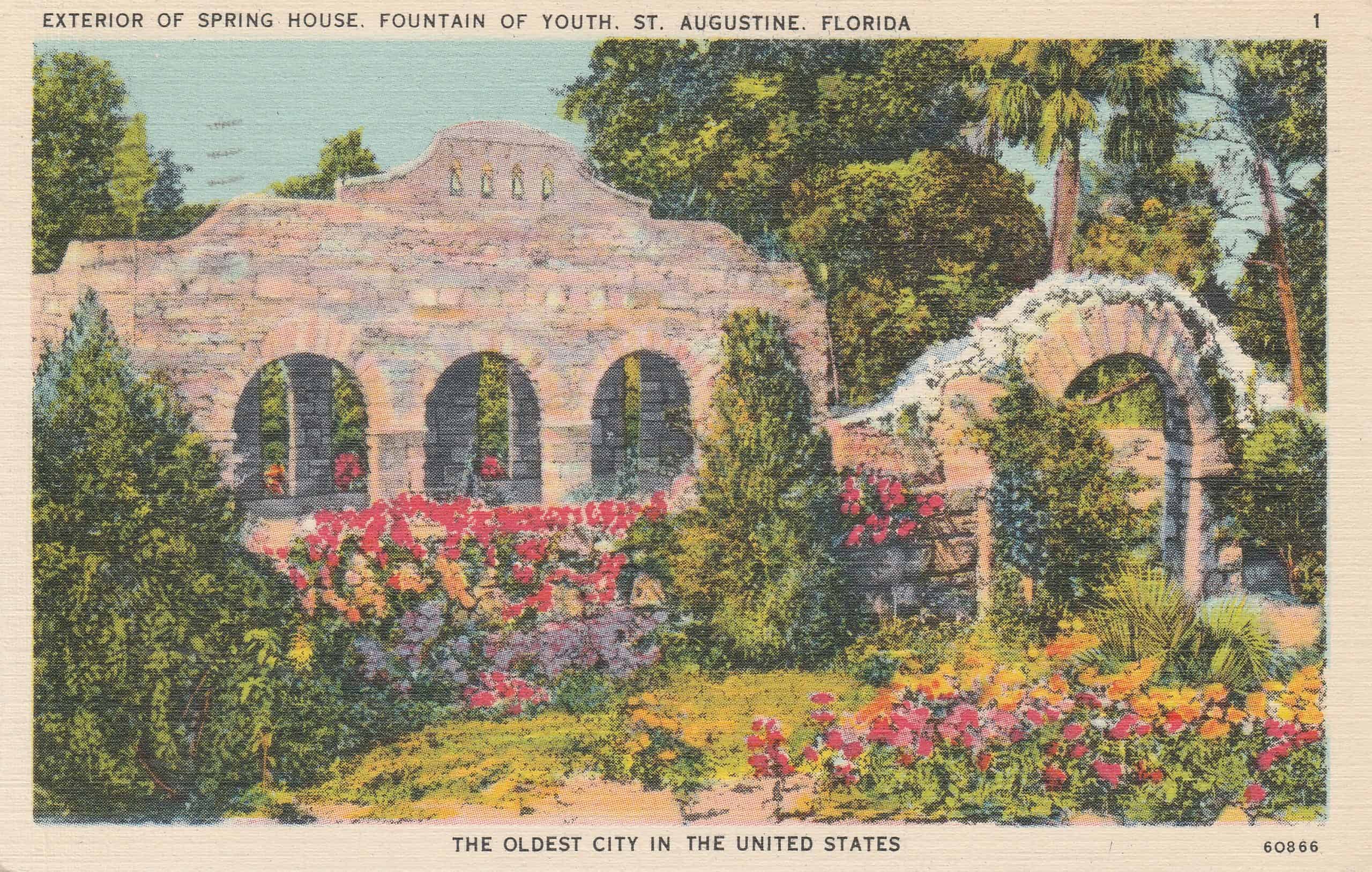
The Fountain of Youth [water] comes directly from the Floridan aquifer, which lies underneath much of North Florida. Tourists can take a sip from Juan Ponce de Leon’s Spring of Eternal Hope whether they believe the myth or not.
Henry M. Flagler (1830 – 1913), a founder of Standard Oil with his partner John D. Rockefeller, was instrumental in the development of Florida’s east coast as a winter tourist destination. His visionary development of Florida’s hotel and transportation facilities would occupy the Gilded Age entrepreneur until his death in 1913.
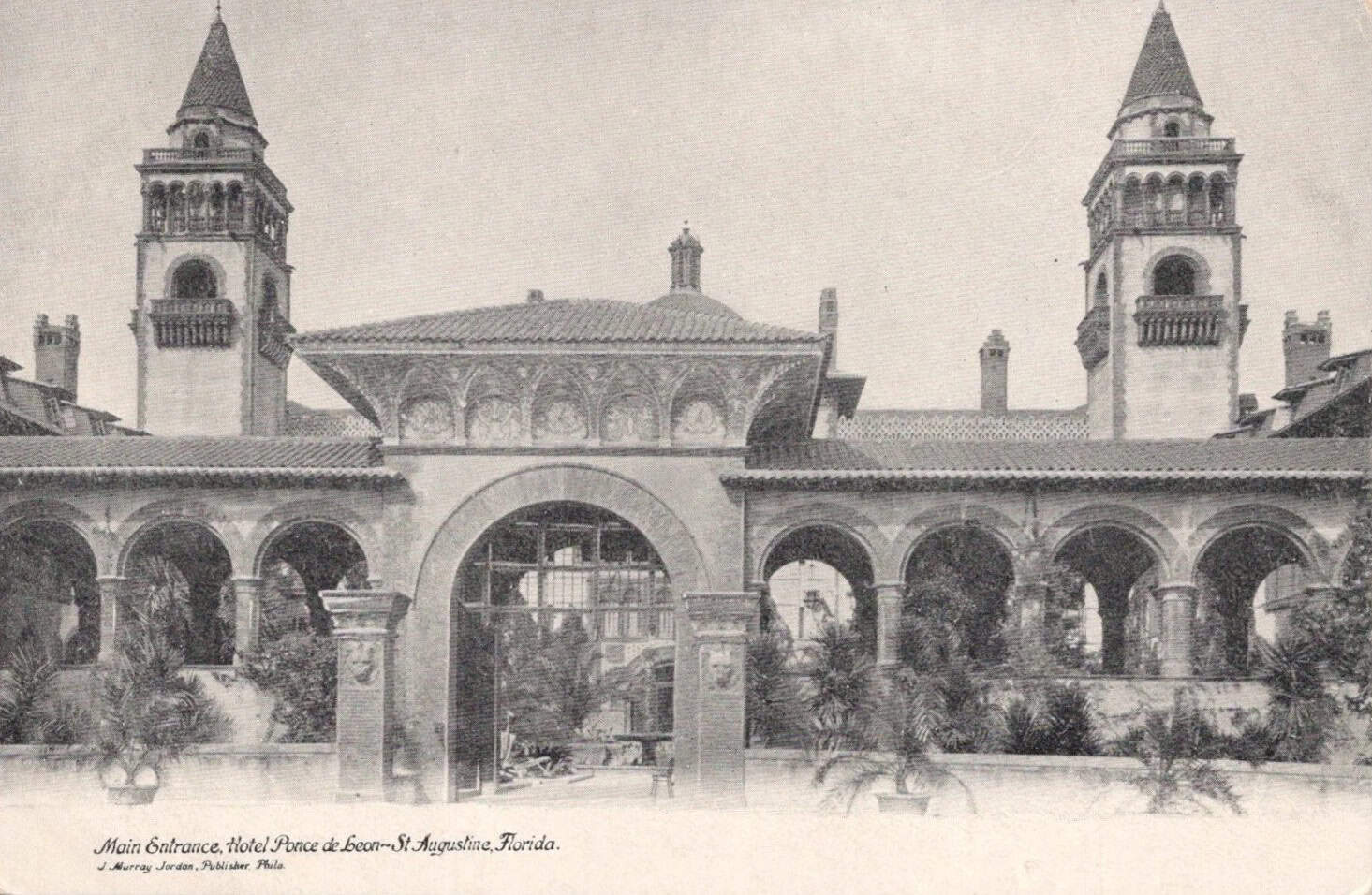
The Ponce de Leon was one of the first buildings in the world built of poured concrete. Flagler’s friend Thomas Edison supplied the equipment to make the Ponce de Leon one of the first buildings constructed with internal electrical wiring. Electricity was so new that the hotel employed staff to turn lights on and off for any guest who feared being shocked by the switches.
The exterior of the Ponce de Leon Hotel was designed in the Spanish Revival style, and its interior was richly decorated. Its dining room featured several large Tiffany windows. Walls of the public rooms featured murals by prominent artist George W. Maynard. Ceilings had canvases of angels by Italian artist Virgilio Tojetti. Furnishings were manufactured in New York City and shipped to Florida. Outside, the grounds were richly landscaped.
In his quest to create a “Riviera” on the eastern seaboard of the United States and to house overflow bookings from the Ponce de Leon, in 1889 Flagler built the Alcazar Hotel across the street. For this he commissioned Carrère and Hastings of New York, the acclaimed architects responsible for Ponce de Leon Hotel, to design the Alcazar. Also of poured concrete, the Alcazar Hotel building is an original architectural style composite of Spanish Renaissance mingled with adaptations borrowed from Moorish buildings in Spain. The facade bears great resemblance to Sevilla’s famed Alcazar, royal palace of kings.
At four stories tall, the Alcazar originally had three hundred guest rooms. Later the room count fell to 170 rooms when all the rooms were equipped with private baths. Outside were lush tropical gardens, tennis courts, and a lawn for croquet.
In the south section of the building were located Turkish and Russian baths and Swedish massage services. The natural artesian water was obtained from a free flowing well located on the property. It was touted to have medicinal benefits. Adjoining the baths was the magnificent four-story casino. At the time of its construction, it had the largest indoor swimming pool in the United States and was the first indoor pool constructed in Florida.
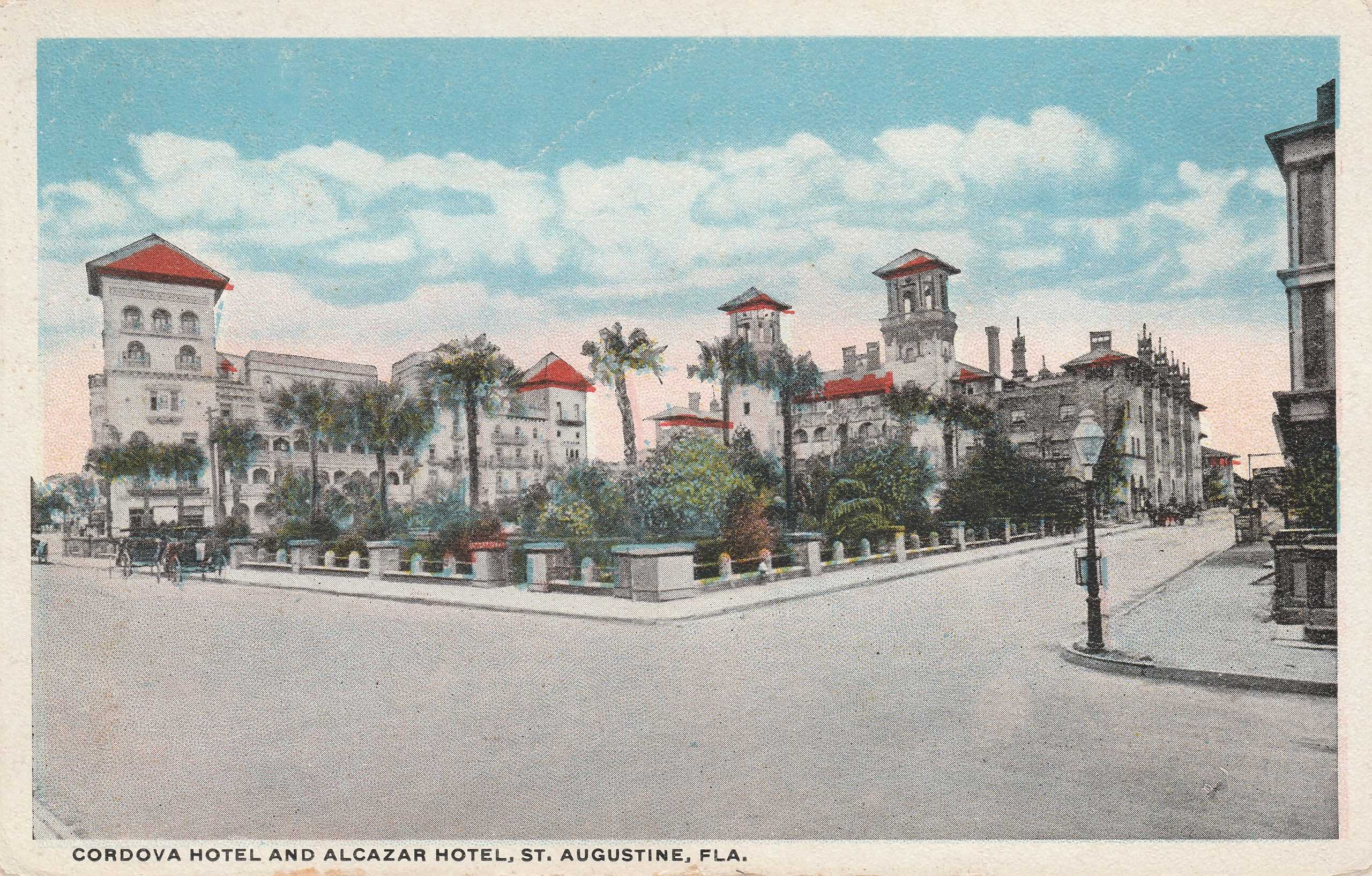
Built next door to the Alcazar in 1888 by New England businessman and philanthropist Franklin W. Smith, the Casa Monica Hotel is an impressive five-story structure. Built in the Moorish revival and Spanish Baroque revival style, it is 400 feet wide with 100-foot towers each topped with tiled roofs. Other exterior architectural features include turrets, balconies, parapet, ornate railings, cornices, arches, and battlements. The hotel opened on January 1, 1888, but Smith ran into financial difficulties and sold the hotel and its furnishings to Flagler for $325,000 after the winter season ended. Flagler renamed it the Cordova Hotel.
The Ponce de Leon Hotel closed in 1967. In 1968, it served as the initial building for Flagler College and today is the centerpiece of the campus. In 1932, both the Alcazar and the Cordova closed due to the Depression. In 1947, Otto C. Lightner purchased the Alcazar Hotel to house his Museum of Hobbies then located in Chicago. Today, the Lightner Museum houses a collection of decorative arts and Americana from the nineteenth and early twentieth centuries. In 1997, hotelier Richard Kessler purchased the Cordova. After a two-year renovation, the Casa Monica Hotel opened in December 1999. The upscale Casa Monica Resort contains 138 guest rooms, including fourteen suites.
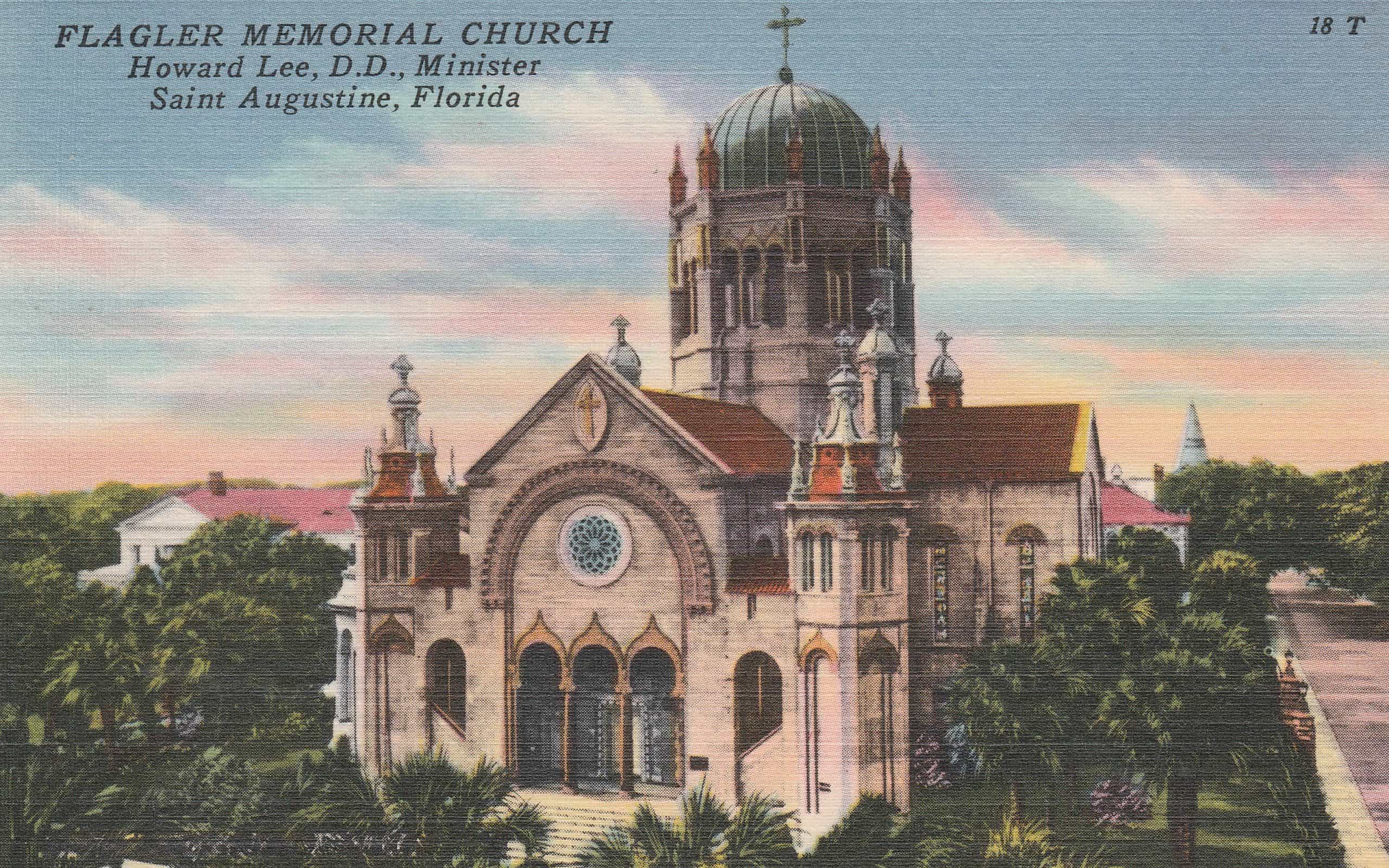
Flagler Memorial Church (Presbyterian) in St. Augustine is among the beautiful churches in Ameria. Henry Flagler, a lifelong Presbyterian, financed the construction of the church to commemorate his daughter, Jennie Louise Flagler, who died during childbirth in 1889. Flagler chose the site for the church near his three St. Augustine hotels. He commissioned Carrère and Hastings to design the church using inspiration from the Basilica of St. Mark in Venice, Italy. Construction costs were $250,000. The copper dome was created in Italy, the floors are made of Italian marble, and the pews are carved from mahogany. Its baptismal font was carved from a single block of Siena marble and is a memorial to Flagler’s late daughter. The church was dedicated on March 16, 1890.
After Flagler died in 1913, he was interred in an Italian marble mausoleum connected to the church. His daughter Jennie, his infant granddaughter Margery, and first wife Mary Harkness Flagler are interred next to him.
Saint Augustine, Florida radiates a charm that feels timeless and inviting. The cobblestone streets, Spanish architecture, and ocean breezes are like nowhere else in Florida. The historic district buzzes with culture, while peaceful beaches offer space to unwind. Warm hospitality, vibrant arts, and stunning sunsets make the city unforgettable.
Fantastic City – thanks for the post
Great cards, particularly the one of Castillo de San Marcos. Its walls are made of coquina, a local material made of naturally compressed seashells. When struck by cannonballs, instead of shattering, the coquina stone merely compresses and absorbs the shock of the hit. The cannon balls just bounced off or sink in a few inches.
Love St. Augustine! Great article & postcards! Thank you.
Great article. Have visited St Augustine on several occasions. I have a few post cards of the town in my collection.
Wonderful article and so well researched. Have always wanted to go there and Dan’s article just accelerates that desire.
Thank you for this interesting article. I visited St Augustine when stationed at Ft. Gordon Ga. A private, all money spent on gas & food & visiting historic sights, so no money for a hotel. I pulled in to the local police station, ( in uniform) & asked to sleep in my car in the safety of the parking lot. The Desk Sergeant wasn’t happy but growled I could. Love St. Augustine.