[Author’s note: I’m home from an extended stay at my daughter’s and am ready to continue my series of articles that began last February (2025) entitled Tuck’s American Views, but before I tackle Tuck’s American Views of Plymouth, Massachusetts, I would like to tell you about Herbert Schultz.]
***
I met Mr. Schultz just a few months before he died in 1966. I don’t remember much about the occasion except that I offered to purchase one of his paintings and was “politely” dismissed as being too naïve to understand the real value of his work.
Regardless of the outcome of our meeting, I still admire the man and appreciate his work – especially his drawings (paintings) that Tuck & Sons turned into postcards.
Herbert Schultz seldom signed his serious art, but his illustrations were frequently initialed with the three letters – HSB. And on very rare occasions he signed only his given name in an arch – like the example below.
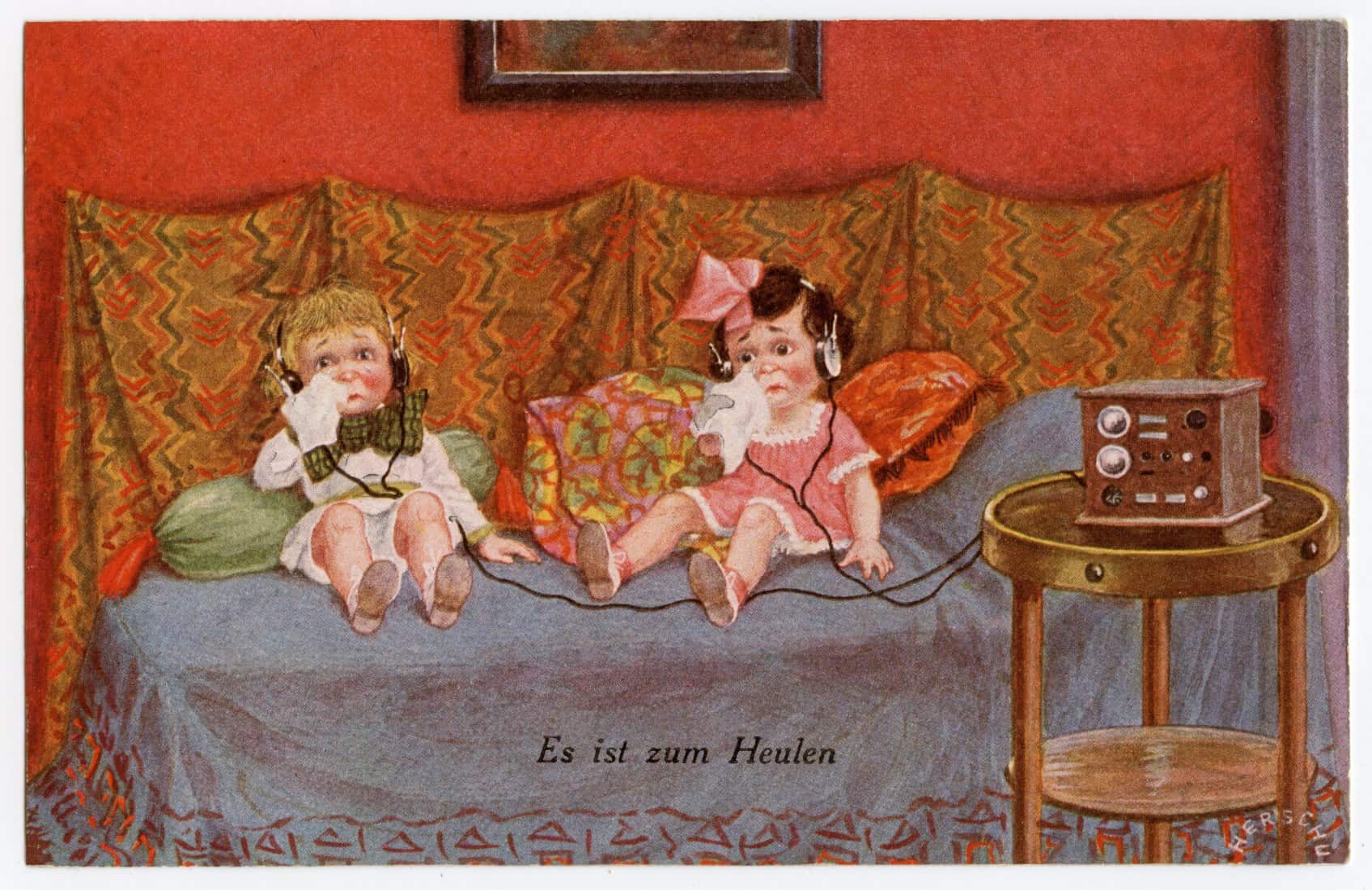
He was born in Berlin, Germany in 1884 of immigrant parents, likely from Eastern European nations like Romania or Poland. He wanted to distinguish himself from other artists with names like Schule, Schulz, Schulte, and Scholl by using a “B” in his signature, hence the initials meant Herschu Schultz – Berlin.
[“Herschu” apparently because his parents preferred the Yiddish spelling of Herbert. Herschu is not a common German name; its roots are in Eastern Europe where many Jewish communities were established and flourished.]
A thorough biography of Schultz has never been found, but apparently after World War II he based himself in Berlin where he worked for at least three different local publishers as well as Raphael Tuck & Sons, London. His many postcard illustrations of children are in the style of the examples below, but he also produced accurate and highly finished work, like paintings of the coachwork used in manufacturing 1930s motor vehicles. He was best known for creating charming, often humorous postcard art.
Sadly, little else has survived because Schultz never achieved popularity in America. From what I have collected over the last 50+ years, most of his work for Tuck was sold only in the U.K., Holland, and Germany, and were signed “H S B” in either of the bottom corners. Very few of his captions were translated into English and the consequence was that his work appears only in vintage European postcard collections.
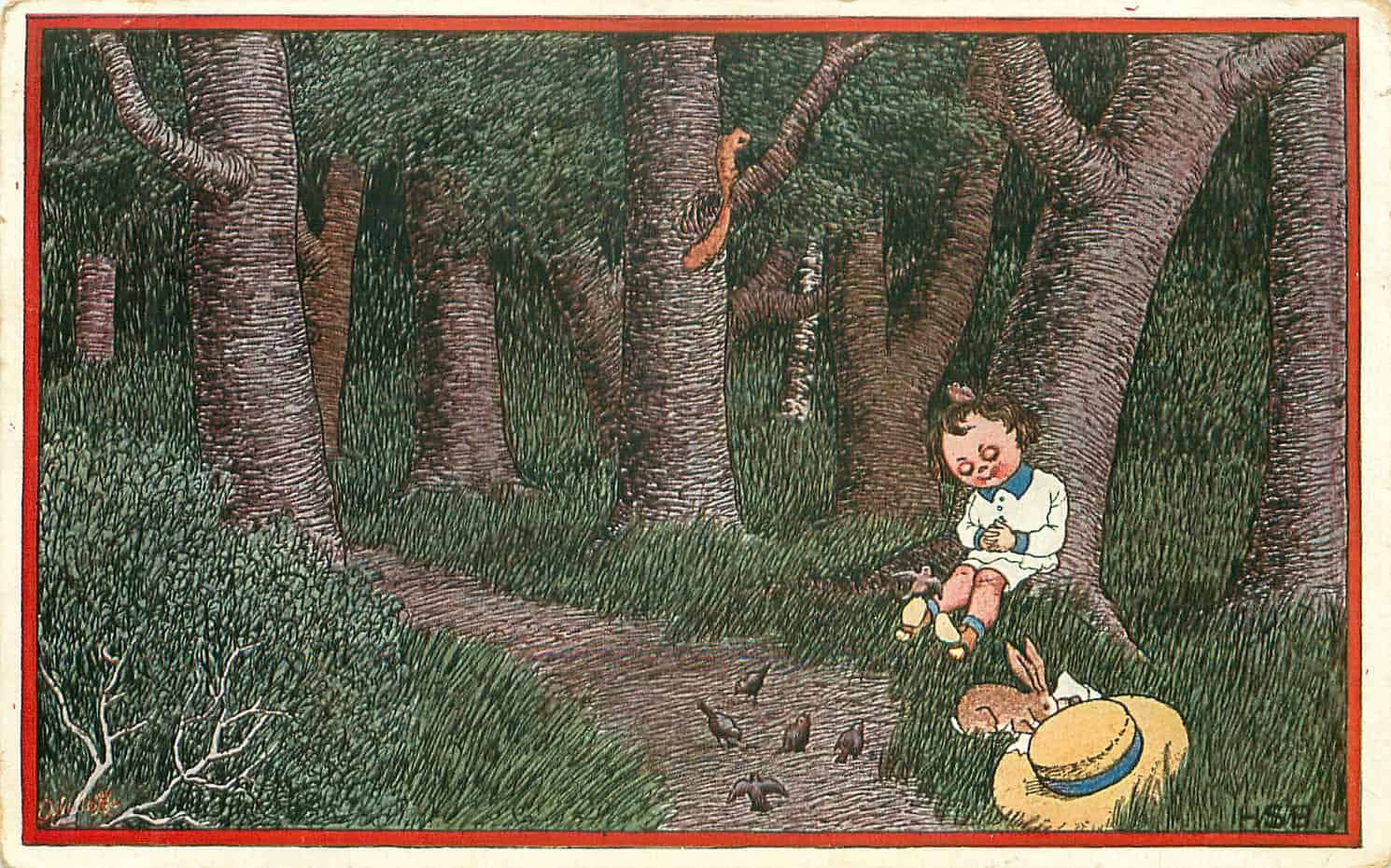
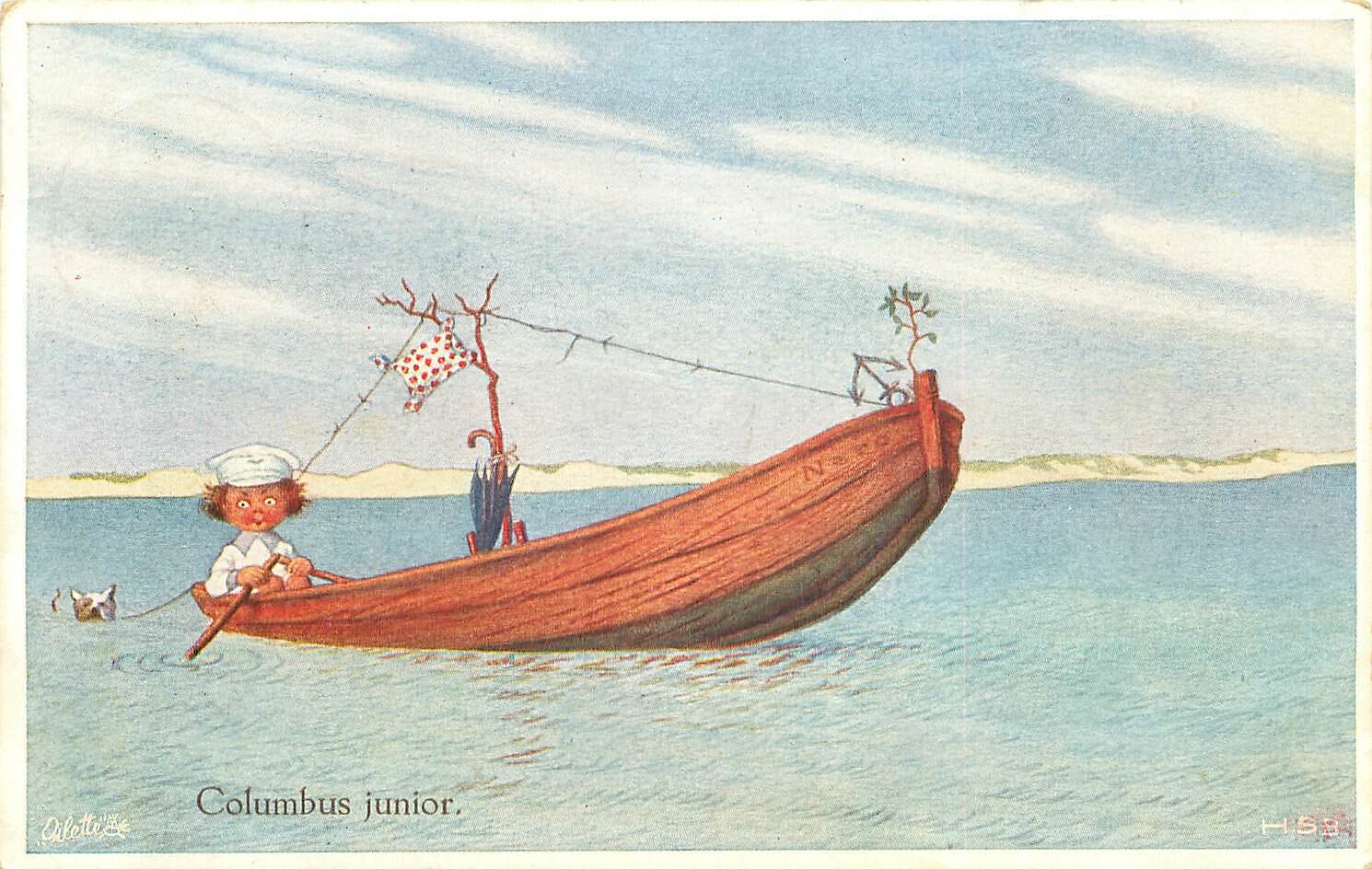
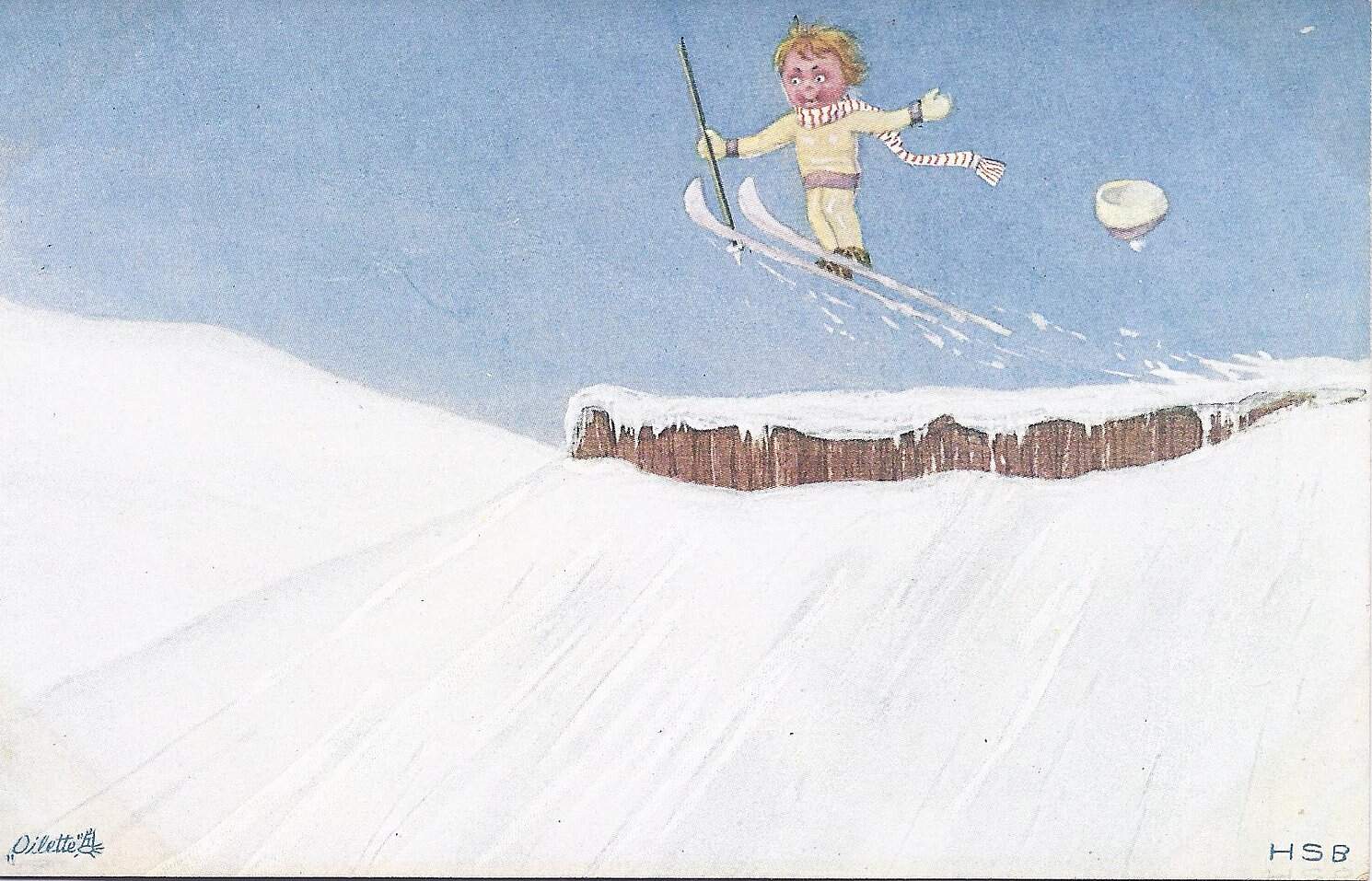
The Tuck set-titles that are identified by my collection (56 cards of a possible 72 issues) are “All Alone,” “Alone,” unnamed set #1021, “Forest Whispers,” “Snowman,” “In Greenland,” “Young Imps,” “Summer Holidays by the Sea,” “Summer Holidays at the Farm,” “Summer Holidays in the Mountains,” and “In the Summertime.” These twelve set (6 issues per set) have been verified by the tuckpostcarddb.org website. Plus, as many as five or six other sets from other publishers – cards not yet been discovered.
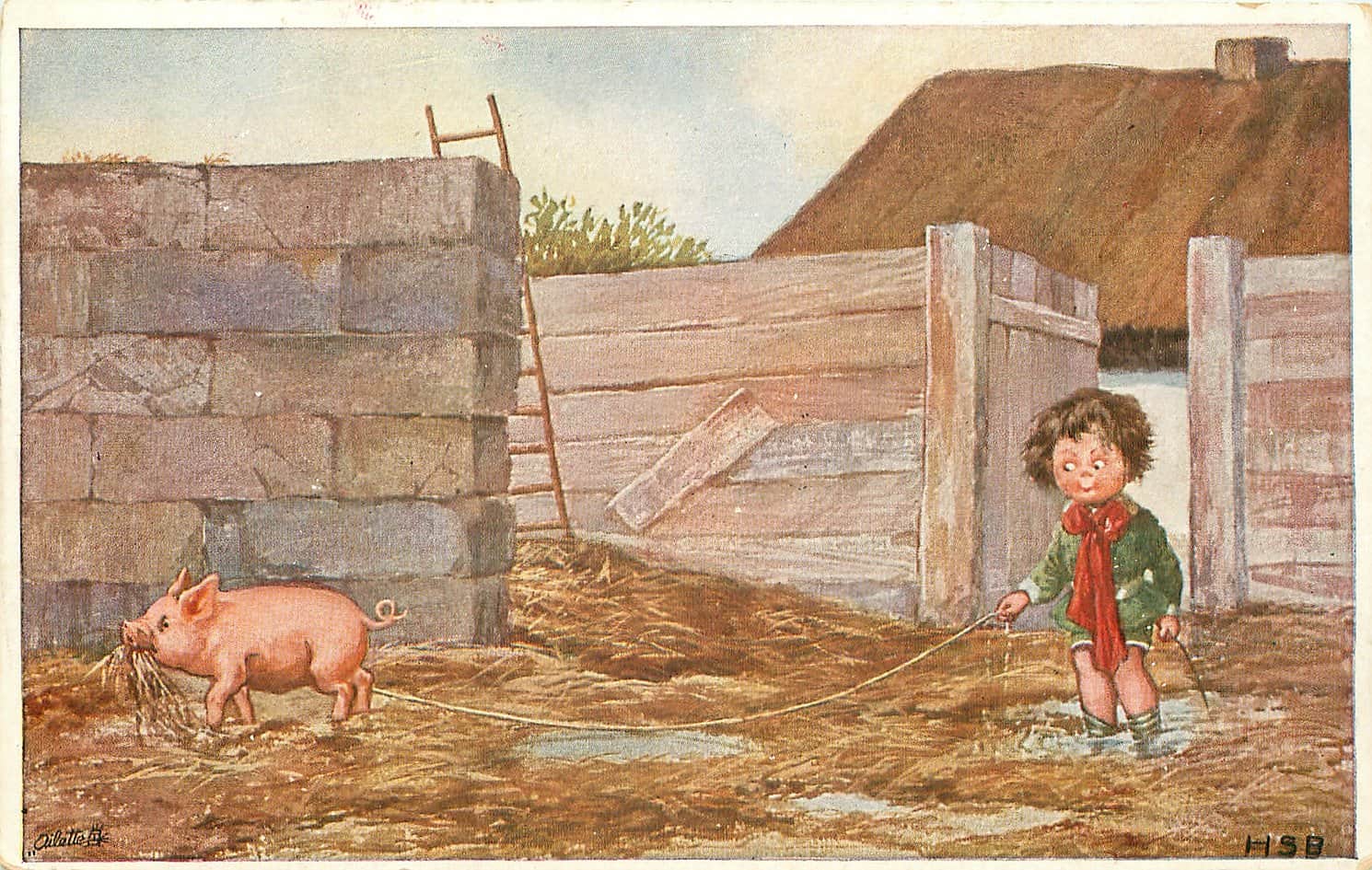
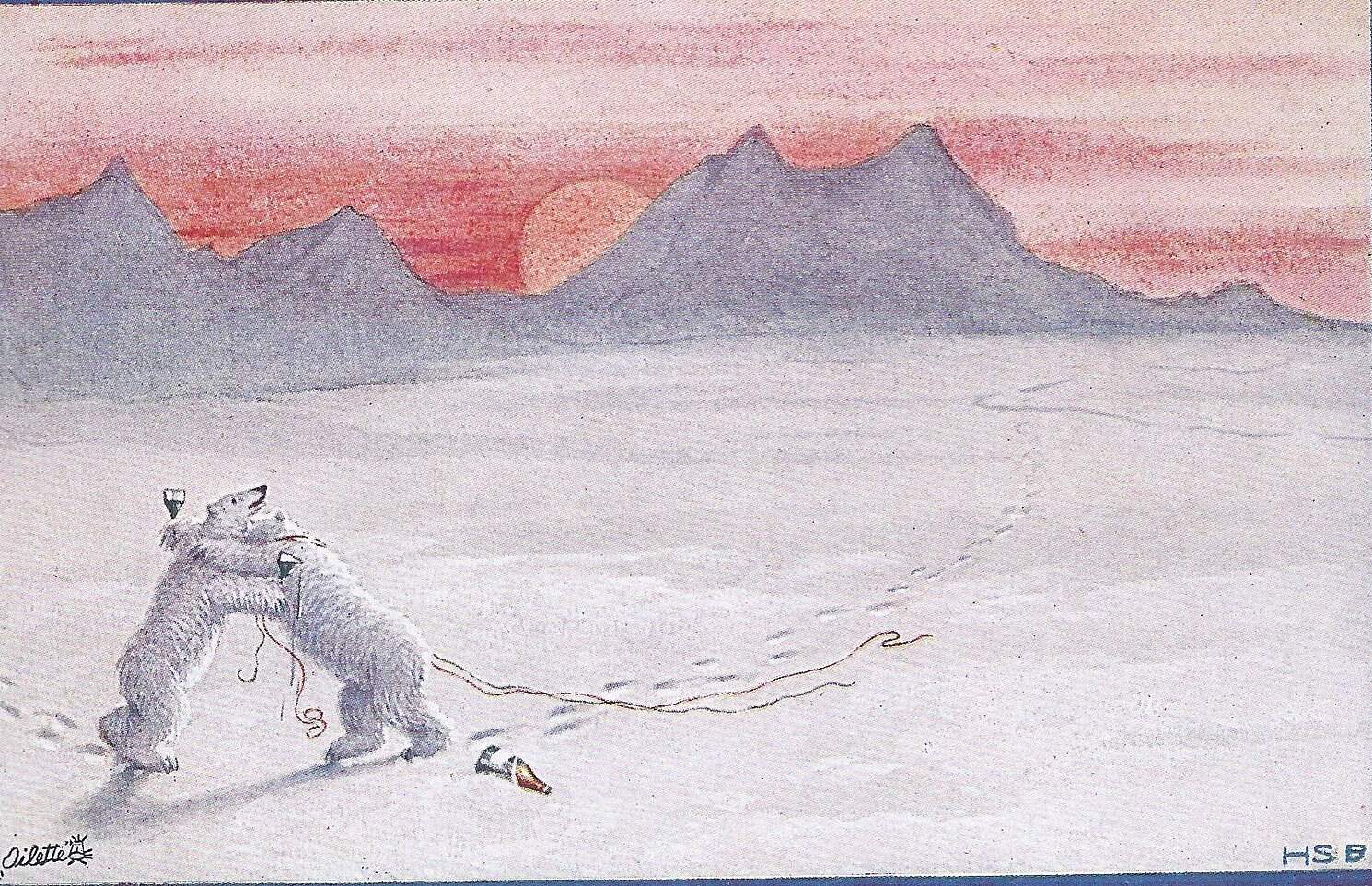
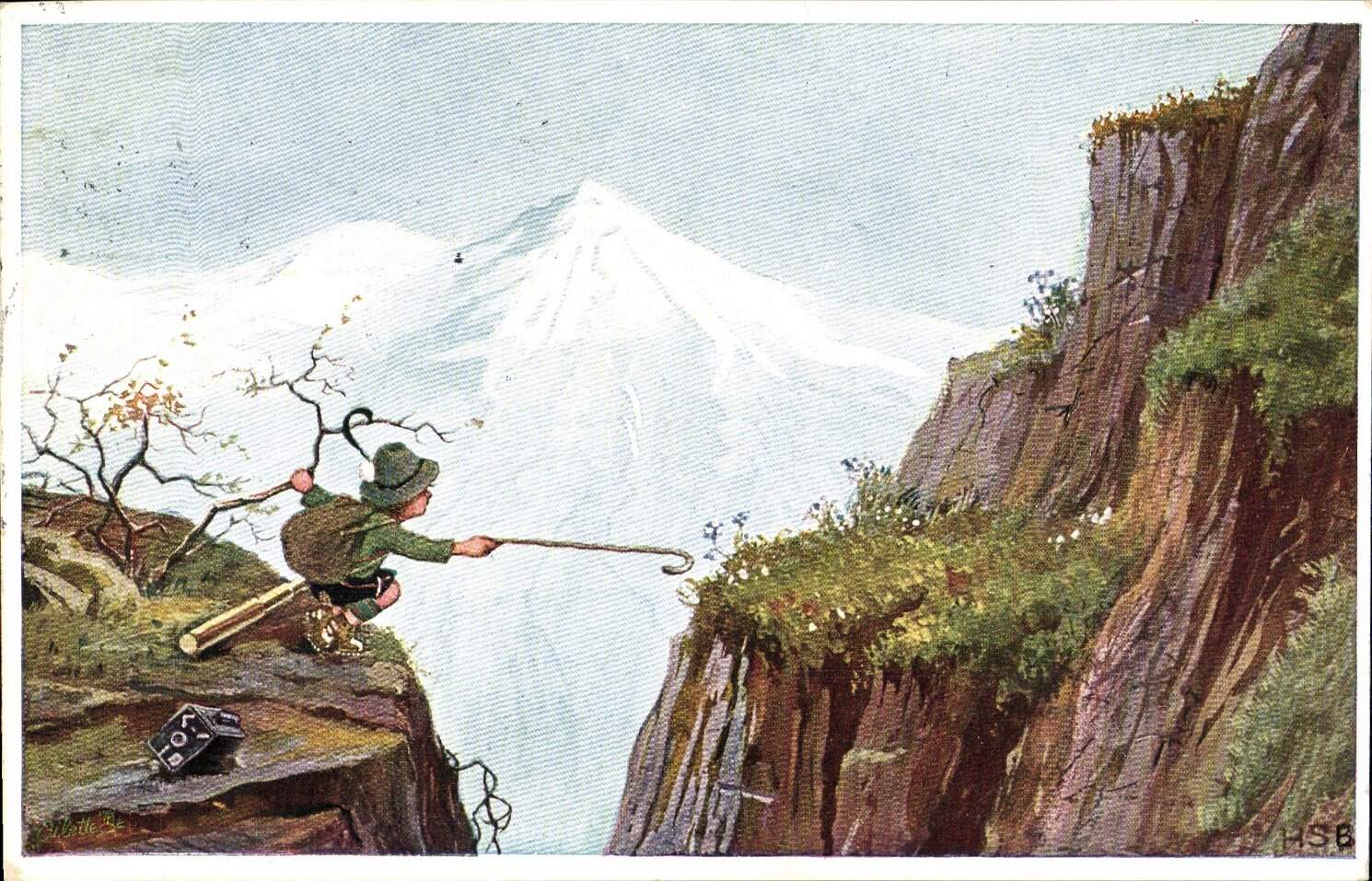
A factor that makes Schultz’s cards collectible include his amusing approach to postcards with everyday circumstances, beach‑themed postcards and the fact that some were published during the war.
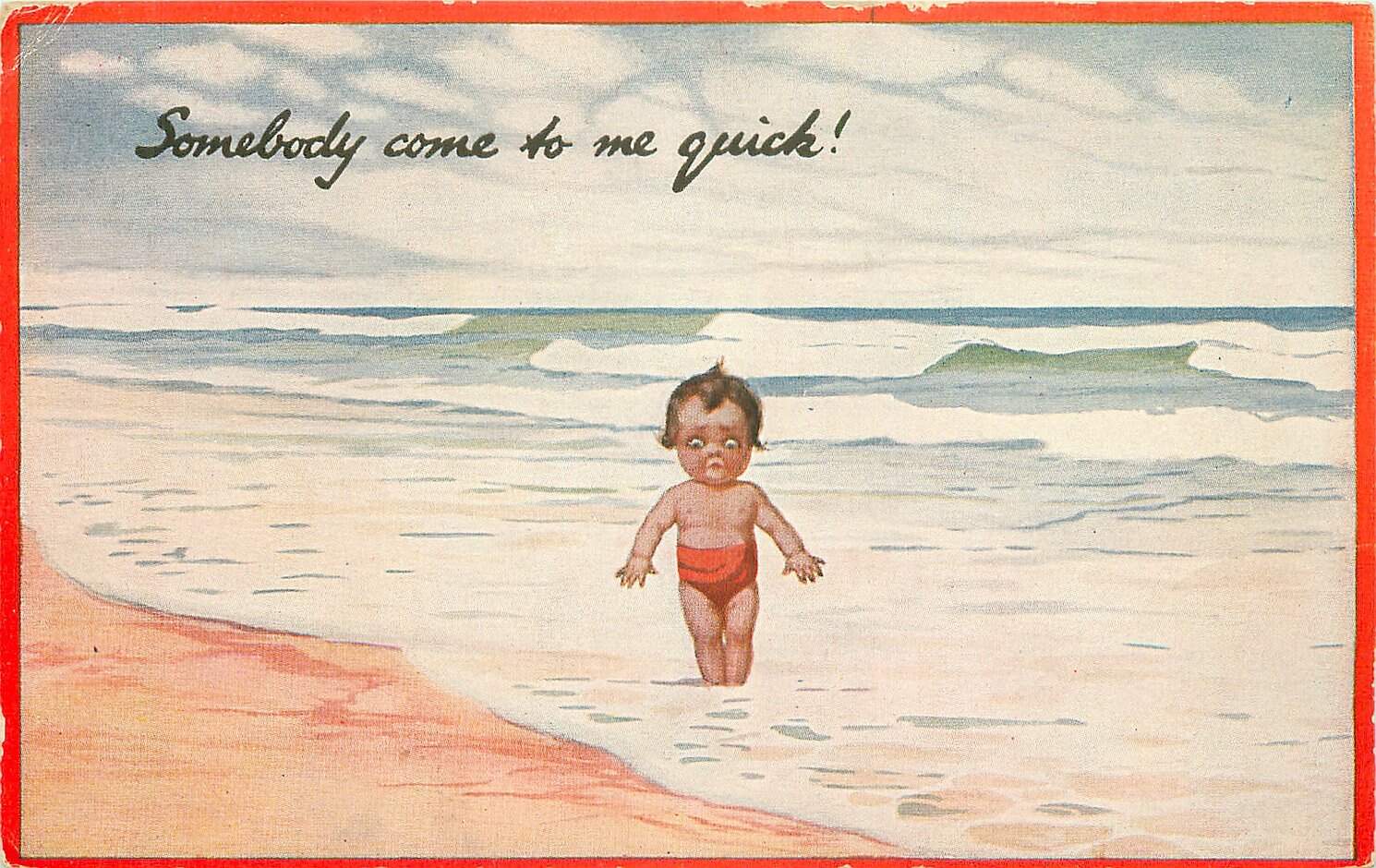
Additionally, I have no verifiable source for this quote but supposedly when once asked why his signature was so mysterious, he replied, “There is no reason for a unique signature; my characteristic style is so well known, it is unnecessary.”
***
Special reminder that if you wish to view any of the
example cards in full size, double click the image. To return to
the text, tap your keyboard’s escape [ESC] key.
Lovely postcards! Thanks for the interesting article about this artist.
Very interesting … thanks! Look forward to more articles.
Thank you, I have a few Tuck postcards and an album so I found this interesting. I had not heard of HSB Will look see if i have any. Thanks.
I don’t see the signature in the arch that you mentioned on very rare occasions he signed only his given name in an arch – like the example the picture below is of two children sitting on a couch, crying. Where is this signature in the arch?
In an arch-shape at the bottom of the right-hand table leg!!!