Mrs. Mary Spencer (1759-1835) was an English immigrant who arrived in Salem, Massachusetts, in the early nineteenth century. There is no record of the date, but it is thought that she arrived around 1806 – she was 47 years old and had one son, Thomas. On their way from England, Mrs. Spencer and her son suffered through the wreck of the ship “Jupiter,” and lost nearly everything. Soon after Mrs. Spencer arrived in Salem the neighbors learned she was a highly skilled candy maker – a talent taught to her by her late husband. The townsfolk admired Mary’s tenacity and donated a barrel of sugar to help her with a fresh start in her new hometown.
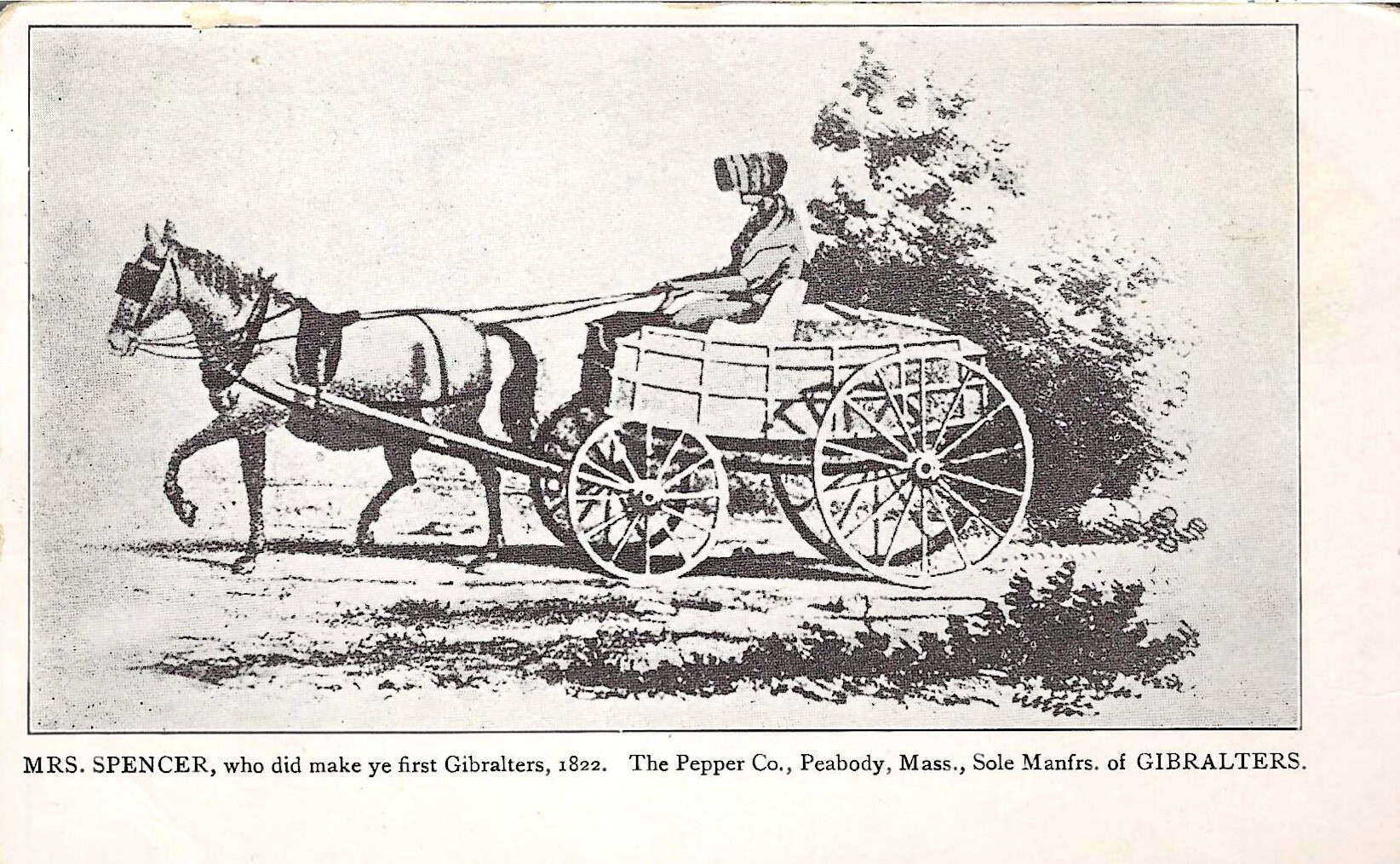
Mary Spencer accepted the town’s gift and created what became known as Gibralters — a hard sugar candy that would become a regional specialty. And later, around the world.
Mrs. Spencer was soon selling her Gibralters (yes, -g i b r a l t e r s- is the correct spelling) from her wagon in Salem and in neighboring villages, making her one of the earliest commercial candy makers in America. Mary’s first Gibralters were snow white, chalky‑opaque, and mildly flavored – some with peppermint, others with lemon. They were often wrapped in paper with twisted ends, a very old New England style. The original batches were hand‑pulled and shaped on a marble slab.
The “Gibralter” recipe is quite simple. [Take 2 cups granulated sugar, 1 cup water, 1 tablespoon lemon juice or a ½ teaspoon cream of tartar. If flavoring is desired add ½ teaspoon peppermint extract or ½ teaspoon lemon extract.
It is best to prepare a workspace, first butter a marble slab, cookie sheet, or large piece of parchment. Having a bench scraper or buttered knife ready will be helpful.
Cook the syrup by combining the sugar and water in a heavy saucepan. Heat to a soft boil over medium heat, stirring until the sugar dissolves. Add lemon juice or cream of tartar (this prevents crystallization). After the flavors are added bring to a hard boil and cook without stirring until the syrup reaches the hard‑crack stage. A candy thermometer helps – but the old test was: Drop a bit into cold water — if it cracks sharply, it’s ready.
Remove from the heat and stir gently. When the mixture is smooth pour the hot syrup onto your prepared surface. Let it cool just enough to handle (still pliable) then pull or fold it lightly to make it opaque. When the desired thickness or clarity is achieved shape into ropes (cut into pieces), small lozenges, or shape into traditional “Gibralter Bricks” — small rectangular blocks.
Allow the individual pieces to cool completely and then store in an airtight tin. Layers should be separated by waxed paper. Gibralters keep for months — one reason they were so popular in the 1800s.]
This is a basic, historically accurate home version recipe inspired by early New England hard‑candy methods. It’s not a proprietary recipe, just a faithful reconstruction of what Mrs. Spencer would likely have made in the early 1800s.
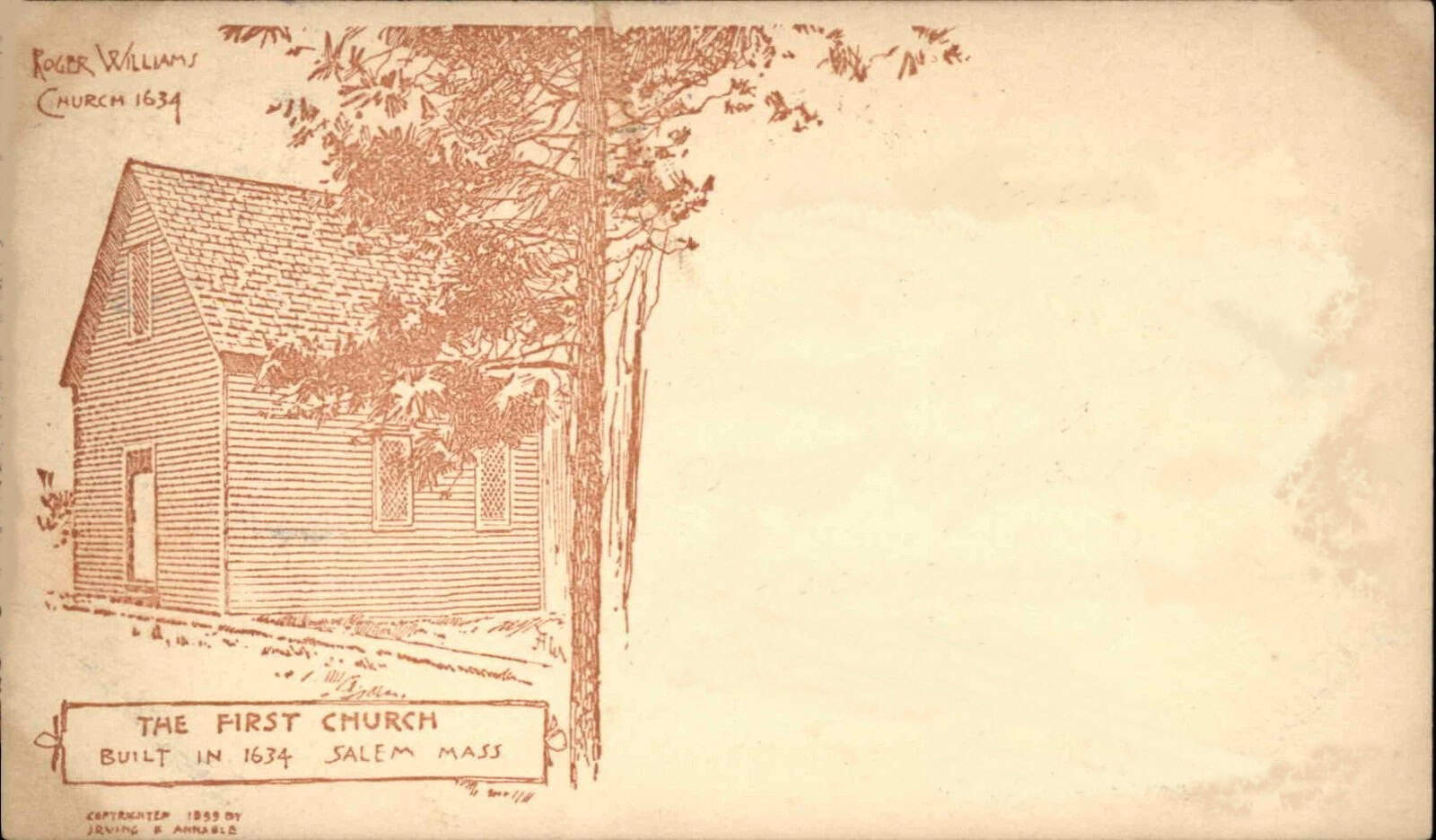
Mrs. Spencer’s candy was so well known that even decades later, Pepper Company calendars featured her image with captions like: “Mrs. Spencer, who did make ye first Gibralters, 1822, passing ye Old Witch House, Salem, Mass.” and “ … selling her candies at the steps of the First Church in Salem, Mass.”
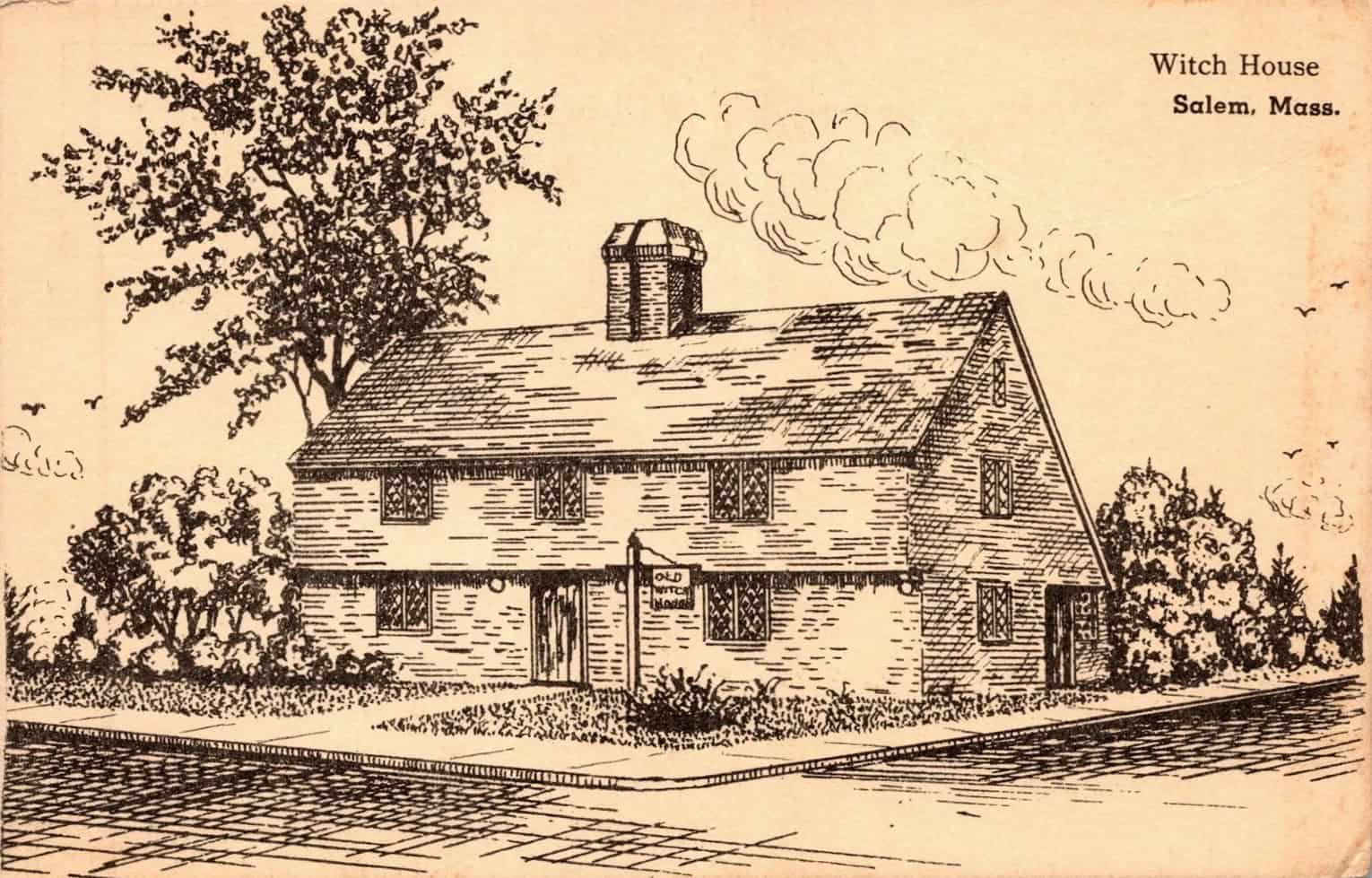
Please note that the “Old Witch House” is NOT the “House of Seven Gables.”
Built around 1675, the Witch House was the home of Jonathan Corwin. It is the only surviving building in Salem directly connected to the 1692 witch trials. Corwin was a merchant and politician who was one of the judges who examined the accused in the famous witch trials.
The House of the Seven Gables is officially the Turner–Ingersoll Mansion. An unrelated home built in 1668 by merchant John Turner. It later inspired Nathaniel Hawthorne’s famous novel The House of the Seven Gables
The First Church in Salem stands at the heart of Salem’s early history. Founded in 1629 by Puritan settlers of the Massachusetts Bay Colony, it became one of New England’s earliest organized churches. Its members helped shape Salem’s civic and religious identity, and several were connected to events surrounding the 1692 Witch Trials. It is unsure that this is the church where Mary Spencer would sell her candies, but it is likely.
The Pepper Company of Peabody, Massachusetts
After Mrs. Spencer’s death, her candy-making business passed briefly to her son Thomas. In 1830, the operation was sold to the Pepper family. [Yes, we have noticed the discrepancy in the death date of Mary Spencer and the sale of her business by her son in 1830.], who would turn it into a thriving confectionery enterprise that lasted for more than 160 years.
The first milestone at the Pepper Company after the 1830 purchase was a move to Peabody, Massachusetts in 1864. George Pepper took over the business from his father and by 1879 the Pepper Company becomes a major candy manufacturer, producing specialty candies (the ever popular “Gibralters” and soon after a similar confection known as “Black Jacks”). In the early years of the twentieth century, they expanded again by making cigars. Their branding frequently referenced Mrs. Spencer and the original Gibralters, emphasizing the company’s historic roots.
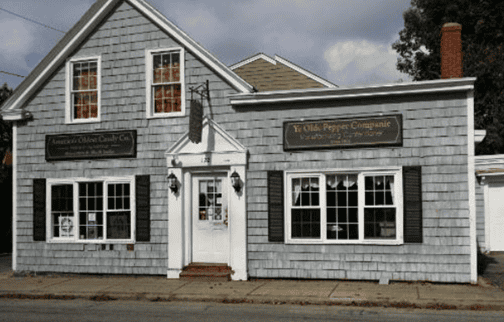
The Pepper Company’s legacy lives on through Ye Olde Pepper Candy Companie in Salem — considered the oldest continuously operating candy company in America — whose early history is deeply tied to both Mrs. Spencer and the Pepper family.
Very interesting article,mum & I visited Salem in 1994 when we we staying in Boston. We also visited the Salem Witch House.
I really enjoyed this article and the included candy recipe. I also like that you mentioned the Salem Witch Trials.