By Kevin Anzzolin, Ph.D.
Mexico, our neighbor to the south, is blessed with a rich indigenous culture and a deep relationship with the arts that is somewhat paradoxical. It is a perfect locale where arts can be captured, reproduced, and shared via postcards.
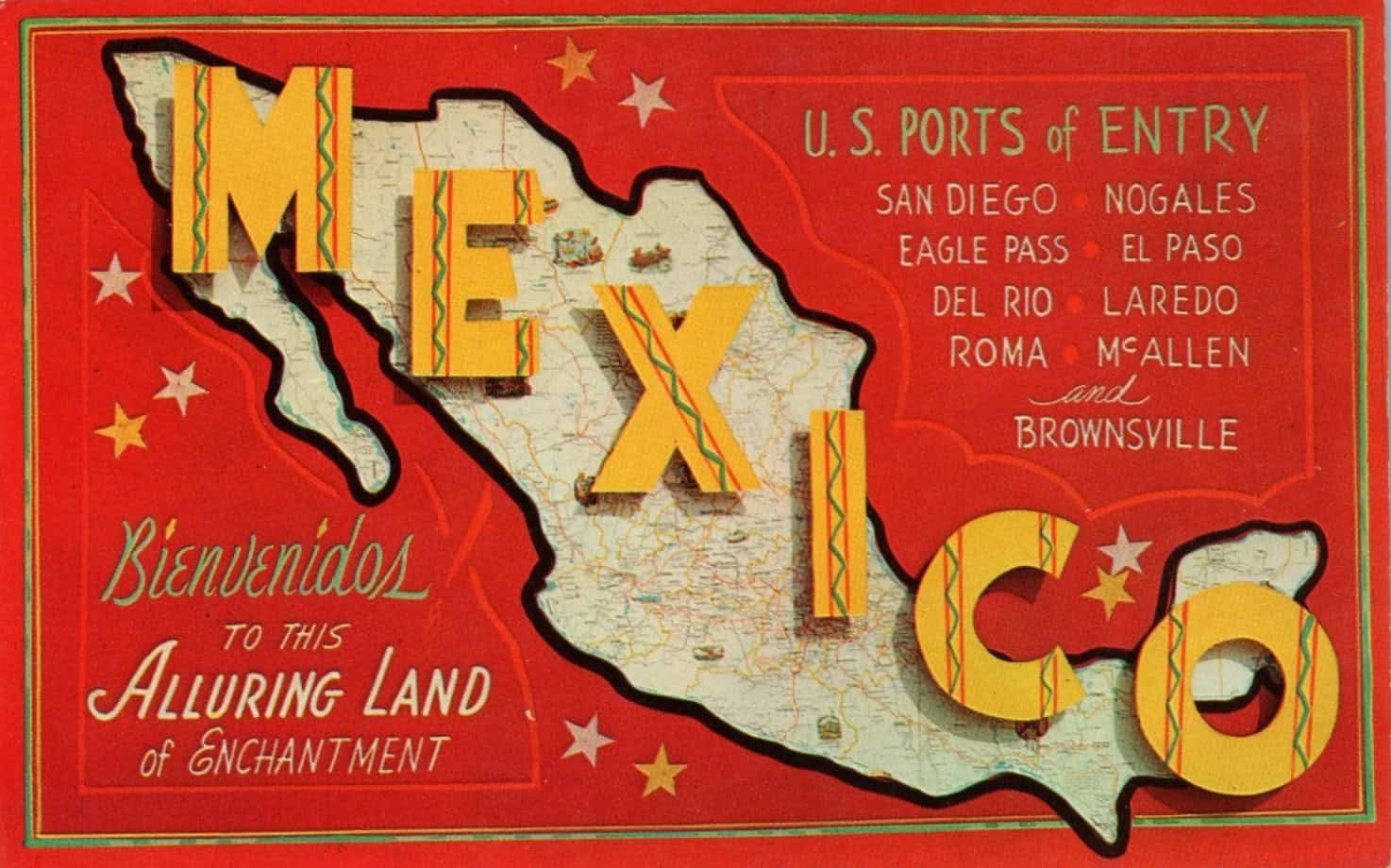
It is only appropriate then, that one of the country’s foremost intellectuals of the twentieth century, Carlos Monsiváis (1938-2010), chose the title, Mexican Postcards (1997), for his collection of thoughtful essays on his country’s culture and society. Each piece in the volume mirrors the snapshot character of a postcard, providing readers with a concise, limited, yet emblematic and even profound glimpse into the everyday social fabric of our closest neighbor. It could be argued that the only reasonable way to appreciate Mexico—its muralism, its Aztec ruins, its rugged landscape—is by way of the humble postcard.
The beauty and ambition of midcentury Mexican postcards was underscored during my visit to Bowling Green State University’s Browne Popular Culture Library in Ohio. Inside the library, a squat brick tower jutting up from a cornfield, one finds oneself amid a cavalcade of Mickey Mouse dolls, Pokémon cards, and Wonder Woman fan fiction.
The library also has a cache of postcards from Latin America and especially, Mexico. The collection offers an invaluable resource for tracking visual representations across the first half of the twentieth century. That was the period when, as historian Mauricio Tenorio argues, Mexico was understood as a “Brown Atlantis.” It was where revolutionary thought fermented and the Pan-American Highway promised access to exotic adventures.
Everyone wanted to meet Frida Kahlo, everyone wanted to visit Teotihuacán, all while dreaming up global politics anew. Perusing these postcards reminds us of a long-forgotten time; an era when the United States at least promoted the idea that we were “Good Neighbors” of Latin American nations.
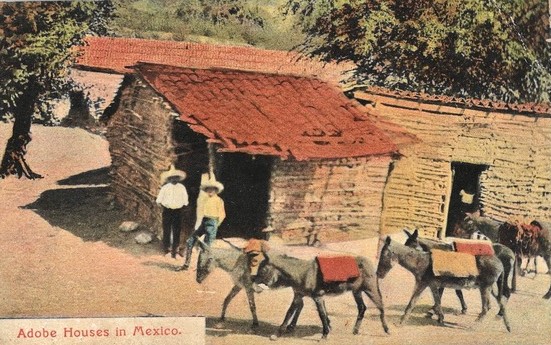
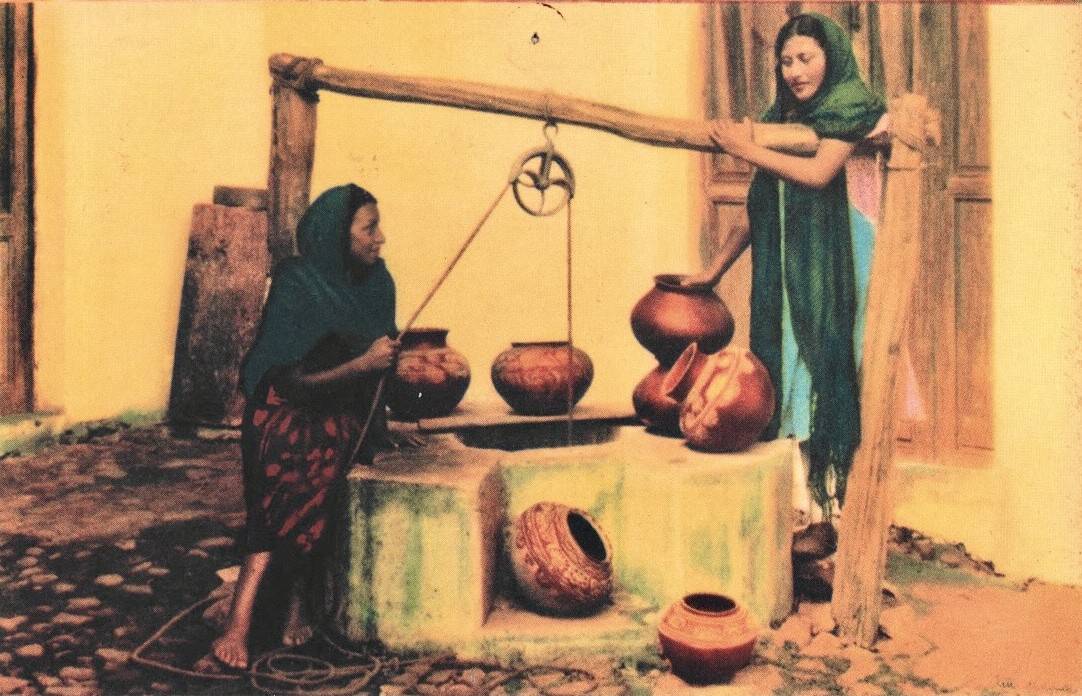
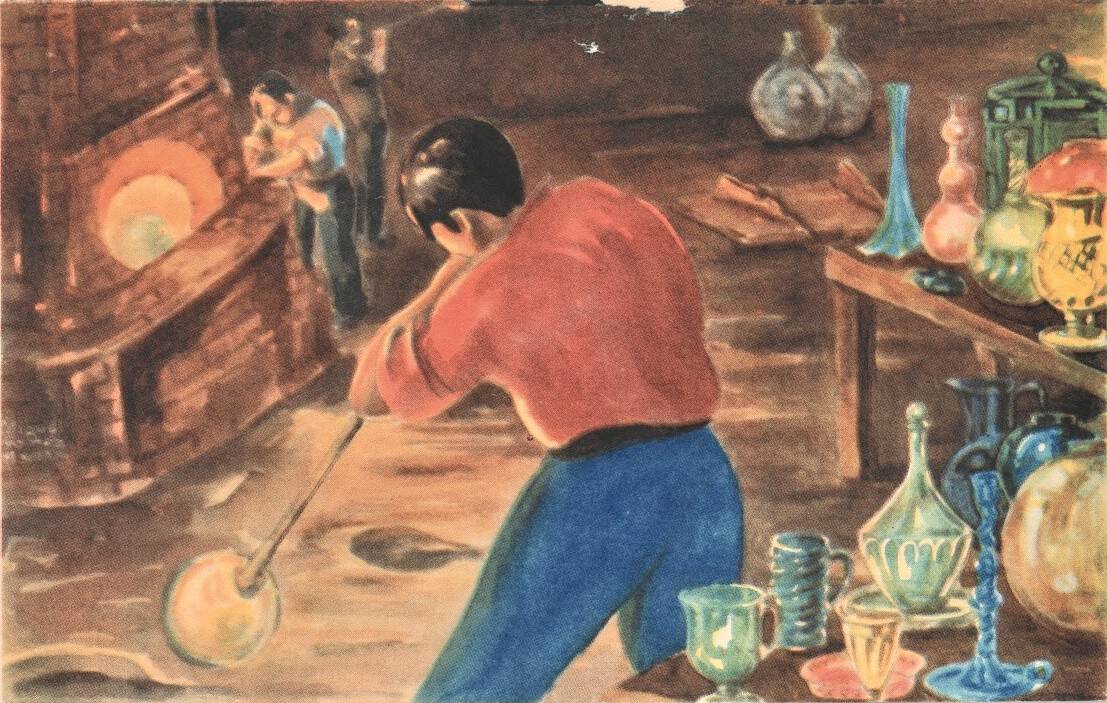
Of the diverse scenes depicted on the postcards, by far the most frequent subject is some archaic form of labor, performed almost exclusively by indigenous individuals. They are simultaneously picturesque and prejudicial. Handloom weaving, pottery, adobe brickmaking, and subsistence farming appear as if they were timeless relics of a simpler past. Supposedly “archaic” forms of labor were presented as the dividing line between civilization and barbarism.
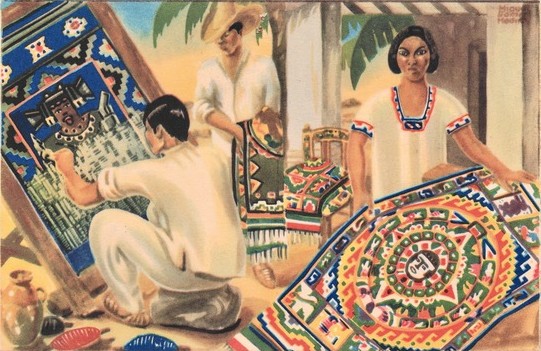
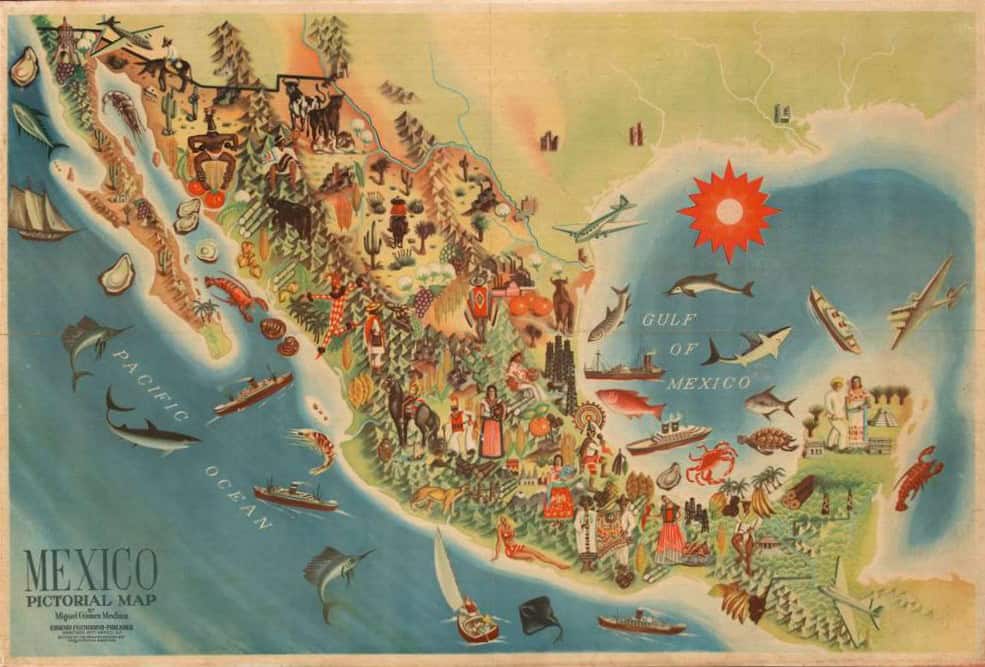
Among the most prominent artists featured in this collection is Miguel Gómez Medina, who was an illustrator whose career spanned the first half of the twentieth century. He stands as Mexico’s most important contributor to the Golden Age of Pictorial Mapmaking, a period spanning roughly 1920 to 1960. He created numerous large-format pictorial maps depicting different regions of Mexico and Guatemala.
Beyond his large-format poster maps, Medina produced map postcards as well, which were generally published through Fischgrund Publishing. This publishing house, in turn, was known for its postcards, maps, and art prints.
Intriguingly, publishers reproduced on postcards images created by Mexican muralists like Diego Rivera and José Clemente Orozco; after all, Mexican muralism emerged from the need to promote pride and nationalism after the Mexican Revolution.
The movement fundamentally challenged traditional distinctions between elite and popular art. Postcards allow us to take home our own mural, in miniature. Other postcards at Bowling Green are the product of Curt Teich & Company.
Few academics have examined the complex intercultural and international relationship which these postcards epitomize. Yet, worth mentioning are Ligia T. Domenech’s Us According to Them and Linda Egan and Mary K. Long’s Mexico Reading the United States, which have illuminated the dynamics of representation and misrepresentation that characterize literary and visual exchanges between Mexico and the United States.
Both reveal how popular narratives contribute to the construction of national and cultural identity. In terms of work on Mexican postcards of the time, Susan Toomey Frost’s Witness to War: Mexico in the Photographs of Walter Elias Hadsell, illustrates how postcards often successfully blur the line between journalism and artistry.
All told, BGSU’s Mexican postcards task us to examine (or perhaps, reexamine) the roots of the U.S.’s cultural attitudes toward Mexico.