Researching the life of Lady Jane Grey, “the nine-day queen of England,” we learn that her life ended when she was scarcely seventeen years old. Her story unfolds with an intensity that still feels shocking even after nearly five centuries.
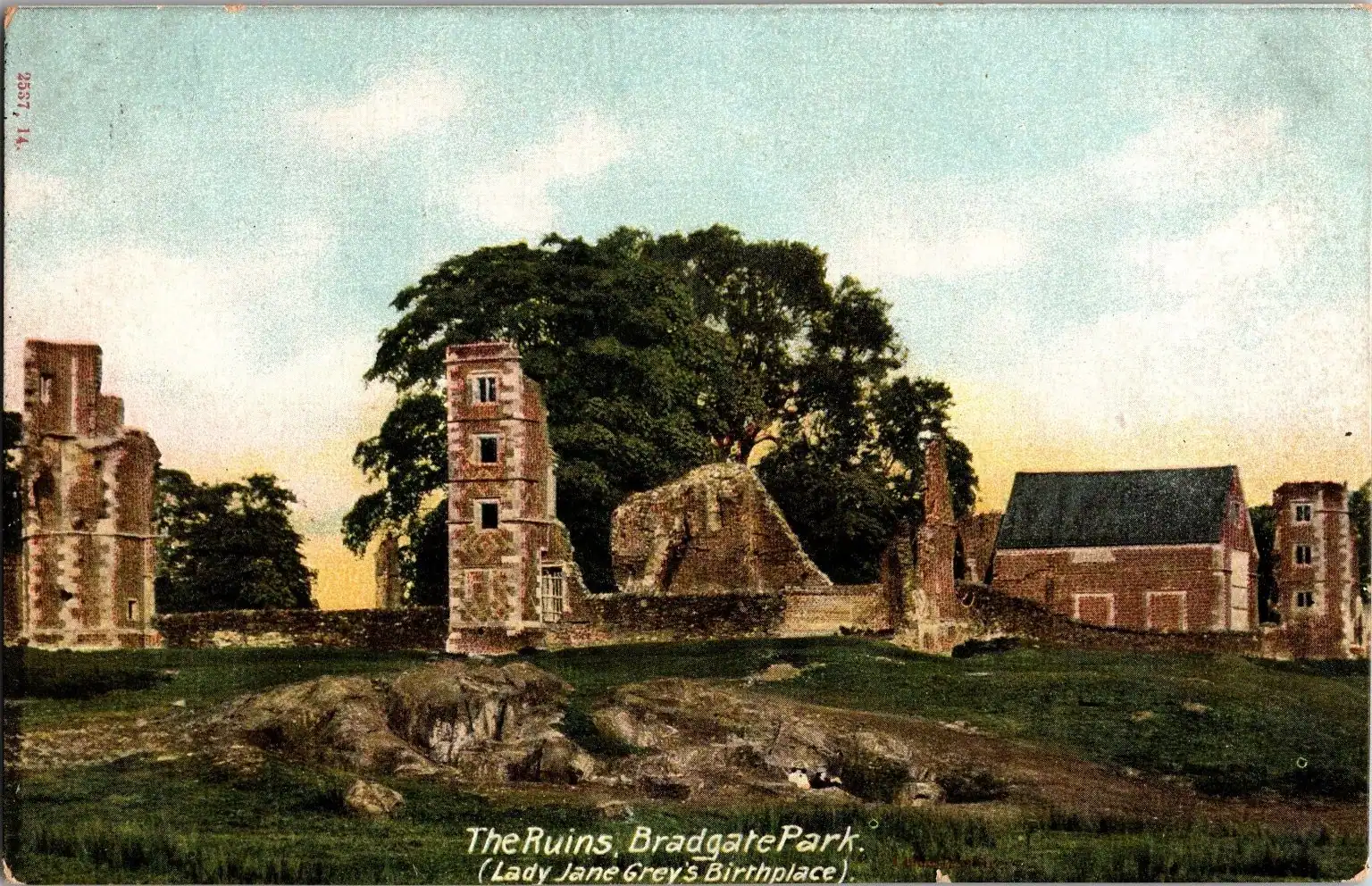
Born in October 1537 at Bradgate House (106 miles northwest of London), she entered the world not as a future queen but as a quiet, bookish child in a family that prized ambition far more than tenderness, loving, and caring. Her mother, Frances Brandon, granddaughter of Henry VII, carried the weight of Tudor blood; her father, Henry Grey, Duke of Suffolk, carried the weight of expectation. Jane carried both.
From her earliest years, Jane found refuge not in courtly entertainments but in learning. She was obsessed with languages and was fluent in Latin, Greek, Hebrew, French, and Italian. She had a hunger for learning that astonished her tutors.
Roger Ascham, visiting Bradgate in 1548, found her reading Plato alone while the rest of the household hunted. When he asked why she chose study over pleasure, she answered with a candor that still stings: “All their pleasure is but a shadow; mine is substantial.” It was the voice of a girl who had already learned that the world around her was not built for her comfort.
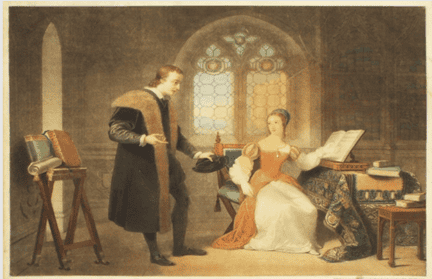
Her intellectual life blossomed further when she entered the household of Queen Catherine Parr, Henry VIII’s last wife, around 1546. Parr’s home was a haven of Protestant scholarship, and Jane absorbed its spirit eagerly. She grew into a young woman of striking seriousness—devout, thoughtful, and possessed of a moral clarity that would later make her both powerful and vulnerable.
Jane, however, lived in Tudor England, where lineage was destiny and faith was politics. When Edward VI, her cousin and fellow Protestant, fell fatally ill in 1553, the question of succession became a crisis. Edward, barely fifteen, feared that his Catholic half‑sister Mary would undo the Protestant reforms he cherished. Under the influence of John Dudley, Duke of Northumberland, he named Jane his heir.
Jane was sixteen. She had no desire for a crown. Yet on July 10, 1553, trembling and bewildered, she was led to the Tower of London and proclaimed Queen of England.
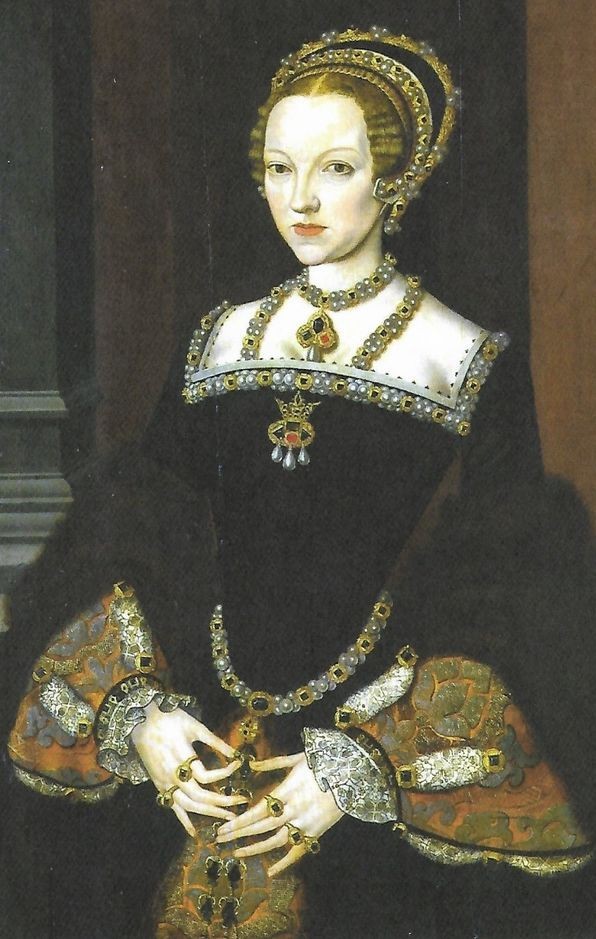
Her nine‑day reign was a tragedy in slow motion.
She refused to name her husband, Guildford Dudley, king, which was an early sign of her quiet resolve. This stern endeavor made it impossible for her to command the loyalty of the nation.
The people rallied to Mary Tudor, Henry VIII’s eldest daughter with Queen Catherine of Aragon, whose claim was clear and whose determination was fierce.
On July 19, 1553, the Privy Council abandoned Jane. She was deposed, imprisoned, and left to contemplate the strange, cruel path that had carried her from Bradgate’s libraries to the Tower of London’s stone walls.
The new Queen, Mary did not initially wish to kill her young cousin, but politics dispensed her mercy. When Jane’s father joined Wyatt’s Rebellion in January 1554, Jane became a symbol too dangerous to spare—a Protestant figurehead around whom future uprisings might gather.
Wyatt’s Rebellion was a long-ago forgotten attempt by the people of England to stop Queen Mary’s marriage to Philip II of Spain and replace her with Princess Elizabeth. The rebels marched on London bridge in January 1554, but their forces dwindled quickly and their leader, Thomas Wyatt was forced to surrender on February 7. He was never thereafter heard from. He was beheaded on April 11, 1554.
On February 12, 1554, Jane walked to the scaffold on Tower Green. Eyewitnesses describe her as calm, even luminous. She declared herself a “true Christian woman,” forgave her executioner, and blindfolded, reached out her hands in a moment of heartbreaking uncertainty: “What shall I do? Where is it?” When her fingers found the block, she laid down her head.
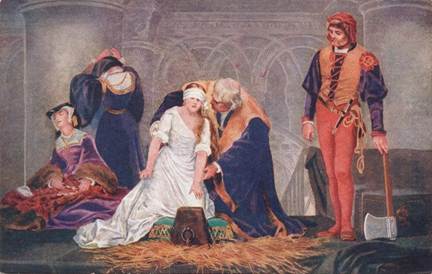
Her death reverberated across Europe. Protestants mourned her as a martyr; humanists mourned her as a brilliant mind extinguished too soon. Today, Lady Jane Grey endures not because she ruled, but because she lived—and died—with a dignity that transcended the brutality of the Tudor Family and their reign of terror.
***
Lady Jane’s legacy of learning came to America
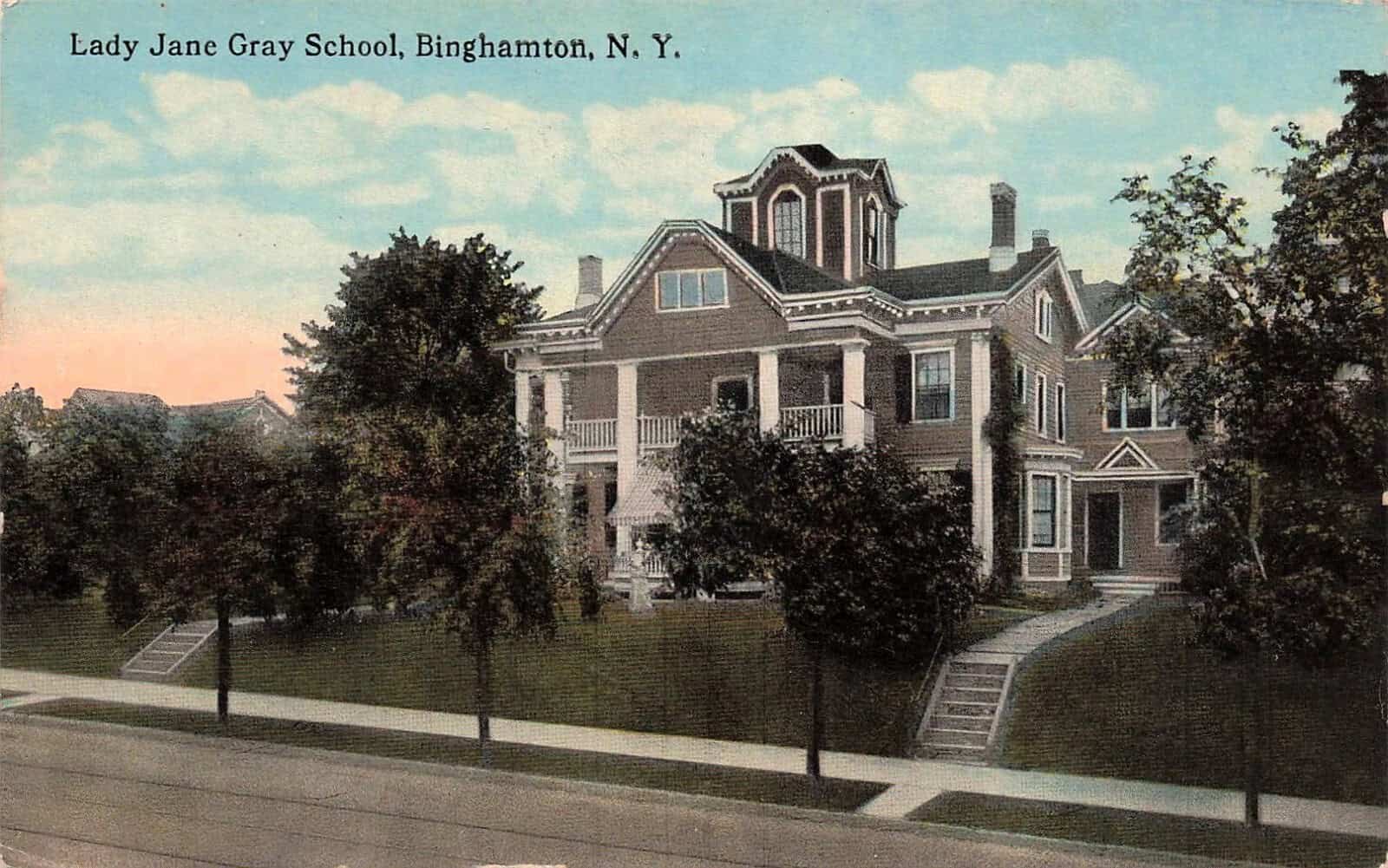
The Lady Jane Grey School in Binghamton, New York was a private boarding and finishing school for young women, operating roughly from the 1880s to 1923. Itwas one of the earliest institutions in the region devoted specifically to educating girls in both academic subjects and the social accomplishments expected of “cultured young ladies” in the Gilded Age.
The history of the school is available online.
Beautiful story, beautifully written. Thank you.
Good article! I have the last postcard in my Tower of London set.
Interesting. I assume the postcards were published in the states.
Thank you a fantastic way to learn history, very interesting. I have a few postcards of The tower of London.