Rasputin and the Empress, a 1932 movie, is a fascinating film for history buffs because it is the only film in which all three Barrymore siblings appeared together: Lionel Barrymore as GrigoriRasputin, John Barrymore as Prince Chegodieff1, and Ethel Barrymore as Empress Alexandra.
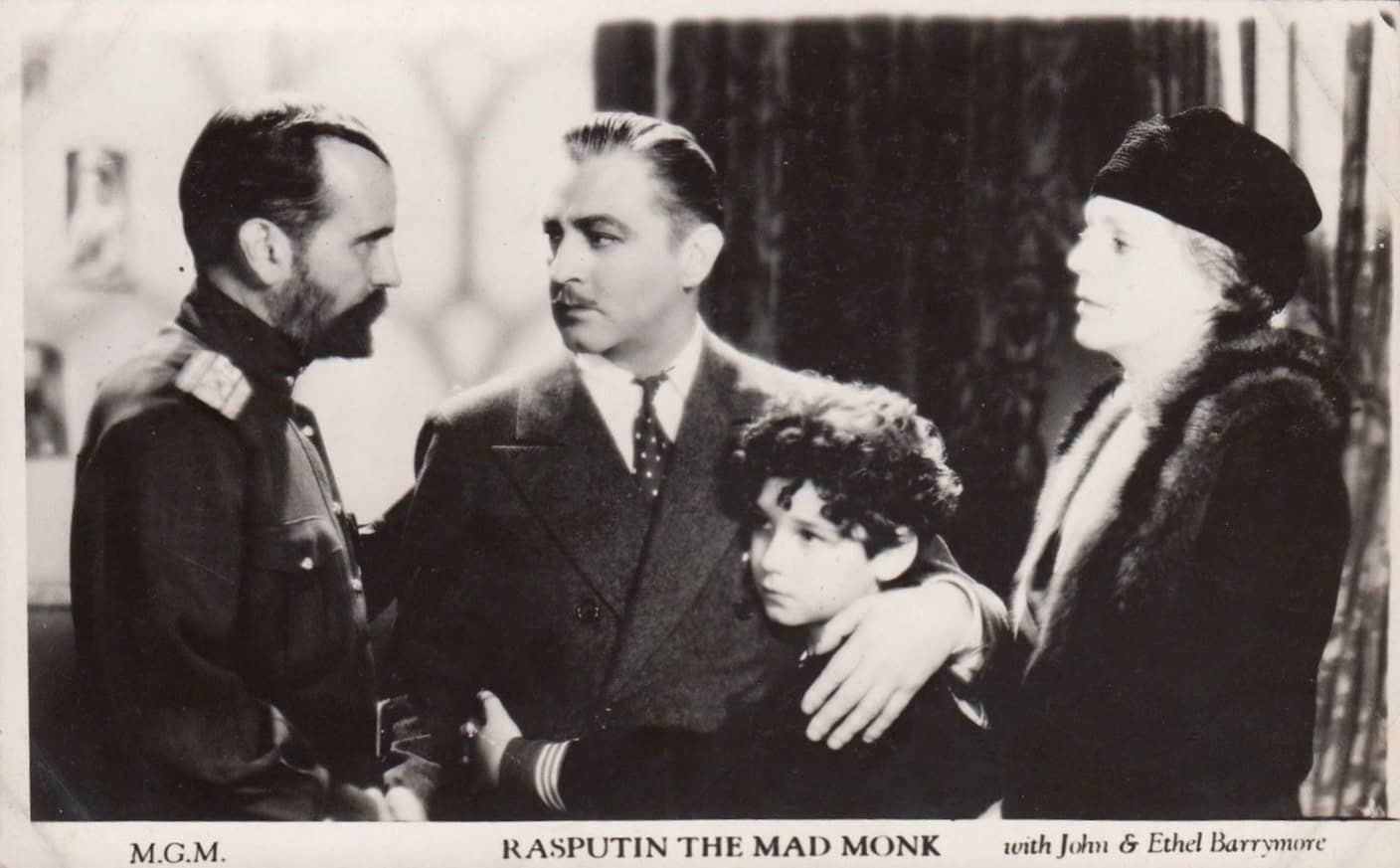
The M.G.M. postcard above shows Lionel Barrymore (as Rasputin) at the left and his brother John (as Prince Chegodieff) and their sister, Ethel (as the Czarina) to the right. Also in the photo is John Alexander, a boy actor who over a five-year period (1930-1934), was known as Tad Alexander. He acted in a dozen films, alongside big stars like Will Rogers, Clark Gable, Bette Davis, and the Barrymores. For reasons unknown, after 1935 he gave up acting likely to pursue another interest – music. He became a concert pianist. He joined the Army during the Second World War where he served as a radar technician. After the War he worked for Hughes Aircraft. In 2010 Mr. Alexander was added to the Young Hollywood Hall of Fame, about which he said, “Acting was just a parenthesis in my life.” Two years after, he died at age 90.
The movie is a dramatized chronical of the final years of Imperial Russia. It was a time when Rasputin, the Siberian mystic and thought-to-be faith healer, gained influence over the royal family after apparently helping the young heir to the throne. As his power grows, members of the Russian aristocracy become convinced that he is corrupting the monarchy and leading the empire toward disaster. Eventually a plot is formed to destroy him.
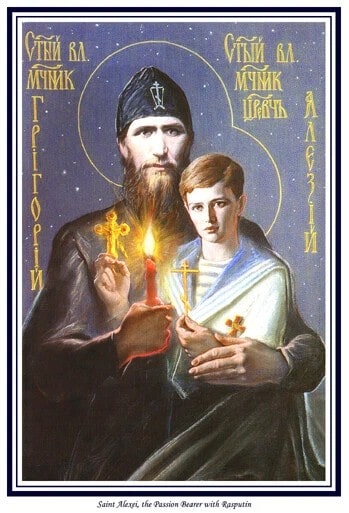
The film is memorable because of Lionel Barrymore’s performance. He does not play Rasputin as a simple villain. Instead, he is hypnotic, unsettling, charismatic, and menacing all at once. Contemporary audiences were fascinated by Rasputin’s reputation as a mystic and his ability to enchant powerful people, and Barrymore’s performance relied on that mystique, especially when the film’s famous line, “I will be Russia!”, captures the character’s ultimate ambition. Rasputin wanted the world to think of him, whenever they thought of Russia.
Also, the film is interesting because it reflects the 1930s viewpoint of the fall of the Romanovs. It gave the world a peek into the private realm of European royalty. Historically accurate, it is not, but it is a wonderful example of the lavish pre-war lifestyle of the European elite.
Rasputin
Rasputin was Siberian which made him an immediate suspect among Russian high society when he became closely associated with the Romanov family during the final years of Imperial Russia.
Czar Nicolas and Alexandra came to regard Rasputin as a man sent by God to protect their son and the monarchy. It was she who defended him against ever growing criticism as Rasputin’s influence at court increased, rumors of corruption, immorality, and political meddling spread throughout Russia.
On the night of December 16-17, 1916, Prince Felix Yusupov and several co-conspirators lured Rasputin to the Yusupov Palace in Petrograd. According to Yusupov’s famous account, Rasputin was first poisoned, then shot, and finally killed after a dramatic struggle. Some historians believe parts of the story are exaggerated, but there is no doubt that the conspirators murdered him. His body was later recovered from a river. Rasputin’s killers hoped to save the Romanov dynasty, but their efforts failed.
The Young Czarevitch, Alexei
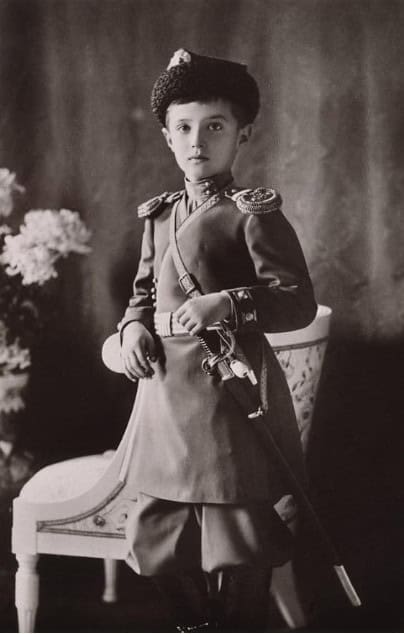
Alexei Nikolaevich Romanov, known simply as Alexei, was born in 1904 as the only son of Czar Nicholas II and Czarina Alexandra, making him heir to the throne of Imperial Russia.
His life was marked by tragedy from an early age. Alexei suffered from hemophilia, a hereditary blood-clotting disorder that caused severe pain and made even minor injuries life-threatening. His condition led his parents to seek help from Rasputin.
Despite his illness, Alexei was remembered as cheerful, intelligent, and devoted to his family. The Russian Revolution of 1917 ended the monarchy, and the imperial family was placed under arrest. In July 1918, Alexei and his family were executed by Bolshevik forces in Yekaterinburg. He was only thirteen years old.
Today, the principal Romanov family members whose remains have been recovered are buried in the St. Peter and St. Paul Cathedral in St. Petersburg.
Czar Nicolas II
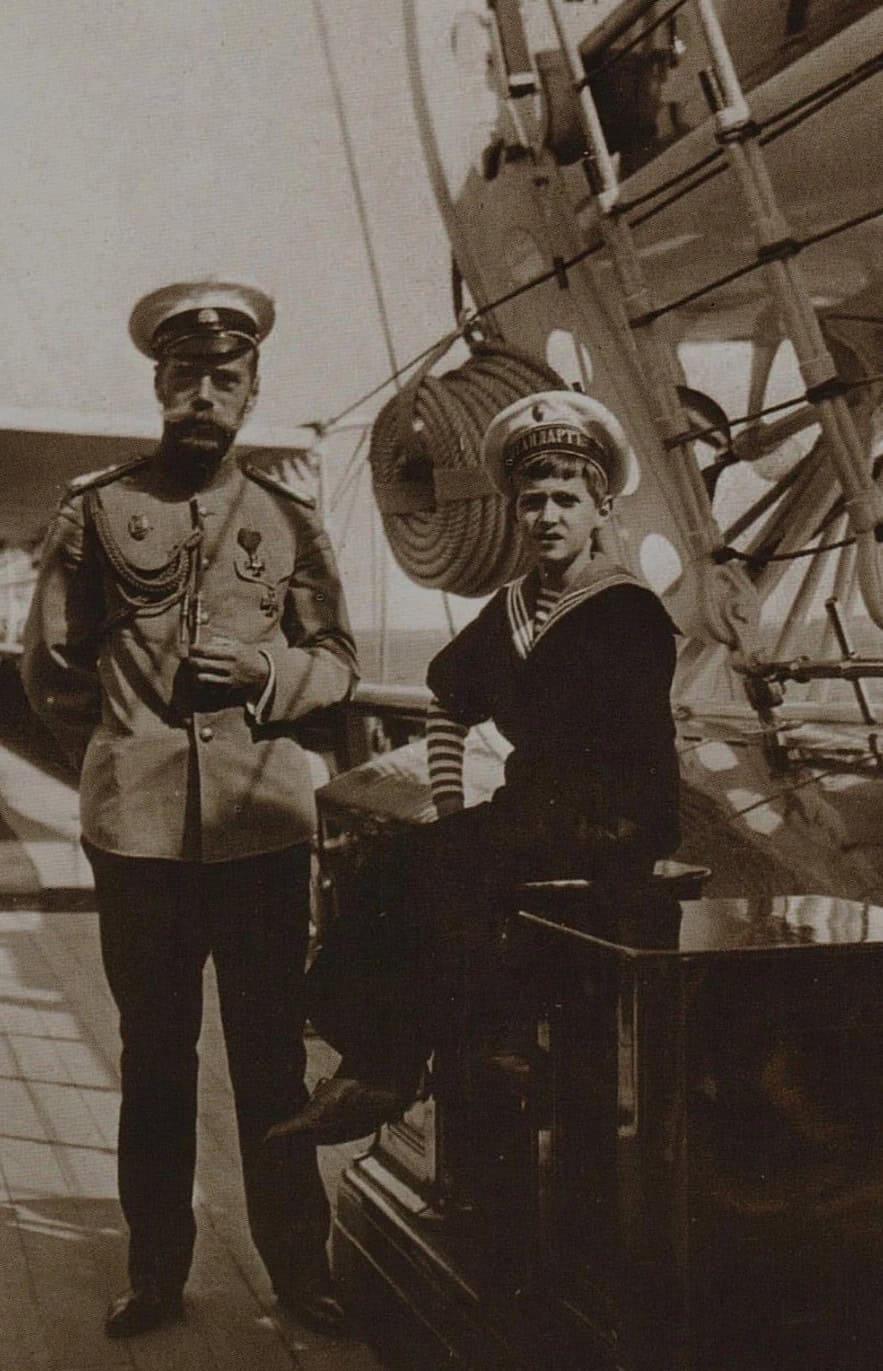
Nicholas II (1868-1918) was the last emperor of Russia and the final ruler of the Romanov dynasty. He ascended the throne in 1894 following the death of his father, Alexander III, and reigned during a period of tremendous social, political, and economic change. Although personally devoted to his family and deeply religious, Nicholas struggled to respond effectively to growing unrest within the empire. His commitment to autocratic rule contributed to the Russian Revolution of 1905 and increasing opposition to his government.
His reign was further weakened by Russia’s defeat in the Russo-Japanese War and the strains of World War I. As military losses mounted and public dissatisfaction grew, Nicholas was forced to abdicate in March 1917.
His execution along with his wife and their children by the Bolsheviks brought more than three centuries of Romanov rule to an end.
The Czarina, Alexandra
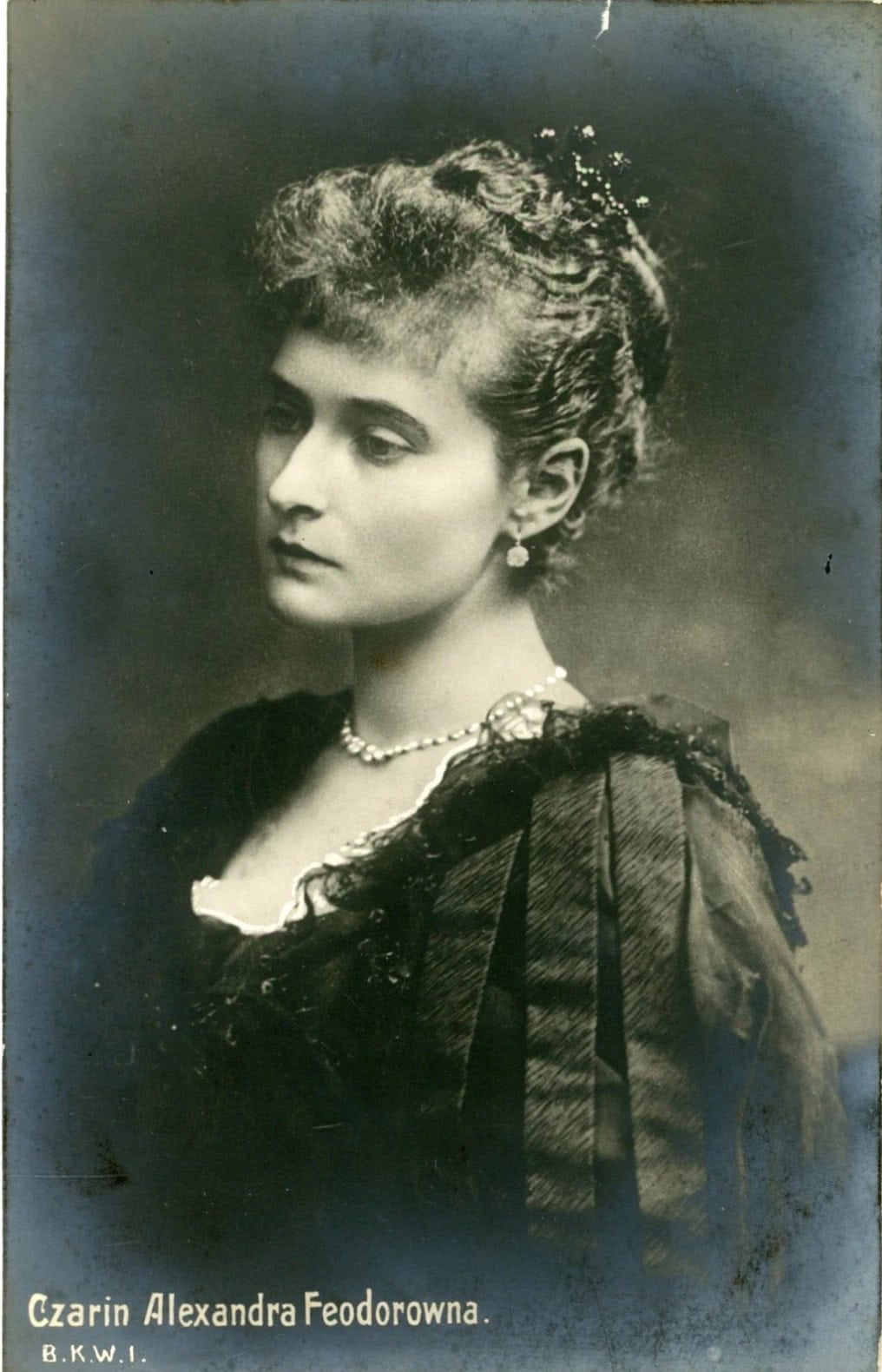
Alexandra Feodorovna (1872-1918), born Princess Alix of Hesse and a granddaughter of Queen Victoria, became the last Empress of Russia when she married Nicholas II in 1894.
Deeply religious and devoted to her husband and children, she never gained popularity among many Russians and was often viewed as aloof and foreign.
The defining event of her life was the birth of her only son, Alexei Romanov, who suffered from hemophilia, a serious inherited blood disorder. To help her son, Alexandra turned to Rasputin, whom she believed could ease the boy’s suffering. Rasputin’s apparent ability to calm Alexei during medical crises earned her complete trust.
As Rasputin’s influence at court grew, many believed he exercised undue influence over the empress and, through her, over government affairs. Historians generally agree that although Rasputin did not cause the fall of the Romanov dynasty by himself, his association with Alexandra greatly undermined public confidence in the imperial government.
Prince Felix Yusupov
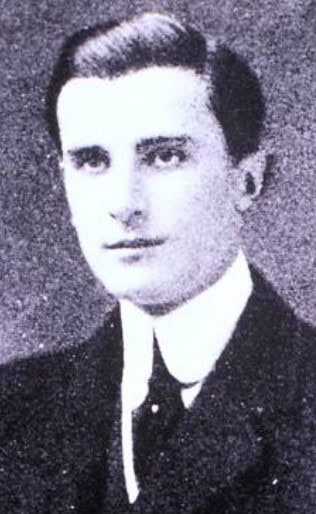
Prince Felix Yusupov was the husband of Czar Nicholas’s only niece (Princess Irina) and one of the richest aristocrats in Russia. He became one of the central figures in the conspiracy to kill Grigori Rasputin.
Rasputin’s influence over the imperial family had become a source of scandal and concern among many Russian aristocrats.
In late 1916, Yusupov joined with several conspirators, including Grand Duke Dmitri Pavlovich and politician Vladimir Purishkevich, to remove Rasputin from palace concerns. The group believed that Rasputin’s influence over Alexandra was damaging the reputation of the monarchy and contributing to Russia’s political instability.
According to Yusupov’s later memoirs, he lured Rasputin to the Yusupov Palace in Petrograd on the night of December 16-17, 1916. There, the conspirators attempted to poison him and later shot him. Yusupov’s dramatic account claimed that Rasputin survived several attempts on his life before finally being killed. Modern historians, however, question parts of this story and believe Yusupov may have embellished events.
The murder failed to save the Romanov dynasty. Just a few months later, Nicholas II abdicated during the Russian Revolution of 1917, and the monarchy collapsed. Ironically, the conspirators intended to preserve the throne, but Rasputin’s death came too late to alter the course of history.
***
1. The Metro-Goldwyn-Mayer Studio was deeply involved in legal problems because the film inaccurately portrayed Prince Felix Yusupov and his wife Princess Irina. The characters were renamed “Prince Chegodieff” and “Princess Natasha.” The suit resulted in a historic finding against MGM that provoked the use of a disclaimer that all people portrayed in the film are fictitious and bear no resemblance to any person living or dead, which has since become standard in Hollywood works of fiction.