In the ninety years between 1845 and 1934, the fleet list of the White Star Shipping Line verifies that the company operated 63 ships. Sixty of those ships had names ending in “ic.” Justicia (1917), Pittsburg (1922), and Southland (1900) were the only exceptions. The best reasoning for the “ic” naming scheme was recently offered by a ship historian who called it a “verbal logo.”

White Star Line was founded in the ashes of a failed cargo/mail delivery concern in Liverpool, England. In just a few years the business grew into a prominent shipping company with an international reputation for comfortable service of the highest caliber for upper class travelers and immigrants moving between Liverpool, England and New York City.
Today, White Star is remembered for its innovative ships, but also, sadly, for the losses of four of its best passenger liners, including the RMS Titanic in 1912 and the wartime sinking of Britannic in 1916. Despite these losses the company retained a prominent hold on shipping markets around the globe.
The “Big Four”
Late in 1899 the patriarch of the Ismay family, Thomas Henry Ismay died. The family was the driving force behind White Star having come from a small village in Cumberland where they sold timber and ship stocks. Upon his father’s death, in a precautionary move to temporarily conserve capital, his son, Bruce cancelled a contract held by Harland & Wolff (a world-famous shipbuilding concern in Belfast, Ireland) for what was to become White Star’s flagship – Olympic. Instead, resources were transferred to the company’s newest project – an audacious attempt to build the grandest fleet of ships that had ever sailed the seas, the “Big Four.”
[Aside: the answer to your question is, “Yes!”, Thomas Henry’s son Bruce Ismay was the same person who was so accurately portrayed as a shameless coward in the 1955 book and 1958 movie, A Night to Remember by Walter Lord. Millions around the world “hated” the fact that he survived the “Titanic” disaster.]
Bruce Ismay’s “Big Four” plan was a ten-year project that to the surprise of many was completed ahead of schedule. The plan was to build four ships in ten years that would be the largest and most luxurious ships afloat. The group consisted of Celtic, Baltic, Adriatic, and Cedric. Each was to be in service by 1909 and be at least 20,000-tons each and have capacities for cargo and passengers that exceeded any ship currently at sea.
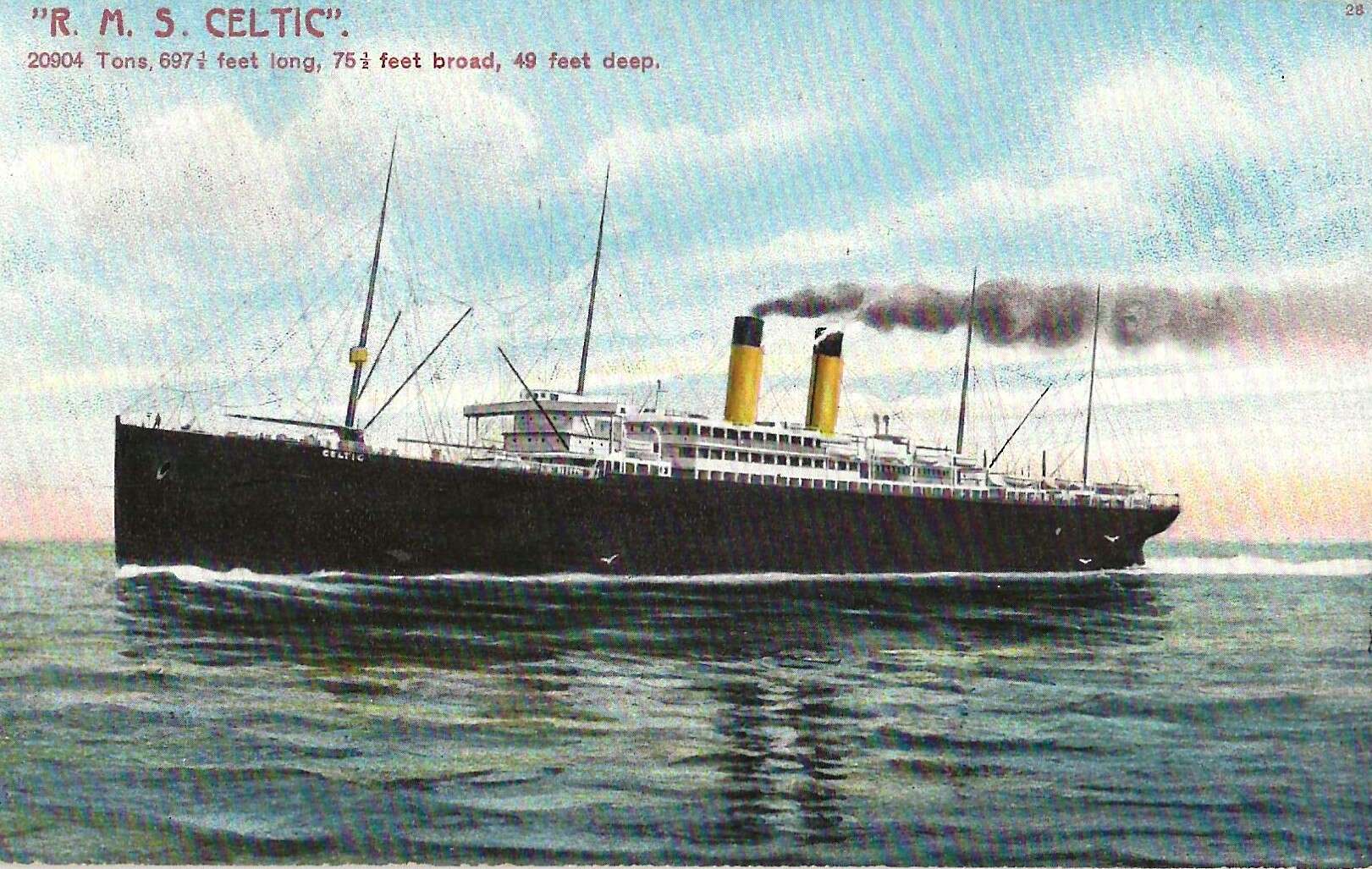
RMS Celtic was the first of the quartet. She was the last ship ordered by Thomas Henry Ismay before his death. She was put into service in 1901 and assigned to the route between Liverpool and New York.
Because of Celtic’s design and construction, the ship was forced to experiment with a mode of slower than usual rotations (roundtrips) but still kept to the schedule of leaving port with a nearly full complement of cargo and passengers on Wednesday mornings at 8 AM. There was one notable exception, Celtic was chosen in 1902 to do a multi-day cruise which met with much success. It was considered the first of White Star’s holiday cruises and because of Celtic’s larger size and low but economical speed, the cruise help develop the new company policy favoring luxury and comfort in place of speed.
When World War I erupted, Celtic was the first commercial vessel converted to an auxiliary cruiser. The Admiralty quickly concluded, however, that such a ship was not ideal for these functions, and transformed her into a troop transport. The war years were hard on Celtic; she struck a mine in February 1917 and in March 1918 she was torpedoed by a German U-boat. Necessary repairs were completed successfully after both incidences.
In 1920 after a complete refit, Celtic resumed her transatlantic service, with only minor disturbances.
Celtic ceased operation on December 10, 1928, when she grounded on the rocks in stormy seas as she approached Cobh (a seaport city in County Cork, Ireland). All the passengers were rescued, but the company considered it futile to attempt a salvage of the 27-year-old ship. She was scrapped on the spot, curiously the shipbreaking operation lasted until 1933.
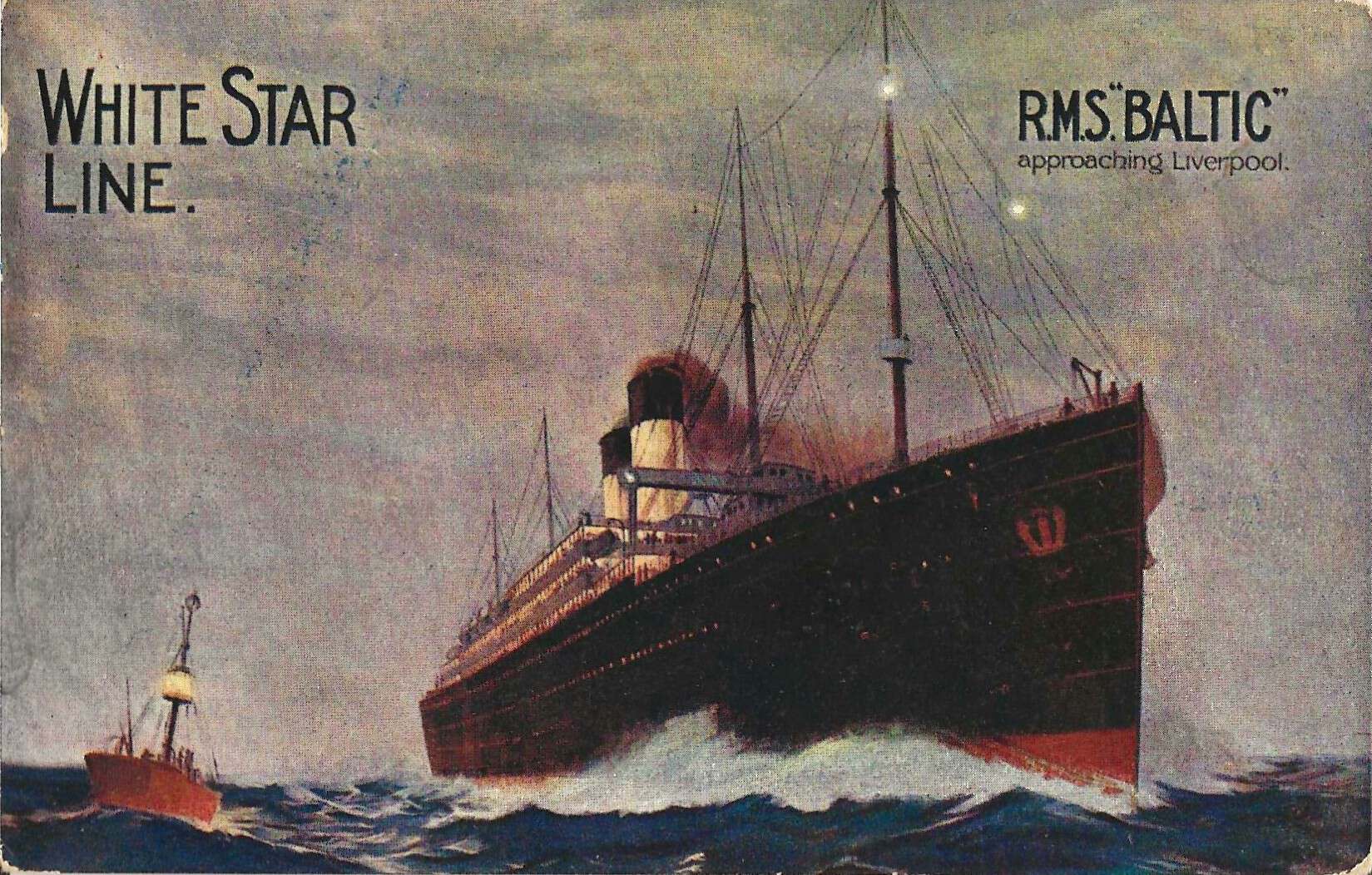
RMS Baltic sailed successfully for the 28 years between 1904 and 1932. At nearly 23,900 tons, she was the world’s largest ship until May 1906. She was the third of the quartet of ships. Of peculiar interest is that although the four ships were virtually identical, Baltic for reasons unknown was the most popular among the regulars.
During her civilian career, Baltic served in the Liverpool – New York rotation. She had a near spotless sailing record, but was involved in two major incidents, one in 1909 and again in 1929. In 1909 Baltic came to the aid of the RMS Republic after Republic was broadsided by SS Florida in a heavy fog off the island of Nantucket, Massachusetts. The Baltic‘s rescue of all passengers drew attention to the important role that the new wireless technology could play in safety at sea.
Baltic was also involved in a rescue on December 6, 1929, when she assisted the sinking schooner Northern Light. A London newspaper dubbed the ship Baltic: Hero is Thy Name!
On February 17, 1933, she sailed for Asia, where she was scrapped in Osaka, Japan, later that year.
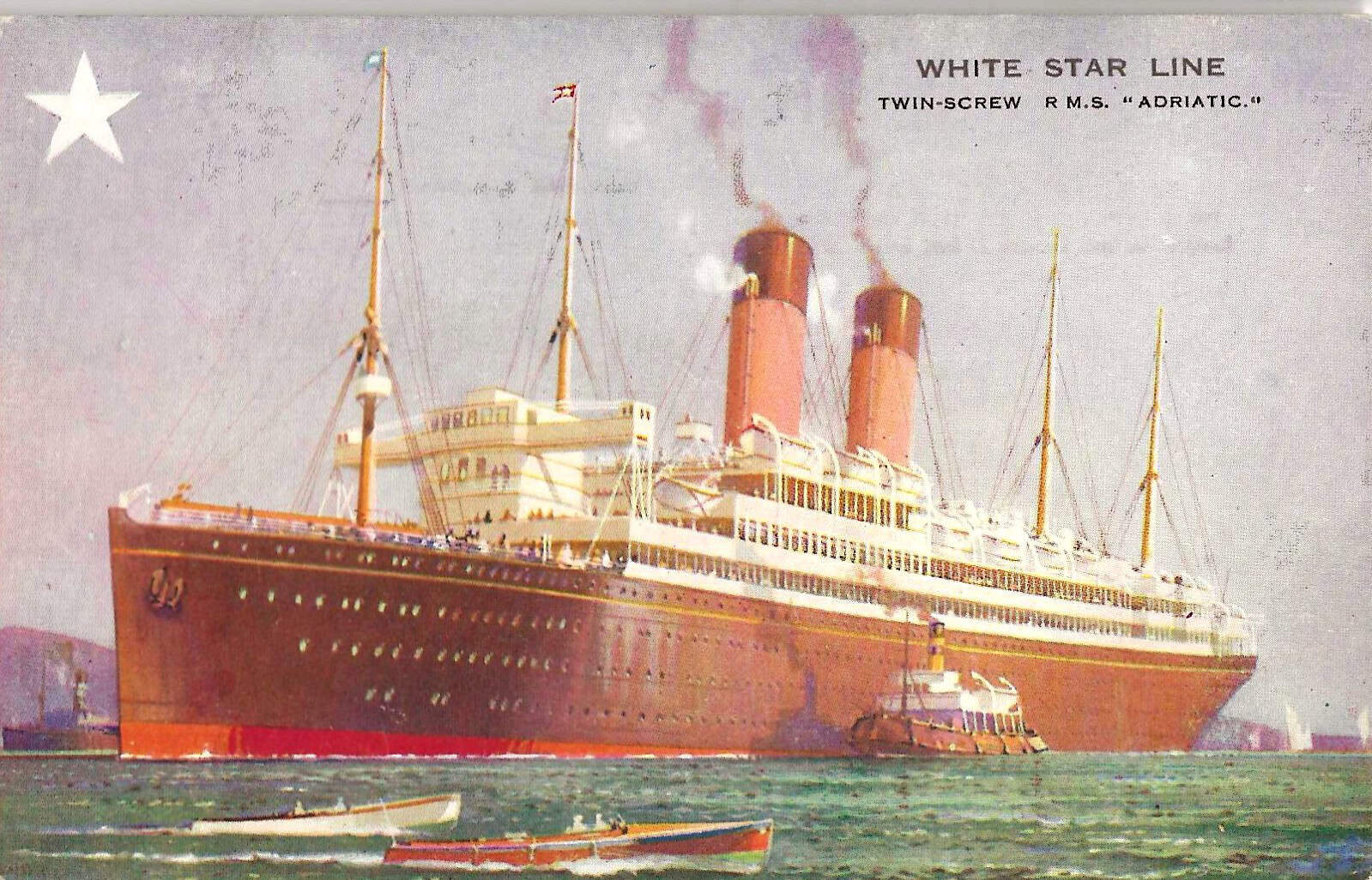
RMS Adriatic. The Royal Mail never received better handling than when aboard White Star’s Adriatic. The mail was always the last item loaded and the first to disembark in every port with a sworn mail agent.
Adriaticwas the fourth of the Big Four and was the only one of the four which was never claimed as the world’s largest passenger ship. However, she was the largest, the fastest, and the most luxurious of the Big Four, being the first ocean liner to have a swimming pool and Turkish baths.
She was launched on September 20, 1906 (purely by coincidence on the same day that Cunard launched Mauretania.) She was completed in dry dock and delivered to White Star and immediately opened the service on a brand-new route from Southampton to New York, April 25, 1907. In 1911 she joined her sister ships in Liverpool. When World War I broke out, the Adriatic was among the few ships that continued with civilian transatlantic service, but in 1917, she was requisitioned and served as a troop transport.
After the war, she was refitted several times and was gradually used for cruises, which became her main service well into the 1930s. Like Baltic, two years later Adriatic was scrapped in Japan.
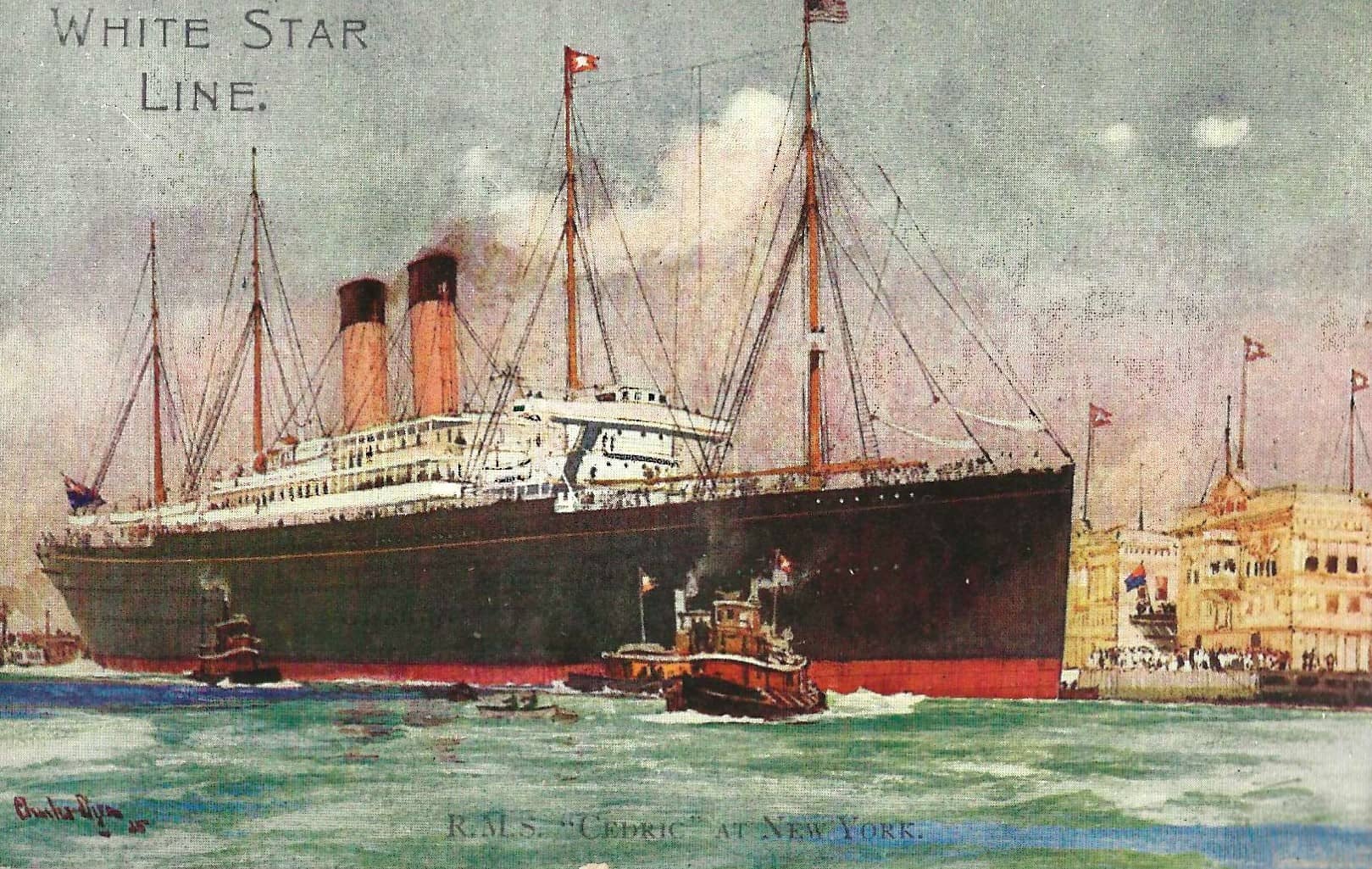
RMS Cedric was the second of the White Star’s quartet of over 20,000 tons ships, and was dubbed, like her older sistership, the largest vessel in the world. At the time of her entering service at Liverpool, she made it possible for White Star to establish a good service that had regular departures on Fridays.
The Cedric was plagued by collisions and minor incidents that took place on the Liverpool to New York rotation. One such event was a measles epidemic that broke out on March 15, 1905. The epidemic raged throughout the vessel among crew and passengers and to make matters worse, the ship sailed right into a storm that damaged her, took her bell, shook the furniture, causing nearly everyone to panic.
In 1910, the ship also suffered a fire at the quayside, but the damage was negligible. In April 1912, on the other hand, Cedric was involved in the events following Titanic‘s disaster. The president of the White Star, Bruce Ismay, asked that the liner be detained in New York so that the surviving crewmembers of Titanic could return to the United Kingdom sailing on her.
Requisitioned as an auxiliary cruiser in World War I, Cedric carried out patrol missions until 1916, but her large size was detrimental to her assigned role. She was then transformed into a troop transport and transported soldiers from Egypt, then from the United States in the direction of the European fronts.
She resumed civilian service in 1919, but in the 1920s Cedric faced competition from modern ships and even after a complete refit attracted very few new clients. She was withdrawn from service in 1931 and scrapped in 1932.
Fascinating!
Awesome!
Fantastic presentation, very enlightening. It’s truly remarkable how economical the Big Four were in comparison to the Oceanic. I can only imagine that 3rd Class on the Celtic must have been quite cramped, with almost double the number of passengers squeezed into a slightly larger area. The contrast in the size of the propulsion machinery is also quite fascinating. That said, I find it intriguing that the Oceanic managed to carry a similar number of passengers over 15 years, compared to Celtic’s 27. Additionally, my favorite has to be the Adriatic because of her plunge bath and the fact that… Read more »