Although the peach is the official state fruit of Georgia and Georgians proudly call their home the Peach State, it is California that is the largest grower of peaches in the United States, producing about 70% of the total orchard yield annually.
During the late nineteenth and early twentieth centuries, California experienced significant economic growth driven by agriculture, particularly in peach cultivation and other agra-endeavors like the production of strawberries, grapes (in the Napa Valley), and cherries (in the San Joaquine Valley), plums, and nectarines. Also, figs, dates, and melons of various kinds.
The influx of Chinese immigrants to California began in the mid-1800s, driven by the Gold Rush and opportunities in farming and labor-intensive industries like railroad construction. Many Chinese men (often several members of the same family) migrated together seeking better economic prospects, often facing discrimination and restrictive laws. Despite these challenges, they established themselves as essential workers.
In the state’s peach orchards, Chinese laborers took on demanding tasks such as planting, pruning, harvesting, and packing peaches. These tasks required physical endurance and skill, and Chinese workers became known for their diligent work ethic and efficiency. Their labor was especially important during harvest seasons when the demand for fruit was high, and the need for quick, precise work was critical for maintaining the quality and profitability of the orchards.
The humble postcard was one rare institution that recognized Chinese immigrants. Raphael Tuck & Sons produced a colorful and well-defined set entitled Chinese on a California Peach Farm. Drawn by Graham Hyde, the set pictures the immigrant worker and the illustration is specific to the chore at which he is working or other parts of a routine day.
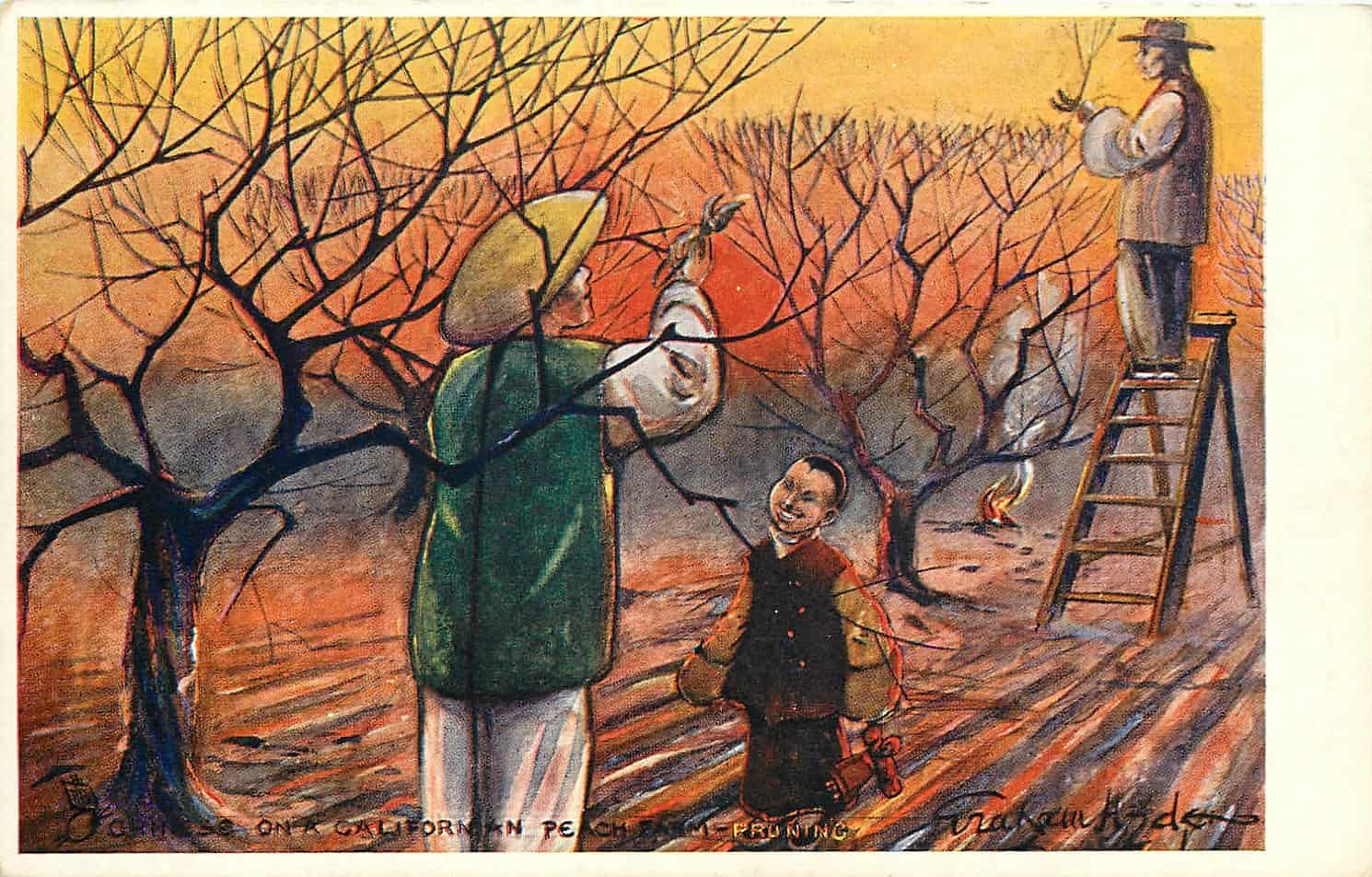
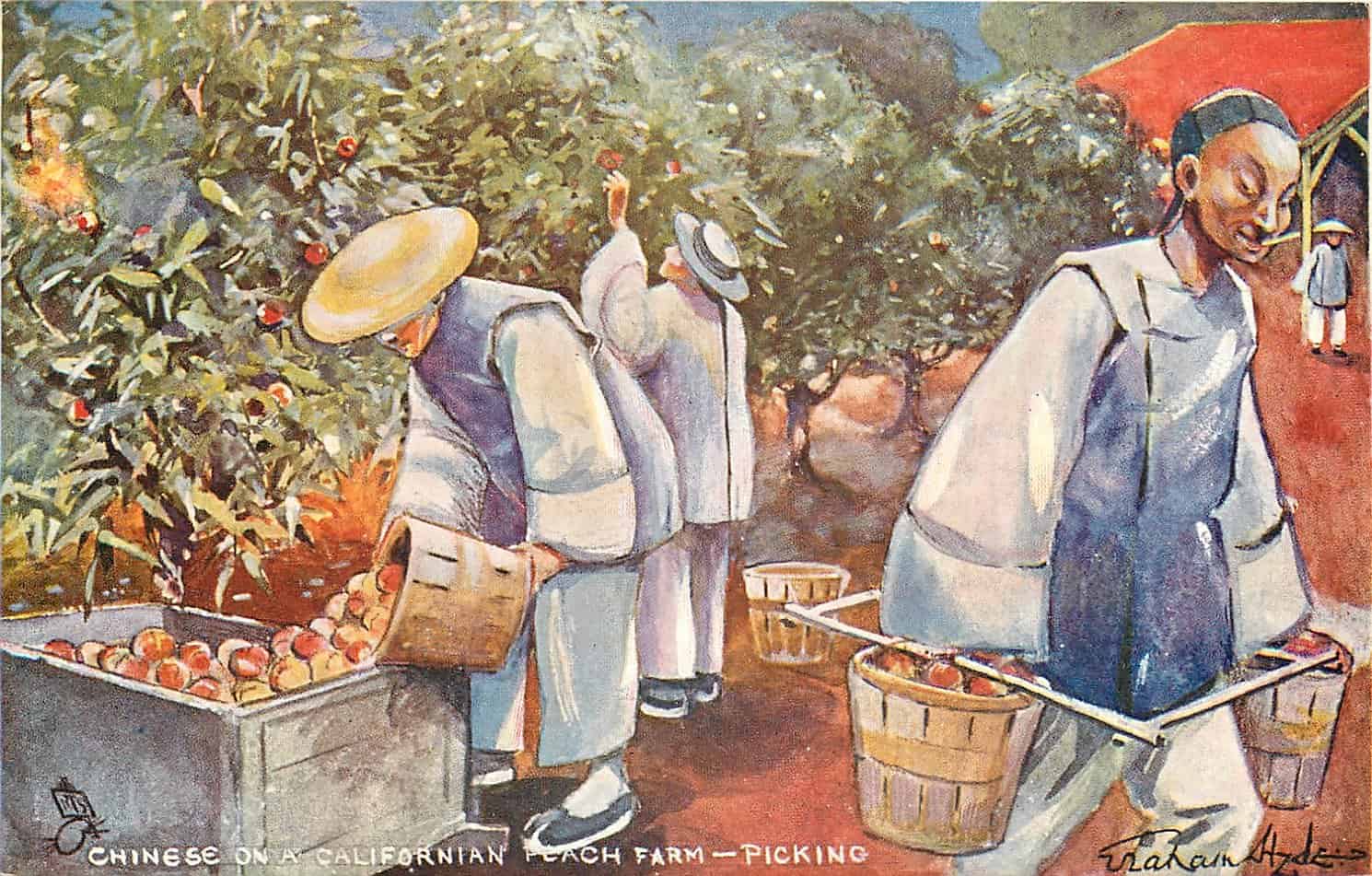
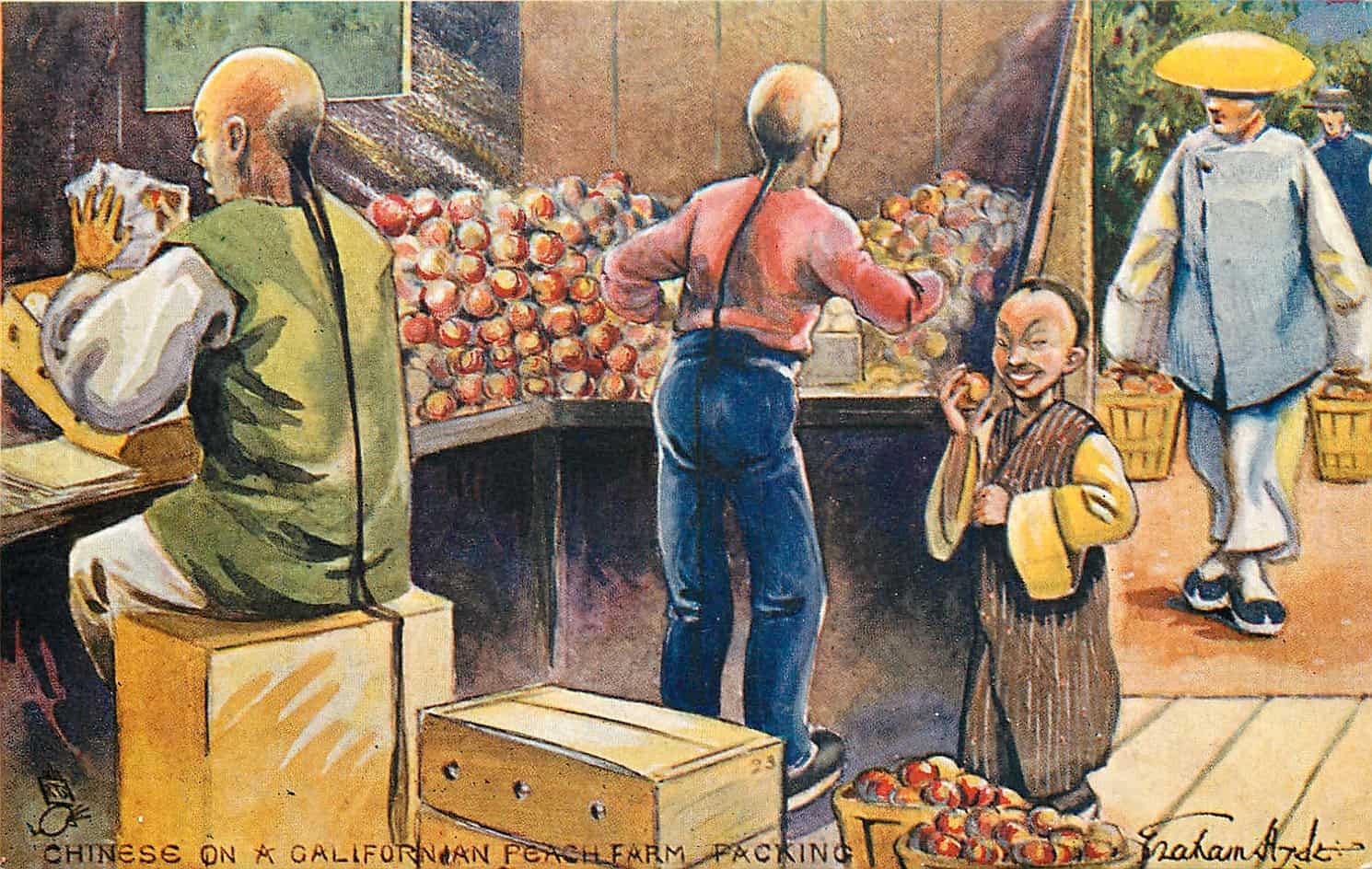
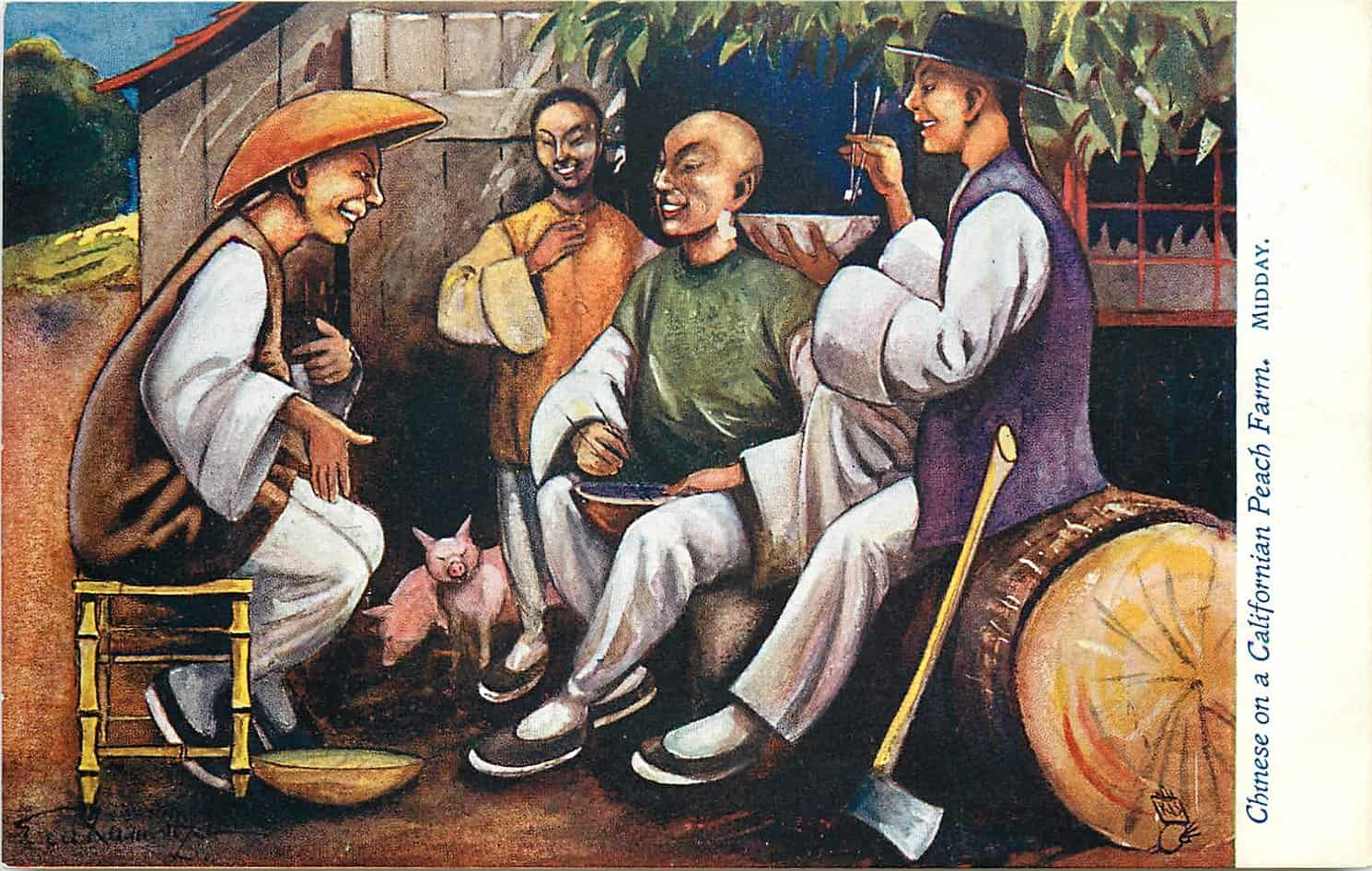
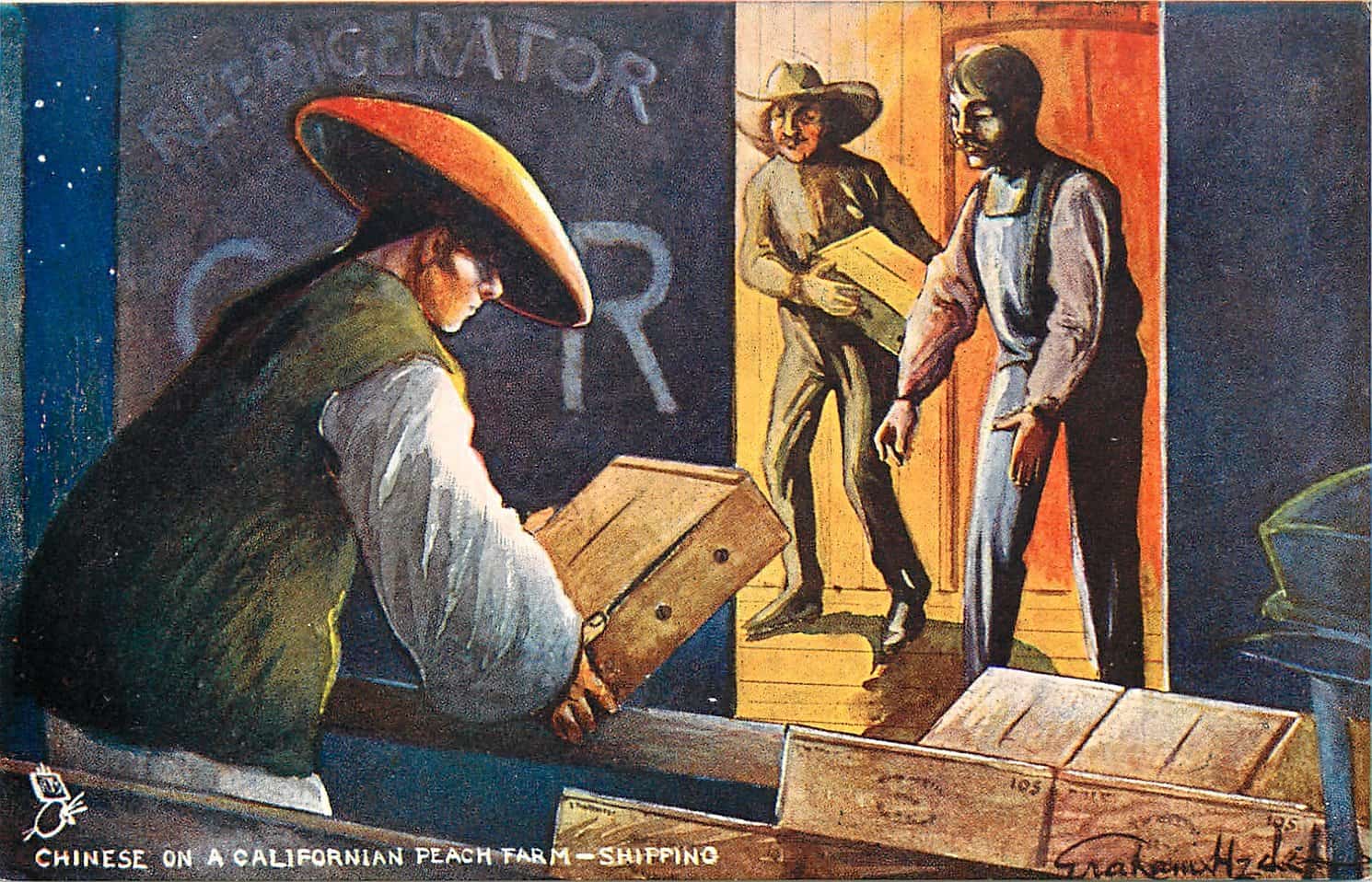
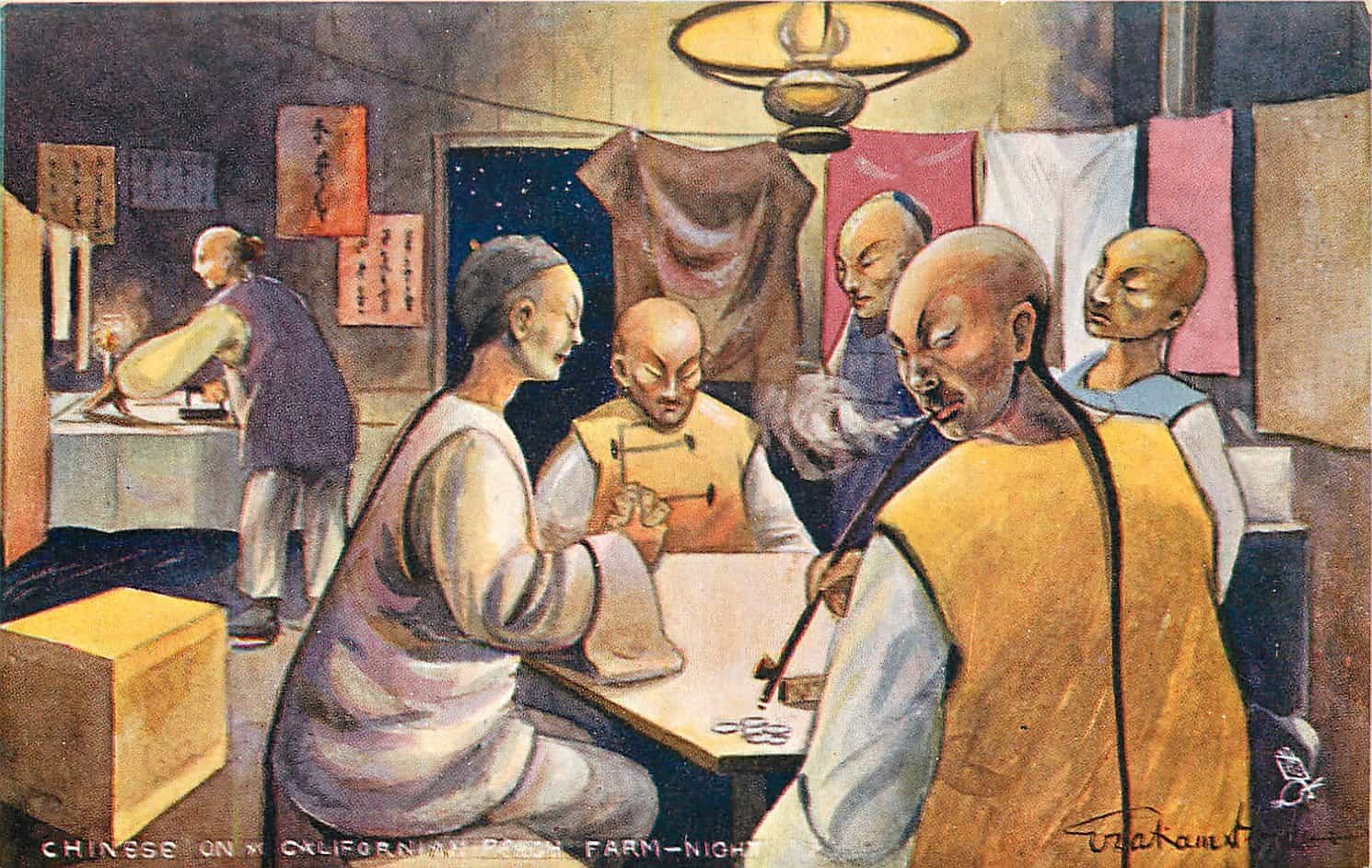
The work environment for Chinese immigrants was often harsh and underpaid. They faced discrimination from white farmers and labor contractors who often exploited their vulnerability. Many Chinese workers lived in segregated and impoverished conditions, working long hours for minimal wages. Despite these hardships, their perseverance contributed significantly to the expansion of California’s fruit industry, making peaches one of the state’s prominent exports.
Furthermore, Chinese immigrants contributed culturally and socially to California’s agricultural communities. They brought with them agricultural techniques and work practices that sometimes influenced local methods. Over time, Chinese workers organized themselves into mutual aid associations that provided social support and helped negotiate better working conditions, although systemic discrimination persisted.
The contribution of Chinese workers in California’s peach orchards also had broader implications for immigration policies. Their labor helped to sustain California’s economy but also fueled anti-Chinese sentiment, leading to discriminatory laws such as the Chinese Exclusion Act of 1882. This legislation severely restricted Chinese immigration and reflected widespread racial prejudice, which impacted Chinese communities for decades.
Despite the adversity, Chinese immigrants who worked in agriculture became role models and frequently shaped part of California’s agricultural development. Their contributions laid the groundwork for future generations of Asian Americans in California and highlighted the importance of immigrant labor in the nation’s economic history. For nearly one-hundred years, the Chinese were indispensable in the state’s agricultural expansion
Thank you for these cards. The illustrations are lovely and nicely composed.
Secondary interest being California agriculture none of my 500 something examples have a representative from this set. Nice to know there is more fruit to pick.
This set is so meaningful in light of the current erasure of our collective history. Thank you for your insight and beautiful contribution. I love living in “The Valley of Hearts Delight” California, such as it is today.
Thank you Graham for sharing a wonderful set of labour postcards; and for your clear and concise outline of their work conditions etc. It must gladden the hearts of their descendants if they should read your appreciative descriptions. Condolences on your own recent loss, and wishing you much happiness on the next stage of your life.
Thanks for an informative and insightful article. The life experiences of Chinese-Americans are often overlooked, especially those outside Chinatowns. Great article on a neglected topic, nicely illustrated with rarely seen postcards. Hope your writing helps ease your pain.