Watching the calamity of a church fire is an emotional experience for the citizens of any community. When it happened in my hometown at the church I attended with my parents for more than twenty years, the memories flooded back at the speed of a tidal wave. It was draining because there would no longer be a place reminding me of the days when my Sunday School teacher would recite verses from the book of Psalms or when my dad (the head usher for the last three decades of his life) would ask me for help carrying the contents of the collection plates home to our dining room table where it would be counted for deposit first thing Monday morning. (My job was to gather the “giving or tithe envelopes” and arrange them in alphabetical order. I got good at it; I could do about 50 or 60 in less than five minutes.)
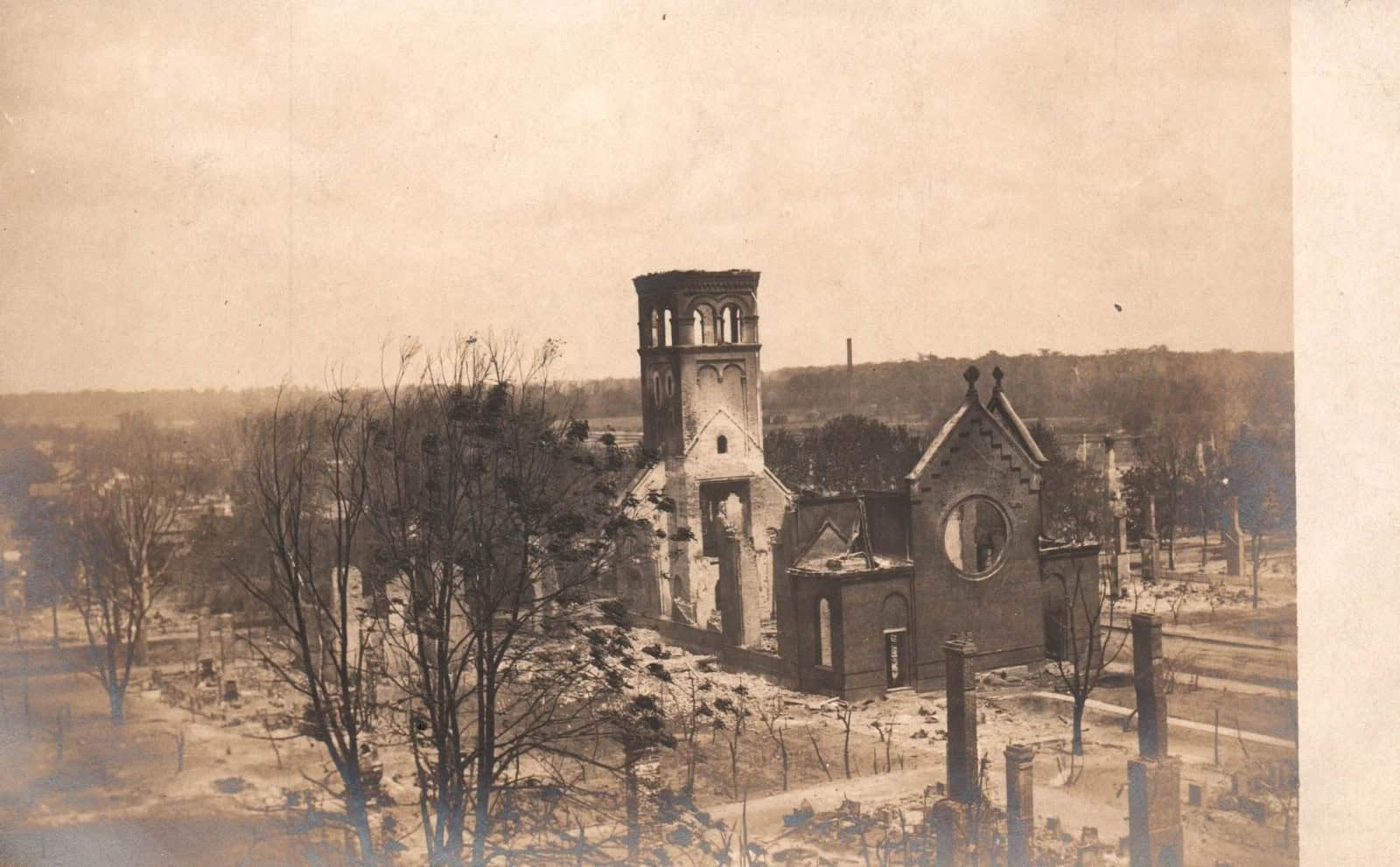
Churches are special places for people. Churches are places where people pray and find relief from the stress of everyday life. It does not matter what “stress” you feel. Some are concerned about having enough money to live a comfortable life or finding a new job. Young people feel “stress” too! I remember once praying for help with my book report that was required in Mr. Adams’s American literature class. When a fire destroys a church, it feels like there is “no place to go to ask someone for help.”
Church fires can make people angry and sad. The sadness comes from remembering important events like weddings, baptisms, and holidays. If you watch the process while the church is burning, your memories may be lost or at least changed. The anger is gut wrenching when a fireman uses an axe to break a stained-glass window that your great-grandfather donated the money to create. Church fires may cause feelings of alarm and fear. People may worry about how the fire started and if their community is safe. They might also worry about the future of their church and if the parishioners can manage to rebuild it. Church fires can lead to a sense of sorrow. People may mourn the loss of a sacred space that helped them in tough times. The fire can make them feel helpless in the same way they would if a loved-one died.
A church fire can also bring a feeling of loss and disappointment. People may feel angry or frustrated that something so important was destroyed. They might think about how much effort and love went into building something that just vanished in flames.
***
I haven’t collected postcards for many years like some of the friends I made at the postcard club I joined. One gentleman who helps me define my collecting has been at it for more than forty years. I think he has a million postcards, but that’s just a guess and probably an exaggeration. I got my start as a collector at an antiques fair held by my local historical society. There was a retired newspaperman who had postcards from my hometown and one of them was a real photo of my church when it was burning.
***
NOTABLE CHURCH FIRES
Springfield, Massachusetts
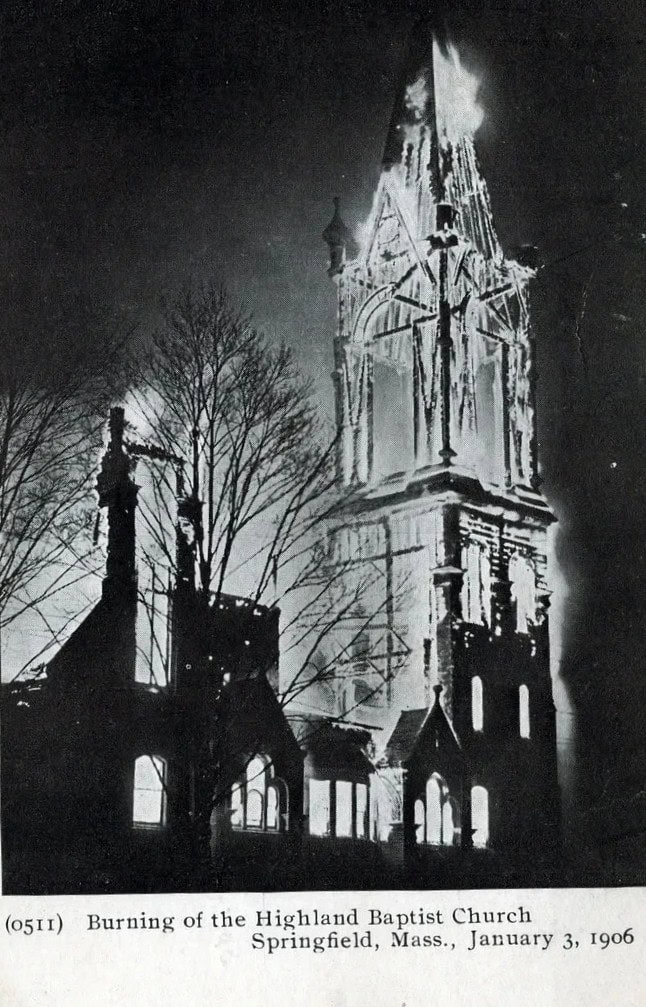
The light in the sky above Springfield in the early morning hours of January 3, 1906, could be seen half-way to Hartford, Connecticut. Two lives were lost and much of the damage was blamed on poor water pressure. The village fire chief reported that if water pressure had been adequate the fire could have been extinguished at the barn where the fire started just after ten o’clock.
The Holyoke Daily Transcript reported that Captain Sidney Bowles of Engine 4 and Frank Hines, a call man from Winchester lost their lives when they fell through the roof of the burning structure. Several other firemen sustained injuries, but of a less serious nature.
Many on-watchers told Transcript reporters that the steeple burned for more than a half-hour before it fell. The church was valued at about $60,000 and the furnishings, including the organ at about $10,000.
Captain Sidney H. Bowles was a man about 50 and has been a member of the fire department for about 10 years.
Baltimore, Maryland
The citizens of Baltimore woke up on Wednesday morning December 23, 1908, to find that the Baltimore Sun had more bad news than usual. On the front page there was an account of a fire at the Harald Square Theatre in New York, a riot in Pittsburgh among a parish of Catholics warring over some furniture that a priest removed from their parochial school, and another incident in New Jersey where a woman threw acid in the mayor’s face.
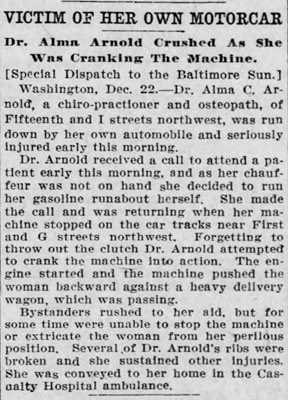
There was more bad news on Page 2 and Page 3 – but WAIT! In the same newspaper was an article about a very devoted Washington, DC, doctor: Dr. Alma Arnold. It has nothing to do with church fires, but it is too good of a human-interest story to dismiss.
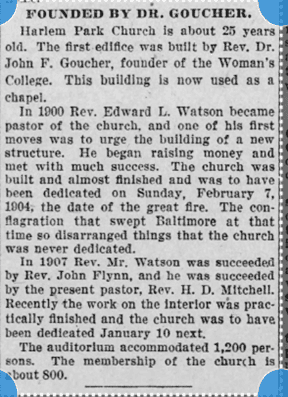
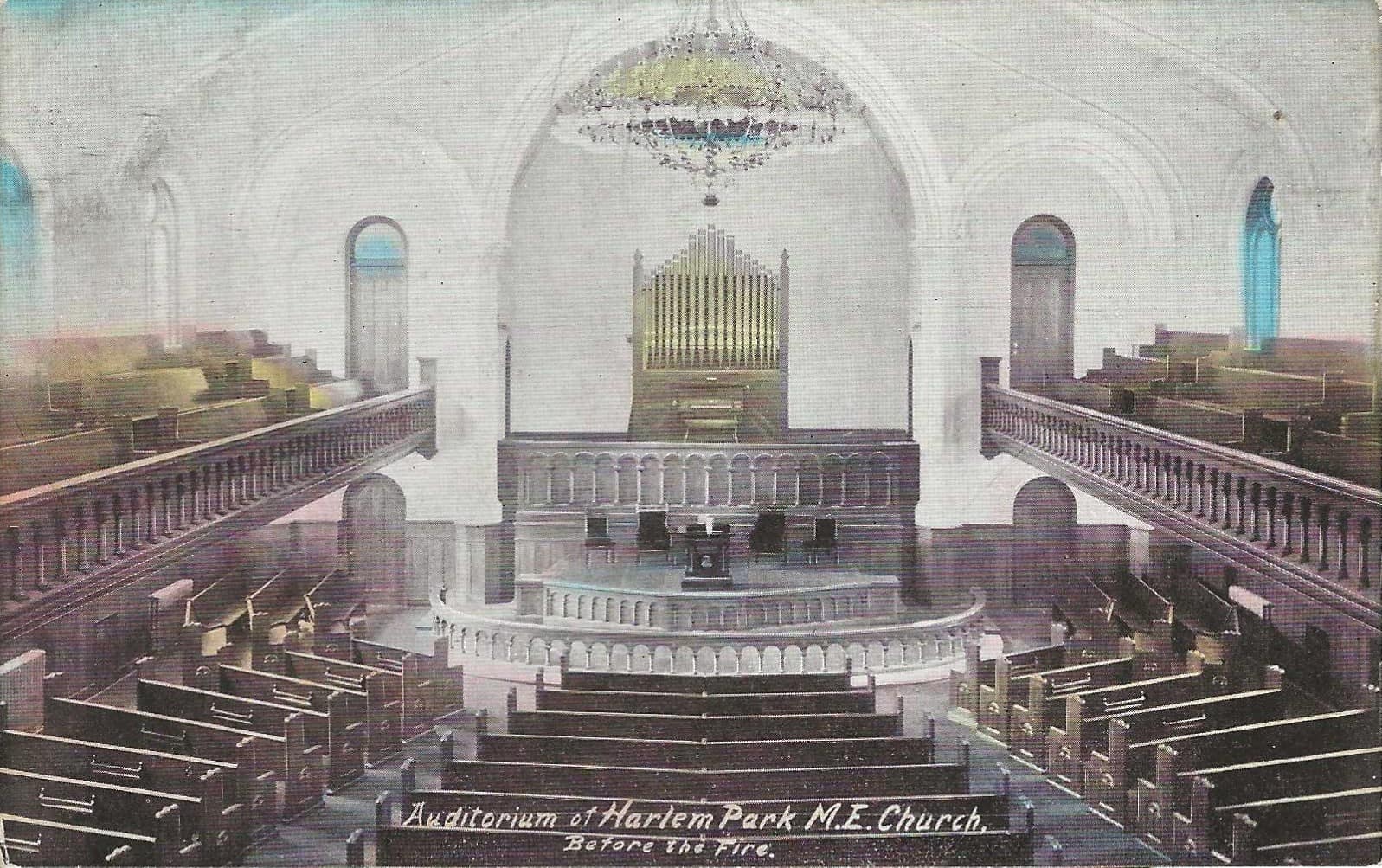
Then on Page 14, the citizens of Harlem Park learned that their Methodist Church was reduced to ruins overnight.
Asbury Park, New Jersey
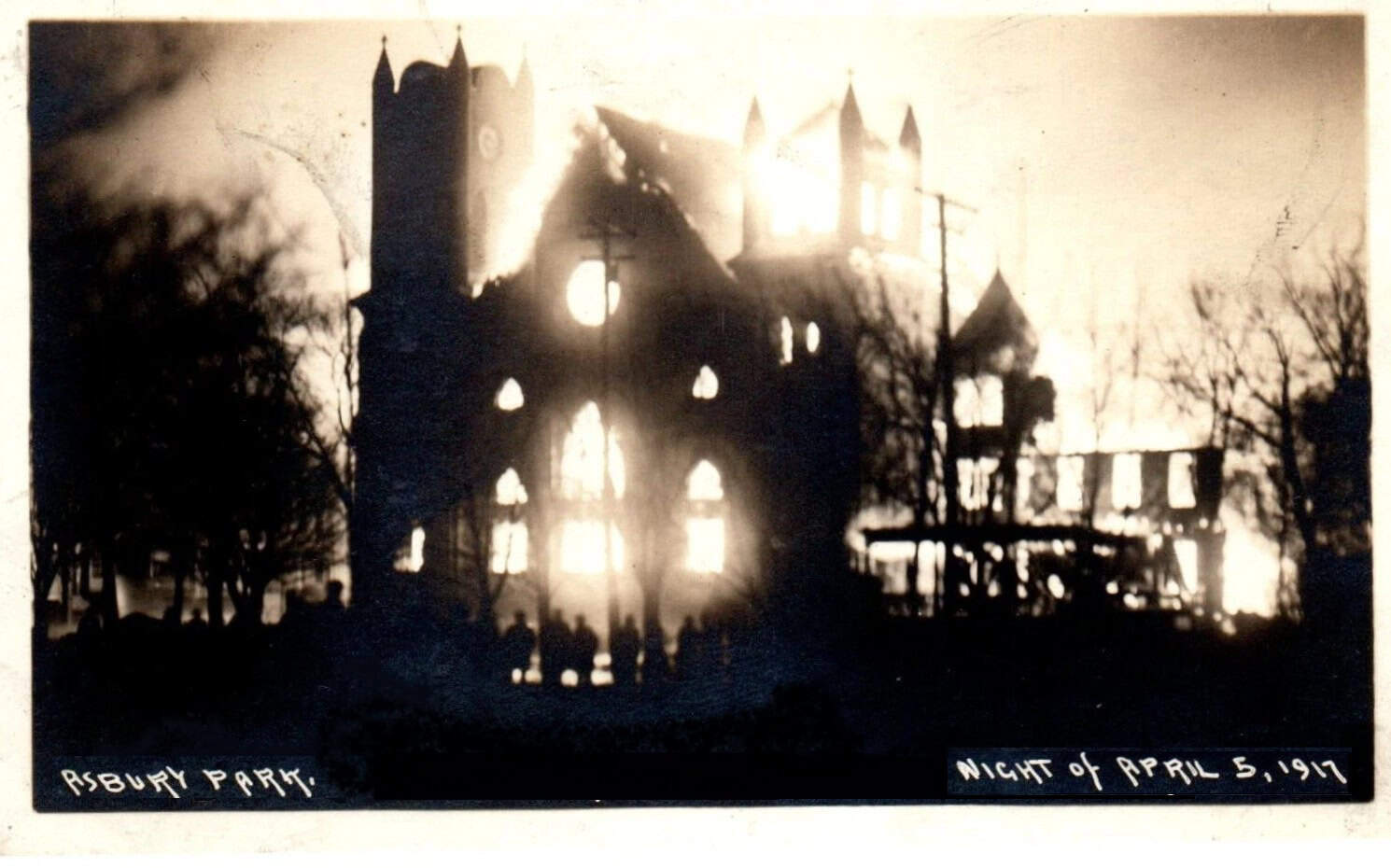
Four blocks of Asbury Park hotels, boarding houses and residences, the $125,000 boardwalk Natatorium, part of the boardwalk, and the First Methodist Episcopal church, were destroyed by fire last night. From the boardwalk to Grand avenue and between First and Second avenues the fire made a clean sweep of 48 buildings. It was driven from its starting point in the Natatorium before a 65-mile [per-hour] gale and laid waste $1,000,000 worth of property before desperate firemen, concentrated on the church building, could do the first effective work. In comparison of fire losses in the city, last night’s fire was a conflagration.
Plymouth, New Hampshire
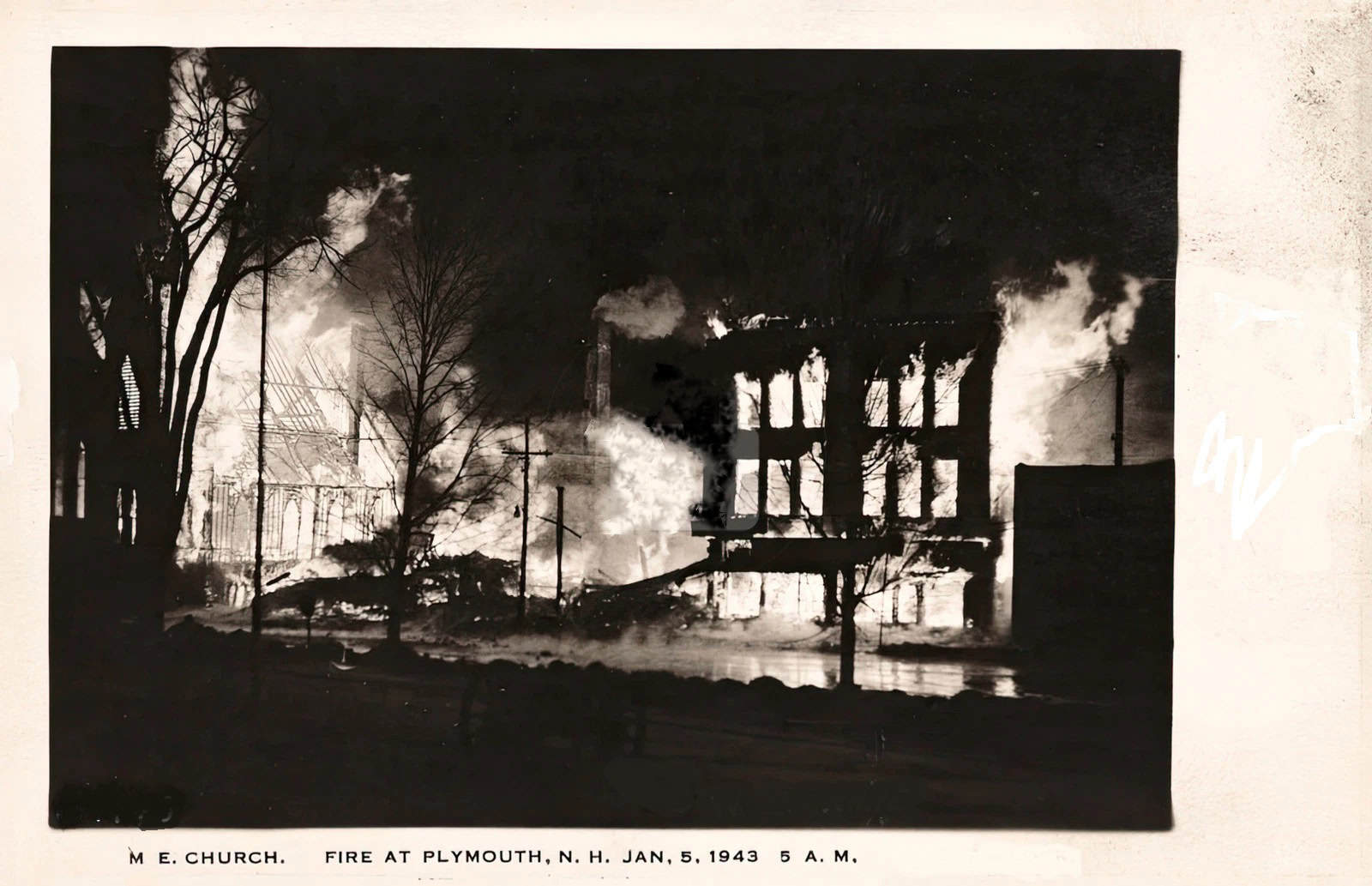
In the early morning hours of January 5, 1943, the sounds of blazing fire, sirens, and the din of activities at the 112-year-old Plymouth, New Hampshire, Methodist Church aroused many from their beds just after 5 AM to witness the worst fire in decades. Crowds filled the sidewalks across the street from the Methodist Church.
Fire Chief, Ralph Cass ordered many valiant attempts to rescue relics from the flames, but sadly most failed. It is estimated the value of real property lost was $300,000.
Fire watchers were on duty at least 10 hours after the blaze was brought under control.
Quebec City, Quebec, CANADA
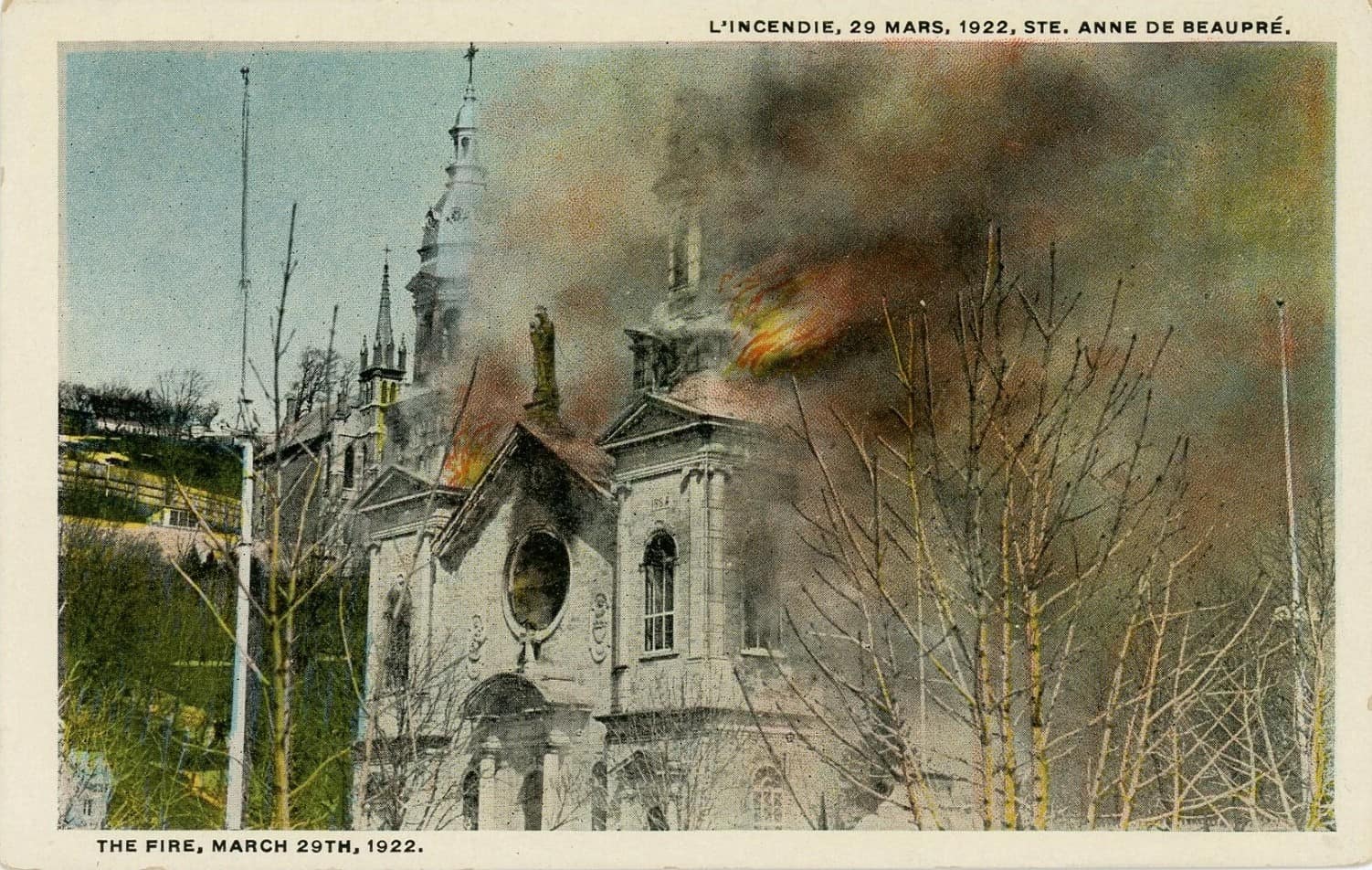
Headline: Le Devoir, 29 Mars 1922, Ste. Anne de Beaupre, “Flames high in the air over Quebec Provence and black smoke billowing into the sky brought Ste. Anne’s Church to ruin yesterday.” A fire of unknown origin (but suspicious) destroyed the predecessor of the current basilica in the morning of March 29, 1922. The $1,000,000 “Basilica” was a complete loss.
The parish dates to 1658 when land was donated for a chapel dedicated to Sainte Anne. Apparently, the relics of the honored Sainte were lost in the fire. Also lost were two sacred paintings, one by Lebrun and another by VanDyke.
A few weeks before the fire the parish priest received an anonymous letter warning that: “I will burn your church on December 28.” The warning was not taken seriously but great efforts were put in place to increase vigilance. When no fire occurred in December, apparently vigilance was relaxed. A Canadian member of the American Ku-Klux-Klan came under suspicion but no direct evidence was found.
***
Paris, France
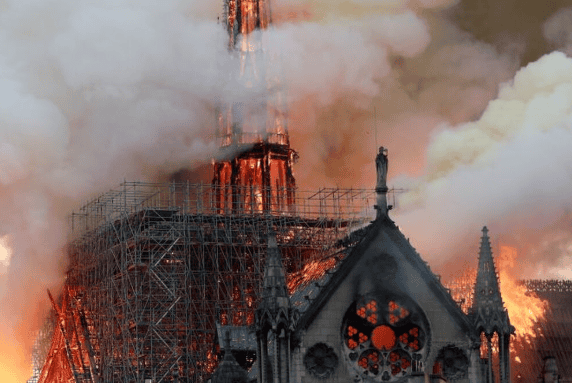
Notre Dame, Paris, April 15, 2019
Church fires are concerning since most are caused by carelessness, vandalism, accidents, or arson. When fire destroys a church, faith and safety are questioned. I asked myself a million questions on April 15, 2019.
Beautifully written and so touching.
This is a most interesting and informative article. As I read it, I was reminded of the fire that destroyed the historic Notre Dame de Lourdes Church in Fall River, Massachusetts, on May 11, 1982. This was the largest church structure in New England and on the ceiling was the largest oil on canvas in the world–Cremoni’s Last Judgment. The church was being renovated and the fire was caused by blow torches igniting creasol in the gutters. The church was on a hill and it was a windy afternoon when the two large steeples fell on neighboring houses: 27 homes… Read more »
Technically speaking, church is not a building, buildings fail. A church is a body of believers. Take heart and stay connected to a community of believers.
Fascinating!