If you planned a day-out along the Champs-Élysées, around the Place Vendôme, or down the Avenue Montaigne in the last months of World War I, you would have seen hundreds of tiny woolen dolls dangling from buttonholes of practically everyone. From tiny children to the best dressed in Parisian society, the dolls had a purpose. Here is a history of the Nénette and Rintintin woolen dolls – the tiny charms that put smiles on the faces of war weary Paris.
Two Little Protectors.
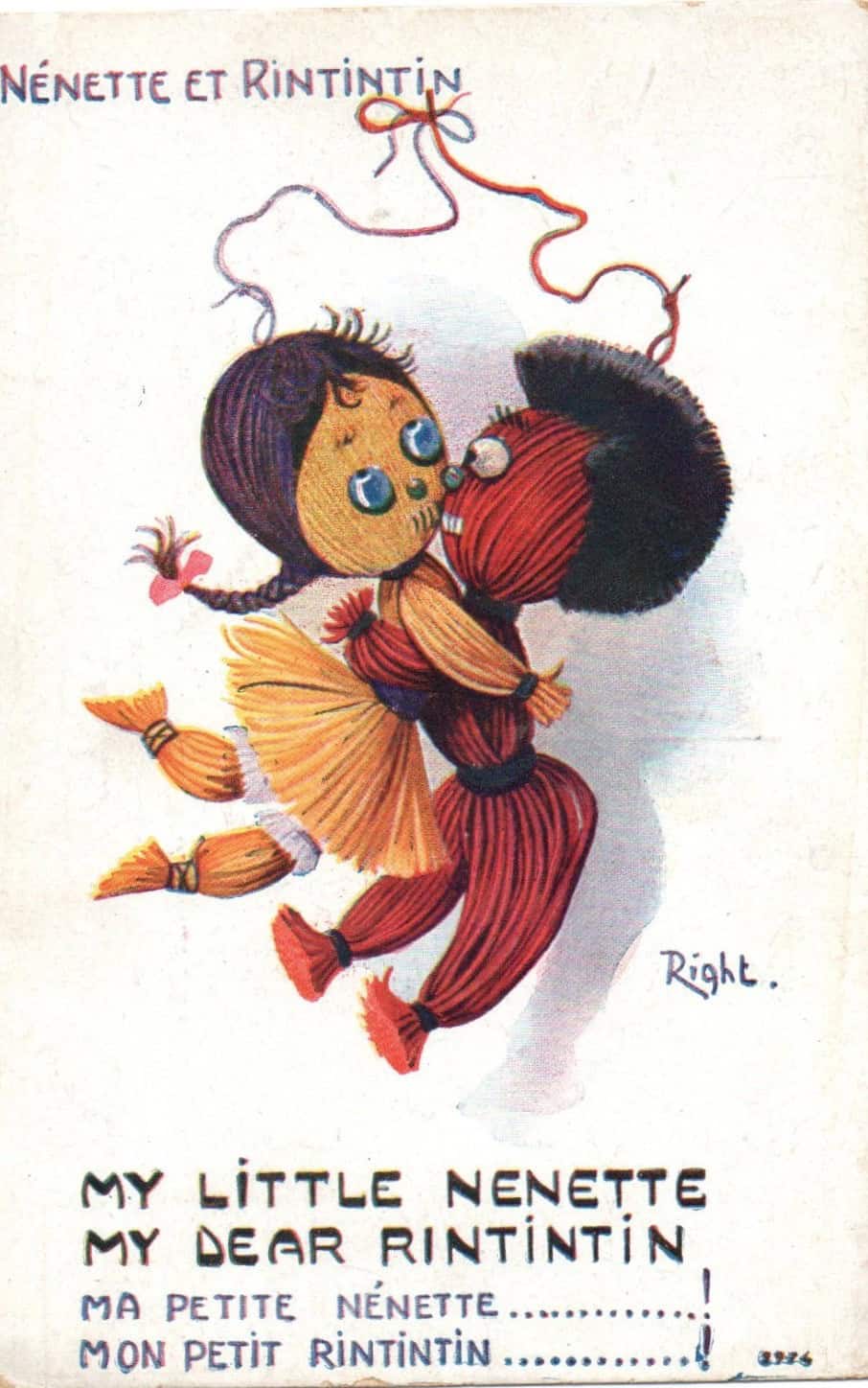
Nénette and Rintintin began as tiny yarn dolls, scarcely an inch tall, simple enough for a child to make, yet powerful enough, so it was thought to shield a person from danger. By the summer of 1918, Paris was exhausted by years of war. Nearly everyone was shaken by air raids and haunted by that long‑range German gun known as Big Bertha. In that atmosphere of fear and uncertainty, Parisians embraced these miniature mascots as talismans of hope.
Observers at the time noted that it had become “taking a long chance to go about unprotected by a Nénette and Rintintin,” and that the charm only worked if the dolls were given, never bought. The pair had to stay together—one without the other broke the spell.
What They Looked Like.
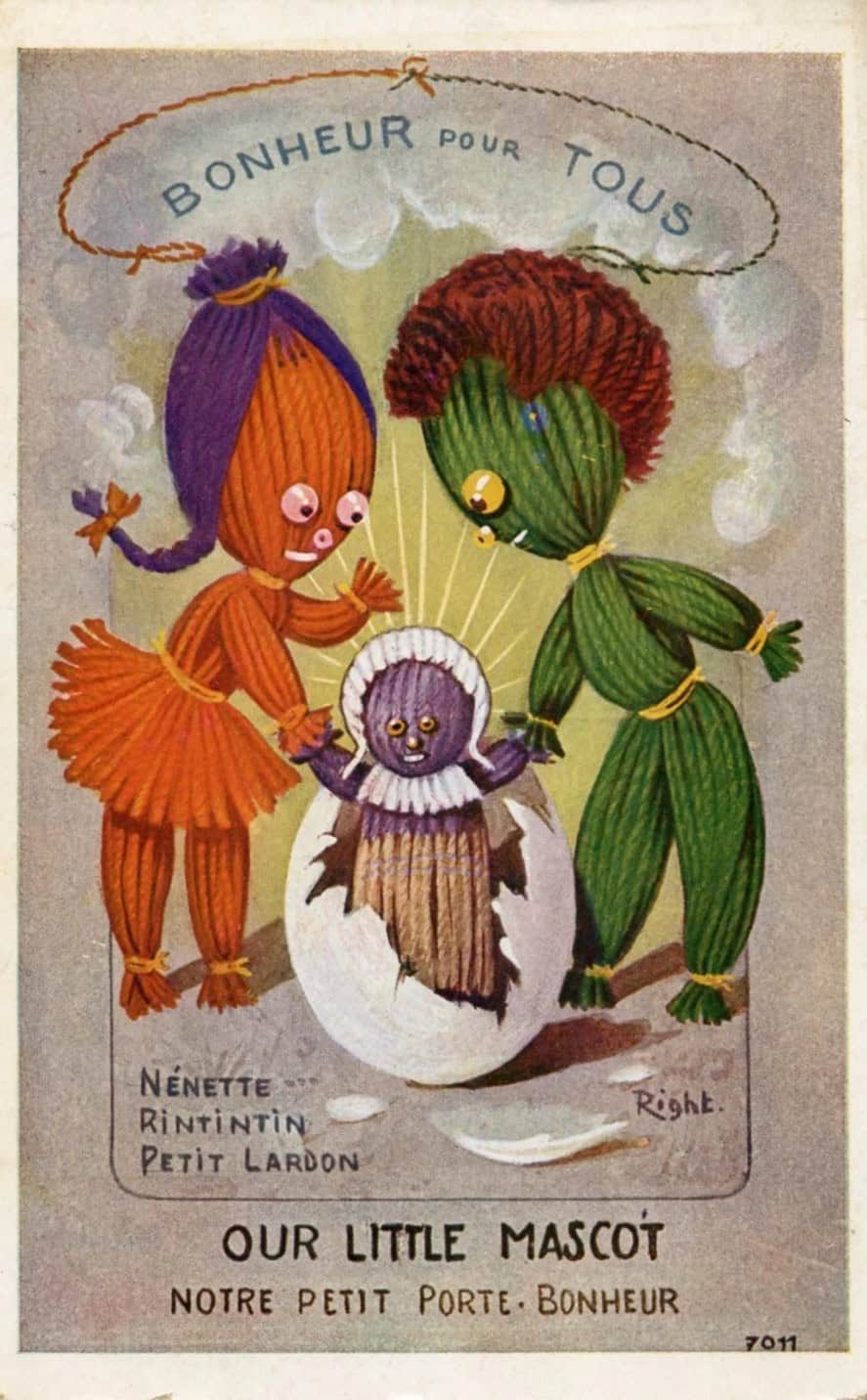
The dolls were made of wool yarn, often in patriotic colors, blue, white, and red, though they appeared in many variations. They were tiny enough to pin to a lapel or hat and were sometimes joined by a third, smaller doll called Petit Lardon, their “baby.” Some were topped with foil hats or simple yarn hair, and they were connected by a thread that symbolized unity and mutual protection. Their simplicity was part of their charm. Anyone could make them: children, sweethearts, soldiers, or volunteers. They were tokens of affection, solidarity, and luck.
A Love Story or Friendship Charm?
The origin story varies; some say they were invented by children, others that they emerged from a popular comic strip, but by 1918, they had become a folk phenomenon, spreading through Paris like a whispered secret. The dolls were often imagined as a couple: Nénette, the girl; Rintintin, the boy. In a city under bombardment, the idea of two tiny lovers clinging to each other for safety resonated deeply.
Soldiers’ Companions and Transatlantic Travelers
When the American forces reached France in June 1918, the dolls were gifts given to everyone in uniform. Soldiers and pilots alike pinned them to their uniforms as good‑luck charms. Their power, people believed, came from the hands that made them, most often a sweetheart or child.
American soldiers adopted the custom willingly, carrying the dolls home after the war. One U.S. serviceman, Corporal Lee Duncan, even named two German shepherd puppies he rescued in 1918 after the dolls. And yes, as you may have guessed, one of those puppies became the legendary Hollywood dog Rin Tin Tin.
A Symbol of Resilience
To wear a Nénette and a Rintintin was to declare your stubborn belief in survival. Parisians often wore them as necklaces to guard against falling bombs, artillery shells, or the uncertainty of war. The Imperial War Museum (London) notes that there were specific beliefs that the dolls protected against the Gotha bombers (the large German biplane bombers famous for daylight raids on London in 1917) and the terrifying long‑range shells of Big Bertha (a 420 mm German howitzer used in World War I).
Their Legacy as seen on postcards.
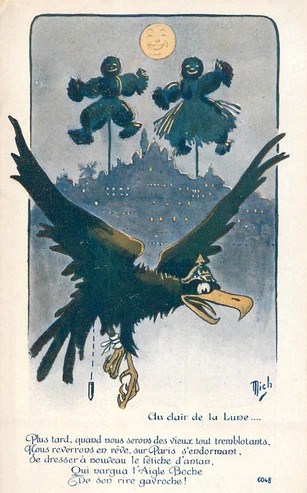
Though the fad faded after the war, the dolls remain preserved in museums and are held dear by collectors. Their story is still told today on postcards. There are at least four known sets of Nénette and Rintintin postcards.
Two signed artists seem to be responsible for the four sets; they are “Right” and “Mich.”
“Right” is by-far the more accomplished illustrator, but “Mich” seems to have a great creative genius. The four sets all have French publisher’s imprints, one of which is I. Lapina, of Paris.
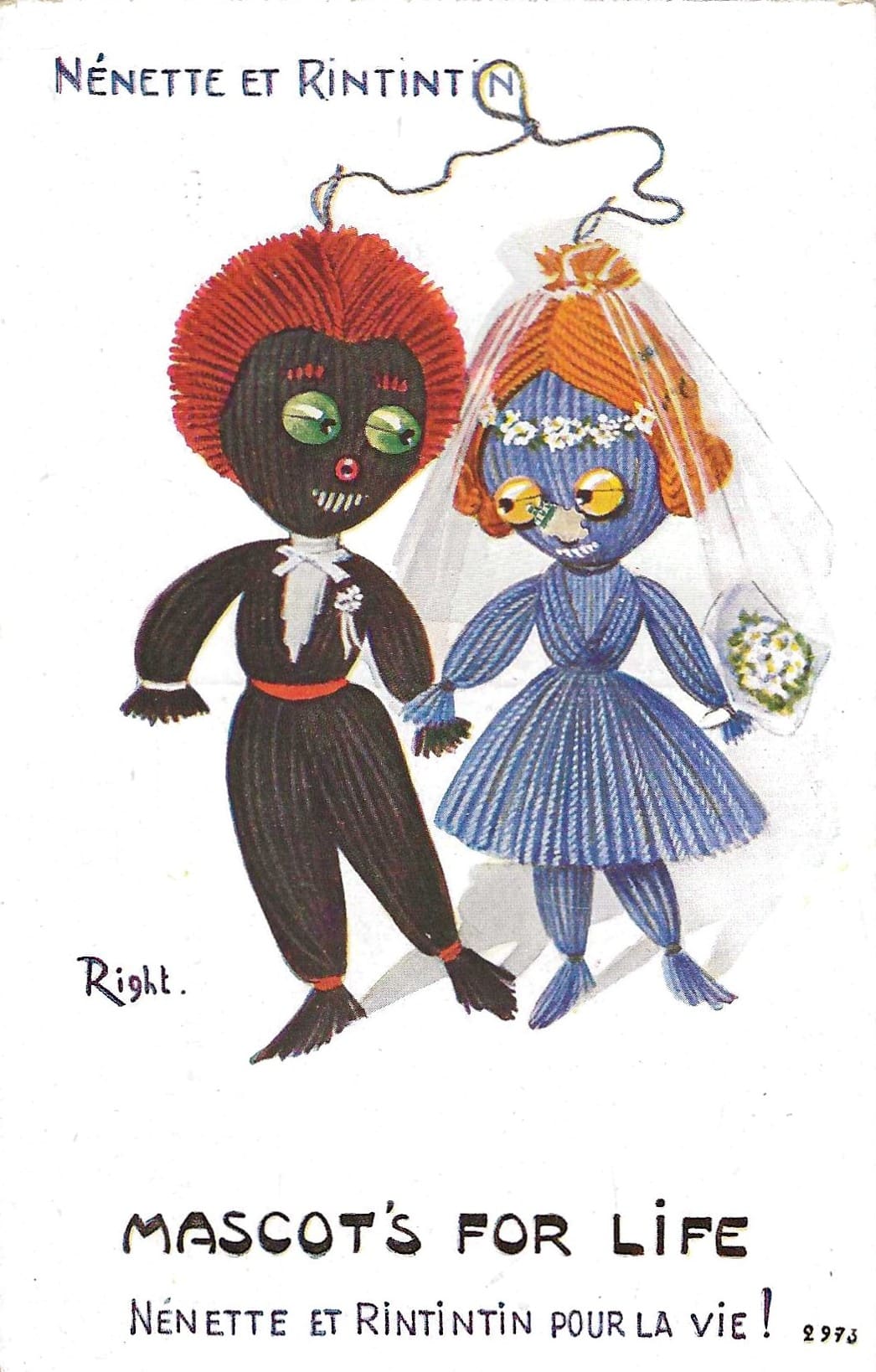
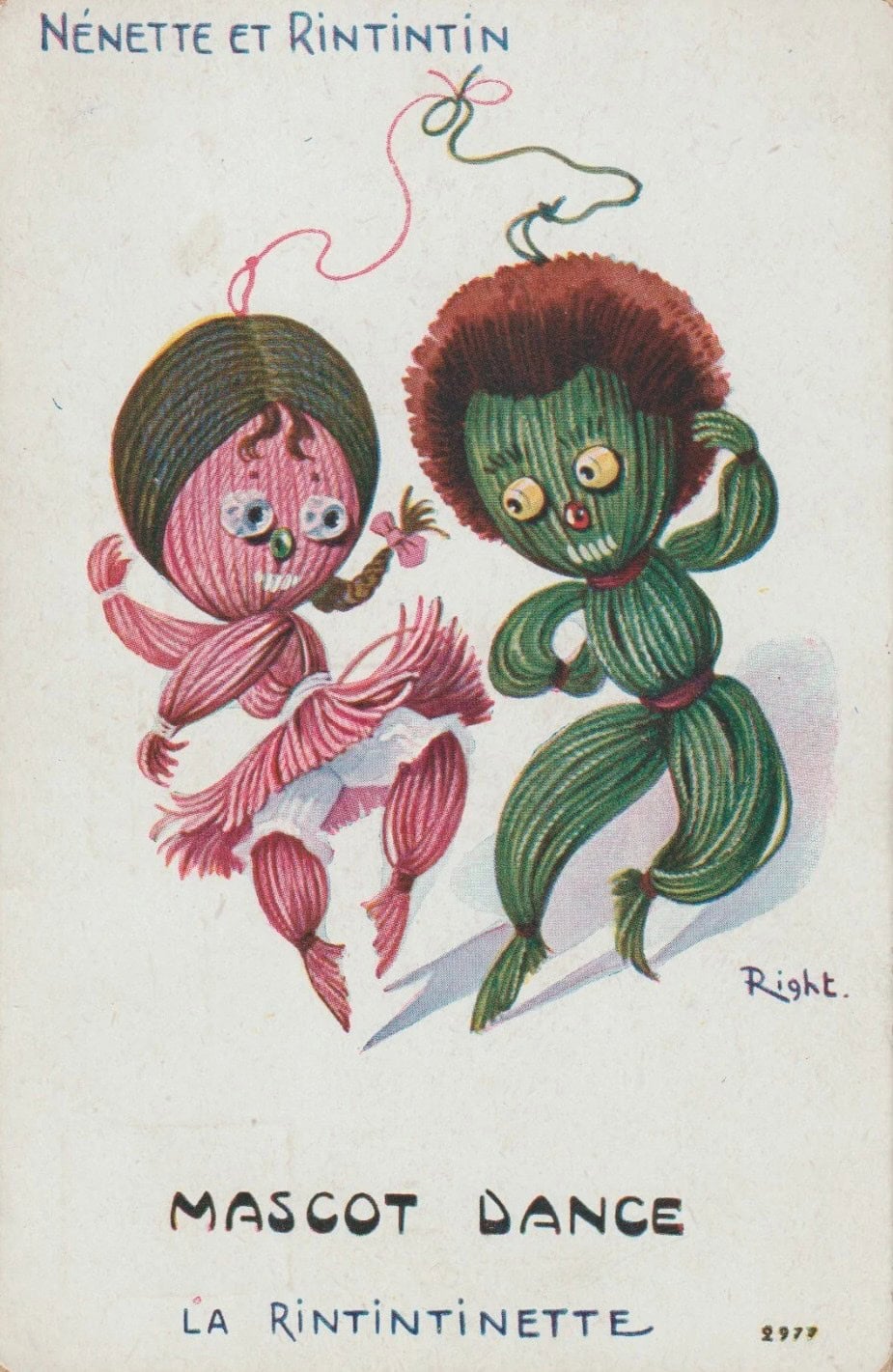
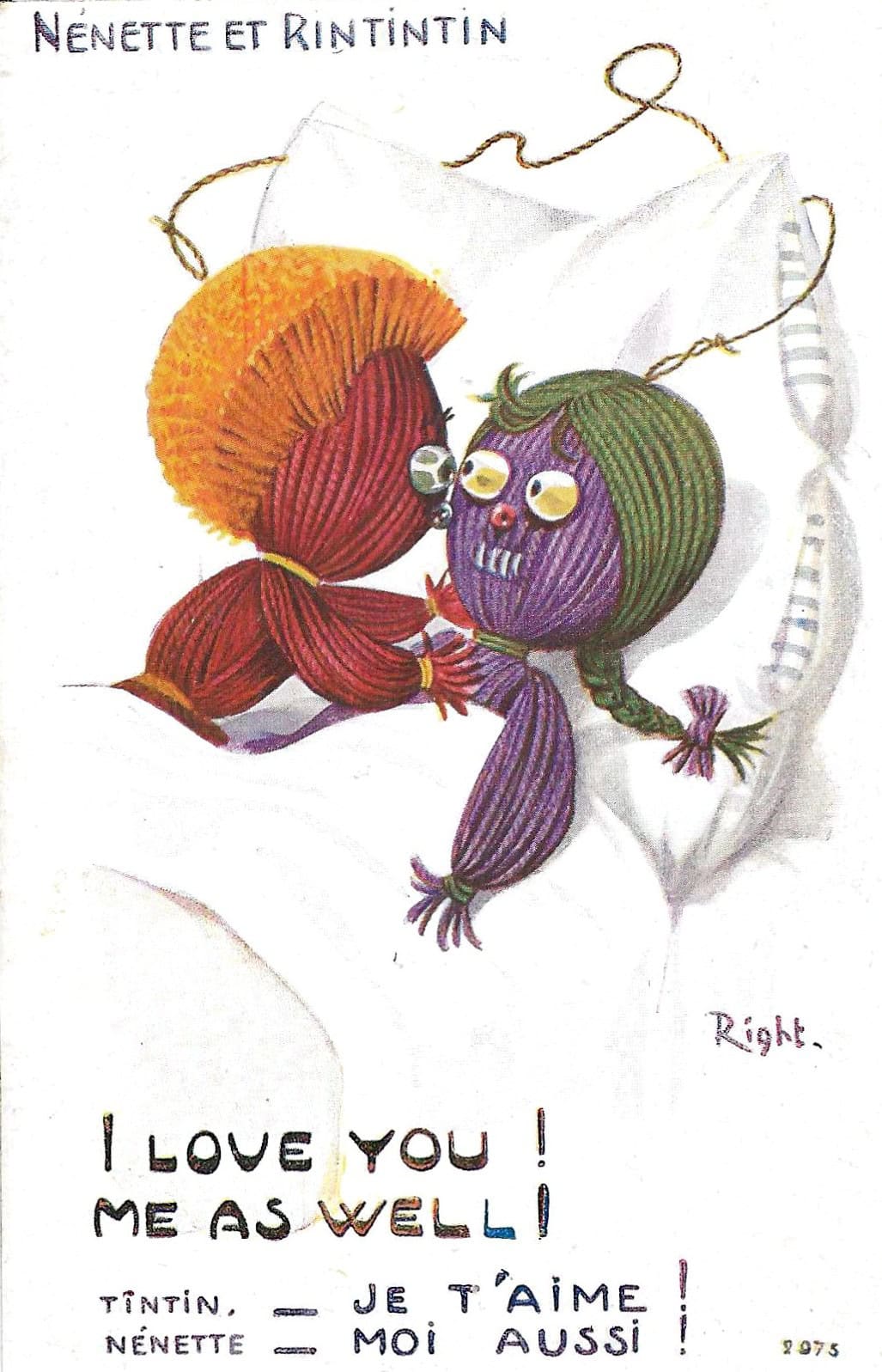
Mich was a prominent poster artist in Paris who flourished between 1895 and 1920. He worked for several ad firms and postcard publishers. He disappeared from the public records circa 1923.
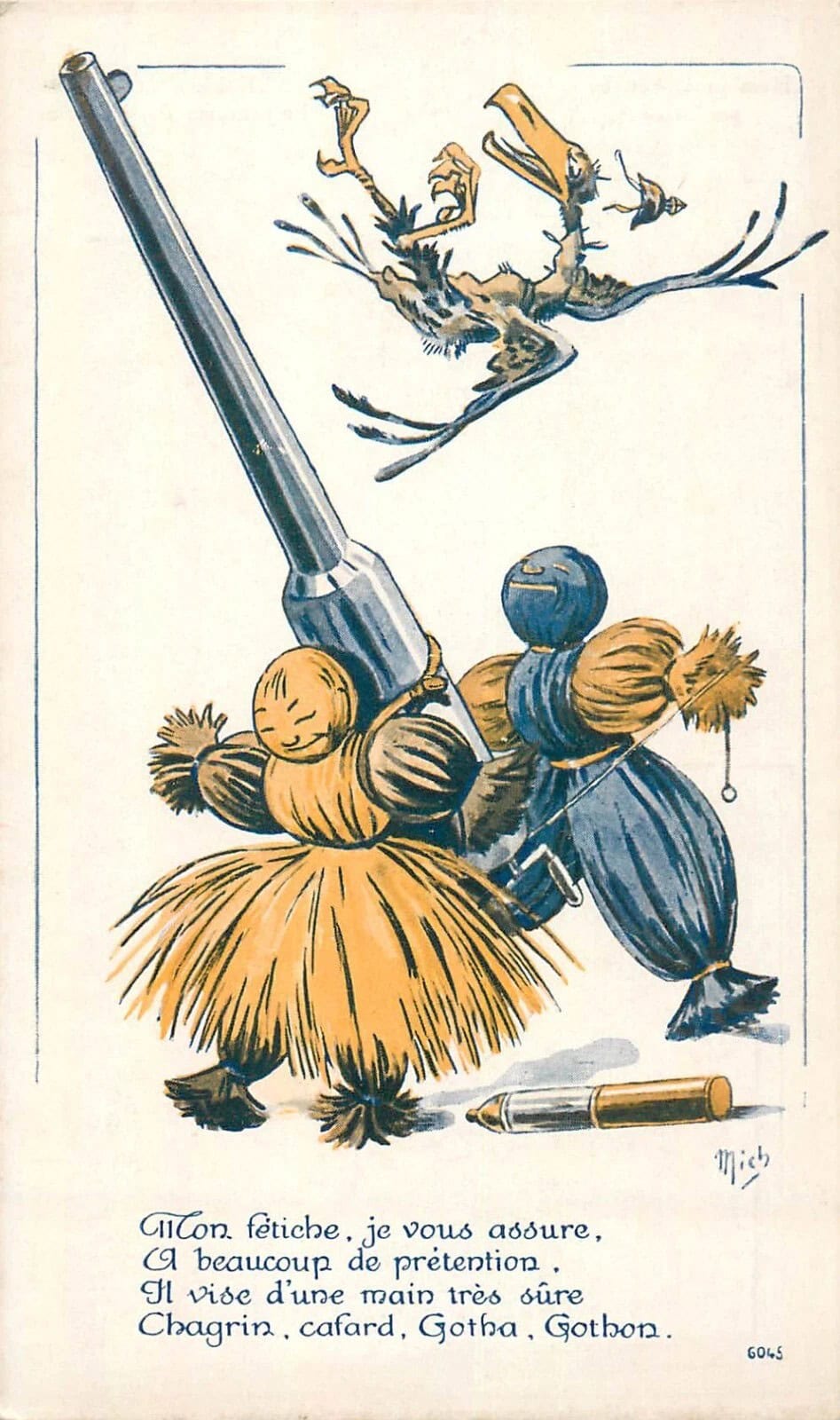
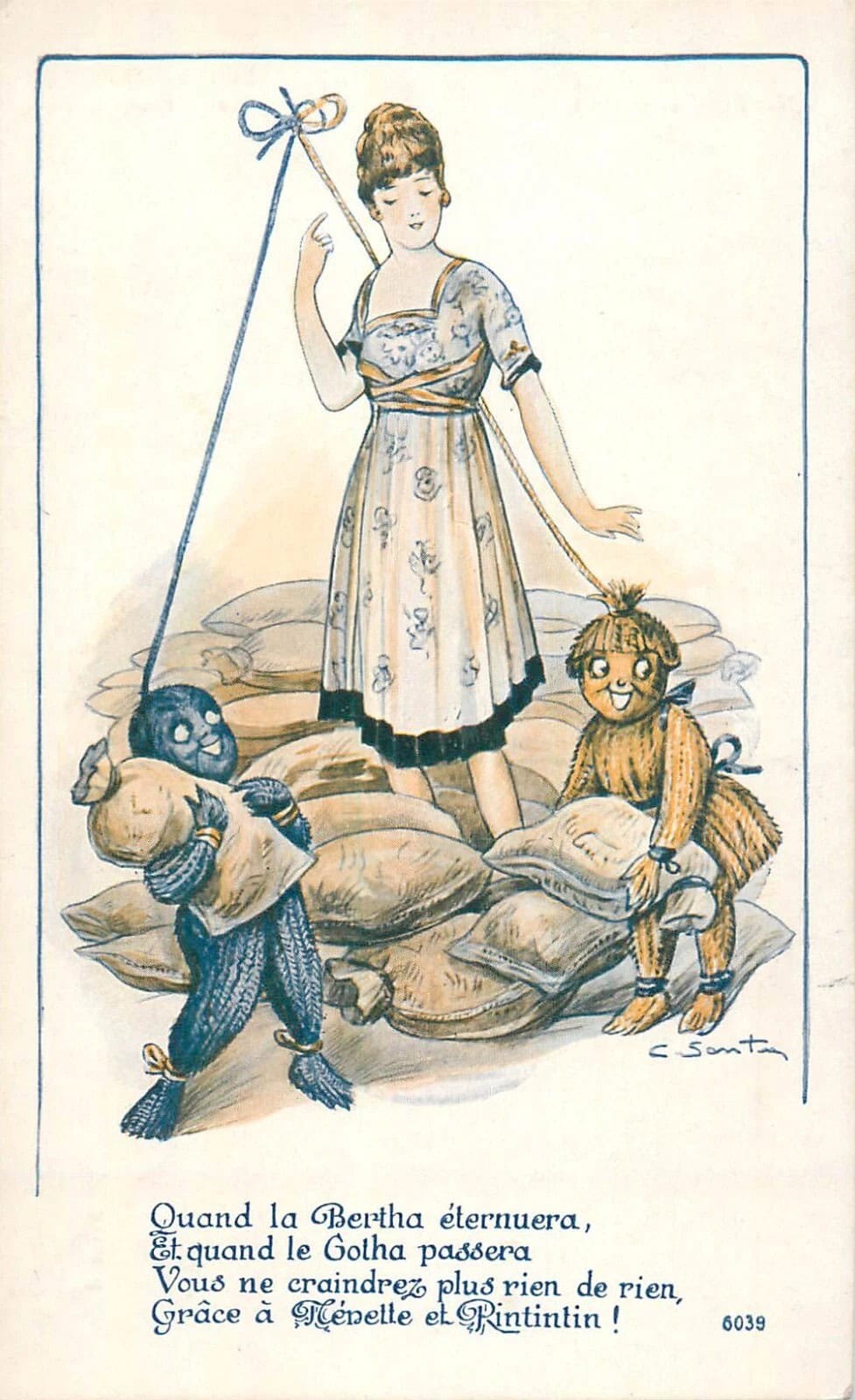
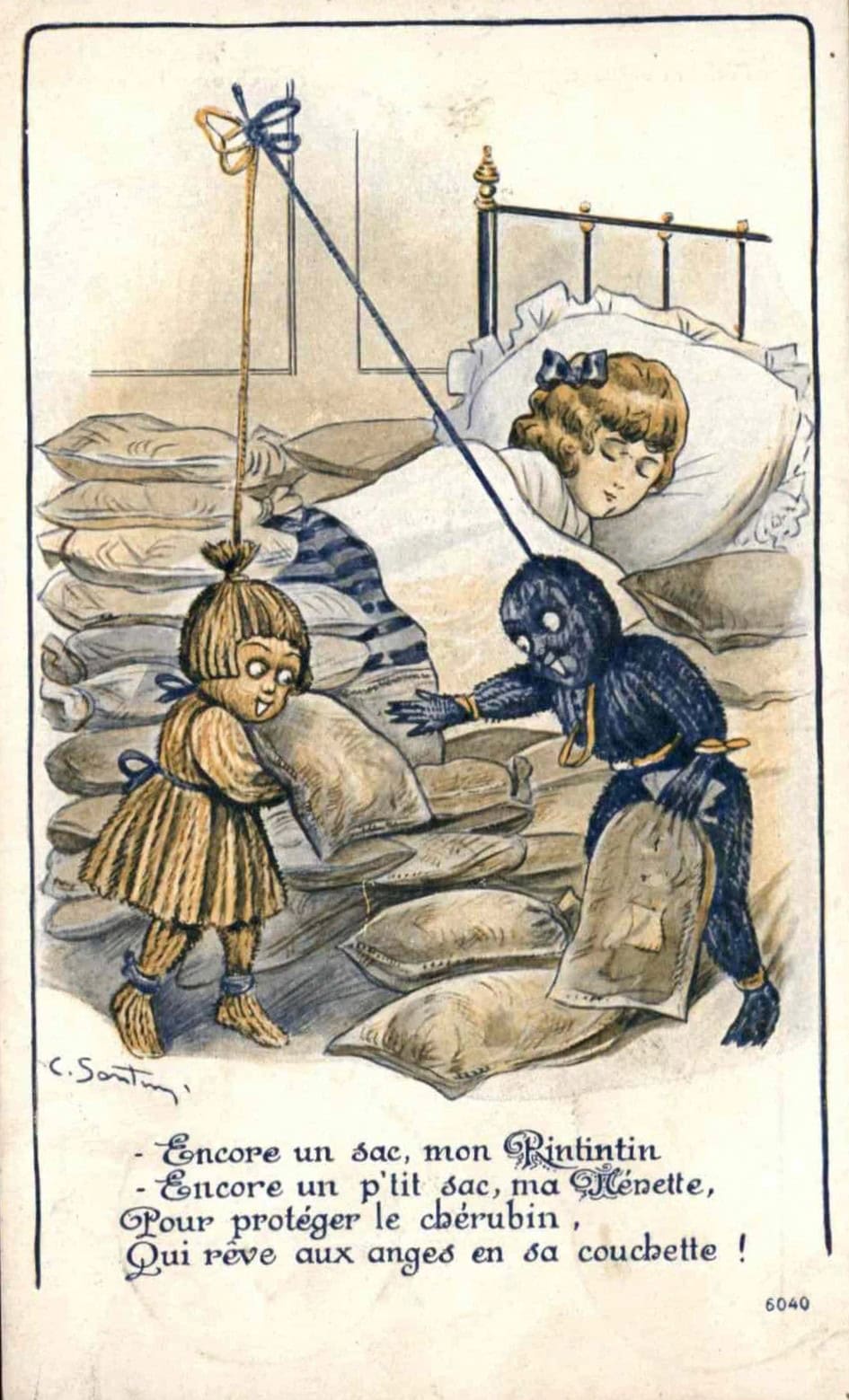
A third signer (C. Santini) who seems to have had an equal talent created at least two of the known cards.
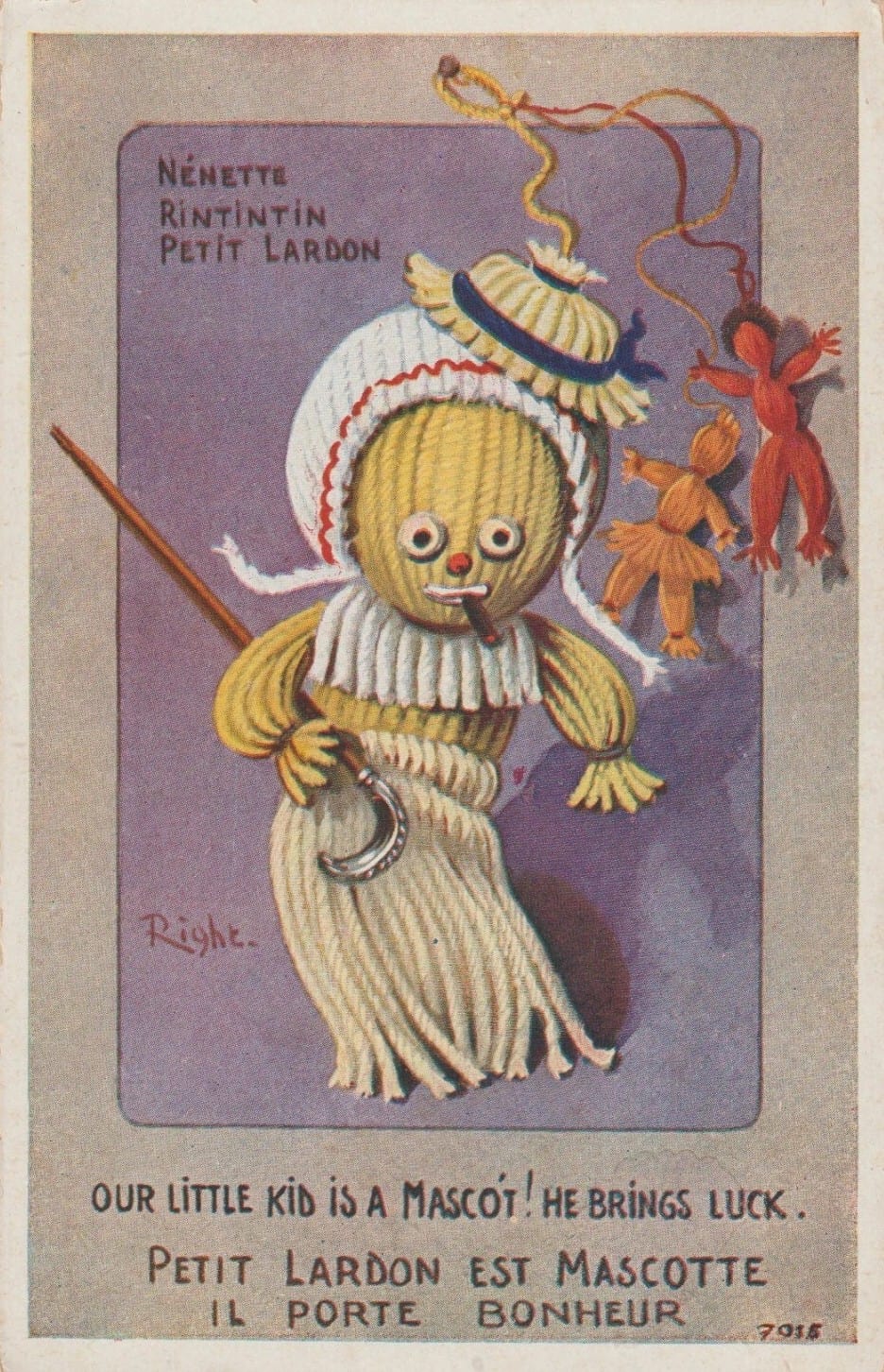
Nénette and Rintintin have watched over the people of Paris
for more than a century. It is our hope they will do the same for you.
Fascinating Thank you
Another fine piece of history Ray, thanks. Ron
Brilliant article on a fascinating topic. Bravo!
Interesting read for sure! Thank you!
Ray, Thanks for this very informative article about these cards. I have a set of the little yarn dolls and started collecting the cards afterwards although I didn’t know the meaning. Great research
I remember my mother showing me how to make these yarn dolls. I was born soon after the end of WWII, but I never realized their significance until reading this article. Thank you for a nice memory.
Fascinating! Excellent research! For those crafty folk interested, you can make your own!
https://www.theworldwar.org/learn/educator-resource/making-good-luck-nenette-and-rintintin
Those are amazing!
Really interesting. Thank you.
I love the history of these dolls and what they symbolize. It would be great to have an original, but also fun if a modern version appeared. I would happily make these for friends and family.