When Ray Hahn’s excellent article, Cass Gilbert, America’s Celebrity Architect appeared in the November 4, 2025, issue of Postcard History, Ray reported that among the many notable buildings Gilbert designed across the United States, were three state capitol buildings: Minnesota, Arkansas, and West Virginia. Three state capitols out of fifty seems a remarkable achievement. So I asked myself, “Did any architect match Gilbert?” Then, last fall I started researching the state capitol buildings of New England.
Right behind Cass Gilbert were two noted New England architects, Charles Bullfinch and Ithiel Town. Boston architect Charles Bullfinch designed three state capitols as well. He designed the Massachusetts and Maine state capitols and the Old Connecticut State House in Hartford. The Old Connecticut State House was in use from 1792 until 1878 when the current State House replaced it. Bullfinch’s Old State House Building is still standing and serves as a history museum.
Bullfinch served as Architect of the U.S. Capitol from 1818 until 1829, supervising the completion of the structure, thirty-six years after its cornerstone was laid. The Capitol’s original low wooden dome was constructed to Bullfinch’s design. Bullfinch’s dome was replaced by the present cast-iron dome completed in 1863.
Connecticut native Ithiel Town also had three state capitols to his credit although two have been demolished. This contribution to Postcard History concerns the New England capitols but first let’s detour to North Carolina and Indiana to examine the demolished sites that came from Ithiel Town’s drawing board.
* * *
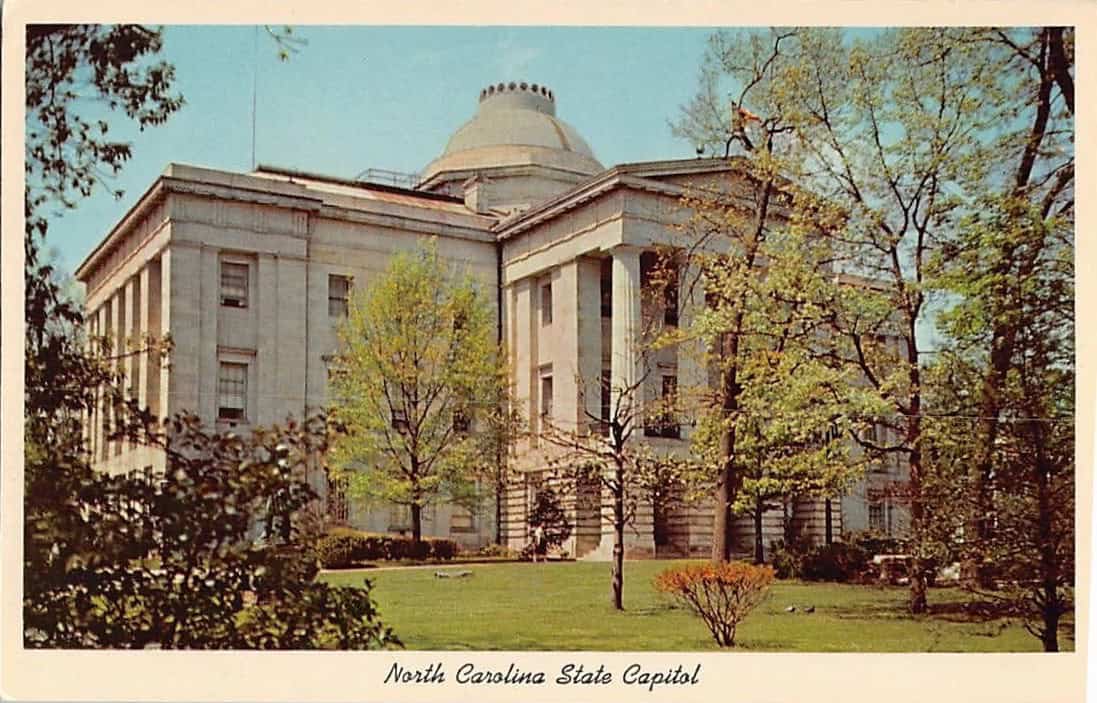
The first North Carolina State Capitol in Raleigh was replaced by the second building in 1840 (below, left). The Greek Revival building was used by the North Carolina General Assembly until 1963 when they moved to the newly constructed State Legislative Building. Today, the North Carolina Governor’s office occupies the building.
* *
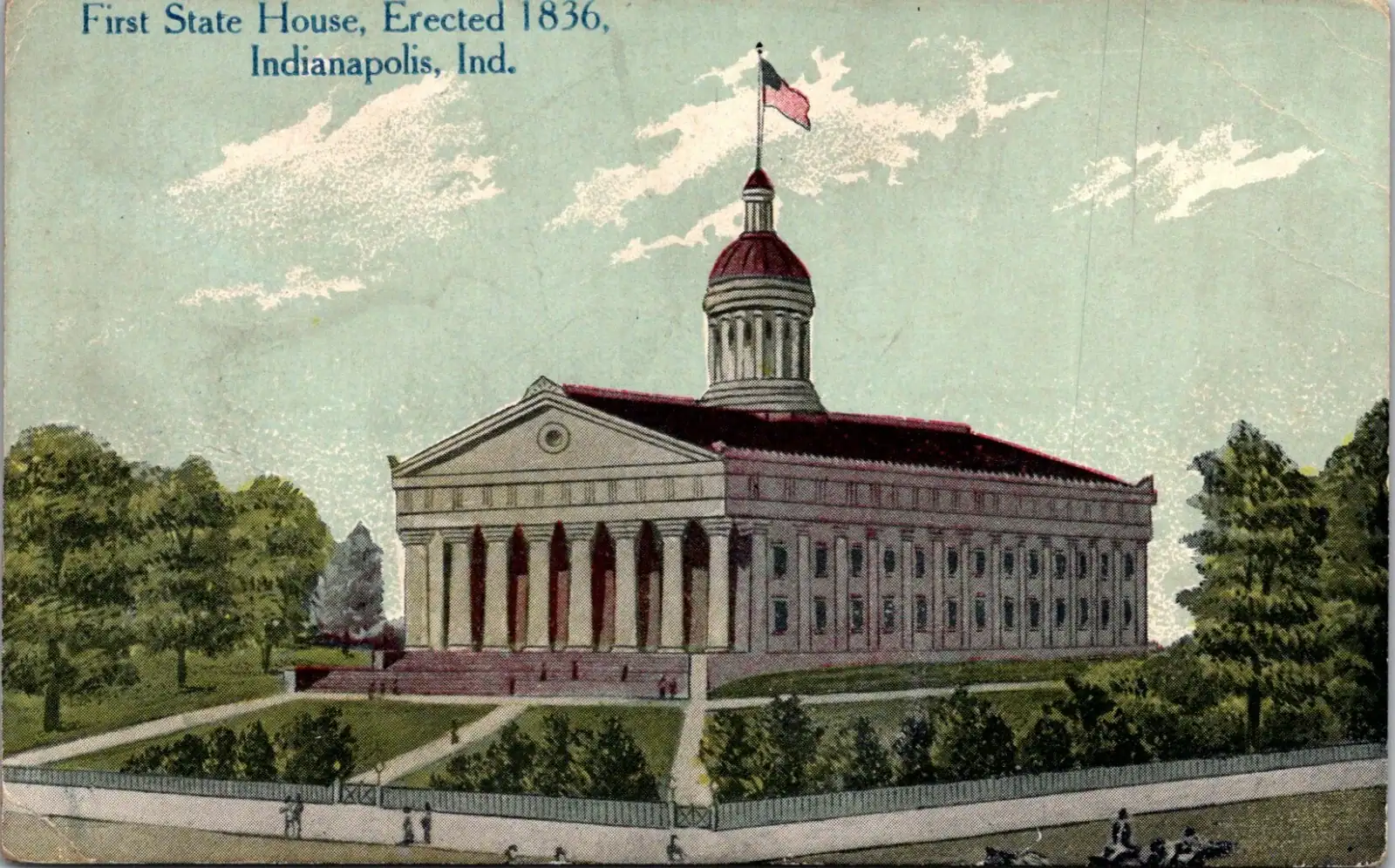
Ithiel Town also designed Indiana’s first statehouse in Indianapolis (above, right). The Greek Revival structure modeled after the Parthenon was in use from 1835 until 1877. Structural problems developed that necessitated its demolition.
* *
As we return to New England, let’s examine . . .
Connecticut’s Capitol
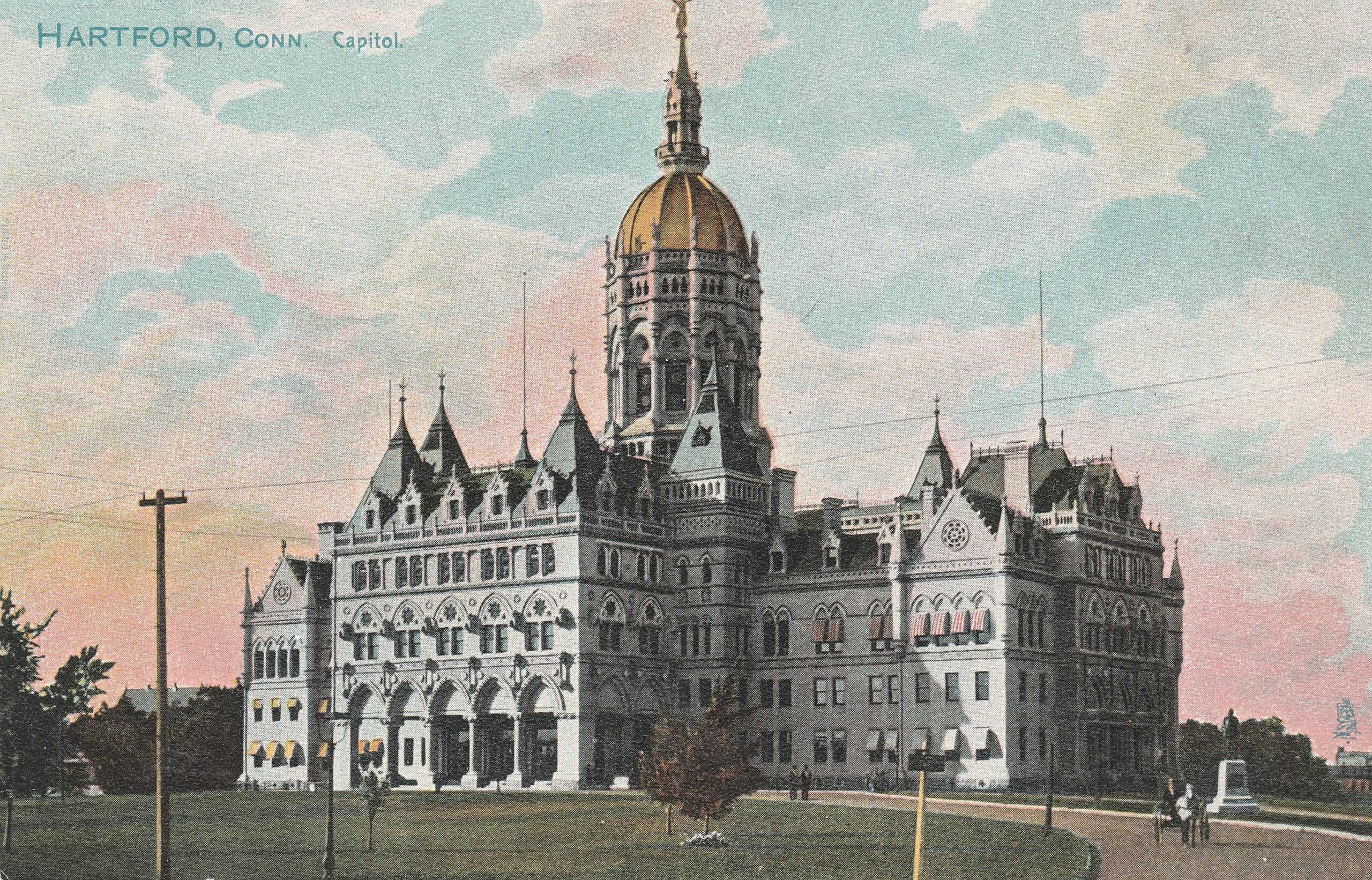
Between the American Revolution and the Civil War, the Connecticut General Assembly alternated their meetings between Hartford and New Haven. After the war, Hartford won the competition to be Connecticut’s capital city and construction began on the State Capitol Building in 1871. It was Connecticut’s third state capitol building after the Old State House in Hartford and the State House in New Haven.
Completed in 1878, the General Assembly met for the first time in the building in January 1879. Built in the Gothic Revival and Renaissance Revival architectural styles, the exterior was constructed of white marble mined in Canaan, Connecticut and granite mined in Waverly, Rhode Island. An impressive gold-leaf dome sits atop the center of the structure. The dome itself is 32 feet tall, topped with a 55-foot-tall cupola, and the drum below is 75 feet tall. The overall height of the tower is 257 feet.
The capitol building in New Haven was designed in 1837 by Town and modeled after a Greek temple. The building hosted its last legislative session in 1874. Sadly, Town’s building was razed in 1889.
Rhode Island’s Capitol
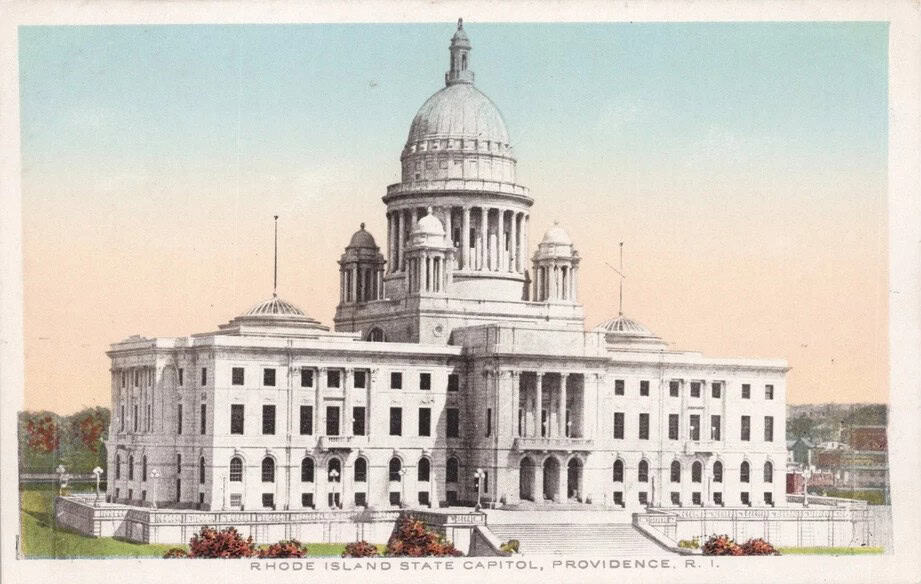
Constructed between 1891 and 1901, the Neoclassical Rhode Island State House in Providence is Rhode Island’s seventh capitol building. It was designed by the renowned New York architectural firm of McKim, Mead and White.
Built of white marble, the building is topped with a dome that Rhode Islanders proclaim is “the fourth largest self-supported dome in the world.” Only Saint Peter’s Basilica in Rome, the Minnesota State Capitol, and the Taj Mahal are larger. Atop the dome is a gold-covered bronze statue of a male figure known as The Independent Man. The statue celebrates Roger Williams and his search for religious freedom that led him to leave the Massachusetts Bay Colony and found Providence Plantation, what is now the state of Rhode Island.
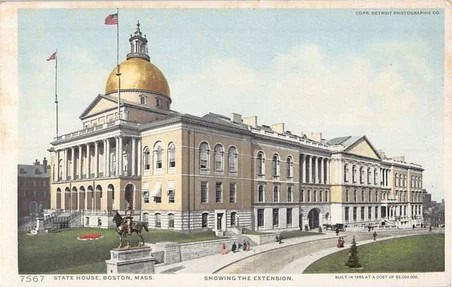
Massachusetts’s Capitol
The Massachusetts State House was completed in January 1798 and built on land at the top of Boston’s Beacon Hill – property formerly owned by John Hancock. It was designed by Charles Bullfinch and is considered a masterpiece of Federal style architecture.
The building was expanded in 1895 and again in 1917. A dome atop the building was covered with copper by Paul Revere’s Copper Company. The dome was gilded with gold-leaf in 1874. During World War II, the dome was painted gray to prevent German bombers from using it as a reference point. It was not re-gilded until 1969.
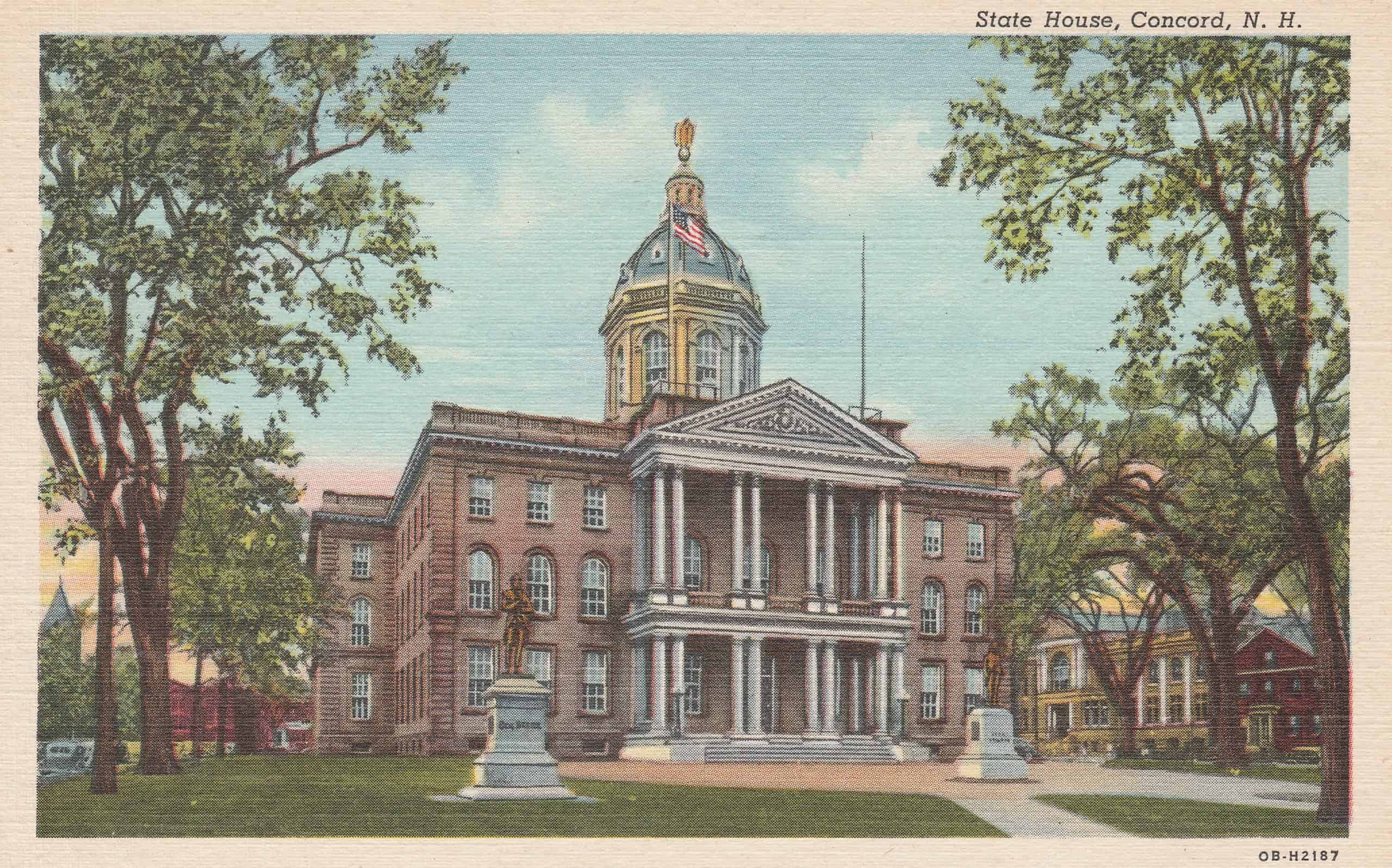
New Hampshire’s Capitol
The New Hampshire State House in Concord was built between 1816 and 1819. It is built of granite blocks in the Greek Revival architectural style and features a portico with Doric columns. The granite was quarried locally, the blocks were cut and shaped by inmates of the state prison.
A large statue of a gold-painted wooden war-eagle looking to the left was placed atop the gilded dome in 1818. In 1957, it was replaced with a peace eagle statue looking to the right. New Hampshire proudly claims it is the oldest state capitol in which both houses of the legislature still meet in their original chambers.
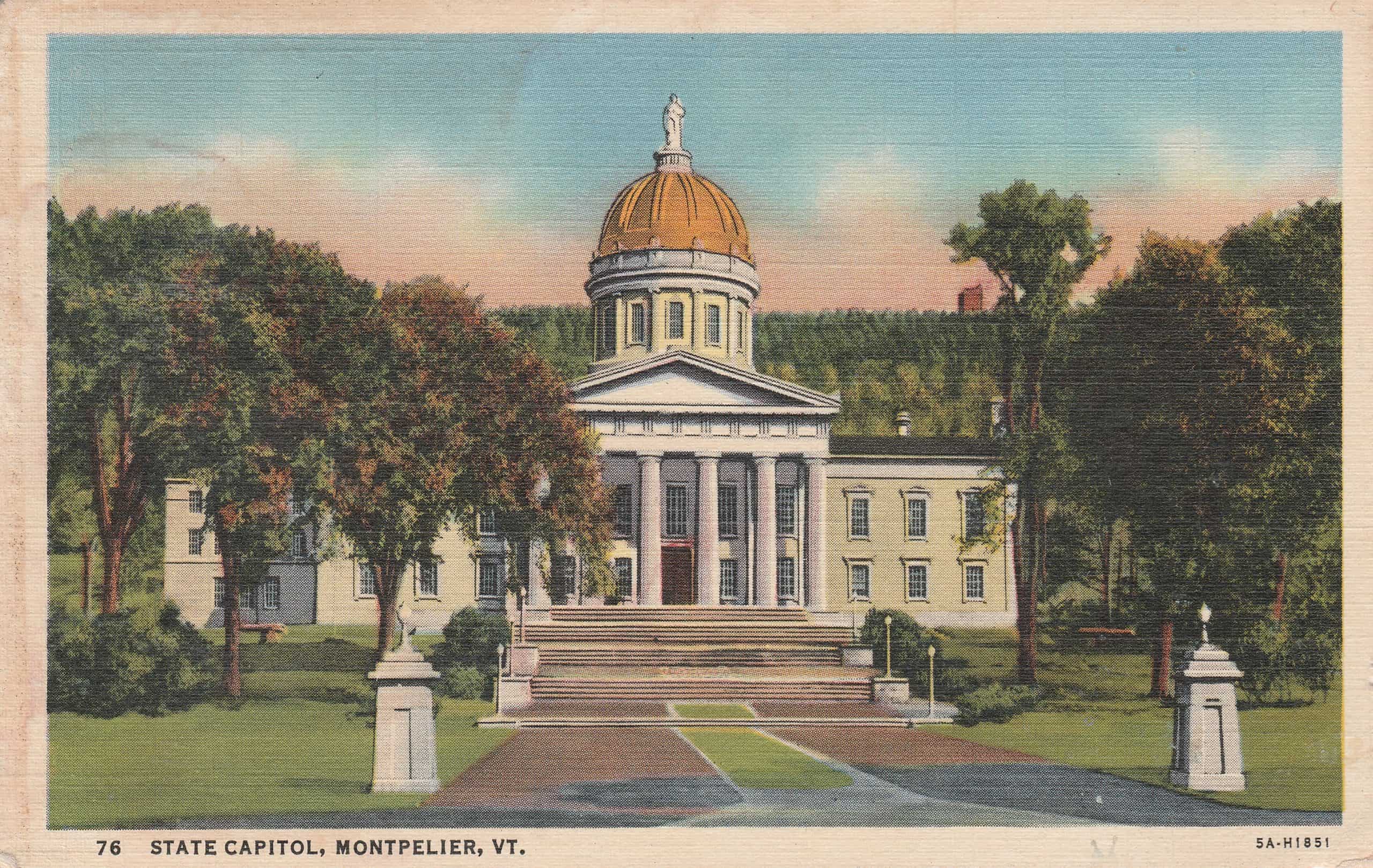
Vermont’s Capitol
The Vermont State House in Montpelier is the state’s third capitol building, the two previous buildings on the site were destroyed by fire. It was constructed between 1857 and 1858, and the first legislative session was held in 1858.
Constructed of granite quarried in Barre, Vermont, the building’s designs feature Neoclassical and Greek Revival architectural elements. It is the smallest state capitol building, not surprising since cows outnumbered people in Vermont until the 1960s.
The building’s gold-leaf dome is easily visible while driving into Montpelier, the smallest city to serve as a state capital. The dome is topped by a statue of Ceres, the Roman goddess of agriculture reflecting Vermont’s agrarian economy for most of its history.
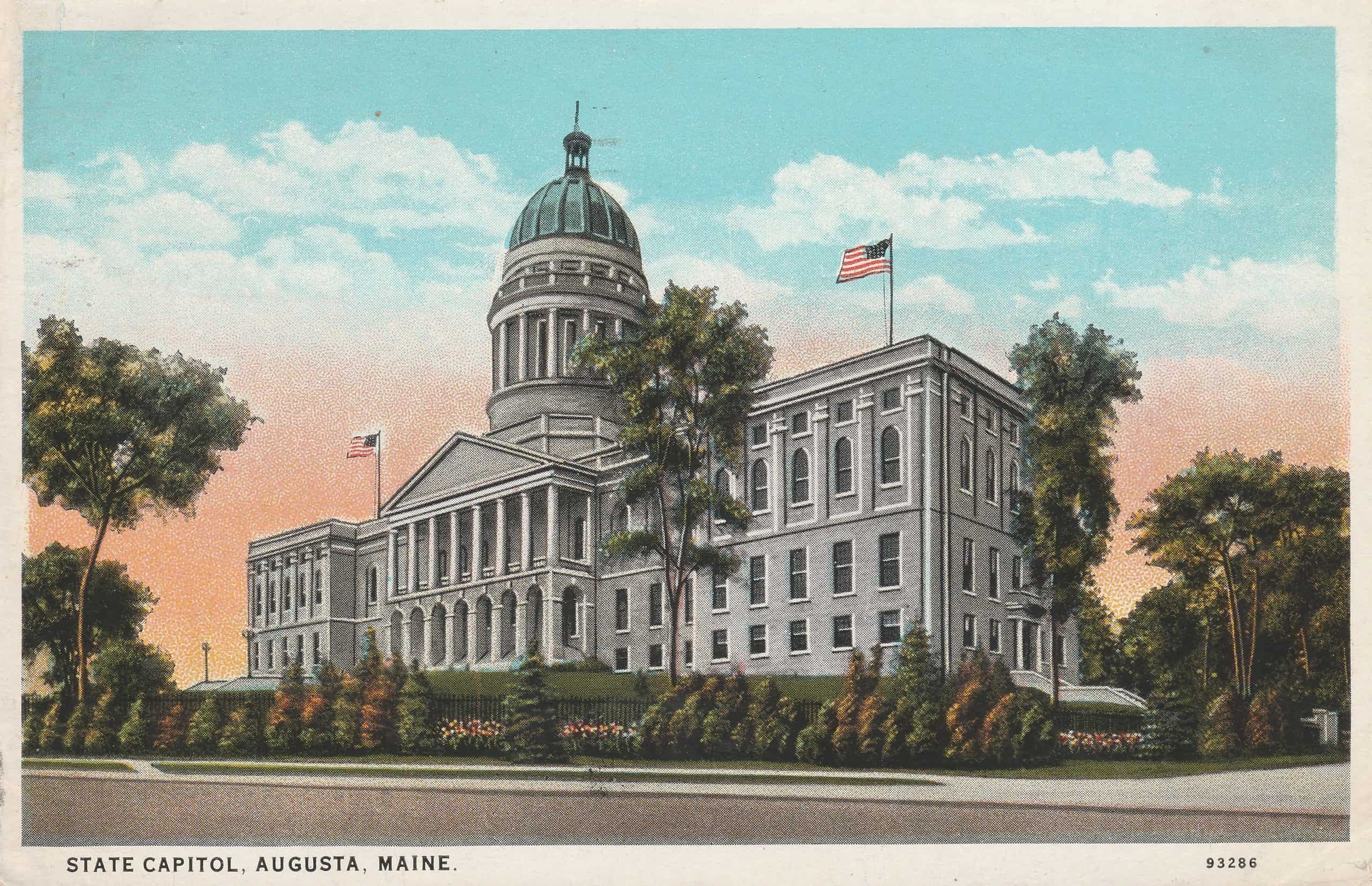
Maine’s Capitol
The territory of Maine was once part of Massachusetts but became the 23rd state in 1820 under the provisions of the Missouri Compromise.
Originally Maine’s capital was in Portland, the state’s largest city, then in 1832 the capital was moved to Augusta due to its central location, and the Maine State House was completed that year.
It was constructed of Maine granite and was modeled after the Massachusetts State House. Charles Bullfinch designed both buildings. A 185-foot-tall dome sheathed in copper sits atop the building. The dome is topped by a gilt copper statue of Minerva, the Roman goddess of wisdom, law, justice, and warfare.