The 1912 four-act drama by Bayard Veiller, Within the Law remains a commercially successful and culturally revealing play of the early twentieth century. Premiering during the Progressive Era, a period marked by discomfort over labor rights, corruption, and the ever increasing gulf between the wealthy and the working class, the play captured the contradictions of its time.
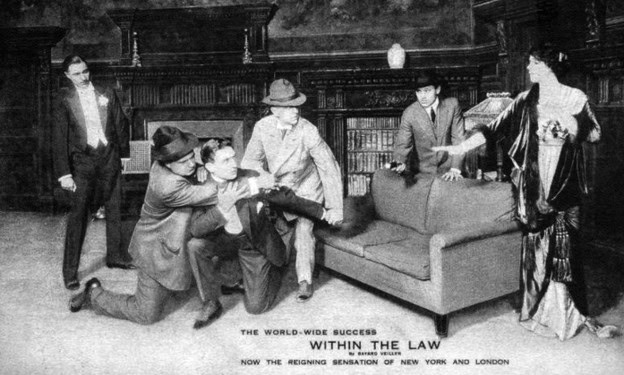
Through the story of Mary Turner, a shopgirl falsely accused of stealing, imprisoned and subsequently transformed into a mastermind of legally permissible crime, Veiller crafted a narrative that explores the edges of justice and legality. Her conviction is not the result of evidence but of the vindictive insistence of her employer, Edward Gilder, who pressures the court to “make an example” of her.
Mary’s wrongful imprisonment becomes the catalyst that reshapes her identity. Upon release, she vows never again to be victimized by a system that protects the wealthy and exploits the poor. Instead of turning to violence, she adopts a more subversive strategy: she will operate strictly within the law, exploiting its loopholes with the same ruthlessness that the powerful use to maintain their privilege.
Mary’s transformation is a critique of her time. She forms a sophisticated criminal enterprise, one that commits frauds, shakedowns, and confidence schemes but remains technically legal. In doing so, she exposes the hypocrisy of a legal system that punishes petty theft harshly while allowing corporate exploitation and class‑based injustice to flourish.
Her marriage to Gilder’s son complicates everything, introducing emotional tension and forcing the audience to confront the blurred lines between vengeance and redemption.
When a police informant attempts to entrap her and a killing ensues, Mary is again accused. Yet this time, the truth emerges: the real killer confesses, and Mary is exonerated. Her survival underscores the play’s central irony, she has been punished for crimes she did not commit and escaped punishment for schemes that, though morally dubious, remained within the letter of the law.
The play’s enormous success—running 541 performances on Broadway—speaks to its resonance with contemporary audiences. Its themes of class injustice, legal cynicism, and the precarious position of working women struck a chord in an era grappling with industrialization and social reform.
Mary Turner represented a new kind of female protagonist: intelligent, strategic, morally ambiguous, and unwilling to accept the passive role society assigned her. At a time when women were fighting for suffrage and economic independence, Mary’s agency and defiance made her both a symbol and a provocation.
Within the Law also enjoyed a long afterlife through five film adaptations between 1916 and 1939, including the 1930 MGM sound film Paid starring Joan Crawford. These adaptations reinterpreted Mary Turner for its own era, but the core tension—between legality and justice—remained constant.
Ultimately, Veiller’s play endures because it dramatizes a truth that remains relevant: the law is not synonymous with justice.
***
Likely the largest misstep by the playwright was his decision to sell the rights to his work. The work was inspired by several similar newspaper accounts of how unjust the legal system was acting when it adjudicated petty crimes and misdemeanors involving working class people.
Veiller sat with the concept for nearly a year before setting down the dialog in 1911. Originally titled, The Miracle, then The Case of Mary Turner, he agreed to a tryout in Chicago where it failed – miserably. In the summer of 1912 after a single re-write and a retitling to Within the Law, rehearsals began with a planned opening at the Eltinge 42nd Street Theatre on September 11, 1912.
***
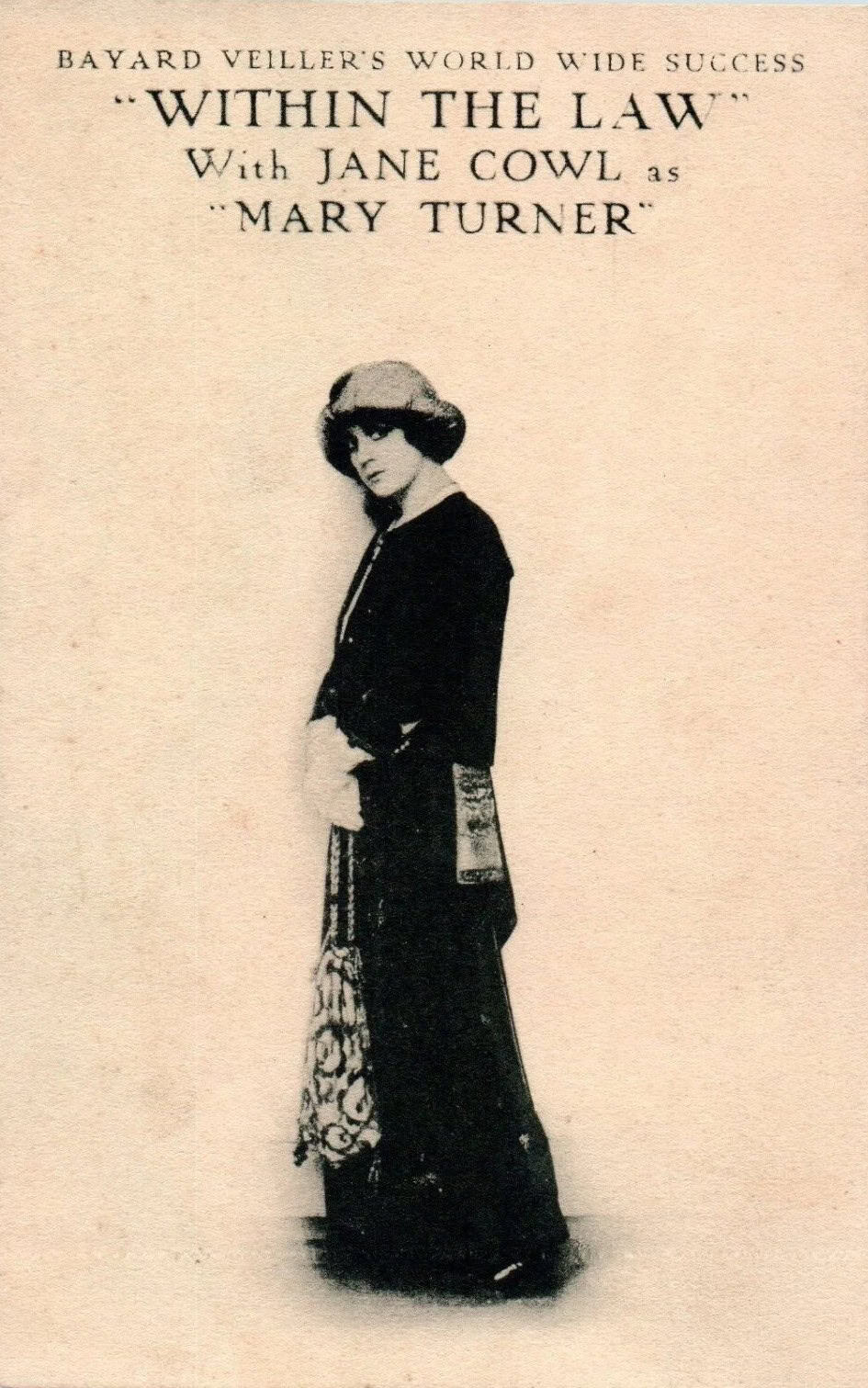
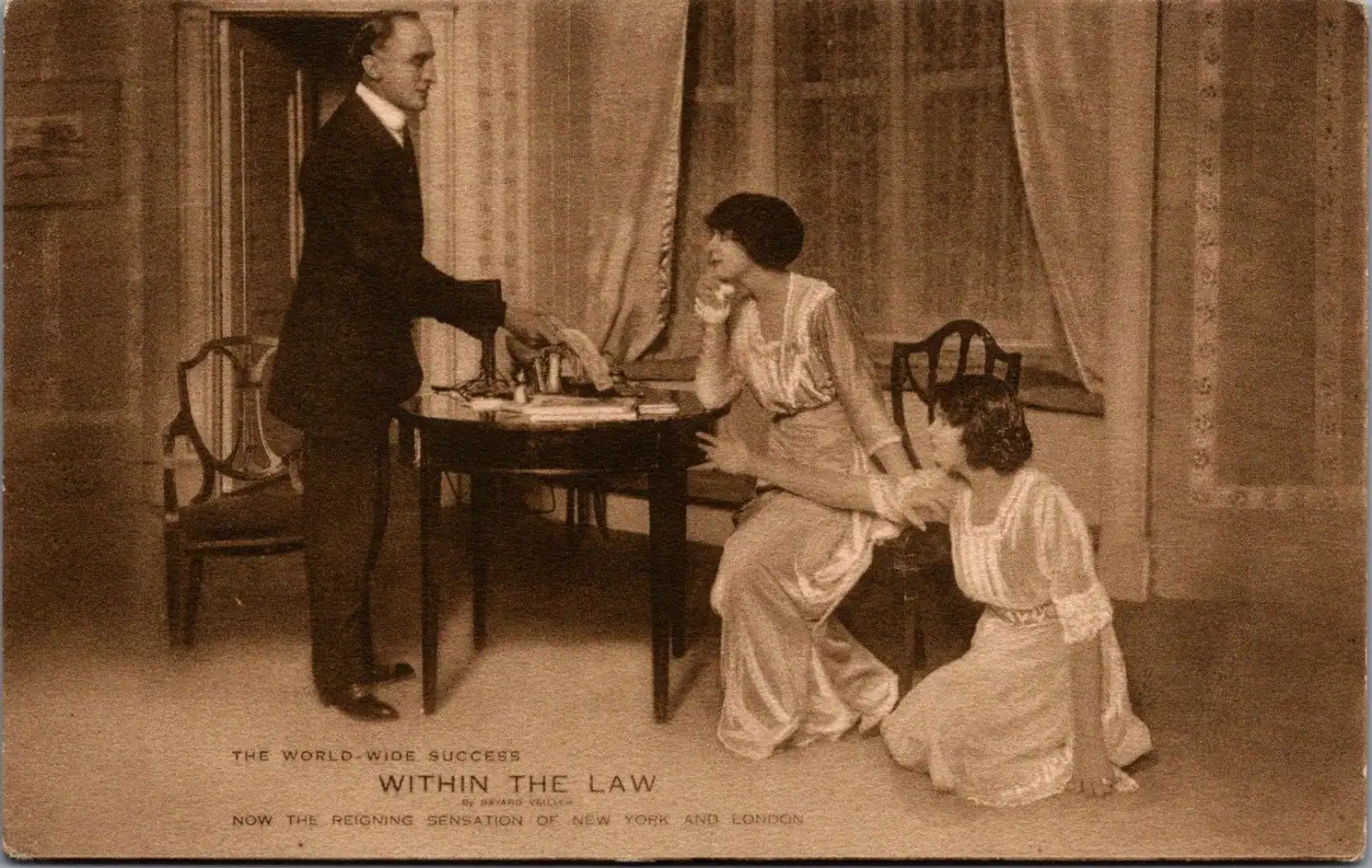
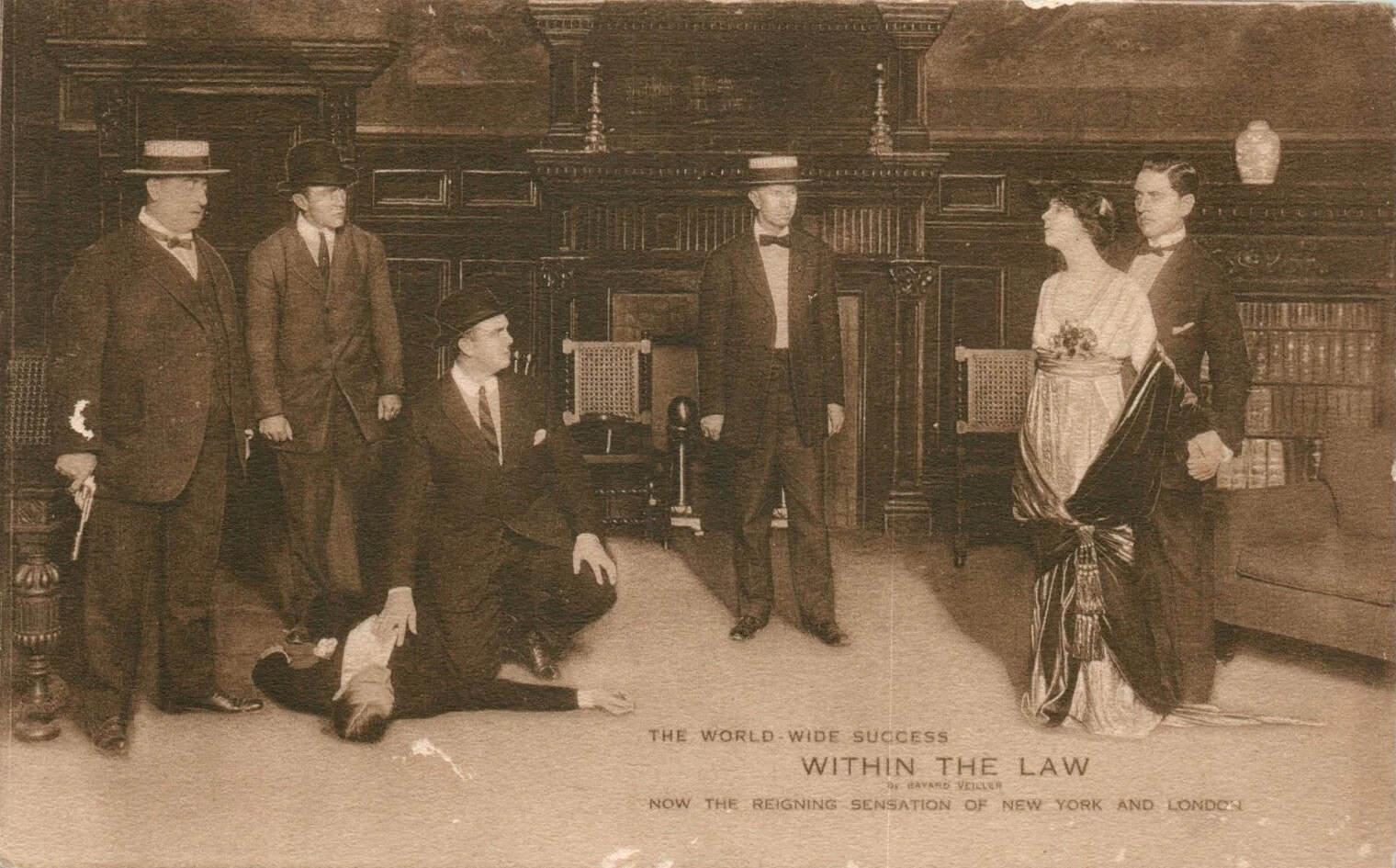
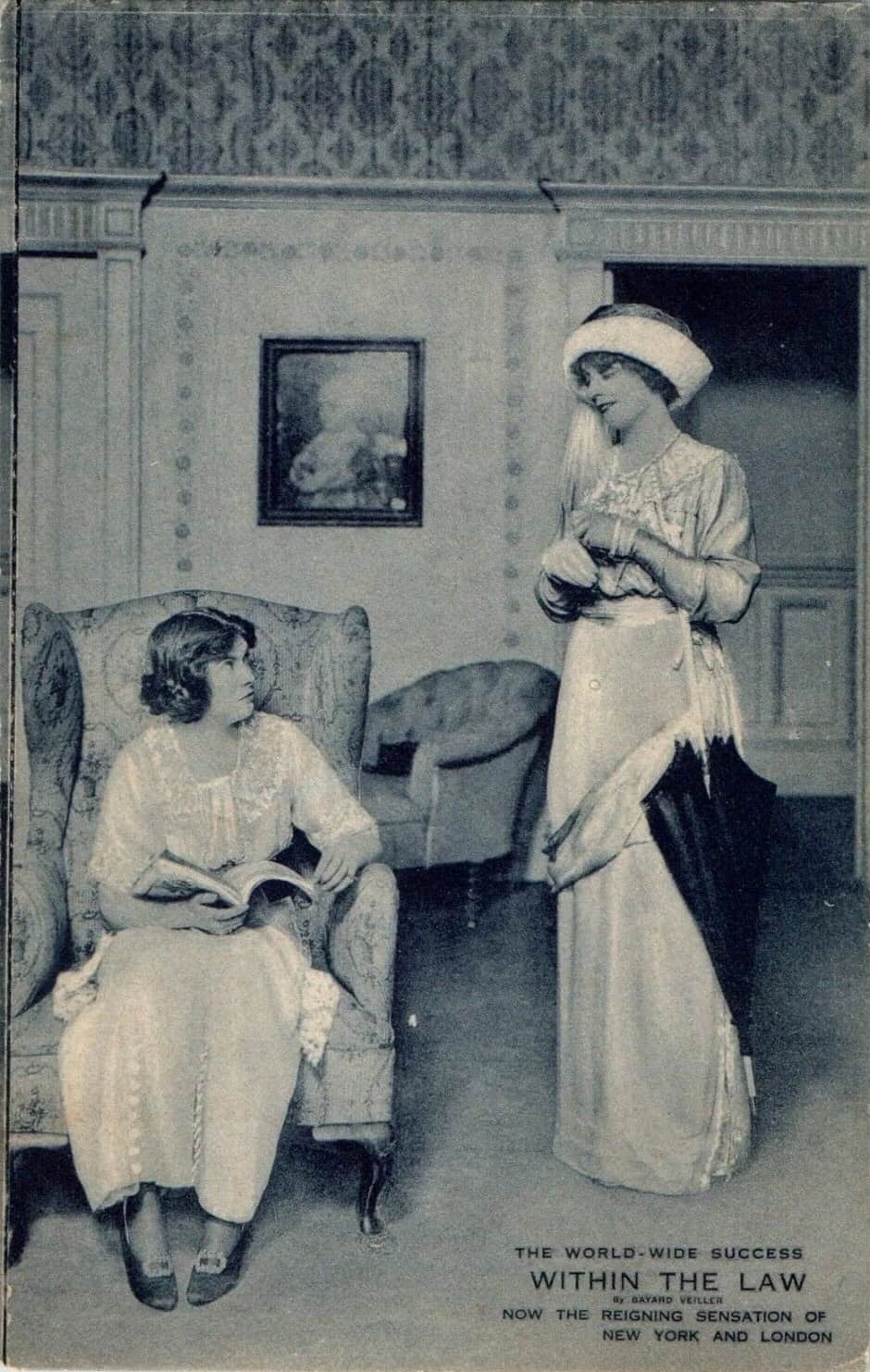
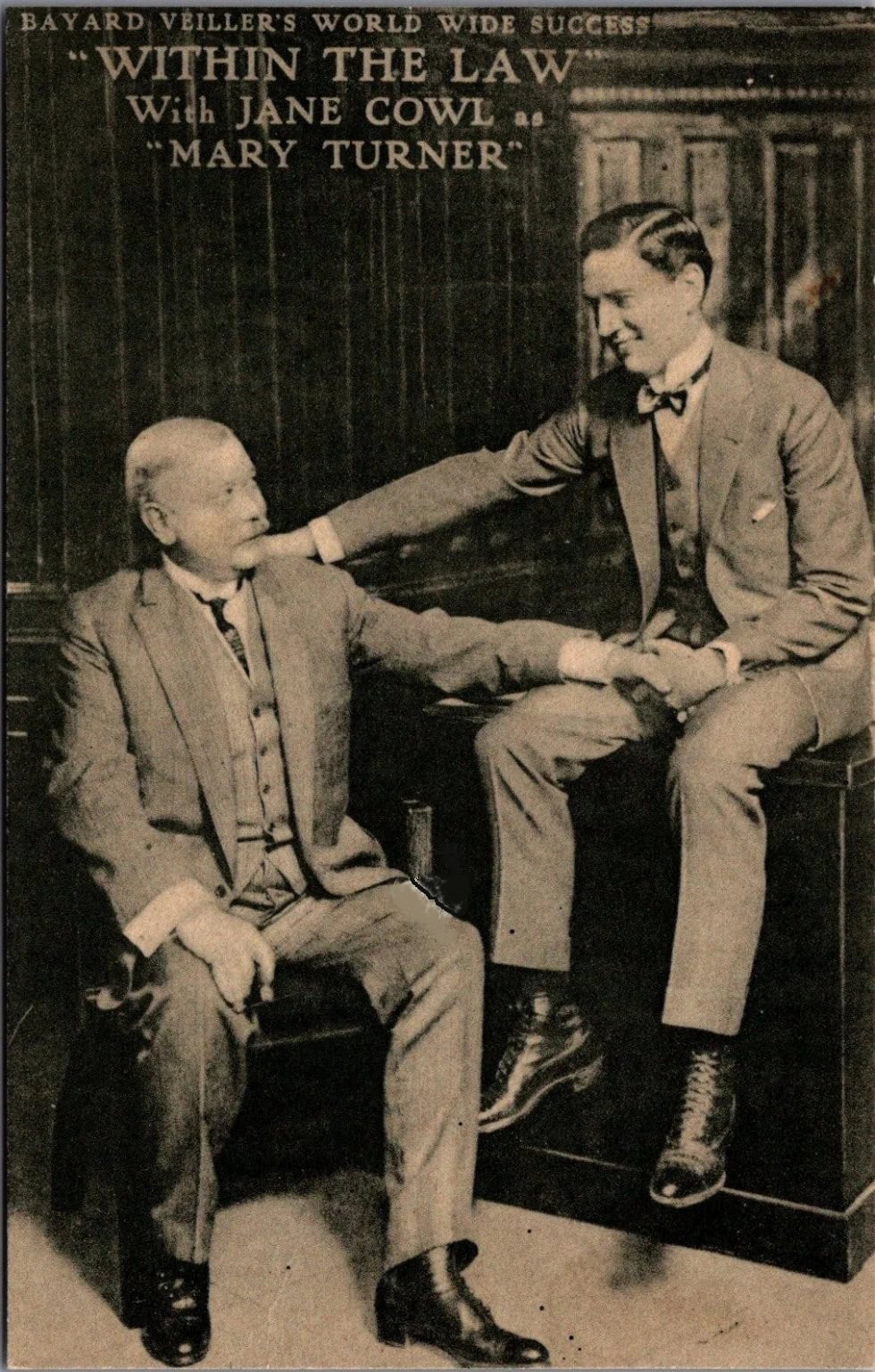
Postcards advertising Within the Law took the play into one of the longest runs of the decade.
There are four distinctive sets. Each easily identified by the captions and the actress who was currently in the role of Mary Turner.
Examples follow. The one seen here is likely the title-card for a series of six cards published by the Wynoak Company of New York, when Jane Cowl was Mary Turner.
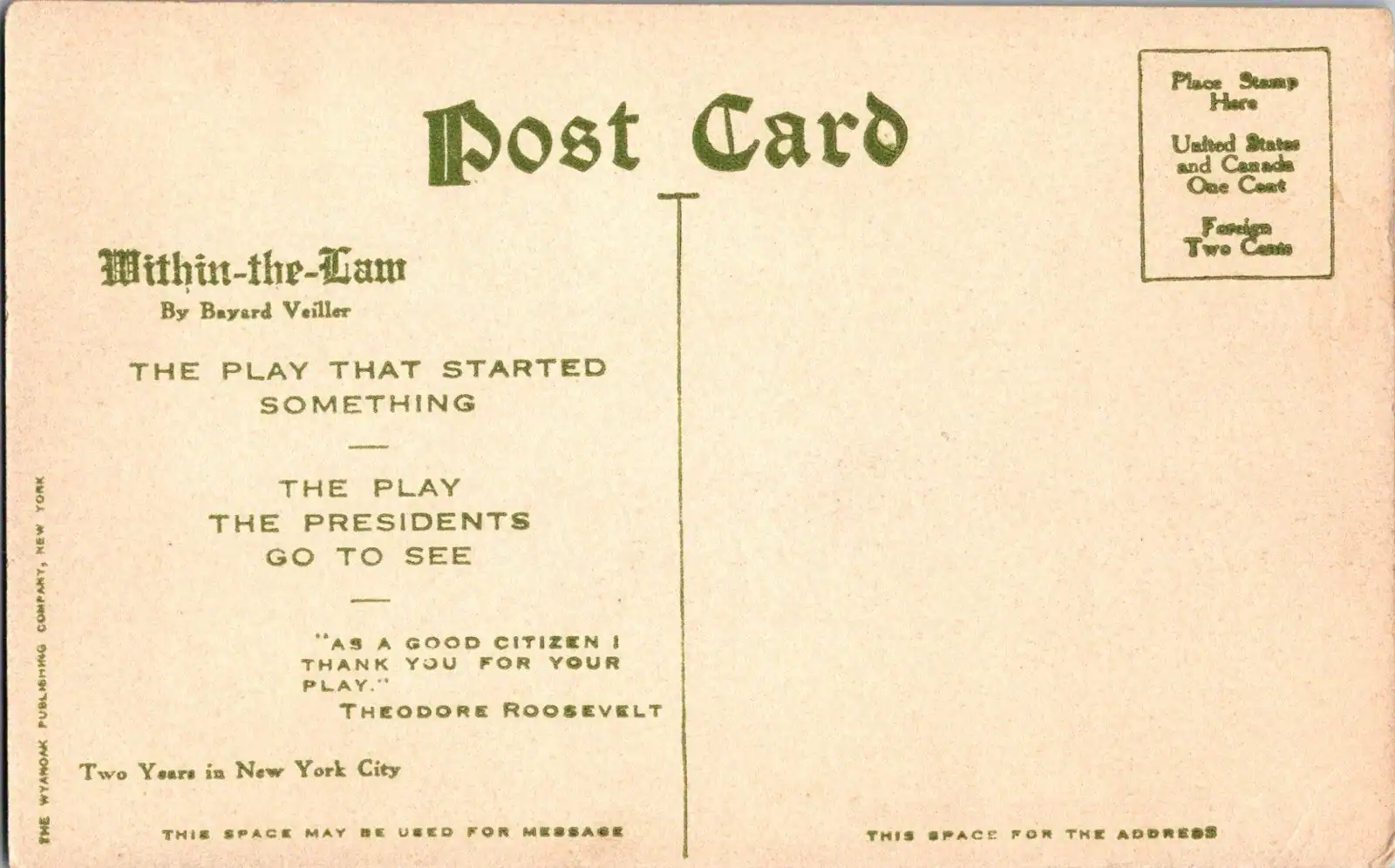
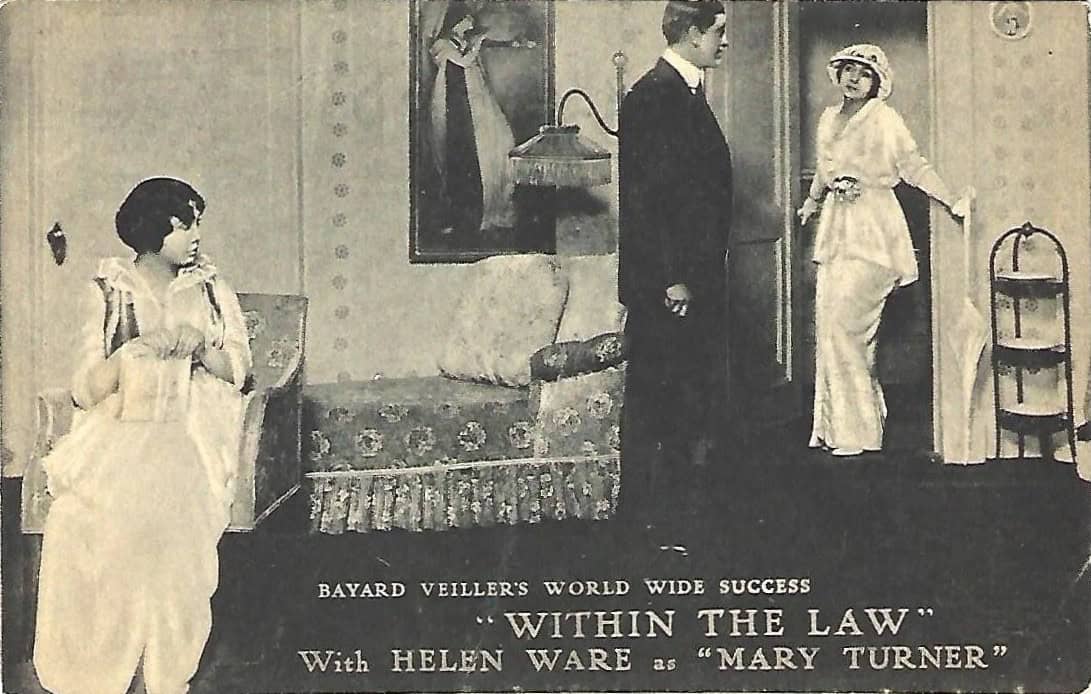
When Helen Ware stepped into the role, the ad cards were modified and took on a “scenic” character. There were at least twelve issues.
As reprints were ordered the character of the cards also changed – from black and white, to sepia and later cyanotype.
One critic wrote, “Through Mary Turner’s journey from victim to strategist, Within the Law exposes the moral fissures in systems of power and invites audiences to question who benefits from the rules and who is destroyed by them.”
Thanks for the postcard glimpse into this play. The core storyline remains relevant today, doesn’t it? I’ll have to try to catch one of the movie adaptations!
This was so interesting! Theatre postcards can tell you so much about the various eras, from a socioeconomic perspective.