7,170 languages are in use today, but the number changes frequently. Every day we learn more about the world’s languages. Languages are, in many ways, living things; they are dynamic. Now, is a fragile time – roughly 44% of all languages are near the vanishing point, often with fewer than 1,000 users remaining. Yet, the world’s top twenty languages are the native tongue of more than 3.7 billion people. In order of use, English is first, then Mandarin Chinese, Hindi, Spanish, Arabic are the top five. French is sixth, German is twelfth.
***
IT’S TIME TO EXPLORE THE LANGUAGES ON POSTCARDS
Yes, there are languages on postcards that do not appear on the
world’s languages list, and this is a very serious question.
Do you speak stamps? Or feet? Perhaps fruit?
In a 1942 issue ofChristian Science Monitor the reporter Mallory Browne attributed a remark to George Bernard Shaw that has many variants that is basic to this conversation. Shaw said, “England and America are two countries separated by a common language.” And, the same can be said about dozens of other countries – China and many of its own provinces; India and Napal, Pakistan, and Bangladesh; Vietnam and all the other countries in Southeast Asia, to name a few.
“Comparative Philology” is the classic term for the deep study of language — not just grammar, but history, evolution, structure, and meaning across time. The term carries a feeling that can be felt only in old Oxford libraries by nineteenth‑century intellectuals.
But even those early “philologists” would find it difficult to explain, describe, or illustrate the languages found on postcards. Yes, there are postcards that proclaim how to use (not so much speak) the languages of stamps, feet, and fruit – all meant to be in good fun.
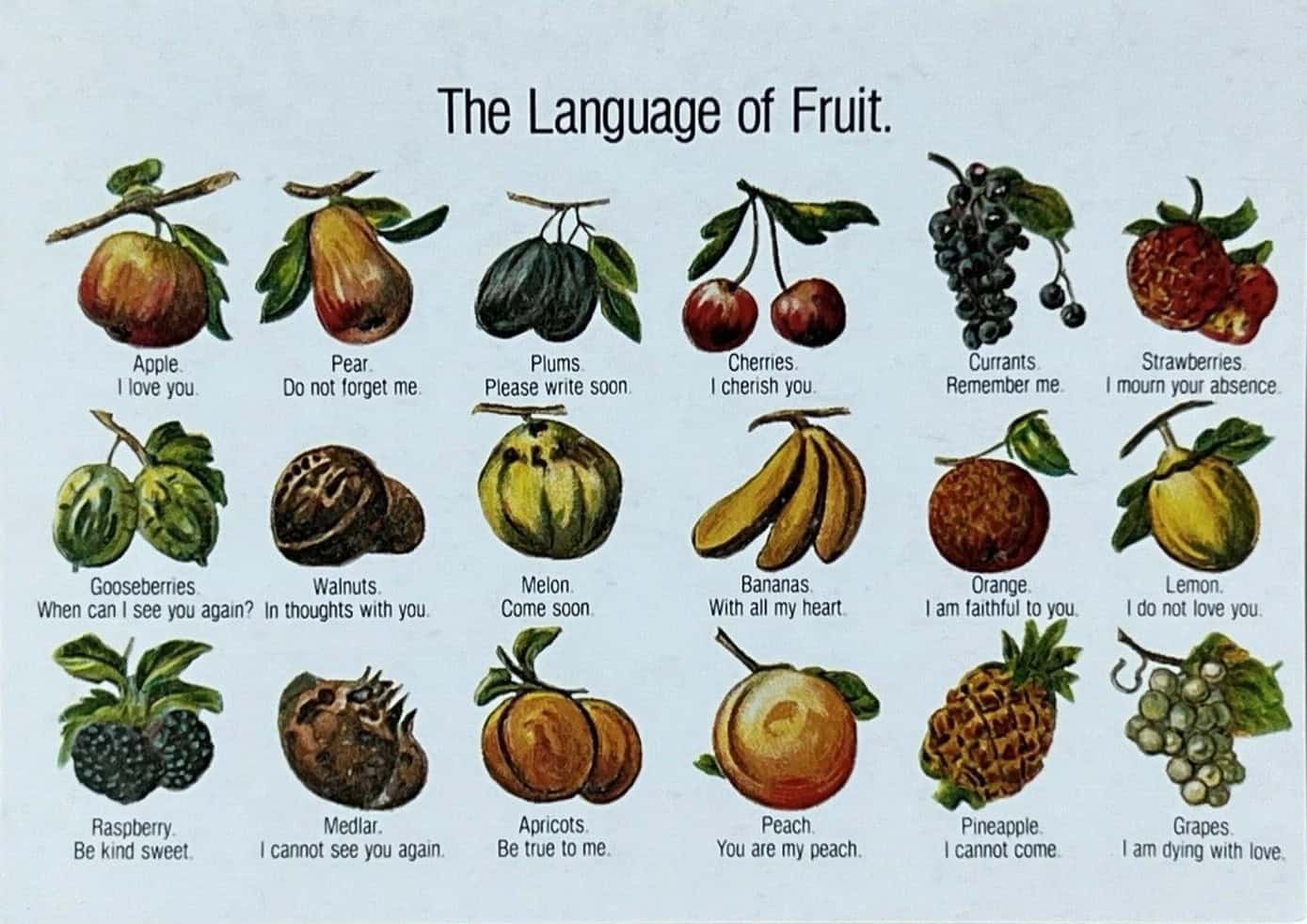
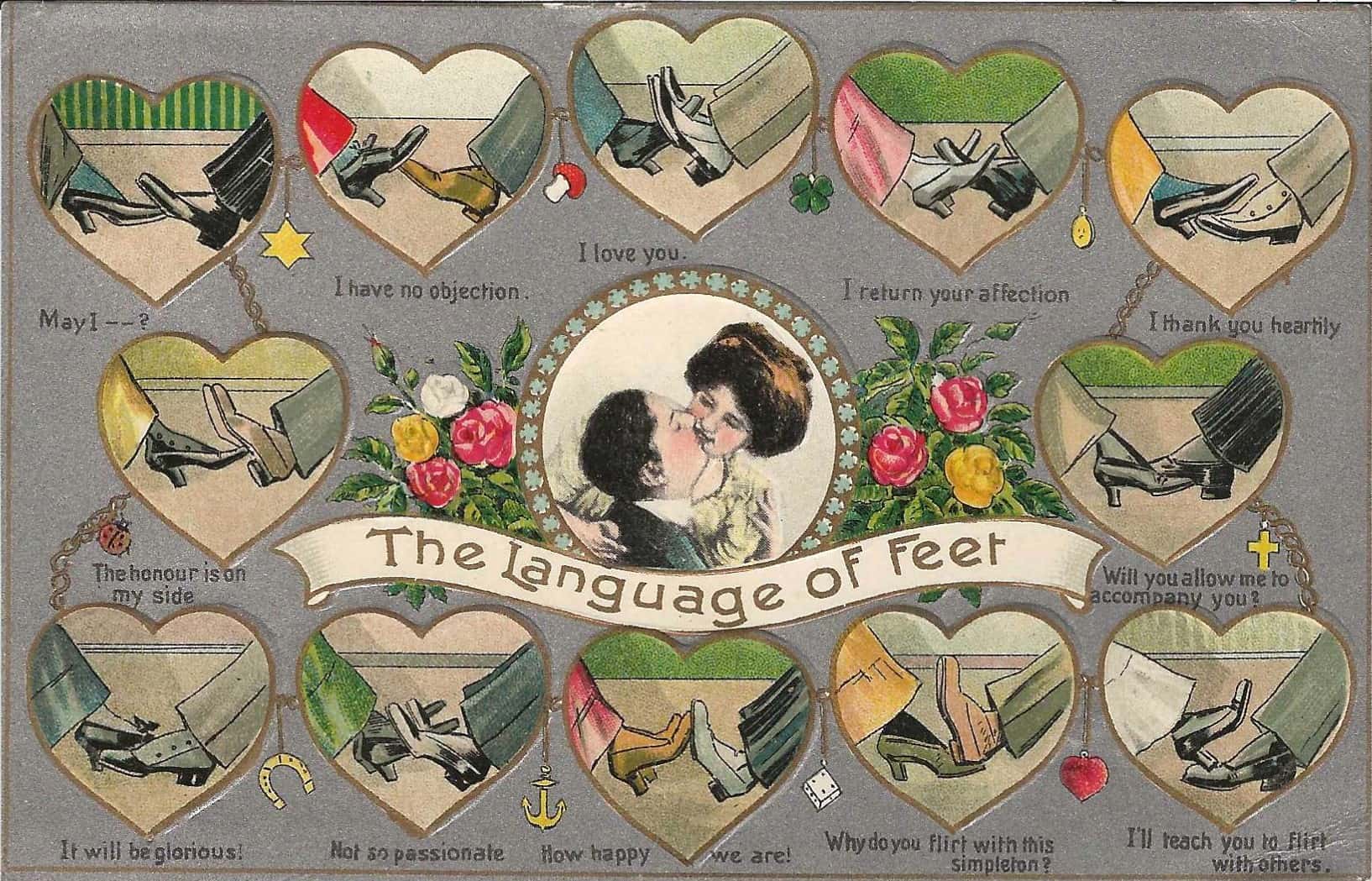
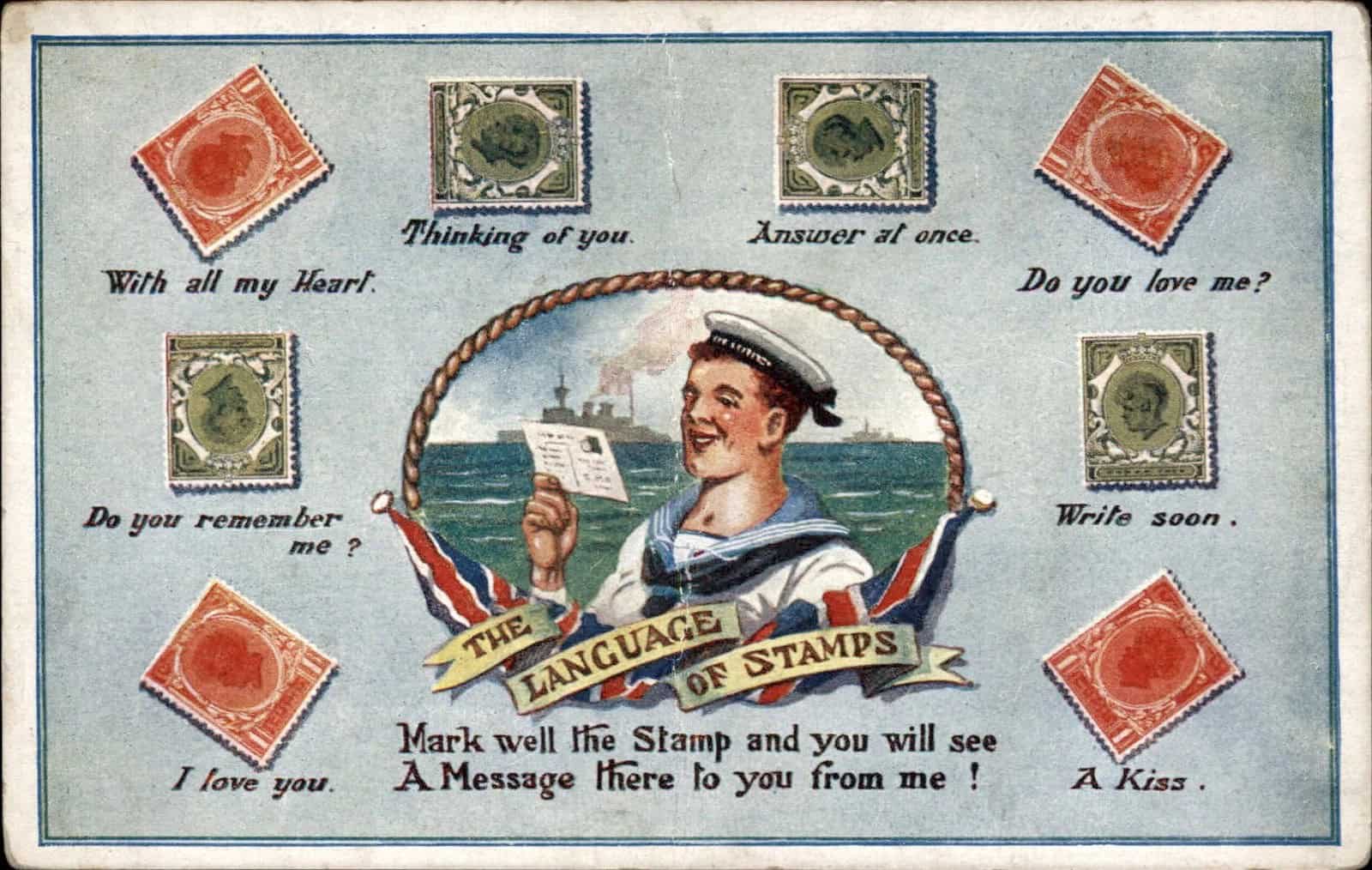
There are also flowers.
In the earlier decades (1901 to 1920) of the twentieth century, the Welch & Sons publishing firm in Portsmouth, England purchased the equipment to manufacture a style of postcard named a Trichromatic. Trichromacy is a printing process. In postcard terminology it means the card was produced using three‑colors of ink in the printing – the classic primaries: cyan, magenta, and yellow. This was an early form of color reproduction used well before full four‑color CMYK became standard.
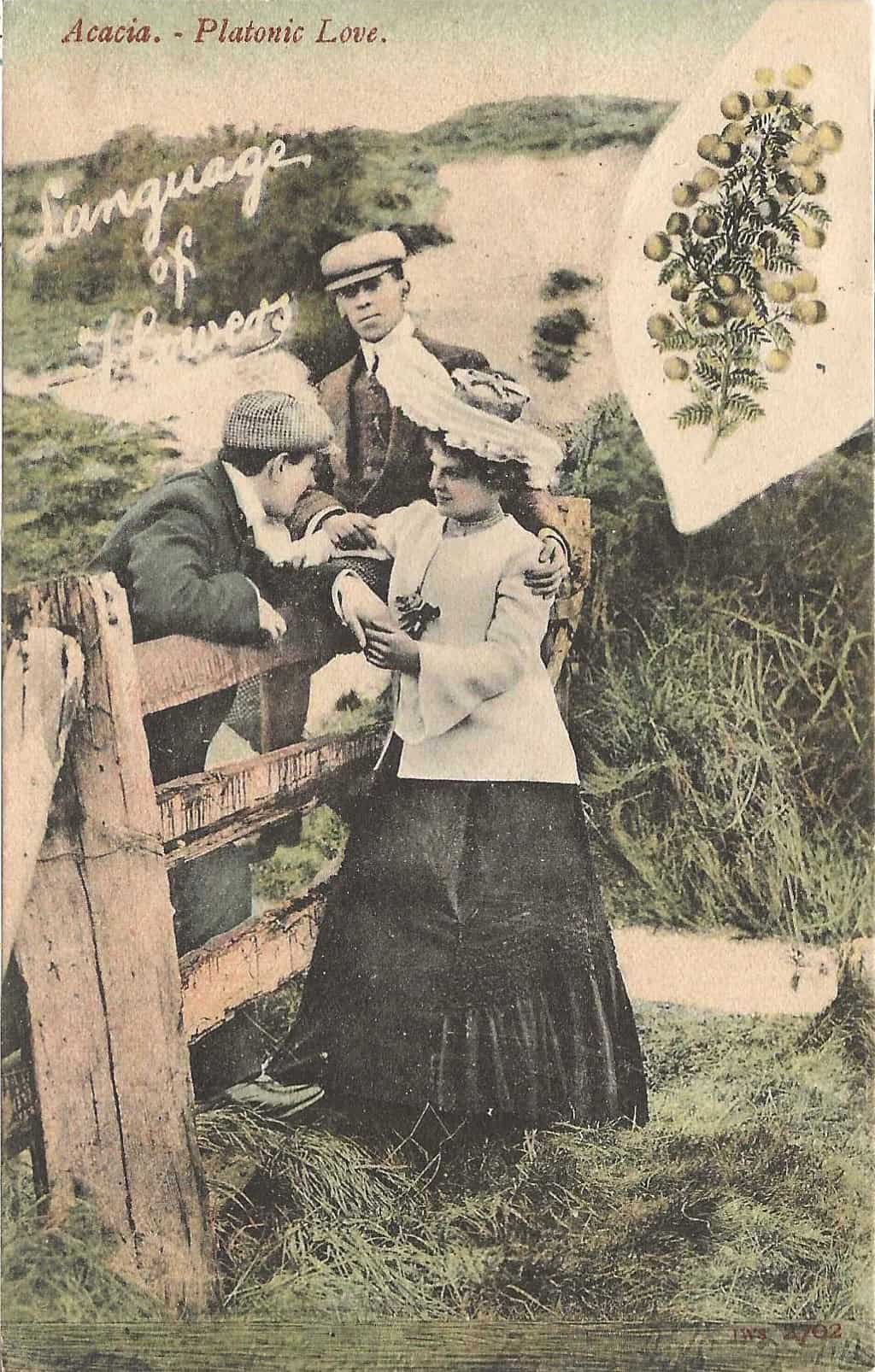
One of Welch’s first sets of “romance” postcards using the newly installed (in Belgium) equipment was their Language of Flowers set featuring inset photos of Acadia, Geranium, Honeysuckle, Purple Columbine, Ranunculus, and Red Columbine. The set title appears in a white “script” style font on the front of the card along with a brief quip about a characteristic of the flower that would also apply to the lass who is being wooed by a lad or a lad accompanied by some of his chums.
The Acacia blossom is characterized as Platonic Love and is described as a tree that presents an air of quiet resilience. Their feathery leaves and pale, fragrant blossoms soften even the harshest landscapes. Acacia often symbolizes renewal and endurance. Acacias are often credited with lending a delicate sweetness to the wind.
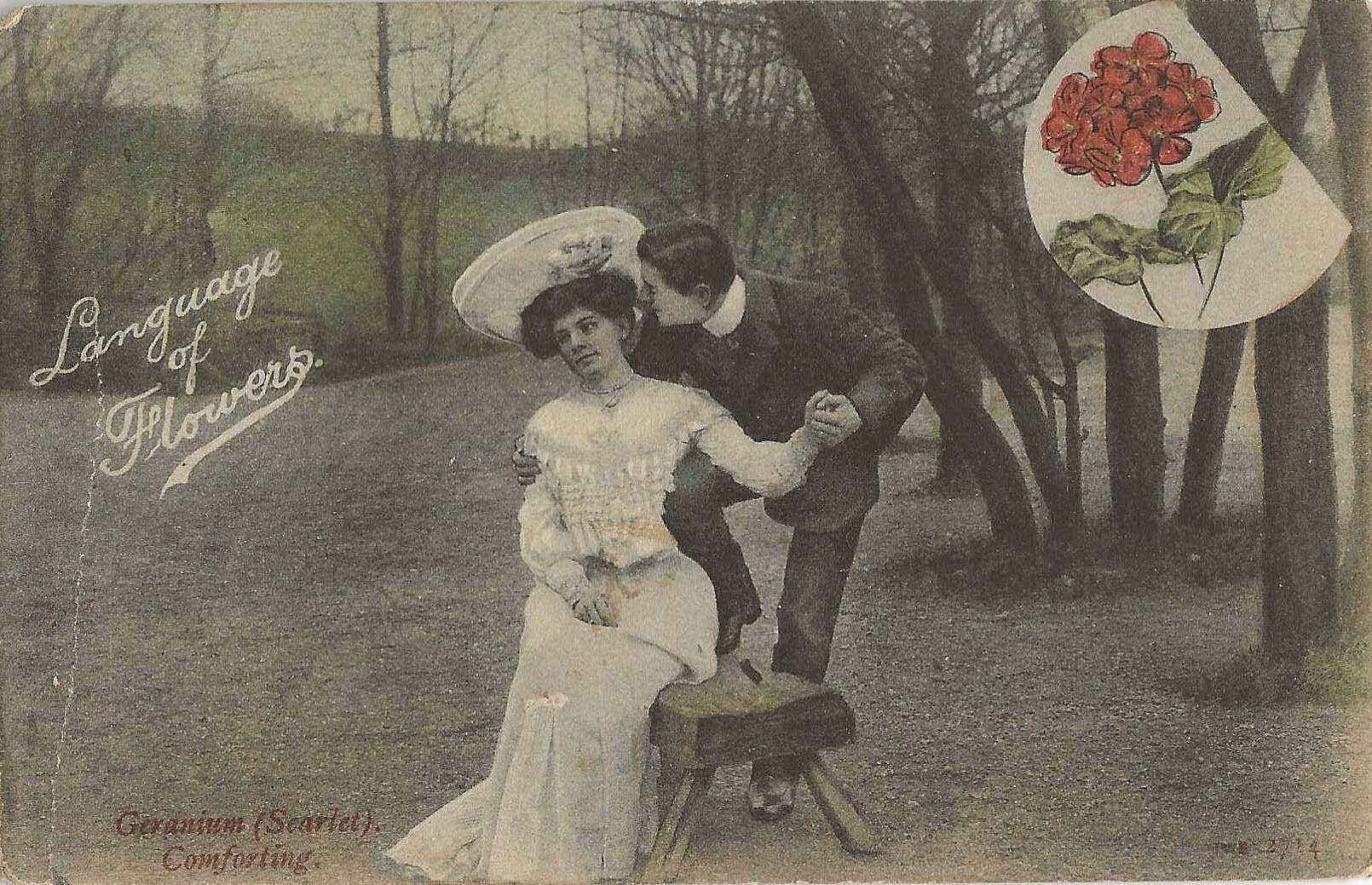
Geraniums are comforting. They brighten gardens with their clusters of red, pink, or violet blooms, each one held above rounded, faintly scented leaves. Hardier than most, they flower through long seasons, thriving in window boxes and gardens alike. Their cheerful presence suggests steadiness, warmth, and the simple pleasure of color that never quite fades.
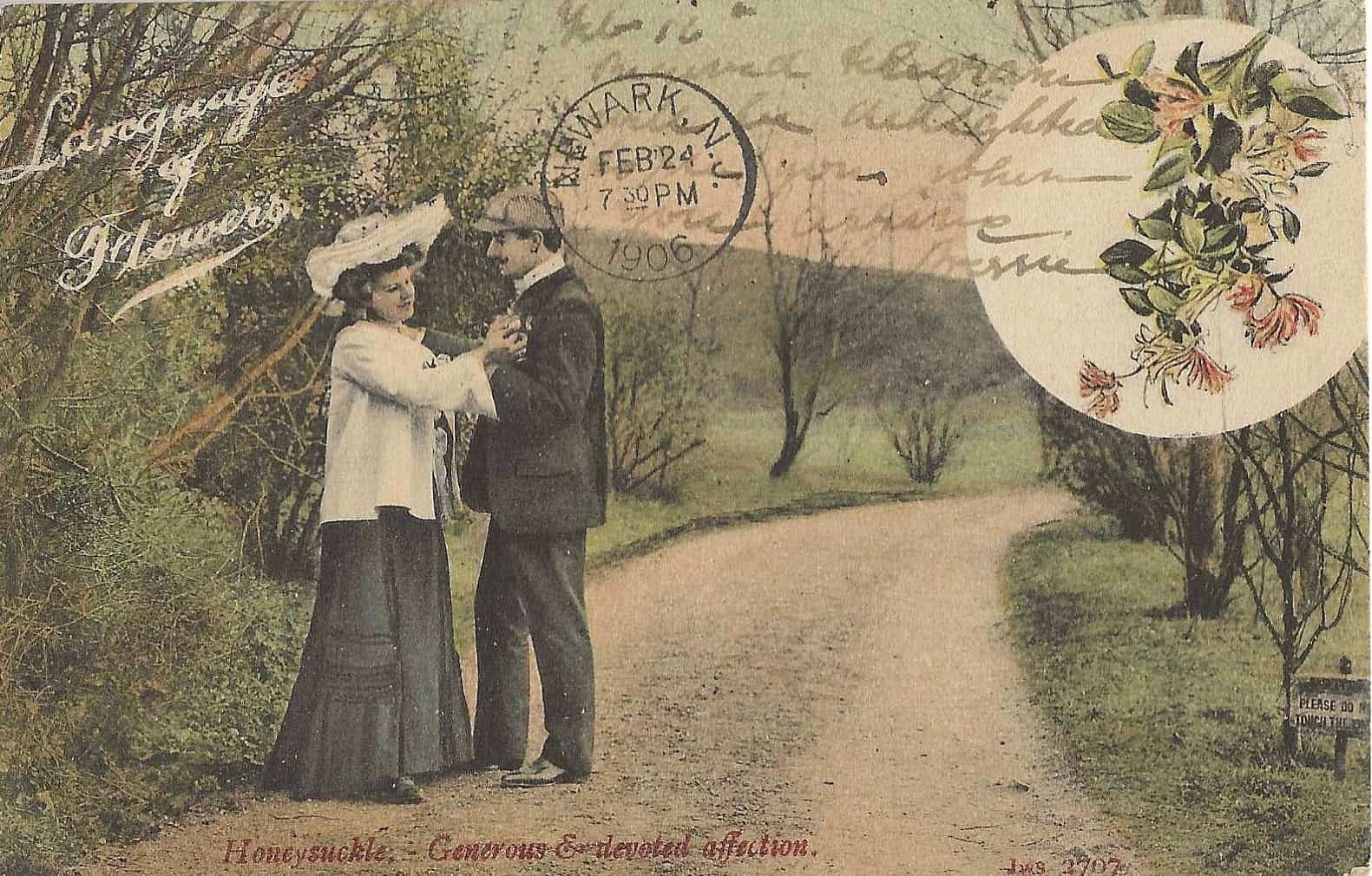
Honeysuckle is characterized as generous and devoted. Honeysuckle loops its vines with effortless grace, toward the sunlight. Creamy‑gold or blushing‑pink blossoms release a warm, nectar‑rich perfume that drifts far on summer evenings. Beloved by hummingbirds and gardeners alike, honeysuckle suggests affection, nostalgia, and the gentle pull of memory woven through a fragrant bloom.
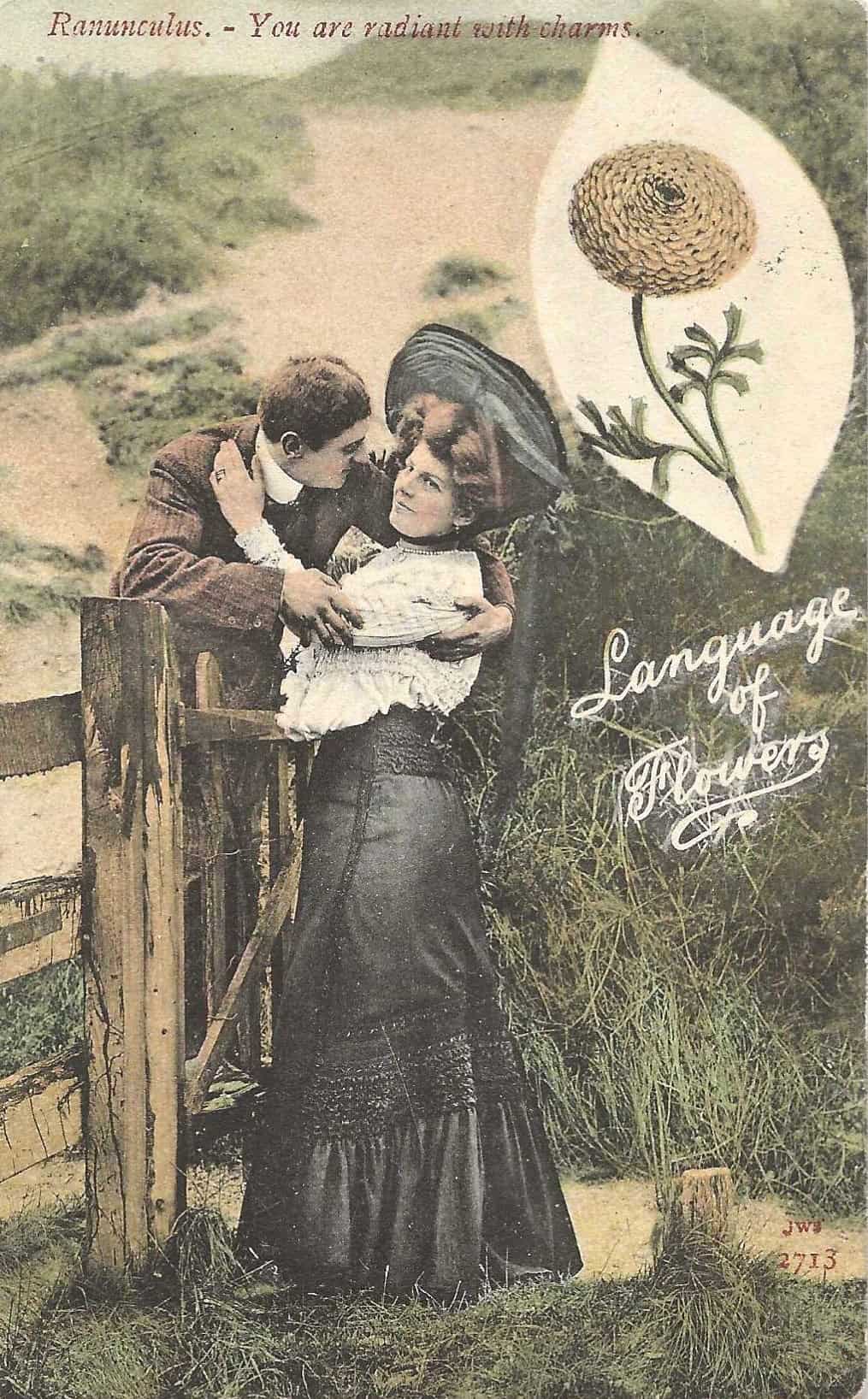
Ranunculus, a flower abundant with charm. Ranunculus blossoms feel, oh so delicate. Blooms are layer upon layer of silky petals spiraling into luminous cups of gold, apricot, or cream. Despite their refined appearance, they grow with surprising vigor. Their blooms evoke elegance without formality, like small, glowing lanterns that bring a sense of quiet luxury to spring gardens and bouquets.
Columbine is a flower of resolve and determination – sure and true! The flowers nod like tiny lanterns. Their colors – soft blues, purples, and whites give them a woodland charm, as though they were crafted by angels. They suggest quiet mystery, resilience, and the charm of wild places that feel half‑enchanted.
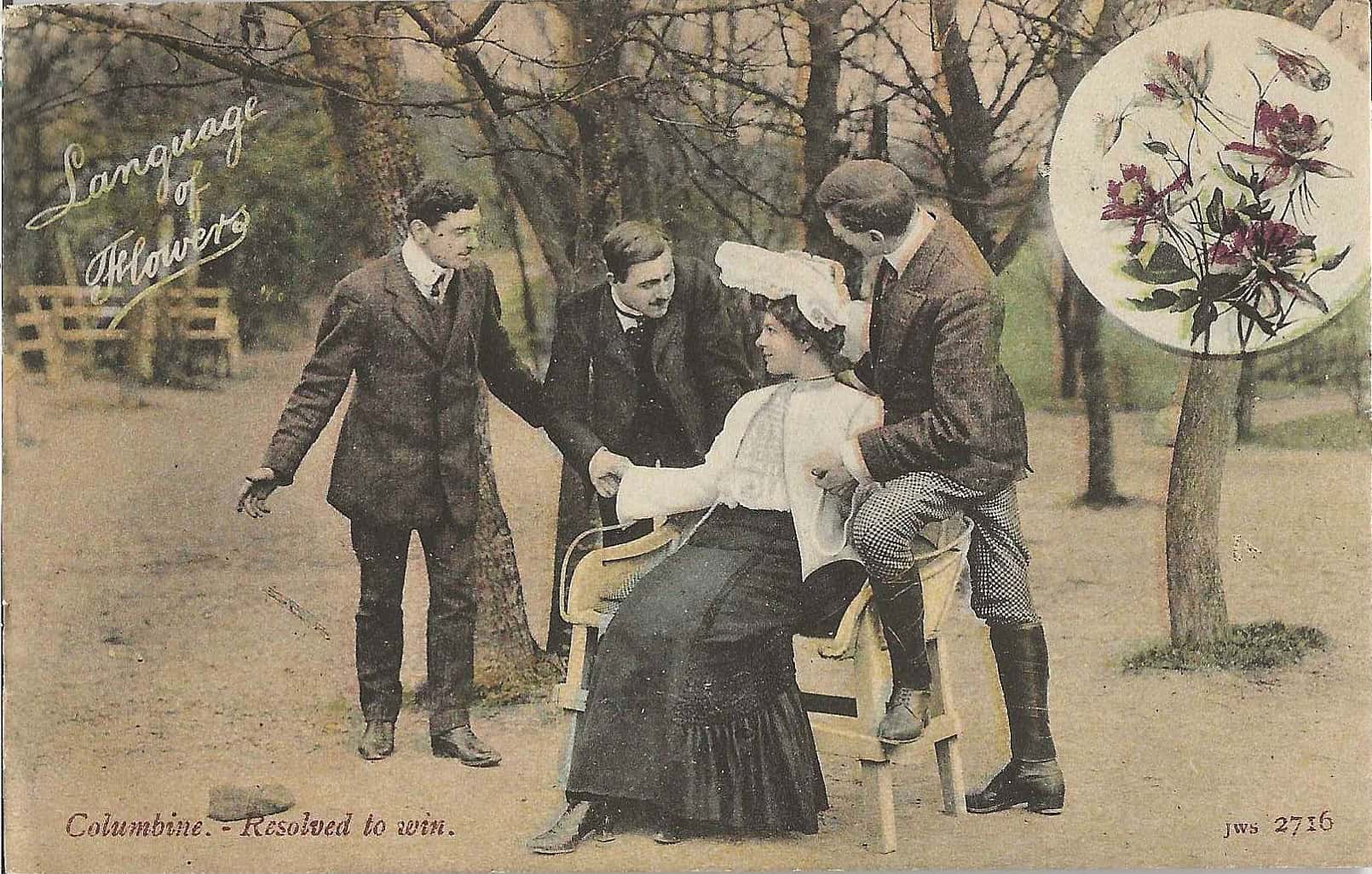
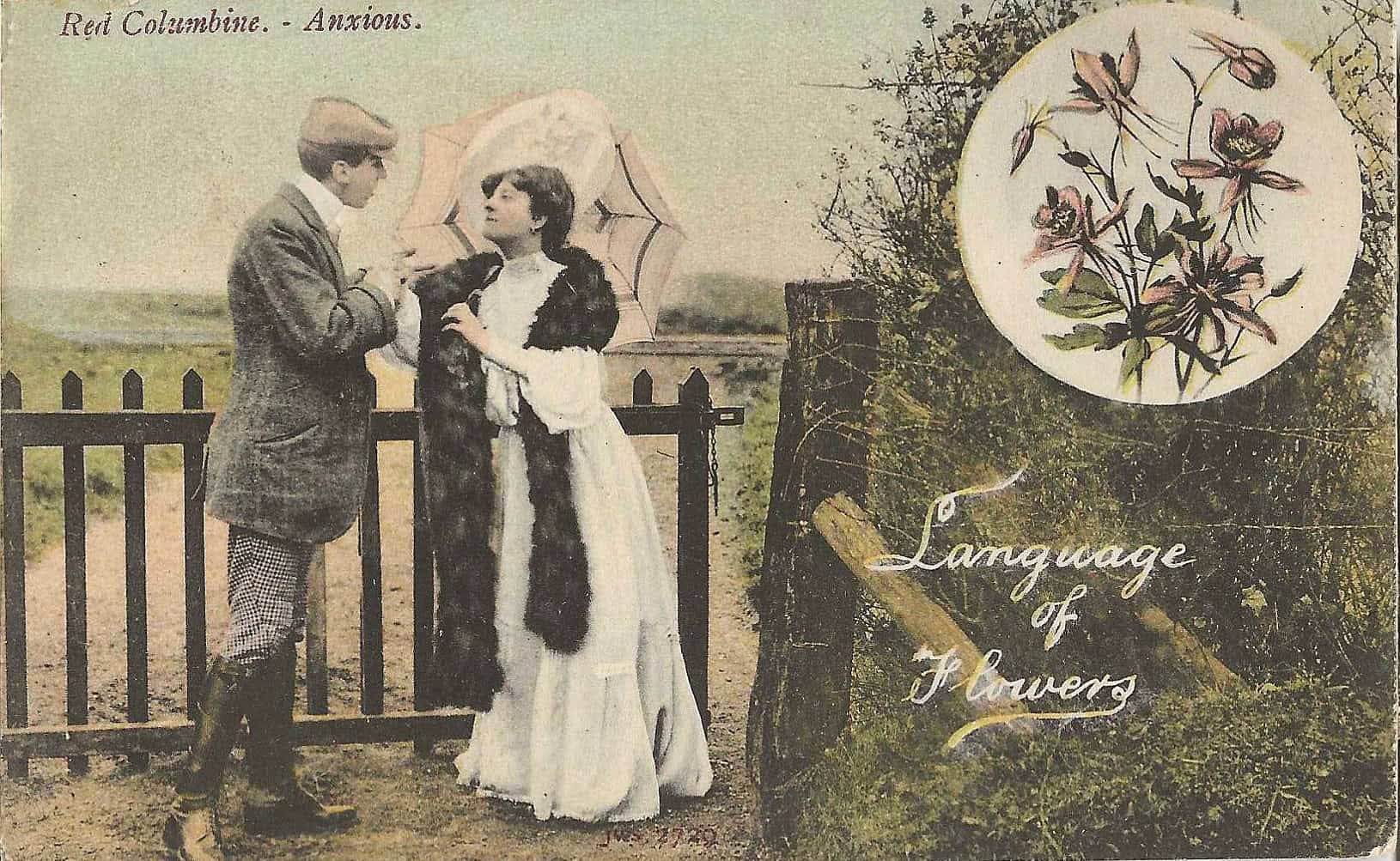
The same is true of Columbine’s botanical cousin, the Red Columbine, which brings “anxiety” to every relationship. Red columbine feels livelier, its scarlet petals flaring outward like sparks. The yellow centers glow against the red, drawing hummingbirds like magnets. It carries a sense of movement and brightness, a woodland flower with the spirit of a small flame—bold, inviting, and unmistakably full of life.
So here we are. As of now there are no courses in Comparative Philology in which you may enroll to speak the languages on postcards, but if you study the cards – self-education is quite rewarding.
Hi Ellie! wonderful article and postcards! this is one of my favorite cards to collect and i did notice how some of the stamps were placed! now i know! thanks so much, Charles
I have a small collection of these cards and they are each fascinating in their own way. Thanks for telking us about them.
I have a small collection of these and each has its own charm. Thanks for explaining all the flower symbolism.
All kinds of great info! Thanks for sharing all your research!