The dictionary on my desk contains six definitions apropos for the word “star” as a noun, and three as a verb. Today I want to concentrate on the noun’s definition #4 – a configuration representing a star; a figure, a symbol, or an icon.
The same dictionary has two definitions for “uniform” as an adjective, one definition when the word is a verb, one definition when “uniform” is used as a noun.
Several groups of people – who might be called constellations – yeah, I know, groan at the pun, put stars on their uniforms. First and likely the best known are generals (the military sorts, not bossy, elderly aunts), then there are police officers, sheriffs, firefighters, honor guards, and EMS (emergency medical service) personnel. And, we must not forget Boy Scouts.
Why? Well because stars are symbols of authority; they also connote knowledge, competence, and skill. Also, stars assure product quality, just ask any Heineken drinker, any Paramount theatre enthusiast, or athlete who wears Converse sports shoes.
But wait … since 1903, to whom do we trust our car?
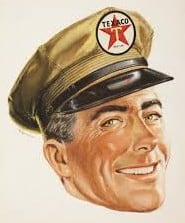
The Texaco man who wears the star!

In 1901 the Texas Fuel Company was founded in Beaumont, Texas. It was headquartered there by Joseph S. Cullinan, Thomas J. Donoghue, and Arnold Schlaet upon the discovery of oil at Spindletop, an oil field a few miles northwest of where the Texas-Louisiana Stateline meets the Gulf of Mexico.
The red star logo first appeared in 1903. The same star would later become the centerpiece of the slogan “Trust your car to the man who wears the star” that launched in 1962 and became one of the most recognizable U.S. advertising campaigns of the twentieth century. It literally remained central to Texaco’s brand identity for the next two decades – the 1960s and 1970s. It was created by the agency Benton & Bowles, with the famous jingle composed by Roy Eaton, and it tied Texaco’s red star logo to the image of the uniformed full‑service station attendant.
Texaco promoted its attendants as trained, uniformed professionals following the “Texaco Dealer Spirit,” emphasizing courtesy and cleanliness.
This set the stage for a trust‑based slogan and a national rebranding push of their re-engineered gasoline brands: Texaco’s Fire Chief and Sky Chief. Texaco Fire Chief was the brand’s regular grade of gasoline, while Sky Chief was their premium or super grade.
By the mid-point of the 1960s there were only a few towns in America without a Texaco gas station. The “Trust” campaign meant what it said, Texaco attendants were trained, uniformed, and reliable. They checked the oil level free of charge with every gasoline purchase (truly a lost art today), they cleaned windshields, and many even inspected tires for excessive wear.
Texaco was among the first to use postcards, television commercials, radio spots, and print ads. It became one of Advertising Age’s “Top 100 Campaigns” of the twentieth century. When Bob Hope became a Texaco spokesman in 1975, the brand surged again.
The examples below are some of the Texaco “reminder”” postcards that dealers and distributors sent to the best customers just to say “hello” and to remind them that their car may need servicing.
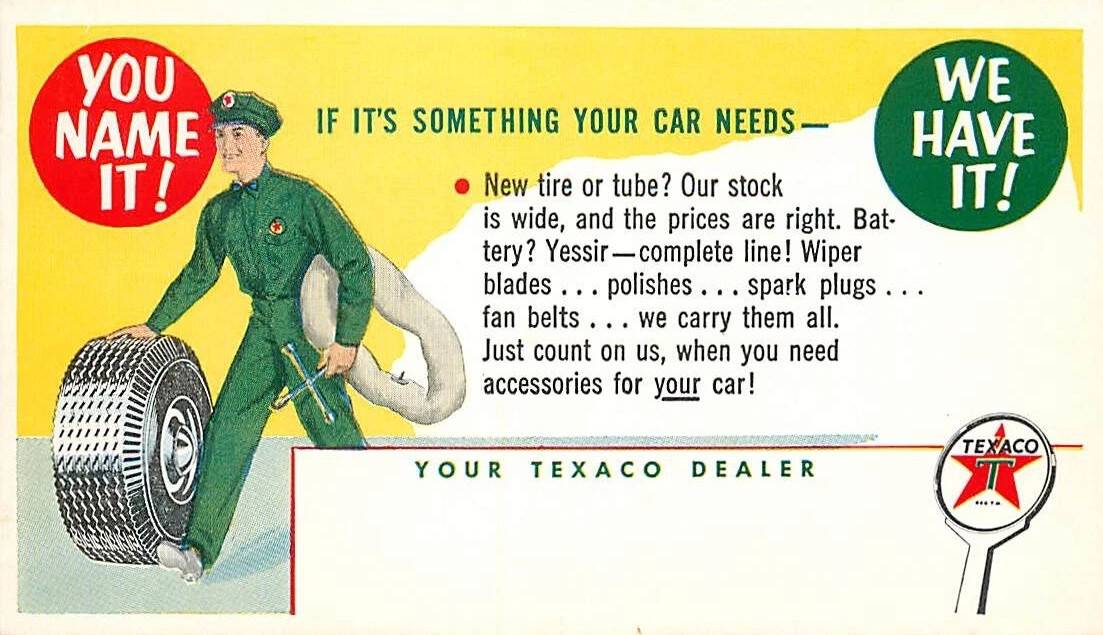
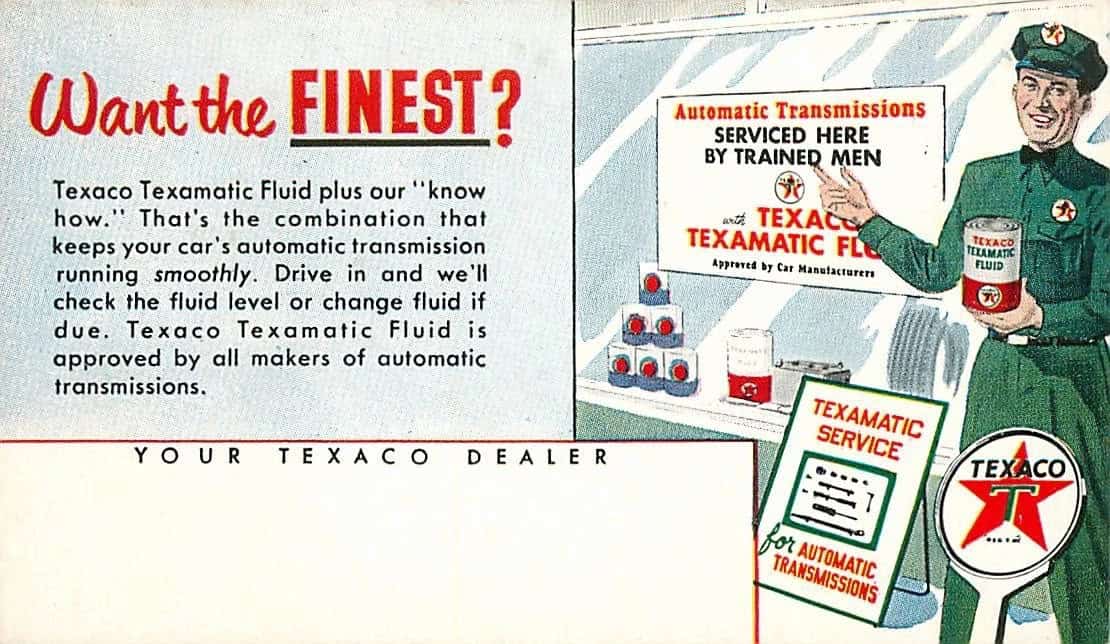
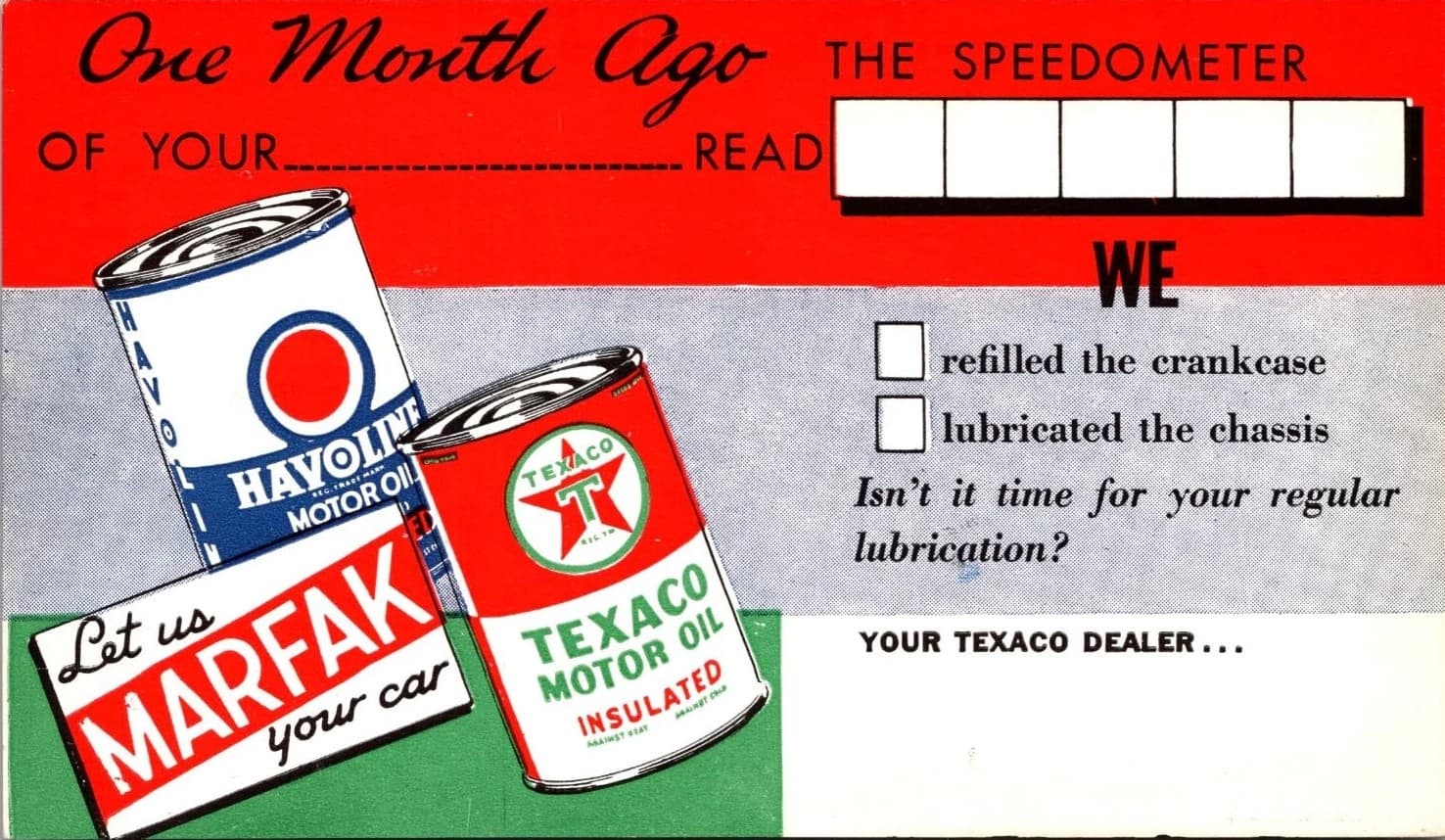
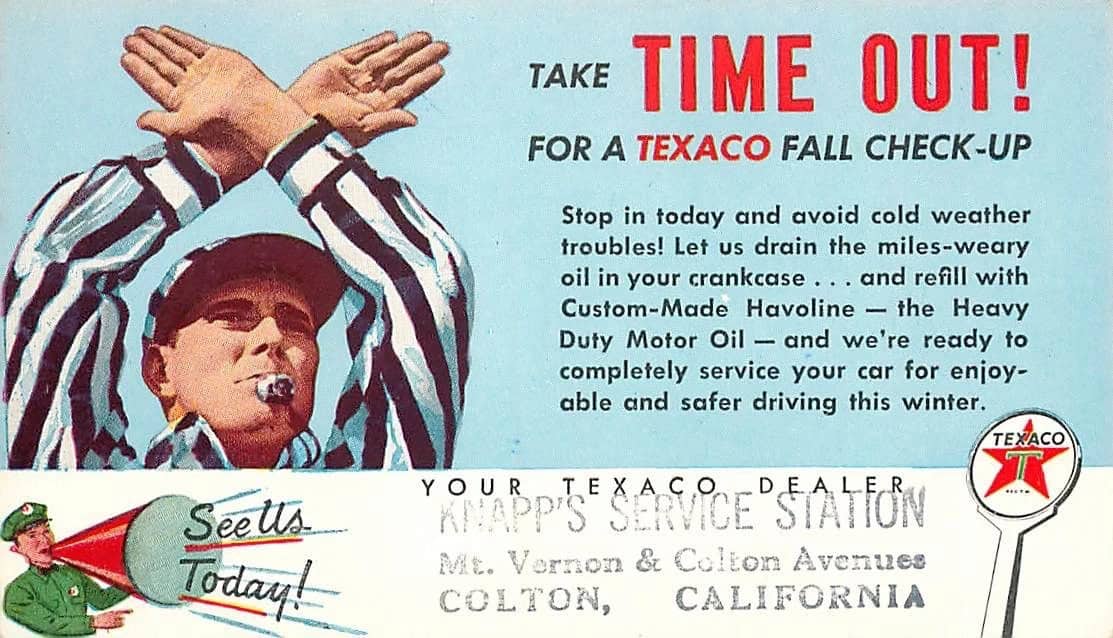
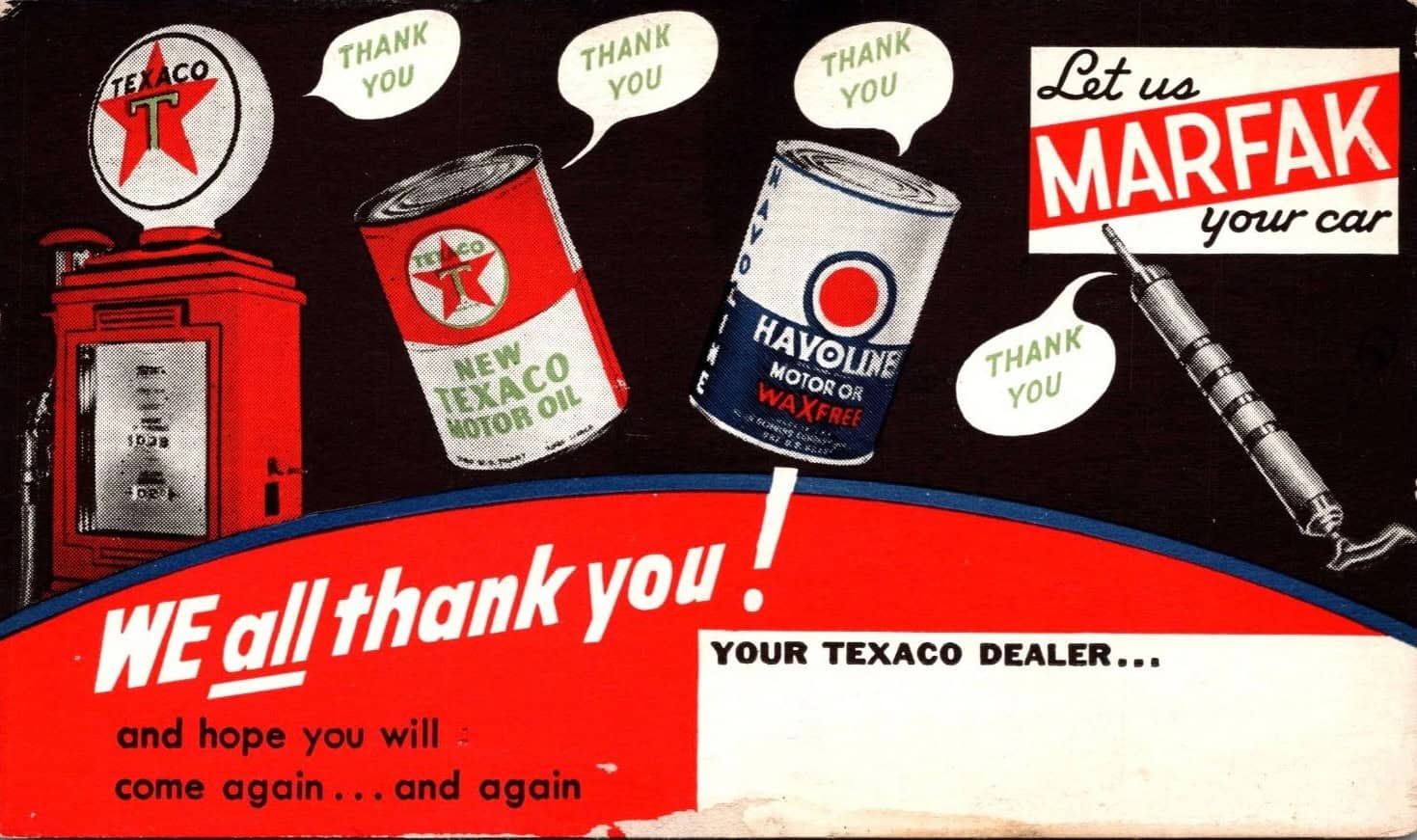
If Americans weren’t so impatient and so accepting of self-service gas stations the “man who wears the star” would likely still be around today.
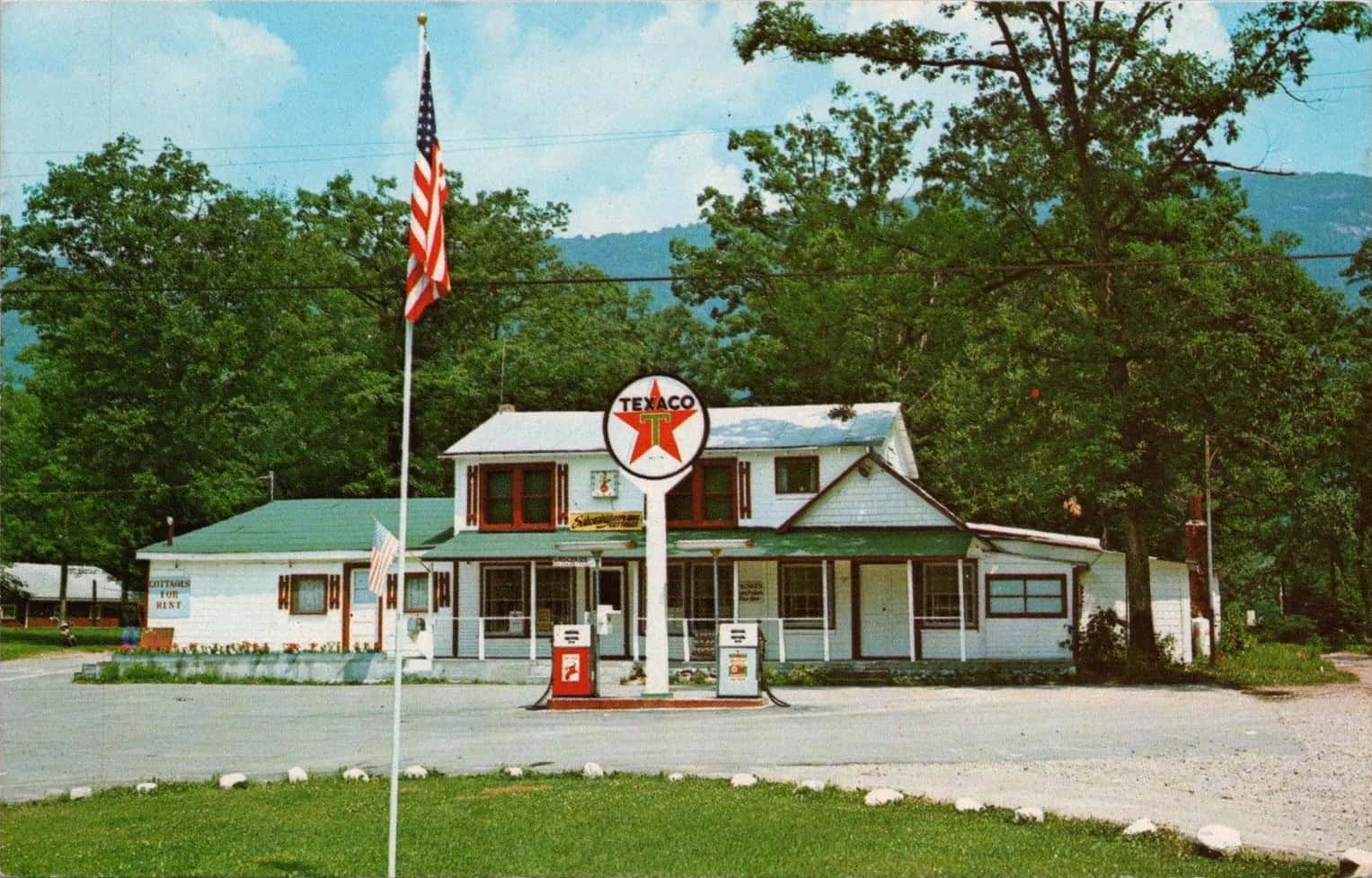
As for other Texaco themed postcards – they seem to have been a favorite of RPPC makers. Here are two of great interest.
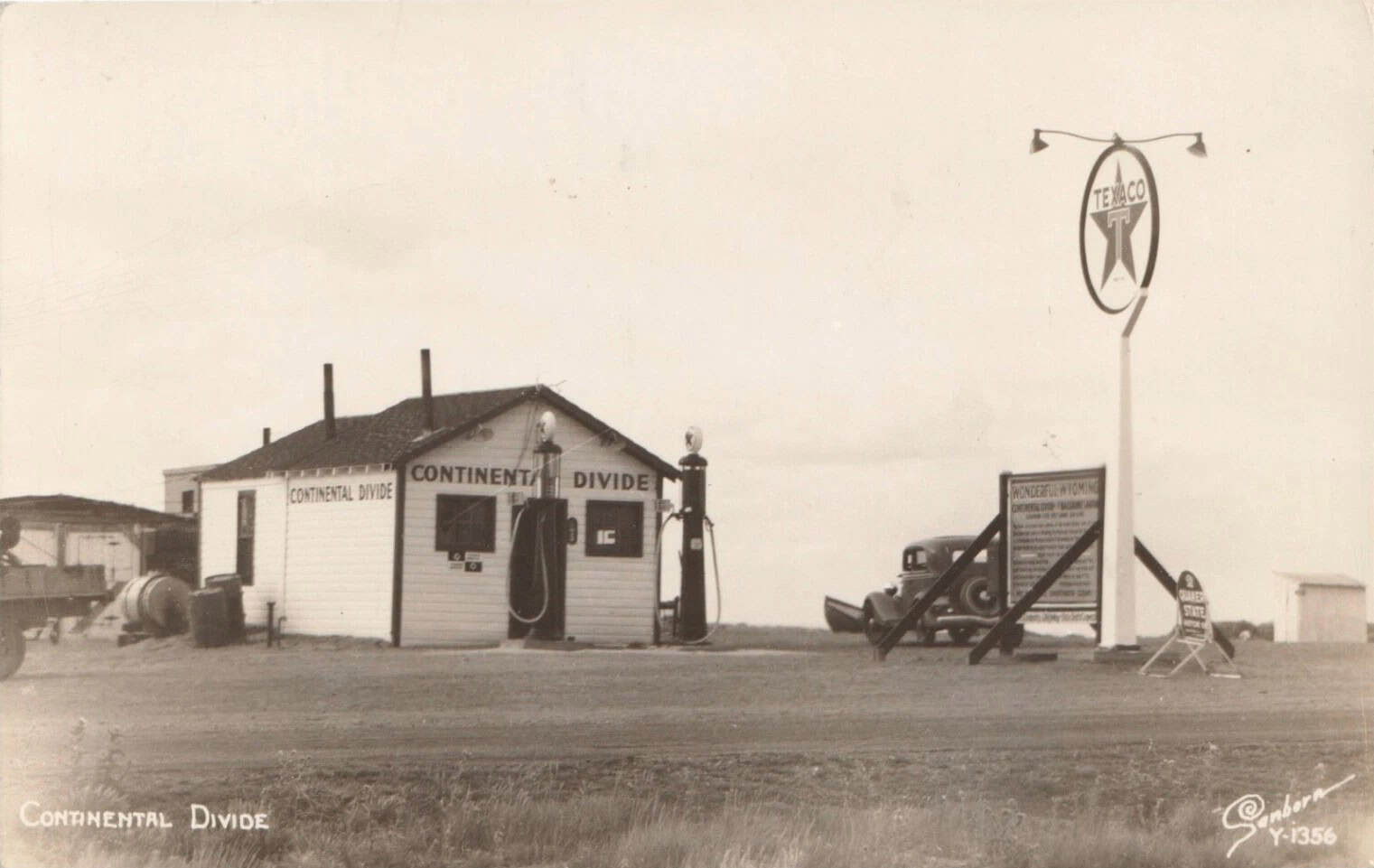
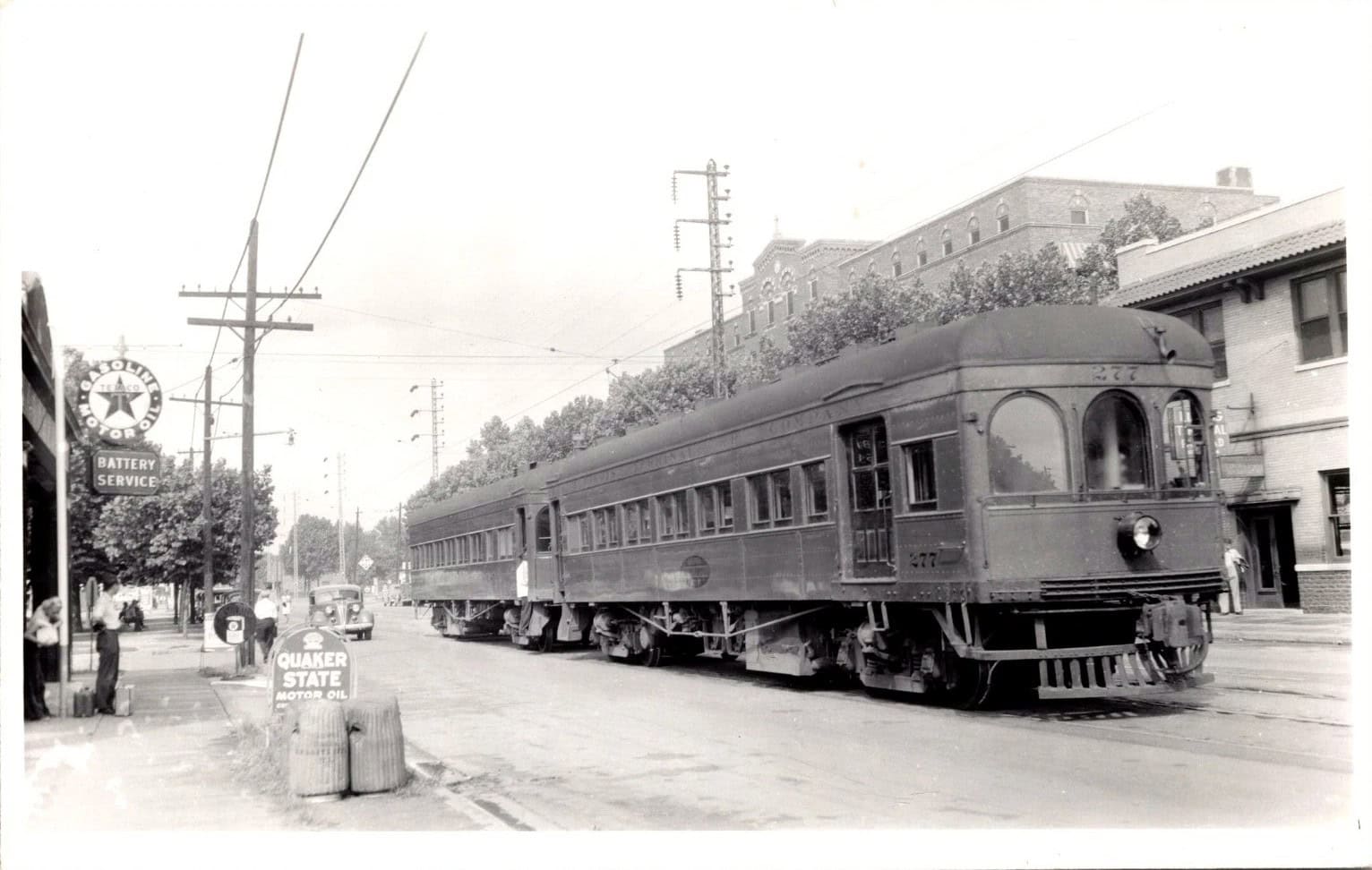
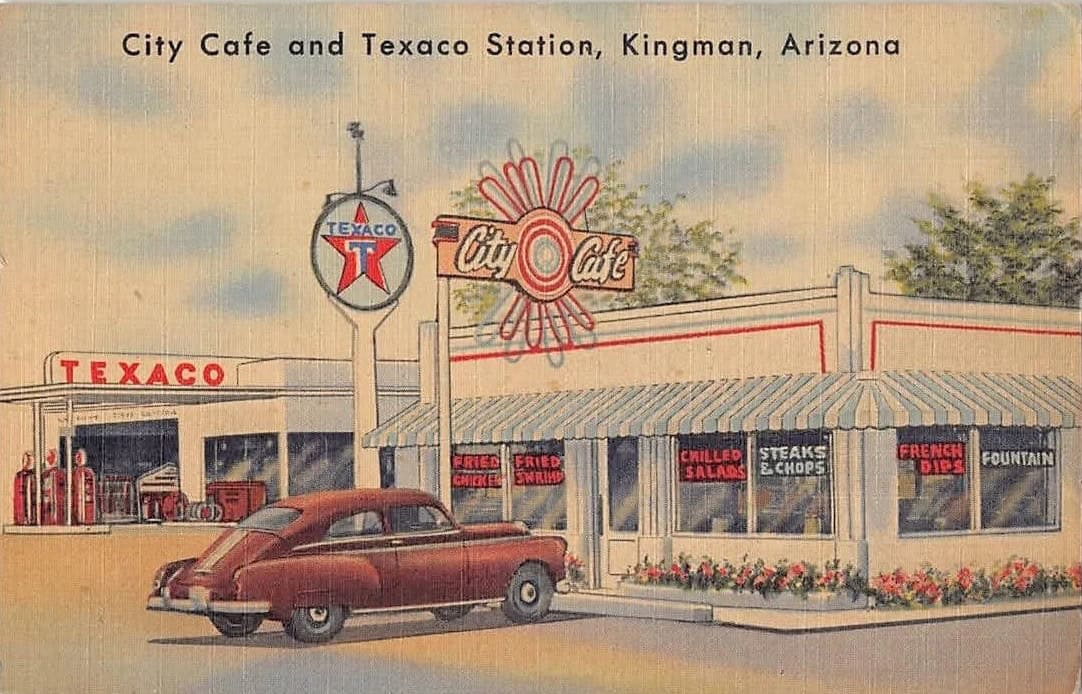
And there were probably equal numbers of privately produced postcards like the two here; one a linen from Arizona and a chrome from New Hampshire – literally cousins from coast to coast.
In 2001 when Texaco merged with Chevron, the Texaco brand continued, but the classic campaign was long retired by then, nevertheless the star is remembered as Texaco’s promise that a Texaco station was a service center, not just fuel pumps.
I’d love to see an article on Cities Service (to become Citgo) and of course, Sinclair. Enjoyed this article, thanks for taking the time to share it.
Hello Ray, thanks for the trip in the “way-back machine”. I have fond memories of our local Texaco station in Kingman, Kansas. It was owned by the family of one of my classmates. The station is gone now, but the memories are still there.
Great article with interesting illustrations. Ray, what is the location of the New Hampshire postcard illustrated?
Oops, it’s not in New Hampshire. Sorry for the error. See below.
Ray’s articles are always so veery interesting and this one is no exception. I fondly remember the Texaco jingle and probably purchased Fire Chief gasoline in my youth.
Wonderful Texaco images and I love how you brought in the other uses of the star symbol.
Remember that jingle well. One of my uncles was a loyal consumer of Texaco gas. Once had a Texaco credit card myself. A few of my gas station postcards have the Texaco star.
Great memories of the old full-service days! Nice write-up and fun to see the postcards.
This articles got STARS UPON THARS! Thanks, loved it. Another example of how this hobby we share is endlessly fascinating and multifaceted.