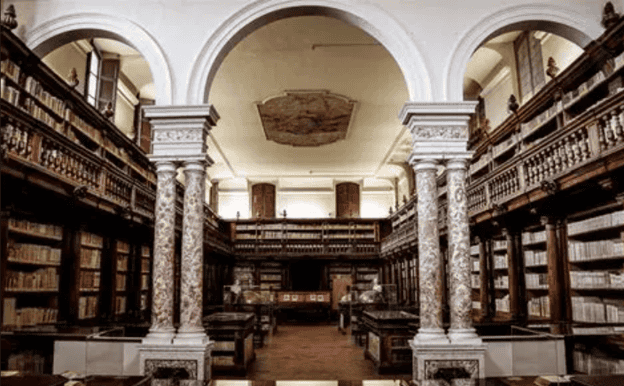
The national library of the Netherlands has a major collection of ancient paper. Does that surprise anyone? The paper is historic, precious, and shockingly valuable. The holdings include the kinds of ornamental and marbled papers traditionally used as endpapers in bookbinding. The KB’s collection contains thousands of sheets of ornamental paper in sample books collected from native paper mills around the world.
It is important to know the one criterion for adding a new paper to the collection is that the “recipe” for the design must accompany the sample.
Decorated paper has been an essential element of European bookbinding since the early seventeenth century. Decorated endpapers once served as an aesthetic and had structural purposes. Among the most valued forms were marbled papers, block‑printed papers, and brocade papers, all of which appear in the collection. End papers are the first and last inner leaves that connect the text blocks to the cover. When they were used regularly, they provided reinforcement and a visual flourish that signaled craftsmanship and luxury.
The most common form of marbled paper originated in Asia between the twelfth and fourteenth centuries, particularly in Japan’s suminagashi and the Turkish ebru traditions, long before their introduction to Europeans in the early 1640s. Europeans refined the marbling by floating pigments on a viscous bath made from gum tragacanth (a kind of water soluble adhesive from the Astragalus shrub) or carrageenan (a gelling agent often extracted from red seaweeds and used often when making chocolate milk, cottage cheese, yogurt, and ice cream).
The marbler (the artisan who creates the designs) manipulates the colors with combs, styluses, or rakes to create patterns such as “peacock,” “nonpareil,” or “shell.” A sheet of absorbent paper was then carefully laid onto the bath, capturing the floating design in a single, irreversible impression. After lifting, the sheet was rinsed and dried, ready for use in bindings. Relatively, a simple process except that the drying methods were cumbersome and time consuming.
There are no historical records concerning the “perfection” of decorated paper since no single individual can be credited, but the regions and workshops where the art became renowned were in Germany, France, and The Netherlands.
- German papermakers, especially in Augsburg and Nuremberg, refined the art as early as the seventeenth century. Their papers became the standard for European bookbinders.
- French marblers in the eighteenth century developed highly controlled combed patterns and introduced new colorfast pigments. They also added elements that improved durability and consistency.
- The Dutch workshops played a major role in distributing ornamental papers across Europe. The Netherlands became a hub for paper merchants, whose sample books can still document the sophistication of their production and trade networks – not to mention the superiority of the Dutch papers.
Decorated paper reached its artistic and technical peak between 1700 and 1850, when European papermaking, bookbinding, and print culture were flourishing. During this period, marbling patterns became standardized and achieved unprecedented intricacy. The industrialization of papermaking in the late nineteenth century gradually reduced the demand for handmade decorated papers, but the craft survived in specialized workshops and has recently experienced a revival among book conservators.
***
You may be familiar with Den Haag (The Hague), it is the home of the International Court of Justice. The court is often in the news, sadly the library is not. With a population of just over half a million, it is the third-largest city in the Netherlands.
During a visit a few years ago, I had the good fortune to find in the KB’s gift shop a set of ten postcards showing examples of ancient, decorated papers. I wasn’t in a big rush to catch the train to my next stop, nevertheless I bought the cards sight-unseen – the sales receipt was still in the envelope when I rediscovered them in a box of souvenirs lately, the total was 9 Guilders, which was then $5.34.
The cards are continental size, on very stern paper produced by the library and the variety is astonishing. Most of the designs are named in Dutch but there are other titles in Norwegian, German, and Afrikaans.
The five examples below, shown with their Dutch captions, are my favorites.
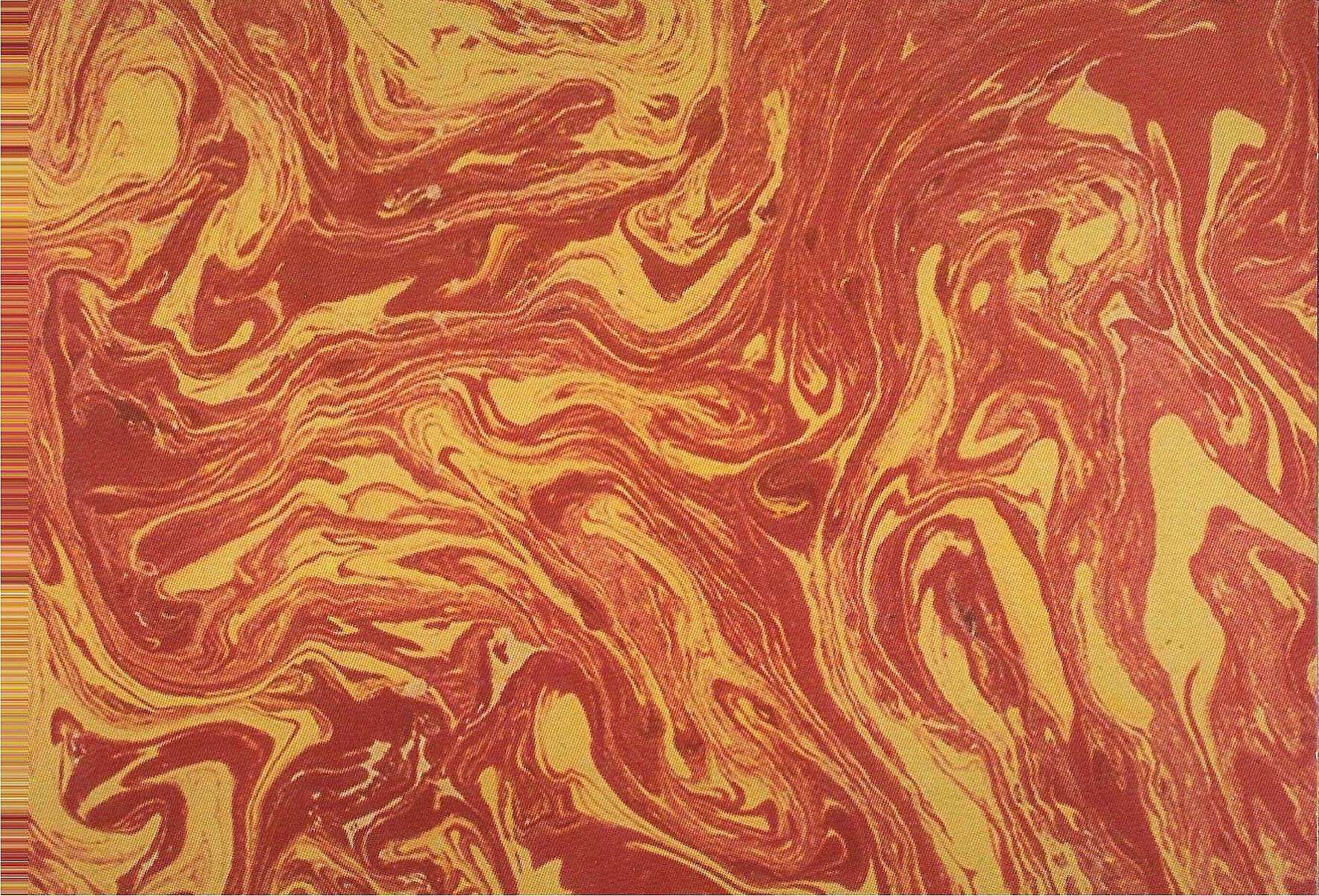
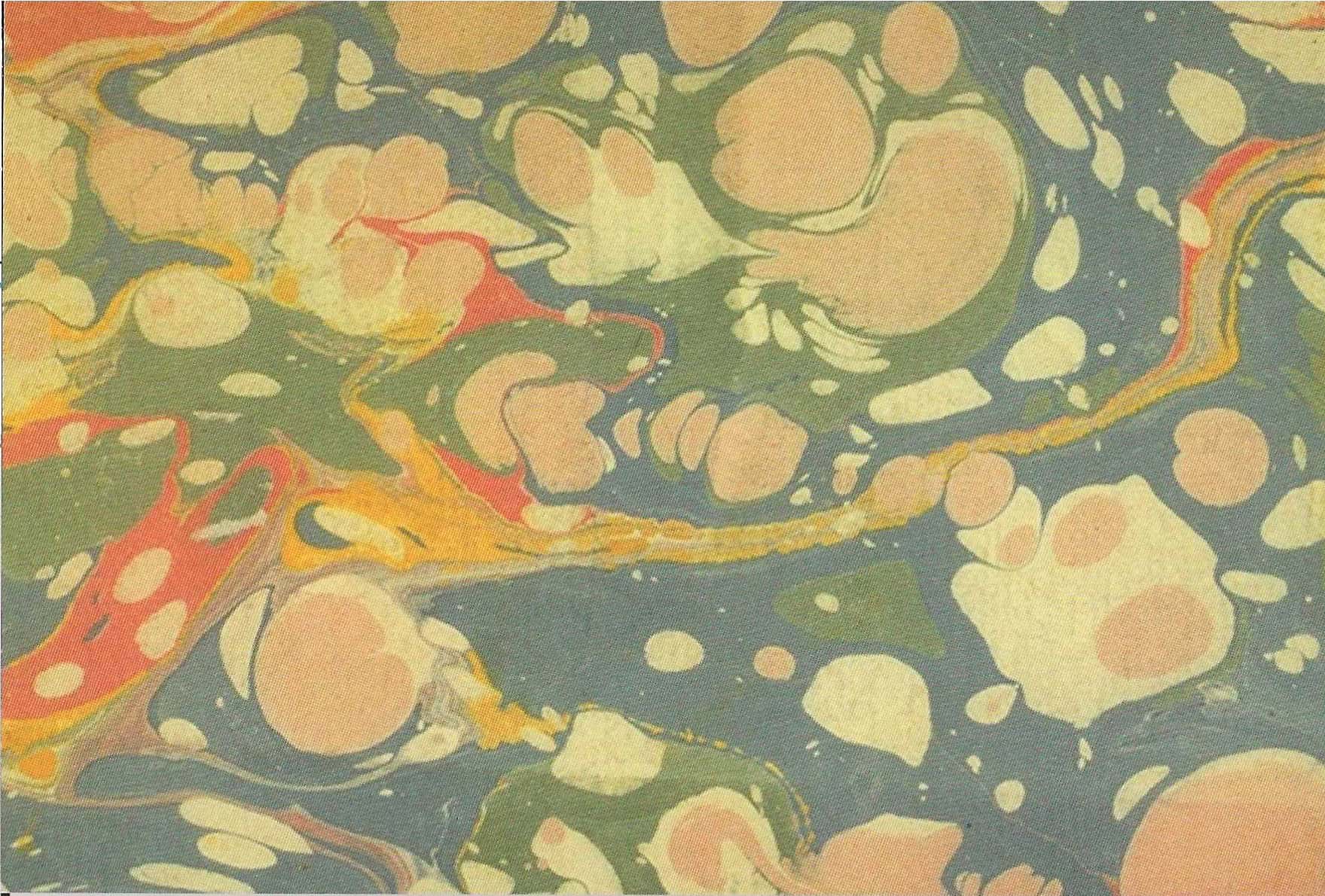
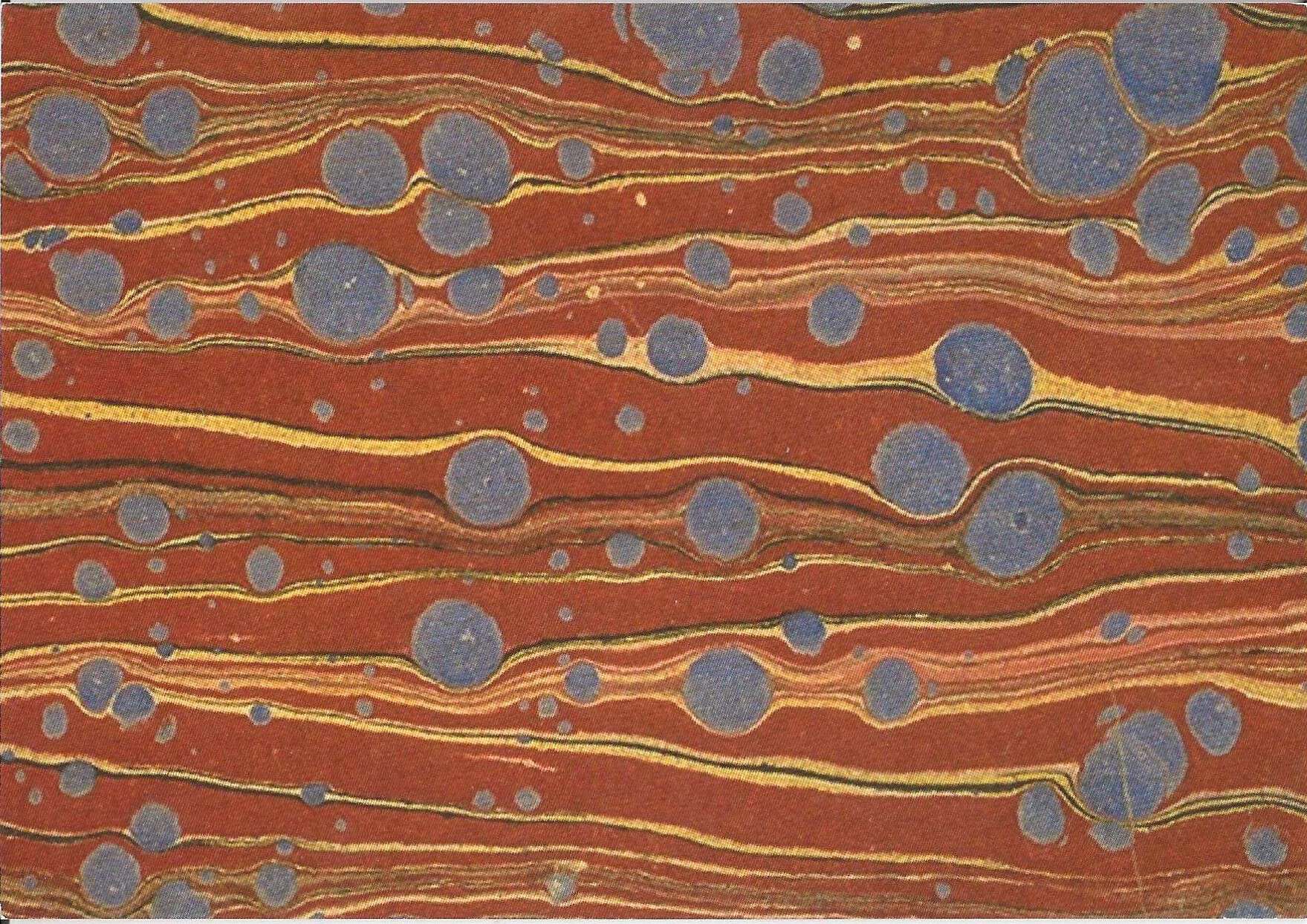
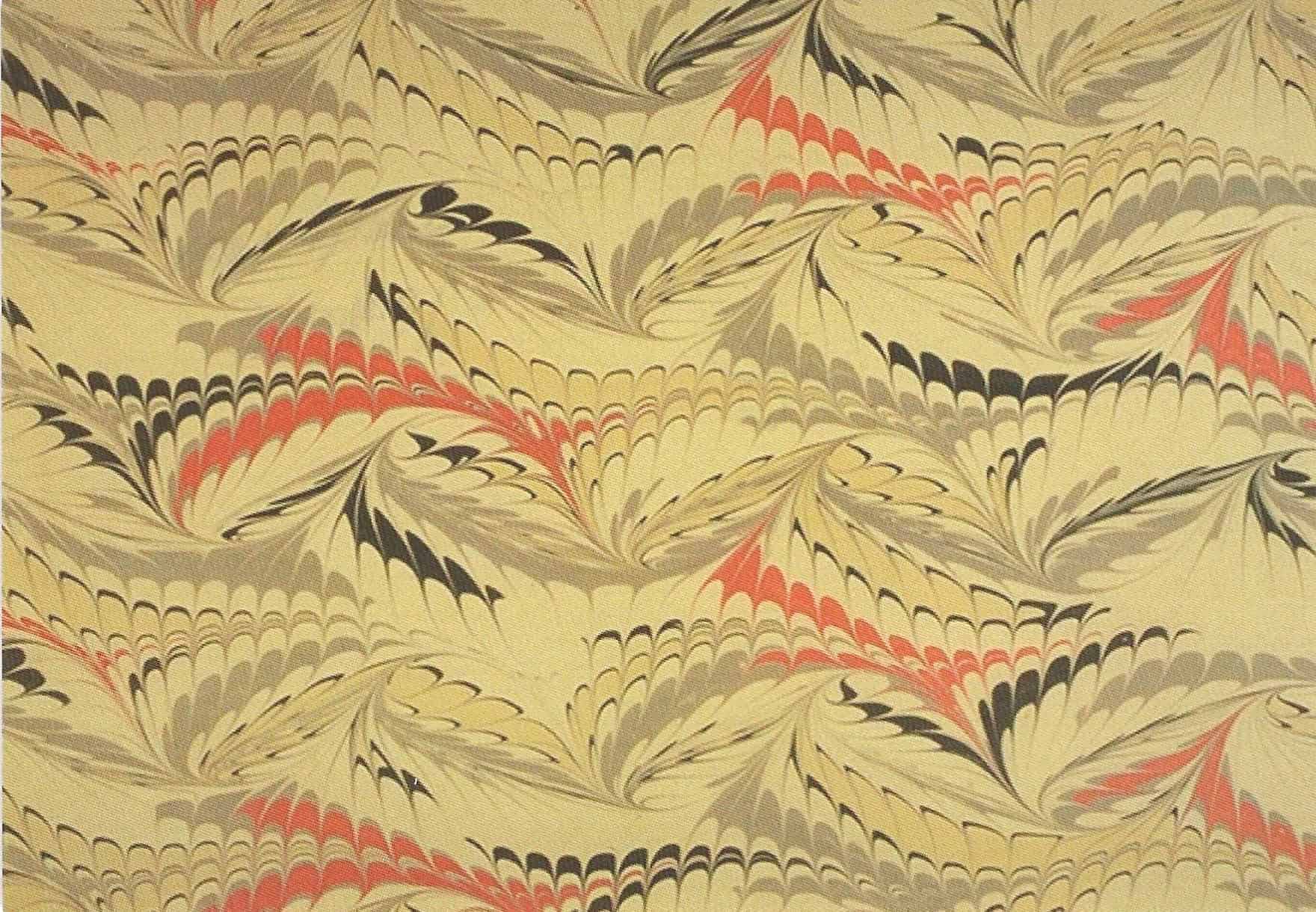
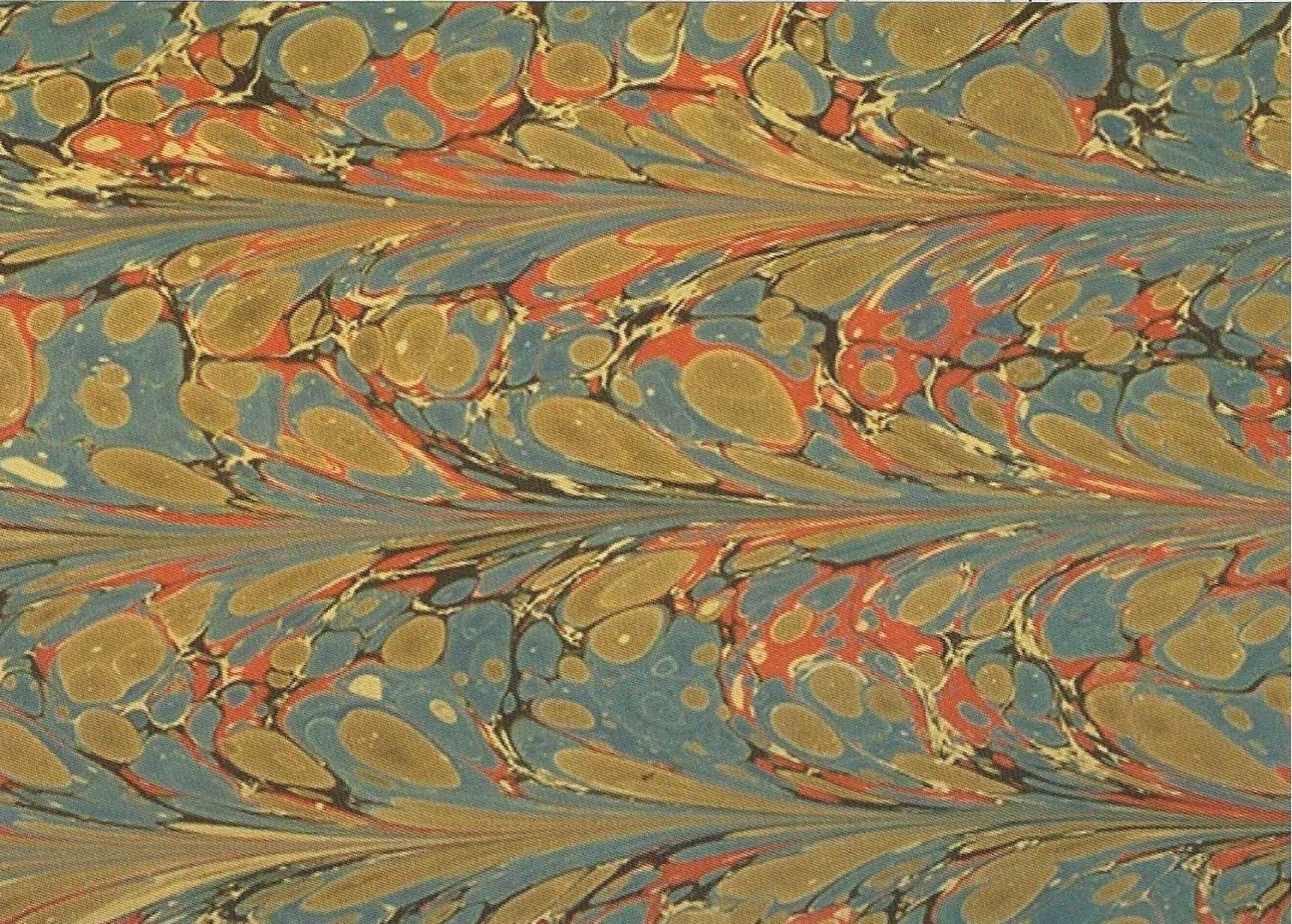
Like most people, I cannot afford to have my favorite old books rebound, but if I could, deciding on which endpaper to use, would be a very difficult decision.
Very interesting and….right around my corner!!
Very interesting. You really have perked my interest. I love this kind of subject. Thank you introducing me to this.
Mike
My mother was decorating paper with this technique and she made some postcards for me!! Thank you for bring back memories
As children my brother and I used humbrol oil paints on water and skim paper across it to make patterns. This reminded me of that time. Thank you.
Another area I had never thought about Thank you
This article was certainly enlightening and as all the articles emailed, I am always learning something new on a weekly basis. I collect postcards forever but seeing the history of some of them is truly wonderful. It inspires me to get my collection in better order.
What an interesting niche of the paper world. Who would have thought that endpapers and postcards would intersect? Thanks for the article.
Thank you for a very interesting article. I am lucky to have a few books with marbling.