You can call them striptease clubs, burlesque shows, girlie bars or ecdysiasts. New York has always had more than its fair share of venues offering erotic entertainment.
Ecdysiasts? That’s a pretty fancy term – it’s a bespoke word made up by humorist and linguist H. L. Mencken in around 1940. The word is derived from a Greek root that references critters that shed a layer or two of skin.
Postcard creators have had to play it by ear, so to speak, sometimes showing the utmost of discretion or otherwise, letting it all hang out. Let’s look at New York City’s checkered history of sexy joints and the postcards that have promoted them.
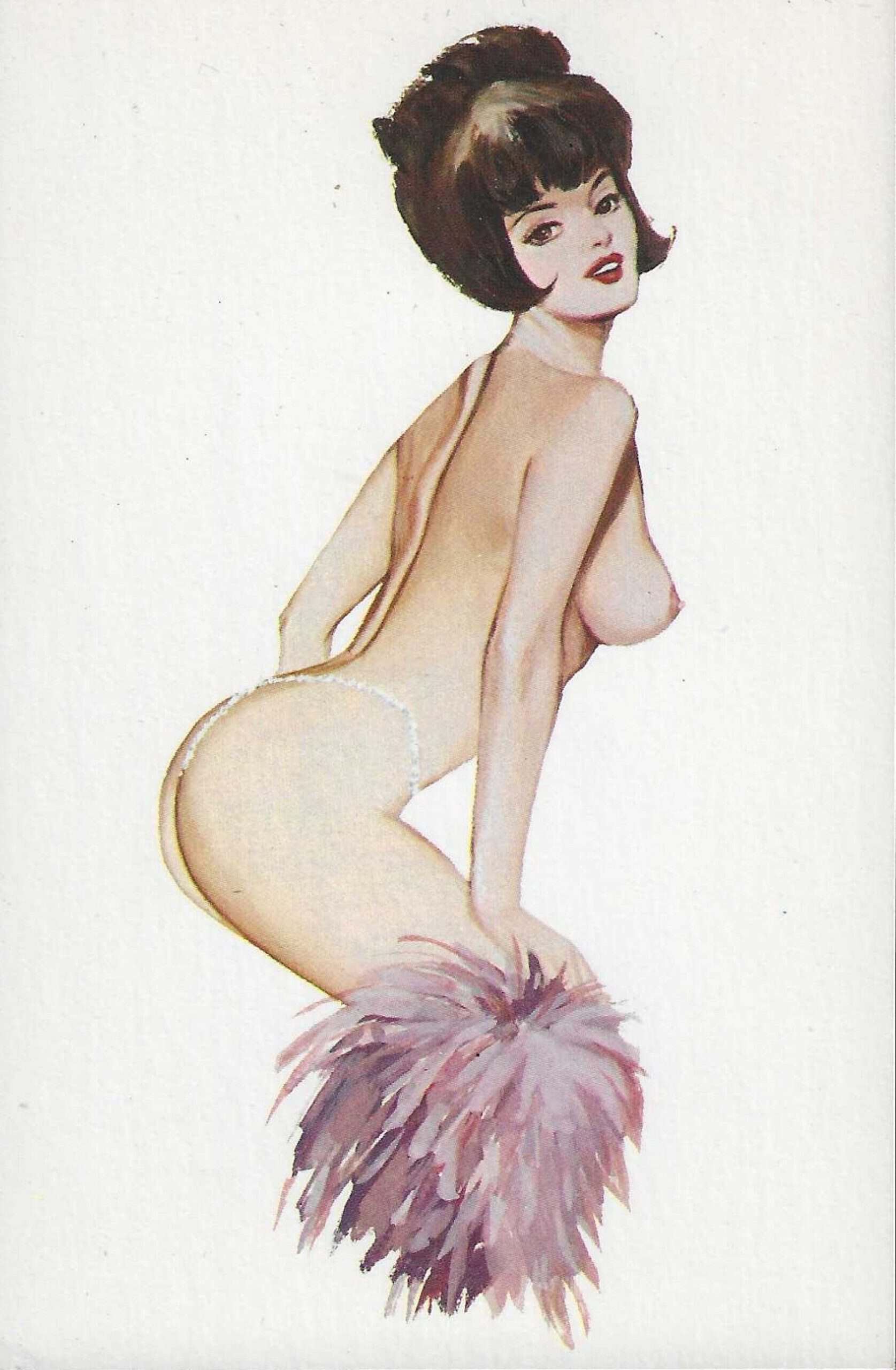
If you were a young single man traversing the Times Square or Rockefeller Center areas in the late 70s or 80s you may have been accosted by someone offering you a free postcard. Looking closely, you would have noticed a partially clad female illustrating a card advertising nightclubs called The Living Room, Adam and Eve, Guys & Dolls Au Go-Go or similar venues. They were not much artistically, clearly not created by anyone named Renoir, but they were solid. Their thick paper and polished illustration invited acceptance and thoughts of possibly visiting the joints “one of these days.”
I never stopped at any of them, but I accumulated 18 different cards without trying very hard.
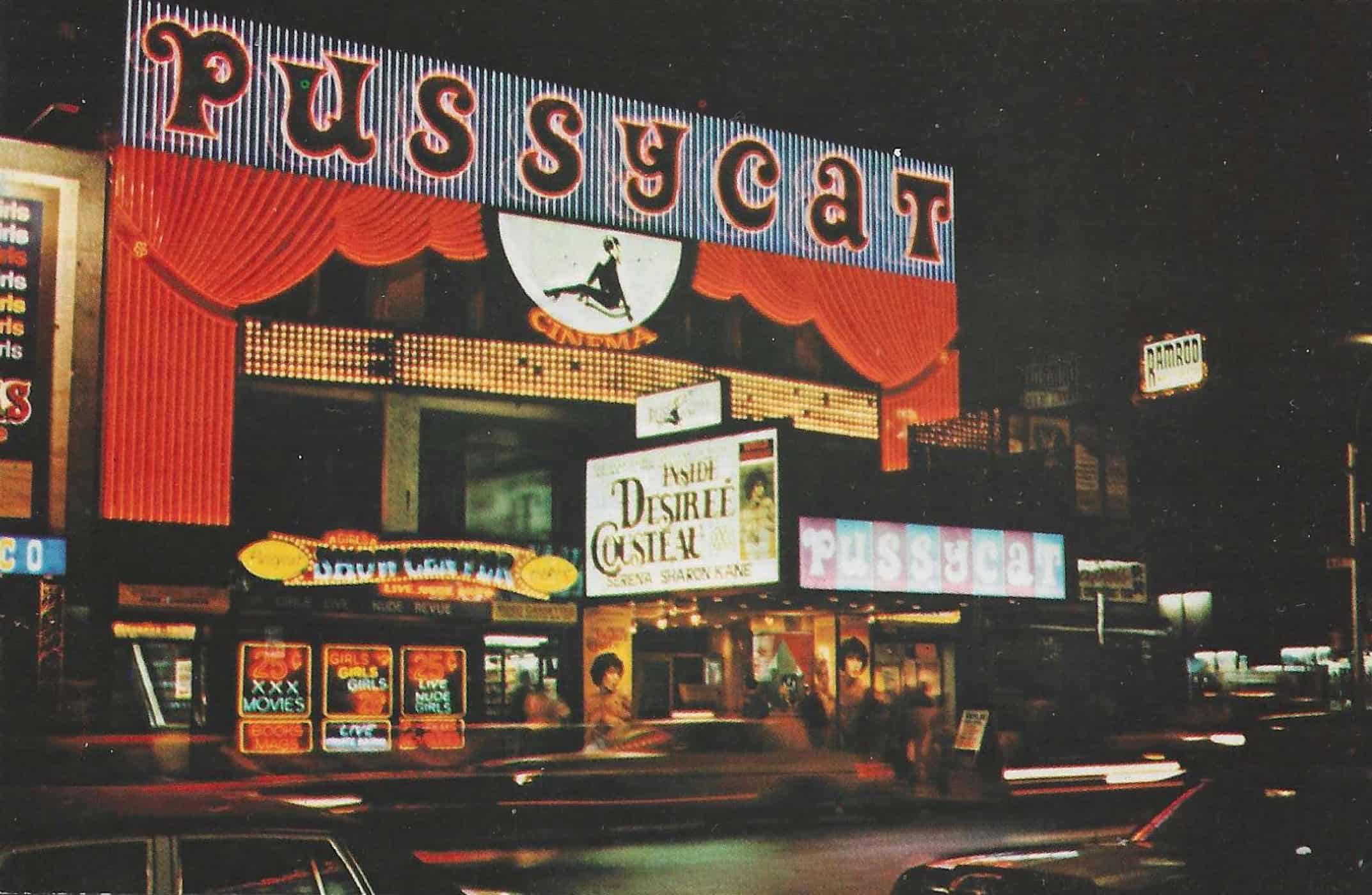
The 1970s and ‘80s are recalled as a very libertine time in New York. Strip bars and sex clubs went to the extreme and were available all over the city. The Pussycat Theater in Times Square became notorious for offering a full-time program of pornography.
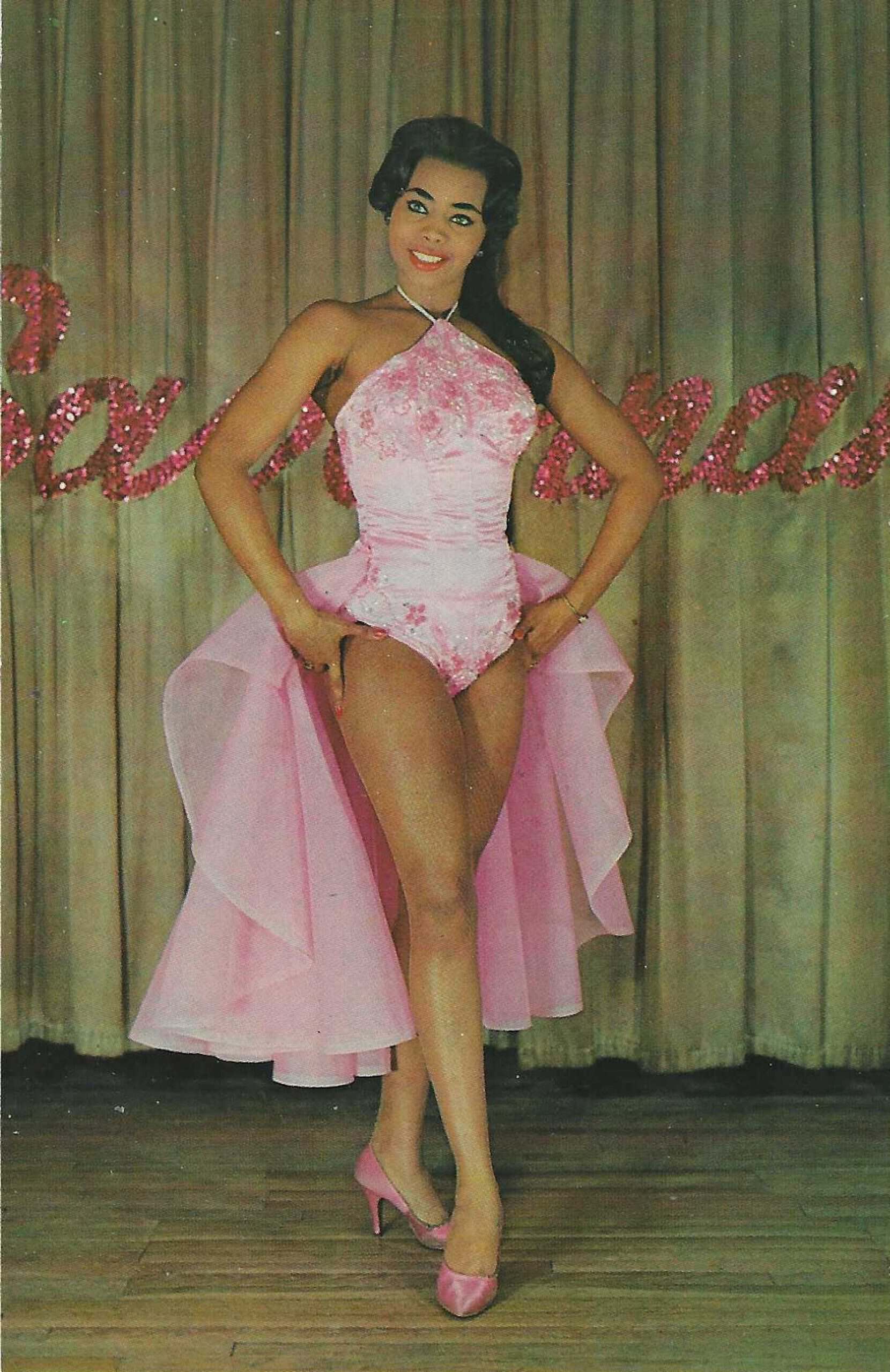
became known for interracial action
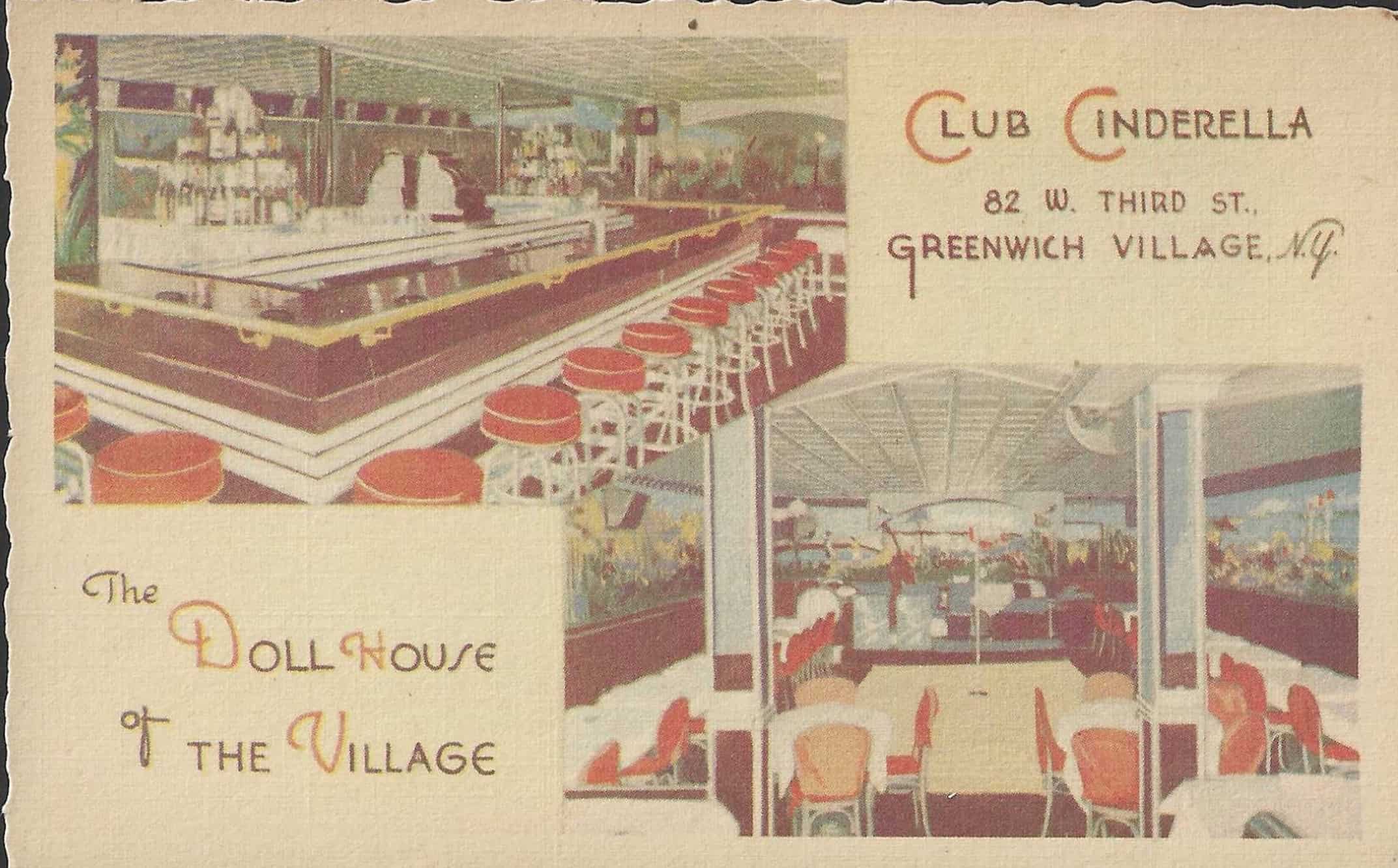
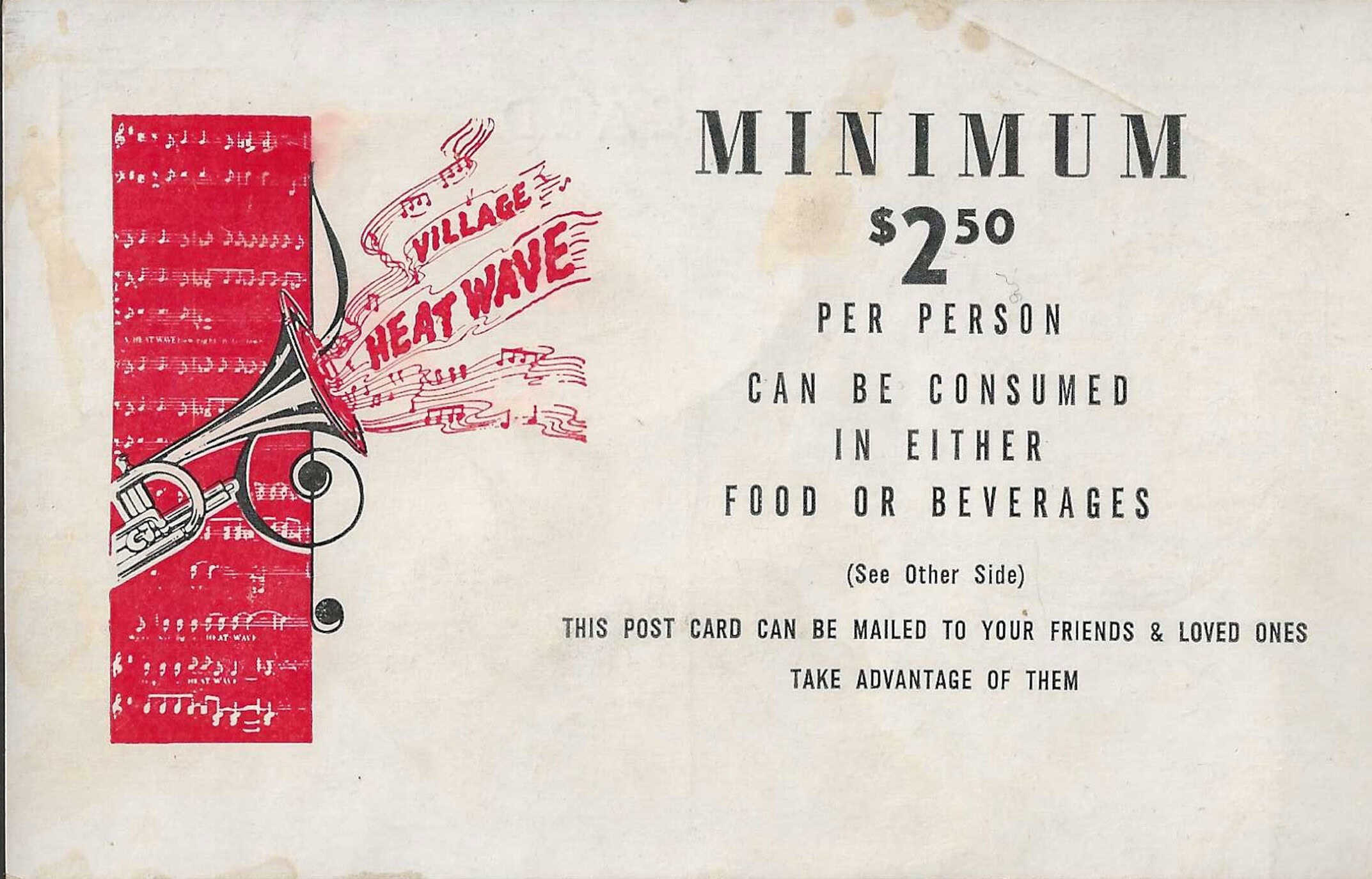
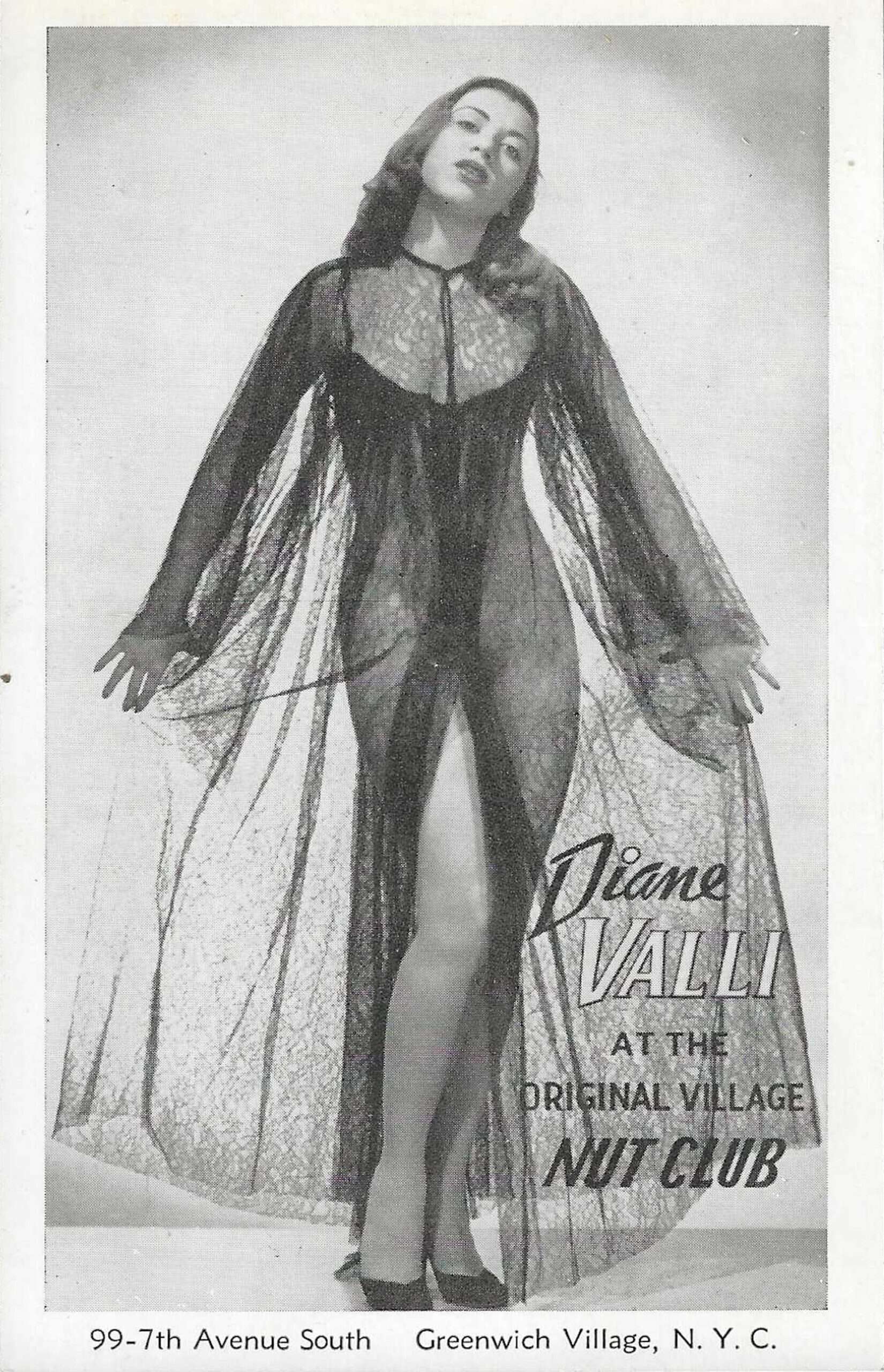
Many new night clubs opened in Greenwich Village, joining long-term veterans like the Club Cinderella, the Village Heat Wave, and the Nut Club.
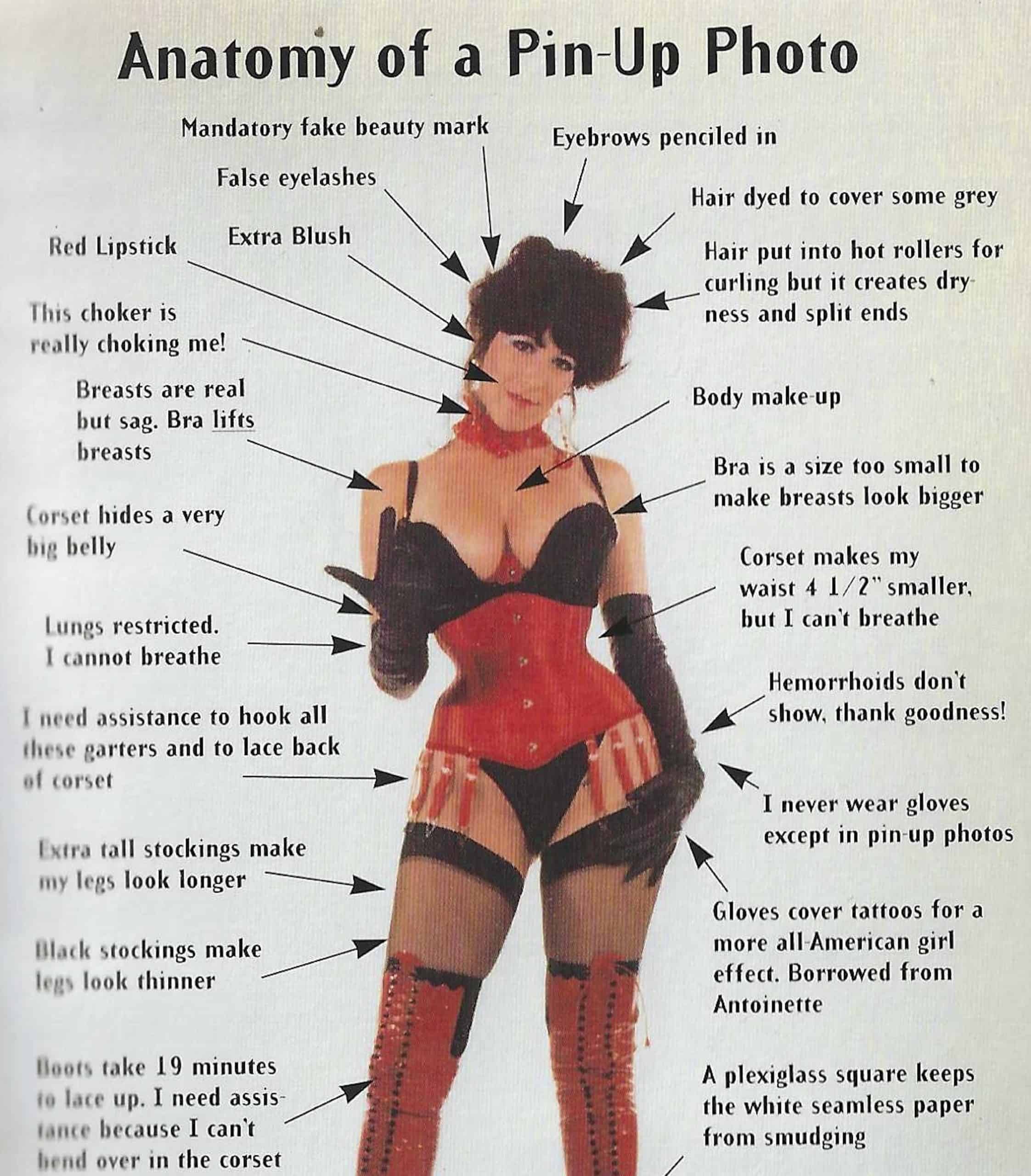
Most of the postcards were produced to advertise venues. Performers were kept largely anonymous; however, one erotic specialist made postcards essential to her act. Annie Sprinkle was more than just a striptease artist. Her evolving career made ethics and social responsibility a significant feature of her erotic enterprise. For example, the postcard entitled “Anatomy of a Pin-Up Photo” demonstrates a sharply critical and humanistic sense of humor, pointing out that what may seem sexy to the audience may be causing the performer to just about faint from oxygen deprivation.
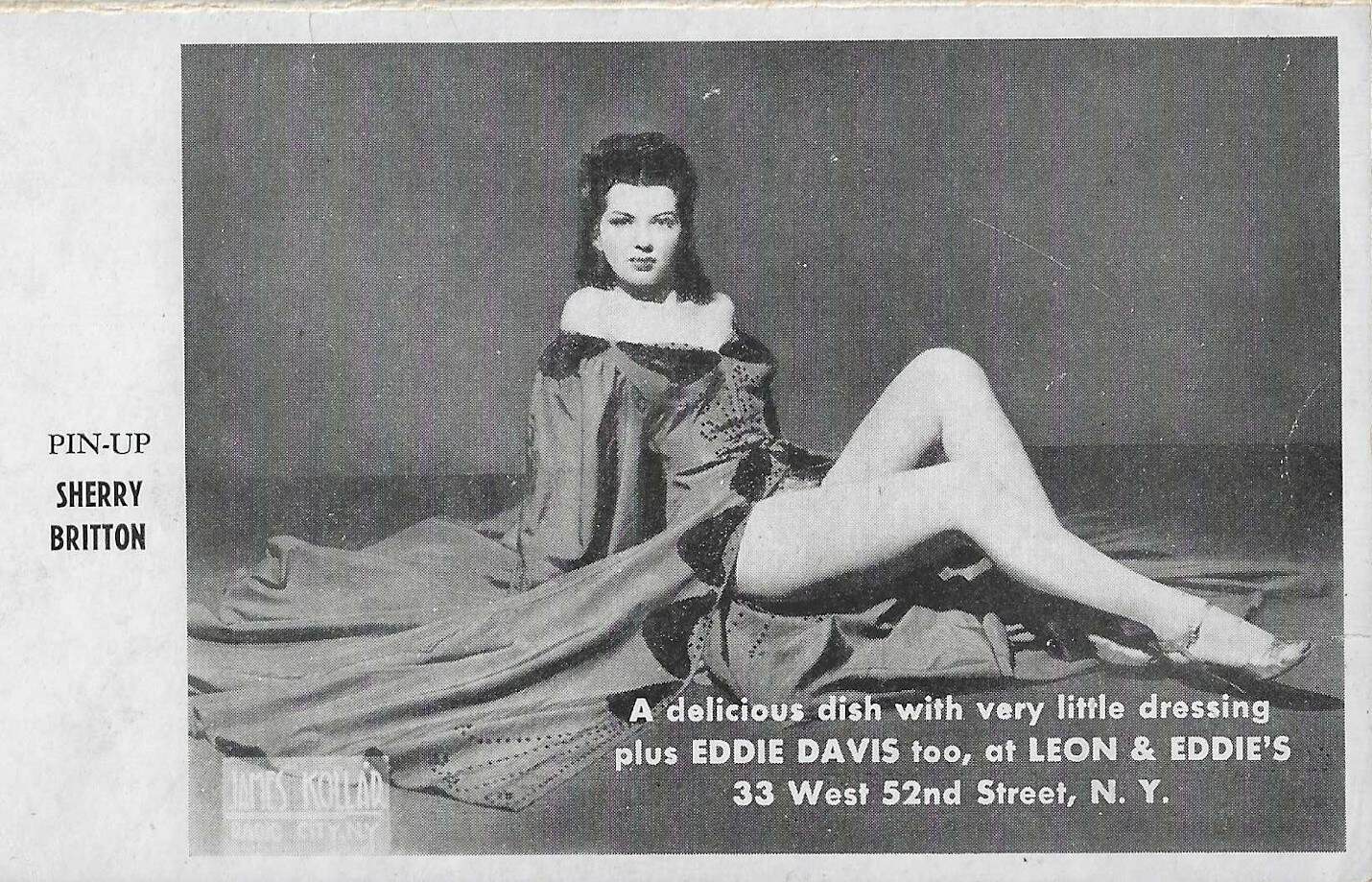
During the Second World War and the years immediately following it, the neighborhood centered on midtown’s 52nd Street became known for Hot Swing and Bebop Jazz, comedy clubs and an abundance of striptease joints. Many of these clubs’ names have become legendary over the years – Leon and Eddie’s, Fanchon Arnold, the Onyx Club, and Club Samoa. Alas, these nightclubs were replaced starting in the 1960s and over the next few decades by commercial office buildings and this entertainment scene died.
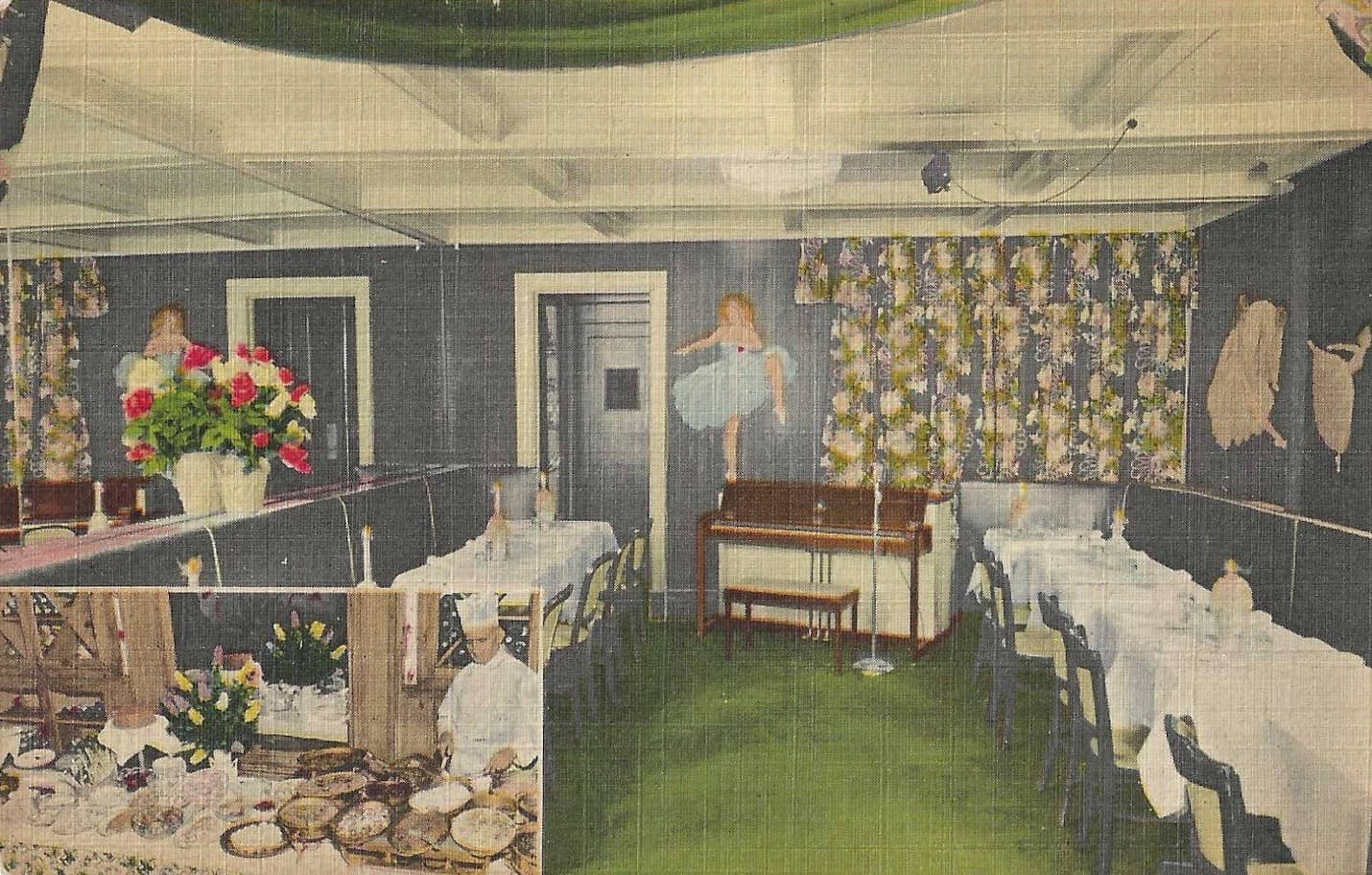
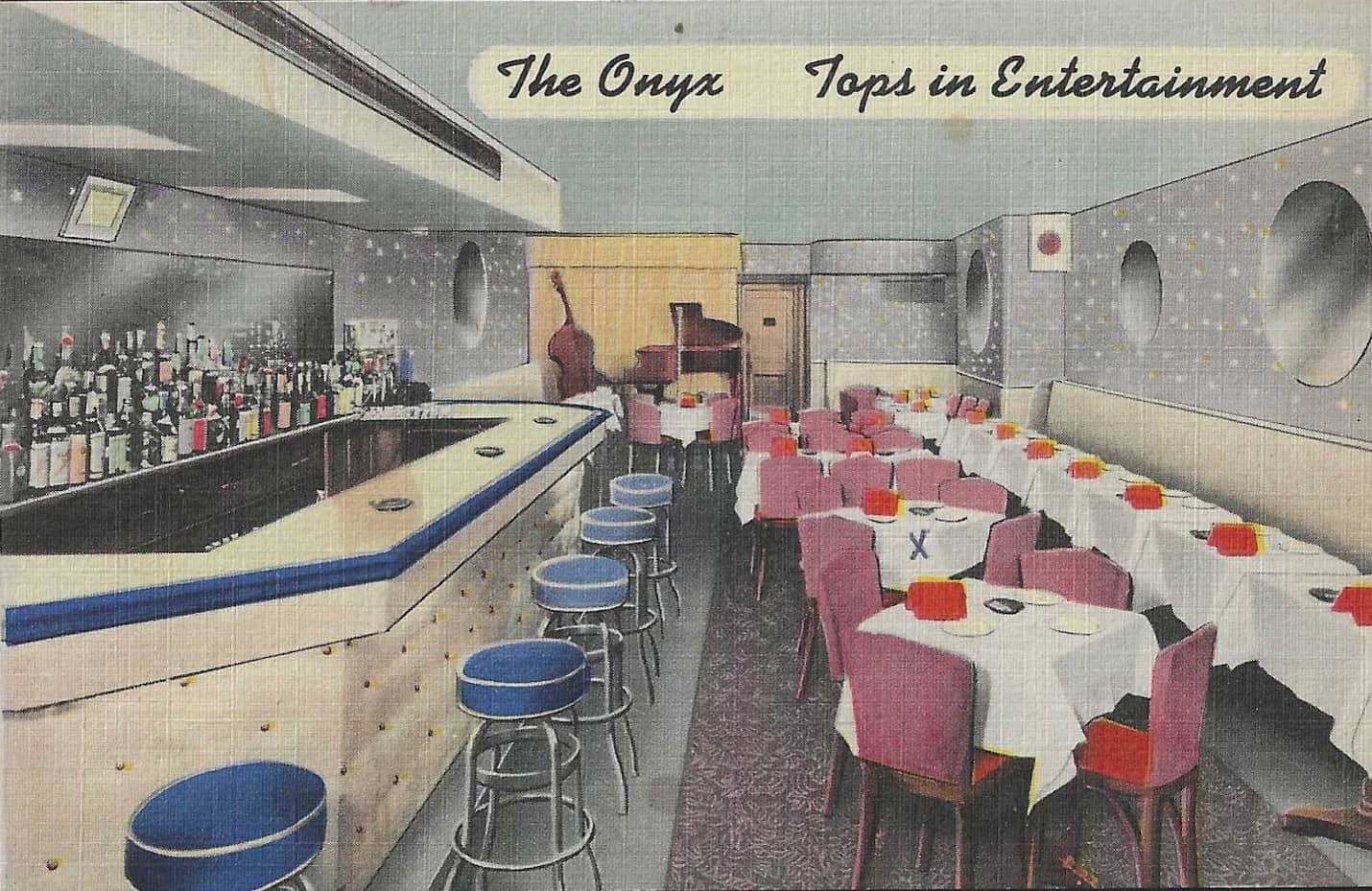
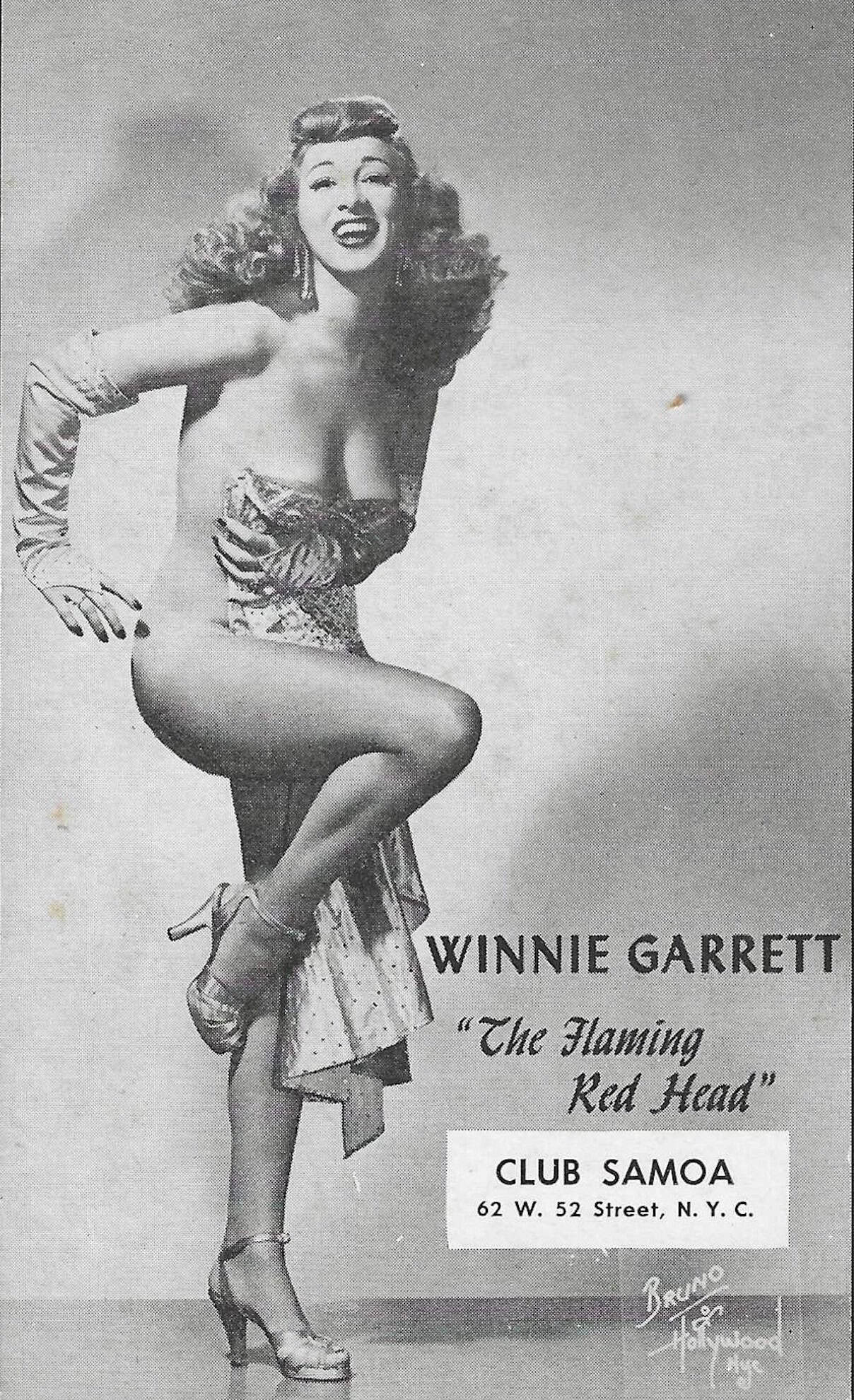
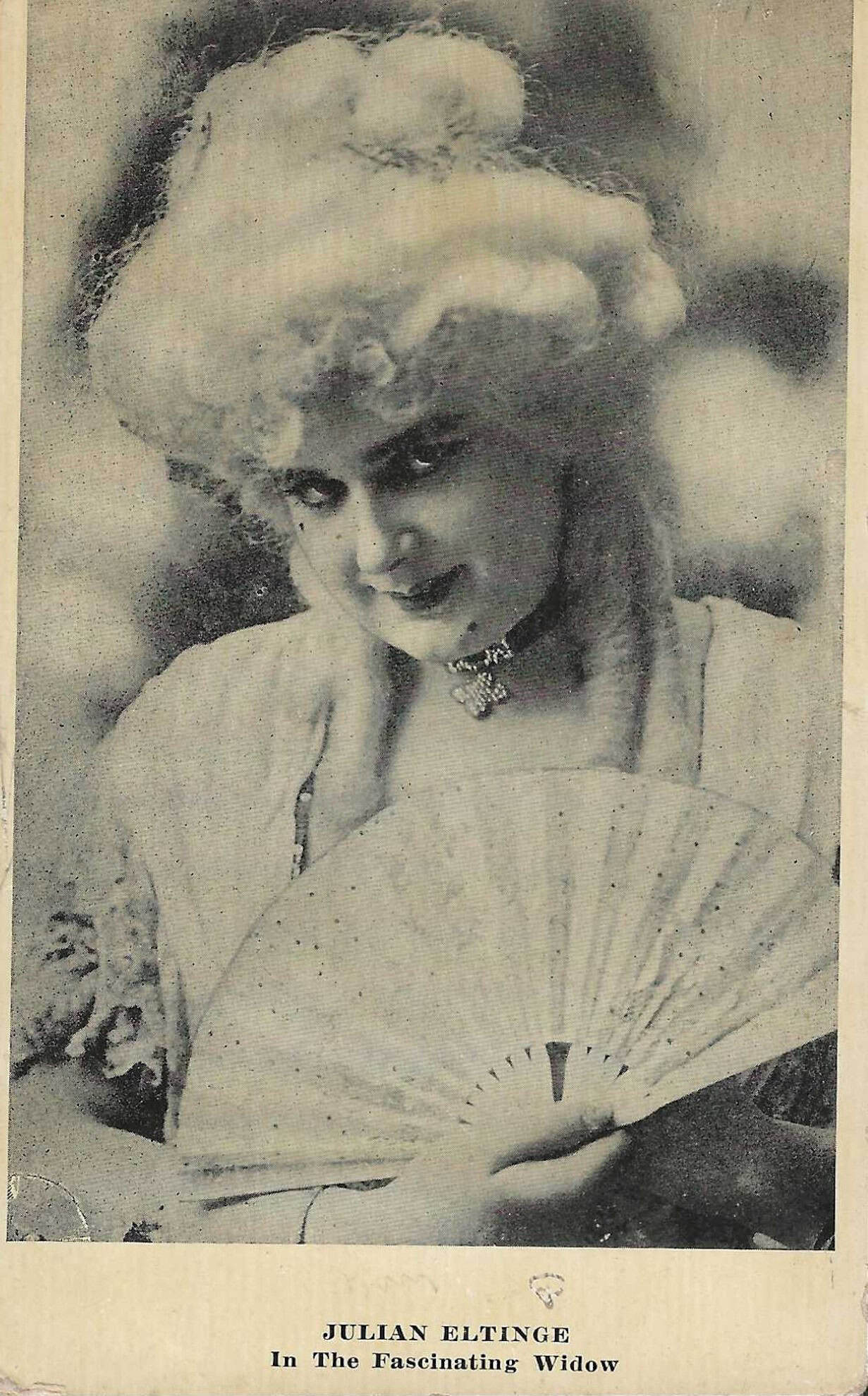
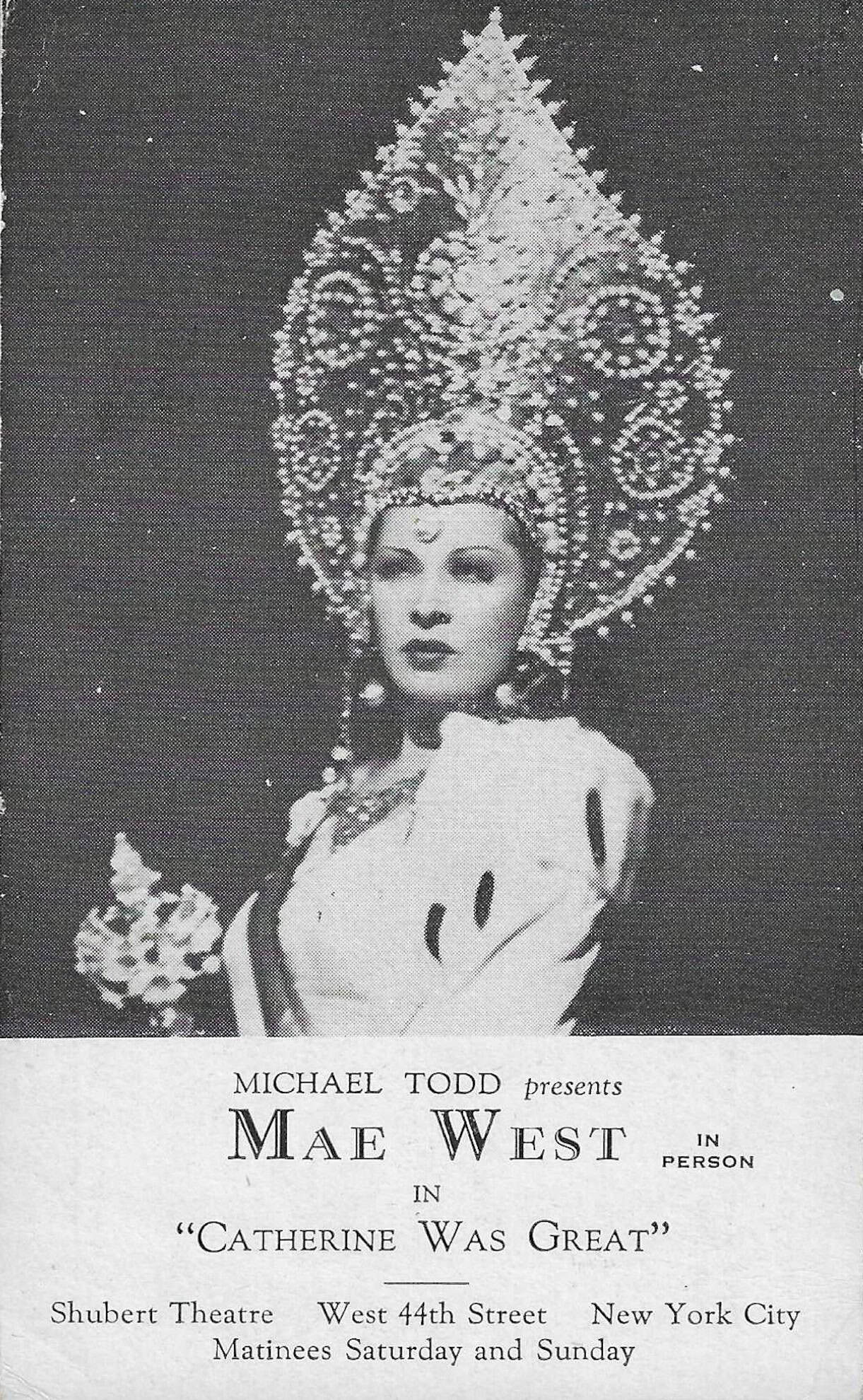
The Times Square area became noted for erotic entertainment in the years following the northward expansion of the theater district beyond 42nd Street – around the time of the First World War. Many names of stars, acts and productions associated with this era have become iconic like, Mae West, The Floradora Girls, the Ziegfeld Follies, Gypsy Rose Lee and the transvestite superstar Julian Eltinge.
[END OF PART I]
Part II of this article will focus on Times Square, and
appear in Postcard History on Thursday, September 24th.
Fantastic!!!! – Ronnie Bell and her twin ‘Liberty Bells’ – thank you