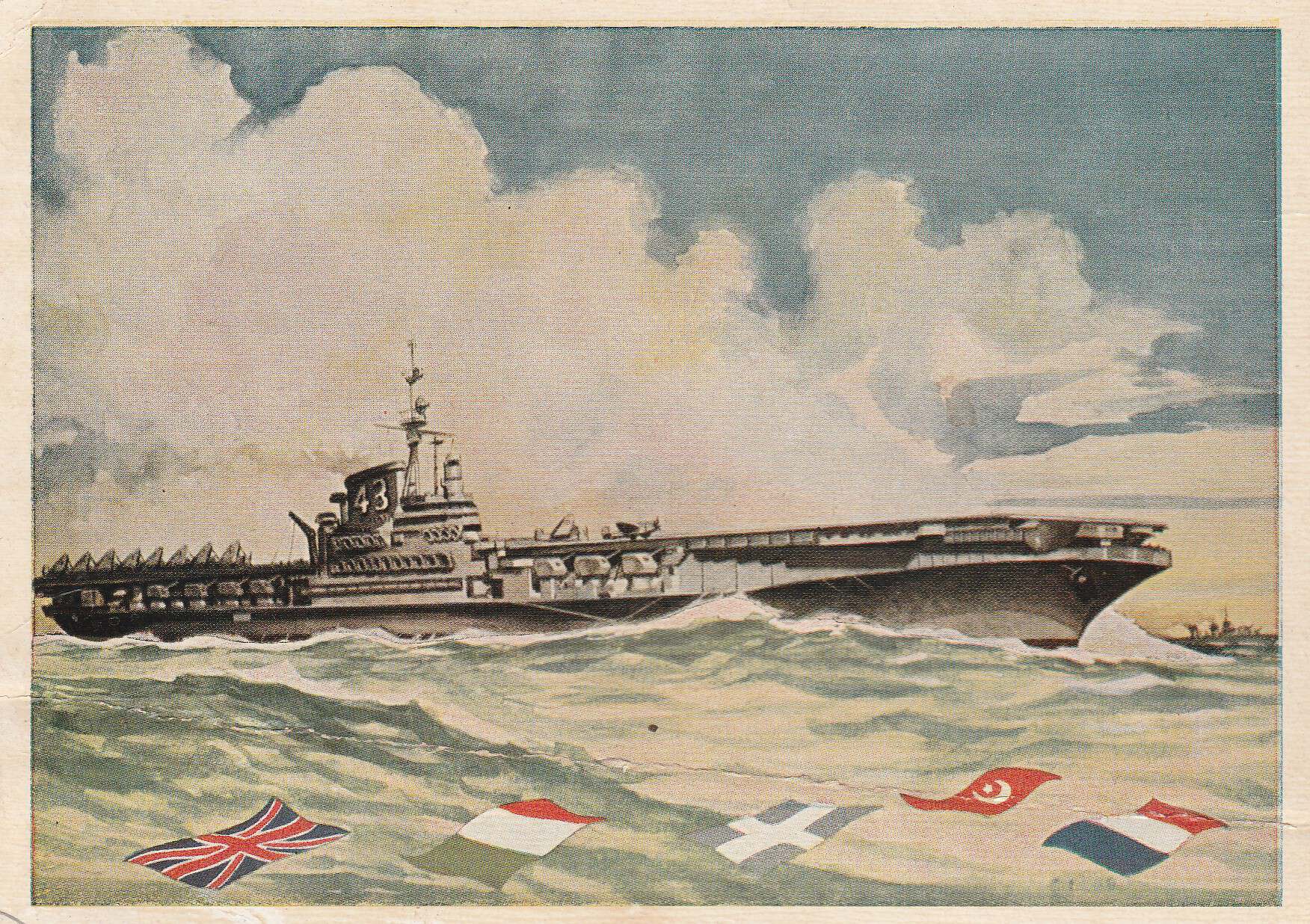
Note the 5 inch/54 caliber guns that lined both sides of the hull.
During the early days of World War II, the U. S. Navy learned some bitter lessons when it lost the carriers Lexington, Yorktown, Hornet, and Wasp. It incorporated what they learned in the design of the three Midway Class carriers. Another influence was the design of the British Illustrious Class carriers and their armored flight decks.
The Midway Class carriers were the first U.S. ships with armored flight decks. They were more than an improved version of the preceding Essex Class carriers. At 60,000 tons at full load, they were much larger than the preceding Essex Class that were 36,380 tons at full load. The Midway Class’s armored flight deck, designed to defend against an aircraft attack, required a much larger hull and lower freeboard, to reduce topweight. Their length was 968 feet compared to 872 feet and 888 feet for the Essex Class short-bow and long-bow versions, respectively. With a beam of 121 feet, they were the first U.S. carriers too large to transit the 110 foot wide locks of the Panama Canal. In comparison, the Essex Class had a beam of 93 feet. The Midway Class had heavily compartmentalized machinery spaces, divided hangar decks, and improved sprinkler and fog foam systems to control fires. They also carried a very heavy anti-aircraft battery of eighteen 5 inch/54 caliber guns, twenty-one 40 mm Bofors quad guns and twenty-eight 20 mm Oerlikon twin guns. Their top speed was 33 knots.
Including the aviation wing personnel, the Midway Class carries crew of 4,500 officers and enlisted men.
The Midway Class carriers were originally designed to carry 132 aircraft, 30 to 40 more aircraft than the Essex Class carriers. Command and control of such enormous air group, larger than any carrier airwing ever, would have been problematic. During the early 1950s, the Midway carriers embarked around 84 planes. Airwings comprised between 60 and 80 aircraft including helicopters during Vietnam war deployments.
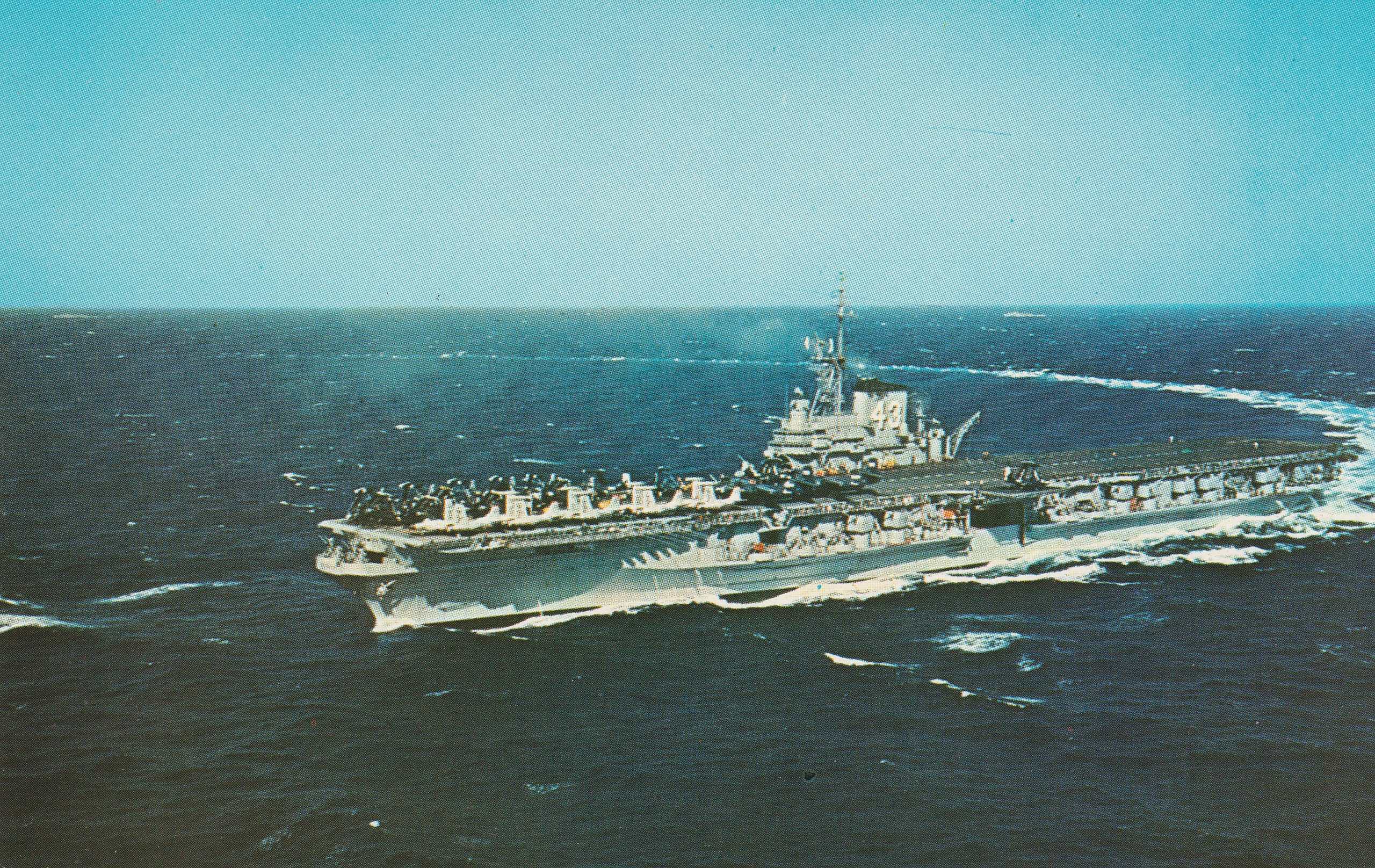
addition of her angled flight deck and hurricane bow.
Newport News Shipbuilding and Dry Dock Company which had already built nine Essex Class carriers, built two of the three Midway Class carriers, Midway and Coral Sea. The New York Naval Shipyard in Brooklyn, builder of four Essex Class carriers built the Franklin D. Roosevelt. Six Midway Class carriers were planned, but three scheduled to be built by Newport News Shipbuilding were cancelled before their construction started.
The Franklin D. Roosevelt was originally named the Coral Sea, On May 8, 1945, President Harry Truman approved the name change recommended by the Secretary of the Navy. The Roosevelt was the first aircraft carrier named for a U. S. president. Prior to that, with a few exceptions, aircraft carriers were named for battles or famous warships.
Although designed for the Pacific War, all three Midway Class carriers were commissioned after the end of hostilities, Midway and Franklin D. Roosevelt in September and October 1945 respectively and the Coral Sea in April 1947.
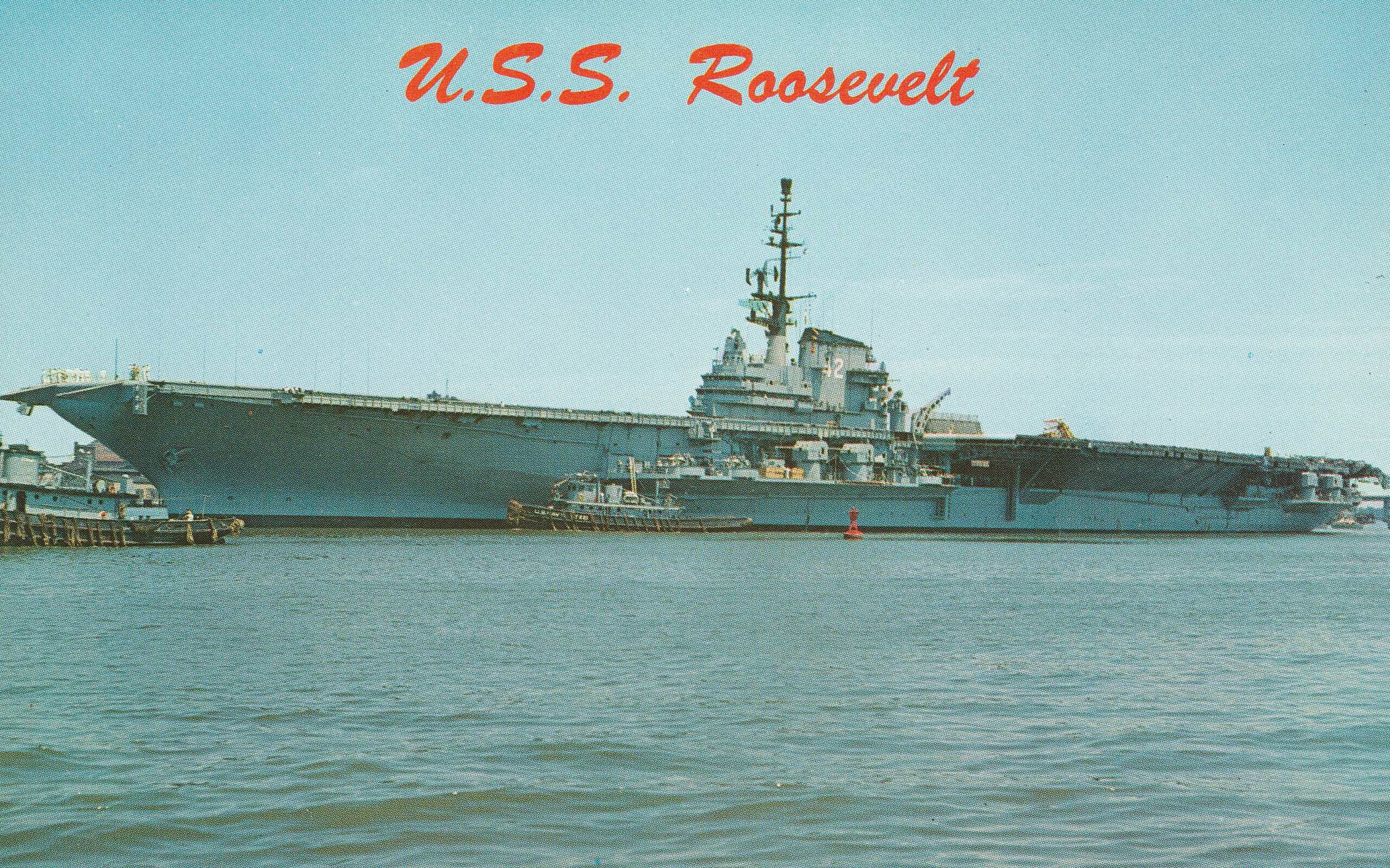
Due to their large size, the three Midway Class carriers easily transitioned from propeller aircraft to jets. Despite being the largest carriers in the U.S. fleet, none of the Midway Class saw action in the Korean theater between 1950 and 1953. The trio served in the Atlantic and Mediterranean as part of the U. S. strategic nuclear deterrent. Until their rebuilds in the 1950s, the Essex Class carriers could not accommodate the North American AJ-1 Savage heavy bomber that could carry Mark III and Mark IV atomic bombs.
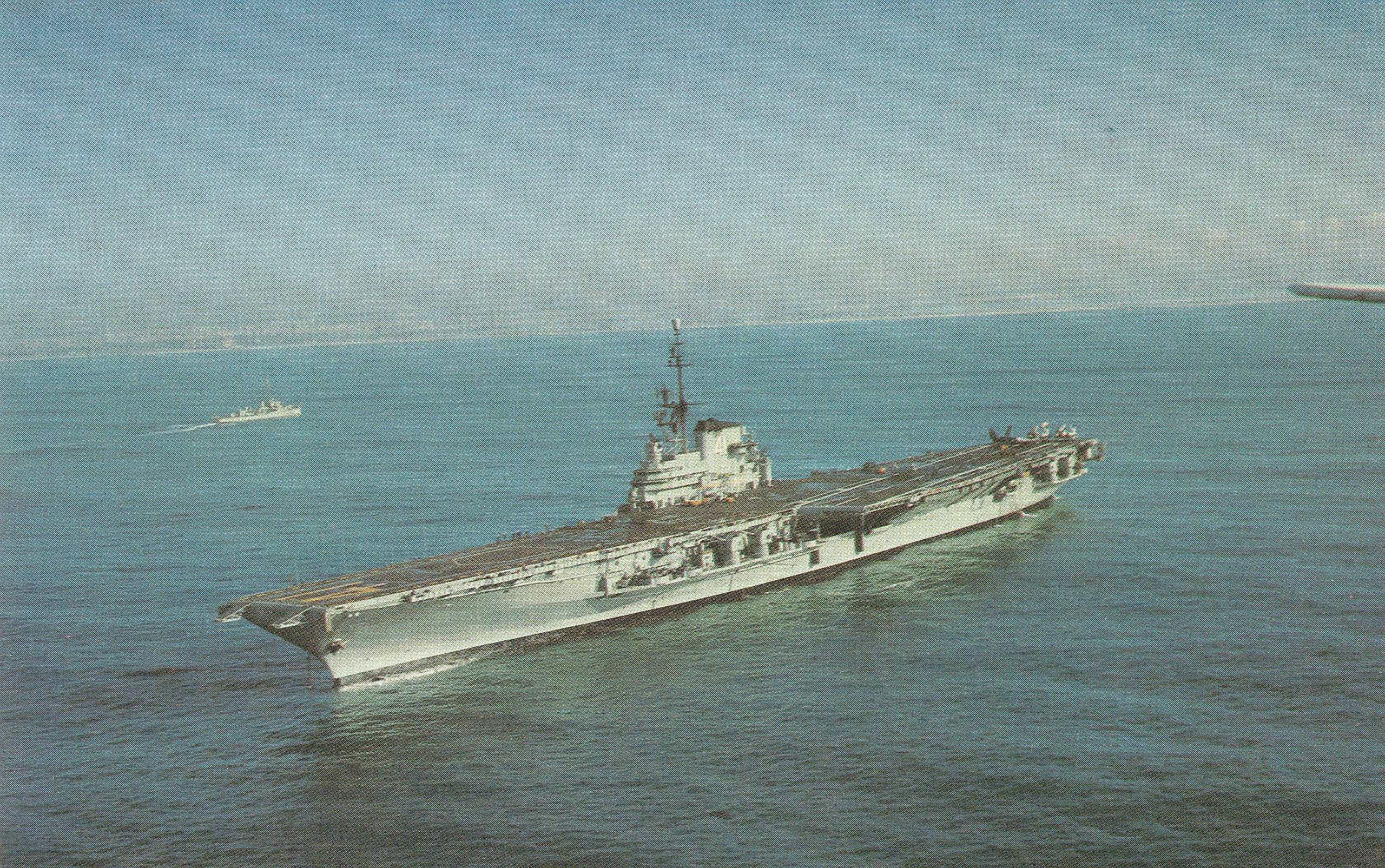
During the mid-1950s, all three Midway carriers were extensively modified with angled flight decks, enlarged bridges, steam catapults, and mirror landing systems being added to enable them to operate the larger jets coming into service. Due to their size, the airwing was reduced to 65 to 70 planes. An enclosed hurricane bow was fitted in an attempt to improve the seakeeping abilities of the three Midways. Later refits removed the anti-aircraft guns and replaced them with Sea Sparrow missile launchers and the Phalanx Close In Weapons System.
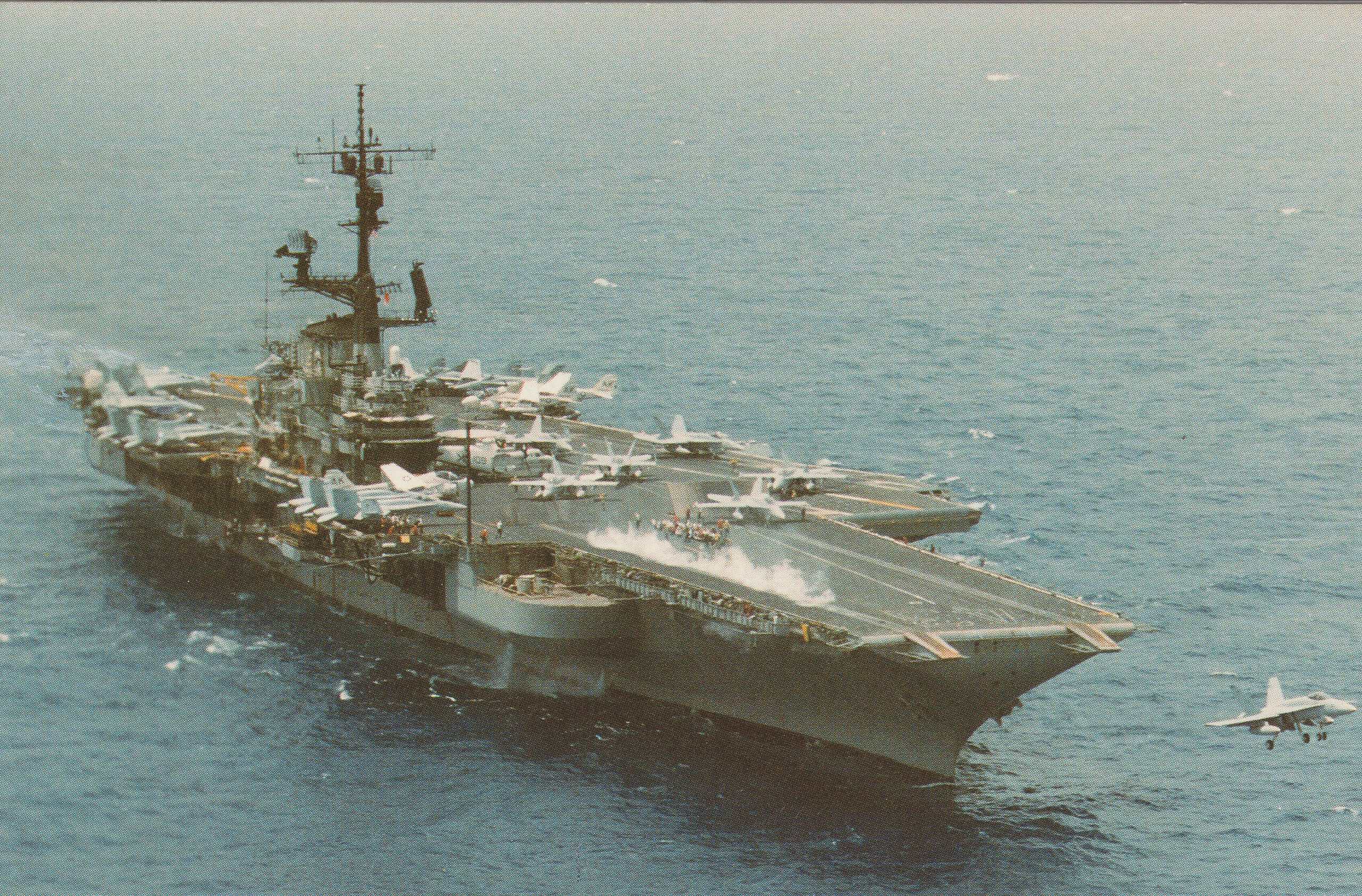
During the Viet Nam War, the Coral Sea deployed six times to the Tonkin Gulf, Midway three times, and Franklin D. Roosevelt once. Between 1966 and 1970, the Midway underwent an extensive modernization program that was supposed to cost $80 million but went over budget at $202 million. Her flight deck was enlarged from 2.8 to 4 acres, elevators were enlarged and their weight capacity increased, and a central air-conditioning plant installed. Planned modernizations of the Franklin Roosevelt and Coral Sea were cancelled as a result. The Navy’s brass feared that if they spent over $400 million upgrading the two carriers, Congress might delay the Nimitz Class nuclear carriers then on the drawing board. Instead, the Roosevelt underwent an austere 11-month refit.
In poor shape since her planned modernization was cancelled, the Franklin D. Roosevelt was decommissioned in 1977 after thirty years of service and quickly scrapped. The Coral Sea was scheduled to be decommissioned after the Roosevelt but gained a reprieve when Ronald Reagan was elected President in 1980 and helped fulfill his campaign promise of a 600-ship Navy. Coral Sea then received a series of extensive refits to extend her service life. Nicknamed the Ageless Warrior in her later career, the Coral Sea served until 1990; her scrapping was completed in 2000.
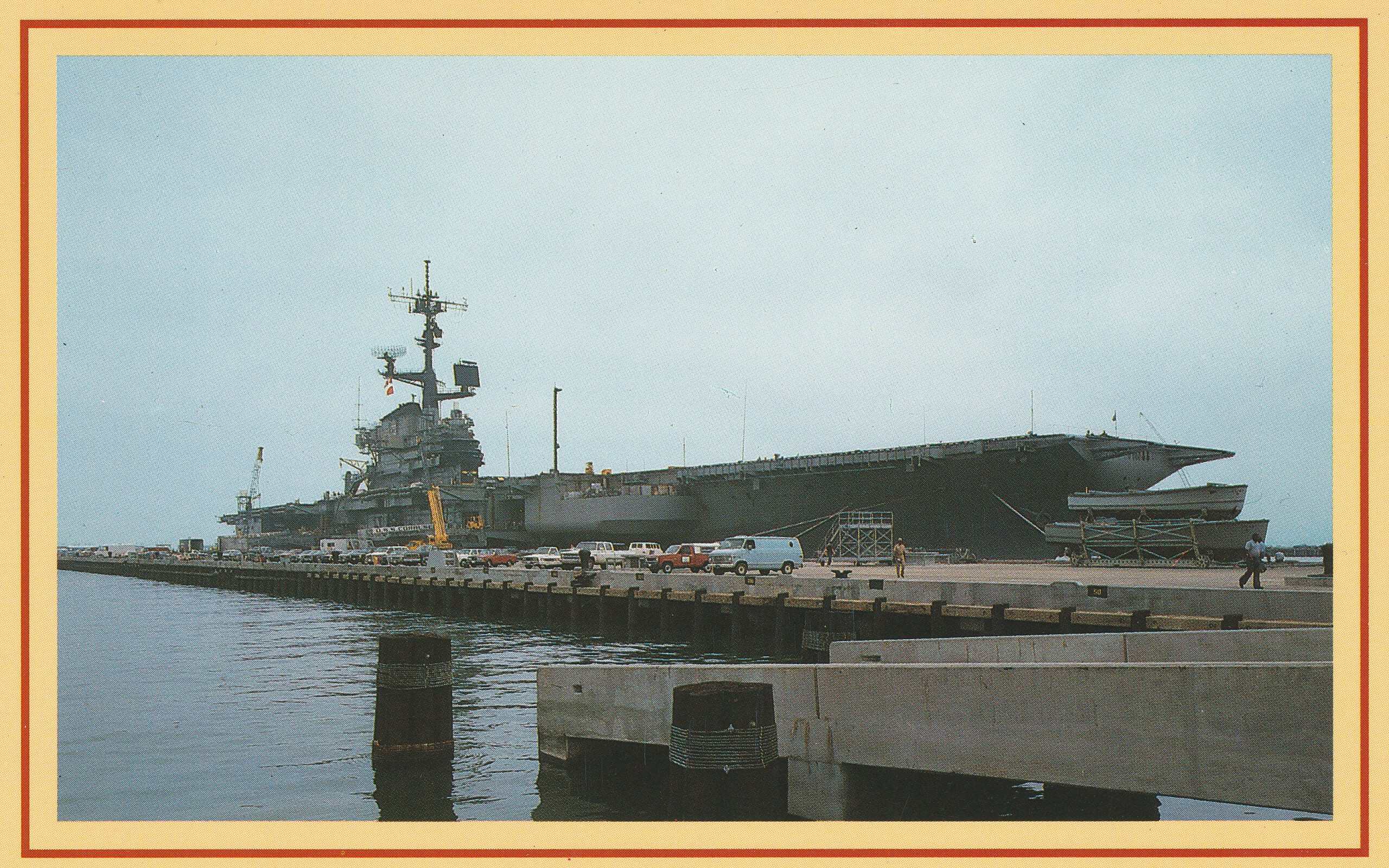
to the Atlantic Fleet from the Pacific in 1983. The Ageless Warrior served 45 years
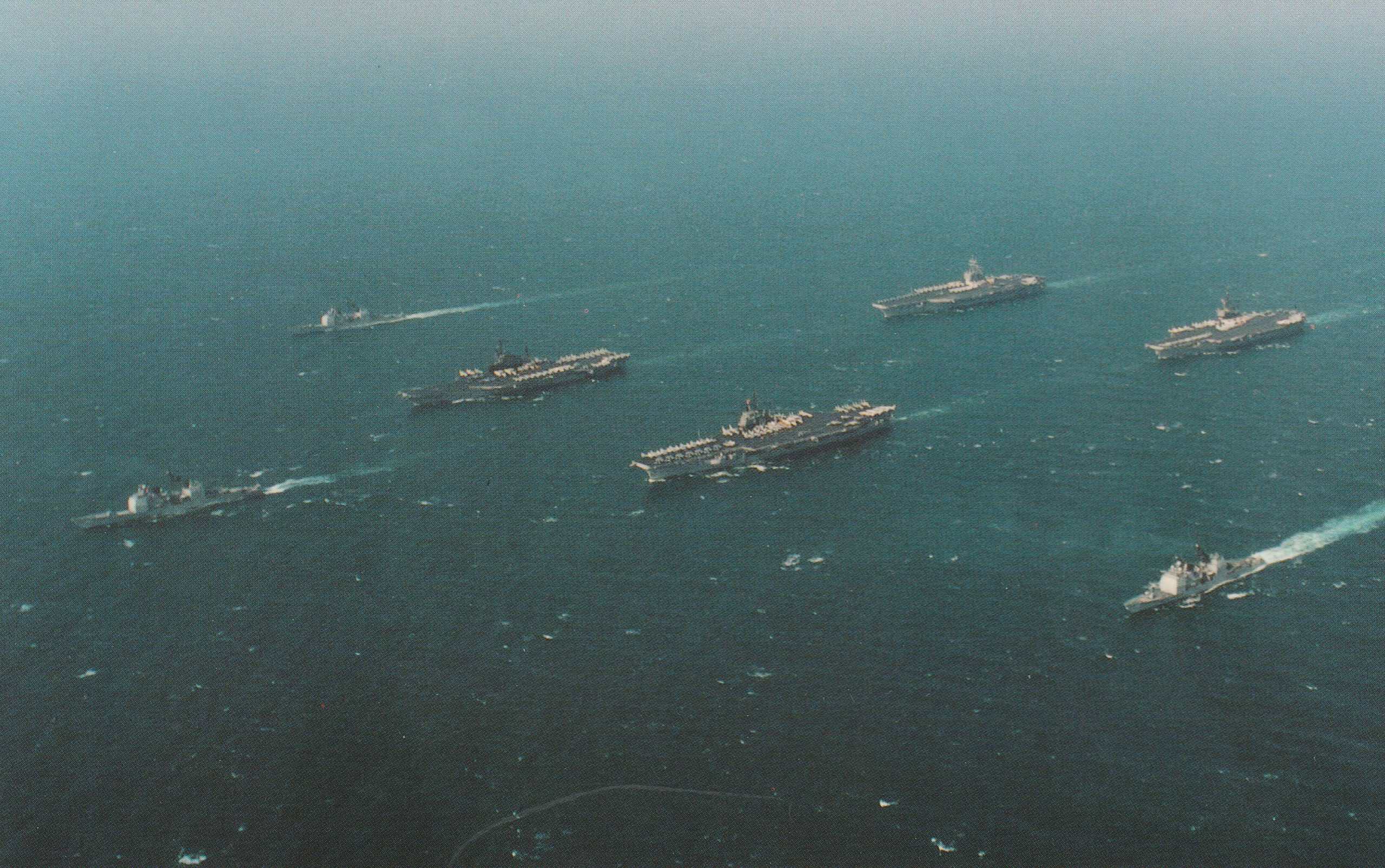
The Midway deployed in Operation Desert Storm and was decommissioned in 1992. She is the last American aircraft carrier preserved as a museum. If visiting San Diego, touring the Midway is a pleasant way to spend an afternoon. Four Essex Class carriers, Intrepid, Lexington, Hornet, and Yorktown are museum ships. None of the Forrestal or Kitty Hawk Class carriers were saved from the scrap yard. Due to her nuclear reactors, the USS Enterprise, the first nuclear powered aircraft carrier cannot be preserved as a museum ship. Deactivated in 2012, it is estimated that Enterprise’s trip to the scrap yard won’t happen until 2030 at a cost of one billion dollars.
The Midway Class design made the three carriers difficult and expensive to modernize or upgrade. In later years, the three carriers were limited by their low freeboard, severe crowding of crew and equipment, low hangar clearances, and poor seakeeping. As they aged, they were unable to operate newer and larger jets. Though their design was flawed, the three ships had long service lives because of the Navy’s need for large carriers.
I was more familiar with the Essex class carriers and the nuclear powered carriers. Thanks for filling in a gap in my knowledge.