Following the Postcard History tradition of presenting three short contributions on three unrelated postcards on every fifth Sunday, this time we treat you to a trio of flash-fiction stories by members from the local “Writers’ Society.” The request was quite succinct, “Create a flash-fiction tale about the image on the card.”
***
The Karl Theodor Bridge, commonly known as the Old Bridge, is in Heidelberg. It crosses the Neckar river.
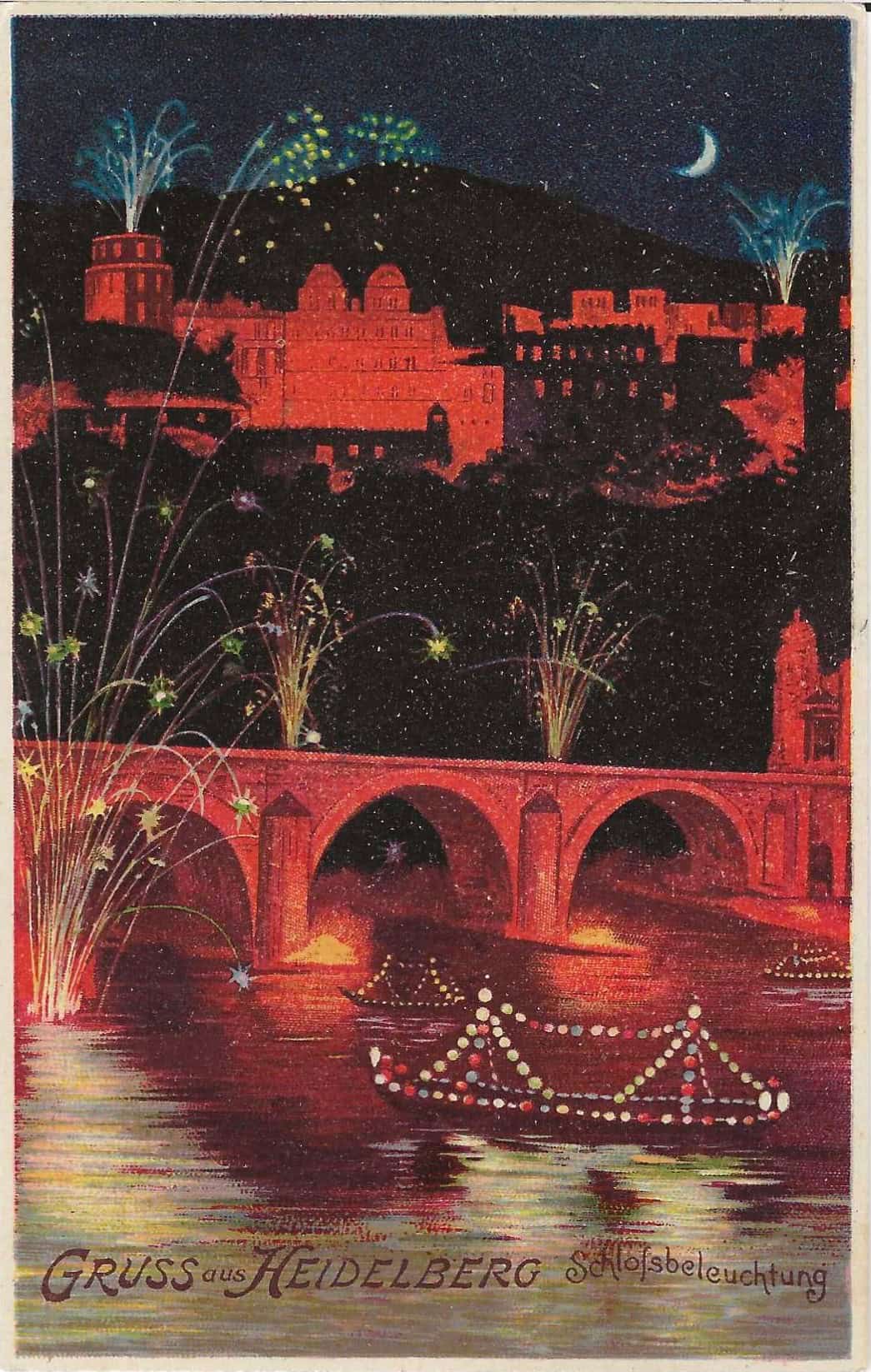
My Story and the Old Bridge
By Lena Oldenheim
The evening light over Heidelberg had the color of old rose petals — warm, fading, and full of memory. My destination was in sight, a three-minute walk: the Karl Theodor Bridge. I paused halfway across, my hand resting on the cool stone railing. I told myself I wasn’t nervous, but my heartbeat said otherwise.
It had been ten years since I’d seen him. Ten years since we stood on this very bridge, promising to write, to visit, to not let life pull us apart.
Life, of course, had done exactly that. For Jonas it was from here in Heidelberg, for me it was from New York. I exhaled slowly, watching the river catch the last golden light of day. The Neckar always moved with a kind of patient certainty, as though it knew people came and went, but the water kept flowing, carrying their stories with it.
I heard footsteps behind me. The pace was steady, unhurried, familiar in a way I had heard before.
He called to me, “Lena.” His voice was deeper now, but unmistakable. I turned, and there he was: Jonas, older around the eyes, hair a little longer, posture still a mix of confidence and gentle awkwardness. I remembered well.
For a moment, we didn’t speak. The years and the miles had stretched between us like another river.
“You’re here,” I finally said.
“I had to,” he replied. “I told you so.”
I laughed softly and added, “We told each other a lot of things, but promises made ten years ago are easy to forget.”
When Jonas stepped closer, he whispered, “Ten-year-old promises are easy to remember, just difficult to keep.”
He continued, “I still have your last letter. The one you sent from Paris.”
I felt my breath catch. “I didn’t think you’d keep it, since I wrote that I would not return to Heidelberg, and that my future was in New York. Weren’t you furious?”
The river murmured below, the city lights flickered awake, and the bridge seemed to lean in, listening.
“But now you have come home and I’m glad,” he said, his voice barely audible above the breeze.
When Jonas reached out, gently brushing my hand with his, it was our first touch in ten years, the distance between us dissolved. We stood together on the old bridge, for hours, remembering, teasing, and each wondering how the evening would end.
Finally, the Neckar carried away our last hesitation.
***
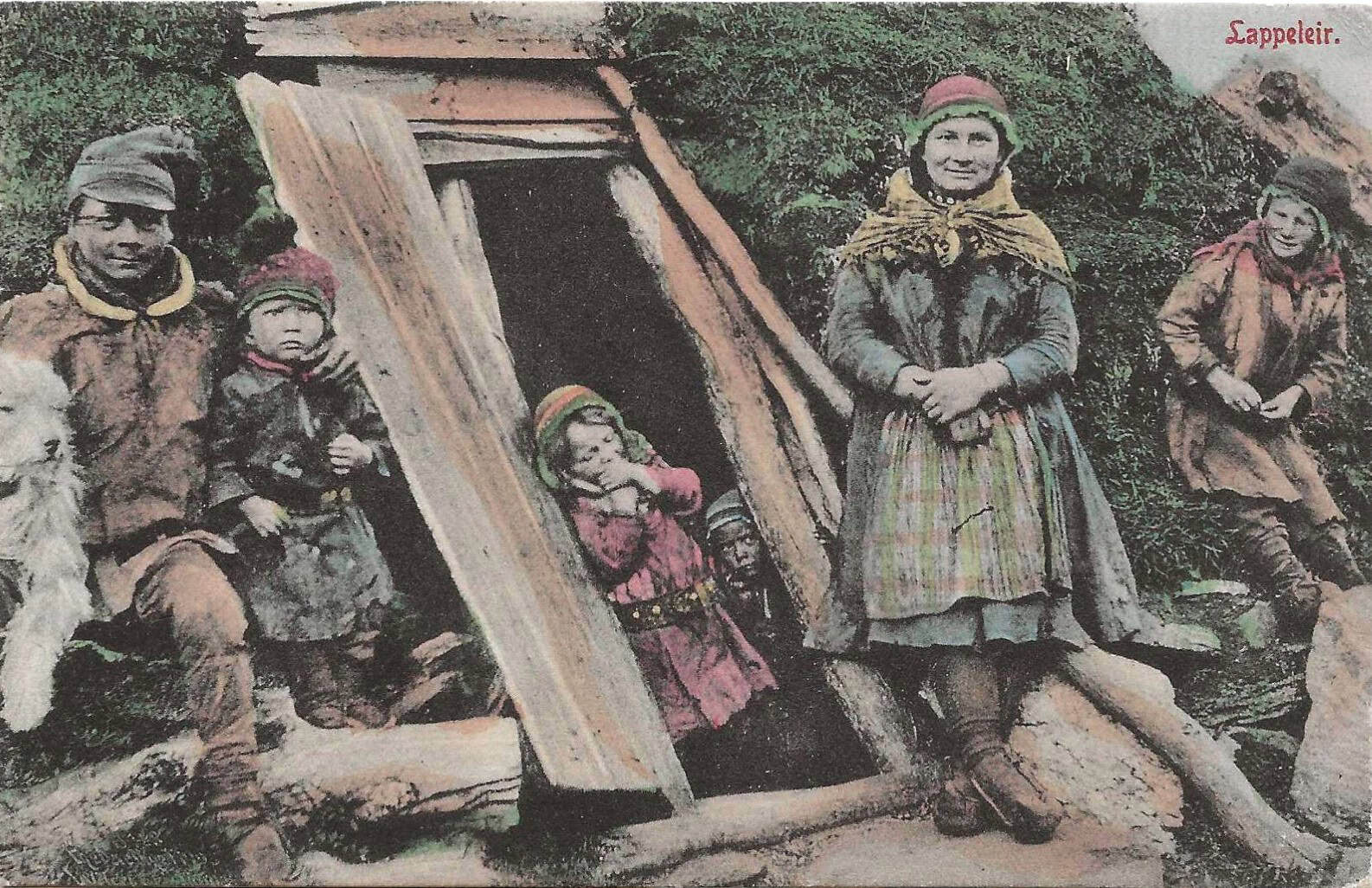
This card was mailed to Altoona, Pennsylvania, from Bergen, Norway on July 27, 1909. The sender, “G. W.” wrote a message telling of visiting with a family at their home like the one in the picture, just three days before. “G.” also mentioned the many waterfalls in Norway and that he had hiked miles to see several of them.
Life as a Lappeleir Family
By Ray Hahn
Home life in Scandinavia in the first decade of the twentieth century certainly unfolded in a world shaped by snow, reindeer, and the steady rhythm of the northern seasons. In a timber walled “goahti” set against the wide tundra, this Sámi couple probably raised their four children with a blend of tradition, resilience, and quiet joy. Their days were measured not by clocks but by migration routes, weather signs, and the needs of their herd.
The father would have been a reindeer herder, who rose before dawn to check the animals grazing at the edge of a birch forest. His eldest son often followed him to learn how to read tracks in the snow and how to guide the herd with a long pole and calm voice.
The mother tended their home, sewing “gákti” (clothing) from reindeer hide and wool, her needle often agleam in the light of their tiny oil lamp. She taught her girls “joiks” (songs), that carried stories of ancestors, spirits, and the land.
Winter dominated their lives. Snow piled high against the walls, and the sky shimmered with the aurora that danced like green fire. The children helped gather firewood, fed the dog, and learned early that survival depended on family cooperation. Yet winter also brought warmth: shared meals of smoked reindeer, laughter around the hearth, and evenings when the father told tales of the Stállu, the giant of Sámi legend who lurked in lonely places.
Spring meant movement. The family packed their sleds and followed the herd toward summer pastures. The youngest children, just about five and almost three, clung to their mother as the sled glided over melting snow. The older children ran alongside their boots splashing in the slush. Migration was hard work, but it was also freedom. It meant days spent under open sky, nights in tents falling to sleep as the wind whistled through the canvas.
By summer, the world softened. Rivers ran fast, the berries ripened, and sunlight lingered past midnight. The children played along the water’s edge, learning to fish and helping gather cloudberries to make jellies and a medicinal “brennevin” (a liquor) for the lightless winter days. Traders arrived from the coast, bringing news, tools, and stories from beyond the tundra. The family bartered hides and crafted goods, strengthening the ties that kept remote families alive and connected.
Autumn brought preparation. The new “reinsdyrkalv” (reindeer fawns) were tagged, herd was culled, meat was cured, and the family repaired sleds and harnesses. As the first frost returned, they celebrated their readiness for another winter. Life was demanding, but it was their lives and they enjoyed being rooted on the land, in kinship, and long-lasting tradition – challenges that others thought were hardships.
This family lived bright and productive lives, not at the edge of the world, but at the center of their own enduring universe.
***
An Unidentified Real Photo and the Frustration of Not Knowing
By Diana Sue Davidson
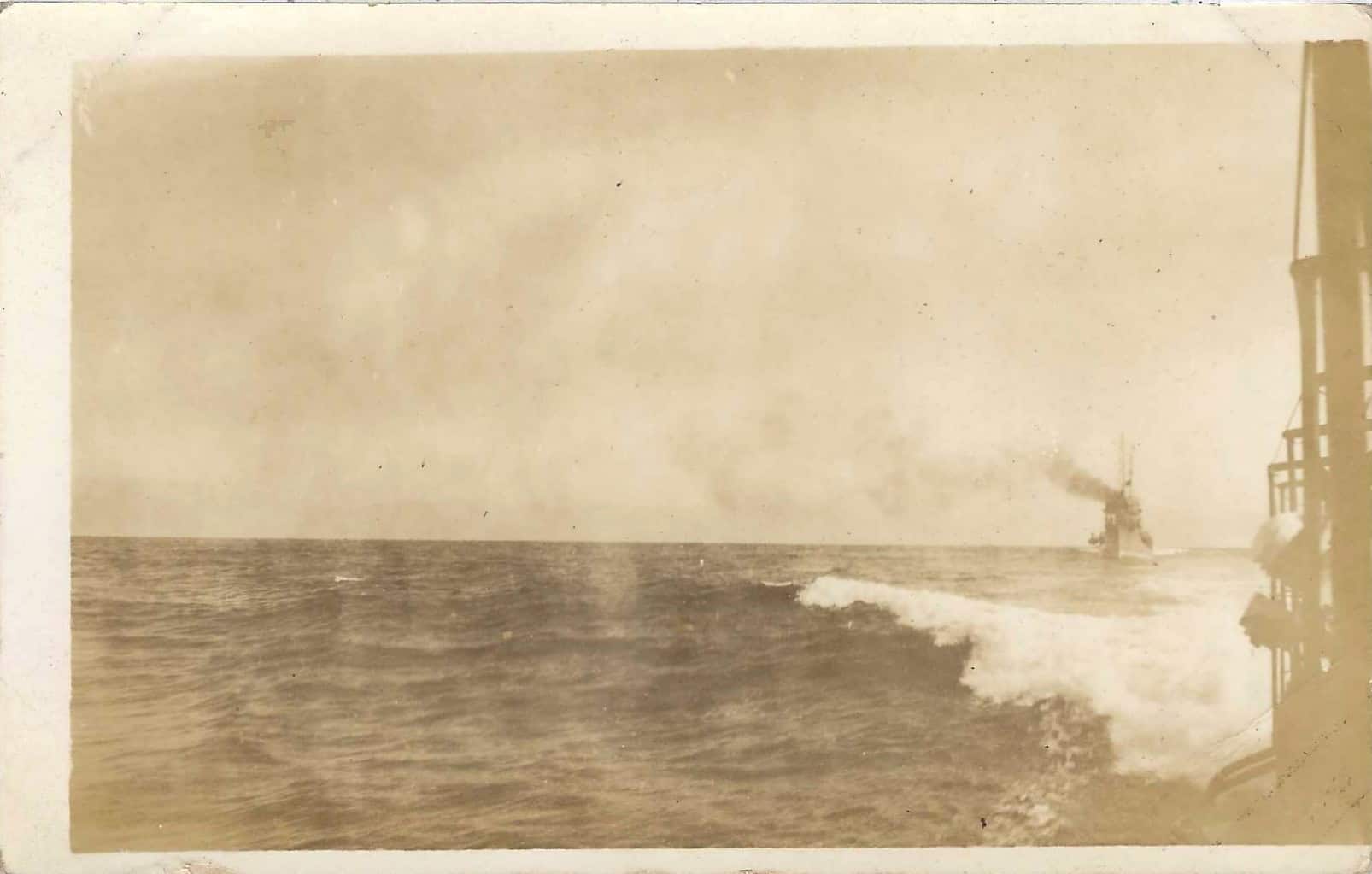
More than two-dozen years ago when the last member of the “Greatest Generation” in my family died, it was incumbent on me to clean out and prepare Uncle Carl’s house for sale. The cellar was no problem, but the attic was a nightmare. There was no way to know, but a good guess would be that the boxes in Uncle Carl’s attic had been there for eighty years. This postcard was in an old shoebox labeled, “Dad’s Stuff.”
The frustration of staring at an unidentified photograph is a quiet, persistent ache. The image itself is like a doorway—an invitation into a story just beyond reach—yet the name, the time, the context remains stubbornly out of sight. You study the image, the content, the background, hoping some detail will speak, but the silence of the past is merciless. It is maddening to hold a piece of history and still feel shut out from it.
Part of the irritation comes from knowing that this person, this place, or this time mattered. There was life, work, struggle, and love, and now the memory depends on a few fading clues. You could search family records, compare dates, consult distant relatives, and still the photograph refuses to yield its secret. The harder you try, the more the mystery seems to deepen, as if the past is teasing you with what it refuses to reveal.
Yet beneath the frustration lies a stubborn determination. The photograph becomes a promise—a reminder that history is not lost until you stop looking. Even in uncertainty, the effort to identify the image becomes an act of respect, a way of saying this story deserves to be known.
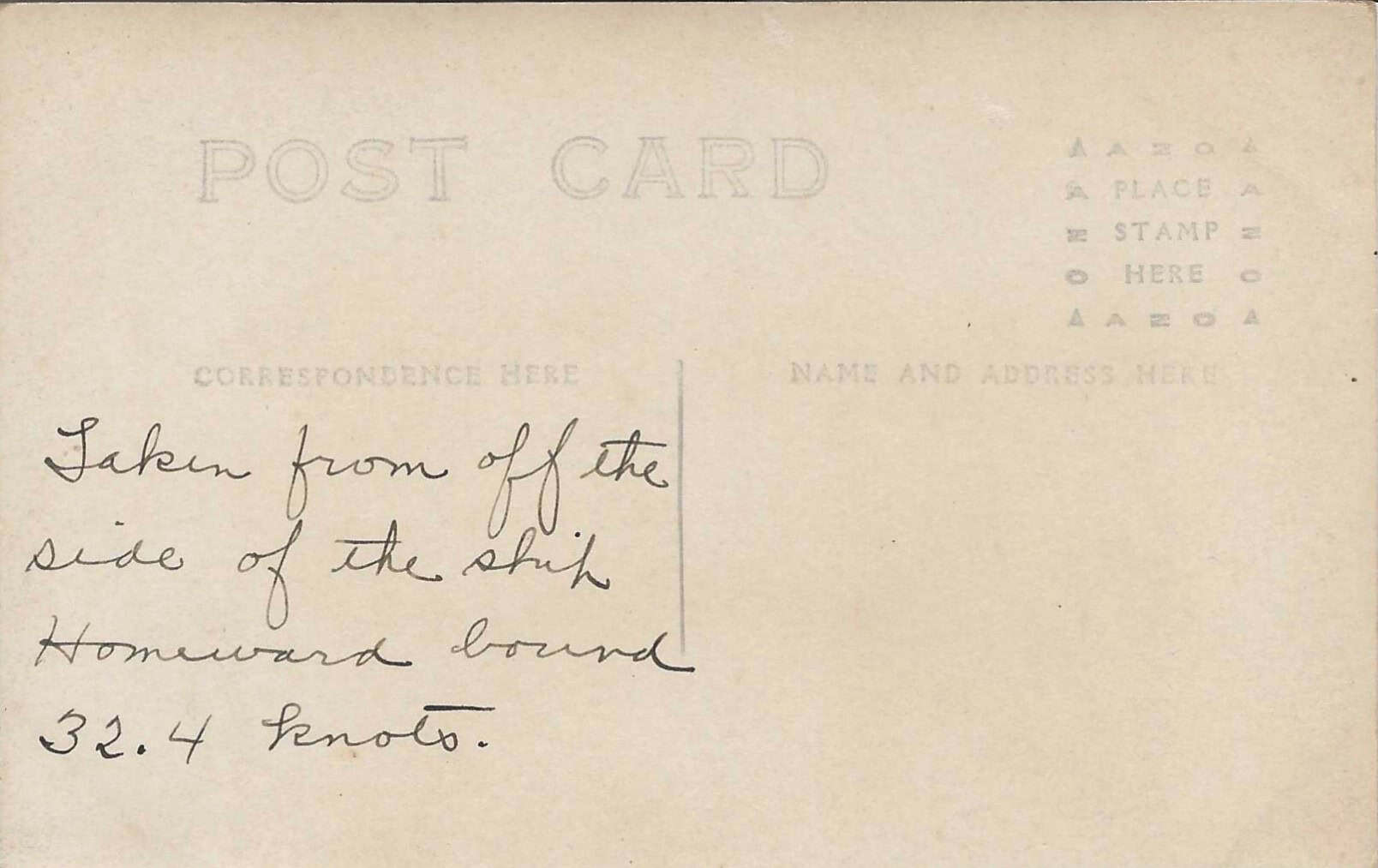
Please, return to the photo, stare at it. Is it only a snapshot of a ship at sea? Do you see the sailor on the right; is that a book he is holding? Look at the quiet of the sea, where are the waves? And check the wake; it was likely as broad as the beam. At a speed of 32.4 knots (which is nearly 40 miles per hour; incredibly fast at sea), who else saw this in real time?
Really fun reads! Thank you all.